Puddles from heaven

rain-13403567897hrThe story goes that back in the 1970s at a conference in London, a UK politician was congratulating Sheikh Yamani on Saudi good fortune in finding so much wealth under the sand. He responded by pointing out of the window “but it is nothing compared to your wealth in having  this precious substance fall from the sky.”

It’s odd stuff, water. It cleanses and revives. It looms large in Scripture because of its life-giving properties: reviving the drooping spirit, dropping fatness on the earth to soften it, making the desert landscape bloom with colour, maybe only once a year. It’s the life that flows from good teaching, the visions that issue from the prophets when the Lord communicates through them, enabling them see what others do not. Water heals—the water of life flowing from the Holy of Holies through the street of the heavenly city.

Now, cast your mind back a few years to the floods in Boscastle and Cockermouth, to the tsunamis, or recently to the south coast floods. Water is heavy. It’s extraordinarily destructive. It can kill. Drink too much and it’ll be curtains.

We moan about too little. We moan about too much. We waste it in ways that horrify people from places where it’s too precious to waste. I’m told on excellent authority that much of the tea we consume comes from tea plantations irrigated by water diverted from nearby towns. People who have so little go without water so that we can feel smug about buying their tea. How long before there’s war over water: mass migrations, global conflict? Maybe it’s already begun.

For seven years of my life, I had a three-quarter mile walk from the bus stop in King Street, Penrith, to school. It rained every day (or so it seems now), and this ten-year old discovered that it took 20 seconds to get soaked, but once soaked, he couldn’t get any wetter, so there was no point bothering. Furthermore, the ten-year old observed that he soon dried out. Though mothers believe that cold and flu are caused by getting wet, I cling to the peculiar view that these illnesses have something to do with viruses and bacteria.

Celebrating water with well dressings is not just a Derbyshire tradition. Have you heard of the water festival on 16 August each year in Villagarcia de Arousa, northwest Spain, where it also rains a lot? After the church service, the tradition is for people to drench each other: 30 tons of water were used last year, delivered by hydrants, hoses and buckets.

Wouldn’t it be a wheeze to do this in Burton? I try my best with Holy Water in church, but a hose would add a new dimension.

College life

Cambridge_Queens'_GatehouseA Cambridge contemporary died recently. The funeral was in Hampshire. I didn’t go. I gather that at the do afterwards a group of them raised the possibility of hiring a venue for a house party reunion. Would I be interested? one of them asked.

Part of me is curious, of course. It would be fascinating to see who’s fatter, thinner, balder (men only college in those days), richer. It would be interesting to see who’s still a nice guy, who’s a pompous gobshite.

But a bigger part of me is reluctant to go, so I was examining why this might be so.

When I think about those years, the predominant feeling is that I was always smirked at, tolerated. I put that to the man who wondered if I might like the house party, and he agreed that it was so, but that it was always with affection. “Like the village idiot” I suggested, but response came there none. ‘You can’t help loving that Stan of ours’ they sang in a College concert,

Why? No public school veneer? No sporting ability or interest? No posh accent? No family connexions? No sex appeal? (This was the opinion of the Deputy Head, a woman, at Penrith Grammar School, who said so to SWMBO when we were both pupils).

At a time when students are about to begin college courses, leaving the nest, incurring massive debts with student loans, it’s as well to remember that the image of partying, drinking, and carousing student life is a figment of the imagination of irresponsible commentators. It just aint so.

Essays, reading, tutorials, practicals, lab work, site work, placements, regulations, theses, dissertations. It is hard work. And on top of this—even before this—one has to deal with one’s own insecurities and thread one’s way through the cliques and gangs and the self-appointed élite of the student body.

And when they come out? There are not enough jobs befitting their qualifications, according to today’s news. So they take jobs for which their courses have been entirely superfluous. Still, it’s kept them off the streets for 6 years or so.

My father felt strongly that education was the way to better oneself. That was so in his day, but not now. So why not send people to school until they can read, write and do sums, then at 12 they can join the jobs market. Higher education then follows only for those that need it or that actually would like it.

A sure vote winner.

Invertebrates rule OK

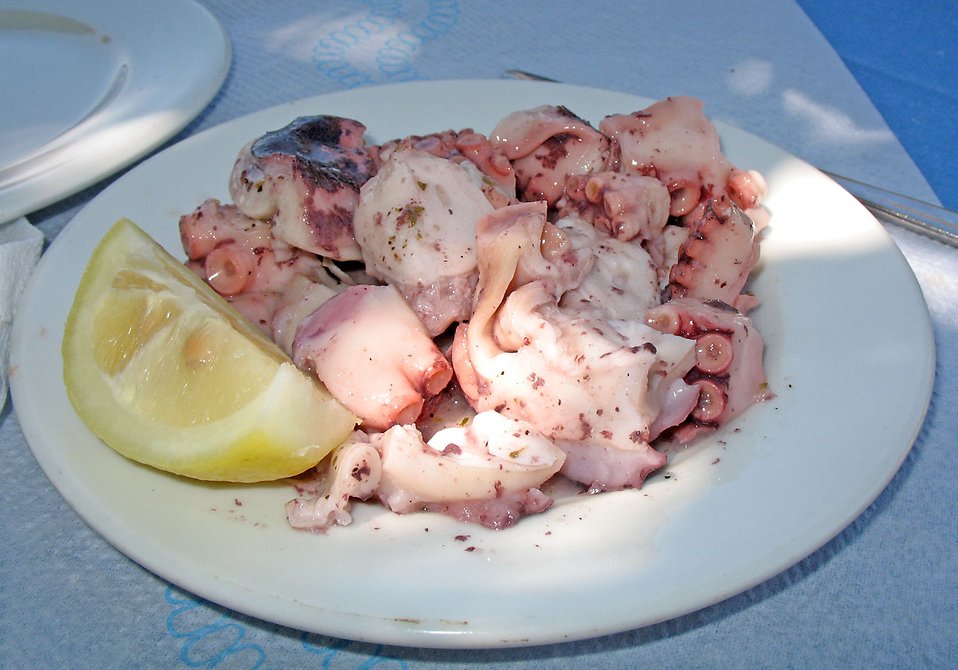
4985825287_273f35736fThis is about octopuses. A recent article announced that scientists said that because of their DNA, octopuses ‘are aliens’. The assumption is that those scientists are competent to judge what is and what is not alien.

Humans have been around—let’s be generous here—about 200 thousand years, and our immediate antecedents about 6 million years. Octopuses, on the other hand, have been around for 150 million years, and their antecedent cephalopods 500 million years.

So—let’s get this right—the new arrivals belong on the planet, but the old stagers are aliens.

This mind-set allows us humans to do what we like with animals and plants. It allows us to do what we like with the planet. It enables us to discard rubbish, pollute environments and behave as if we were rulers of creation, bossing it about.

Biblical scholars might like to know that when Genesis 1:28 is properly translated from the Hebrew, it’s clear that we are to be custodians of the earth, not subdue it or have dominion over it. We are responsible for it, and our actions.

A theological conundrum arises. Are octopuses saved? Do they need to be? Let’s say for argument that they don’t. What do we humans have that requires our salvation, but that octopuses lack? This is not an entirely silly question, for its implications need to be explored if biology and theology are to have a serious conversation. Good luck with that.

Octopuses are very bright. They use tools and solve problems. Comparing the behaviour and skills of octopuses with those of some of the species to which I belong yields conclusions that it ill behoves a clerk in holy orders to consider, let alone articulate. Perhaps the human ape is evolving into several species as I type.

7869-a-plate-of-octopus-salad-pvThere are more octopuses than humans. Octopuses will be around long after we’ve disappeared. Jellyfish are older and vastly more numerous. The more toxic waste we chuck into their environment, the sooner they will rise up against us. Read The Swarm by Frank Schatzing.

I am very fond of octopuses, especially with garlic and lemon.

For God’s sake, go!

scissors_2-resized-600A level results today. Reminds me of three episodes last week.

One. A young woman said she was nervous about what she might get. I said: “what do you need?” Before she could reply, her grandmother answered for her. I said “where do you hope to study?” Her mother replied. Then, “and what will you be studying?” Finally, she was allowed to get a word in.

Two. Can’t remember the topic of conversation, but I was again chatting to a young adult, man this time, and his mother kept answering for him. I ignored her and pressed on.

Three. I met a young relation for the first time since he was about 10. A personable young man, at home in his own skin. He’s in his first year “at uni”. (Ye Gods, how I hate that abbreviation.) I said “which?”, and blow me, but his father answered. I said “you’re a fantastic ventriloquist: I didn’t see your lips move and the sound came from over there!”

All these people are old enough to vote, to reproduce, to fight for their homeland. Not to speak for themselves, it seems. It’s highly commendable that they acquire any articulacy skills.

Luke 14:26.

There comes a time when fledglings need to be shoved out of the nest if they haven’t gone of their own accord. Such a pity that leaving home is increasingly not a viable financial option these days. As SWMBO observed “I don’t know how young people can afford to go to university now”.

There is a tide in the affairs of men, which if not taken at the flood, leads on to boredom. And mothering becomes smothering.

A cold climate

An architect designed this

An architect designed this

One of the less welcome accompaniments to getting older is dreaming about school, university and previous jobs. Last night I was yet again feeling guilty for not ‘getting on with research’ as a lecturer in Anatomy at Nottingham. The boss, Rex Coupland, made some barbed remark about it being too much to hope that he would see a publication soon.

How long does this sort of tripe go on? I thought I’d ditched this sort of stuff! Ah well, at least the dreams about the pecking order of school playgrounds have died down. Maybe I’m becoming demented with long-term memories shoving out short-term stuff. I can’t find my fountain pen—lost it last Wednesday I think. I’d much rather be able to remember that than some jerk in a 1962 playground.

As it happens, publications from Nottingham days did trickle along eventually, after I’d submitted my PhD dissertation. I vividly remember the viva voce examination: it was embarrassing. People had commented on how easy it was to read the dissertation—‘like a novel’ said the examiner from Glasgow, but the examiner from Sheffield, the foremost expert in one of the techniques I used, was (rightly) scandalized that I had made some sweeping journalistic statement that conveniently ignored facts (they always get in the way of a good story). I had to modify and resubmit.

glengorm

Glengorm

I’d begun to write the dissertation the previous year. I first put pen to paper (no computer or word processor) on a week’s holiday to the Isle of Mull. We rented one of the cottages attached to Glengorm Castle near Tobermory. I’d been rather taken by the place as Madam Sin’s (Bette Davis) HQ the film of the same name, a kind of silly James Bond romp in the Highlands and Islands. There we pitched up: Susan, her mum, three kids and me just after Easter.

Ye Gods, it was cold. Never been so cold. Was the cottage heated? It was not. There was a wood burning stove that made my eyes run, and there was a bath with some hot water if you turned the heater on and did a Highland Fling to get it to work. The children slept in their overcoats. I think I did too. The seaward views were terrific though: Coll quite close, and was that South Uist in the distance?

Those were the days when I was daft enough to think that I should take work on holiday with me. Never did any, mind, but felt I should. Despite an inauspicious start the dissertation was completed and submitted later that year.

After that I applied for promotion to Senior Lecturer. Those were the Thatcher days of University squeezes, and that year there were, I think, fewer than 10 such promotions in the entire University. Needless to say, I was not one of them. I started to look about at other opportunities. Early in 1987 the Professorship of Anatomy at the College of Surgeons in Dublin was advertised. I don’t quite know why I applied: no Irish blood, no golf, no shooting, no fishing. But I did. The interview was in March. East Midlands to Dublin was in a Fokker with elastic bands. All very cosy. I must have charmed the panel.

The job started on 1 January 1988. Those were the last years of Catholic Ireland, and that’s another story.

Blessed are the cheese makers


bavaria-blu-self-2Homily for Year B, Proper 14

1 Kings 19:4-8. Psalm 34:1-8. Ephesians 4:25-5:2. John 6:35, 41-51.

I am the living bread that came down from heaven. Whoever eats of this bread will live forever; and the bread that I will give for the life of the world is my flesh.

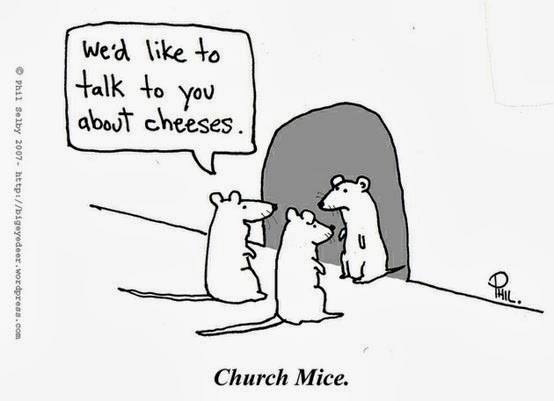
I’m talking about dairy products this morning, but before I do, I ponder the problem that cheese lovers have when it comes to spreading the word.

People sneer at virgin birth, resurrection, ascension, eating flesh and drinking blood. They laugh at the notion that the world has been saved by an angry God who has his own son murdered to satisfy that anger. They ridicule the idea that people might pray for someone to get better, or for something not to happen. They laugh at an imaginary friend.

People—all of us—are losing the ability to read between the lines. We are inclined to take the printed word literally. We are inclined to think that if it’s printed it must be true.

Scientific ways of thinking have schooled us to think that unless we can see it, touch it, feel it, measure it, it is of no importance. We think in terms of yes, no; right/wrong; true/false. We began to feel that we are right, and that those who disagree are wrong. We lose the ability to cope with both/and, with ambiguity. We lose the willingness to consider that there might be grey areas. We lose the ability to think in pictures.

This matters when we read Holy Scripture. It was written in languages that are not now spoken. It was copied by hand again and again. It has been translated into Latin, then English. Do we allow for ambiguities and mistakes that are therefore inevitable? Do we allow for not being able to see the facial expression of Jesus, or Paul, or whomever, so that we can’t know when they’re being ironic, or have a twinkle in the eye? Scriptural idioms have been torn from their cultural and geographic contexts. Do we allow for that? What would a visitor from, say, Vladivostok make of our expressions such as raining cats and dogs; scales fell from my eyes; wet behind the ears; green with envy?

With all that in mind, let’s talk about cheeses. Look at the last sentence of today’s Gospel: Whoever eats of this bread will live forever; and the bread that I will give for the life of the world is my flesh.

First, what does “live forever” mean?

The Greek for forever is aion, from which we get aeon. It has several meanings, such as lifetime, generation, destiny. Is it to mean for all eternity? For ever? Or is it about a quality of life beyond time in which time is of little importance. Does it perhaps mean something like what we mean when we say “to the ends of the earth”? A declaration of intent, of commitment. Is it about destiny, that is, our inclination towards God, our home?

Exploring like this enables us to move beyond a literal meaning of Scripture and move into something altogether more exciting and imaginative. It enables us to engage with people who dismiss the simplistic notion of life after death.

Next, in the same verse in the Greek, we have “I shall be giving over the bread which is my flesh for the sake of the ‘cosmic’ system of life. Whatever else cosmos may mean, it is also about good order. So the bread of life, the flesh of Jesus, is about order, as opposed to disorder. This is wisdom. Or, if we want to think about cosmos in terms of the universe, then the Jesus event is about more than simply humanity. It’s about the transformation of the whole existing order. It’s about a worldview that is far more exciting than the self-obsessed me me me of personal salvation.

My third point for this morning is “I am the living bread.” The living bread is all that Jesus and his message encapsulate: recognition of our dependence upon something much greater than us, our dependence upon one another, our need to let go of attachments, our need to accept that we are not in control, that we are here today and gone tomorrow, that there are cosmic forces not dependent upon us, that we have urges and inclinations that can yield great beauty and others than can lead to immense harm. All this is the living bread.

If we wish to share our faith with the sceptics of today, we need to engage our brains for new ways of talking about God and Jesus that sidestep issues like virgin births and the doctrinal stuff that’s hard or even impossible for 21st century westerners to swallow.

I am the living bread that came down from heaven. Whoever eats of this bread will live forever; and the bread that I will give for the life of the world is my flesh.

The Divine (“God”) is all that is beautiful, delightful, lovely, creative and ordered (i.e. just and true). There is a bit of God in everyone and everything: we are all broken off bits of God. “What is not God is nothing; what is not God is no thing.”

God is the laws of science (logos), of physics, of the cosmos, … and much more. God is love. The perfect human manifestation of logos is Jesus the Christ whose example and life we emulate as best we can in the circumstances in which we find ourselves.

Since none of us, despite God within, is perfect, we cock up. This is part of the human condition. Sometimes we do this intentionally and sometimes accidentally; sometimes by things we do that we wish we hadn’t, and sometimes by things we fail to do. We acknowledge our own mistakes, our own imperfection and our own helplessness. This is not to grovel, but simply to accept that we are not perfect and not in control, but that we will bash on doing our best.

The Divine within is like a pilot light. Incarnation. For us to be fully human that light needs to fill our skins from the inside. What stops it from doing so are things like pride, greed, avarice and showing off. To let it shine and fill us, it’s not that we need to DO something, it’s simply that we need to relax into ourselves, to recognize our pride, greed, avarice and showing off tendencies, and then let them melt away. When you lift up the lid of your psyche, you begin to see all sorts of grubs wriggling around. But then, in the warm light of love, they can begin to melt away as you love the hell out of yourself. This is at least a lifetime’s work.

“And if you want to know the way, be pleased to hear what he did say.” And what Jesus demonstrated is that we rise to the heights – we approach The Divine – when we let go of pride, greed, avarice, showing off – that is, when ego dies, and selflessness replaces selfishness. Crucifixion followed by ascension.

quest-historical-jesus-albert-schweitzer-paperback-cover-artAll the rest, the dogma, the doctrine, is poetry that has collected around the message. Much of it is of great beauty and psychological authenticity. Much of it is past its sell-by date and should be ditched.

Schweitzer: He comes to us as One unknown, without a name, as of old, by the lakeside, he came to those men who did not know who he was. He says the same words, ‘Follow me!’, and sets us to those tasks which he must fulfil in our time. He commands. And to those who obey Him, whether wise or unwise, He will reveal Himself in the toils, the conflicts, the suffering that they may experience in his fellowship, and, as an ineffable mystery, they shall learn in their own experience Who He is.

Blissfully bad behaviour

Hay Fever at Noel Coward Theatre“Each day is a little life: every waking and rising a little birth, every fresh morning a little youth.” Schopenhauer may have thought so, but I don’t, at least not when I’m dragged from the land of Nod by a commotion on the bed at 5.10 am.

I open my sticky eyes to find that what feels like a dog dancing on my head is indeed a dog dancing on my head. The tail wags—that’s a nice breeze. I suggest to the dog that he might calm down. When I say “I suggest”, I actually instruct the dog to go elsewhere with language that pious po-faces think a Clerk in Holy Orders should not know. The dog, impervious to any command that he dodge lorries on the A38, wins.

“Mine eyes have seen the glory of the coming of the Lord” – not so. They remain sticky and gooey. I peel them open. I arise and go to my kettle and conjure forth the first of many “cups that cheer but not inebriate”.

As we accompany Og the dog to the canal for the morning constitutional, SWMBO asks if I see the pretty flowers. Then she looks at me. “No, I don’t suppose you do”. Everything is a blur. So is the screen as I type, even after antihistamines, salbutamol and whatever it is in the dark brown inhaler. Prickly eyes, prickly skin, and a feather tickling each side of my nose.

Oh bliss, dahling, summer is upon us.

“The flowering grasses will be reaching their peak during the warm weather this week.” What a joy. This, I suppose, is why wheat makes me feel prickly inside, why whiskey and I have a fraught relationship (thankfully), why cakes and buns are not good for me, though it’s kind of people to offer me them when I visit, as Vicars are wont to do. A couple of weeks ago I took one, had a crumb, then surreptitiously put the bun it in my pocket. Later that day when foraging for coins there was a shower of crumbs.

My reaction to corn, wheat and hay meant that going with my father into his flourmill or hen house was out of the question, any notion of following in his footsteps unthinkable. Playing among hay bales was an early introduction to the phenomenon of cause and effect. Funny, though, I kept doing it for a while. Wasn’t it Einstein who said that insanity was doing the same thing over and over again and expecting different results?

I knew there was a reason why cold sunny weather suits me best, but for now I enjoy the performance. If my immune system is alive, so must I be.

Children of the 1950s

silver-sword1Back in the 1950s I remember The Silver Sword, on TV. The story, by Ian Seraillier, is utterly gripping. Aged 7 or 8, I became aware for the first time of the Second World War and the Nazis. It remains for me the most vivid example of man’s inhumanity to man.

The story concerns the three Balicki children, Edek, Ruth and Bronia. Their parents are carted off the Nazis to God-knows-where. The children have to learn to manage among the ruins of the destroyed Warsaw. A small silver sword from home becomes their lucky charm. They hear rumours that their parents have escaped. They trudge across Europe, then across Lake Constance, to Switzerland where the family is re-united. It’s based on a true story, and I guess there are many similar stories in war zones everywhere. The most memorable character, even after almost 60 years was Edek, played on TV by a very young Melvyn Hayes.

6931193Round about then at Langwathby School we were introduced to Swallows and Amazons. I think I was supposed to like those stories since they were about Windermere, and that was ‘ours’. I thought the children intolerably stuck up. Still do. I liked the children in Marjorie Lloyd’s Fell Farm books better, especially when they were allowed to go fell walking on their own and stay away from home for days. Why couldn’t I be free of supervision too?

Persephone-Books-The-Children-who-Lives-in-a-Barn-cover-389x600Best of all was Eleanor Graham’s The Children who lived in a barn. An utterly improbable story, I now see, but that didn’t bother me then. The Dunnett parents fly to foreign parts to see some aged relative, leaving the children at home. They do not return. The village busybodies interfere. The landlord evicts the children. They set up home in a barn. The authorities threaten them. The children manage for months. More threats and interference. Eventually the parents return.

Oh, the bliss of being free of adult restrictions and expectations. I was with the Dunnett children all the way. I could see the nosey-parkers around me. That story did more to make me intolerant of interfering busybodies than any other event in my life.

I think about the Balicki children making their way across Europe. I think about the Fell Farm children. I think about the Dunnett family. I look at children of today accompanied even only a few yards to school, watched, smothered.