Children of the 1950s

silver-sword1Back in the 1950s I remember The Silver Sword, on TV. The story, by Ian Seraillier, is utterly gripping. Aged 7 or 8, I became aware for the first time of the Second World War and the Nazis. It remains for me the most vivid example of man’s inhumanity to man.

The story concerns the three Balicki children, Edek, Ruth and Bronia. Their parents are carted off the Nazis to God-knows-where. The children have to learn to manage among the ruins of the destroyed Warsaw. A small silver sword from home becomes their lucky charm. They hear rumours that their parents have escaped. They trudge across Europe, then across Lake Constance, to Switzerland where the family is re-united. It’s based on a true story, and I guess there are many similar stories in war zones everywhere. The most memorable character, even after almost 60 years was Edek, played on TV by a very young Melvyn Hayes.
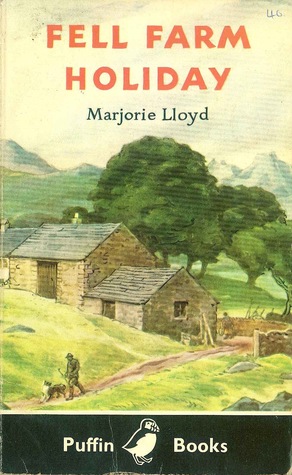
6931193Round about then at Langwathby School we were introduced to Swallows and Amazons. I think I was supposed to like those stories since they were about Windermere, and that was ‘ours’. I thought the children intolerably stuck up. Still do. I liked the children in Marjorie Lloyd’s Fell Farm books better, especially when they were allowed to go fell walking on their own and stay away from home for days. Why couldn’t I be free of supervision too?
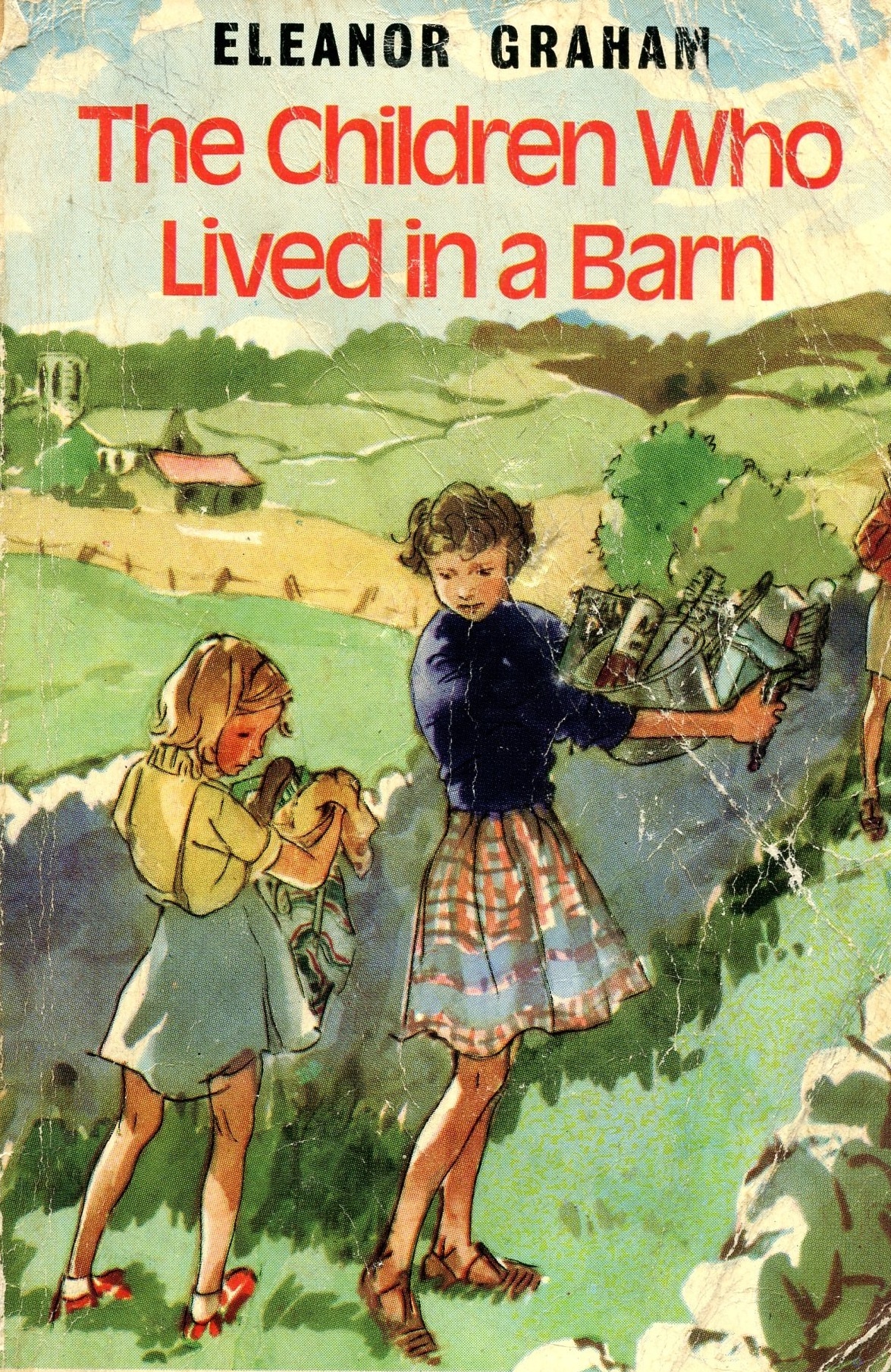
Persephone-Books-The-Children-who-Lives-in-a-Barn-cover-389x600Best of all was Eleanor Graham’s The Children who lived in a barn. An utterly improbable story, I now see, but that didn’t bother me then. The Dunnett parents fly to foreign parts to see some aged relative, leaving the children at home. They do not return. The village busybodies interfere. The landlord evicts the children. They set up home in a barn. The authorities threaten them. The children manage for months. More threats and interference. Eventually the parents return.

Oh, the bliss of being free of adult restrictions and expectations. I was with the Dunnett children all the way. I could see the nosey-parkers around me. That story did more to make me intolerant of interfering busybodies than any other event in my life.

I think about the Balicki children making their way across Europe. I think about the Fell Farm children. I think about the Dunnett family. I look at children of today accompanied even only a few yards to school, watched, smothered.

It’s just over a year since we left Ireland

Ulysses_Arriving_In_DublinNext month sees me one year in post.

We’ve left Ireland twice now. The first time was in 2003 after 15 years at the College of Surgeons in Dublin, when I came to help set up the new medical school in Derby. Then again last year after three years in Portlaoise.

Both times it has taken me a long time to disconnect and for the emotions to begin to settle. Both times things were complicated by our leaving behind a daughter and a son, and in 2014 a son-in-law. When we came to England in 2003 another son was here, but now he’s in Texas with a family, so that enriches the bubbling brew.

In 2003 it took me several months to give up a daily fix of the College of Surgeons website hoping for news of friends, and (I confess) a bit of schadenfreude. Now its the Facebook pages of Irish ex-colleagues.

“Why am I doing this?” Part grief, part anger, part separation anxiety, part questioning of motives, for there was no compulsion to leave. And part dependency.

My heart is somewhere between Dublin and Holyhead: there is something about Ireland that I dearly love; bits of my DNA are in Dublin, and bits of Dublin are in my DNA. I’m managing now to look at the Irish Times only once a week (Saturday, for Ross O’Carroll Kelly) and catch up on the news. And of course there’s the Euro pensions (not good at the moment).

It brings it home to me in a tiny way the plight of those who at great risk flee their homeland, who cross the sea in leaky barrels, who trudge miles and miles overland. People whose relatives at home may be punished as a result. Those who, like the man I saw this morning, was lured here and abused by criminals and now can’t go home, and can’t find work or accommodation.

Spare a thought for people away from home. You never know what battles they have faced, or what grief they suffer.

Four in 10 students say university not good value

drainWhat a surprise!

During my quarter of a century teaching at the University of Nottingham and the Royal College of Surgeons in Ireland I’ve seen the growth of ‘educationalists’. They purport to improve teaching standards by fostering an interest in the ‘discipline’ of ‘pedagogy’ (why do they insist on pronouncing this ‘pedagodjee’?)

Have they done so?

No.

They manufacture more and more hoops for those at the chalk-face to jump through.

They spin all sorts of guff about improving the student experience. They do this by giving the students questionnaires to fill in every week about this, that and the other. They are asked to grade individual staff on the basis of quality of handouts, or use of technology, or approachability, and much more.

They write garbage such as:

  • purposeful reflection (thinking, but at €100 an hour);
  • impactful research (difficult, since Medical Education Journals are pretty risible);
  • student centered e-portfolios (students do something online, the teachers ignore it);
  • the flipped classroom (getting students to read ahead and then asking questions during a ‘lecture’);
  • dynamic/personalized/bespoke Learning Environments (A place online to dump powerpoints);
  • student-led teaching, peer teaching (letting the students do the work while the staff do experiential research into different varieties of coffee);
  • interprofessional education (talking to each other).

As sociology was once defined as the study of those who don’t need to be studied by those who do, so medical education is the study of those who teach by those who can’t, won’t, and certainly shouldn’t.

And the sad thing is that the tail now wags the dog. Educationalists now call the shots. The result is that students are not now taught anything much. Students must reinvent the wheel for themselves. They are lectured about the ‘science’ of learning—in truth not a science at all, merely tendentious opinion.

University ‘teachers’ are appointed to lectureships on the basis of knowing a great deal about hardly anything. What matters for their career advancement is how many publications they produce, and in what journals. Chances are that to them the teaching and nurturing of students is a distraction. The ability to distil complex concepts as an introduction for the neophyte matters not one jot.

Students pay fees. At the College of Surgeons medical school (despite the name, for undergraduate medics not just surgeons), a medical student now pays over €50K a year. Just think what could happen if the students started to use this power. Oh yes, of course, silly me, what would happen is that they would not get their degrees, so they would not be able to earn enough money to pay off their student loans.

What is the solution?

Simples, as Aleksandr Orlov might say:

  • separate teaching and research and fund research separately;
  • abolish student fees.
  • let students pay teachers directly, on the spot: they would flock to the good ones who would be suitably rewarded.

We preach best what we need to learn most

Sr Consilio

Sr Consilio

Watch this for wisdom, from about 37 minutes on. What I write below is a pale reflection.

Two quotes from St Francis have come my way recently:

  • You can show your love to others by not wishing that they should be better Christians.
  • We must bear patiently not being good . . . and not being thought good.

Yes, they are correct. Those three nots are there.

Read the quotes again, and this time leave out the nots. ‘That’s more like it,’ you say. Those piously corrected versions give us an illusion of superiority that appeals to the ego. ‘After all’, you say, ‘I am not like other people. I am a Christian’.

Now, delve into you heart and mind. Ask yourself why do I think what I think? Why do I do what I do? Why do I react as I react?

When you lift up the stone, you see all sorts of grubs wriggling about that you never knew were there. You see such things as having always to be one-up, having to be ‘right’, always criticizing and finding fault, and so on.

These are addictions. They are just as harmful as booze or fags or drugs—worse, in fact, for they are demons that melt into the surroundings like chameleons. They are vain things that charm me most; they rob us of our personalities.

All of us have them: we can be addicted to power, controlling, wanting to change other people, protecting, pleasing, TV, internet, Facebook, criticizing, moaning. They developed when we were little in response to our circumstances and our experiences. We kid ourselves that we are well-adjusted, and if we are careful never to step outside our comfort zones, never to stray beyond the circled wagons that we have become used to, our illusions are not challenged. But the truth is we are all wounded—because of the things we experienced as we grew up.

And now we are all in recovery. Every single one of us. It’s hard to accept it. It’s as hard for you and me to quit finding fault, or whatever, as it is for others to put down the drink and quit the drugs.

Now, read those quotes of St Francis again. Do you see why the nots are essential?

Each one of us has to face those things in us that we’d prefer to pretend are not there. When we do, we begin to come to terms with who and what we are. This is hard work, but I would go so far as to say that we don’t begin to grow up until we begin it.

If you persevere with honest self-observation, you begin to accept your own addictions when you look them in the face. You begin to understand humility. Your heart softens towards yourself and other people. Do not harden your hearts. You begin to see your weaknesses in others, and others’ in yourself.

This is what people call the “integration of the negative.” It is Jesus’ teaching (Jesus was a mystic). It is Paul’s teaching (Paul was a mystic: see Romans 8), and that of all great spiritual writers. They honour the things that society dismisses, like not winning, not acquiring, not collecting, not imposing.

We can only do our best in the circumstances we find ourselves. We will make mistakes and we will get things wrong. But we will get many more things right and light up the world as only we can. It’s so much easier to love people who acknowledge their inadequacies than people who stand on their dignity and pretend to be perfect. Read The Water of Life by The Brothers Grimm, and you will see why people get stuck on their high horses.

There’s no need for us to be perfect. We do a better job when the soft and vulnerable centre is exposed, rather than the smooth exterior. Like chocolate éclairs: that lovely moment when the goo inside is reached. A lamp inside a vase is no use unless the vase is cracked. Only through your cracks, defects, and wounds, will your true humanity shine out.

Love your faults and frustrations, for they are the making of you. Indeed, there’s a sense in which you need to welcome them and embrace them. Only that way can you love the hell out of yourself.

The joys of ageing

Eyes that see shall never grow old

Eyes that see shall never grow old

I’ve been an OAP for a week. So far I’m enjoying it.

About fifteen years ago I attended a scientific meeting in London. We were put up in student accommodation at the London Hospital (Whitechapel). It was dreadful. After one night I thought I’m a forty(ish) year old Professor of Anatomy and I don’t need places like this in my life, so I hoofed off to one of the West End hotels for the next two nights.

Did I have notions of grandeur? Maybe. In any case it was a recognition that my life was probably half gone and that slumming it in grotty student accommodation was no longer desirable or necessary (I earned a lot more than I do now). I’ve never been that keen on hardship: my definition of slumming it is running out of ice cubes.

About five years ago I decided that I would never again be in a hurry. I start things earlier, I get things ready the night before, to avoid Where are the sermon notes? orders of service? …. I don’t clog up my diary unless I absolutely have to.

I like to arrive at airports at least two hours in advance, more for US. Speaking of which, I resolved not to have to get up early for flights—4 am reveille for 7 am flight, that sort of thing. But with dearly beloveds in Dublin, needs occasionally must. The return flights, if early, can be a real problem if one has partaken immoderately of Arthur’s nectar the evening before: “three’s enough, don’t you think? Oh, all right then.”

Eating habits have changed. I won’t begin an evening meal after 7.30 pm. I sleep terribly if I do. I have learnt over the years to avoid wheat (not gluten – wheat), for it makes me feel bloated and I sleep badly. I have learnt to cast lingering avaricious glances at Fish and Chip shops, rather than to enter, for similar reasons (sometimes I yield). Milk is snot-inducing poison.

I need a magnifying glass for reading books. I can’t hear people unless I can see their mouths. I tell them not to talk to my back, but they ignore me. Maybe they have the same problem.

As we age, we have to come to terms with changing mechanics and metabolism. I’m very fortunate that I don’t have more to worry about. I once said that I aimed to immature with age. And I enjoy not caring so much about any thing. I care only about people.

In my last parish I had an 85-year-old parishioner who, when asked how she was, said ‘well, Rector, I was able to pull up my knickers this morning, so I’m grand.’

There is nothing more to be said.

The Kingdom of God is like …

Fimble

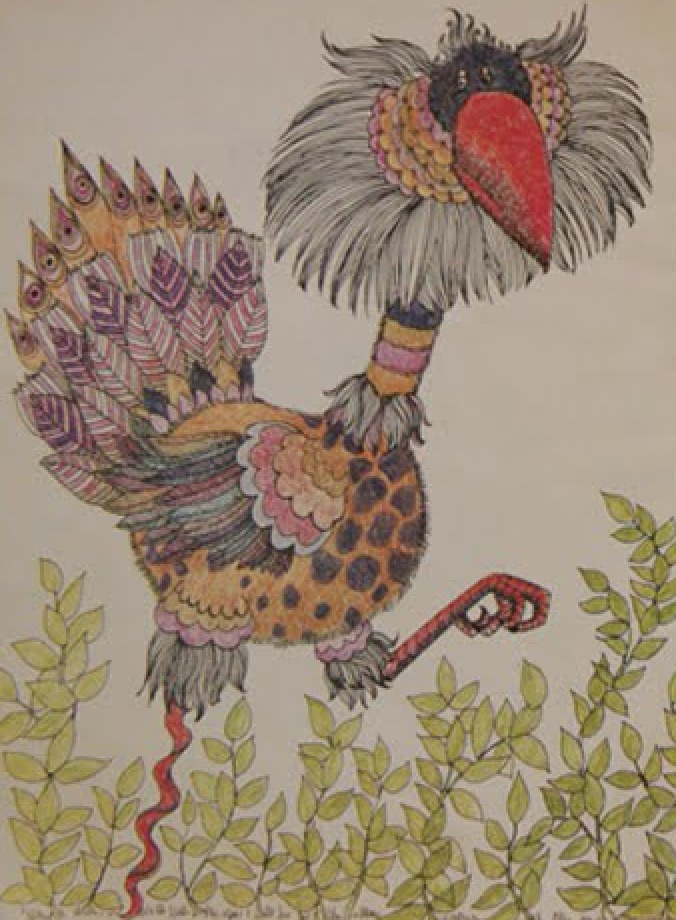
The Fimble Fowl (one of Helen Oxenbury’s wonderful illustrations)

The Quangle Wangle’s Hat

Homily for Trinity II, year B. Ezekiel 17: 22-24; 2 Corinthians 5: 6-10, 14-17;   Mark 4: 26-34

On the top of the Crumpetty Tree
The Quangle Wangle sat,
But his face you could not see,
On account of his Beaver Hat.
For his Hat was a hundred and two feet wide,
With ribbons and bibbons on every side
And bells, and buttons, and loops, and lace,
So that nobody ever could see the face
Of the Quangle Wangle Quee.

The Quangle Wangle said
To himself on the Crumpetty Tree, —
“Jam; and jelly; and bread;
Are the best of food for me!
But the longer I live on this Crumpetty Tree
The plainer than ever it seems to me
That very few people come this way
And that life on the whole is far from gay!”
Said the Quangle Wangle Quee.

But there came to the Crumpetty Tree,
Mr and Mrs Canary; And they said, —
“Did every you see
Any spot so charmingly airy?
May we build a nest on your lovely Hat?
Mr Quangle Wangle, grant us that!
O please let us come and build a nest
Of whatever material suits you best,
Mr Quangle Wangle Quee!”

And besides, to the Crumpetty Tree
Came the Stork, the Duck, and the Owl;
The Snail, and the Bumble-Bee,
The Frog, and the Fimble Fowl;
(The Fimble Fowl, with a corkscrew leg;)
And all of them said, — “We humbly beg,
We may build out homes on your lovely Hat, —
Mr Quangle Wangle, grant us that!
Mr Quangle Wangle Quee!”

And the Golden Grouse came there,
And the Pobble who has no toes, —
And the small Olympian bear, —
And the Dong with a luminous nose.
And the Blue Baboon, who played the Flute, —
And the Orient Calf from the Land of Tute, —
And the Attery Squash, and the Bisky Bat, —
All came and built on the lovely Hat
Of the Quangle Wangle Quee.

And the Quangle Wangle said
To himself on the Crumpetty Tree, —
“When all these creatures move
What a wonderful noise there’ll be!”
And at night by the light of the Mulberry moon
They danced to the Flute of the Blue Baboon,
On the broad green leaves of the Crumpetty Tree,
And all were as happy as happy could be,
With the Quangle Wangle Quee.

Edward Lear (whose works are, I hope, in the public domain)

O taste and see

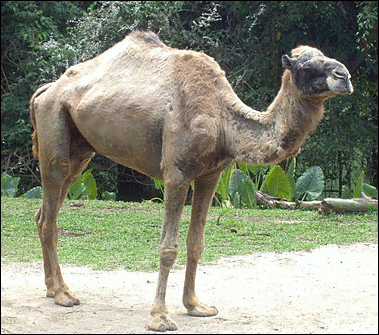
Camel_in_Singapore_ZooAnother avenue of pleasure closed off. The World Health Organisation tells us not to drink camel’s urine.

I was wondering why I was tired. I’m overweight. I was 64 (65 now). It’s very tiring to have people dumping their expectations on one—the lot of the Vicar. Then, listening to SWMBO, a type 2 diabetic (when I say listening, I mean being aware of faint buzzing sound somewhere to the left), I wondered if I was developing diabetes. That would account for tiredness. It would mean that I was drinking a lot. Now, I’m a copious tea drinker, though not in Bennite quantities, so how would I know? It would mean I was peeing a lot, and given the amount I drink, I don’t. And it would mean that my urine would taste sweet.

O taste and see. So I did. Nothing really. A bit salty perhaps, but I am a salt lover. I’ve never been a sugar lover. As a child I was known as the odd one who likes sandwiches not cakes. So no diabetes. Why bother with expensive tests when taste buds come free?

As a medical student I learnt the importance of always checking piss (in the Bible, don’t moan at me) and dung (also there, but less likely to provoke moaning). Here, boys and girls, is what to look for.

First, blood. This might be pinkness or redness or blackness from huge quantities of the stuff. Mind you, chances are you’ll already be at death’s door if it’s black—unless you’ve just returned from a night on Arthur’s best in Dublin. Blood in wee means something wrong with kidneys, bladder or connecting tubes. Blood in poo means something wrong with large intestine. Blood on poo means probably piles, which are kind-of blood blisters. Don’t sit on radiators or you’ll get thermopiles. Blood is a danger sign. Blood is good, but only confined to blood vessels. End of.

Now urine: colour, smell, pain. Note any change in what’s normal for you. I drink a lot, so mine is anything between clear and a delicate Piesporter. It doesn’t smell. Smelly dark urine often means infection, unless you’ve been perilously convivial the night before and have a head like a constipated turnip. If you’ve recently partaken of asparagus, your pee will smell pretty vile. It soon passes. If you’ve recently had a bum-burner, it might well sting a bit to pee. Don’t fret unnecessarily: use your common sense, should you have any left after last night.

Poo: colour, consistency, pain. Again, note any change from normal for you. Poo colour comes mainly from bile, which digests fats. If bile is unable to flow into the intestine, fats will not be digested so poo will be fatty, chalky coloured, smelly, and will float. In such cases, the bile is excreted from the body not in poo but in urine, so urine is dark. Pale stools and dark urine—always bad news: bile tubes are blocked. You’d be amazed how many doctors miss this, though not if they’ve been through my hands they shouldn’t.

Consistency: the function of the colon is to remove water from stools. So runny poo means that stuff is hurrying, or being hurried, through. There are several reasons why this might happen, often an infection by some of God’s non-human creatures. I once had a dreadful episode at Johannesburg airport that made the check-in lady enquire if I was well enough to board. I crossed my legs I can tell you. Read about it: Letter from Malawi. Parishioners who have had part of their colons removed have always responded well to being addressed as semi-colons (“oh no, it hurts to laugh”). I could go on, but maybe you’ve had enough for today. I shall deal with the ear next, I think. Quite fascinating.

From now on, look and sniff before flushing. Leave the tasting to others. Or machines.

Losing it and letting go

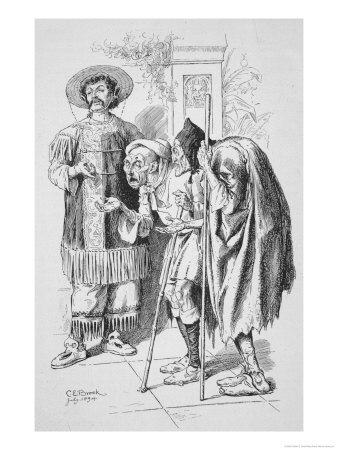
charles-e-brock-gulliver-is-shown-the-aged-struldbrugs

Living for ever

“Where did I put my keys?”

Why do I go out, lock the door, then have to unlock it to get something I’d forgotten? Not once, not twice, but three times.

“Yes, I rang you, but I’ve forgotten what about—oh, wait a minute, now I remember.”

Our brains are wired so that as we age, we remember 30 years ago better than yesterday. There are good reasons for this in terms of self- and species preservation. We remember what is good and bad for us. We remember what we learnt by experience.

In days gone by, the loss of recent memory didn’t matter much since we were unlikely to live long enough for it to become a problem. But now we live too long. Or some people do.

Remembering stuff from decades ago can be depressing. We tend to dwell on the days when we were fit and active, and when we grabbed life by the short and curlies. We become sad about what we can’t do any more. We need to grieve these losses: the loss of youth and energy and get-up-and-go. And we need to acknowledge that things we once thought important have turned out to be no more than seductive bubbles that have burst, leaving only a soapy mess.

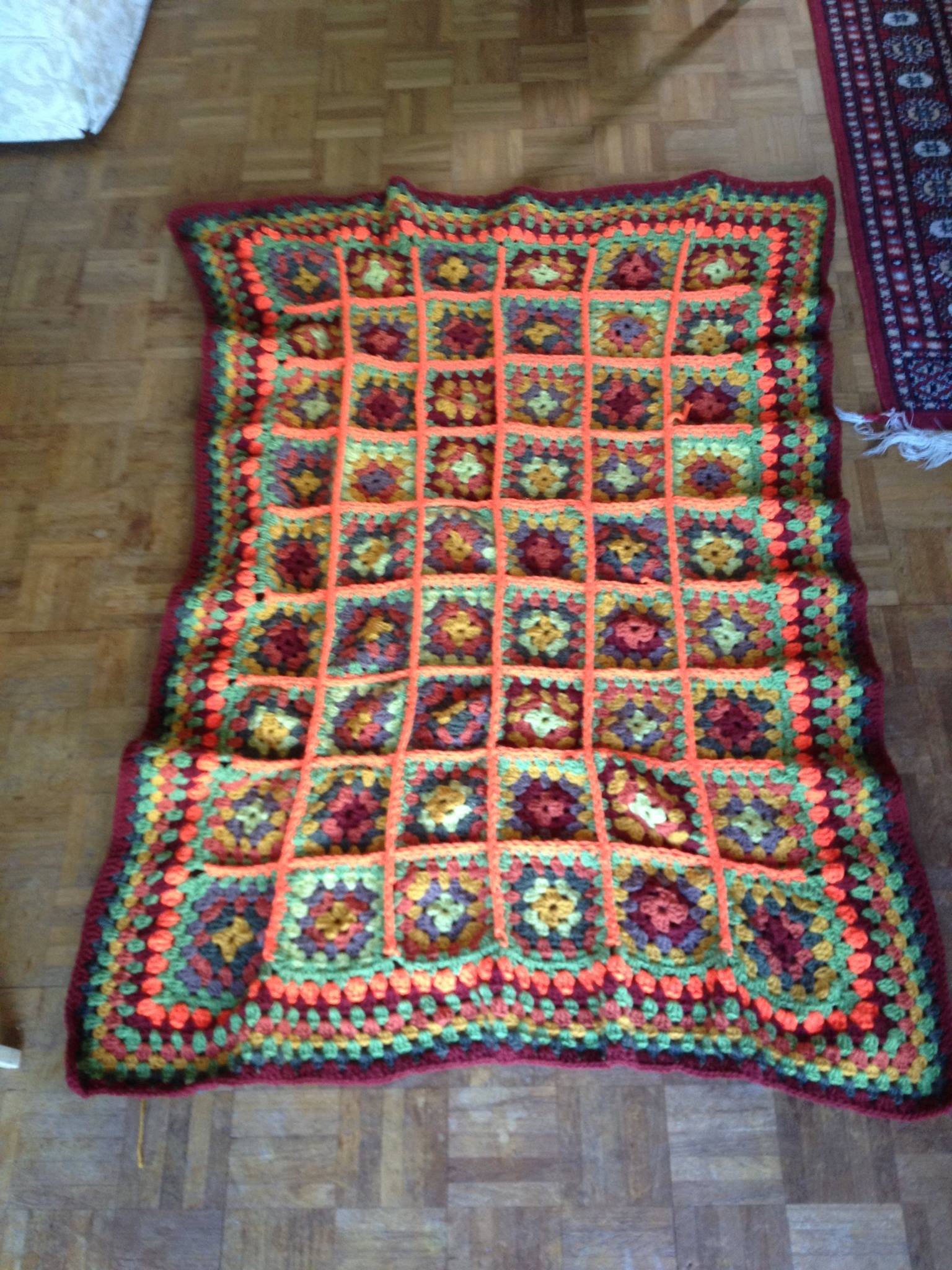
11212629_835354123185770_7807558211314617443_oRather than moping, try mopping. Honour what you used to be able to do and absorb it into yourself. Accept that you can’t do it any more. Take up something you can. I’m very impressed with what SWMBO has achieved in a short time having taken up crocheting. I need to find something like that. Think how you might share your wisdom and experience with younger people. Talk to them as friends. One of the sadnesses about my relationship with my father was that before he died (I was then 37) we never reached the stage of talking to each other as friends. I dare say it was as much my fault as his, but at that time his words seemed only to be given as peremptory instructions.

Phibes

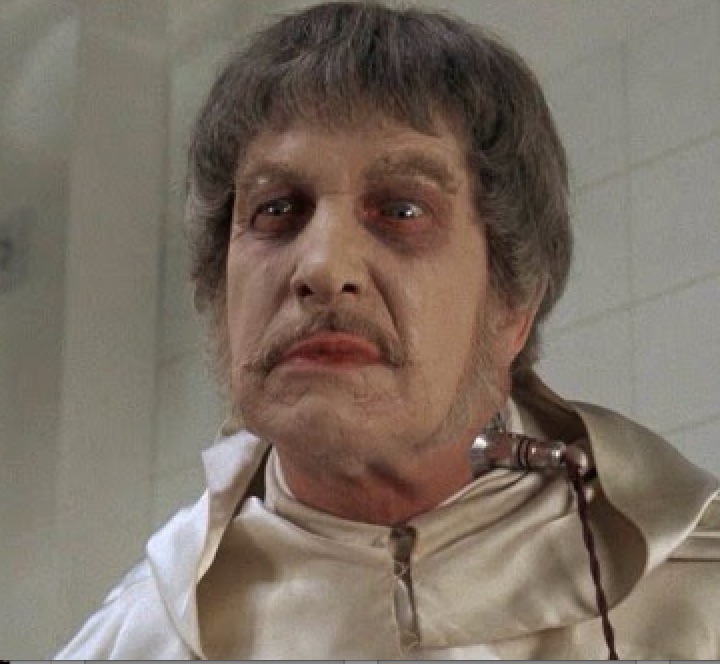
There comes a time to acknowledge that it’s someone else’s turn to carry the flag. We see people doing things that our experience tells us will come to grief, and we want to tell them why. If only we could plug a memory stick into a USB port on the side of our heads, transfer our wisdom to it for transmission to someone else’s brain. Maybe bodily USB ports will be the next stage of our evolution. Dr Phibes, the wonderful Vincent Price, seemed to have some such thing on the side of his neck.

Hindu sanyassi give up all their possessions and wander off to fend for themselves. I find this peculiarly attractive. I’ve lived my life backwards in a sense, each change of job in the last 10 years some sort of a renunciation, with less and less income (poor SWMBO). But I lack guts to go the whole hog (relieved SWMBO). Enjoy getting older. Acknowledge the right of others to cock up just like you did. Let go of the will to control and influence, and relax into life. Clutter, rank, things, attitudes, stuff, possessions—none of this matters. The only things that matter are relationships. Live in the present because before you know it, it’ll be too late.

Living in the past leads to depression. Living in the future leads to anxiety. Living in the present leads to peace.