Friction

Death by clinging

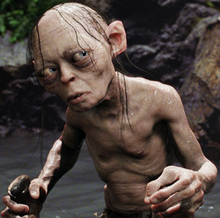
If you read the New Testament epistles or the Acts of the Apostles, you’ll be in no doubt that rows and disagreements have always been part of the fabric of church life. They still are. Sometimes they’re about what the Rector does or does not do, or what he permits or does not permit. Sometimes they’re about what the wider church organisation does or wishes to do. Sometimes they’re about something that happened years ago that we enjoy raking up, not realising that it is like a cancer, and that we are becoming more and more like Gollum in Lord of the Rings. At the root of all this, it seems to me, is lust for control. We can’t seem to let go of the illusion that the cosmos revolves around what ‘I’ want. Why do ‘I’ want it? Is it because if I don’t get it I feel as if I’ll be letting down the memory of my forefathers? Is it because I can cope only with what I am familiar with? Is it because I’m pretending that I’m still in my prime by keeping things as they were then?

We need to ask questions about our understanding of church. Is it a mystical reality, or an earthly club? Is the Church of Ireland a loose confederation of individual parishes that can do as they like, or is it part of the Church of Christ? If we are all parts of the same body, as St Paul writes, then what is the equivalent of the nervous system that coordinates activity and allows communication between the different parts and the centre? What, indeed, is the centre? And what does that mean for the way that we as individual Christians, and as Christian communities, carry out our business?

Instincts, urges and conferences

Primates together

The Church will soon be having its conferences and synods about human sexuality and civil partnerships. At Clergy meetings we hear about attitudes to scripture and the importance of pastoral sensitivity. It is said—quite rightly—that the Church has got its knickers in a complete twist by having a conference about this issue, whilst having said little or nothing about the rape of the country by the wide boys of political-financial cronyism. I would go so far as to say that the Church’s knickers are now round its ankles. They are in danger of tripping it up with a Galileo-style mistake in which the evidence of science and senses is ignored.

It seems to me that all the discussions miss the most important thing of all. In case it has passed you by, girls and boys, we are animals. We are mammals. We are apes. Stand with no clothes on in front of a mirror and use your eyes. Anatomy and physiology confirm this. We are governed by animal instincts and urges that come from, amongst other places, hormones secreted by our glands, and glands that are controlled by natural rhythms.

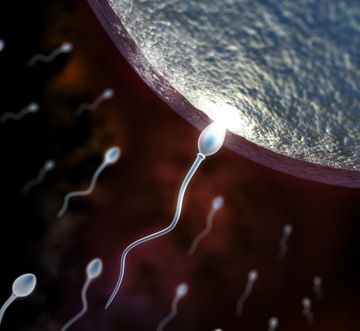
Holy Scripture tells us that each one of us is made in the image of the Divine. Just as I am, just as you are. Jesus loves me, this I know, for the Bible tells me so. So Jesus must love my glands too. And their secretions. And the effects they have. And the processes by which they developed from the moment that my father’s sperm fertilised my mother’s egg. So how can there be an intelligent discussion on human sexuality without considering what we know about the development of sex organs, sex hormones, their effects, the development of psychological sex, emotions and the nature of sexual attraction? I ask you.

How can we be certain enough to make universal rules? Experts differ about the meaning and interpretation of Holy Scripture. How can we be certain what words in a language no longer spoken meant to people who wrote and first read them 2000 years ago? Pastoral considerations can never be wholly reliable because I am not you and you are not I—even if I know myself and you know yourself. I wonder how many of those with the loudest voices have actually looked into themselves and wondered where their thoughts, and urges, and instincts, and gut reactions come from.

If the conference displays to the world that the Church has its priorities wrong, will anyone be surprised? Will anyone care any more?

All about Eve and Adam

The unsuccessful ones nip off for a pint, I suppose

The Church of Ireland is having a big row about sexuality. I referred to this in November 2011 under the heading A spot of bother. However painful it may be for those directly involved in this—and I know it causes worry and sleepless nights for some—it is discussion that needs to be had in public. As someone who spent 30 years teaching anatomy and embryology to medical students, I have views based on what we know about the biology of sexuality.

If we say marriage is between man and woman, then we have to define man and woman. If we say ordinands have to be heterosexual, then we have to opine on maleness and femaleness.

Structure

The gonads of the early embryo can develop into either testes or ovaries. It seems that the ovary develops unless hormonal conditions at a certain stage of development ‘switch’ on the testis, as it were. That is, the female is the default setting. Very rarely (1 in over 80,000 births), an individual may have an ovary on one side and a testis on the other, or a gonad may contain both ovarian and testicular tissue. During development, the ovary stays more or less where it started, but the testis descends into the scrotum. Undescended testes, this descent having been arrested, are common: about 3 in 100 male births. In a sense, they signify incomplete male development. The clitoris and penis both develop from the same embryonic precursor. The female, again, seems to be the default setting. Penile congenital anomalies such as hypospadias, where the opening is on the under surface of the penis, are surprisingly common (some say as much as 1 in 300 male births). They can be regarded as varying degrees of reversion to the female anatomy. How small does a penis have to be before it is more a clitoris?
The scrotum and the labia majora develop from the same structures: the scrotum is the two labia ‘sewed’ together (you can see the ‘seam’). How large do labia have to be before they become scrotum-like? Every adult male prostate gland contains a vestige of the precursor of the uterus. Every adult female has structures that in males develop into the tube conveying spermatozoa from testis to penis.

I could give more examples. Genitalia differ in size, shape and form. Some people are born with external genitalia of one sex, and internal genitalia of another. Or a person may be born with genitals that seem to be neither one thing nor the other—a girl may be born with an abnormally large clitoris, or lacking a vaginal opening, or a boy may be born with a small penis, or with a divided scrotum, like labia. Structural anomalies in the male are more common than in the female, though you may recall the fuss last year about the South African ‘female’ athlete who was reported to lack both ovaries and uterus.

Chromosomes

The normal human female complement of sex chromosomes is XX. The normal human male complement of sex chromosomes is XY. The incidence of newborns that are neither XX nor XY has been put at about 1 in 1700. Here are some examples:

  • XXX: 1 in 1000. Female, often no other manifestations.
  • XYY: 1 in 1000. Male, often no other manifestations.
  • XXY: Klinefelter’s syndrome. 1 in about 1000, often sterile, males with female fat distribution. May never be diagnosed, so may be commoner than we think.
  • XO, that is, only one X chromosome and nothing else: Turner’s syndrome. 1 in about 3000. Appear female, nearly always sterile.
  • Mosaic, some cells XX, some XY. Very uncommon.

Psychological sex – ‘what do I feel or experience?’

We know very little. It seems that a part of the brain may be switched on to ‘I think I’m a male’ at a certain stage of development. It seems, again, that the female is the default state. There are reports of people who feel as if they have been born into the body of the ‘wrong’ gender. There are reports of an area of the human brain that in homosexual men is more like that of heterosexual women than that of heterosexual men: male body, female brain perhaps.
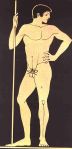
Look at me
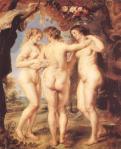
Rubens: The Three Graces

If a man admires or envies the muscularity of a male athlete, does that mean he is a homosexual?

If a woman admires or envies a Rubens lady of generous proportion, does that mean she is a lesbian?

Defining man/male and woman/female

We simplify sex categories into male, female, and sometimes intersex, for cultural purposes. This is unsubtle. There is much scope for naturally occurring structural and chromosomal anomaly, and a spectrum of psychological sex.

Pleasure

To what extent did Biblical writers and early readers associate procreation with sexual intercourse? This is worth asking, for it is clear that even today not everyone understands the sequelae of sexual intercourse. In Biblical times, the roles of ova and spermatozoa were not as we know them today. It was held at one stage that semen merely initiated the development of the embryo in the mother, and at another stage that a spermatozoon contained the miniature human and that it was ‘injected’ into the mother, who was merely the vessel in which the embryo grew (perhaps the origin of bun in the oven). (As an aside, both these shed interesting light on notions of virgin births in Biblical times, even accepting that virgin is the correct translation.) This matters to the same-sex debate, because it is relevant to whether or not Biblical people recognised the importance of pleasure in sexual intercourse—what we might term the psychological effects that come from the flood of endorphins released in orgasm.

If we say that sexual pleasure is banned, and that intercourse is only for the purpose of procreation, then intercourse must be restricted only to those times in the menstrual cycle when conception is possible. Of course, this turns current RC teaching on its head, and using the safe period for the avoidance of conception is just as much a sin as using a condom.

Pleasure police

So, how do we define man and woman? 

Inspecting genitalia might not give a definite answer, and anyway who would have the imbecility to suggest it? Chromosomal tests might not be a reliable indicator of how the person feels. Assessing the ability to engage in vaginal intercourse might do the trick, Diocesan assessors could be appointed, and CCTV cameras installed in Rectory bedrooms. If one or both partners were infertile, then intercourse would be only for pleasure, so there might have to be pleasure police.

Conclusion

If we say we are certain, we deceive ourselves, and the truth is not in us.

Some poor biological material

A short story

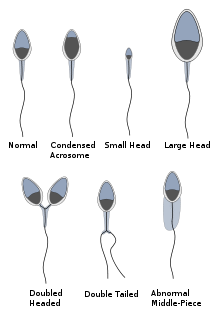
Male infertility is on the rise—a scientist has described it as a ‘timebomb’. Spermatozoa are now more likely than ever to be dysfunctional. It could well be that we are being feminised by the hormones routinely used in food preparation, now entering the water table. Read Consider her ways by John Wyndham, published in 1961. Set in the future when men are a distant memory for even the oldest human in a society organised like that of bees. Parthenogenesis returns. The trouble with parthenogenesis in XX mothers is that the offspring can only be female. And on that note I end.

Dead and alive

Dead but won’t lie down

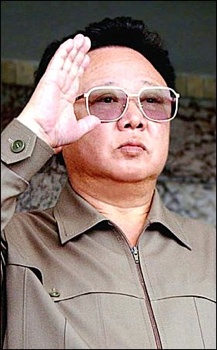
The Dear Leader is dead. Much more interesting than the death was the birth. When Kim Jong-Il was born, North Korean propaganda tells us, a rainbow appeared in the sky and a star appeared over the place where he lay. Remind you of anything?

It’s interesting to look at the ways in which cultures dress up ‘specialness’. For 200 years or so Biblical scholars have debated the significance of virgin births, angels, shepherds, stars and wise men. What does ‘virgin’ mean in that context? People of the Bible knew nothing about egg and sperm at fertilization, so would have a different reaction to the idea of a virgin birth than we do. And so on.

For me, these elements are symbols of the messages of Christmas. Attitudes to a teenage pregnancy reveal the real values of society. The first to hear the good news were young shepherds out in the cold—just as we leave parts of ourselves out in the cold. Wise men follow a star and kneel at childlikeness. They refuse to cooperate with an agent of earthly power who attempts to stifle new growth and creativity. All this is as far removed from the reality of the Kim dynasty as it’s possible to get.

Let earth and heaven combine

But don’t let’s fall into the trap of thinking that the Divine would approve of this regime, or disapprove of that. The kingdom of the Divine is not of this world, but is an inner kingdom—in here, not out there—and there is no chance that out there will be sorted until we’ve attended to in here.

O holy child of Bethlehem, be born in us today.

Our God contracted to a span, Incomprehensibly made Man. And we the life of God shall know, For God is manifest below.

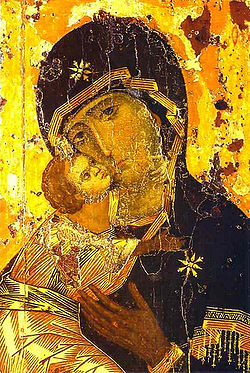
Because of you, O full of grace, all creation rejoices, the ranks of angels and the human race; hallowed temple and spiritual paradise, pride of virgins; From you God was incarnate and he, who is our God before the ages, became a little child. For he made your womb a throne and caused it to become wider than the heavens. Because of you, O full of grace, all creation rejoices; glory to you.

Orlick and me

Seeking whom he may devour

My memories of childhood include Sunday afternoon TV serials such as The Secret Garden, The Silver Sword, David Copperfield, and Great Expectations. Memory plays tricks, but I have a distinct impression that the productions of the 1960s were long enough to be more faithful to the novels than many subsequent shorter versions. Last month’s Great Expectations, spread over three hours, covered aspects of the story that don’t feature at all in shorter films, such as the attack on Mrs Jo, and the characterisation of Orlick.

I home in on Orlick because in that recent production I was struck as never before that Orlick is the dark side of Pip. You could regard Great Expectations as an exploration of Pip’s self-deception, of the way in which he falls victim to the attraction of money, status, the high life—seduced by glamour in fact—but all the time this dark character haunting him and reminding him of his past.

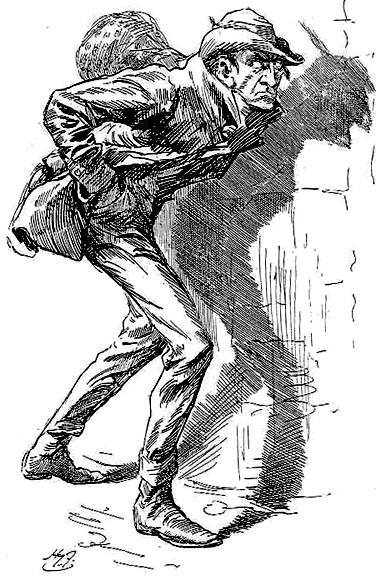
There may be people around who are permanently sunny, unsullied by dark corners, people who are entirely pure and without stain. As I say, there may be—though I’ve never knowingly met one. And I’m certain that I’m not one. My dark side is alive. Like Orlick, he sometimes disappears from view and I kid myself that he’s gone. But he hasn’t: he struts back into the picture at inappropriate moments.

I hear people pray for all stress to be removed from their lives. The hymn Dear Lord and father of mankind, which people seem to like, but I don’t (it’s the tune they like), has that fatuous line ‘take from our souls the strain and stress … ’—can you imagine anything more utterly boring? (And while I’m on this rant, the last verse, Breathe through the heats …  is silly as well. Do you want to be emasculated?) We need to struggle to confront the darkness within, the demons that are the enemies of our good selves. Life is a struggle, and part of that struggle is to enable light to overcome the darkness—to let the light bleach the hell out of us. Love the hell out of us is perhaps is a more helpful phrase (sadly, not original). Jesus tells us to love our enemies, and there is a great temptation to forget that our most pernicious enemies are not other people, but are actually parts of ourselves, those inner demons that incite us to pride, the lust for power, and insincerity (all Dickens’ villains). The inner demons that prevent us from being fully ourselves. The inner demons that steal our liberty because we become slaves to them, addicted and dependent.

This is the spiritual warfare of Paul’s epistles. Spiritual wickedness in high places—not ‘out there’ but ‘in here’. It is a message of John’s epistles. It is what Christianity is about. In Great Expectations Pip’s ‘redemption’ is balanced by Orlick’s unmasking and arrest, and our happiness and fulfilment will begin only when we acknowledge the Orlick within.

Deliver us from the evil parts of ourselves. 

Tourette’s

I hardly think a caption necessary

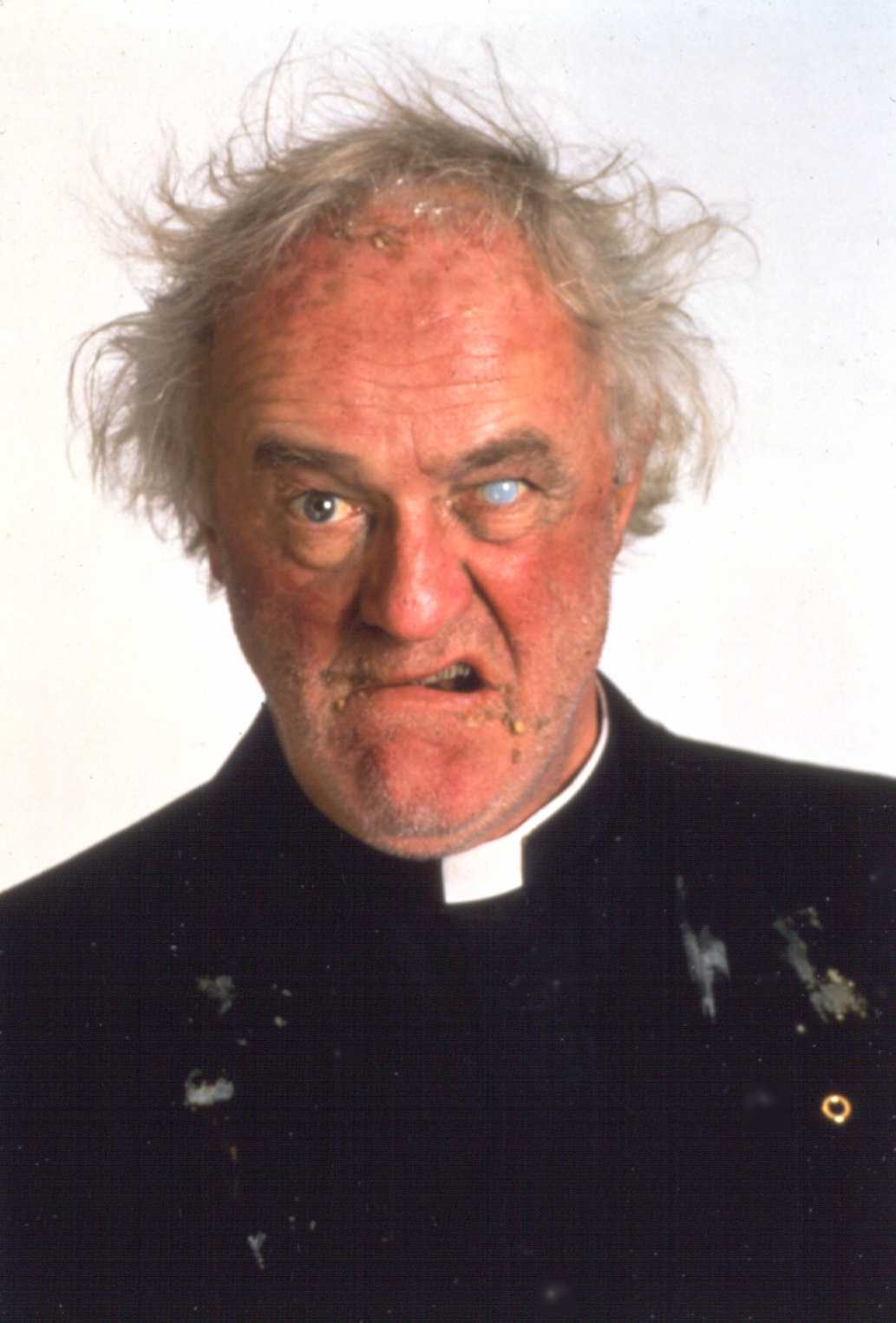
What shall I do about my Tourette’s? People say it’s very entertaining when my outrageous comments issue forth. One day, though, if they haven’t already, they’ll get me into terrible trouble. Are my Tourette tendencies eruptions of some long-suppressed frustrations? Evagrios (4th century) said: The demons that fight us in the front line are those entrusted with the appetites of gluttony, those that suggest avaricious thoughts, and those that incite us to seek the esteem of men. Is this my problem: the need to show off to others, the craving of recognition by those whose recognition is not worth having? If so, I suppose the first step is to recognise the embryonic urge to utter forth in glorious voice something that would best be left unuttered, and nip it in the bud.

Or perhaps my brain is wired that way, and this is an expression of me. If it were suppressed, would I cease to be me? Are the brains of comedians and performers – like clergy – wired in such a way that we need some degree of Tourette’s in order to do our work? Neuroscientists and pyschologists must have opined on this.

A common image of Jesus is, to quote from hymn and carol, someone meek and mild, obedient and good. The Jesus of Holy Scripture is charismatic, elusive, revolutionary, sometimes offensive, physical, thoughtful, sympathetic, empathetic. He rarely if ever answers a question directly. He is described by others as a glutton and a drunkard. These two sets of images do not match. Why not?

The church seems to emasculate men. It often seems very ‘girly’. Perhaps theological colleges have a burdizzo (look it up). No wonder men and boys are deserting the church. Which would you rather do: play sport or be passive in church? Of course, church needn’t be passive, and it’s possible to do both church and sport (or whatever), but in this case, Sunday morning ain’t a good time for getting folk in.

Maybe it’s this conflict between what I feel I am, and what people expect me to be, that’s the cause of my pseudo-Tourette’s. On reflection, though, I think I’ve always been like this. Maybe it’s hardwired in and I should live with it, enjoy it. When I and my colleagues were ordained, the Bishop told us that we must never lose our humanity. The hand that made us is divine.

I will not exercise myself in great matters that are too high for me

When I want your opinion, I’ll tell you it

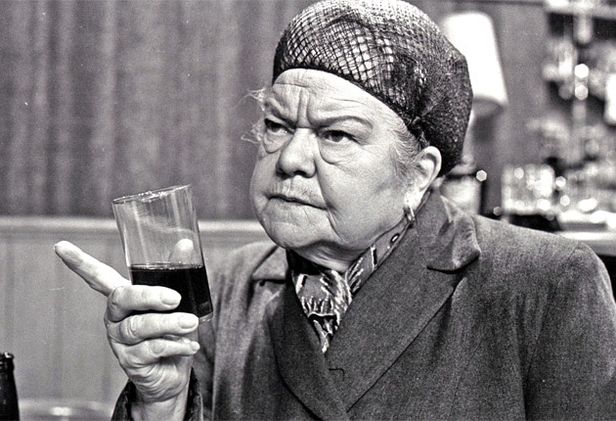
It’s a never-ending source of wonderment to me to find that I come across so many people who are experts in everything under the sun. Indeed, sometimes I think that I must be the only person in the world who is not multitalented and omniscient. I fear that the planet will stop rotating on its axis when the curtains finally close around these gifted people. (It’s remarkable how many crematorium committals are accompanied by Frank Sinatra singing ‘and now, the end is here, and so I face the final curtain’ – or ‘Smoke gets in your eyes’). Over the last 40 years I have met such people on councils, committees, groups, and I never fail to be humbled by their expertise and their unselfish willingness to share it with the world. My life has been enriched beyond measure.

When I sang in Carlisle Cathedral choir, before mammals had evolved, I was curiously attracted to Psalm 131, and not merely because it was short. It begins: Lord, I am not high-minded: I have no proud looks. Whether or not I had or have proud looks, it’s the second verse that sticks in my mind: I will not exercise myself in great matters that are too high for me. You may not know this, but an extra verse has recently been discovered in a cave near the Dead Sea, and I’m the only person to have seen the manuscript. The additional text goes: and I wish everyone else would mind his or her own business as well.

There is an irregular verb that goes: I have principles, you are awkward, he/she/it is intransigent. Or you might prefer the more regular: I don’t know everything, you don’t know everything, he/she/it doesn’t know everything. Ludwig Wittgenstein said (something like) ‘whereof one cannot speak, thereof one must be silent’, and ‘nothing is so difficult as not deceiving oneself.’ If we say that we know everything, we deceive ourselves and the truth is not in us. Our own opinions are just that—opinions. Others may disagree with us, others may have had experiences that are different from ours and lead them to different conclusions. I know I harp on about this, but the fact is that one day we’ll be dead, and then our opinions won’t matter two hoots.

We would do well to listen to others and try to see where they are coming from. We would do well to accord to others the same ‘air time’ as we expect them to accord to us. We would do well to turn off the ‘transmit’ button, and turn on ‘receive’. We would do well to love our neighbour as ourselves—not better than, mark you, but as well as.

Hiding behind titles

Pompous, proud and prelatical

In my former parishes, I was often called Fr Stanley. I liked this, since I am a father, and at least in Derbyshire there was affection in it. But I understand that this is de trop in the Church of Ireland. Here, the tradition seems to be to call me Rev Stanley. I don’t feel particularly reverend, and anyway Rev is properly used with Christian name or initial and surname. My own preference is to be called, at least to my face, Stanley. Or Irreverend Stanley.

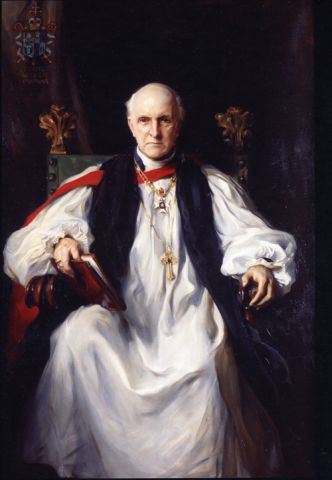
Institutions are obsessed with titles and rank. The church, which should know better, is riddled with them. Reverend, Venerable, Canon, Very Reverend, Right Reverend, Most Reverend, Frightfully Reverend, Your Grace. When Michael Parkinson interviewed Robert Runcie, about to become Archbishop and change from being Right Reverend to Most Reverend, Runcie with characteristic wit suggested that his title at that moment was Increasingly Reverend. One of Runcie’s predecessors, Cosmo Gordon Lang complained that his new portrait made him look pompous, proud and prelatical, to which one of his colleagues, the acerbic Bishop Henson, is said to have asked: “To which of those epithets does Your Grace take exception?” All this hierarchical nonsense is a sign of an institution in trouble. It signals a delusional and inward-looking club. Who, outside the club, cares? And if any organisation should care about those outside it, it’s the church.

It’s easy for us clergy to become institutionalized, and to imagine that our little clubby rules are important. I read church publications in which nothing controversial is ever reported and wonder what sort of la-la land they are talking about. How do they relate to real life? If you read the documents that parishes produce when they are looking for new clergy, you quickly learn to read between the lines (see attachment). I wonder how much the blurb for the post I’ve recently left will reflect the job that I knew …

We need to wake up to the fact that people see through this tripe. People see beyond this spin and hypocrisy. Yes, I know it’s easy for me to talk having ‘enjoyed’ rank and title in a former career, but we must try to see that our being obsessed with the churchy club flies in the face of incarnational reality for the world’s population.

Guide_to_church_speak