Why did the Samaritan cross the road?

800px-Moose_crossing_a_roadHomily for 14 July 2013 (Proper 10, Year C)

Deuteronomy 30: 9-14. Psalm 25: 1-9. Colossians 1: 1-14. Luke 10: 25-37.

What is there to say fresh about such a famous text? Perhaps it will do no harm to hear it again.

Duty versus love. Placing duty over love is what the priest and Levite did. There are times when we’ve all done that. There’s a scene in John Le Carré’s Smiley’s People where George Smiley is writing to Karla to confront him with evidence of his duplicity. Karla, the Russian secret service boss, demands loyalty to the system above all else, and anyone who transgresses is imprisoned or worse. But he has a secret. He has a daughter, supposedly with psychiatric illness, hidden away in a clinic in Switzerland. He channels some of his budget into secret accounts to support her. He is not living by the standards of duty that he exacts from others. George Smiley writes to Karla: ‘you have placed love above duty’. Karla has at last done right, but at the cost of having to leave home, lose respectability and become an outcast. This is the penalty that comes of doing the right thing. And the longer we delay, the heavier the penalty.

Who is my neighbour? The lawyer wants a definition of ‘neighbour’ so that he can do things by the book and keep his nose clean. If you’re a Liverpool supporter, the neighbour in need could be a Man U supporter. If you’re a Laois supporter, the neighbour in need could be a Carlow supporter. If you’re an ardent republican, your neighbour could be a royalist. If you’re out of work and in negative equity, the neighbour in need might be a banker.

It’s easy to fall into the lawyer’s trap. You could say ‘central Africa is a long way away and I don’t come across the starving millions in my daily activities, so they are not my neighbours. Anyway, I wouldn’t know about them if it weren’t for modern communications.’ This is being like the lawyer, wanting to define ‘neighbour’ so that you can draw lines in order to do things by the book and keep your nose clean. Or you might say: ‘is he really in need? I saw that so-called beggar arrive round the corner in a Mercedes.’ Or you might say: ‘she’s got a medical card and is better off on benefits than I am.’ These are distractions, I think. I have sympathy with those observations—there is nothing in Scripture that says we should not be responsible for ourselves and there is nothing that says we should expect a free ride (the opposite, in fact)—but to draw lines like this is to be like the lawyer. If you see someone in need, help them. End of. When I come into your presence I become your neighbour.

Think about the Samaritan. Did he stand to gain by crossing over and helping? He would have been delayed, and he was certainly out of pocket. Everybody helps friends and people they like. But are we willing at some personal cost to help anyone who needs it? It’s easy to chuck cash into a church gate collection. You feel better about yourself. I feel uneasy about such collections. It’s like having a fix of chocolate, or toast and butter. They lull us into a self-satisfied glow, at least for a short time. Love in practice means action, something personal. Throwing coins into a bucket is cosmetic and spiritually dangerous for it induces complacency.

Teach us, good Lord, to serve thee as thou deservest; to give and not to count the cost; to fight and not to heed the wounds; to toil and not to seek for rest; to labour and not to ask for any reward, save that of knowing that we do thy will, through the same Jesus Christ our Lord.

Think about the victim. What does he, a Jew presumably, feel about being even touched, let alone helped, by a Samaritan? Would he allow it if he were healthy? Are there people you don’t want to touch you? Are there some people you will not sit next to? Do you know someone who refuses help from certain people? That kind of pride, to which we are all prone, harms only the proud. When you’re at death’s door, you will accept help from anyone. When you’ve lost everything, you’ve nothing else to lose. If I refuse someone’s help, I haven’t suffered enough yet.

The Samaritan is Jesus. The priest and Levite represent Jewish law that advises people to avoid sin. This is a bit like advising chocoholics to avoid chocolate, or me to avoid salt. No use at all. It’s help we need! The help, the healing comes from someone—the enemy in the story—who has crossed to the other side (God to man). An unlikely source. The Samaritan/Jesus takes the victim to the Inn. The Inn is the church and its sacraments: the cleansing waters of Baptism, and the Body and Blood, ‘the spiritual medicine of the People of God’. All of us who have been baptized, very members incorporate in the mystical body, can be Christs, ministering to the world. In Colossians we hear of Jesus (the Samaritan in this story) as the image of the Divine. God is love, and Jesus is love in action. In God there is no un-Christlikeness at all.

Part of me is a world-weary cynic, worn down by slithering and slimy politics of academic life, church life, government scandals, bureaucratic nonsense, trials of daily life and the shame and mistakes that come after 63 years of consciousness on this planet. This part of me is the priest, the Levite, too busy, too weary, too impatient to stop. But part of me is still a wide-eyed mischievous 6-year old, open to the world, trusting and naïve, who thinks that people are basically good despite our inevitable cock-ups. This part of me is the Samaritan, and this part of me is the bit that I can concentrate on. We are all called to be Samaritans. As the writer of Deuteronomy says: the word is in your mouth and your heart.

When I come into your presence, or you into mine, we become neighbours.
Travelling light

Where next?

Where next?

If you’re going on holiday, what will you take with you? In the days when I travelled more than I do now, it was fascinating to see some people checking in huge amounts of luggage, and others next to nothing, even for long-haul flights. When our three children were children we went on quite a few Eurocamp holidays to France. The rule was: take no more than fits in a supermarket plastic bag. The children were on the whole left to do their own packing, and their judgment was usually spot on. Of course, a favourite toy had to fit in the bag, and quite right too. I learnt the hard way that travelling light is best. On one flight to the US Susan and I were questioned closely by security staff at check-in because we had so little. I think they thought we might be suicide bombers so wouldn’t be coming back. (Do I look like a suicide bomber?)

travel_lightOver the past few weeks lectionary readings have been advising us to travel light: no baggage, no looking back, concentrate on essentials. Travel light in every sense, not just luggage, but also attitudes, obsessions, addictions, shoulds, oughts, other people’s expectations …. ditch them. I know, it’s easier to do this as one gets older and cares less what other people think. I know, when you’ve got a boss breathing down your neck, and targets to meet, and others to placate–all this makes it difficult to travel light. There’s the mortgage to pay, and the children to clothe, feed and educate. In days not long gone, men in particular found themselves stuck on this treadmill. Now, with both parents in many households having to work, it’s worse still.

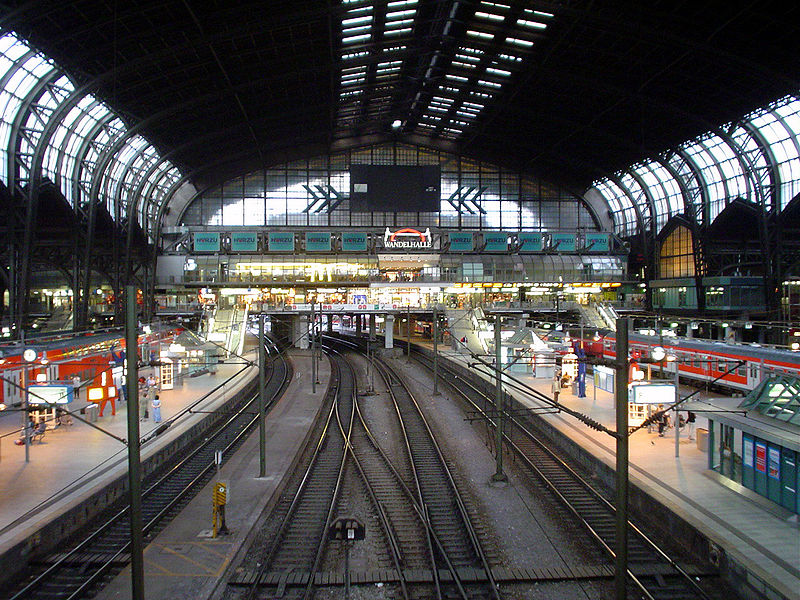
‘I want’ used to mean ‘I lack’ (as in ‘there is nothing I shall want’). Now it seems to mean the opposite: ‘I must have, I absolutely can’t do without’. All piffle of course. We can do without anything if we set our minds to it. Jack Reacher carries only a toothbrush and buys cheap clothes as he travels. Mind you, he has money in his wallet. He can’t have been married. There’s something wonderfully liberating in arriving at a port or a railway station, not having to be anywhere in particular and going where one pleases. We arrived at Hamburg Hauptbahnhof on one holiday in exactly that position. We ended up in Weimar that night. Cain was made to wander the earth as punishment.  Was it really punishment?

Happy summer. I hope you find refreshment somehow. Take what comes and enjoy it as best you can. Travel as light as you can.

Behold, the sea

just-oceanBehold, the sea itself,
 and on its limitless, heaving breast, the ships. And in the ocean depths, the ‘things creeping innumerable, both small and great beasts’. Doubtless some of you will be immersing your tired limbs and arthritic joints in the sea at some point, so here’s something to ponder as you lie there sipping your Margaritas or whatever.

It’s a funny thing that we know more about outer space and other planets than we do about the ocean depths on this planet. All sorts of weird and wonderful things live down there. Gigantic single-celled amoebas, bristleworms chomping ferociously through the seabed, as close to the earth’s core as it’s possible to get. Creatures that live with the enormous weight of water pressing down on them, that ‘feel’ their way rather than see (no light down there), that know nothing of greedy bankers or being out of work or feeling depressed. Creatures that adore sulphur and shun oxygen. I suppose all they care about, if they ‘care’ at all, is getting enough food (so do we, if truth be told, though we pretend otherwise).

There are more creatures down there than humans up here, yet we think nothing of chucking our pollutants and radioactive rubbish into their environment. How long before we start to regret our casual disregard for ocean life? How long before the Kraken wakes? How long before our drilling on the seabed causes underwater landslips leading to tsunamis that wipe us out? And some people will doubtless blame ‘God’ for it.

Bristleworm mouth. These things can be a foot long

Bristleworm mouth. These things can be a foot long

When we have nuked ourselves out of existence, sea cucumbers and jellyfish and giant tubeworms will still be there, deep down in the oceans. When we’ve been wiped out by our antibiotic over-use, they will still be there. There’s a prayer I always use at funerals that begins ‘O Lord God, who has made us creatures of this earth’ to remind us that we are exactly that—creatures of this earth, like (other) apes, cattle, insects, amoeba, bacteria and viruses. Psalm 24 says the earth is the Lord’s, and all that is in it. Not ours. We are merely custodians.

My mind is like the ocean depths. I sometimes feel like someone who descends in a diving doodah with a powerful light attached. As the light scans over the depths, it illuminates some fantastic demon-creature that, unused to light, quickly flaps away. The trick is to get the light to stay on it, following it, no escape. Sometimes, then, the creature transmogrifies into something rather sad and loveable. Then it disappears as it becomes part of me.

Depths and deliverance

450px-Agua_de_gelo_Ice_Water_Agua_de_hieloHomily for 23 June 2013 (Proper 7, Year C)

Isaiah 65:1-9. Psalm 22:19-28. Galatians 3:23-29. Luke 8:26-39.

Do you believe in evil? Read the news. It’s hard not to. Why do people do evil things? Do you think that we are all pure, but open to infection by evil ‘out there’, just as we are open to infection by microbes? Since every evil deed begins as a thought, does that mean that evil ‘out there’ worms its way into our brains to create a thought? Or do you think that we have evil ‘in here’, living with us, part of us, and we need constantly to be on guard that it doesn’t grow within us? Do you believe in demons? And if so, do they live in us all the time? Does ‘deliver us from evil’ really mean ‘deliver us from the evil part of ourselves’?

It’s easy, as with all scripture, to get bogged down by the details of today’s Gospel story. Big picture level, it’s about Jesus calming a disturbance. In this case, not the disturbance of a storm on water but a disturbance of mind. All this boils down to the healing of a gentile outcast. And so the sermon could end now, the message being the power of the Lord to bring release from disturbance. As the hymn says:

Turn your eyes upon Jesus, Look full in His wonderful face, and the things of earth will grow strangely dim, In the light of His glory and grace.

If, like me, you think that evil is part of every one of us, then following the advice of this ditty might mean that we allow ourselves to be brainwashed by ‘the truth’ in order to prevent evil from growing within. Not a bad outcome.

End of sermon? Perhaps not. Having said that there’s no need to dwell on details, I find them intriguing. Jesus goes deliberately into Gentile, unclean, territory. Shocking! There’s the strange detail of the man living among the tombs. There’s open talk of demons as causes of psychiatric disease. This is not popular today. Why did Jesus ask the demon its name? Why the pigs? With our tendency to go all doe-eyed at any mention of animals, it’s hard not to feel sorry for the pigs. Why the steep bank? Why the water?

Let’s get some of those details out of the way, remembering that words are used to paint pictures.

Demons were regarded as the cause of disturbing behaviour. And they still are by many of us. The steep bank is the edge of the abyss, and the abyss was the home of all demons: pandemonium. In Holy Scripture, water symbolizes the chaos and disorder of messy life. What about the names? The first thing we want to know about someone is the name. In some small way it gives us power over them, a ‘handle’. By asking the demon its name, Jesus claimed authority over it. It, or rather they, recognized his authority, for they pleaded not to be sent to judgement in the abyss. Jesus, for whom as a faithful Jew pigs are unclean, sends the demons into the pigs, and off they go to drown in water. Water, hydrogen and oxygen combined, is very strange stuff. It is very heavy. It kills. But we need it. It refreshes, it cleanses, it rehydrates and revives. Today is a great day for a baptism. Parents and godparents are asked if they reject the devil and all demons that rebel against God. Then water on the one hand washes away the demons, and on the other, in the words of the epistle, clothes the (usually) child with Christ.

And so the sermon, once again, could end. But I’ve left the best bit to last. What of the tombs? The Greek word used here for tomb is mnema, from which we get mnemonic, memory, memorial. Think about the relationship between psychiatric disease and being stuck in the past. Think about how when we retreat into memories of times past, we get stuck—entombed—there. Like a black hole that sucks everything into it, we start to live in the tomb of memory with the door closed, unable to look outward. Dementia. Locked away. That’s what happens to some people as they age and lose function in part of the brain that deals with recent memory, leaving only the long-ago memory. That’s what happens to people who choose not to let go of the past, and who can’t let go of past grievances. I think water symbolizes not just chaos and disorder but also the human mind. It’s a fact that we humans know more about the stars and the planets than we do about what’s going on in the depths of the oceans on this planet. Likewise, we don’t know what’s going on in the depths of our minds. But we can try to let go of those things that drag up down into them.

Maybe that’s what today’s story is really about: Jesus opening the tomb of memory, so that the man’s demons of the past are banished, like the pigs, into the cleansing water. Rolling away the stone that entombs us in our memories enables resurrection and new life.

Depression and exaltation

creativity-disease-how-illness-affects-literature-art-music-sandblom-philip-paperback-cover-artA letter in the Church of Ireland Gazette a few weeks ago asked why the church officially ‘has nothing to say in relation to the one in four people who attend our parishes every Sunday … [who] at least one time in their life experience serious problems with their mental well-being?’ The writer points out that there are plenty of resources on interfaith dialogue, building maintenance, liturgy, etc, but ‘no resources to help people who are struggling with mental health issues.’ I meet many people who tell me they are clinically depressed but do not wish it to be widely known: society and the church have a peculiar pre-scientific attitude to mental illness. Some of them cope without drugs, some are on antidepressants all the time, others on and off.

Let me ask: what resources would you like to see made available?

I need chemicals. I don’t blame myself for this. I don’t say, ‘if only I had, or hadn’t, done this, or that …’ I accept that something about the production and/or metabolism of my brain chemicals means that I cope better with help. This is not new: it’s been going on for over 20 years, and when I look back I see signs in my youth. Furthermore, I think previous generations showed signs too, not that I recognized it at the time. I’ve been on sertraline for years. When we went to France last summer I forgot to take them. ‘Never mind, I’ll see what happens’. What happened was that I began to feel ‘hunted’, agitation bubbling up. I started the pills again. Once since then, I’ve stopped them with much the same the results. Without the pills, I feel that the cosmos is not on my side. Paranoia is too strong a word, but certainly heightened watchfulness. From an evolutionary point of view, this is no bad thing: when we were hunter-gatherers we needed to avoid being eaten by predators, so watchfulness is hard-wired in. Another thing I notice without pills is a heightened tendency to shock (strong enough, some would say, without being heightened). This can be very amusing, at least to me—naughty child stuff. It’s as if I observe a torrent of words coming from another creature within me. I can understand why people thought, and think, in terms of possession and demons.

The GP asked me recently if I thought there was an element of ‘up’ as well as ‘down’ and I said not. But SWMBO rather thinks there is, and the more I consider it, the more I come round to the view that she’s right. I guess the pills smooth out highs and lows—every valley shall be exalted, and every mountain and hill shall be made low—but I have a sneaking suspicion that this comes at the expense of a kind of suppression, a feeling that I’m being averaged. There is much more to be described and written, but others were there long before me (Stephen Fry has recently spoken about this). There are many implications for theology, particularly with respect to biological drives and the notion of  ‘made in the Divine image’.

Some people feel that taking happy pills means that they are second-rate humans. I’m not inclined to see it that way: it’s not because we lack something, but because we see more clearly. We need something to cope with the strange society in which we live. Society doesn’t look down on people who take antibiotics, so why should those on antidepressants be sneered at? I am as I am. If I need chemicals, then I need chemicals. If that troubles others, it’s their problem.

I look back over the blogs. Sometimes I think ‘yes, spot on!’ Sometimes I think ‘why did I write that? I wouldn’t write that now’. The things we say and do, and write, are without doubt products of our moods and emotions. We are slaves of our brain chemicals. All of us. There’s plenty in the medical literature that points to a link between creativity and psychiatric illness. There’s the lovely story of a man with Tourette’s syndrome who takes pills during the week for work, but not at the weekend when he plays in a band: he’s a better musician without the pills. The question becomes: ‘how can I make the best of my condition?’

To all fellow ‘sufferers’ let me repeat: what resources would you like to see? What can I do to help? If you’d like to contact me with suggestions, I’ll see what I can do.

Doctor in the house

Professor Sir Stanley Clayton

Professor Sir Stanley Clayton

Dulwich Hospital, late 1974 or early 1975. Teaching ward round led by Professor Sir Stanley Clayton, author of celebrated Obstetrics and Gynaecology undergraduate text. I was not the most diligent of students, but I turned up for everything. Osmosis works.

SC: Tell me, Mr Monkhouse, what do you know of the aetiology of pre-eclampsia?
Me: silence
SC: Well, perhaps you can tell me about its treatment.
Me: silence
SC:  [we wore name badges] Mr Monkhouse, do you have a textbook?
Me: Yes, sir. Yours.
SC: Have you ever opened it?
Siemiginowski_Marie_Casimire_with_childrenCambridge, Addenbrooke’s Hospital, early summer 1975, ‘final’ Obstetrics viva voce examination

Mr Michael Brudenell (examiner): Why might this lady know more about her condition than most?
Me: because she’s a librarian.
MB: Oh, very good. And what advice will you give her about feeding her baby?
Me: Breast.
MB: Tell me why.
Me: Because breast is best. Cow’s milk is for cows, and human’s milk is for humans. There’s no better reason.
MB: Haw, haw, haw. Well I think that’ll do. Off you go.

I passed.

Bennett-Fracture-LCambridge,  Old Schools, early summer 1975, ‘final’ Surgery viva voce examination. I can’t remember who the examiners were, but there were three of them, all professors or Sir somebody or other.

Examiner: Good morning. Take a seat. Which College?
Me: Queens’.
Examiner: And which medical school?
Me: King’s [College Hospital Medical School, London].
Examiner: Haw, haw, a royal flush, eh?! Haw, haw.

After I’d picked myself up from rolling around on the floor in laughter, I was handed a radiograph of a wrist. There was a fracture of the base of the first metacarpal. God knows how I recognized it, but I did.

Me: Ah, a Bennett’s fracture.
Examiner: Very good. Pause. Tell me, who was Bennett?
Me, confidently: a nineteenth century Dublin surgeon.
Examiner, surprised: Oh. Pause. Quizzical look. Was he?
Me: I’ve no idea. I was guessing. There were so many nineteenth century Dublin surgeons, so the chances are good that he was.
Examiner: Haw, haw. Very good.

Ironic, in view of my subsequent history (there must be a God after all), but Bennett was a nineteenth century Dublin surgeon. And there were so many of them. I passed.

Heart water at a meal

40-16Homily for 16 June 2013

Psalm 32. 2 Samuel 11:26-12:10,13,14,15. Luke 7:36-8:3

It’s easy to say that rules apply to others. It’s hard to remember that they apply to me as well. King David was outraged by the story of the rich man stealing the poor man’s lamb. Yet he couldn’t see, until it was pointed out to him, that he had done worse. David had been an adulterer and had ordered a murder, and nonetheless he had the courage to ‘fess up. One can commit enormous mistakes, but one can also acknowledge them, change one’s life and make reparation.

A couple of weeks ago we had the centurion who doesn’t think himself worthy to have Jesus as his guest. Today we have the inverse: Simon the respectable religious man who is positively offhand about welcoming Jesus as his guest. Offensive even. You couldn’t make up stuff like this.

Jesus is known to eat with sinners, thieves, drunkards, gluttons. I wonder why the Pharisee invites him for a meal. Is it so that he can lecture Jesus on what he should be doing? Like those drivers who overtake you and then slow down and ‘show’ you how to drive?  Simon disregards all the normal courtesies. He doesn’t ‘kiss’ Jesus in greeting. He doesn’t allow Jesus to wash his feet, let alone wash them for him, essential and expected in those days with dusty and dirty tracks. He doesn’t offer any means of ‘freshening up’.

Then there’s the meal. Men only, of course. The ‘table’ is lower than knee height. They recline on cushions on the ground, feet out behind them. I’ve been at meals like that in the Middle East. They take a long time. A woman of ill-repute barges in. Imagine, an uninvited woman in a men-only meal. A woman shunned by respectable people. A money-lender perhaps, or a grasping landlady, an informer, a notorious gossip, a prostitute. Maybe she had simply married a Gentile. A mixed marriage. What a sin. The woman doesn’t say a word. She simply acts. She lets her hair down in front of a man who is not her husband. This is sexually provocative. It is ground for divorce. She touches a man who is not her husband. An awful crime. She washes Jesus’ feet with her tears. Why is she weeping? She pours expensive oil over him. She does the things the host should have done, but did not.

The other men at the meal doubtless expect Jesus to be horrified, and to throw her out. Jesus says nothing. When he does speak, it’s not to the woman. It’s to Simon. Jesus lays into Simon the religious man. Jesus coruscates him. No gentle Jesus meek and mild here. No mealy-mouthed platitudes from a House of Bishops. Jesus—horror of horrors—holds up the woman as an example.

  • She recognizes what Jesus is. The Pharisee doesn’t.
  • She knows her shame. The Pharisee doesn’t.
  • She knows she needs forgiveness. The Pharisee doesn’t.
  • She serves. The Pharisee doesn’t.
  • She repents. The Pharisee doesn’t.
  • She gives generously. The Pharisee doesn’t.
  • She loves much and is forgiven much. The Pharisee is mean and unforgiven.

What a contrast! ‘Simon, just because you’re a so-called holy man doesn’t mean that you have anything to teach her. This woman who so disgusts you can teach you a thing or two about being humble, and repentant, and honest, and generous, and serving, and loving, and thankful.’

It’s easy to point the finger at bankers and financiers who exploit others. It’s easy to point to those who ‘kill’ with harsh words, or cruel deeds, or who pay unjust wages, or who do a nixer. But do we apply those same rules to ourselves? Do we realise that when we pass on gossip, we kill? Do we recognize that cheap prices in the shops come from ‘killing’ people in  sweat-shops? Do we recognize that our pension funds are invested in companies that ‘kill’ through exploitation?

lossy-page1-558px-Martin_Luther_by_Cranach-restoration.tif

Martin Luther

Have you ever wept tears over your shame? Martin Luther says ‘All who call on God in true faith, earnestly from the heart, will certainly be heard, and will receive what they have asked and desired.’ How often do we look into our hearts? How often have we tried to bluster and excuse ourselves—I couldn’t help it, I had no choice—rather than ache for forgiveness? The more I look into my heart, the more I recognize my need for forgiveness. The closer the woman in today’s story is to Jesus, the more she recognizes her need for forgiveness. Her tears are what Martin Luther calls herzwasser. The woman’s heart-water washes Jesus’ feet, just as he washes the apostles’ feet on Holy Thursday.

This is one of the most powerful stories in Holy Scripture. And Luke goes on. He describes how women are included in the teaching ministry of Jesus. These women were by no means perfect. Some clearly were from affluent families: they funded his ministry, they followed him. That’s shocking too, in those days in that place.

Religious people can be very cruel. Stiff-necked. If they don’t repent, they’re living a double life. Am I one of them? The woman was lavish in worship, falling at the feet of Jesus. Am I like her? David and Simon are aware of everyone’s faults but their own. Am I like them? Jesus condemns very little, but always complacency and hypocrisy. We say in the Lord’s Prayer: forgive us our trespasses, as we forgive those who trespass against us. If we forgive little we will be forgiven little.

If I draw a line between myself and someone else, Jesus will be on the other side.

We brought nothing into this world …

River Eden at Langwathby

River Eden at Langwathby

… and it is certain we can carry nothing out. I was 63 a few days ago and I have a funeral today, so here’s a contemplative ramble.

At Maryborough school recently we sat in silence for a while, maybe 90 seconds or so. I asked how many felt comfortable in the silence. Very few hands went up. I asked the ‘uncomfortables’ why they felt uncomfortable, and a 7 year old said ‘it’s a waste of time’. I guess that’s a pretty common feeling about silence.

SWMBO and I increasingly sit in silence. My vision and hearing are such that the TV is less and less an option. Even when the words are on, I can’t see them clearly enough. I refuse to get one of them huge screens. I like silence. I suppose you could say that it’s not silence in my head. It’s reading or thinking. It’s still noise, you might say, that distracts me from being conscious of the here-and-now moment. It is true that we spend a great deal of time avoiding solitude and having to confront our inner selves. But sooner or later we must. As we get older and deafer and blinder, and as our friends start to shuffle off this mortal coil, we are increasingly silent and increasingly alone. (I’ve blogged about this before.)

A blissful childhood does not prepare one for life. It makes hardship difficult to come to terms with (for an interesting take on hardship, read this). An unhappy childhood, they say, enables a child to develop psychological resources to cope with the vicissitudes of life and the solitude of advancing years. My happiest memories of my first ten years are of being alone: playing in the sandpit, playing streams and dams in the mud by the river Eden at the bottom of the garden, and reading. I liked being 6: fun without responsibility. I still feel 6 quite often. Does anyone remember a four volume set The World of the Children? Wonderfully politically incorrect (hooray) by today’s standards, but utterly redolent of childhood for me (I got another set from abebooks; they’re by the bed). I remember trying to match the pictures of wildflowers with the ones growing on the slope down to the river.

Is this enjoyment of solitude the beginning of second childhood? Maybe. But it also allows me to recognize the disguises, the onion skins that have collected around me over the years. I begin to see that I don’t need them, they have outlived their purpose—if indeed they had one. I’m rather enjoying confronting myself, warts and all. As the masks fall away, I’m not sure if there is anything inside. The central absence. Schopenhauer wrote of ‘a certain trace of silent sadness … a consciousness that results from knowledge of the vanity of all achievements and of the suffering of all life, not merely one’s own’, and while I understand utterly the point about vanity—yes, all is vanity—I don’t today feel that the central absence is sad. Rather it’s an occasion for delight. Life, the divine joke.

As onion skins are discarded, the view from the eye of the soul in the midst of the central absence becomes clearer and clearer. With fewer onion skins, fewer personae, fewer masks, I see out more clearly. Clairvoyance. Not only that, but others looking from outside can see me more clearly. That’s how it seems to me today. I’m not sure I know who I am any more. This is not in the least frightening or distressing—it’s liberating.