Weekend in New York

800px-Bear_Mtn_Bridge

Bear Mountain Bridge, Hudson Valley

Email diary from Stanley to Susan in Dublin.

Saturday 14 September, a decade ago.

Rose about 8. Can’t see what they see in bagels – tough and dense. Haven’t had decent tea since I left home. Walked to 5th avenue (10 minutes) then the Empire State. Lovely art deco interior. Went up (no problem, unlike Eiffel tower). View not fantastic because of haze. Then down to Skyride – like that thing at Alton Towers where they project on a screen and you get the illusion of being there. Not as good as that thing at Alton Towers.

Walked to Grand Central – famous from films. Wonderful building like a Roman hall. Train journey for 2 hours up the banks of the Hudson River to Poughkeepsie. Passed big bridges, West Point. This is definitely the line in North by Northwest with Cary Grant and Eve Marie Kendall (confirmed, on request, by the conductor). Grand Central was the station Cary Grant caused the commotion at, earlier in the film. Hudson valley lovely.

Got back about 3.30, changed trains in Harlem, walked to St John the Divine Cathedral. Very large, unfinished: dark, gloomy, big disappointment (how typically Anglican). Then late lunch – some sort of ‘wrap’ in a greasy spoon, and subway to Times Square. Got lost. Then wandering hotel-wards (after having unlost myself) and stumbled on this internet café, so here I am at 3 dollars for one hour. The top of the Chrysler building looks lovely – shiny steel art deco – on the front of one of our Gershwin records. Not open to the public. I went into the Woolworth building yesterday – also 1920s features, and was then shooed out – not open to the public – I ignored the notice saying so.

The idea of a play this evening is appealing, but I’d rather not be on my own. Monday will be busy and has to include an evening flight to Pittsburgh, so I will be anxious about getting to the airport in time. American people, as judged by those on trains and the subway are better behaved and more law-abiding – I suppose I mean responsible – than the Irish and Brits. And trains seem not to be used by the wealthy – at least not the trains I’ve been on.

St Thomas

St Thomas

Sunday 15 September – amazing day

Poked my head in St Patrick’s then came across St Thomas’s (Anglican i.e. Episcopal) which I’d heard of but forgotten about. Music was Bairstow in D so I just had to stay. Church milliner, lovely vestments, stinking rich, sidesmen in morning dress etc. Money money money. Fizzy wine afterwards (they called it champagne – it wasn’t) $2 a glass. Can I have another says I – if you pay another $2, says Mr Snootypants behind the counter. So I waited until he wasn’t looking and helped myself.

People chatting to their friends, visitors largely ignored, so I did my Victoria Wood at a party act (‘did you go for distressed teak for your kitchen furnishings?’) and went over to a couple and talked for a bit, then I went over to a man in his late 50s (approx) with a younger chap, both wearing P G Wodehouse outfits – cravats, hankies in the breast pocket, posh shoes, etc. Said hello, the older man said hello and he said oh you’re English. So was he, plummy – turns out he was Eton and Christchurch Oxford (poor sod). What are you doing here, he said. So I told him and said what line of work are you in. He said, I’m titled so I don’t have to work. Who are you says I. Lord Bingham, the Marquis of Mayenne, says he. Bingham as in Lord Lucan? says I. Yes says he – he is my uncle.

So, you’re a professor says he, yes says I but you needn’t call me that because I don’t like titles and have no intention of calling you Lord. He laughed uproariously (not ‘off with his head’ anyway). This is my assistant, Herman (Mexican). Turns out Bingham is teaching him English and they are restoring a house in New Rochelle, 20 miles away.

Bingham says join us for lunch so I did. In Greenwich Village. Waiter says what would you like for an aperitif. Bingham says, Oh I’ll have the Queen Mother’s tipple, gin and Dubonnet, so we all did. Ah, three queens, says the waiter. I must say, says Bingham, I rather take exception to that remark. Herman 29 is looking for a wife. Bingham says to me how old’s your daughter, so I say 27 and he says is she married, No says I but I think she’s in love. Pity he says. Herman is searching! When Bingham’s not sailing on his yacht (Some Like it Hot) he is an avid doer of good works, visiting the sick etc. He says, we’re going to Roosevelt Island hospital to visit the sick. Would you like to come? So, just going with the flow, I said yes, thanks, lovely.

Roosevelt Island

Roosevelt Island

Over 59th Street Bridge. Depressing, smelly hospital where people are dumped by relatives. Smells of old cabbage/urine. He says prayers with people. It was humbling. Bingham’s certainly devout and very sincere and a good man, but I wondered what the recipients think. Presumably Bingham enjoyed it.

He laid his hands on a black woman who seemed to want it (she grunted and smiled anyway) and then we all had to put a hand on. Do you feel the power of Christ surging through you? This is a bit on the edge for me I can tell you. There was a time when I would have cringed, but now I just take what comes. Needless to say, there was no miraculous recovery. Then we met a Jewish multimillionaire with a stroke and cardiomyopathy, in a wheelchair, who has disowned his family. Entertaining chap – he and I got on well but I can’t figure out why he was in that hospital.

I didn’t get back until 10 pm. This sort of adventure doesn’t usually happen to me. Amazing stuff.

History of Art

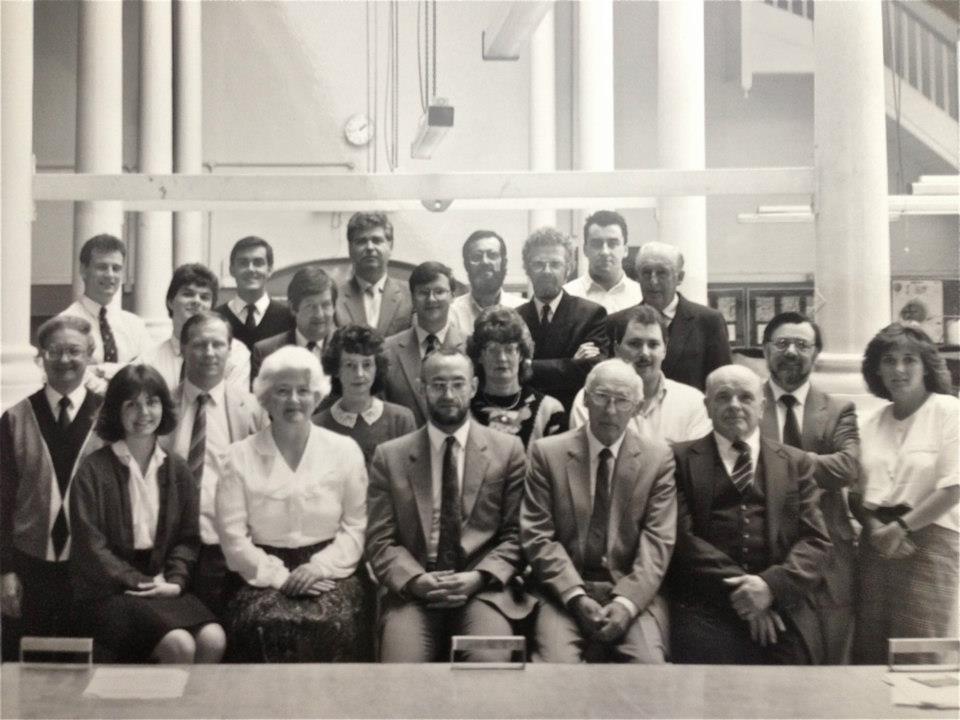
035144Medics at Cambridge – I’m talking 1971 here – could study anything they liked in the third year, assuming that necessary subjects had been covered in the previous two, and that they were accepted on their chosen course. I think this is still the case. In typical Cambridge understated style, it was something that we took for granted. I look on it as truly inspired. Would that more undergraduate medical schools would do likewise. Most people did something scientific, but not everyone. To my certain knowledge a handful read Archaeology and Anthropology, a few English, a few Philosophy and a few Theology. Two of us (out of about 200) read History of Art, both from Queens’ College: me and my mate David. I like to think that David did it because of me but I may be kidding myself.

It wasn’t common for medics to take History of Art, maybe one every two or three years. It was normally a two-year course, so medics with only one year to complete it were discouraged. You can see why: we lacked knowledge of historical and cultural contexts, we knew little of historical research, or of trends in art and architecture. Having said that, I wasn’t totally ignorant of architectural history. I’d been in and around churches since I was 10 or so, and something rubbed off on this curious youngster who noted details. I spent happy hours poring over Banister Fletcher and James Lees-Milne in Carlisle Library, and had parents who indulged their peculiar son (‘what shall we do with our Stanley?’ they asked the local GP – I know, because he told me 30 years later) in trips to see buildings. I went to Thurnam’s bookshop in Carlisle week after week just to look at the picture of Westminster Cathedral in Victorian Architecture by Peter Ferriday. The assistants were tolerant. I plucked up courage to buy it after a month or so when I was in funds. That was the book that introduced me to the word prolegomena (I’ve forgotten what it means now) and to Nikolaus Pevsner.

David and I had to be vetted by the academics in the Department of History of Art. Michael Jaffé was the boss. He had rooms in King’s. We trooped off to see him. He was an expert on Titian and Rubens. I made it clear that my interests were exclusively architectural, which was allowed, but the unnerving and leonine Jaffé insisted on asking me about Titian. I knew nothing. I still know nothing. I wouldn’t be swayed from my determination to concentrate on the history of architecture, confident that I already knew enough to pass the exam tomorrow. The other interviewer was Duncan Robinson, then Director of the Fitzwilliam Museum and later Master of Magdalene (succeeded recently by Rowan Williams). That was altogether gentler and pleasanter. Anyway, they said yes.

History of Art, Scroope Terrace, Cambridge

History of Art, Scroope Terrace, Cambridge

It was a terrific year—blissful to be away from Biochemistry labs and microscope slides, and blissful to be with intriguing ideas and mix with the most exotic creatures. Pevsner was still giving Slade Lectures in those days. I was like a groupie at a pop concert. David Watkin was up and coming. He had, doubtless still has, a formidable intellect. At a relatively young age he pointed out the holes in Pevsner’s approach to architectural history that almost held that anyone designing in styles that were not modernistic (concrete, steel, ugly) must be bad and immoral. Dr Watkin had a prominent beauty spot on his cheek (was it real?) and dressed immaculately, Evelyn Waugh style. Except, that is, one morning when I called to see him about my dissertation on James Brooks when he answered my knock in his jimjams and dressing down, and offered me a digestive. Very civil of him. Another student was memorable for aping Lord Sebastian Flyte, and riding round Cambridge on a tricycle, in full morning dress with a silver-topped cane. Where did he get the money? I recall one lecture at which the speaker, talking about an architectural firm with two names—was it Lanchester & Rickards or Mewès & Davis?—said of one of them ‘He had an eye for the ladies and died unexpectedly. I think that should be a lesson to us all.’

David and I both finished the course with second class exam results. Our tutor at Queens’ congratulated us warmly, saying that medics who did History of Art normally came out with thirds.

Yes, we did come across Anthony Blunt, and no, we weren’t recruited. To anything.

Pioneering women in Langwathby

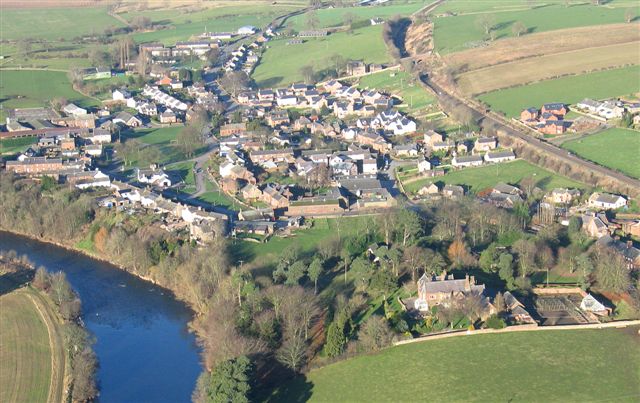
The Morleys house is top centre somewhere

The Morley house is top centre

Langwathby in the 1950s and 60s. At the Little Salkeld end, there was a large and distinguished house between Stamper’s farm and the council houses, set back next to the railway cutting up a longish drive.

The Morleys lived there.

To my young eyes, Mrs Morley looked as if she were the ancient of days (‘whatever that means’, I thought).  She went about on her bike and did her shopping in a grubby Gabardine mac, her hair looking as if she’d been plugged into an electric socket. There were rumours. She collected nettles for soup. Was she a witch? We children never saw Mr Morley. Was he a recluse? Was he a spy? Maybe he did secret government work, like Uncle Quentin of the Famous Five.

Before long, the wildly imaginative soup cleared somewhat. Mrs Morley had been an orthopaedic surgeon. A woman orthopaedic surgeon in those days. Her husband John had been a professor at Manchester University. Education then was a way of bettering oneself, as my father often said (would that it were still so), so suddenly the Morleys acquired a different sort of glamour. Mr Morley was now Professor Morley. I was susceptible to academic snobbery.

Google tells me that Mrs Morley was born Margaret Gregg in 1892 to parents who lived in Styal, Cheshire. She studied painting in Paris, was a VAD in WWI, and became an orthopaedic surgeon. She married the widowed John Morley, soon to be Professor of Surgery in Manchester. Professor Morley died in 1974 and Mrs Morley some years later. What a terrific life. I wish I’d known her.

Bank House is the long thin one, bottom left

Bank House is bottom left, long and thin

Just as John Morley was morphing from Uncle Quentin to esteemed Professor, another elderly retired ‘couple’ moved into Bank House (where my father was born) opposite the Shepherds Inn. I came across them when I started on the organ rota for Evensong at Langwathby church, so I suppose that must have been about 1963. The newcomers sat at the back of church on the right. They made friends with me. They asked for the Welsh tune to Jesu, lover of my soul, so one Sunday they got it. This wasn’t a good move, for it displeased some villagers born in the 15th century who preferred ‘the proper tune’ (an early lesson in congregational politics).

By now I was less prone to exotic imaginings. I took them as I found them. They were Mr John Elam, another retired orthopaedic surgeon, and his sister Mrs Tipper. They took an interest in my academic progress. Mrs Tipper was encouraging about my Cambridge application. They gave me a four-volume set of the first edition of Grove’s Dictionary of Music and Musicians.

Constance Tipper

Constance Tipper

Slowly, slowly, Mrs Tipper’s past revealed itself. ‘I was a metallurgist’ she told me in a offhand, matter-of-fact way. How unusual. I’d never come across one of them before. I might not even have heard the word before. Mrs Tipper was not just any old metallurgist, but one of the world’s most eminent. Dr C F Tipper, née Elam, had the highest doctorates in science that it is possible to get, and from not one but two universities, London and Cambridge.

She had been a Fellow of a Cambridge College. It was she who in WWII hit upon the reason why some ships broke in two. Her name is given to an industrial test. For many years, she was the only woman academic in the Cambridge Faculty of Engineering. All this, and she called herself Mrs Tipper. With the self-absorption of adolescence, I never took much trouble to find out about her. Another missed opportunity.

She died in 1995 aged 101, the year after a tree had been planted at Newnham College Cambridge to mark her centenary. You can read about her here.

What brought these remarkable pioneering women to a small village in Cumberland?

Fishing in the river Eden.

Do the what-comes-naturally

U0WxlThis week’s New Scientist has an article debunking some widely held notions about nutrition. Here are four of them.

1. It is not necessary to drink eight glasses of water a day. It is not necessary to drink pure water at all. It just isn’t true that by the time we are thirsty we are already dehydrated. ‘So relax and trust your body.’ If you visit any primary school, chances are you’ll see children clutching their water bottles like comforters (well, I hope it’s water). Are these for the comfort of the children or the parents, I wonder?

2. Sugar does not make children hyperactive. Children go to parties where (A) they eat sugary things and (B) are excited. It does not follow that A causes B. Sugar rots the teeth though.

3. Being a bit overweight is—wait for it, wait for it—good for you and will stave off the grim reaper for a bit! Deo gratias. Yes, yes, I know I’m more than a bit overweight, but still ….

4. The notion that we should eat like cavemen is bunkum. Crops and animals then were quite different from crops and animals now. There is no evidence that cavemen were healthier than we are. Evolution ‘doesn’t care if we drop dead once we’ve raised our children and grandchildren’.

Why does it give me such joy that these are debunked?  I suppose because I find zealots tiresome. The nanny state goes too far. People tell us what to eat, what to drink, how to eat and drink, when to eat and drink, how to sit, how to stand, how to exercise, how to walk, what to think … and more. Do-gooders used to tell us that eggs were bad. Eggs are now good. I heard a whisper recently that salt wasn’t the satanic substance that we had been led to believe, and that maybe if I think I need salt it’s because my body is telling me I do (or perhaps I’m addicted to it).

When I was in my 30s I became fascinated by the Mitford sisters (novelist, farmer, fascists, communist, writers) and remember that their mother, Lady Redesdale, believed that ‘the good body’ would heal itself more effectively without the intervention of doctors or medicine. Was she barmy? She took this to the point of having the doctor remove a child’s appendix on the kitchen table. Maybe a bit barmy. I think I’m remembering right that in my early days as a clinical medical student, an eminent surgeon told us that in his opinion people should let the body do the what-comes-naturally. Amen, amen!

Registering intersex

What sex would you say the baptismal candidate was?

What sex would you say the baptismal candidate was?

Very soon in Germany it will be possible to register a child as being of indeterminate gender—neither male nor female, but indeterminate.

Off you go to the Register Office. You have to say whether the little darling is male or female. No problem usually. But occasionally it’s fraught: the little darling’s gender is ambiguous because the anatomy of the nether regions is neither one thing nor the other. Usually, surgery is soon done to ‘regularize’ the situation. Making the baby look like a female is the easiest thing to do for the obvious reason that it’s easier to chop things off than stick things on. (This can lead to psychological problems later when, for example, the person grows up feeling like a male, yet having no dangly bits.)

Being neither one thing nor the other, or having bits of both, means intersex. This is a natural phenomenon. It’s not something the baby chooses, and certainly not something parents choose. They are, doubtless, in shock and perplexity. But the fact is that sometimes, more often than we recognize or admit, nature goes awry.

I know, I’ve blogged about this stuff before, here and here. The German initiative means I’m doing it again. There will be some delicious issues for the institutional church. It’s full of rules. If we say marriage is between man and woman, then we have to define man and woman. If we say ordinands have to be heterosexual, then we have to lay down criteria of maleness and femaleness. If only men may be ordained, how will manhood be assessed? Is it an absence of some things or a presence of others? If it’s a chromosomal thing, then what will assessors do about chromosomal anomalies? It seems to me that none of the church’s rules can be enforced. If it’s not possible to enforce them, there’s no point having them.

You may say I’m being silly. Perhaps you think that the institutional church is on the way out, and that what the churches say or do is irrelevant. You might be right. But if you think that the church could be, should be, and basically is, a force for good in the world, then it does matter. The trouble is that the churches generally are run by people who seem blind to what biology has to tell us about the human condition, and who tend to look backwards rather than forwards. A biological Galileo saga in the making.

Biologically, legal recognition of intersex is long overdue.

Click here for more about the development of sexuality.

Reunions

Even then, I had a great future behind me

Even then, I had a great future behind me

From time to time I’m invited to speak at medical school reunions of those I taught decades ago. It’s generally the successful ones who attend: in their 40s, on astronomical salaries, often with kids at schools where fees are more than my stipend. One or two have jetted from Hong Kong or Sydney just for the event.

I begin my speech by sympathizing with them. Despite the trappings of success such as big houses, tennis courts, swimming pools, and posh cars, this is a difficult time of life. Children are getting more and more expensive and fractious, relationships are creaking with divorces past or looming, and parents are beginning to lose their marbles. I remember it well, though I never had the telephone number salary.

Standing in front of them is this ‘owd feller’ that they invited to speak because they remember what he used to be like. Even in those days, though, he had a great future behind him, for he peaked when he was 10. They are shocked to see the fat old cynic he’s turned into. They’re astonished at what he’s become. They’re not alone. Some praise his courage for this, slightly envious. Some are mildly amused. Some are dismissively sceptical. But in general they’re lovely, warm, courteous and good fun. Many of them talk privately about an interest in ‘spiritual matters’ that is touching, and displays a vague longing – a certain trace of silent sadness. ‘I can’t swallow all the dogma,’ they say, ‘but I do love churches and church music.’ Me too. I don’t think the man in sandals was known for his love of dogma.

You see, dear reader, many of these worthy people are beginning to be bored. You need to understand that though medical training is lengthy and requires a good memory, it is absolutely not intellectually or conceptually challenging. Consider too that the human body recovers from disease often despite doctors, not because of them: once carpenters and plumbers have done their work, masterly inactivity is often the best ‘treatment’. What doctors need is common sense and humanity, and in my experience those qualities don’t necessarily go hand in hand with academic brilliance. When you’ve removed 321 gall bladders, or done 534 hysterectomies, or seen the effects of deprivation and poverty that you can do nothing about, work begins to pall. And there’s still 15 years to go. Boredom.

How will they cope? Many take to golf. I’m not old enough to play golf. Some will develop a fondness for the bottle or some other peccadillo. Some will spend more and more time on their yachts. When I was an intern in London, every Sunday I had to ring Burnham-on-Sea, where the consultant had his boat, to tell him of his operation list next day and let him know how his private patients were faring without him. Some will become bigwigs in professional bodies, sitting in panelled rooms on committees that reorganize things that don’t need reorganizing. Some try to recapture lost youth propping up the bar at what used to be Lansdowne Road and contrive friendships with players. And so on. A certain trace of silent sadness. 

Speaking at a reunion is a bit like going into a fusty room that might have been better left unvisited. It’s hard to resist, though. I return saying ‘I won’t do that again’. But I do. The invitation comes, and I feel vaguely honoured. I’m a fool, of course. I rather suspect that the ex-students think I’ll be as subversive now as I was then. In fact, I’m much, much more.

An awful tragedy

475px-The_ScreamThe family of a friend of a friend has just suffered the most awful tragedy that can come the way of parents.

Their son took his own life—because of exam results.

I try to imagine what’s going through the minds of heartbroken parents. Remorse? Rightly or wrongly, I might feel guilty for nagging, or for not encouraging in the right way. I might feel guilty for not noticing distress, not picking up signs, not taking the time to listen and to notice. But I’d feel angry with the school, with my child’s friends and teachers. I’d be angry with a system that sets such store by exam results. My heart goes out to them.

In my former life as a medical school teacher, as well as those who were there because they wanted to be, I met some students who’d been pushed into medicine by their school, presumably for the sake of the school’s, or the teachers’, kudos. I came across some who were there to fulfil their parents’ dreams. I met others who had drifted there because they were good at passing exams and/or charming interviewers. Some of these folk came a cropper and left. Some of them stayed the distance, graduated with Dr in front of their names, and then went off in a different direction: banking, arts, business, motherhood.

I look at the list of hospital consultants in Ireland, and in the English East Midlands, and can point to a good number who passed through my hands. I can tell you that many of them, as students, were academically quite unremarkable, some passing exams only after resits. They are, I’m sure, perfectly competent doctors, and I’d have little hesitation in placing myself in their care, if necessary. (I know a surgeon, though, who says of one of his colleagues, ‘I wouldn’t even allow him to carve the Sunday joint’.) My point is that what people achieve, or fail to achieve, at any particular age doesn’t mean much. There has to be some system of sorting who gets a limited number of third-level places, and whatever system you have will not be perfect.

Let’s do all we can to care for students who don’t do as well as they had hoped. Anything to stem the awful despair that drives a young person to end it all, and the agony they leave behind.

Summer music

Irish Midlands Chamber Orchestra in St Peter's

Irish Midlands Chamber Orchestra in St Peter’s

The Portlaoise lunchtime concerts have grown. People thank me for brightening up lunchtime as if I were some sort of philanthropist. Little do they know me! The truth is, of course, that I started the concerts last year for my benefit, to get a bit of culcha. They have the added value of bringing a bit more music to a town that in some respects needs it. They get people into the church-—and this is a good thing, for there are still some out there who haven’t quite lost the notion that they might go to hell if they come in. And they raise a bit of money for the Hospice, Dunamaise Arts Centre and the church. But first and foremost they revive my sometimes drooping spirit!

This summer we’ve had some spectacular performers: organ, violin and cello were lovely, trumpet and organ were thrilling, ladies close harmony was charming, organ-alone concerts have been refreshing, and today’s Midlands Concert Orchestra was terrific. There were about 80 people there. Toe-tapping tunes. You could see people’s bodies moving to the beat of Dvorak, Bizet, Offenbach, Lennon/McCartney, and marches from the movies. Organ music has featured most, not surprising given my background and contacts, but then St Peter’s has an organ that sounds well and is good to play.

Visiting musicians comment on the lovely church and its sense of intimacy, the brightness of the place, and an acoustic that gives a bit of bloom to the sound. And, I hope, the welcome. It’s particularly good to have young players, and several have said how much they value the experience of giving a public performance. For organists in particular, it’s gratifying to play music that people actually listen to, rather than merely talk over. There’s plenty of talent about, and it’s great that people are willing to come to St Peter’s.

It’s a truth universally acknowledged that if you please yourself, then some others will be pleased with you. Here’s to the rest of the 2013 season.