The Beaker Folk of Husborne Crawley

Beaker Header Trees Henge. newA subversive streak is something to be cherished, so if you’ve got one I recommend an occasional visit to The Beaker Folk for refreshment. Flooding Caused by Gay Marriage, is particularly good.

My regular reader will know that a while back in Brave new world I chided the Archbishop of Canterbury for seeming to belittle the work of the parish priest. I put these sentiments into a courteous email to him. After 10 days or so I had a reply from the Archbishop’s Acting Correspondence Secretary, a retired Archdeacon, saying, in essence, push off and get used to the new regime, and stating that the traditional model of parish ministry was failing. The questions I raised about expectations and administrative burdens, however, were ignored.

One thing amused me. The retired Archdeacon, despite being a fully paid-up member of the new iconoclasm, appended ‘The Venerable’ to his signature.

Titles and status remain so very important in the brave new Church.

A nose that runs in the family

Workhouse, then City General, then University (so full circle)

Workhouse, then City General, now University (so full circle)

Carlisle hospitals saw quite a bit of me when I was young. Chatsworth Square Nursing Home took my tonsils when I was about 5. All I can remember is dark green walls and glass partitions. The Ear, Nose and Throat fraternity made me one of theirs after that, with a sinus job, two nasal polypectomies and an operation on the nasal septum when I was about 17. Somewhere in all this came appendix, two teeth operations (they’re wonky at the front), and an arm job. Mostly, I was at the City General, but the appendix and arm were done at the (old) Cumberland Infirmary where for the appendix in 1960 I was in Ward 18 opposite grandfather W P Monkhouse, then in his 80s.

For one of the nose jobs I was in a side room with a boy from Workington whose sister was called—and this is what it sounded like to me—Hughery. I’d never heard of that name and asked him to say it again, just to be sure. Yes, it sounded like Hughery. So that’s what I said. It wasn’t until years later that it dawned on me that it was Hilary, and he was probably in for a palate operation, so pronouncing ‘l’ was a problem. He thought he was saying Hilary and I heard Hughery. No wonder he was cross with me: I suppose he thought I was making fun of him.

One thing illness does for you, popular wisdom has it, is make you patient. It makes you take each moment as it comes. It teaches you not to have too many expectations. You learn that when doctors say you might be home at the weekend, you equally well might not. You learn to laugh off these little disappointments. When you expect to be going for an operation on Tuesday, and it’s cancelled because you have a chest infection, you learn to take it in your stride. That’s what popular wisdom says illness does for you.

Let me tell you that popular wisdom is piffle. Complete twaddle. Especially if you’re a child. As is well known, I am the most patient and even tempered of God’s creatures, but not even I was able to bear with equanimity the unpredictability of illness. I was in despair when some sign of progress did not materialize as I thought it should.

Dangerous rubbish

Dangerous rubbish

My nose would have been less inclined to run in the family had I not had cow’s milk shoved down my throat ‘when I were a lad’. It should come in bottles marked ‘poison’. Cow’s milk for cows, human’s milk for humans. It’s a snot generator. In the 1990s an Ear, Nose and Throat colleague told me my nose would be better if I stopped milk. I have, except in tea, and it is. The other thing that affected me was grain and meal that, since my father ran an agricultural feed manufacturing plant, put money in our pockets.

Milk and wheat are not good for Rambling Rector. I wonder how different my life would have been if I’d known sooner. As for cats, which always know that I’m allergic to them, the best place for them is under the wheel of a heavy truck.

One of Grimm’s Fairy Tales has a man whose nose grows so long that people trip over it.

Pigeon ‘pie’

From the BBC website

From the BBC website

Something to cheer the drooping spirit on a cold and gloomy January day.

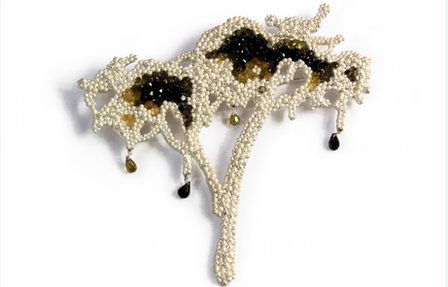
Frances Wadsworth-Jones makes brooches using crushed precious and semiprecious stones and sells them for up to £2,500. ‘Nothing special about that’ you may say. Oh yes there is. They’re inspired by pigeon droppings. She says ‘I like to try and find beauty in the unexpected and I quite often look at the floor. Ealing is great for inspiration.’

The streets of Ealing must be paved with—err—gold.

‘People must think I’m mad’ … surely not … ‘because I have to take pictures of poo too. I’ve got hundreds.’ There’s no law against it, apparently. Do you suppose they’re stored on computer?

I’m very childish. There’s nothing quite like talking about poo to bring on a smile, though maybe talking about farting does too. I was taught that before flushing it away one should always inspect poo for colour, smell, consistency, and ‘does it float’? Note particularly any changes. Poo is a good indicator of inner health.

Actually, the intestines aren’t ‘inner’ – they’re outer’ because the ‘inside’ of the tube is continuous with the outside world through mouth and anus. This is the basis on which rests the distinction between carcinoma and sarcoma. But this is not supposed to be a pathology tutorial.

Pigeon poo isn’t just poo. That’s the black stuff in the middle. The light stuff round the edge is, in our terms, urine.  Whereas we eutherian mammals have separate holes for wind and piss (though you wouldn’t think so listening to some people – and piss is in the King James Bible so don’t moan at me), birds have only one. Everything gets mixed together, so. The evolution of the sphincters and sex region is utterly fascinating.

I watched an episode of Benidorm the other day (I’m a recent convert to this wonderful, wonderful series) in which a turd is found floating in the swimming pool. I wonder if this will interest Frances. If pigeon poo brings luck, as she says, what will human poo bring?

Of mice and men

1510896_642587485805127_2086111283_n

Animal experimentation is certainly an issue that polarizes. I wonder how many opinions are based on facts and experience rather than sentiment and propaganda. How many of those vehemently opposed are principled enough to refuse antibiotics, or question how they were tested?

For several years I worked on the mammalian adrenal gland. The mouse Mus musculus was the creature of choice. I could not have done the work without killing. The question is: was it worthwhile?

Zhou Enlai, when asked about the importance of the French revolution, is reported to have said that it was too early to tell. I feel rather the same about much research in general, and mine in particular. I certainly don’t claim it to have had any impact, but this is not to say that in the future someone will not build upon it in a way that enlightens us about endocrine processes.

Headline-grabbing results are rare. Scientific research is like chipping fragments from a stone, a sculpture gradually emerging. Researchers build upon the work of others, and slowly, slowly knowledge accumulates. After a great deal of accumulation, conclusions can perhaps be drawn. It is dangerous to draw them too soon.

Yes, there are alternatives to animal experimentation, and they are increasingly used. More will be developed. But, in the words of my friend Andy, ‘at the moment they can’t simulate the real deal because mammals are so delightfully complex and still so poorly understood—despite the hubris of the scientific community.’

Is animal experimentation evil, immoral, bad? It concerns me that too much is done simply as CV boosting, as truthfully in my case, and there are problems with the way that research is politicized by factions and industry, but that’s another story.

I suspect that opposition to animal experimentation is most vociferous among those who are furthest removed from living and working with animals. You won’t find much opposition in the agricultural community. If you hold that all creatures are God’s creatures like us, then the only logical position is Jainism: non-violence towards all living beings. How do you define living? Plants? Fungi? Bacteria? Slime moulds? Clergymen?

Much of what we know of how the inner ear works comes from research that was done on human subjects in 1930s and 1940s Germany, in circumstances that may well appall us. We have benefited from that research not least in the development of hearing aids and cochlear implants. Knowledge of some neurological conditions comes from experiments on monkeys and apes. It’s all very well to object—until, that is, you get the disease.

When we lived in Nottingham, our children attended a school patronized by sandal-wearers, amongst whom there were more than a few objectors. Our children said “my daddy works with mice’s kidneys” (kidney/adrenal confusion understandable at that age) and drew pictures of my office. I did rather fear reprisals.

I was a reluctant researcher—a disappointment to the eminent Professor Rex Coupland, I didn’t enjoy the nitty-gritty of research and much preferred teaching, scholarship and administration. Rex was a big man with a long stride, so there was warning of his approach as he stomped along the echoing corridors. When professorial footsteps were heard in the distance, one could either dodge into the Dissection Room, or dash into the khasi, or else nip downstairs, along the corridor on the floor below, and then up again at the other end. Silly or what?

Medical school rowing again

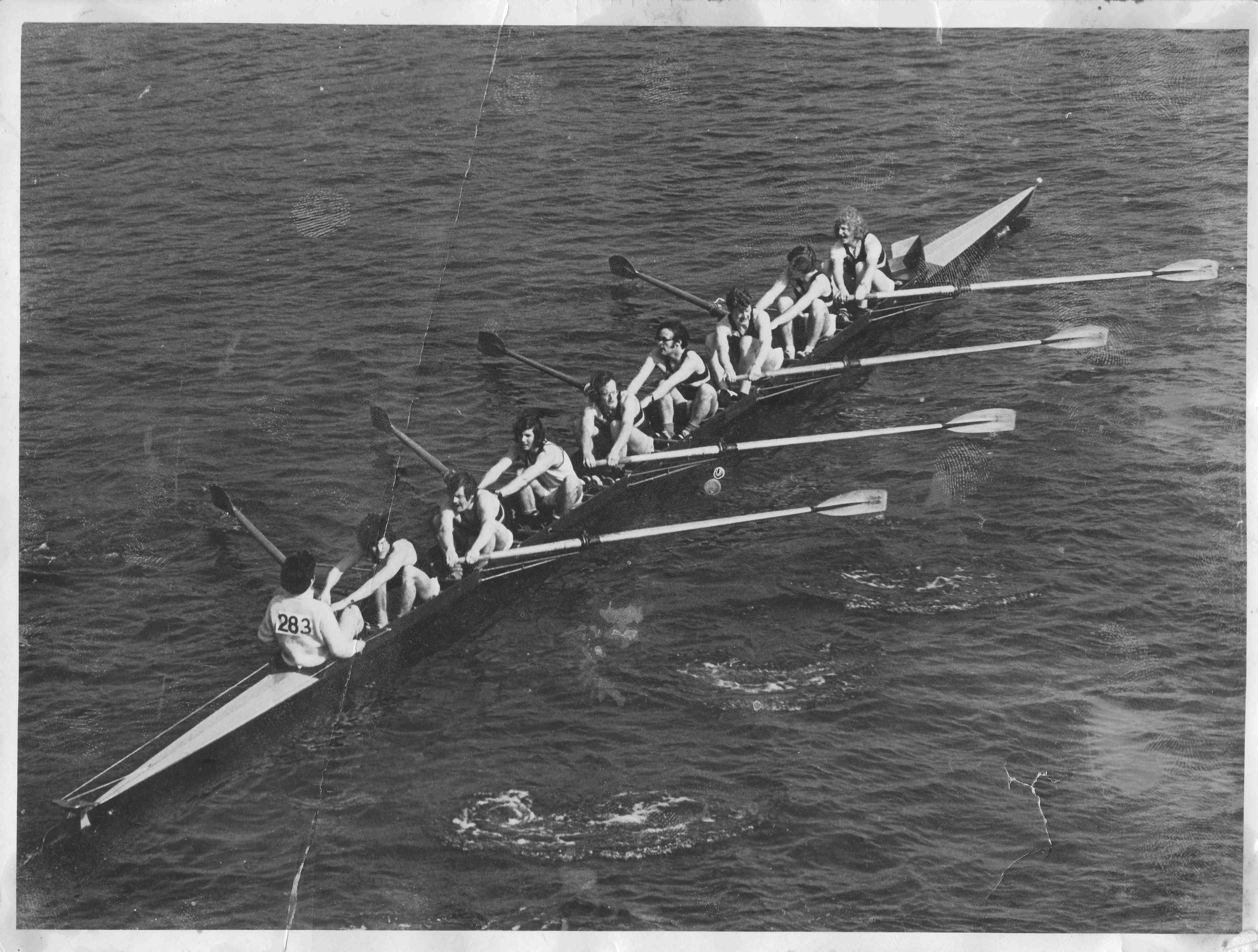
ROWINGPeter Selley, a man with a scanner, has kindly sent me this picture. It shows the King’s College Hospital Medical School eight on the Thames in the Tideway Head. I blogged about this here.

From left to right we are:

  •      Stephen Martin (cox, latterly a psychiatrist in Durham)
  •      Sandy Anderson (stroke, don’t know where he is)
  •      Clive Coddington (GP in Hampshire I think)
  •      Chris Morris (don’t know)
  •      Bob Morris (don’t know)
  •      me
  •      Terry Riordan (pathologist in Devon)
  •      Peter Selley (GP in Devon)
  •      James Anderson (bow, don’t know)

The boat wasn’t ours. We rented it from Thames Rowing Club, whose boathouse in Putney we used. The team was ‘sponsored’ by Mr A M MacArthur (1921-2012), then Consultant Cardiothoracic surgeon at King’s, who had been a noted athlete and rower in his youth. You can read his obituary here.

I don’t remember that we trained much. There were occasional sessions on the rowing tub doodah in the boathouse in an attempt to tidy up technical skills such as feathering, but the training I recall was simply rowing on the river. In all weathers too.

Some of us were serious rowers, in particular the captain, Clive Coddington, whose contacts got us to the Kingston Regatta, Terry Riordan whose voice stunned us all, and (I think) Bob Morris. I hope that Peter and Steve won’t mind if I class them with me as rowing for fun. Not that Steve, mind you, rowed. All he did was sit on his orse (as Ross O’Carroll Kelly would say), steer and shout at us—which he did very well, I might add. Peter had (has still I rather think) a searing wit and is great good fun. Susan and I know him best of all, and were able to visit his  mansion in Devon in later years. Stephen had an explosive laugh, and unlimited enthusiasm for things Scottish and military, and Waugh’s Sword of Honour. I remember Clive for his vigour and intelligence, but I suspect he found it frustrating that some of us lacked his commitment. Of Terry the voice I have already written.

I’m pretty sure Susan and I were wed by the time this photo was taken. I was enjoying myself as a medical student, but Susan was teaching at an inner city school just off the Old Kent Road in north Peckham. This was by no means easy, and I hope she might commit memories of it to print before too long.

Most of us in this photo qualified as doctors in 1975. I organized a reunion for our cohort in 1985 at the Savoy in London. That’s the last time any number of us met, though individuals have kept in sporadic contact.

Gentlemen, thank you!

Baptism

800px-Baptistery.Arians06Homily for 12 January 2014. Isaiah 42:1-9. Psalm 29. Acts 10:34-43. Matthew 3:13-17

As a child I was enraged when adults referred to me as Arthur’s lad, or whatever, and it narks me now to hear people say so-and-so’s daughter or son. I have a name, dammit, and I was given it at Baptism.

When we give someone a name, we feel more personally involved with him or her. A different kind of relationship is established: I’m now me, not just Arthur’s son, or his car, or his boots. Using a name, we can address someone directly.

But other things happen too when we give somebody a name. We make them part of our tribe, our group. We domesticate them like a pet. We begin to feel comfortable with them, and able to control them, drink tea with them and suck them into our prejudices.

It’s easy to let this happen with our relationship with the Master.

We begin to feel we know him. We ask him for this or that favour,  ignoring the fact that millions of others ask for favours that negate ours. We ask him to cure this or that illness in someone we know, as if he is at our beck and call. We twist his teaching to suit us and our situation, ignoring the fact that we’re already pampered and privileged. As we domesticate Jesus we try to make him ‘one of us’, like a lap dog that wags its tail and goes for walkies at our whim.

It’s dangerous to claim to know Jesus. It reflects our narcissism. What emerges from Holy Scripture is just how unpredictable he is. I marvel at those people who claim to know the Master. I do not dare presume. He is concentrated, undiluted love—certainly—but that is not limited by my desires and prejudices. Concentrated, undiluted love might mean saying ‘no’ to me, for my own well-being. Many churches have the strap-line ‘to know Jesus and to make him known’. Good luck with that.

Who is doing the naming in today’s Gospel?

The mistake I’m making is to assume that I’m doing the naming. Of course I’m not. ‘This is my beloved Son, in whom I am well pleased’ doesn’t come from my mouth, nor from the mouth of John the Baptist, who’s puzzled by Jesus’ appearance in the queue. ‘What are you doing here? You know what I’m on about better than I do.’

Jesus doesn’t need baptism. But maybe he’s waiting in line for our benefit. Acting as our representative, he shows us what to do. In the words we heard at the carol service: ‘and if you want to know the way, be pleased to hear what he did say’. He identifies with all of us imperfect people who need a fresh start and a new identity—which is one of the things that baptism’s about.

The Gospel tells us whose son Jesus is, and the first readers knew very well what his name meant. Jesus, the Greek version of Joshua (and like Jason, as in the Argonauts), means ‘the one who saves’. From what, by what means, and to what end, are topics for a whole course of sermons.

Whatever else today’s events mean for you and me, they remind us that the Master is not a personal pet, to be called on only when we need a bit of a cuddle and ignored the rest of the time. And just as he, the beloved Son, shows us the way, all of us are beloved sons and daughters of the Divine Lord, with all the rights and responsibilities that brings.

Jesus is immersed in the Jordan. We are immersed in divine love, by no means always easy to bear. Today is a call to think about our personal relationship with the one we claim to worship.

Indecision and delivery

Og the dog

Og the dog off for a swim

Nothing works. I’ve tried shaking my head like Og the dog after a swim. I’ve tried tipping my head to one side and then the other. All to no avail. My brain is still brimming over. Usually when something goes in one ear, another thing falls out the other. But not at the moment. So many possibilities and consequences.

At school when we all wanted to be first in the dining hall there was so much pushing and shoving that nobody made it through the door at all. That’s what my head’s like: full of one the one hand … and on the other Like people who have so much to say, it all comes out jumbled.

They say we have free will. Pish and piffle! One of the characters in the film Shadowlands (CS Lewis and Joy Gresham), says ‘we read to know we’re not alone’. I read Richard Rohr and often think ‘yes! finally I find someone who knows what I think better than I do.’ He writes: We are all conditioned, programmed, wounded, addicted, repetitive, habituated and compulsive in our brain processes—which indeed largely determines the content of what gets in and what stays out. True free will is largely a myth, as most of us initially operate almost entirely out of conditioning and culture.

When I was a student on the Obstetrics and Gynaecology rotation, a wise obstetrician* said that the best line of treatment more often than not is Masterly Inactivity (and he spoke the capitals). This is not bad advice for me at the moment. If in doubt do nowt. Who or what will be a midwife for my brain?

* He was on hand when SWMBO came to be delivered of our daughter in 1975. We then moved to Nottingham, and found that he had too, so he was in charge of the emergence of the two boys into daylight as well. They’re all October birthdays. It’s called the rhythm method of conception.

Brave new world

A good vicar

A good vicar

According to the UK Daily Telegraph yesterday, the Archbishop of Canterbury’s idea of a good vicar (Church of England jargon for parish priest) is one who holds services in ‘non-traditional venues like pubs and clubs’ and ‘in all kinds of strange places.’

I’ve worked in the Church of England and so can say with some confidence that the administrative demands imposed by the Archbishop’s colleagues and the institution on the one hand, and the pastoral role demanded by the community and by those who already support the church on the other, mean that few if any vicars could possibly be regarded by the Archbishop as good. Unless, that is, they refused to deal with correspondence, initiatives, circulars, questionnaires, funerals, weddings, baptisms, and five or six services a Sunday … and so on.

I must accept that I was not, and still must not be, a good vicar. I don’t have the wherewithal or confidence to evangelize in a pub or club or ‘strange place’ for I am not given to facile answers to difficult questions. I am given to pastoral and intellectual exploration that begins in joy and sorrow and ends in wonder and mystery. I am given to an appreciation of beauty and the liturgy. I am able to hold two opposing viewpoints and still function, I think and hope, reasonably well.