Fireworks and Og don’t mix

OgFireworks at the Town Hall last night—the Vicarage is a stone’s throw away. The dog really does not like the bangs, squeaks and whooshes. I was in bed with a virus, so to speak, and he tried to get into my skin, trembling and panting in terror.

Last night was a Sikh festival, but it’s much the same at New Year, Christmas, Eid, Divali, and for about a week over Halloween/Guy Fawkes.

The poor creature is a rescue dog. Since he came to us about three years ago, he’s better than he was, but he’s still terrified of brushes, men in hoodies, the sounds of a football match, and traffic, especially lorries. And he will not come through a doorway if you are standing by it.

We’ve all got our fears. Some of them are rational, some not. Some of the irrational ones hark back to our evolution: we recoil from some creatures because inherited knowledge deep inside recognizes that they might be, or once have been, harmful. I dislike spiders and always call for SWMBO to deal with them. Obviously I am more sensitive to inherited wisdom than she is.

The things that terrify Og the Dog are more likely to be learnt than inherited. It does not speak well of the humans that he met during his first two years.

Back to fireworks. My children will tell you with glee of their foolish and incompetent father who, when they were in single figures and we lived in Nottingham, dropped a match into the box of fireworks. The results were dangerously spectacular.

Perceptions in Penrith

066cd2fJames Rebanks is something of a media darling. His combination of boy with attitude who left school early, Oxford education, businessman and sheep farmer makes for heady reading.

Now I must declare an interest. Mr Rebanks farms at Penruddock near Penrith. He attended the comprehensive school in Penrith, a town which has, through all the ups and downs of state education and the abolition of the 11-plus exam, retained a selective state Grammar School, my alma mater. A contemporary of mine at the Grammar School was another Rebanks, presumably a relation, of whom my only memory is that he was shall we say pugnacious.

James Rebanks is scathing about the way he felt belittled by schoolteachers and others because he was interested in farming, and not much else. My experience was otherwise – the opposite in a sense. As an asthmatic child, allergic to corn and hay, forced to spend a good deal of time indoors, I felt belittled by my peers for not being interested in farming. In Langwathby in the 1950s and 1960s there was absolutely nothing for a boy who was not interested in football or cricket or being knee-deep in dung.

For me, reading was a window to a new universe, education the key that unlocked the door of the cage. Then music came along to set every nerve gloriously on edge. I recall speech days at the Grammar School in which the Headmaster, recently arrived from Manchester, reflected ruefully on the lack of ambition he met in mid 1960s Penrith. I recall encouragement and interest from my teachers in all their pupils. But I can’t say I was ever aware of any belittling of farming or agriculture as a means of getting from adolescence to death.

Maybe it was different at Ullswater School. Maybe Mr Rebanks came across teachers who were taking out their own frustrations on him. This is not ‘their’ fault, or ‘my’ fault or Mr Rebanks’s ‘fault’. It’s just the way things were. And quite possibly still are, despite the tourism, the second homes, the sterility of farming villages about which I’ve fulminated elsewhere.

Recently I saw the men of the family ranging in age from 20s to 70s trooping off together to a Carlisle United match. Part of me has always longed for that kind of camaraderie, but what I find difficult to take with it—and, I wonder, do I see this in Mr Rebanks despite his degree and business acumen?—is the persistent whisper of xenophobia. Clubbiness—I saw it yesterday in a group of organists! And then I wonder if I too am guilty.

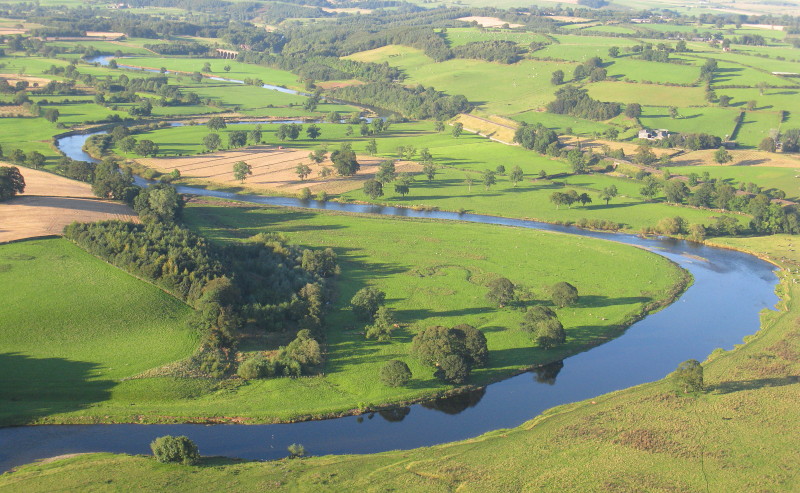
8523738_origMy son now 35 came with us on a recent trip and said he could see why I felt there was nothing for me there despite the analgesic air and hypnotic beauty and prosperity of the Eden Valley. The way in which it is hemmed in by the Pennines, Shap Fell, the Lakes and the Solway speaks of more than just geography.

Mr Rebanks might have cause to be grateful to those who belittled him. They fuelled the pugnacity that enabled him to push on the door labelled education at a time that suited him, not them, so that he could embark on the journey that has brought him to his fame of today.

Blood, flesh and bread

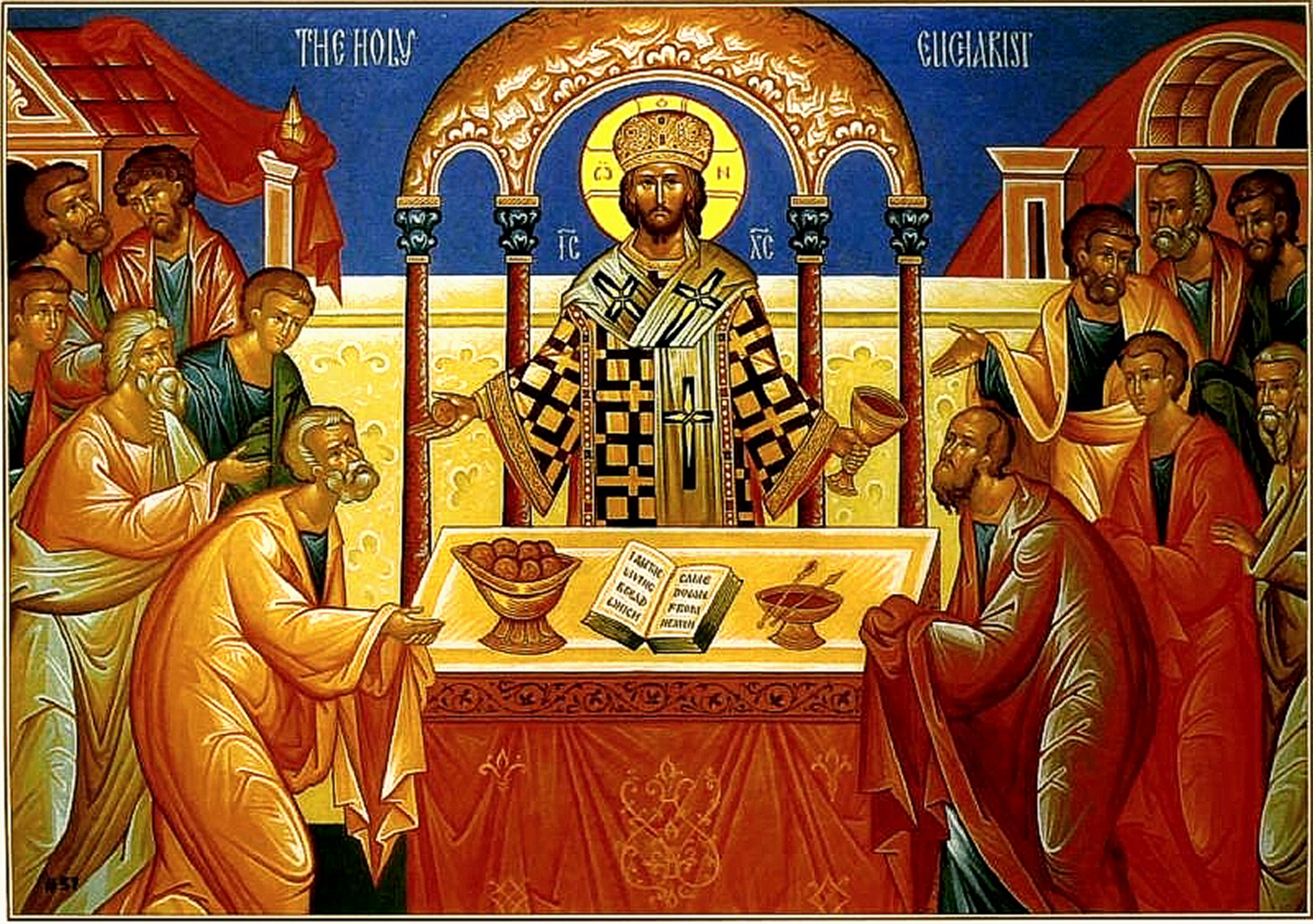
The-Holy-Eucharist4People of the Book are much more at home with parts of the body and bodily functions than we are. They think nothing of talking at length about blood, guts, wombs, circumcision, hearts, body, eyes, ears. They are much less prissy and much more down to earth than respectable Anglicans are.

Let’s start with blood.

The film Gandhi has Charlie Andrews on a crowded train, hauled up to sit on the roof. An Indian says to him ‘I have friends who are Christian: they eat flesh and drink blood every Sunday.’ It’s a friendly greeting, though with today’s flesh-eating zombie and vampire films and video games, people might think otherwise.

We can bleed to death. As the blood seeps away, so does the life-force. Lack of blood equals death, so blood equals life. For Jews and Muslims, ritual preparation of meat to eat involves draining all the blood so that they are not guilty of consuming the God-given life force. (I like black pudding so am doomed I suppose). The blood that marks the doorposts in the first Passover signifies that the house will be preserved: blood equals life. The blood of Jesus, the blood that flows from his crucified side, gives life to the world.

Blood brings nutrient to the cells of the body. What more nutritious than the Sermon on the Mount?

Blood contains red cells that bring oxygen to the tissues. Get rid of the polluting smoke of duty and should, and instead take up the oxygen of freedom from worldly burdens. We are in the world, but not of the world.

Blood has white cells that fight disease and maintain health. Think about that.

Blood removes rubbish from tissues of the body, and contains platelets that plug holes in blood vessels. The resources of the church are there for us when we feel burdened, and life overcomes us. Come unto me all that labour and are heavy laden, and I will refresh you.

When I hear of the ‘blood of the lamb’, I understand it as, quite simply, the life of the Divine. As St John’s Gospel has it: ‘Unless you eat my flesh and drink my blood, you shall not have life within you’ (John 6:53). And in the passion gospel we hear that when Christ’s body was pierced, blood and water flows out to sanctify the earth.

Now body, specifically on Holy Thursday, feet.

For most of the people on the planet, feet are even more important than they are for us. Bad feet = no work. Feet need to be cared for. Washing feet an example of service and kindness. And naked feet of the very rich look pretty much like naked feet of the very poor.

Imagine Jesus and the disciples’ feet. No stout brogues, and I doubt that they would have been so lacking in fashion sense as to wear socks with their sandals. Who knows what they trod in. So in washing their feet, Jesus was taking a bit of a risk.

This is a cleansing, like Baptism. A washing away of the dust on our feet, that is, washing away the past. It’s a confession. And as we wash each other’s feet we might confess our weaknesses to one another. In truth, we should be washing each other’s feet as a preparation for every mass.

Now bread.

Companion means [taking] bread together. That is a sermon in a sentence. Bethlehem, Bet Lahm, means house of bread. Another sermon.

Finally, an invitation

I could end with George Herbert’s invitation (Love III: Love bade me welcome …), but instead I opt for Bishop Lancelot Andrewes’ play on the word ‘come’ in his Christmas Sermon of 1620.
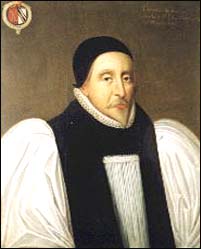
Lancelot Andrewes

Lancelot Andrewes

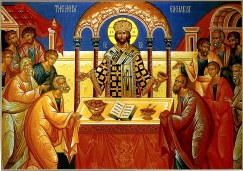
In the old Ritual of the Church we find that on the cover of the canister, wherein was the Sacrament of His Body, there was a star engrave, to show us that now the star leads us thither, to His body there.

And what shall I say now, but according as St. John saith, and the star, and the wise men say, ‘Come.’ And He, Whose the star is, and to Whom the wise men came, saith, ‘Come.’ And let them who are disposed, ‘Come.’ And let whosoever will, take of the ‘Bread of Life, which came down from Heaven’ this day into Bethlehem, the house of bread. Of which Bread the Church is this day the house, the true Bethlehem, and all the Bethlehem we have now left to come to for the Bread of life, – of that His life which we hope for in Heaven. And this our nearest coming that here we can come, till we shall by another venite come, unto Him in His Heavenly Kingdom to which He grant we may come, That this day came to us in earth that we thereby might come to Him and remain with Him for ever, ‘Jesus Christ the Righteous.’

Holy week here and now

Agony

Plenty people tell me they don’t need an imaginary friend to help them get through life. I’m not sure I do either. There’s nothing imaginary about the events of Holy Week: they happen all the time.

Take the Passion narratives—three obvious headings: (1) failure to confront reality, that is to say, denials; (2) mob justice; and (3) evasion of responsibility.

Denials. Peter’s denials saved his skin—but only for that moment. Later, he wept, overcome with remorse. It’s hard to hear today’s news without being confronted by denials. How can a head of state deny his part in a situation that sees the bulk of his people starve while he lives in luxury? How can a politician say what is self-evidently not the case? Is anyone guilt-free? Who has not tried to get something for nothing, or used work time for personal business?

Mob ‘justice’. Men fighting in Manchester car parks on the news yesterday. FaceBook bullying. One story from 2007 sticks in my mind. In March of that year, The Times reported, a young man was surrounded by a gang with wooden sticks. Witnesses say that teenage girls egged on the attack with shouts of “Kill him, kill him.”

Evasion of responsibility. Pilate wriggled out of responsibility and washed his hands, the act of appeasers everywhere. Pilate needed to please his superiors. Sound familiar? Do you know a public service that is quick to take responsibility for its cockups? A politician? A banker? It’s easy to pick on them because they set themselves up for it.

We all make mistakes. We’re greedy. We want the dividends if we’re lucky enough to have money invested. Our pensions depend on them. We’re all complicit in all this, the sin of the world, and the consequences will run and run for generations. I accept that, and I can’t and don’t condemn anyone for faults that also afflict me. But the arrogance and lack of remorse that we see in public life is something else. According to the Gospels, Jesus was censorious about very little, but always, always, always about hypocrisy and complacency. Do you remember Josef Fritzl who locked up some of his family for almost 30 years? Even he seems to have acknowledged, eventually, the enormity of his actions after being confronted by his daughter in court. If you want Fritzl on a big scale, think of North Korea, where people are walled up for their entire lives.

The three headings can in truth be compressed into one: the sin of Adam—trying to be what we are not. The fig leaf has nothing to do with covering up our genitals, but is about covering up our naked selves by putting on a mask, a persona to hide our true faces. We deny the truth because of our need to save face, but it’s not the face that suffers. It is the inner self that I harm when I deny what is evident to others. This inner self that is, in my theology, the Christ within, the Divine within. When we harm others, we wound the Christ within them and we wound the Christ within ourselves, as surely as any nail on the cross.

Life is a struggle, and for most people on the planet it’s more of a struggle than it is for you and me. I look around and see the beauty and fragility of creation. One man’s illness results in the death of a plane load of people. Creation is constantly beset by terrible acts of evil, appalling events everywhere. Hundreds of innocents are slaughtered in power struggles: one group of people trying to control others. I hear of it even in my own land, my own town: abuse, slavery of one sort or another. “At times it almost seems as if the very stars are being wrenched from heaven by some evil force” * — which is exactly how the events of Good Friday are described in the Gospels.

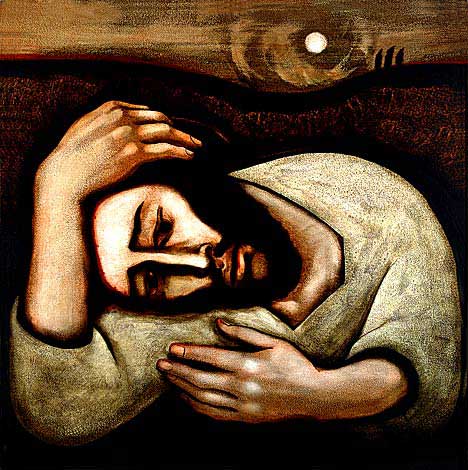
This urge to the inhuman is in us all somewhere. Evil, badness, cruelty all begin as a thought in someone’s mind. When someone decides to support the things that evil people do, that decision begins as a thought in someone’s mind. When we are tormented by what to do, when beads of sweat start forming on our foreheads and drop like grapes to the floor, we are experiencing something of the mental agony that we hear of in the Garden of Gethsemane.

All this because we have the power to choose, wisely or unwisely. The power to choose actions that might fracture (diabolic), or might build up (anabolic). The power to choose actions that might increase the amount of misery in the world, or that attempt to decrease it.

The story of Adam and Eve in the Garden of Eden attempts to explain why we humans so often get it wrong. It illustrates that when we choose for selfish reasons rather than for selfless reasons, we disturb the cosmos. It explains why we so often hide behind masks, spiritual cosmetics, spiritual fig leaves, rather than stand in full frontal nudity before the Divine.

Every choice begins as a thought. We need to be aware of our thoughts because we need to choose wisely, to have courage to stand for truth and right, to have courage to be nonconformist, and stand up to those who try to persuade us to do what we know we should not. We may be laughed at, scorned, cast out, sneered at. But from this suffering we grow in self-knowledge, and growing in self-knowledge, with all the shame and joy that such growth brings, is a step towards growing into the Divine. We have a guide.

* thanks to The Revd Elizabeth France

Then and now

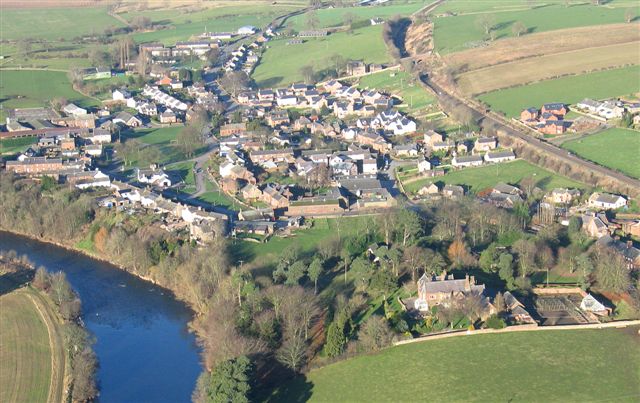
1-langwathby-5891bI was in the village of my childhood recently. In the 1950s there were at least seven working farms, with tractors, yapping dogs, animals herded along the main road, and cow dung spattered where feet did not fear to tread. It was smelly, noisy and messy.

Not any more. There are now, I think, three working farms. It’s all very clean. No dogs barking, no cows mooing or sheep baa-ing. No cow pats or sheep dottles decorating the roads.

It’s been ‘Cotswoldized’: second homes, suburban warfare, Chelsea tractors. Sterile.

We’re too clean. No wonder allergic diseases are on the rise when our immune systems are not challenged enough. In our ridiculously risk averse culture, kids don’t eat dirt any more. And why is there this obsession with washing and showering? Water is bad for your skin, and soap is worse. Muck falls off eventually.

I like mess. I like the outskirts of towns with the randomness of buildings and telephone poles and wires. I like the scattering of car shops, tyre shops, furniture shops, bathroom shops, burger shops. It’s all so normal somehow.

Some people have a vision of heaven that’s clean and tidy. A Midsomer village without murders where one’s friends live in ochre-coloured cottages along the banks of the stream, behind Kentucky-fried Georgian doors. I hope not. I hope it’s much messier than that. And as for murders, well, I have a little list ….

Life is messy. Relationships don’t do what you expect. Things don’t work out. Actions, or inactions, have consequences. Like a row of skittles where one falls knocking over the next, and the next, and the next …. endless and uncontrollable. This is the glorious mess of being alive. Stuff happens: you can’t control it.

Do you want to get to the end of your life regretting what you haven’t done because you wanted always to be in control? Or do you want to be able to look back knowing it’s been one hell of a ride?

Wisdom sage?

Wisdom sage

Here are three helpful bits of advice that my mentor, Homer Simpson, gave to his son Bart:

I want to share something with you: The three little sentences that will get you through life. Number 1: Cover for me. Number 2: Oh, good idea, Boss! Number 3: It was like that when I got here.

Chocolat the disturber

Holy Communion?

Holy Communion?

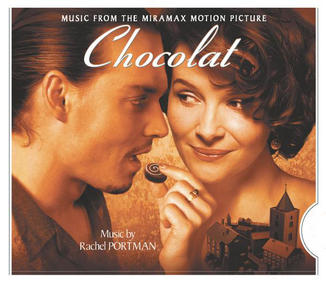
I’m not a huge fan of chocolate, but in Lent we’ve been watching the film Chocolat. It’s full of Easter messages. The wind (spirit) blows open the doors of the fusty church. Unhappiness is exposed behind a façade of pomposity. Hypocrisy is found lurking behind a judgmental personality. Power is used to oppress and abuse. God the disturber shows up dull complacency. Healing comes to the mayor only after he has been found in the metaphorical gutter having gorged on chocolate, that well known substance of Satan.

We see how “church” which at the beginning is an oppressor by the end has become a liberator. As the film runs, we see how heart-to-heart conversations result in smiles and colour and liberation. We see how eating together (com panis, bread together)—having a party—is sacramental.

Whether or not the novelist Joanne Harris had all this mind is neither here nor there: what matters is what we take from the story. For me, the film is about darkness to light, oppression to liberation, drowning to salvation, death to ascension, and the power of parties that include. As Père Henri in Chocolat said in his Easter sermon, “I think that we can’t go around … measuring our goodness by what we don’t do. By what we deny ourselves, what we resist, and who we exclude. I think … we’ve got to measure goodness by what we embrace, what we create … and who we include.”

In his novel The Power and the Glory, Graham Greene has one of his characters say “hate was just a failure of imagination”. The Holy Week and Easter story is about a group of people who were so threatened by new ideas that they put Jesus to death. A failure of imagination that resulted in hatred. Looking at the world today, we see the same forces at work. To take but one example, North Korea might be a long way away, but its threats have the power to destroy the world—and all because the governing clique lacks the ability to admit that new ideas could make things better. A failure of imagination.

Hatred is a failure of imagination. Love is the blossoming of the imagination. Love is expensive. Love demands letting go. Letting go is renewal. Letting go is resurrection. Letting go enables us to ascend.

Egg timers, black holes, Mary Poppins

Curved space-time

Curved space-time

A homily for Passion Sunday

Picture an egg timer. The sand in the top chamber is time and space before the Christ event. People are reliant on ‘the law’ and on rules, ticking boxes to get details right. It’s a monochrome world where the punishment fits the crime, where earthquakes signify the anger of the God(s), where illness is viewed as a consequence of transgressions, where people use force to assume abusive positions of power and control.

The sand enters the part of the upper chamber with sloping sides. Imagine Gabriel’s visit to Mary—that is, the Incarnation—happening as the chamber narrows. Imagine that the Nativity, the life of Jesus, the Passion, as the chamber becomes more constricted.

Imagine that the orifice between the two chambers is the death on the cross. Imagine that the time spent by the sand passing through that orifice is Jesus in the tomb and the harrowing of hell.

The sand enters the lower chamber. As the chamber widens out we have Ascension and Pentecost. If at the moment of crucifixion Christ becomes unrestricted by locality, then at the Ascension he is unrestricted by space, and at Pentecost by time. Cosmic Christ. The lower chamber becomes infinitely big, multicoloured, completely unconstricted. A wide place.

Now turn the egg timer upside down, and instead of thinking of sand falling from top to bottom, think now of it passing from bottom to top. Ascending. At the Ascension our humanity is lifted to the Divine. Made like him, like him we rise (Charles Wesley). The ascension is the vital part of the story, the resurrection merely part of it. Through the Ascension, man approaches the Divine. ‘God the Logos became what we are, in order that we may become what he himself is’ (Irenaeus).

Incarnation to Pentecost, the Christ-event, is all one, indivisible into sections. Just as for any one of us birth, growth, adolescence, prime, maturity and senility merge inseparably into one another, so also for the Christ event.

Maybe this egg timer doesn’t work for you. Try a cosmic image with the universe contracting down into a black hole, Golgotha, then bursting forth into a new colourful glorious renewed and resurrected universe. Imagine everything before Christ being concentrated into him in the black hole, and taken at the moment of crucifixion into a new world. ‘When the eternal word assumed human existence at his Incarnation, he also assumed temporality. He drew time into the sphere of eternity. Christ is himself the bridge between time and eternity … In the Word incarnate, who remains forever, the presence of eternity with time becomes bodily and concrete’ (Ratzinger).

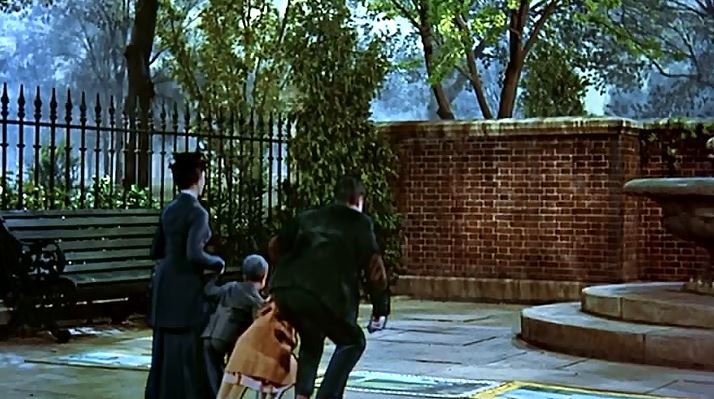
mary-poppins-jump1Or, if that doesn’t work either, then try bathos. Think of Julie Andrews and Dick van Dyke in Mary Poppins jumping through a dull London pavement into a brightly coloured new world where everything is supercalifragilisticexpialidocious. No, maybe not.

Is this true? Is it merely poetry, or myth, or allegory? It’s all these things—without the ‘merely’.

It’s not just something that happened 2000 years ago. It happens every day of our lives. It happens every time the penny drops about a situation that has troubled us. It happens every time we realize that we need to reassess priorities, to think again. it happens when circumstances force us to change direction, when we realize that we are at the end of a road, when we are at the end of our tether (Blessed are the poor in spirit), and that giving up what we once held dear will release us to possibilities as yet undreamed of. When we realize that the seed must die in order to flower. When, in psychological terms, we let egotistic self give way to selflessness. When I sacrifice ‘all the vain things that charm me most’, I move into new, more open, territory.

If we want to see Jesus then we must look this death full in the face. If we refuse to acknowledge the reality of death, we refuse to see Jesus. Confronting these deaths is some of the most difficult work we ever do. It is soul troubling. It is sweat inducing, headache making, wringing out Gethsemane work. But only then can the balloon begin to ascend, and the imagination take flight.

Resurrection as imagination. Compassion, enjoyment and fun begin to replace seriousness, separateness and superiority. Caterpillar to butterfly. Larva to imago.

What died on the cross? Self.

Union with God is a mystery that is worked out in human persons. The personal character of a human being who has entered on the way of union is never impaired, even though he renounces his own will and his natural inclinations. This is how the human personality comes to its full realization in grace. (St Isaac)

Biology is a wonderful thing

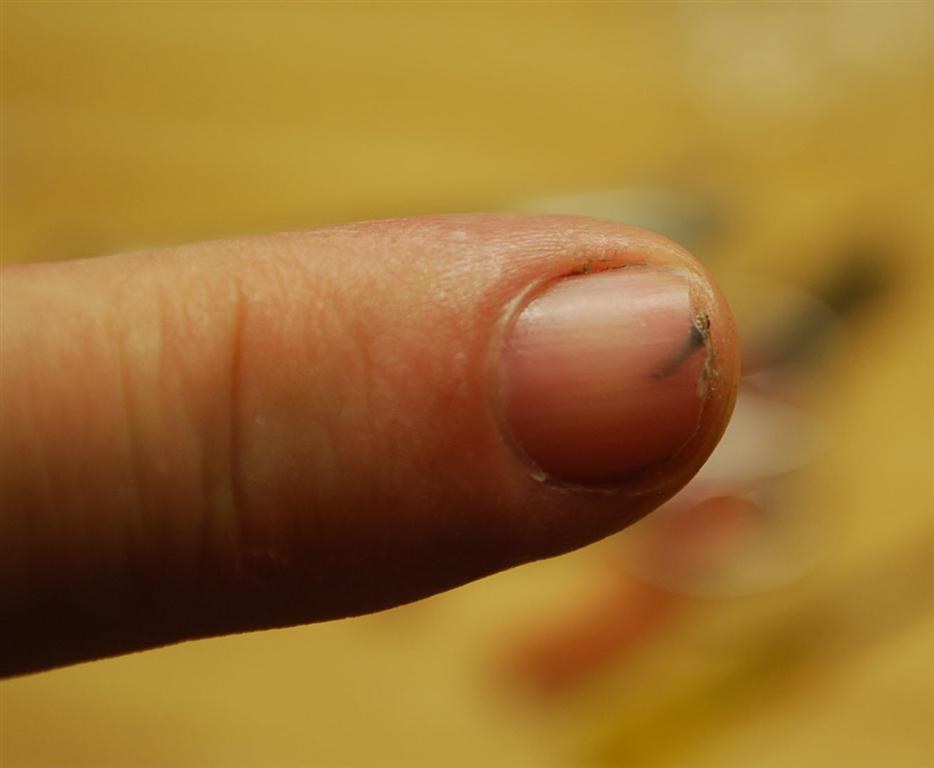
dsc0142bI was scrabbling around under the bed trying to retrieve the computer when – ouch – a splinter made its way under my index finger nail. First thing in the morning is not a good time for me to deal with this: I’m peering through lacrimal secretions that are still like gobbets of purest mud, and I need an industrial strength magnifying glass these days. So I left it alone for the moment. It began to hurt.

By the time I’d done a school assembly my eyesight was more conducive to digital inspection so I had a look. I could see a couple of millimeters of wood poking out from the edge of the nail so I grabbed it with a pair of tweezers and yanked. Out it came: about 7 mm of splinter. ‘Good, that looks like all of it, so problem sorted.’

Or so I thought.

That evening, it was still sore. It was beginning to swell. In the middle of the night it was throbbing. In sleepy gloom I’d already been admitted to hospital with septicaemia, and they’d had to amputate my finger, then my hand, then my arm. How much of me would they have to amputate before I stopped being me? Clearly, there was still some wood under the nail.

In the morning the finger end was red, warm, swollen and exquisitely painful. Rubor, calor, tumor, dolor. As soon as I could see, I took a pair of scissors and poked around a bit under the nail. Hell’s teeth, it hurt. There was something dark. Clotted blood or wicked wood? Whatever, it was I dug it out.

Now here’s the wonderful thing.

Within seconds, and I mean seconds, the throbbing abated. Within 15 minutes the redness had all but gone and there was no more swelling. After an hour there was no sign that anything had ever been amiss. I even remarked to SWMBO how marvellous it was.

Isn’t it remarkable how the body is so good at recognizing foreign material? And isn’t it remarkable that having done so, it knows as soon as, but not a minute before, the foreign material is no longer there? Imagine how efficient and busy the cells of the immune system must be to detect, act, repel, contain and relax.

Some scientists want to know exactly how it all works, and good luck to them. I’m happy to know that it still does, after all these years.