Chocolat the disturber

Holy Communion?

Holy Communion?

I’m not a huge fan of chocolate, but in Lent we’ve been watching the film Chocolat. It’s full of Easter messages. The wind (spirit) blows open the doors of the fusty church. Unhappiness is exposed behind a façade of pomposity. Hypocrisy is found lurking behind a judgmental personality. Power is used to oppress and abuse. God the disturber shows up dull complacency. Healing comes to the mayor only after he has been found in the metaphorical gutter having gorged on chocolate, that well known substance of Satan.

We see how “church” which at the beginning is an oppressor by the end has become a liberator. As the film runs, we see how heart-to-heart conversations result in smiles and colour and liberation. We see how eating together (com panis, bread together)—having a party—is sacramental.

Whether or not the novelist Joanne Harris had all this mind is neither here nor there: what matters is what we take from the story. For me, the film is about darkness to light, oppression to liberation, drowning to salvation, death to ascension, and the power of parties that include. As Père Henri in Chocolat said in his Easter sermon, “I think that we can’t go around … measuring our goodness by what we don’t do. By what we deny ourselves, what we resist, and who we exclude. I think … we’ve got to measure goodness by what we embrace, what we create … and who we include.”

In his novel The Power and the Glory, Graham Greene has one of his characters say “hate was just a failure of imagination”. The Holy Week and Easter story is about a group of people who were so threatened by new ideas that they put Jesus to death. A failure of imagination that resulted in hatred. Looking at the world today, we see the same forces at work. To take but one example, North Korea might be a long way away, but its threats have the power to destroy the world—and all because the governing clique lacks the ability to admit that new ideas could make things better. A failure of imagination.

Hatred is a failure of imagination. Love is the blossoming of the imagination. Love is expensive. Love demands letting go. Letting go is renewal. Letting go is resurrection. Letting go enables us to ascend.

Egg timers, black holes, Mary Poppins

Curved space-time

Curved space-time

A homily for Passion Sunday

Picture an egg timer. The sand in the top chamber is time and space before the Christ event. People are reliant on ‘the law’ and on rules, ticking boxes to get details right. It’s a monochrome world where the punishment fits the crime, where earthquakes signify the anger of the God(s), where illness is viewed as a consequence of transgressions, where people use force to assume abusive positions of power and control.

The sand enters the part of the upper chamber with sloping sides. Imagine Gabriel’s visit to Mary—that is, the Incarnation—happening as the chamber narrows. Imagine that the Nativity, the life of Jesus, the Passion, as the chamber becomes more constricted.

Imagine that the orifice between the two chambers is the death on the cross. Imagine that the time spent by the sand passing through that orifice is Jesus in the tomb and the harrowing of hell.

The sand enters the lower chamber. As the chamber widens out we have Ascension and Pentecost. If at the moment of crucifixion Christ becomes unrestricted by locality, then at the Ascension he is unrestricted by space, and at Pentecost by time. Cosmic Christ. The lower chamber becomes infinitely big, multicoloured, completely unconstricted. A wide place.

Now turn the egg timer upside down, and instead of thinking of sand falling from top to bottom, think now of it passing from bottom to top. Ascending. At the Ascension our humanity is lifted to the Divine. Made like him, like him we rise (Charles Wesley). The ascension is the vital part of the story, the resurrection merely part of it. Through the Ascension, man approaches the Divine. ‘God the Logos became what we are, in order that we may become what he himself is’ (Irenaeus).

Incarnation to Pentecost, the Christ-event, is all one, indivisible into sections. Just as for any one of us birth, growth, adolescence, prime, maturity and senility merge inseparably into one another, so also for the Christ event.

Maybe this egg timer doesn’t work for you. Try a cosmic image with the universe contracting down into a black hole, Golgotha, then bursting forth into a new colourful glorious renewed and resurrected universe. Imagine everything before Christ being concentrated into him in the black hole, and taken at the moment of crucifixion into a new world. ‘When the eternal word assumed human existence at his Incarnation, he also assumed temporality. He drew time into the sphere of eternity. Christ is himself the bridge between time and eternity … In the Word incarnate, who remains forever, the presence of eternity with time becomes bodily and concrete’ (Ratzinger).

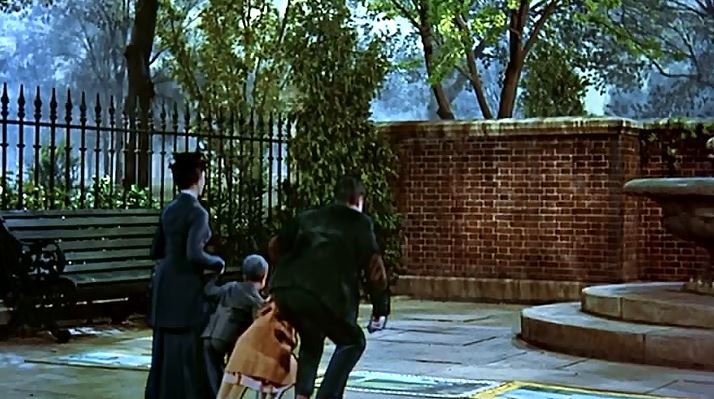
mary-poppins-jump1Or, if that doesn’t work either, then try bathos. Think of Julie Andrews and Dick van Dyke in Mary Poppins jumping through a dull London pavement into a brightly coloured new world where everything is supercalifragilisticexpialidocious. No, maybe not.

Is this true? Is it merely poetry, or myth, or allegory? It’s all these things—without the ‘merely’.

It’s not just something that happened 2000 years ago. It happens every day of our lives. It happens every time the penny drops about a situation that has troubled us. It happens every time we realize that we need to reassess priorities, to think again. it happens when circumstances force us to change direction, when we realize that we are at the end of a road, when we are at the end of our tether (Blessed are the poor in spirit), and that giving up what we once held dear will release us to possibilities as yet undreamed of. When we realize that the seed must die in order to flower. When, in psychological terms, we let egotistic self give way to selflessness. When I sacrifice ‘all the vain things that charm me most’, I move into new, more open, territory.

If we want to see Jesus then we must look this death full in the face. If we refuse to acknowledge the reality of death, we refuse to see Jesus. Confronting these deaths is some of the most difficult work we ever do. It is soul troubling. It is sweat inducing, headache making, wringing out Gethsemane work. But only then can the balloon begin to ascend, and the imagination take flight.

Resurrection as imagination. Compassion, enjoyment and fun begin to replace seriousness, separateness and superiority. Caterpillar to butterfly. Larva to imago.

What died on the cross? Self.

Union with God is a mystery that is worked out in human persons. The personal character of a human being who has entered on the way of union is never impaired, even though he renounces his own will and his natural inclinations. This is how the human personality comes to its full realization in grace. (St Isaac)
Lent as relaxation

censer-incense-burner-01Welcome deare feast of Lent.

We had beautiful Ash Wednesday ceremonies yesterday evening. Unaccompanied plainsong, psalm and Merbecke, and three gentle hymns. Whoever observed that in the catholic tradition music aids devotion and calms the spirit, whereas in the reformed tradition it excites the emotions, knew a thing or two.

Ash Wednesday is a wonderful feast of being human. Since dust we are and to dust we shall return, we might as well stop trying to be what we’re not. Ditch the personae, shed the skins. Relax into ourselves.

Lent as relaxation. Yes, relaxation. Letting go, loosening up. Freeing from constraints.

Relaxation from the constraints that we tie ourselves up with, and the new clothes we wrap around ourselves to appear bigger, brighter and better than we are, to impress others. (Evagrios the Solitary, 4th century: Of the demons … there are three groups who fight in the front line: those entrusted with the appetites of gluttony, those who suggest avaricious thoughts, and those who incite us to seek the esteem of men.)

Relaxation from the constraints that constitute addictions. I’m not suggesting we indulge them but, as it were, put them on the table in front of us and look at them full in the face. Addictions to food, booze, complaining, finding fault, having to win … and so many more. Hold them up to yourself and the Lord. You can’t let go of something unless you look at it and know what it is you have to let go of.

Relaxation – moving to a wide place. If we are not constrained, if our view is not limited, we have freedom of action, we are farseeing.

Relaxation – not laziness—far from it—but freeing up so each one of us can give to the world what only each one of us can give.

Relaxation – abstinence from things that hold us back. Don’t give up what you enjoy: that’s just another constraint. Rather give up what you don’t need any more. Let go of ways of thinking that you once needed but that now constrain you. Let go of hurts, resentments, oughts and shoulds. Let go of prejudices and attitudes that restrict your view of the world. Start saying ‘no’ to the expectations of others, and begin to get to know someone you’ve hardly ever met—no, not your maker, but yourself (thanks to W R Inge, sometime Dean of London, for this nugget of gold).

This Lenten abstinence has nothing to do with hair shirts, but everything to do with freeing up yourself for delight you had forgotten was in you. It’s about losing your ego, and rediscovering the Divine within.

Welcome deare feast of Lent.

What is truth?

4288759Whistleblowing is in the news. Banks and bankers are at it again. HSBC is caught with its knickers round its knees. UK tax authorities have allegedly been either negligent or complicit in not having acted on a tip off. Church of England Archbishops have been cosying up to the former chairman of HSBC, himself an Anglican priest, so make of that what you will.

Let’s not fool ourselves into thinking that this is unusual. Remember Mr Fred Goodwin and his antics when The Royal Bank of Scotland almost folded? I suspect that if there’s a bank that hasn’t yet made the news for the wrong reasons, it’s only because it hasn’t been found out. And it’s not confined to banks. Any organisation that has power will, in my experience, do everything it can to cling to its precious, at almost any price. Did you see the Belgian series Salamander when it was shown on BBC? The DVD is available, and I look forward to series 2. Is that truth or fiction? The powerless are pilloried by the powerful. Individuals are attacked by the mob. This is the law of the playground bully. If you were in any way unusual at school, you will know what it feels like to suffer at the hands of the unimaginative, and you will know to what ends you had to go to appease them.

For 19 years we lived in Ireland. Hardly a week goes by there without some new revelation of political chicanery, or some report of abuse of the powerless by the Church – an organisation that for reasons of history has been allowed way too much power over society. A dear friend, who worked for years in the Irish psychiatric hospital service, had a mantra that she impressed on me when I was having a spot of bother: “Might is always right and authority always upholds authority, so get used to it and watch your back”. I doubt it’s better here in the UK. It may even be worse: in this more complex layered society, with the networks of the largely public school educated élite who are in charge, it’s easier to hide things out of sight of the great unwashed—that is, you and me.

Whistleblowers always have a tough time. If you tell an unpopular truth, people will criticise you. Far better, it seems, to live in some artificial never-never land of make-believe than to dwell in the courts of straightforwardness and truth. Prophets are never popular. They have always suffered for pointing out the elephant in the room.

Lent is about a spiritual spring clean. The events leading up to Easter include the story of one who suffered for daring to tell it like it is. Pontius Pilate’s question ‘what is truth?’ is the anthem of the pragmatic appeaser. We need more whistleblowers. We need more people who are ready to tell the truth and who are willing to suffer for it. Are you? Am I?

Confirmation class 1

child-laughingI’m doing adult confirmation preparation for an accountant, a student of mathematics and a YMCA executive, so I’ve been forced to think about what I tell them. Here is my brief ‘catechism’ part 1.

The Divine (“God”) is the sum total of all that is beautiful, delightful, lovely, creative and ordered (i.e. just and true). There is a bit of God in everyone and everything: we are all broken off bits of God. “What is not God is nothing; what is not God is no thing.” Therefore, there is God in you and even in me.

God is the laws of science (logos), of physics, of the cosmos, … and much more. God is love. The perfect human manifestation of this is Jesus the Christ whose example and life we emulate as best we can in the circumstances in which we find ourselves.

Since none of us, despite God within, is perfect, we cock up. This is part of the human condition. Sometimes we do this intentionally and sometimes accidentally; sometimes by things we do that we wish we hadn’t, and sometimes by things we fail to do. We need to acknowledge our own mistakes, our own imperfection and our own helplessness. This is not to grovel, but simply to accept that we are not perfect and not in control, but that we will bash on doing our best as we see it at any moment in time. It helps if we can talk about all these things to a friend from whom we hide nothing. And if you don’t have such a person, a priest will do fine – anonymous or known, it does not matter.

The Divine within is like a pilot light. Incarnation. For us to be fully human that light needs to fill our skins from the inside. What stops it from doing so are things like pride, greed, avarice and showing off. To let it shine and fill us, it’s not that we need to DO something, it’s simply that we need to relax into ourselves, to recognize our pride, greed, avarice and showing off tendencies, and then let them melt away. When you lift up the lid of your psyche, you begin to see all sorts of grubs wriggling around. But then, in the warm light of love, they can begin to melt away as you love the hell out of yourself. This is at least a lifetime’s work.

“And if you want to know the way, be pleased to hear what he did say.” And what JC demonstrated is that we rise to the heights – we approach The Divine – when we let go of pride, greed, avarice, showing off – that is, when ego dies, and selflessness replaces selfishness. Crucifixion followed by ascension.

All the rest, the dogma, the doctrine, is poetry that has collected around the message. Much of it is of great beauty, psychological authenticity and ultimate truth. Some of it is past its sell-by date and should be ditched.

Life is a terminal condition

Dream as if you'll live forever. Live as if you'll die today.

Dream as if you’ll live forever. Live as if you’ll die today.

Please excuse me: I’ve written about this sort of stuff before, but I can’t stop myself doing so again.

TV adverts at the moment tell us: for the first time as many people survive cancer as die from cancer; together we’ll beat cancer; soon nobody will die from cancer.

What nonsense! It’s emotional manipulation to get you to give to cancer research.

If you don’t die from cancer, then what will you die from?

Maybe you think you won’t die at all. Maybe you’ll live for ever like the struldbrugs in Jonathan Swift’s Gulliver’s Travels, increasingly opinionated and cranky (some of us are like that already). At 80 years of age their marriages were dissolved because no two people could stand each other any longer, and they became legally dead, no longer able to own property. This is not unattractive: no taxes, no responsibilities, no leaking roofs to worry about.

Somehow, unlikely though it may seem, I think Swift was taking the piss.

Life is a terminal condition. Deal with it. We invest so much in doctors and drug companies because people can’t come to terms with that fact. We imagine that the next new drug or treatment will allow us to live for ever—or at least, for that bit longer.

Imagine you’re expecting to kick the bucket any day, then a new drug unexpectedly becomes available and you are told you have an extra month. What will you do with the extra days? Will you travel to where you’ve always wanted to go? Will you write your life story? Will you make sure that the people you think are gobshites know your opinion of them? (a very tempting option.)

When my mother was on her last legs with secondary cancer, she was put on morphine and had a couple of months at home. She asked me what to do. I said if I were her, I’d get a train ticket and go places I’d never been, though by then she was too ill to bother. After she died, my father bought a deep fat fryer, so that was soon the end of him. If we don’t die of cancer, I suppose heart disease will be the killer. Or murder—if the struldbrug character changes are an indicator.

What will it be for me? Road traffic accident? Heart disease (I like eggs; I like salt)? Cancer? Quite possibly cancer. I’m a bit of a worrier and there is evidence of cancer-genes in the family. Now just so you get this straight, cancer is not a disease, it’s a side-effect of ageing: the longer you live, the more likely your cells are to go out of control. Also, cancer is not God’s judgement. Cancer is not a punishment. Cancer, like so many other things, is just stuff that happens.

The game's up

The game’s up

Back to the plot. The beginning of the year is a good time to make peace with people you know you’ve offended or hurt. You might tell people who’ve hurt you that you bear them no ill will. You would then have a lighter heart, carry fewer burdens, and live more serenely. You can start this now, by living each day as if ‘twere thy last. Because it jolly well might be.

Wiping out this disease today means you die of something else tomorrow. Life—to repeat—is terminal, and you never know when the game’s up.

Drop down, ye heavens, from above

uctegt_2

Drop down, ye heavens

A woman is awarded a divorce settlement of £337 million. Babies are punched by their ‘parents’ such that the pathologist likens the injuries to those arising from the baby having been thrown from the top of a tower block. People are so intent on getting the latest gadget or fashion that they trample on other shoppers. There are over 13000 slaves in the UK. The banks are bailed out by you and me, but they still overpay their bosses and refuse to serve our needs.

Let’s get personal. I would love God to sort out those people who over the last three years in Ireland behaved so as to spoil our, and others’, lives there. I would love God to do unspeakable things to those who maim babies and children. And more. Perhaps this is why stories of revenge (Shawshank) are so well received.

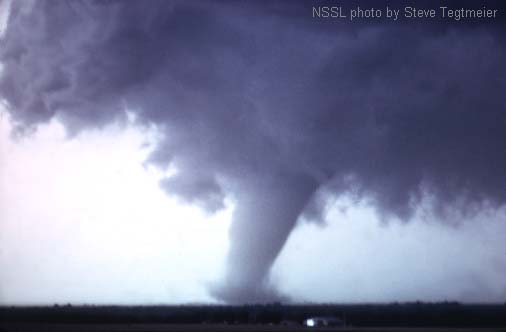
Drop down, ye heavens, from above, and pour down righteousnessCome like a tornado. Stir up thy strength and come and help us. Wachet auf! Part the clouds, stretch out your hand. Sort out this mess.

But hold on. The more I think of this image of us waiting for God to come and sort things out, the more disturbing it gets. It assumes that we are like children waiting for daddy and mammy to come and kiss it all better. Like so much religion, it makes infants of us. Surely, this can’t be right: the point of Jesus’ teaching is to help us grow up, not to make brainless nincompoops of us (though you often wouldn’t think that).

Come and sort this place out. And so he did. He came down to earth from heaven. He shared our human life, so that we can share His divine life. Admirabile commercium. God becomes one of us, and we have power to become sons and daughters of God. We are his hands and feet and eyes and mouth and ears. We all have the divine spark, the light, within. God acts in this world through us. So rather than waiting for Daddy to come and sort things out, what are we going to do about it? You and me?

How are we going to deal with a corrupt economic system that enables hedge fund managers to amass 700 million? Or sportsmen who are paid more in a minute most people in the world earn in a year? Or dictators who brainwash their people? Or people—us—who are so besotted with being acquisitive that we trample on other shoppers to get the latest gadgets or fashions? And more and more. Shall we demonstrate? Shall we rebel? Shall we organize civil disobedience? How about a national day of prayer and fasting? Or several such days. It would do us no harm. Gandhi showed how effective that could be. How else can we make our feelings known?

The trouble is that it’s not just about them—it’s about us. We are part of them. They are part of us. We might well amass £700 million if we could. We’re all addicted to bad behaviour of some description: holding on to power, greed, controlling others, booze, fags, complaining, gossiping, criticizing others, exercise, drugs, food. If you’re from the prosperous end of society, such addictions are encouraged and rewarded. If you’re not, they land you in trouble. But for all of us, these attachments steal our personalities, they change us, they eat away at us like caterpillars chomping leaves.

Come and save us. That ain’t gonna happen until we acknowledge the depths of our own addictions and our own need for liberation. Deliver us from evil. Deliver us from the evil parts of ourselves. This has to start with ourselves. That is what Advent is for: making us ready. Look in a mirror. Let the infant Christ grow in us as it is growing in Mary.

‘He was not idle all the time He was an embryo — all the nine months He was in the womb; but then and there He even eat out the core of corruption that cleft to our nature and us, and made both us and it an unpleasing object in the sight of God. …. [We] were by this means made beloved in Him … this the good by Christ an embryo.’ (Lancelot Andrewes 1614)

Thus He in love to us behaved,
 To show us how we must be saved
; And if you want to know the way
, Be pleased to hear what He did say.

The trouble is, we don’t. Happy Advent.

A call to action

Doomed!

Doomed!

Homily for Second Sunday before Advent, Year A, by Fr Phillip Jefferies

Zephaniah 1-7; 12-18. 1 Thessalonians 5: 1-11. Matthew 25: 14-30.

A devastating prophet of doom is the almost unknown and difficult to date prophet Zephaniah who saw the Judgements of the Lord in the affairs of history. But it’s not just Zephaniah! All three readings at mass today are what you’d call full frontal – even Paul’s first letter to the church at Thessalonica likens the coming of Christ to a thief in the night or the labour pains of a pregnant woman – grim indeed, and no escape. Nor, it seems, can we slip away into a comfortable parable in the gospel for today: the careful and cautious slave is roundly condemned!

If it were you or me and we were given only £300 (= 1 talent) to look after by someone we considered to be a bit of a tyrant, it might seem prudent to us, too, not to put it at risk. But, oh no, this parable isn’t about being careful, it is about risking it. So although we might be tempted to feel sorry for the third servant, we are not supposed to; put nicely, we might say nothing ventured nothing won – but the language of the parable doesn’t put it nicely: go to hell, says the harsh master, but with added venom!

The message from today’s Gospel then is very clear: get out there and live dangerously or there will be hell to pay. And as I said, the two supporting readings do just that: they support a tough understanding of what is expected at the coming of the Kingdom.

The Anglican calendar for these few weeks from the last Sunday after Trinity until Advent Sunday calls this period the Kingdom Season and the liturgical colour is red (that the Vicar likes red, or it’s the colour of his eyes, has nothing to do with it). Liturgically, red suggests fire and blood – drama and extreme cost. Are these fitting symbols for God’s Kingdom, do you think? Certainly, the readings, red in tooth and claw, as you might describe them, back up this view.

All this prompts us to ask whether the Kingdom of God might have more in common with a Caliphate than with a place for little children above the bright blue sky. I raise this somewhat fearful contrast not to be offensive, but to sharpen our minds to what precisely is being presented to us in the readings and in the theology of the kingdom of God.

I hear, as you do, of the radicalization of some young Muslims, one from our nearest city – up the road in Derby, and I wonder what they see about this United Kingdom of Great Britain and Northern Ireland which fails to galvanize their admiration and loyalty. Well, I don’t know for certain, of course, what they don’t like. I do know, however, what fails to attract me and tends to take away my pride (to quote G K Chesterton). We seem to have such a vacuous life style, with a thorough-going celebrity culture. Most of our public statements come from our politicians with all the bombast of the bull horn – especially on foreign policy; our entertainment, while much of the world starves, is about endless different ways to cook. Meanwhile, our collective public worship appears to be centred on past wars, some of them very questionable, and is all organised by the British Legion.

There! And I’m not a radical, just from the slow, old West Country – whence bloweth the gentle zephyr; but, nevertheless, before me, whether I like it or not, is this radical parable Jesus told – and told with such vehemence!

I’m no extremist, just Church of England; but here I am sharing in this celebration of the Holy Sacrament of the sacrifice of the body and blood of Christ. Perhaps it is I who need radicalizing! But perhaps the Holy Scriptures and the Holy Sacraments are, and should be, radicalizing in themselves; not into unspeakable degradation and violence, but out of any complacency and into confrontational Christian witness … Onward Christian soldiers!