The Skinners Arms

Skinner's arm

Skinner’s arm

I promised here a story of a performing lady and her abdominal scar. Here it is.

The year is 1973, the place south London. The time is Friday evening, and the story concerns four young men attending King’s College Hospital Medical School who were taking an evening stroll. As they proceeded from Camberwell in a north-westerly direction towards The Oval, a thirst descended upon them somewhere in salubrious north Brixton.

Behold, seest thou yonder hostelry?
Yea, verily. Let us thither hie to slake our thirst.
Aye, aye. Come, make haste.

It was—you’ve guessed it—the Skinners Arms (there is no information concerning whether or not there was an apostrophe, and if so where it went) on the corner of Vassall Road and Camberwell New Road. According to Wikimapia it is no longer in existence, having doubtless succumbed to town planners. Anyhoo … the four knights did enter.

If it be thy pleasure, fair serving wench, we parchèd wanderers each desire a tankard of thy most toothsome nectar.
Most certainly, wandering lords, quoth she.

Some time and several flagons later, behold the lights did dim. Music rang forth and lo, a performing lady materialized on the podium. This surprised the knaves. Nevertheless, they steeled themselves to witness a spectacle. The performing lady, they were astonished to see, gradually divested herself of her habiliments until she stood before the assembled company wearing only a two-piece bikini. She had a midline scar below the umbilicus.

Ah, comrades, espiest-ye the scar? Perhaps the lady hath undergone an hysterectomy.

It was not that the utterance itself was foolish, but rather the volume at which it rang forth, for the intended whisper cameth more as proclamation. If thou understandest that, thou dost apprehend the nub of the issue.

Thou art mistaken, fair friend, quoth the lady, for ‘tis an appendix scar.

And having uttered those very words the bikini-clad performer hied herself to the bench at which the knaves were seated, and sat on the knee of one of them, and polished his spectacles with one of her removèd garments.

Now, the knaves were, admittedly, junior medical students, but they possess’d enough knowledge to know that appendicectomy does not normally require a midline incision in the lower abdomen. Nevertheless, they sensed that circumstances were not propitious for further discussion of the issue. They felt that discretion was in their best interests, and without further quaffing or quoting they legged it onwards, returning to their lodgings to prepare for the rigours of the weekend. The young men were lucky, methinks, not to be set upon by the lady’s supporters.

The moral of this story? To draw conclusions from observations is good, but any proclamation of the same should be timely rather than immediate. The youth learnt a lesson.

Every sinner has a future, and every saint a past (Cardinal Hume, I think).

A salutary tale

399px-WLANL_-_MicheleLovesArt_-_Museum_Boijmans_Van_Beuningen_-_Eva_na_de_zondeval,_RodinThe south London children’s hospital again. Another story that does not reflect well on me.

Admission from Casualty. Young lad, about 6. A few bruises and a couple of broken bones. Once again, his name and his face are etched upon my memory. I shall call him Jason. A suspected battered ‘baby’ (the term used at the time). I examined him as best I could. He was apprehensive, watchful and suspicious of me. His father later came to visit as I was tending Jason in the glass-walled cubicle. I could hardly bring myself to speak to him—it would only have been ‘good evening’ anyway—and I could only just stop myself launching into a tirade. Fortunately I managed to control myself. Weeks later I was called to Camberwell Magistrates Court to give evidence, my first appearance in a court room. It was curiously low-key and inconclusive. I remember few details of that, other than that it happened. Not long afterwards, my job ended and I moved to Nottingham to become an Assistant Lecturer in Anatomy.

I assumed the parent(s) were guilty. They may not have been. Perhaps, as in one of Alan Bennett’s Talking Heads monologues, the child bruised easily because of leukaemia, and/or had brittle bones. I am ashamed of my rush to judgement. I was very young and our daughter was about 6 months old at the time. I worked a two-in-three rota, and was home only every third night.

Please don’t underestimate the emotional pressures on doctors, young doctors especially and those working with children in particular. I can say that the emotional pressures on pastoral clergy are similar, though less intense. This experience, and many others, make me pretty sure that it is just not possible for a sentient human being to be ‘neutral’ about anything, Our own experiences colour what we see and hear and how we think and react, and our emotions cause us to do extraordinary things, some of which we will regret.

It’s called being human.

Where the bee stings, there sting I

bee-sting-1717_2Another story from the south London children’s hospital. It doesn’t reflect well on me.

It was a lovely balmy summer evening in 1976 (remember, dear reader, that I qualified as a doctor in June 1975). The air was scented with the sweet odour of traffic fumes from the adjacent A3 and A23. The occasional subterranean rumble signalled a passing Northern line tube. Passers-by gaily shouted greetings to one another as they merrily made their way to the Skinner’s Arms on Camberwell New Road for an evening’s intellectual exchange over a pint of golden nectar. [Sorry to intrude here, but I’ve another story about the Skinner’s Arms that could be told. It involved a performing lady and her abdominal scar. Maybe another time. Back to the plot]. The day was ended, ward rounds, theatre sessions, drips inserted, consultants humoured, parents talked to, emotion drained. I was the only doctor in the hospital, and I’d gone to bed.

In about the 40th hour of a continuous shift lasting three working days and the two intervening nights, the phone rings about 11.30 pm. It was the night porter.

Go to A and E, there’s a child in distress.

Indeed there was: a boy about 8 years old. He’d been stung by a bee (maybe a wasp, but the blog title wouldn’t be as good) that morning, and the resulting inflammation was bothering him. I tended the child as best I could. Painkillers, emollient cream and so on. Then I made my big mistake. I said to mama:

I’d gone to bed. I’ve been on duty for over 36 hours. Why have you waited till now to bring your little darling [well, I didn’t say that, quite] to hospital?

The mother, who worked as a nurse in St Olave’s Hospital, elsewhere in London, was outraged. She blustered:

I won’t be spoken to like that.

She obviously felt guilty and was embarrassed. She continued:

I wouldn’t be spoken to like that at St Olave’s.

My turn now.

Then you’d better go there next time.

And off she and the heir apparent stomp.

The moral of the story? There are several. They include (1) take your complaint to the doctor before the crepuscular fall in endogenous corticosteroids makes it worse; (2) remember that doctors are human too; (3) choose a hospital that is properly staffed by doctors rather than administrators. If you can find one.

Need’st thou strive officiously to keep alive?

Holy Wisdom

Holy Wisdom

In 1975 and 1976 I worked as a junior hospital doctor in a children’s hospital in South London.

Once upon a time, in 1975, Simon (not his real name) was born with congenital biliary atresia. Liver damage meant that he would not see five years of age, and surgery at that time was ‘experimental’. Simon had repeated operations. I enter the scene in April 1976, a fairly newly qualified doctor, right at the bottom of the medical hierarchy. I am the first on-call doctor to carry out the consultant’s wishes during the day. I perform hands-on procedures such as intravenous drug administration. I am on call for two out of every three nights and weekends, at which times I am the only doctor in the hospital. Simon requires attention, often lengthy, during the small hours most nights. He has drips inserted into scalp veins. These frequently become displaced or blocked, causing swelling, inflammation and infection. It is my job to re-insert the drips into one of the increasingly few veins available. Simon is jaundiced, conscious and whimpering while this is going on. The memory of his large eyes looking at me as I am causing him pain is with me 37 years later.

During the next few months Simon has two further abdominal operations, a total of five so far. Sotto voce discussions during ward rounds acknowledge that Simon will die, but that perhaps another operation should be attempted. Face-to-face discussions with parents (Simon is their first child) are less realistic, or more upbeat, depending on your viewpoint. His parents are perplexed, distressed and uncertain. After the last operation I say to the consultant—remember I am the lowest of the low on the medical food-chain, ‘wouldn’t it be best for him and his parents if he were allowed to die with as much dignity as we can provide and he can muster?’ I am ridiculed and condemned for my views. My reasoning that this would have allowed his parents to begin to pick up their lives, grieving as necessary, and try for another child, is simply not heard. Simon undergoes hepatic surgery for the sixth time. A few days after this, Simon dies about 20 months old. This story is accurate inasmuch as my memory is reliable, long-forgotten details surfacing as I type.

Here are some of the issues raised by this story:

  • Best interests? Whose? Simon, parents, society, doctor?
  • How is unnecessary surgery justified? How can we know it’s unnecessary until it’s been tried?
  • To what extent do doctors put the needs of research and career advancement before those of patients?
  • Practising surgical techniques on babies for the possible benefit of those in the future.
  • My advocacy of allowing the child to die could be interpreted as advocacy of killing (Dr Leonard Arthur at Derby in 1981).
  • The effects of illness on the family, and the role of the medical profession in prolonging this.
  • Difficult treatment and practical procedures being in the hands of the least qualified (me).
  • The effect on me of being left to deal with Simon and his parents, especially at night.
  • The role of managers and senior medics in not providing adequate training and support.
  • The expense to the community of keeping alive, and providing expensive surgery for, those with no prospect of even medium-term survival.
  • Giving information to relatives: the balance between providing hope—that is, probably telling lies, or giving straight facts.

Was it arrogant and presumptuous, evil even, of me to want to leave Simon to God, or nature if you prefer, with only compassionate care? Was it selfish of me to want fewer disturbances at night? As a result of Simon’s needs, I was less well-rested for other patients. Is it appropriate that Simon’s parents were not consulted but were told what would happen to him? The relationship between the ‘healer’ and the sick should be open and honest. In this case, it was not. I was constrained by the instructions of bosses and did not have the courage to disobey them. I was feeling, though not acting, as if I alone knew the mind of God.

How do we weigh the needs of the individual against those of community and colleagues? We have to make judgements, although to do so today is often condemned: ‘to defend distinctions of value … is to offend against the only value-judgement that is widely accepted, the judgement that judgements are wrong’ (Roger Scruton).

Suffering genes

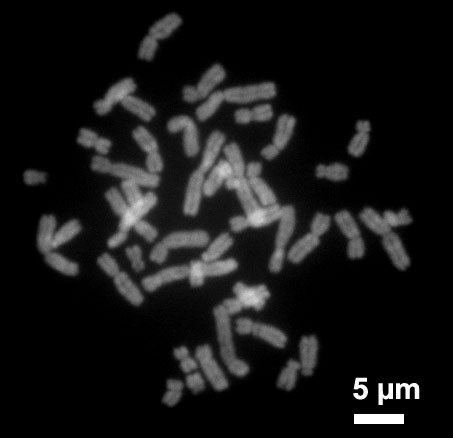
HumanChromosomesChromomycinA3We reckon medicine to be about the relief of suffering. It seems to me that Jews and Muslims are more enthusiastic about this than many Christians. Despite the holocaust, Jews embrace forms of genetic engineering. Rabbi Immanuel Jakobovits reportedly advised against marrying into a family known to carry an inherited disease. This refreshingly honest attitude is not confined to genetics: Orthodox Jews accept contraception when a pregnancy is likely to threaten a woman’s health—something officially forbidden to most Christians. R M Green writes that Talmudic sages denounce the glorification of suffering, and prefer to forego future reward if it involves present agony. This is attractive! It’s as if over the centuries Jews have had enough suffering and want to minimize it in the future.

In Christianity, by contrast, there’s always been something of a suffering-is-good-for-you masochism. St Paul says as much. Some Christians seem to glory in suffering. Their aim is not to avoid pain but to embrace it. We all know people who make a virtue of enjoying ill health. ‘After all’, they say sanctimoniously, ‘Jesus knowingly goes to the cross, and in this suffering I’m imitating Our Lord, and present with those who suffer’. Pass the sick bag. The logical position for these people would be to eschew antibiotics, elastoplasts, analgesics, hip replacements—the lot.

And yet, and yet … I can’t pretend to be logical or consistent. Given our human ability to take a tool for good and turn it to evil ends, I’m ambivalent about gene therapy. My wife and I decided when we were both reproductively intact, now long ago, that we would not have amniocentesis when she was expecting, for the result would not change our minds about allowing the pregnancy to proceed to term. The practice of medicine is, at root, antibiological and antievolutionary, and you could say that all medicine is a form of genetic engineering in that helping the ‘less fit’ to survive and reproduce weakens the gene-pool. Despite the considerable benefits that genetic medicine can bring, our use of it indicates intolerance of imperfection and disability. And so does plastic surgery, bodybuilding, cosmetics, and obsession about weight. There was a time in my life when I fell victim to this as a ‘gym rat’. Now I see these as indicating a quest for perfection and immortality that is a perversion by the satanic advertising industry of a perfectly reasonable spiritual quest for wholeness.

Yes, I know, such agonizing is a disease of materialism. But I live in 21st century Europe and am confronted by such issues. Even so, perhaps especially so, there are boundaries to be laid down about what is and isn’t permitted by society, and what can and can’t be available at public expense. Who will draw these lines? Politicians don’t seem to want to, and neither do medics. Ethicists and theologians can twist anything to suit—and do. Herbert McCabe (1926–2001), a Roman Catholic priest, theologian and philosopher, is reported as saying ‘ethics is entirely concerned with doing what you want.’ Maybe we should remove all controls and let people do as they wish—at their own expense. I think not.

Exam season and delight

Joy, joy

Joy, joy

I have a June birthday, and therefore many happy birthday memories of sitting in sweaty exam halls wondering what to write next, unable to fathom some knotty problem. I was not a quick worker, though I could ramble on and on in essay questions. Here are a couple of Physics questions that came my way: If a pendulum clock keeps time at the foot of the Post Office Tower in London, estimate its error at the top. And another: Estimate the weight of the heaviest insect that can be supported by surface tension on a pond. Nothing given, everything had to be estimated. Here is a question I liked rather more: ‘Architecture is frozen music’. Discuss.

I recall that one early summer Sunday in 1970, when it was my turn to do the prayers at Evensong in Queens’ College Chapel, Cambridge. I asked that we might ‘attain the results we deserve.’ It caused some consternation, and that year, the end of my first year, I got a third. Not good. Quod erat demonstrandum.

In those post-WW2 babyboom days, education was seen as a means of bettering oneself, and increasing one’s chances of getting a good job. Those were the days in England when what you knew was more important than who you knew. Those days, now gone in England I think, have not yet arrived in Ireland. We hear politicians lamenting the brain drain from Ireland, and yet here, more than anywhere else I know, people boast about pulling strings, and ‘having a word’, and sidestepping the system. Perhaps that’s one reason, other than economics, why young people emigrate.

Queen Elizabeth Grammar School, Penrith

Queen Elizabeth Grammar School, Penrith

Some people are very bright. They do little work and yet outshine the rest. They are positively sick-making.  Some people acquire ‘cop-on’ and learn to play the system. Some people know exactly what they will do, and they do it. Some spend their lives exploring, trying this, trying that, and so end up as a Rector in Co Laois. I recall feeling apprehensive a fair amount of time as a student, never sure why I was there, and without any vision of a future. Now that I come to think of it, that’s still pretty much the case, though the apprehensiveness (apprehension?) has largely dissipated.

I don’t know anything any more, and I certainly have no idea if I got the results I deserve, or if anyone ever does. But I send my warmest greetings and blessings to all students and hope that they will, whatever results they get, live with delight and bring delight to others. Nothing else matters.

Church militant? Church irrelevant

At least this is a natural hypnotic

At least this is a natural hypnotic

Look at the pictures of the 2013 General Synod in Armagh. Same old, same old. Where are the new faces? Where are the young people? Read the accounts of business. Where’s the reality? Where’s the vitality? Where’s the strategy? Where’s the vision? Where’s the engagement with science, with society? Why are Bishops apparently obsessed with sex, but say next to nothing about injustice and usury? Listen to the way at Diocesan Synods that rabbit’s friends and relations are voted into vacancies, or retiring members are immediately re-elected. See how fear of reprisal influences voting by show of hands.

Is this a portrait of a thriving organisation? It is not. It’s a portrait of an irrelevant and self-congratulatory club in which old people plan a future they will not be around to see. What’s the point of spending money on prizes for blogs, websites, media? Who, outside the membership of the select little club, cares a damn about this piffle? I’m reminded again of Aer Lingus being awarded the prize for the best Irish airline by Cara, the in-house magazine of Aer Lingus.

Well over half the clergy in this diocese are over 60. Will we be replaced? Even if replacements can be afforded, where will they come from? I suspect the trickle from Rome has peaked. Some of us come from England, and there are some from the kingdom of Far Far Away, but the church can’t rely on them. The Church of Ireland community can hardly be said to be enthusiastic about fostering vocations. Look at the pictures of synod again: how many of those people can even manage to get their children and grandchildren to come to church?

In Co Laois there are eight paid Church of Ireland clergy. Costs are rising, property taxes are passed on to churches. People are increasingly hard-up. Crisis looms (crisis does not mean opportunity—that’s management-speak invention). How long before eight are down to three: north, central, and south? And as for churches: there are too many. So close some. Simples.

What’s the chance of a rational and clear-headed discussion of these issues? None. It’s all about tribal identity, posturing and self-gratification. If the Church of Ireland population were even a fraction as loyal and committed as is the Muslim population, churches would thrive and lives would be changed.

Anabolism and diabolism

hard-heart-wire-frame1-1024x682I’ve been told by a well-wisher that s/he looks forward every month to my writings in the Diocesan magazine. Not only that, they get better each month. This is a comforting message. It builds me up: it is anabolic, and I need that. It comes at a time when I hear that some parishioners scan my every word in the magazine and on this blog for something they can use to have me drummed out. It comes the day after one complaint that parish accounts were not available (a pile of them were in the church porch for over a month), and another, surprisingly vicious, that the pewsheet had the wrong readings in it (year B, not year C). It would have been helpful had the complainant offered to be responsible for pewsheet production.

The well-wisher said that s/he did not know of a Church of Ireland parish in which all was sweetness and light, and knew of several that were riven with discord. S/he wondered how anyone these days could stick the hassle of being a Rector. I knew the Church of Ireland between 1988 and 2003 and then again from 2011. Someone in early 2012 asked me what it was like coming back, to which I replied ‘I forgot just how unpleasant some members of the C of I can be to each other.’ Fortunately, for all the vexatious members there are more delightful ones. Ministering to all is a privilege, and ministering to the delightful is a pleasure.

You would think that the church would be less prone to fault-finding than other organizations. Sadly, the opposite seems to be the case—spectacularly so in the C of I. I recall complaints brought against the Revd Michael Bland, the Rector of Buckland with Snowshill (Gloucestershire), in the 1960s. When asked about the angry emotions felt by some of his congregation, he said: ‘Quite right. Get the violence off the street and into the Church where it belongs.’ Why the aggro? Is it because church is the place for power-games? Is it because church is the tribal totem? I can’t see what the discord has to do with the man in sandals. Perhaps the church has a death wish: they forget nothing, they learn nothing, as it was reputedly said of the Bourbons.

Seeking whom he may devour

Seeking whom he may devour

Grumbling and gossip are diabolical. They splinter—that’s what diabolical means. The shards of glass from the devil’s mirror at the beginning of Andersen’s The Snow Queen turn the heart to ice and corrupt the vision. Guilt and shame harden the heart. As for corrupting the vision, look into the eyes. The retina is the only bit of the central nervous system that is visible to an observer. The eye is the window of the soul: eye structure and personality are linked, researchers suggest, because genes responsible for the development of the iris also influence how the ‘personality part’ of the brain is wired up. And notice how shame and guilt affect the way that people hold their heads and move their eyes.

Hardness of heart is what the psalmist warns us about. It makes us insensitive to the woes of others. It makes us obsess about self. And the harder it gets, the greater will be the mess when it eventually shatters–as certainly it will.

Speed these lagging footsteps; melt this heart of ice.