Why did the Samaritan cross the road?

800px-Moose_crossing_a_roadHomily for 14 July 2013 (Proper 10, Year C)

Deuteronomy 30: 9-14. Psalm 25: 1-9. Colossians 1: 1-14. Luke 10: 25-37.

What is there to say fresh about such a famous text? Perhaps it will do no harm to hear it again.

Duty versus love. Placing duty over love is what the priest and Levite did. There are times when we’ve all done that. There’s a scene in John Le Carré’s Smiley’s People where George Smiley is writing to Karla to confront him with evidence of his duplicity. Karla, the Russian secret service boss, demands loyalty to the system above all else, and anyone who transgresses is imprisoned or worse. But he has a secret. He has a daughter, supposedly with psychiatric illness, hidden away in a clinic in Switzerland. He channels some of his budget into secret accounts to support her. He is not living by the standards of duty that he exacts from others. George Smiley writes to Karla: ‘you have placed love above duty’. Karla has at last done right, but at the cost of having to leave home, lose respectability and become an outcast. This is the penalty that comes of doing the right thing. And the longer we delay, the heavier the penalty.

Who is my neighbour? The lawyer wants a definition of ‘neighbour’ so that he can do things by the book and keep his nose clean. If you’re a Liverpool supporter, the neighbour in need could be a Man U supporter. If you’re a Laois supporter, the neighbour in need could be a Carlow supporter. If you’re an ardent republican, your neighbour could be a royalist. If you’re out of work and in negative equity, the neighbour in need might be a banker.

It’s easy to fall into the lawyer’s trap. You could say ‘central Africa is a long way away and I don’t come across the starving millions in my daily activities, so they are not my neighbours. Anyway, I wouldn’t know about them if it weren’t for modern communications.’ This is being like the lawyer, wanting to define ‘neighbour’ so that you can draw lines in order to do things by the book and keep your nose clean. Or you might say: ‘is he really in need? I saw that so-called beggar arrive round the corner in a Mercedes.’ Or you might say: ‘she’s got a medical card and is better off on benefits than I am.’ These are distractions, I think. I have sympathy with those observations—there is nothing in Scripture that says we should not be responsible for ourselves and there is nothing that says we should expect a free ride (the opposite, in fact)—but to draw lines like this is to be like the lawyer. If you see someone in need, help them. End of. When I come into your presence I become your neighbour.

Think about the Samaritan. Did he stand to gain by crossing over and helping? He would have been delayed, and he was certainly out of pocket. Everybody helps friends and people they like. But are we willing at some personal cost to help anyone who needs it? It’s easy to chuck cash into a church gate collection. You feel better about yourself. I feel uneasy about such collections. It’s like having a fix of chocolate, or toast and butter. They lull us into a self-satisfied glow, at least for a short time. Love in practice means action, something personal. Throwing coins into a bucket is cosmetic and spiritually dangerous for it induces complacency.

Teach us, good Lord, to serve thee as thou deservest; to give and not to count the cost; to fight and not to heed the wounds; to toil and not to seek for rest; to labour and not to ask for any reward, save that of knowing that we do thy will, through the same Jesus Christ our Lord.

Think about the victim. What does he, a Jew presumably, feel about being even touched, let alone helped, by a Samaritan? Would he allow it if he were healthy? Are there people you don’t want to touch you? Are there some people you will not sit next to? Do you know someone who refuses help from certain people? That kind of pride, to which we are all prone, harms only the proud. When you’re at death’s door, you will accept help from anyone. When you’ve lost everything, you’ve nothing else to lose. If I refuse someone’s help, I haven’t suffered enough yet.

The Samaritan is Jesus. The priest and Levite represent Jewish law that advises people to avoid sin. This is a bit like advising chocoholics to avoid chocolate, or me to avoid salt. No use at all. It’s help we need! The help, the healing comes from someone—the enemy in the story—who has crossed to the other side (God to man). An unlikely source. The Samaritan/Jesus takes the victim to the Inn. The Inn is the church and its sacraments: the cleansing waters of Baptism, and the Body and Blood, ‘the spiritual medicine of the People of God’. All of us who have been baptized, very members incorporate in the mystical body, can be Christs, ministering to the world. In Colossians we hear of Jesus (the Samaritan in this story) as the image of the Divine. God is love, and Jesus is love in action. In God there is no un-Christlikeness at all.

Part of me is a world-weary cynic, worn down by slithering and slimy politics of academic life, church life, government scandals, bureaucratic nonsense, trials of daily life and the shame and mistakes that come after 63 years of consciousness on this planet. This part of me is the priest, the Levite, too busy, too weary, too impatient to stop. But part of me is still a wide-eyed mischievous 6-year old, open to the world, trusting and naïve, who thinks that people are basically good despite our inevitable cock-ups. This part of me is the Samaritan, and this part of me is the bit that I can concentrate on. We are all called to be Samaritans. As the writer of Deuteronomy says: the word is in your mouth and your heart.

When I come into your presence, or you into mine, we become neighbours.
Travelling light

Where next?

Where next?

If you’re going on holiday, what will you take with you? In the days when I travelled more than I do now, it was fascinating to see some people checking in huge amounts of luggage, and others next to nothing, even for long-haul flights. When our three children were children we went on quite a few Eurocamp holidays to France. The rule was: take no more than fits in a supermarket plastic bag. The children were on the whole left to do their own packing, and their judgment was usually spot on. Of course, a favourite toy had to fit in the bag, and quite right too. I learnt the hard way that travelling light is best. On one flight to the US Susan and I were questioned closely by security staff at check-in because we had so little. I think they thought we might be suicide bombers so wouldn’t be coming back. (Do I look like a suicide bomber?)

travel_lightOver the past few weeks lectionary readings have been advising us to travel light: no baggage, no looking back, concentrate on essentials. Travel light in every sense, not just luggage, but also attitudes, obsessions, addictions, shoulds, oughts, other people’s expectations …. ditch them. I know, it’s easier to do this as one gets older and cares less what other people think. I know, when you’ve got a boss breathing down your neck, and targets to meet, and others to placate–all this makes it difficult to travel light. There’s the mortgage to pay, and the children to clothe, feed and educate. In days not long gone, men in particular found themselves stuck on this treadmill. Now, with both parents in many households having to work, it’s worse still.

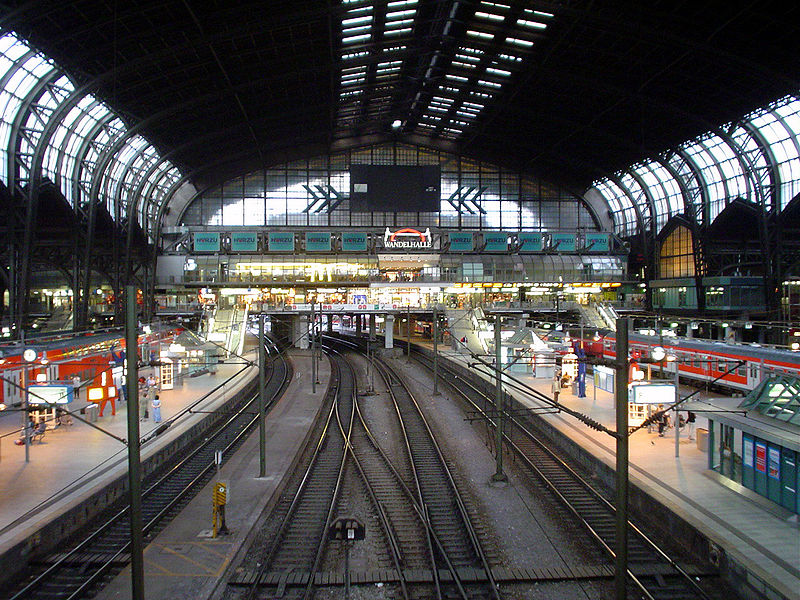
‘I want’ used to mean ‘I lack’ (as in ‘there is nothing I shall want’). Now it seems to mean the opposite: ‘I must have, I absolutely can’t do without’. All piffle of course. We can do without anything if we set our minds to it. Jack Reacher carries only a toothbrush and buys cheap clothes as he travels. Mind you, he has money in his wallet. He can’t have been married. There’s something wonderfully liberating in arriving at a port or a railway station, not having to be anywhere in particular and going where one pleases. We arrived at Hamburg Hauptbahnhof on one holiday in exactly that position. We ended up in Weimar that night. Cain was made to wander the earth as punishment.  Was it really punishment?

Happy summer. I hope you find refreshment somehow. Take what comes and enjoy it as best you can. Travel as light as you can.

Depths and deliverance

450px-Agua_de_gelo_Ice_Water_Agua_de_hieloHomily for 23 June 2013 (Proper 7, Year C)

Isaiah 65:1-9. Psalm 22:19-28. Galatians 3:23-29. Luke 8:26-39.

Do you believe in evil? Read the news. It’s hard not to. Why do people do evil things? Do you think that we are all pure, but open to infection by evil ‘out there’, just as we are open to infection by microbes? Since every evil deed begins as a thought, does that mean that evil ‘out there’ worms its way into our brains to create a thought? Or do you think that we have evil ‘in here’, living with us, part of us, and we need constantly to be on guard that it doesn’t grow within us? Do you believe in demons? And if so, do they live in us all the time? Does ‘deliver us from evil’ really mean ‘deliver us from the evil part of ourselves’?

It’s easy, as with all scripture, to get bogged down by the details of today’s Gospel story. Big picture level, it’s about Jesus calming a disturbance. In this case, not the disturbance of a storm on water but a disturbance of mind. All this boils down to the healing of a gentile outcast. And so the sermon could end now, the message being the power of the Lord to bring release from disturbance. As the hymn says:

Turn your eyes upon Jesus, Look full in His wonderful face, and the things of earth will grow strangely dim, In the light of His glory and grace.

If, like me, you think that evil is part of every one of us, then following the advice of this ditty might mean that we allow ourselves to be brainwashed by ‘the truth’ in order to prevent evil from growing within. Not a bad outcome.

End of sermon? Perhaps not. Having said that there’s no need to dwell on details, I find them intriguing. Jesus goes deliberately into Gentile, unclean, territory. Shocking! There’s the strange detail of the man living among the tombs. There’s open talk of demons as causes of psychiatric disease. This is not popular today. Why did Jesus ask the demon its name? Why the pigs? With our tendency to go all doe-eyed at any mention of animals, it’s hard not to feel sorry for the pigs. Why the steep bank? Why the water?

Let’s get some of those details out of the way, remembering that words are used to paint pictures.

Demons were regarded as the cause of disturbing behaviour. And they still are by many of us. The steep bank is the edge of the abyss, and the abyss was the home of all demons: pandemonium. In Holy Scripture, water symbolizes the chaos and disorder of messy life. What about the names? The first thing we want to know about someone is the name. In some small way it gives us power over them, a ‘handle’. By asking the demon its name, Jesus claimed authority over it. It, or rather they, recognized his authority, for they pleaded not to be sent to judgement in the abyss. Jesus, for whom as a faithful Jew pigs are unclean, sends the demons into the pigs, and off they go to drown in water. Water, hydrogen and oxygen combined, is very strange stuff. It is very heavy. It kills. But we need it. It refreshes, it cleanses, it rehydrates and revives. Today is a great day for a baptism. Parents and godparents are asked if they reject the devil and all demons that rebel against God. Then water on the one hand washes away the demons, and on the other, in the words of the epistle, clothes the (usually) child with Christ.

And so the sermon, once again, could end. But I’ve left the best bit to last. What of the tombs? The Greek word used here for tomb is mnema, from which we get mnemonic, memory, memorial. Think about the relationship between psychiatric disease and being stuck in the past. Think about how when we retreat into memories of times past, we get stuck—entombed—there. Like a black hole that sucks everything into it, we start to live in the tomb of memory with the door closed, unable to look outward. Dementia. Locked away. That’s what happens to some people as they age and lose function in part of the brain that deals with recent memory, leaving only the long-ago memory. That’s what happens to people who choose not to let go of the past, and who can’t let go of past grievances. I think water symbolizes not just chaos and disorder but also the human mind. It’s a fact that we humans know more about the stars and the planets than we do about what’s going on in the depths of the oceans on this planet. Likewise, we don’t know what’s going on in the depths of our minds. But we can try to let go of those things that drag up down into them.

Maybe that’s what today’s story is really about: Jesus opening the tomb of memory, so that the man’s demons of the past are banished, like the pigs, into the cleansing water. Rolling away the stone that entombs us in our memories enables resurrection and new life.

Heart water at a meal

40-16Homily for 16 June 2013

Psalm 32. 2 Samuel 11:26-12:10,13,14,15. Luke 7:36-8:3

It’s easy to say that rules apply to others. It’s hard to remember that they apply to me as well. King David was outraged by the story of the rich man stealing the poor man’s lamb. Yet he couldn’t see, until it was pointed out to him, that he had done worse. David had been an adulterer and had ordered a murder, and nonetheless he had the courage to ‘fess up. One can commit enormous mistakes, but one can also acknowledge them, change one’s life and make reparation.

A couple of weeks ago we had the centurion who doesn’t think himself worthy to have Jesus as his guest. Today we have the inverse: Simon the respectable religious man who is positively offhand about welcoming Jesus as his guest. Offensive even. You couldn’t make up stuff like this.

Jesus is known to eat with sinners, thieves, drunkards, gluttons. I wonder why the Pharisee invites him for a meal. Is it so that he can lecture Jesus on what he should be doing? Like those drivers who overtake you and then slow down and ‘show’ you how to drive?  Simon disregards all the normal courtesies. He doesn’t ‘kiss’ Jesus in greeting. He doesn’t allow Jesus to wash his feet, let alone wash them for him, essential and expected in those days with dusty and dirty tracks. He doesn’t offer any means of ‘freshening up’.

Then there’s the meal. Men only, of course. The ‘table’ is lower than knee height. They recline on cushions on the ground, feet out behind them. I’ve been at meals like that in the Middle East. They take a long time. A woman of ill-repute barges in. Imagine, an uninvited woman in a men-only meal. A woman shunned by respectable people. A money-lender perhaps, or a grasping landlady, an informer, a notorious gossip, a prostitute. Maybe she had simply married a Gentile. A mixed marriage. What a sin. The woman doesn’t say a word. She simply acts. She lets her hair down in front of a man who is not her husband. This is sexually provocative. It is ground for divorce. She touches a man who is not her husband. An awful crime. She washes Jesus’ feet with her tears. Why is she weeping? She pours expensive oil over him. She does the things the host should have done, but did not.

The other men at the meal doubtless expect Jesus to be horrified, and to throw her out. Jesus says nothing. When he does speak, it’s not to the woman. It’s to Simon. Jesus lays into Simon the religious man. Jesus coruscates him. No gentle Jesus meek and mild here. No mealy-mouthed platitudes from a House of Bishops. Jesus—horror of horrors—holds up the woman as an example.

  • She recognizes what Jesus is. The Pharisee doesn’t.
  • She knows her shame. The Pharisee doesn’t.
  • She knows she needs forgiveness. The Pharisee doesn’t.
  • She serves. The Pharisee doesn’t.
  • She repents. The Pharisee doesn’t.
  • She gives generously. The Pharisee doesn’t.
  • She loves much and is forgiven much. The Pharisee is mean and unforgiven.

What a contrast! ‘Simon, just because you’re a so-called holy man doesn’t mean that you have anything to teach her. This woman who so disgusts you can teach you a thing or two about being humble, and repentant, and honest, and generous, and serving, and loving, and thankful.’

It’s easy to point the finger at bankers and financiers who exploit others. It’s easy to point to those who ‘kill’ with harsh words, or cruel deeds, or who pay unjust wages, or who do a nixer. But do we apply those same rules to ourselves? Do we realise that when we pass on gossip, we kill? Do we recognize that cheap prices in the shops come from ‘killing’ people in  sweat-shops? Do we recognize that our pension funds are invested in companies that ‘kill’ through exploitation?

lossy-page1-558px-Martin_Luther_by_Cranach-restoration.tif

Martin Luther

Have you ever wept tears over your shame? Martin Luther says ‘All who call on God in true faith, earnestly from the heart, will certainly be heard, and will receive what they have asked and desired.’ How often do we look into our hearts? How often have we tried to bluster and excuse ourselves—I couldn’t help it, I had no choice—rather than ache for forgiveness? The more I look into my heart, the more I recognize my need for forgiveness. The closer the woman in today’s story is to Jesus, the more she recognizes her need for forgiveness. Her tears are what Martin Luther calls herzwasser. The woman’s heart-water washes Jesus’ feet, just as he washes the apostles’ feet on Holy Thursday.

This is one of the most powerful stories in Holy Scripture. And Luke goes on. He describes how women are included in the teaching ministry of Jesus. These women were by no means perfect. Some clearly were from affluent families: they funded his ministry, they followed him. That’s shocking too, in those days in that place.

Religious people can be very cruel. Stiff-necked. If they don’t repent, they’re living a double life. Am I one of them? The woman was lavish in worship, falling at the feet of Jesus. Am I like her? David and Simon are aware of everyone’s faults but their own. Am I like them? Jesus condemns very little, but always complacency and hypocrisy. We say in the Lord’s Prayer: forgive us our trespasses, as we forgive those who trespass against us. If we forgive little we will be forgiven little.

If I draw a line between myself and someone else, Jesus will be on the other side.

We brought nothing into this world …

River Eden at Langwathby

River Eden at Langwathby

… and it is certain we can carry nothing out. I was 63 a few days ago and I have a funeral today, so here’s a contemplative ramble.

At Maryborough school recently we sat in silence for a while, maybe 90 seconds or so. I asked how many felt comfortable in the silence. Very few hands went up. I asked the ‘uncomfortables’ why they felt uncomfortable, and a 7 year old said ‘it’s a waste of time’. I guess that’s a pretty common feeling about silence.

SWMBO and I increasingly sit in silence. My vision and hearing are such that the TV is less and less an option. Even when the words are on, I can’t see them clearly enough. I refuse to get one of them huge screens. I like silence. I suppose you could say that it’s not silence in my head. It’s reading or thinking. It’s still noise, you might say, that distracts me from being conscious of the here-and-now moment. It is true that we spend a great deal of time avoiding solitude and having to confront our inner selves. But sooner or later we must. As we get older and deafer and blinder, and as our friends start to shuffle off this mortal coil, we are increasingly silent and increasingly alone. (I’ve blogged about this before.)

A blissful childhood does not prepare one for life. It makes hardship difficult to come to terms with (for an interesting take on hardship, read this). An unhappy childhood, they say, enables a child to develop psychological resources to cope with the vicissitudes of life and the solitude of advancing years. My happiest memories of my first ten years are of being alone: playing in the sandpit, playing streams and dams in the mud by the river Eden at the bottom of the garden, and reading. I liked being 6: fun without responsibility. I still feel 6 quite often. Does anyone remember a four volume set The World of the Children? Wonderfully politically incorrect (hooray) by today’s standards, but utterly redolent of childhood for me (I got another set from abebooks; they’re by the bed). I remember trying to match the pictures of wildflowers with the ones growing on the slope down to the river.

Is this enjoyment of solitude the beginning of second childhood? Maybe. But it also allows me to recognize the disguises, the onion skins that have collected around me over the years. I begin to see that I don’t need them, they have outlived their purpose—if indeed they had one. I’m rather enjoying confronting myself, warts and all. As the masks fall away, I’m not sure if there is anything inside. The central absence. Schopenhauer wrote of ‘a certain trace of silent sadness … a consciousness that results from knowledge of the vanity of all achievements and of the suffering of all life, not merely one’s own’, and while I understand utterly the point about vanity—yes, all is vanity—I don’t today feel that the central absence is sad. Rather it’s an occasion for delight. Life, the divine joke.

As onion skins are discarded, the view from the eye of the soul in the midst of the central absence becomes clearer and clearer. With fewer onion skins, fewer personae, fewer masks, I see out more clearly. Clairvoyance. Not only that, but others looking from outside can see me more clearly. That’s how it seems to me today. I’m not sure I know who I am any more. This is not in the least frightening or distressing—it’s liberating.

Being made to think

Watchtower in the Eden Valley

Watchtower in the Eden Valley

I was doing my sermon. Tring, tring, triiiiiiiiiiing went the door bell. Woof-woof, woof-woof went Og the king of Basan. Og the dog really, but one dreams. I heave my creaking and overweight body out of its groove on the sofa where I do most of my writing with the computer resting on the sofa arm and Og the dog lying beside me. I stomp to the door. I’m greeted by two neatly dressed gentlemen and a young child. They are smiling. I restrain Og the dog who, despite being a good barker, is one of the more timid of things creeping innumerable, both small and great beasts.

‘Good morning, Sir.’

I reciprocate by offering them my heartiest felicitations on this the first day of flaming (hollow laughter) June.

‘Could we interest you in this?’

They proffer a leaflet. I readily accept it with thanks. I quickly look at the back page and see that it’s from Watchtower Publications. Jehovah’s Witnesses are quite numerous in Portlaoise. Seeing the face of one of the men, noting the Watchtower connexion, and putting two and two together makes something in my brain go clunk, clunk, clunk. I’m delighted to say that I know two of his children. They attend Maryborough school. I tell him that they are good fun and little treasures. He demurs somewhat, his diagnosis of their condition being not so much treasures, but more ‘live-wires’. He says this with a somewhat wry expression on his face. The pains of parenthood. We exchange more pleasantries and I say I’d love a chat, but they hoof it, pitter patter, back to Coote Street whence presumably they came.

Not long after, I had time to read the leaflet. You can imagine the content: what does the Bible say, sort of stuff. Nothing to which I took exception.

A number of things about the encounter rather shamed me. Their commitment, their neatness, their smiles, their evident goodness and lack of guile. I wondered how much time they spent having to deal with property and legal issues, with internecine feuds, with leaking roofs, with graveyards and complaints, with church furnishings. I made some personal resolutions. And then I began to fantasize about would happen if we followed the example of my callers and visited every home in our parishes with a leaflet about what we do, and what we offer. I began to wonder what exactly is it that we do offer to those who are not already in the club?

Maybe this is something to think about over the summer. The leaflet is the easy bit.

The centurion’s servant

JesusHealingCenturionServantHomily for 2 June 2013

1 Kings 8:22-23, 41-43. Psalm 96:1-9. Galatians 1:1-12. Luke 7:1-10.

This morning’s reading from Hebrew Scripture commends ministry to outsiders, not just to members of the club. That message also comes across in Paul’s letter to the Galatians. Paul is gravely disappointed that the Galatians should have been foolish enough to listen to people who said that only Jews – that is club members – would be saved. He is very cross – incandescent I’d say – that he has to tell them again that that isn’t the case. And in the Gospel, we see Jesus healing an outsider. An outsider of outsiders, in a way: not a Jew, not even a Roman, but the servant of a Roman. The servant could have been from anywhere. That theme, that Christianity is for all, not just the chosen elite, is something that all churches need to take seriously: as we welcome people, as we give out notices—it’s easy to assume if I say ‘tell the Wardens’ that people will know who the Wardens are, as I’m greeting people before and after services. It’s easy for us to fall into chatting with people we know, and ignore those we don’t. We’ve talked about that before, and doubtless will again. But not today. Today I want to consider healing itself.

We say medicine is about the relief of suffering. In Christianity, and I suspect in many of our childhood experiences, there’s always been something of a suffering-is-good-for-you masochism. It’ll make a man of you. Sportsmen proudly bearing their scars as a token of ‘hardness’. Some Christians seem to glory in suffering. Their aim is not to avoid pain but to embrace it. And I suspect we all know people who make a virtue of enjoying ill health. ‘After all’, they say sanctimoniously, ‘Jesus knowingly goes to the cross, and in this suffering I’m imitating Our Lord, present alongside those who suffer’. This is not a view I’m keen on myself. My idea of suffering is running out of ice cubes. The logical position for these people would be to eschew antibiotics, elastoplasts, pain-killlers, hip replacements. And the rest.

Other faiths are more sensible than some Christians. Members of other Abrahamic faiths have no problem with alleviating suffering, accepting contraception when a pregnancy is likely to threaten a woman’s health, even the killing of the unborn in certain circumstances. Jewish writers denounce the glorification of suffering, and even prefer to forego future reward if it involves present agony. So let’s not kid ourselves that we need to be miserable, despite the emphasis on the suffering servanthood of Christ that is pushed by some branches of Christianity.

Let’s consider healing. As I’ve said before, healing is not about cure. After all, we’re all going to die sooner or later, and there is no cure of that. Medical cure today of one disease simply means that we’ll die tomorrow of something else. Not recognizing that is one reason why so much money is poured into the health services; why doctors are so well-funded by the folly of patients who think that they should live for ever; why people pay for unnecessary plastic surgery and cosmetics; why people obsess about their appearance. This obsession with perfect health and appearance is saying that we are intolerant of imperfection and disability. I speak with some insight here: there was a time when I spent money on gym memberships in the quest for some physical ideal. You can see how far I have fallen short, and how that money was wasted. We are all afflicted to some degree or other. But the quest for perfection and immortality is, I think, a perversion by satanic elements in our culture of a perfectly reasonable spiritual quest for wholeness.

Surely, that’s what healing is about: the quest for wholeness. Here are some other words and ideas that mean the same: salving, restoring integrity, soothing, and the one I like best: coming to terms with the situation we’re in. When we have come to terms with our situation, we do feel better, we know we need to ask for help, and that is itself a form of healing. At the bedside, I often pray that we will have grace to bear what must be borne, and patience to cooperate with the healing process.

In today’s Gospel, it’s easily missed that the centurion and Jesus never actually met. It’s healing from afar. You could say that Jesus did nothing, because by the time he was told of the servant’s condition, the centurion had already sent out messengers to say that the servant was healed, so Jesus needn’t go any further. It seems to indicate that healing began as soon as the need for it was acknowledged. I think this is absolutely true. When I realize that I have a cold, or manflu or whatever, I can relax a bit and accept the fact that I won’t be able to do this or that or the other. And concentrate on resting to allow biological healing processes. It’s as if the healing process is locked away inside us and can’t begin until we consciously realize that we need to let it start working.

We don’t need to hide our broken-ness. At the Eucharist, there’s great significance in one little act immediately after the Lord’s Prayer. The bread which we break is a sharing in the body of Christ. It was the wounds to Jesus’ body that did the healing work. We don’t need to pretend we’re perfect. We are human: we can never be perfect. It’s our imperfections that help us to understand one other. When we see someone else’s faults, and that they acknowledge them, we feel more kindly disposed to them. This is the first stage of healing. This is why people who never acknowledge their mistakes are so scorned. Why spin doctors are reviled. I view it as one of my tasks to make plain my faults for all to see. Some people want their ministers to be perfect. Good luck with that one. Let’s put aside any facade of perfection, and acknowledge that we all need healing from something: childhood hurts; or resentments that we refuse to let go; or addictions to attitudes, to chemicals, to ways of behaving. We need healing from all the things that are thieves of our true selves.

In hospitals, patients tell me their secrets. They whisper them to me, and we talk about them. They smile nervously as they do so. And then I can see them sinking back into their pillows. I can see the relief. This is a coming to terms operation. It’s a setting down the load operation. It’s an acceptance of who they are, and when they see that they are not condemned for being who they are, it’s a healing.

You and I are human. We have no need to pretend to be anything else. In the Christian way of thinking, our humanity was raised to the level of the Divine at the Ascension. Made like him, like him we rise. We begin to be healed when we accept our need for healing. Just like the centurion and his servant.

Medical ‘ethics’?

srgry02Recently I’ve posted a few blogs about what some people call medical ethics. The ‘discipline’ is a fairly recent invention, its having grown as the influence of faith and religion in society has diminished. I enclose discipline in quotation marks because for the life of me I can’t see that there is any coherent discipline whatsoever. To my mind, given the infinite variety of medical scenarios, it’s impossible to distil a discipline. There are too many variables.

Perhaps I’m wrong, and lack vision. Perhaps, on the other hand, I see that the Emperor is naked, and that there aren’t any generally applicable principles. Perhaps medical ethics is an illusory codpiece trying to constrain what should hang free. Medical ethicists have increased the number of –isms (if you’ve seen Ferris Bueller’s Day Off, you’ll know that he doesn’t care for -isms. I’m with him there), one of which, coherentism, is a fancy word for taking all things into consideration in the present circumstances, and ignoring what we don’t like. It resonates with the observation I’ve quoted before of Fr Herbert McCabe (1926–2001), a Roman Catholic priest and philosopher, that ‘ethics is entirely concerned with doing what you want.’ Hitler had an ethical code: it just wasn’t one that gains much favour today. I wonder how many ‘medical ethicists’ have been at the sharp end—bedside, operating theatre or surgery. How many have been patients with serious illness, or parents of those with serious illness?

Thomas Merton wrote that the gospel message ‘becomes impertinent and laughable if there is an easy answer to everything in a few external gestures and pious intentions. Christianity is a religion for men who are aware that there is a deep wound, a fissure of sin that strikes down to the very heart of man’s being.’ Rowan Williams writes that ethics ‘is a difficult discovering … of what has already shaped the person you are and is moulding you in this or that direction.’ And there, I think, we have it: whatever ‘ethicists’ say, ultimately the resolution of every dilemma comes down to one or more decisions by an individual. An individual makes decisions not on the basis of texts that someone else has written or –isms that someone else has invented, but on what has shaped and is shaping his or her psyche.

For me, compassionate pastoral action matters more than anything else, and this is as true in ministry as in medical practice. Compassionate pastoral action means prudence and 360˚ watchfulness. It means considering the needs of community. It means self-forgetfulness. It means accepting that I will get things wrong, and this is something the public seems unwilling to tolerate. It means humility—knowing my place on the earth, humus.

Confidence and integrity come not from choosing from someone else’s menu of options, but from sifting out what’s appropriate to the truth of my being, and of the situation in which I find myself. If I call myself a Christian, I must attempt to model my life on Christ’s. That doesn’t mean living a life like his, but rather living my life as authentically for me in my circumstances as he lived his for him in his circumstances. If we could encourage medical professionals along this road, I would be cheered. If we could get people of faith to engage more with those at the sharp-end of medical decision-making, and vice versa, I would be thrilled.