John Grainger Monkhouse 1943-2013

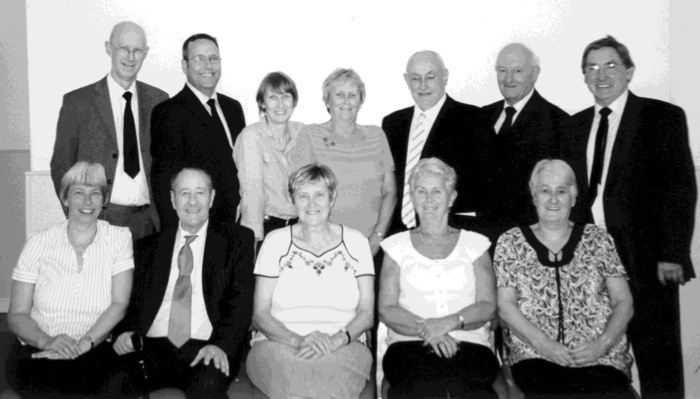
Some of the Monkhouse cousins in 2011. John RIP front row second from the left.

Some of the Monkhouse cousins in 2011. Back row: John, Tim, Elizabeth, Margaret, me, Michael, Andrew. Front row: Judith, John RIP, Susan, Christine, Margaret.

So, the funeral then. My cousin, 69, the first of our generation to go, brain tumour.

One of his brothers described him as an ‘expansive’ man—not his size, but his personality. He enlarged horizons. He was fun. He sparkled. I last saw him two years ago at our centenarian aunt’s funeral (see pic) and was all the better for it.

Lovely to meet cousins not seen for decades. And what gossip! All sorts of skeletons tumbling out of cupboards. Rows and fallings-out between the five Monkhouses (Monkhice I suppose) of my father’s generation meant that some of us 15 cousins never saw much of each other after the mid-1960s. So silly, and such a shame. Stories of resentments, inheritances, assumptions, fictions. A soap opera of a sort well-known to any clergyman. What a waste of energy when you might just as well let it all hang out.

Goodbye John. It was a sad end for him, a couple of weeks before his 70th birthday. But having known for some time that the end was nigh, he was at least able to ‘enjoy’ getting ready for it as best he could. Save us from dying unprepared. If I go at the same age as my parents, I’ve 8 years left at most.

We’re all be in a coffin one day, so we might as well start preparing for it now. Sparkle! There is no more worthwhile alternative.

It’s good to be back

Fall-Foliage-1-LargeWe returned from 12 days in the US this morning. The weather was perfect: sunny and cool. No rain. Vermont was lovely in late autumn, enough red left on the maples. Manhattan was Manhattan.

Everything there is about present and future. We come back to this island off an island off the edge of a continent that doesn’t matter any more, to be confronted in national and church press by same old, same old squabbles. It’s all about the past here. People are still perseverating about what Christians should and shouldn’t do with their genitals, and primates are pontificating about perceptions of parochial attitudes. It seems that ‘sex and sectarianism’ is now the strapline for the Irish church.

It’s good to see that it’s got its priorities right.

Theology and the arts

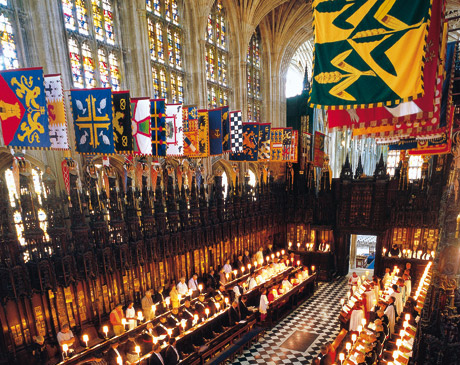
p3-quireHere I am on a course about Theology and the Arts. The surroundings are magnificent, Windsor Castle, St George’s Chapel, mediaeval glory, 18th and 19th century Gothick and the rest. An extension of ‘public’ (English-speak for fee paying posh, don’t ask why) school and Oxbridge.  The company is congenial and stimulating. And yet, and yet …

At the ‘consultation’ we are hearing about, among other things, the enrichment of church life by music, art, literature and so on. Very interesting and stimulating too, as ways to enchant the liturgy. But I see from Crockford’s that clergy speakers come from the rarefied heights of the church. I wonder do they think how frustrating it can be to ordinary parish clergy to have all these wonderful ideas thrown at them, then when they get home realize that few if any are likely to go down well with those who come to church and pay the bills? It’s a different world in Windsor. Those who inhabit this élite place are free of the rigours of ordinary parish life, but also of its blessings. I wonder how well they would fare in its rough and tumble? Reality does not much tarnish their fine thoughts.

Pillars of salt

The Dead Sea

The Dead Sea

Part of my job as Rural Dean involves visiting local churches for ‘stocktaking’. I’ve been church crawling since I was about 13 and have seen most large churches and many small ones in England, Scotland and Ireland. I’ve seen more than a few in France and some in Germany.

The great churches of the Cotswolds, Norfolk and Somerset tend to be open. Likewise in France and Germany. They show signs of being used by the community, often with evidence of activities that wouldn’t be regarded as ‘churchy’. People drop in throughout the day. The churches are certainly treasured.

Local churches here are treasured too. But in the main the ‘treasuring’ takes a different form. It seems that the focus is on preservation—as if people are saying ‘churches must remain as they were when I was young. The last thing we should do is share these buildings with outsiders.’

Many of them are pretty much as they would have been 100 years ago, apart from electricity and nasty carpets (they ruin the acoustics—chuck ‘em out). One of the Laois churches seems not to have changed a jot since 1750. I can’t decide whether this is charming or sad. I don’t need to decide: it’s both charming and sad. But everything is about looking back, and nothing about looking forward.

I drive to Limerick and see signs advertising 1000 (I think) years of history in Roscrea. Soon after that there’s the sign near Moneygall advertising ‘President Obama’s ancestral village’. It’s all about the past. Does this matter?

If people and places and churches fix their eyes on the past, looking back like Lot’s wife, they risk becoming pillars of salt. Much as I like salt, it’s not a fate that appeals to me. Is this obsession with the past one of the reasons that young people emigrate?

One thing I’ve picked up from my peregrinations is thankfulness for the three churches I go to week by week. They’re clean and bright. There are some signs of present and future.

Deafness and ploughing

AudiogramA man wandered up to the joint RC/CoI tent at the National Ploughing Championships today and came over to our table. He was warmly and loudly greeted by my colleague. If she had looked at him, she would have seen him respond by pointing to his ears and mouthing ‘deaf’. My colleague burbled on some more, louder this time, so he did it again.

I handed him a pen and a pad of post-its. He wrote: ‘the C of I does nothing for deaf people.’ I wrote: ‘Well, it should, I am pretty deaf myself, and am tired of people thinking it’s my job to listen harder, rather than theirs to speak more clearly.’ And so I am. I now work on the principle that if people can’t be bothered to speak clearly and with deliberate enunciation, it must be because in their heart of hearts they realize that they’ve nothing worth saying.

We had an interesting ‘conversation’. I’m inspired to learn sign language. It will do me no harm, and it might even do some good.

What else happened?

Well, I was accosted by a gentleman who told me that there will never be church unity, for any church that re-enacts the Lord’s passion on the altar, and indulges in paedophilia, was damned to hell-fire, and that only the blood of Christ can save the world. I thanked him for his kind words and he stomped off. Quite a few people commented on the Bishop-designate of Meath and Kildare, and one or two wondered how the horsey set and the masons would take to her.

It was striking to note how many young adults of both sexes wrote prayer requests. I had good chats with the parish priests of Myshall and Killeigh. I shook hands and exchanged blessings with countless visitors. And the new (RC) bishop of Kildare and Leighlin came over for a chat. It’s good to have another bishop to look up to, for like my bishop he is well over 6 feet tall. I suppose they must have stood for long periods in fertilizer when they were young.

Nil illegitimi carborundum

Before

Before …

Local clergy met this morning to hear a talk about stress in clergy families.

Stress provokes growth and adaptation. Stress keeps us alert and on our toes and enables us to respond to emergencies. In short, stress in sharp doses is good. But when it’s prolonged, it leads to ill-health, immune system depression, gastrointestinal problems, cancers, mental burnout, and more.

Clergy stress results from all sorts of things: lack of boundaries, unreasonable expectations of, and by, self and others, feeling one has responsibility without authority, living in a goldfish bowl (‘I demand to know the colour of your bowel movements today, Rector’). In some cases, clergy bring stress on themselves by wanting to be needed – in itself a personality disorder. But worse is the effect of stress on clergy wives, clergy husbands, and clergy children. A clergy spouse effectively becomes a one-parent family in a busy parish. The phone rings at unsocial hours. ‘I know it’s the Rector’s day off, but ….’ Well, you might know it, but clearly you don’t respect it. Get off the phone now this minute, and ring tomorrow at a reasonable hour.

None of the things that have caused me grief in seven years of ordained life was dealt with in theological training. All of them are largely ignored by the organisation, such is its corporate hypocrisy and its ability to pretend that black is white. Here are some of them.

  • Enquiries about ancestors and complaints about graveyards. I was ordained to serve the living not the dead. I do not care about graveyards.
  • Legal matters about buildings and land. I have no legal training and am not a property manager. I am not interested in title deeds, and if I have to be, I want the proper fee.
  • Conflict between mission demands, such as, the organist is so bad s/he needs to be sacked, and pastoral demands, if s/he is, the rest of the community will be offended because s/he’s related to them all.
  • People choosing to take offence.
  • Being dumped on by those higher up in the food chain who seem to justify their existence by finding hoops for increasingly hard-pressed parish clergy to jump through. This is a Church of England thing. Thankfully, the structure and finances of the Church of Ireland mean that the few people up the food chain are so busy that they don’t have time for this.
  • People thinking that everything is the Rector’s job. If you want it done, do it yourself, and stop bellyaching at me.
  • People thinking that it only counts if the Rector does it. Ordination is magic.
  • Petty squabbles. Some people need to grow up.
  • Self-appointed ‘royal’ families in a parish. These cause awful problems.
  • Refusals to accept that the law of the land means that old ways of doing things are no longer legally acceptable.
  • Refusals to accept the church’s regulations.

Over the last seven years, these are some of my experiences:

  • phone calls at unsocial hours about ancestors;
  • mother in law moaning about wedding arrangements;
  • stroppy letters about the state of the graveyard;
  • nuisance calls, several at 2 am;
  • being shouted at and shunned in public;
  • complaints about preaching the gospel;
  • a threat of physical violence;
  • callers ‘needing’ a bus fare to somewhere or other, stinking of booze (lots of these, and actually, I don’t mind them – at least these souls know they are needy);
  • powerlessness and perplexity about legal affairs;
  • sleepless nights, anxiety, diarrhoea, stress-related gobbling, incipient despair …. and more.
I hardly think a caption necessary

… and after

I have it easy compared to some, who are driven to resignation or early retirement. Some clergy find meetings and minutes and agenda and rules difficult to cope with. I do not. But all this nonsense detracts from my caring for the sick, helping the afflicted, reading, reflecting, preparing teaching and sermons, burying baptizing, marrying, and making sure worship is seemly and inspiring.

Fortunately, my pre-ordination life experience has given me the buoyancy to keep my head above water most of the time. Maybe putting this in writing will help others.

One Sunday, three sermons

VladimirThis Sunday, 8 September 2013, really needs three homilies.

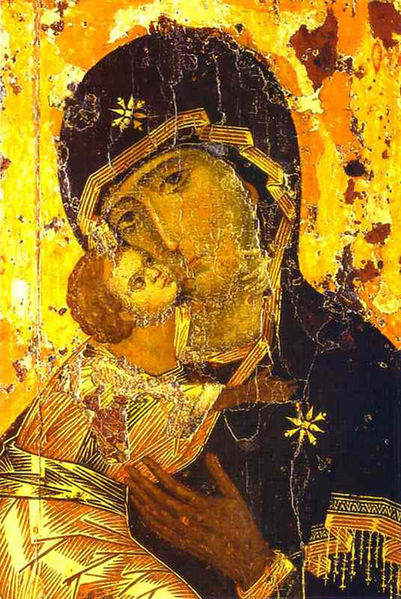
Firstly, it’s the Feast of the Nativity of the Mother of God. Contrary to what many RCs think, Mary is held in high regard in the Anglican churches. In the C of I calendar there are three festivals for Mary: the visit by Gabriel, Mary’s visit to Elizabeth, and her Nativity. No other saint has three festivals. Whether or not we intercede through her is a matter of personal decision: some do, some don’t. You can read the Mary homily here.

Second, this Sunday falls in the middle of Mental Health week. I’ve blogged about this before and will not do so again, yet. But it too is worth a homily, so if you’re interested, try here.

And third, the lectionary readings set for today, Proper 18 Year C, are certainly worth a homily, and a long one too. Jesus is trying to sell his way of life to others. He’s not like any salesman that would be given a job nowadays. He’s an anti-salesman. He doesn’t ‘embiggen’ his product; he’s brutal about what it will mean. ‘Don’t buy into this unless you’re prepared to take the flak. It’s going to be hard’. You can read this homily here – and I thank Mark Driscoll of Mars Hill Church, Seattle, for his inspiration. He’s unlikely to read it, but if he does he will see that I’ve plagiarized him mercilessly.

The gist is that we give up too easily. Disciples need discipline. At school this morning, we touched on how discipline enables achievement and goals. The little and not-so-little darlings appreciate this with their hobbies and sport. Our children went to a primary school in Nottingham where pupils were, as the Headmaster proudly wrote, so busy exploring different cultures that there just wasn’t time for the 3Rs. I still have the letter in which he said so. Soon after that he became an Inspector.

As I’ve said before, I taught Anatomy to medical students for 30 years. It’s one of those subjects where it’s possible to be wrong. To give an obvious example, the thing at the end of the lower limb is a foot not a hand, and its nerves are the tibial and common fibular, not the median and ulnar. Here’s another: the pulse you feel in the neck is the carotid, not the femoral. On one occasion, when I was dealing with a student in his early 30s at the new medical school in Derby, I was asking questions as part of a teaching session. I asked him one question, he replied, and I said ‘no, that’s incorrect.’ He was stunned. He said to me ‘you’re the first person ever to have told me I’m wrong.’ I was stunned.

There is absolutely nothing in Holy Scripture that encourages the malign view that putting up with second best, or error, is to be encouraged. Certainly not the gospel for Proper 18 Year C. Love is not to be found in toleration. Quality is not incompatible with compassion.

Scars, octopuses and trouts

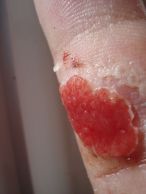
450px-Finger_with_granulation_tissueA sort of homily for Proper 17, Year C

Sirach 10:12-18. Psalm 112. Hebrews 13:1-8, 15-16. Luke 14:1, 7-14

Being proud of someone else is one sort of pride. This can be a selfless pride. I am proud of my children. I hope this is selfless. Then there is being proud, standing over, putting oneself above. We talk about the ‘proud flesh’ of a healing wound. In the healing process, granulation tissue ‘stands proud’ of surrounding tissue and gradually forms a scar. Scar tissue is functionally useless.

You might say that people who are proud in this sense are functionally useless. Hubris: overweening pride, pride before a fall. Hubris kills.

A Pharisee and a tax-gatherer prayed in the temple. The Pharisee prayed, ‘God, I thank you that I’m not like other men.’ The tax-gatherer said, ‘God, be merciful to me, a sinner.’

It’s tempting to say ‘Lord, thank you that I’m not like that Pharisee.’

When the Titanic set sail, someone reportedly said ‘Even God couldn’t sink this ship.’

Pride test

Do you long for attention? Do you make a scene? Are you needy and clingy? Have you learnt to look pathetic?
Are you a begrudger? ‘They didn’t deserve that!’ ‘That’s not fair!’ ‘I could do better than them.’ Maybe you could, but you don’t!
Do you always have to win? Some people even cheat at Scrabble.
Do you tell porkies? Do you tell lies to make yourself look bigger than you are, or to belittle someone else? It’s all pride.
Do you refuse to admit it when you’re wrong? And when you’re caught, do you try to wriggle out of it? You blame something else, bring on the waterworks, blame the drink, or the tiredness or whatever?
Do you pick fights? Is this because you stand up to bullies? Or is it because you are a bully and must win?
Do you push in when you’re in a queue: ‘I’m very important, I have important things to do. The rest of you can wait.’
Do you get upset when people don’t recognize your worth?
Do you believe that dreadful advert where the lady says ‘Because I’m worth it’? No, you’re not!
Do you feel you’re basically a good person, but others are not?

One point for each yes. I scored 362.

Octopus_tool_useHumility

Humus = earth. Humble people are earthed in the reality of being human. We are creatures of this earth. Octopuses can assemble coconut shells to make a ‘house’. And humans think invertebrates are stupid! I know a zoologist who worked with octopuses, and she was quite certain that they were clever. I tell you, invertebrates will be around long after humans are gone. 

Pride versus humility

Pride covets others’ success. Humility says ‘I’m delighted for you’ and means it.
Pride is about being selfish. Humility is about being selfless.
Pride is about getting glory. Humility is about giving glory.
Pride is about independence. Humility is about dependence.
Pride says to itself, ‘My will be done.’ Humility says to the Lord, ‘Thy will be done.’
Pride leads to dishonour. Humility leads to honour.
Proud people make terrible spouses, parents, friends, colleagues, bosses, church members. Humble people, by the grace of God, can be a good spouses, parents, friends, colleagues, bosses, church members.
Are you going to start high and end low, or are you going to start low and end high?

Forget me me me. Take stock of your gifts and skills and faults. Accept them, be earthed, then focus on the Divine. Never mind competing with others. Make the best of what comes your way and pass it on.

When’s the last time you were on your knees? Some say, ‘I never get on my knees.’ When was the last time you acknowledged your pride to someone else? ‘I would, but what will other people think?’ Never mind other people. As Evagrios said, the worst demon of all is that which incites us to seek the approval of others.

cantankerous-old-troutLook at the news. Syria. Egypt. People gouge out a child’s eyes in China. People abuse children. Politicians screw their people. However much we may be horrified at the behaviour of those in the news, it hurts to acknowledge that it is but an extreme version of our own. It all comes down to supposing that ‘my’ wishes are more important than anyone else’s.

I need to remember that when I’m sitting at traffic lights, cursing some old trout in the car in front who seems to be waiting for a particular shade of green.

This is the sin of the world.

You pet a dog, the dog wags its tail and thinks you must be a god. You pet a cat, and the cat purrs, shuts its eyes and thinks it must be a god. What about you? How do you think?

If you should ask me what are the ways of God, I would tell you that the first is humility, the second is humility, and the third is humility. St Augustine.