A woman of no importance

1A homily for 6 September 2015

Proper 18 Year B. Isaiah 34.4-7. James 2:1-10, 14-17. Mark 7:24-37

The image of the child drowned trying to flee Syria will stay in my mind for a long time. I wonder why that image is so much more powerful than hearing of Rwandan children suffering similarly, as they are at this moment, or of Burton children suffering abuse at the hands of adults, as they are at the moment.

It makes me realize what a privileged and easy life I have. This is not my fault, and I’m not trying to make myself or anyone else feel guilty: it’s not my ‘fault’ that I was born on a European island in the mid-20th century. But it makes me question the job I’m doing in the face of suffering. Am I really advancing the Kingdom of God as the Vicar of these parishes? Should I not be doing something, using my medical or political skills, or my ability as a provocateur to disturb the comfortable?

It brings us face to face with our powerlessness and our mortality, and so how important it is for us to get out priorities right now before it’s too late. Squabbles about church stuff such as who can lay hands on whom at an ordination, or who may or may not take communion, are put into perspective. I see yet again the importance of taking risks for the big things of life and not sweating the small stuff. Compared to the drowned boy it’s all small stuff.

Look at today’s Gospel. Jesus taking risks—yet again. Goodness me, a sense of humour in the Gospels. How shocking. Jesus teases a woman—shock horror, a gentile woman—swoon, likening her to a dog—sal volatile please. If he said that today, he’d be in court on a charge of abuse. The woman was no pushover. She answered back and stood up for herself. Then he went on to the Decapolis, most definitely not among the chosen people. Pushing at boundaries, ignoring the conventions of the day. Stepping outside the comfort zone and getting our priorities right – loving neighbour as self.

In talking to the woman, Jesus paid no heed to the Levitical laws for hand washing. He seems to ignore those rules a lot when he’s eating on the hillside, on the lakeshore, across the lake on Gentile land. He pays no heed to where and with whom he eats—despised tax collectors and sinners. He talks about food with a Syrophoenician woman—certainly a woman of no importance (was he crucified because of the way he ate?). Jesus—cautious? I think not. Although meals are ritual events where social order and rules of the tribe are reinforced, he doesn’t let rules stand in the way of a party.

Look at today’s epistle. It’s easy to think this is the argument about faith versus works. It’s not about that at all, though some may say so. It’s not about comparing the relative sinfulness of murder and adultery either. It’s about getting your priorities right. Stop fawning over the powerful, the influential, the well dressed. Stop sucking up to the Masons, the members of the Burton Club, the MP, the Mayor, the doctor, the Vicar. Start ministering to your neighbour as yourself, no matter how they speak, or smell, or appear. Don’t let convention stand in the way of compassion. Don’t let duty stifle initiative.

We need to guard against being so concerned to keep our lives, our churches and our religion ‘pure’ or ‘just the way we like it’ in a way that excludes others, or welcomes them only on our terms. Being open-minded and willing to explore and do new things is expensive. It leads others to criticize us. It leads to a kind of crucifixion as we see the death of all we once held dear.

When I see pictures of refugees dead and dying I know that none of our conventions and rules is important enough to go to war over. Faith without works is merely self-indulgent narcissism.

Harden not your hearts. There’s a wideness in God’s mercy that seems to elude mere mortals.

For God’s sake, go!

scissors_2-resized-600A level results today. Reminds me of three episodes last week.

One. A young woman said she was nervous about what she might get. I said: “what do you need?” Before she could reply, her grandmother answered for her. I said “where do you hope to study?” Her mother replied. Then, “and what will you be studying?” Finally, she was allowed to get a word in.

Two. Can’t remember the topic of conversation, but I was again chatting to a young adult, man this time, and his mother kept answering for him. I ignored her and pressed on.

Three. I met a young relation for the first time since he was about 10. A personable young man, at home in his own skin. He’s in his first year “at uni”. (Ye Gods, how I hate that abbreviation.) I said “which?”, and blow me, but his father answered. I said “you’re a fantastic ventriloquist: I didn’t see your lips move and the sound came from over there!”

All these people are old enough to vote, to reproduce, to fight for their homeland. Not to speak for themselves, it seems. It’s highly commendable that they acquire any articulacy skills.

Luke 14:26.

There comes a time when fledglings need to be shoved out of the nest if they haven’t gone of their own accord. Such a pity that leaving home is increasingly not a viable financial option these days. As SWMBO observed “I don’t know how young people can afford to go to university now”.

There is a tide in the affairs of men, which if not taken at the flood, leads on to boredom. And mothering becomes smothering.

The joys of ageing

Eyes that see shall never grow old

Eyes that see shall never grow old

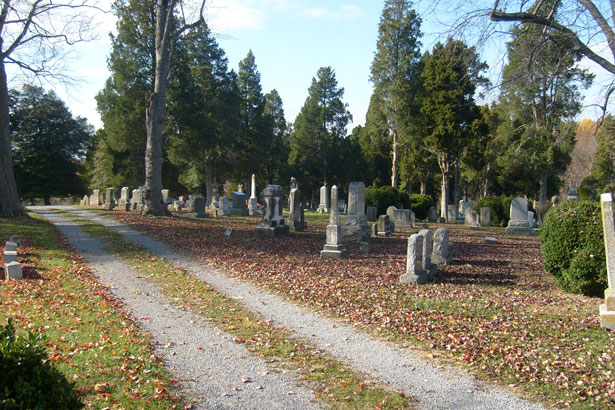
I’ve been an OAP for a week. So far I’m enjoying it.

About fifteen years ago I attended a scientific meeting in London. We were put up in student accommodation at the London Hospital (Whitechapel). It was dreadful. After one night I thought I’m a forty(ish) year old Professor of Anatomy and I don’t need places like this in my life, so I hoofed off to one of the West End hotels for the next two nights.

Did I have notions of grandeur? Maybe. In any case it was a recognition that my life was probably half gone and that slumming it in grotty student accommodation was no longer desirable or necessary (I earned a lot more than I do now). I’ve never been that keen on hardship: my definition of slumming it is running out of ice cubes.

About five years ago I decided that I would never again be in a hurry. I start things earlier, I get things ready the night before, to avoid Where are the sermon notes? orders of service? …. I don’t clog up my diary unless I absolutely have to.

I like to arrive at airports at least two hours in advance, more for US. Speaking of which, I resolved not to have to get up early for flights—4 am reveille for 7 am flight, that sort of thing. But with dearly beloveds in Dublin, needs occasionally must. The return flights, if early, can be a real problem if one has partaken immoderately of Arthur’s nectar the evening before: “three’s enough, don’t you think? Oh, all right then.”

Eating habits have changed. I won’t begin an evening meal after 7.30 pm. I sleep terribly if I do. I have learnt over the years to avoid wheat (not gluten – wheat), for it makes me feel bloated and I sleep badly. I have learnt to cast lingering avaricious glances at Fish and Chip shops, rather than to enter, for similar reasons (sometimes I yield). Milk is snot-inducing poison.

I need a magnifying glass for reading books. I can’t hear people unless I can see their mouths. I tell them not to talk to my back, but they ignore me. Maybe they have the same problem.

As we age, we have to come to terms with changing mechanics and metabolism. I’m very fortunate that I don’t have more to worry about. I once said that I aimed to immature with age. And I enjoy not caring so much about any thing. I care only about people.

In my last parish I had an 85-year-old parishioner who, when asked how she was, said ‘well, Rector, I was able to pull up my knickers this morning, so I’m grand.’

There is nothing more to be said.

Losing it and letting go

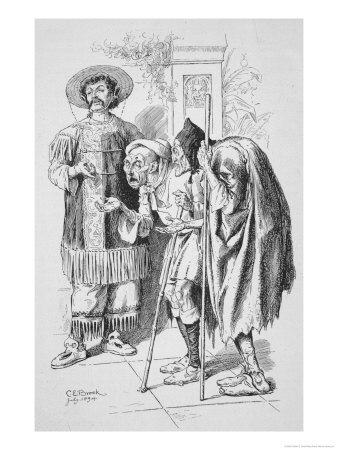
charles-e-brock-gulliver-is-shown-the-aged-struldbrugs

Living for ever

“Where did I put my keys?”

Why do I go out, lock the door, then have to unlock it to get something I’d forgotten? Not once, not twice, but three times.

“Yes, I rang you, but I’ve forgotten what about—oh, wait a minute, now I remember.”

Our brains are wired so that as we age, we remember 30 years ago better than yesterday. There are good reasons for this in terms of self- and species preservation. We remember what is good and bad for us. We remember what we learnt by experience.

In days gone by, the loss of recent memory didn’t matter much since we were unlikely to live long enough for it to become a problem. But now we live too long. Or some people do.

Remembering stuff from decades ago can be depressing. We tend to dwell on the days when we were fit and active, and when we grabbed life by the short and curlies. We become sad about what we can’t do any more. We need to grieve these losses: the loss of youth and energy and get-up-and-go. And we need to acknowledge that things we once thought important have turned out to be no more than seductive bubbles that have burst, leaving only a soapy mess.

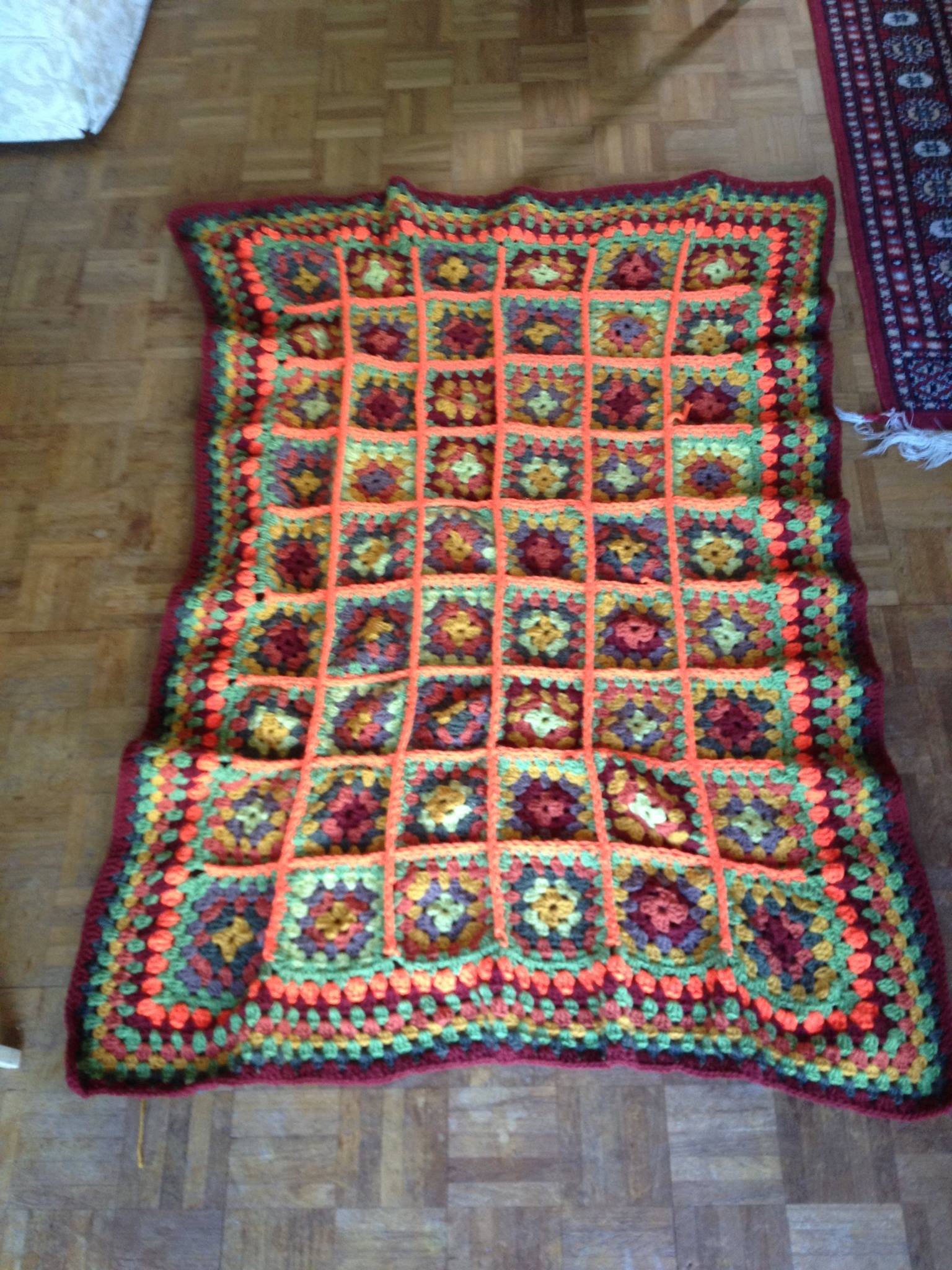
11212629_835354123185770_7807558211314617443_oRather than moping, try mopping. Honour what you used to be able to do and absorb it into yourself. Accept that you can’t do it any more. Take up something you can. I’m very impressed with what SWMBO has achieved in a short time having taken up crocheting. I need to find something like that. Think how you might share your wisdom and experience with younger people. Talk to them as friends. One of the sadnesses about my relationship with my father was that before he died (I was then 37) we never reached the stage of talking to each other as friends. I dare say it was as much my fault as his, but at that time his words seemed only to be given as peremptory instructions.

Phibes

There comes a time to acknowledge that it’s someone else’s turn to carry the flag. We see people doing things that our experience tells us will come to grief, and we want to tell them why. If only we could plug a memory stick into a USB port on the side of our heads, transfer our wisdom to it for transmission to someone else’s brain. Maybe bodily USB ports will be the next stage of our evolution. Dr Phibes, the wonderful Vincent Price, seemed to have some such thing on the side of his neck.

Hindu sanyassi give up all their possessions and wander off to fend for themselves. I find this peculiarly attractive. I’ve lived my life backwards in a sense, each change of job in the last 10 years some sort of a renunciation, with less and less income (poor SWMBO). But I lack guts to go the whole hog (relieved SWMBO). Enjoy getting older. Acknowledge the right of others to cock up just like you did. Let go of the will to control and influence, and relax into life. Clutter, rank, things, attitudes, stuff, possessions—none of this matters. The only things that matter are relationships. Live in the present because before you know it, it’ll be too late.

Living in the past leads to depression. Living in the future leads to anxiety. Living in the present leads to peace.

Funerals

296-1226348580VH2IIrish funerals are big. And soon—rarely later than the third day. On the two or three evenings before, there are prayers over the coffin in the house, even a Protestant house. Not something I was used to in Chesterfield, but I found the pocket-book of Pastoral Offices bought in a Catholic shop does the trick. The place is full, with tea, sangwiches and Uisce beatha. A real good do, people drifting in and out to see the guest of honour laid out in Sunday best.

Just before the church funeral, we gather in the funeral parlour for more prayers round the coffin. Lots of people again. Church is packed, and there’s a crowd outside. The full liturgy, an hour by no means unusual, is relayed over the loudspeaker.

Then comes the wake. The whole day is soon gone. There are so many people involved in even one funeral, I wonder when they get any work done.

Funerals in England are small, late, and brief. People have had a week or two to chat and grieve. Since most are not regular churchgoers, and wouldn’t think of involving clergy in these early stages, undertakers do what in Ireland the clergy still do. I’ve learnt what’s expected of me in England, and that to exceed those expectations is neither necessary nor usually welcome. The Vicar is ‘hired’ for the ritual magic stuff, and the family isn’t bothered about which Vicar.

Church of Ireland clerics rarely bury people they don’t know. Church of England clerics rarely bury people they do. I averaged four a year when I was a C of I Rector. So far here, I’ve done three a month;  some colleagues do that many a week. Late and brief they may be, but I do them as well as I can, antennae sensitive to atmosphere, sounds, and sights. Only 25 minutes maybe, but 25 minutes in which dignity and professionalism are paramount.

Irish colleagues were incredulous at English ways. I can live with both.

Awesome

The Tetons, Wyoming, Truly awesome

The Tetons, Wyoming, Truly awesome

An email today from a church administrator begins “I am hugely excited about the prospect …”

I think I remember being hugely excited when I was younger, probably about visiting Auntie Lily in Bradford. I was quite excited about being able to spend York Minster Evensong in the organ loft with Francis Jackson. That was over half a century ago. Have I been hugely excited since then? I rather doubt it.

I have looked forward to a rail journey to Prague, to playing Schnitger organs, to visits to the US, even to a Carlisle jaunt last week to relive my mis-spent youth on the Cathedral organ. I look forward to our autumn trip to Houston, even to watching a few films on the way.

Hugely excited? No. Is this because I am a grumpy old man? Is it simply a matter of semantics? Is the fault, if fault there be, in me?

A quick random trawl of a few church websites just now yields:

  • fantastic venue, fantastic celebration (same site). Fantastic means unreal – mind you, they use that too.
  • inspiring vision. Who does it inspire? It clearly inspires them, but for them to tell me that it does or will inspire me is presumptuous.
  • fabulous space. Really? Do they really mean the stuff of fables?
  • stunning public space. Rail journeys, hotels, views, décor, cosmetic … all these are now stunning. They knock you out.
  • vibrant church. Ye Gods.
  • amazing. So remarkable as to elicit disbelief? I don’t think that’s what they mean.
  • awesome. My granddaughter with her Texan accent uses this in a way that sounds entirely natural. It is charming. But used by aged hipster ‘worship leaders’ it is an embarrassment,

I am turned off by word-inflation in any context, but the church should know better than to indulge in it. It speaks of insecurity, desperation, panic and, worst of all, insincerity. People are not stupid – they see through it.

There are no words left to express real admiration, awe and excitement.

A right judgement in all things

_68043404_005783605-1A General Election approaches. Some people expect the Vicar to make deep and meaningful recommendations and warnings about who to vote for, or not to vote for. The trouble is, I can’t.

I can’t recommend voting for any one person or any one party in particular. This is not because I’m unwilling to say what I think—I’m not. It’s not because the first-past-the-post system makes it pretty pointless voting in constituencies with large majorities, though that is the case.

It’s because the big 3 are all pretty woeful. Labour big nobs are Islington windbags with attitude, obsessed with political correctness. Tories are all Cotswolds and Chelsea tractors, and Liberals simply wishy-washy. I have some sympathy with English people feeling at a disadvantage compared to the Welsh and the Scottish, but the solutions on offer for that are, to say the least, unappealing.

I look for a bit of decency and common sense. I’d like to think there was some old-Labour somewhere. I’d like to see someone confront corruption. I’d like to see an end to the culture of giving jobs to school chums, friends and relations (the Church of England is pretty good at that too). I’d love to see an end to rampant corporate managerialism that stifles us all, especially schools and hospitals, preventing teachers, doctors and nurses from doing what they thought they would be doing when they joined those professions. I’d love to see a welfare system that helps the hard-pressed without making silly hoops for them to jump through, and that no longer pays a few to be irresponsible.

You might be tempted to vote for a party you don’t really agree with in order to give the same-old-same-old a bloody nose. You might be tempted to spoil your ballot paper. You might be tempted to vote for her or him because they have a nice smile, or they sent you a Christmas card, or did some small service that is no more than their duty, and for which they are paid.

All I can suggest is that you vote for those you think will best serve the common good. This might not be in your self-interest, but it might just lead to a healthier society and a healthier world community. Of course, with the best will in the world, you might make a decision that turns out to have been ill-judged. But nobody chooses wisely all the time.

Vote for the good of all, on balance. Not the good of the bankers, of the landowners, of those with their snouts already in the trough, or for this group or that, but think about sons and daughters trying to get a job, find a home, start a family and make a contribution to society.

Vote for the common good.

Chocolat the disturber

Holy Communion?

Holy Communion?

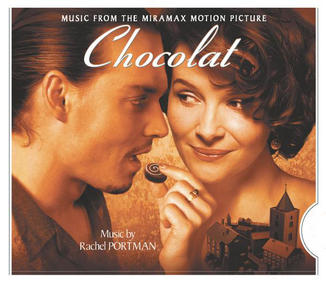
I’m not a huge fan of chocolate, but in Lent we’ve been watching the film Chocolat. It’s full of Easter messages. The wind (spirit) blows open the doors of the fusty church. Unhappiness is exposed behind a façade of pomposity. Hypocrisy is found lurking behind a judgmental personality. Power is used to oppress and abuse. God the disturber shows up dull complacency. Healing comes to the mayor only after he has been found in the metaphorical gutter having gorged on chocolate, that well known substance of Satan.

We see how “church” which at the beginning is an oppressor by the end has become a liberator. As the film runs, we see how heart-to-heart conversations result in smiles and colour and liberation. We see how eating together (com panis, bread together)—having a party—is sacramental.

Whether or not the novelist Joanne Harris had all this mind is neither here nor there: what matters is what we take from the story. For me, the film is about darkness to light, oppression to liberation, drowning to salvation, death to ascension, and the power of parties that include. As Père Henri in Chocolat said in his Easter sermon, “I think that we can’t go around … measuring our goodness by what we don’t do. By what we deny ourselves, what we resist, and who we exclude. I think … we’ve got to measure goodness by what we embrace, what we create … and who we include.”

In his novel The Power and the Glory, Graham Greene has one of his characters say “hate was just a failure of imagination”. The Holy Week and Easter story is about a group of people who were so threatened by new ideas that they put Jesus to death. A failure of imagination that resulted in hatred. Looking at the world today, we see the same forces at work. To take but one example, North Korea might be a long way away, but its threats have the power to destroy the world—and all because the governing clique lacks the ability to admit that new ideas could make things better. A failure of imagination.

Hatred is a failure of imagination. Love is the blossoming of the imagination. Love is expensive. Love demands letting go. Letting go is renewal. Letting go is resurrection. Letting go enables us to ascend.