Jensen

800px-Jensen_FFCardiology outpatients, some time in 1974. The consultant, now long gone to his reward, is an extremely eminent Harley Street cardiologist, pinstripe, bow tie, the works. The patient is a young lad with a heart condition. He is accompanied by his father, an artisan with a pronounced sarf Lunnun accent.

Consultant: Now, tell me my good man, what’s the young chappie’s name?

Father: Jensen, boss.

Consultant: Jensen, eh. That’s a most unusual name. How did you come by it?

Father: Well, yer see guv, the missus and me we like cars, and a Jensen’s a fantastic machine, so that’s what we called im.

Consultant: Oh, I see. That’s rather good. Pause. I must say, it’s as well you don’t like Rovers. Haw, haw, haw.

The Skinners Arms

Skinner's arm

Skinner’s arm

I promised here a story of a performing lady and her abdominal scar. Here it is.

The year is 1973, the place south London. The time is Friday evening, and the story concerns four young men attending King’s College Hospital Medical School who were taking an evening stroll. As they proceeded from Camberwell in a north-westerly direction towards The Oval, a thirst descended upon them somewhere in salubrious north Brixton.

Behold, seest thou yonder hostelry?
Yea, verily. Let us thither hie to slake our thirst.
Aye, aye. Come, make haste.

It was—you’ve guessed it—the Skinners Arms (there is no information concerning whether or not there was an apostrophe, and if so where it went) on the corner of Vassall Road and Camberwell New Road. According to Wikimapia it is no longer in existence, having doubtless succumbed to town planners. Anyhoo … the four knights did enter.

If it be thy pleasure, fair serving wench, we parchèd wanderers each desire a tankard of thy most toothsome nectar.
Most certainly, wandering lords, quoth she.

Some time and several flagons later, behold the lights did dim. Music rang forth and lo, a performing lady materialized on the podium. This surprised the knaves. Nevertheless, they steeled themselves to witness a spectacle. The performing lady, they were astonished to see, gradually divested herself of her habiliments until she stood before the assembled company wearing only a two-piece bikini. She had a midline scar below the umbilicus.

Ah, comrades, espiest-ye the scar? Perhaps the lady hath undergone an hysterectomy.

It was not that the utterance itself was foolish, but rather the volume at which it rang forth, for the intended whisper cameth more as proclamation. If thou understandest that, thou dost apprehend the nub of the issue.

Thou art mistaken, fair friend, quoth the lady, for ‘tis an appendix scar.

And having uttered those very words the bikini-clad performer hied herself to the bench at which the knaves were seated, and sat on the knee of one of them, and polished his spectacles with one of her removèd garments.

Now, the knaves were, admittedly, junior medical students, but they possess’d enough knowledge to know that appendicectomy does not normally require a midline incision in the lower abdomen. Nevertheless, they sensed that circumstances were not propitious for further discussion of the issue. They felt that discretion was in their best interests, and without further quaffing or quoting they legged it onwards, returning to their lodgings to prepare for the rigours of the weekend. The young men were lucky, methinks, not to be set upon by the lady’s supporters.

The moral of this story? To draw conclusions from observations is good, but any proclamation of the same should be timely rather than immediate. The youth learnt a lesson.

Every sinner has a future, and every saint a past (Cardinal Hume, I think).

A salutary tale

399px-WLANL_-_MicheleLovesArt_-_Museum_Boijmans_Van_Beuningen_-_Eva_na_de_zondeval,_RodinThe south London children’s hospital again. Another story that does not reflect well on me.

Admission from Casualty. Young lad, about 6. A few bruises and a couple of broken bones. Once again, his name and his face are etched upon my memory. I shall call him Jason. A suspected battered ‘baby’ (the term used at the time). I examined him as best I could. He was apprehensive, watchful and suspicious of me. His father later came to visit as I was tending Jason in the glass-walled cubicle. I could hardly bring myself to speak to him—it would only have been ‘good evening’ anyway—and I could only just stop myself launching into a tirade. Fortunately I managed to control myself. Weeks later I was called to Camberwell Magistrates Court to give evidence, my first appearance in a court room. It was curiously low-key and inconclusive. I remember few details of that, other than that it happened. Not long afterwards, my job ended and I moved to Nottingham to become an Assistant Lecturer in Anatomy.

I assumed the parent(s) were guilty. They may not have been. Perhaps, as in one of Alan Bennett’s Talking Heads monologues, the child bruised easily because of leukaemia, and/or had brittle bones. I am ashamed of my rush to judgement. I was very young and our daughter was about 6 months old at the time. I worked a two-in-three rota, and was home only every third night.

Please don’t underestimate the emotional pressures on doctors, young doctors especially and those working with children in particular. I can say that the emotional pressures on pastoral clergy are similar, though less intense. This experience, and many others, make me pretty sure that it is just not possible for a sentient human being to be ‘neutral’ about anything, Our own experiences colour what we see and hear and how we think and react, and our emotions cause us to do extraordinary things, some of which we will regret.

It’s called being human.

Where the bee stings, there sting I

bee-sting-1717_2Another story from the south London children’s hospital. It doesn’t reflect well on me.

It was a lovely balmy summer evening in 1976 (remember, dear reader, that I qualified as a doctor in June 1975). The air was scented with the sweet odour of traffic fumes from the adjacent A3 and A23. The occasional subterranean rumble signalled a passing Northern line tube. Passers-by gaily shouted greetings to one another as they merrily made their way to the Skinner’s Arms on Camberwell New Road for an evening’s intellectual exchange over a pint of golden nectar. [Sorry to intrude here, but I’ve another story about the Skinner’s Arms that could be told. It involved a performing lady and her abdominal scar. Maybe another time. Back to the plot]. The day was ended, ward rounds, theatre sessions, drips inserted, consultants humoured, parents talked to, emotion drained. I was the only doctor in the hospital, and I’d gone to bed.

In about the 40th hour of a continuous shift lasting three working days and the two intervening nights, the phone rings about 11.30 pm. It was the night porter.

Go to A and E, there’s a child in distress.

Indeed there was: a boy about 8 years old. He’d been stung by a bee (maybe a wasp, but the blog title wouldn’t be as good) that morning, and the resulting inflammation was bothering him. I tended the child as best I could. Painkillers, emollient cream and so on. Then I made my big mistake. I said to mama:

I’d gone to bed. I’ve been on duty for over 36 hours. Why have you waited till now to bring your little darling [well, I didn’t say that, quite] to hospital?

The mother, who worked as a nurse in St Olave’s Hospital, elsewhere in London, was outraged. She blustered:

I won’t be spoken to like that.

She obviously felt guilty and was embarrassed. She continued:

I wouldn’t be spoken to like that at St Olave’s.

My turn now.

Then you’d better go there next time.

And off she and the heir apparent stomp.

The moral of the story? There are several. They include (1) take your complaint to the doctor before the crepuscular fall in endogenous corticosteroids makes it worse; (2) remember that doctors are human too; (3) choose a hospital that is properly staffed by doctors rather than administrators. If you can find one.

Need’st thou strive officiously to keep alive?

Holy Wisdom

Holy Wisdom

In 1975 and 1976 I worked as a junior hospital doctor in a children’s hospital in South London.

Once upon a time, in 1975, Simon (not his real name) was born with congenital biliary atresia. Liver damage meant that he would not see five years of age, and surgery at that time was ‘experimental’. Simon had repeated operations. I enter the scene in April 1976, a fairly newly qualified doctor, right at the bottom of the medical hierarchy. I am the first on-call doctor to carry out the consultant’s wishes during the day. I perform hands-on procedures such as intravenous drug administration. I am on call for two out of every three nights and weekends, at which times I am the only doctor in the hospital. Simon requires attention, often lengthy, during the small hours most nights. He has drips inserted into scalp veins. These frequently become displaced or blocked, causing swelling, inflammation and infection. It is my job to re-insert the drips into one of the increasingly few veins available. Simon is jaundiced, conscious and whimpering while this is going on. The memory of his large eyes looking at me as I am causing him pain is with me 37 years later.

During the next few months Simon has two further abdominal operations, a total of five so far. Sotto voce discussions during ward rounds acknowledge that Simon will die, but that perhaps another operation should be attempted. Face-to-face discussions with parents (Simon is their first child) are less realistic, or more upbeat, depending on your viewpoint. His parents are perplexed, distressed and uncertain. After the last operation I say to the consultant—remember I am the lowest of the low on the medical food-chain, ‘wouldn’t it be best for him and his parents if he were allowed to die with as much dignity as we can provide and he can muster?’ I am ridiculed and condemned for my views. My reasoning that this would have allowed his parents to begin to pick up their lives, grieving as necessary, and try for another child, is simply not heard. Simon undergoes hepatic surgery for the sixth time. A few days after this, Simon dies about 20 months old. This story is accurate inasmuch as my memory is reliable, long-forgotten details surfacing as I type.

Here are some of the issues raised by this story:

  • Best interests? Whose? Simon, parents, society, doctor?
  • How is unnecessary surgery justified? How can we know it’s unnecessary until it’s been tried?
  • To what extent do doctors put the needs of research and career advancement before those of patients?
  • Practising surgical techniques on babies for the possible benefit of those in the future.
  • My advocacy of allowing the child to die could be interpreted as advocacy of killing (Dr Leonard Arthur at Derby in 1981).
  • The effects of illness on the family, and the role of the medical profession in prolonging this.
  • Difficult treatment and practical procedures being in the hands of the least qualified (me).
  • The effect on me of being left to deal with Simon and his parents, especially at night.
  • The role of managers and senior medics in not providing adequate training and support.
  • The expense to the community of keeping alive, and providing expensive surgery for, those with no prospect of even medium-term survival.
  • Giving information to relatives: the balance between providing hope—that is, probably telling lies, or giving straight facts.

Was it arrogant and presumptuous, evil even, of me to want to leave Simon to God, or nature if you prefer, with only compassionate care? Was it selfish of me to want fewer disturbances at night? As a result of Simon’s needs, I was less well-rested for other patients. Is it appropriate that Simon’s parents were not consulted but were told what would happen to him? The relationship between the ‘healer’ and the sick should be open and honest. In this case, it was not. I was constrained by the instructions of bosses and did not have the courage to disobey them. I was feeling, though not acting, as if I alone knew the mind of God.

How do we weigh the needs of the individual against those of community and colleagues? We have to make judgements, although to do so today is often condemned: ‘to defend distinctions of value … is to offend against the only value-judgement that is widely accepted, the judgement that judgements are wrong’ (Roger Scruton).

Suffering genes

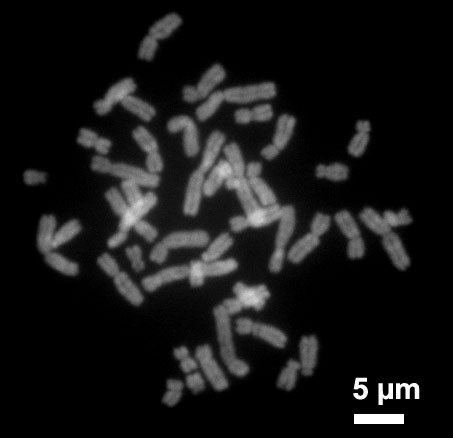
HumanChromosomesChromomycinA3We reckon medicine to be about the relief of suffering. It seems to me that Jews and Muslims are more enthusiastic about this than many Christians. Despite the holocaust, Jews embrace forms of genetic engineering. Rabbi Immanuel Jakobovits reportedly advised against marrying into a family known to carry an inherited disease. This refreshingly honest attitude is not confined to genetics: Orthodox Jews accept contraception when a pregnancy is likely to threaten a woman’s health—something officially forbidden to most Christians. R M Green writes that Talmudic sages denounce the glorification of suffering, and prefer to forego future reward if it involves present agony. This is attractive! It’s as if over the centuries Jews have had enough suffering and want to minimize it in the future.

In Christianity, by contrast, there’s always been something of a suffering-is-good-for-you masochism. St Paul says as much. Some Christians seem to glory in suffering. Their aim is not to avoid pain but to embrace it. We all know people who make a virtue of enjoying ill health. ‘After all’, they say sanctimoniously, ‘Jesus knowingly goes to the cross, and in this suffering I’m imitating Our Lord, and present with those who suffer’. Pass the sick bag. The logical position for these people would be to eschew antibiotics, elastoplasts, analgesics, hip replacements—the lot.

And yet, and yet … I can’t pretend to be logical or consistent. Given our human ability to take a tool for good and turn it to evil ends, I’m ambivalent about gene therapy. My wife and I decided when we were both reproductively intact, now long ago, that we would not have amniocentesis when she was expecting, for the result would not change our minds about allowing the pregnancy to proceed to term. The practice of medicine is, at root, antibiological and antievolutionary, and you could say that all medicine is a form of genetic engineering in that helping the ‘less fit’ to survive and reproduce weakens the gene-pool. Despite the considerable benefits that genetic medicine can bring, our use of it indicates intolerance of imperfection and disability. And so does plastic surgery, bodybuilding, cosmetics, and obsession about weight. There was a time in my life when I fell victim to this as a ‘gym rat’. Now I see these as indicating a quest for perfection and immortality that is a perversion by the satanic advertising industry of a perfectly reasonable spiritual quest for wholeness.

Yes, I know, such agonizing is a disease of materialism. But I live in 21st century Europe and am confronted by such issues. Even so, perhaps especially so, there are boundaries to be laid down about what is and isn’t permitted by society, and what can and can’t be available at public expense. Who will draw these lines? Politicians don’t seem to want to, and neither do medics. Ethicists and theologians can twist anything to suit—and do. Herbert McCabe (1926–2001), a Roman Catholic priest, theologian and philosopher, is reported as saying ‘ethics is entirely concerned with doing what you want.’ Maybe we should remove all controls and let people do as they wish—at their own expense. I think not.

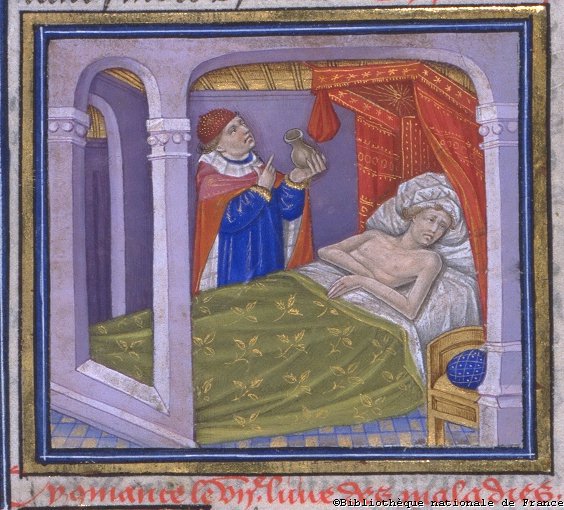
Doctors or magicians?

Casting spells

Casting spells

Anne Marie Hourihane (Irish Times 22 April 2013) laid into the Irish healthcare system: ‘It is truly dreadful’ she wrote, ‘to get into your car outside a celebrated Dublin teaching hospital, convinced that you might as well be leaving your loved one on the platform of Heuston Station.’ Not surprisingly Dr Shane Considine (24 April) took exception. I’ve been a hospital doctor, and was a medical educator for 30 years. Now I’m in the parochial ministry of the Church of Ireland. I can glimpse both points of view.

Some patients claim they are not told things that matter to them. Perhaps they don’t remember what is said to them: there is plenty evidence of how what we ‘hear’ is not always what is said. Perhaps the professionals can’t imagine how forlorn it feels to be a patient. The film ‘Wit’ has Emma Thompson as a dying patient whose feelings are trampled upon and whose suffering is observed rather than treated. Perhaps the prospect of litigation means that professionals won’t say anything until technology has provided evidence. Compensation culture catches up with us. Perhaps some doctors have been educated in medical schools where patient-centred concerns are not valued as they are here. This is ironical: Irish medical education is tailored to the needs of the home culture, yet a good proportion of doctors trained here emigrate permanently. I wonder why? And perhaps there is something that encourages doctors to think of themselves as set-apart, different from ordinary mortals. Speeches made at welcome ceremonies, oaths taken at graduations, and the very rituals themselves all point to a mystical ordination rite in which doctors are ‘consecrated’ as an elite.

This is not altogether their fault. It is ours too. We want medical professionals to heal us, to take away our misery. We want them to be gods, omnipotent and omniscient. Yet, when things go wrong and they retreat behind the veil of assumed divinity, we raise hell.

This is a partnership. Whatever the members of the medical profession might need to do, we need to take responsibility for ourselves. The body is a machine and needs to be properly looked after. We need to stop expecting abracadabra miracles, and accept that tubes get blocked, wiring goes wrong, and cells start to reproduce for reasons as yet unfathomed. And even when they are fathomed, and we don’t die of cancer, we can be sure we will die of something else. We need to remember that we are mortal—life is terminal.

I had a parishioner who was delighted—yes, delighted—when doctors told her there was nothing more that could be done. ‘At last’ she said, ‘someone has been honest with me.’

Gender biology, Aristotle and theology

OLYMPUS DIGITAL CAMERAI have a dear friend who developed leukaemia about 20 years ago. He is a male of the species. Or is he? His leukaemia was treated by a bone marrow transplant, the donor being a woman. Were he to commit some heinous crime, ‘his’ blood cells left at the crime scene would appear to have come from a female. What delicious opportunities abound for him to exact revenge on those who have offended him, and yet evade detection. Has this possibility yet been explored by a crime novelist? This man has the body of a male but the blood of a female. How do we define gender?

Some species change sex mid life. Males become females—and I’m not talking man-boobs here. Clownfish do it, though that’s something that Finding Nemo didn’t explore. Things can go the other way too, female to male. These phenomena seem to happen naturally when a population deems it necessary (how?) to restore a particular male/female ratio. Do you think this might happen in say, primary school teachers, where men are woefully under-represented? Some hormonal diseases cause men to develop female characteristics, and others cause women to develop male characteristics. Is the more laid-back outlook that some men acquire as they get older a result of falling levels of testosterone, a kind of natural feminization? Are we males being feminized by the increasing oestrogen levels in the water supply?

It’s widely held that the ‘default setting’ of the mammalian embryo is female: the embryo will develop into a female unless male things are switched on a certain time of development. The female, then, is the basic form, the male the experimental (more advanced? less stable?). SWMBO says this explains why flu is more ‘serious’ in a man, since he is the less robust sex. We all have within our bodies male and female bits and pieces in various stages of development. The ovary and testis come from the same thing. The penis and clitoris likewise.
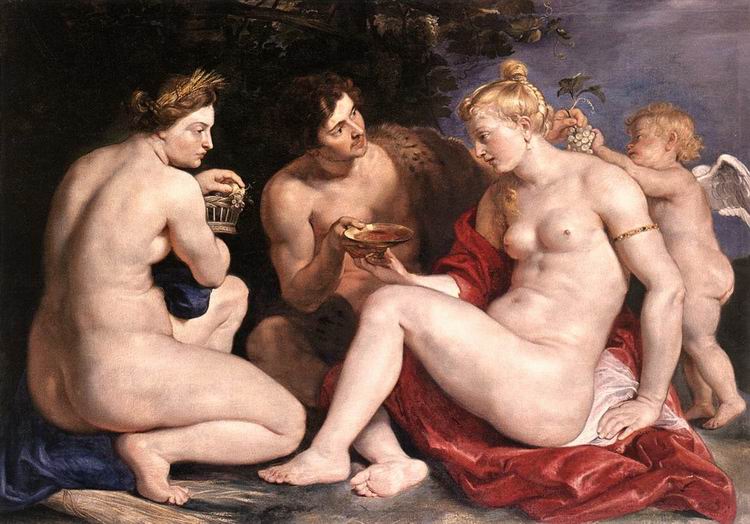
Peter Paul Rubens

Peter Paul Rubens

Then there’s the matter of psychological gender—what we think we are, what we feel like in our heads. How does it affect our personalities, the way we express our sexuality, the way we respond to art, for example? What does a generously proportioned Rubens nude broad do for you? or one of Michelangelo’s representations of God, looking for all the world like a steroid-crazed bodybuilder who pumps iron in a spit-and-sawdust gym? What do your physical and/or emotional responses to these images say about you and your psychological sexuality? Our knowledge of how psychological sex is determined in the brain is very sketchy indeed. A spectrum is more likely than either/or.

I could go on. Suffice it to say that things are not as simple as some would wish. I think there’s a bit of both in all of us. Hermaphrodites (functioning male and female organs in the same creature) are common in plants and animals. Homosexuality occurs in nature. And so do intersex states—organisms that are neither male nor female, but somewhere in-between, to put it crudely. Physical abnormalities of the penis are common in humans, and nearly all of them reflect a kind-of intersex state in which there is some degree of reversion to the basic female anatomy. Some human newborns appear to be of indeterminate gender, and the nature of their upbringing is a matter of choice by parents/professionals. And God loves all her creation.

The church gets into a terrible tangle about this. The reason is, I think, that it hasn’t quite grasped the fact that  biology has moved on from Aristotle, The role of semen as seed (and no more than seed) was appreciated at least as early as about 1400 BC. Later on, Hindu scriptures of the sixth century BC accept that the female is essential, with menstrual blood (from the mother, of course) forming the basis of the embryo, and semen merely the provoking agent for things to happen. Then along come others who thinks that the sperm from the male contains the miniature human, and that all the woman provides is the ‘oven’ for incubation. This faulty biology might at least in part explain the Vatican’s aversion to condoms. I suppose they think the used condom is full of miniature humans desperately clamouring to find an oven in which to bake. Extending this, the catholic view should be that intercourse is permissible only when conception is likely. Using the safe period for contraception, therefore, should be frightfully sinful.

070522_sharks_hmed_5p.grid-6x2It gets even better! New Scientist, 2 March 2013 tells us that virgin births are commoner than we thought. Though not yet recorded in mammals, except once about 2000 years ago in the Middle East, sharks, snakes, and turkeys, to name but three, can do it, and in the wild too. If this is a sign of things to come, men will no longer be required. Perhaps—and this is a long shot, I know—clerical celibacy is actually prophetic, pointing to the ultimate biological uselessness of the male of the species. In the Garden of Eden when the snake was talking to the woman, as they do, the man was nowhere to be found. Perhaps he was in his garden shed, recovering from surgery. Well now, lads, you can stay there. Is this not good news? I urge you to read Consider Her Ways by John Wyndham, and The Children of Men by P D James.

Fascinating stuff, raising all sorts of questions. There are doctorates to be written on the theology of gender and reproduction. Theology has to fit biology, not the other way round.