Calving time

Aside

Calves but not as known in Laois

Calves, but not as known in Laois

Some of my parishioners are, as it were, calving at the moment. I’ve just missed the opportunity to be at a bovine obstetric event because I didn’t pick up the phone message soon enough. I asked to be called so that I could have the opportunity to stick my upper limb somewhere the sun don’t shine (normally finger tip and nasal aperture is as far as it gets).

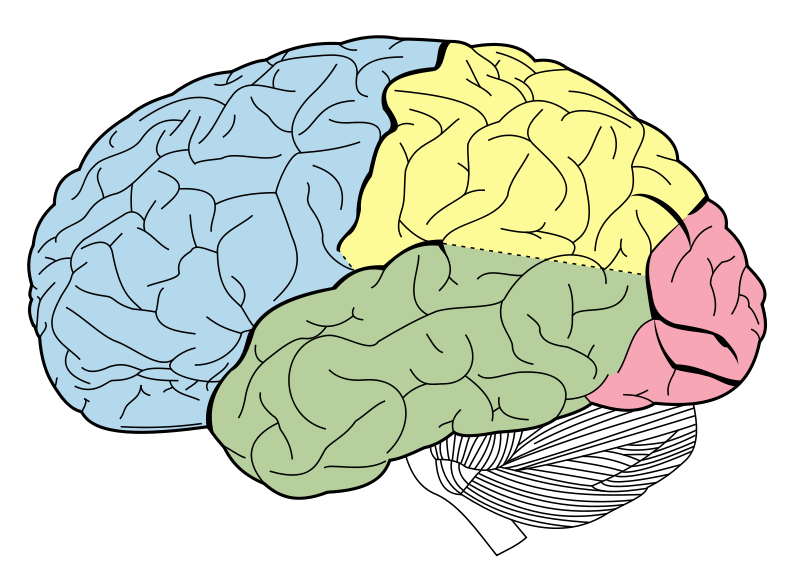
When you see other mammals tumble out into the world, you realize just how immature the human newborn is in comparison. Why? I think it has to do with brain development. If we left if any longer to come out—that is until we were able to stagger like calves, or something similar—the brain would be bigger, the head would be bigger and it would get stuck as it tried to get through mum’s pelvis. So the nine month timing is a kind of compromise between the needs of the mother and the needs of the fetus. That’s my view anyway, and I doubt you’ll find any evidence to the contrary it so it must be right.

What of the placenta? It’s a miraculous organ, another compromise between fetus and mother. It invades the mother so that fetal blood can get near enough to maternal blood for exchange to occur. Too much invasion and mother suffers. Too little, and fetus suffers. Other mammals are very wise to eat the placenta. Why don’t we? (Some do, apparently, but it’s not common.) It’s nutritious, hormone rich, and, unless squeezed, full of blood. Fried I suppose it would be just like black pudding. Add two or three eggs for breakfast. Ahhhhh. I wonder, shall I start a trend here? There’s lots of theology in this.

Two spiritual autobiographies

Homecoming

It took me a while to overcome a Kindle aversion. All sorts of reasons: Amazon exploiting the book market, inveigling its way into my mind through cookies, and so on and so forth. And then I thought ‘sod it’ and bought one. So far I haven’t spilt tea on it.

Good for stuffing in your pocket of course. Good for taking on holiday. Good for reading in bed: not as unwieldy as a book. Not good when SWMBO wants the light out and I want to continue reading, for mine is not one of the sexy back lit jobbies. I have a light on a clasp, but that seems to have a life of its own in that the light comes and goes, and so does the whole thing when the spring clasp decides to rearrange itself. Trouble is, though we’ve downloaded a fair number of free books, (for yes, dear reader, Susan acquired one too), most books I’d like to read are not free. So considerable, and where books are concerned rare, self-discipline is called for.

Before I fell asleep on the train yesterday I was reading (kindling?) the second volume of art critic Brian Sewell’s autobiography, Outsider: Always Almost: Never Quite. It covers, amongst other things, the Anthony Blunt saga. Whatever else Sewell may be, and some say snobbish, elitist, offensive, immoral, and much, much more (‘we pee on things and call it art’), he is uncompromisingly honest and without a shred of self-deception. He has the guts to tell it as it is about so-called works of art lauded by the chattering classes. He has taste and discernment, and for that he is pilloried by the luvvies. It’s not the sort of book you’d leave for your 10 year old to read, however. Sewell’s sexual activities are – what’s the word I’m looking for here? – ah yes, educational. He is utterly matter-of-fact about them. As I muse on them, and their significance, I’m reminded that we have no coherent theology of pleasure.

‘Uncompromisingly honest and without a shred of self-deception’ is a phrase that must be used to describe Ruth Burrows. Whether or not you pick up Brian Sewell’s book, I most strongly recommend anything, everything by Ruth Burrows. In her autobiography Before the Living God, this Carmelite nun unflinchingly dissects her human and emotional experiences, the battles that rage in her head, and her responses to them. She shows that prayer is, more than anything else, God’s work, not ours, enabling a journey into self, letting the onion skins fall off as one penetrates ever deeper, in order that the divine within can merge freely with the divine without, no more layers blocking the exchange. (Talk of onion skins puts me in mind of the donkey in Shrek and parfaits. Oh, never mind.) This requires courage and honesty to see ourselves as we really are. More than any other contemporary writer, I think, Ruth Burrows shows that to be holy is to be fully human, hiding nothing, accepting everything about ourselves in order to let the hell be loved out of us. Love your enemies, especially the enemies that live in us.

Eyes that see shall never grow old

Eyes that see shall never grow old

So, then, could Brian Sewell be called holy, or fully human? I suppose that depends on what he thinks of the battles that go on in his head, and only he can know that. We all have these battles. Some are more aware of them than others. When I take out my brain to look at the stuff that goes on in my head, I begin to glimpse what Ruth Burrows has known for a long time, that liberation means freedom from, not freedom to. We might ask ourselves: freedom from what?

Dratted things creeping innumerable

6a00d834522f2b69e2017d3e514226970c-320wi

Gills become ears-nose-and-throaty things

The beginning of December is not a good time for a clerk in Holy Orders to be feeling unwell, but unwell is how I feel. Headache, gently throbbing ears and nose (not throat yet), slight unsteadiness when I stand, which has nothing to do with the glass of port that I may or may not have had last night. I know I’m not alone in these otorhinological symptoms, and they remind me of evolutionary consequences of the adoption of a terrestrial (as opposed to a marine) environment.

Innumerable

Innumerable

I muse on the wonders of creation in the form of bacteria and viruses responsible for these throbbing feelings. I wish the microbes no harm, though I wish they would do me no harm. You will doubtless recall from the ‘proper’ version (the old Prayer Book) of Psalm 104 that splendid phrase: ‘things creeping innumerable, both small and great beasts’. I wonder if the psalmist would have been quite so up-beat if s/he had realised that things creeping innumerable can do us a lot of damage. It brings home to us that size is not everything. I could go on, but such zoological wanderings do nothing to alleviate the symptoms. The question is, should I commit murder by taking antimicrobials? Ah, the ethical dilemmas we face.

A Christian?

Theology has to account for this

Earlier today, someone asked me what I thought it meant to be a Christian. Oddly enough, I’ve never been asked that before — at least, not quite so bluntly. I have views about how theology must fit the reality of our animal existence, and I will set them down in print when I have worked through some of the issues they raise. But for now, from a practical point of view, here’s what I think ‘being a Christian’ involves.

Do justly, love mercy, walk humbly.

Love your neighbour as yourself. This doesn’t mean letting my neighbour walk all over me. It doesn’t mean that I should approve of my neighbour evading responsibility for his or her own action or inaction any more than I should evade responsibility for mine. It means expecting of myself no less than I expect of others. It means expecting of others no more than I expect of myself. It also means:

  • Don’t do to others what I wouldn’t like them to do to me.
  • Condemn not that I be not condemned.
  • Examine the plank in my own eye before I even begin to comment on the speck in someone else’s.

And:

  • Don’t compete for the best places at parties.
  • Pray in secret not for show. Indeed, don’t do anything for show.
  • Openness — let your light so shine  …  as a city on a hill, a lamp on a stand.
  •  Watch for the signs of the times. Use your nous. To stand in front of an oncoming car expecting it not to hit me is stupid. Newton’s first law of motion still holds (he thought his most important role in life was as a Biblical Scholar).
  • Let your ‘yes’ be yes and your ‘no’ be no — anything else is evil. (What about diplomacy?)
  • Do not treat people with partiality, for God is no respecter of persons … you have one Father and you are all sisters and brothers. Everyone. Not just members of your family, your tribe, your race, your denomination, your opinion. Everyone. Including those who hate you.
  • Love one another as I have loved you. Thankfully, loving does not have to mean liking.

I fall short on them all. I’m human therefore I make mistakes. The psychological authenticity of Jesus’ message sustains mesometimes only justin my priestly role. I suppose what this role boils down to is: encouraging people to confront reality by living in the present (e-ternity, ec-stasis), free from the burden of the past (forgiveness), feet planted on the ground (humility), eyes and mind looking all round and beyond (others and otherness). Some of the doctrine we’ve inherited was written by and for a pre-mediaeval view of the universe. Some of it reflects the pyschological obsession of the writer. Some of it has passed its sell-by date. Much of it is poetic imagery. Nearly all of it expresses deep psychological truths.

The questioner asked me a second question: do I believe every word when I say the Creed. What a question. Watch this space.

The world is as it is

The Astronomer Royal

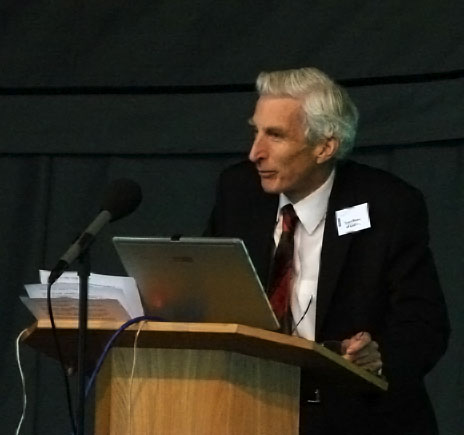
The British Astronomer Royal points out here that the sun has been shining for over 4 billion years, and has over 6 billion to go before it explodes and earth is vapourized. If you represent earth’s lifetime by a single year January to December, the 21st century is a quarter of a second in June. We are less than halfway through the process of evolution. Whatever creatures witness the demise of the solar system will be as different from us as we are from bacteria. We are still, he says, at the beginning of the emergence of intelligence in the cosmos. The last three centuries have seen acceleration in (probably) human-induced changes in the planet’s environment. Some species become extinct, new ones will evolve. Humans like us may or may not survive, but will certainly evolve.

I remember at primary school (Langwathby C of E since you ask) standing in the playground, Settle-Carlisle railway to my left, and thinking that life on another planet does not necessarily mean life as we know it. And I still think that. We have haemoglobin to carry oxygen in the blood, octopuses have other stuff for the same purpose – and they are on the same planet. The creature in Alien that grew in John Hurt’s belly (yes, yes, I know it was only a story) had acid in its blood vessels. Our thinking is altogether too selfish, too human-obsessed. Things could be otherwise. We are like pimples on the backside of the cosmos. Hurricanes, earthquakes, wind and rain come and go. The earth will cleanse itself. For those that accept the notion of God, ‘God is working his purpose out as year succeeds to year’. For those that don’t, the laws of nature are doing the what-comes-naturally. In the context of evolution, this has interesting theological implications. It’s not over yet.

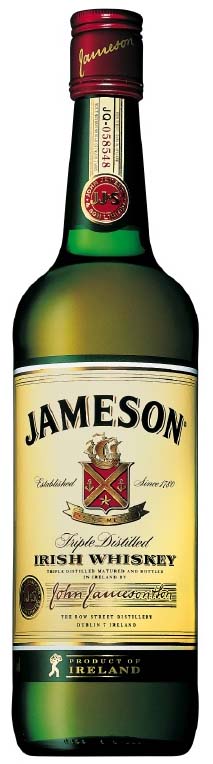
Make the most of what you’ve got when you’ve got it, because you might not have it much longer. Live each day as ‘twere thy last. In an earlier post here I wrote about a ‘good death’. One of my more elderly (in years but not in mind) parishioners told me that her idea of a good death was slipping off a stool with a glass of Jameson’s in her hand. This has interesting theological implications too. Raise your glasses. The standard Anglican response to any difficult issue has much to commend it: ‘Let’s have another glass of sherry‘. Or whiskey.

Thinking mammals

Aside

Rector at prayer

Maryborough school students are impressive. I went in this morning for the usual Friday assembly, and was commandeered to talk to infants about bones, a topic that was exercising them today. After we’d named some bones, and felt them, the conversation went something like this:

me: why do you think we need bones
them: to make us stiff
me: what would happen if we didn’t have any
them: we’d be like jelly
me: do you know any creatures that are like jelly?
them: jellyfish
me: and why don’t they need bones?
them: they float in water.

Smart infants, aren’t they? With the whole school, the conversation developed.

me: if bones make us stiff, how do we move?
them: joints and muscles
me: and why do we need to move?
them: to look for food.

Spot on, eh? And when I asked them why babies cried, they said ‘for food’. That’s why communication developed in my humble opinion (though SWMBO says my opinion is never humble).

me: can you think why moving would be hard if we didn’t have bones and muscles?
them: gravity.

And there, boys and girls, you have it in a nutshell. Impressive, huh?

The theme of the assembly was food, so we discussed different sorts of food: fruit, veg, cow, pig, sheep, octopus, squid, fish, crab. Even worms. Some of them told me about carbohydrates which moved us on to carbon, hydrogen, oxygen and nitrogen. Some of them knew that methane was found in farts (the young ones had left by this stage, but I expect someone will complain). Some of them knew about cartilage and bone. The seniors told me we were mammals, and they knew that meant that mothers produce milk. Oh, the joys of being surrounded by people not yet disconnected from the earth. I told them that the milk-producing organ is the mammary gland. Presumably that’s why mothers are mammies, though I didn’t say that. The other thing I didn’t say was that the reason we move and seek food is in order to reproduce. That’s for secondary school pupils. What has this to do with church? Answer: everything. Work it out yourself.

Memories and tombs

Use it or lose it

November is a dark kind of month. Dark memories, dark nights, dark moods if you have seasonal affective disorder, the end of the church year, waiting for the light to dawn. Remembrance, memory, memorial, tomb. Mnema. When we retreat into memories of times past, we can get stuck—entombed—there. Like a black hole that sucks everything into it, we start to live in the tomb of memory with the door closed, living in the distant past, unable to look outward. Dementia. Locked away. That’s what happens to some people as they age and lose function in part of the brain that deals with recent memory. It’s as if the only part of the memory that functions is the long-ago memory. That’s what happens to some people who chose not to let go of the past, and who seem to rejoice in dredging up past grievances. Remembrance ceremonies in November remind us how destructive humans can be when we act on pride and the will to control others. I hope they can also point how constructive can be our resolve to make the world a more delightful place when we replace the desire for revenge with the desire for love. And I don’t mean soppy, emotional love. I mean proper love that’s hard work, caring, sharing, working, enduring. Replacing me-me-me with us-us-us. When we let go of the past and open the tomb of memory, resentments of the past fly away. Rolling away the stone that entombs us in our memories enables resurrection and new life. Roll on!

Moving and memories

New classes, new schools, new colleges, new jobs—this time of year often brings a mixture of excitement and fearfulness. The need to make new friends, and moving from being a big fish in a small pond to being a minnow in an ocean can be a challenge. Watching two new hens join our original four showed me again that settling into a new pecking order is fraught—the two new ones are still being bullied after four months. Coping with this (settling in I mean, not the hens) is difficult enough when you’re in your sixties, but can you remember what it was like when you were starting school? I was at primary school 200 yards away from the house. I can’t remember much about how I felt then except for a general air of anxiety, for some reason made much worse when our cat followed me to school and I thought I’d get the blame for it. Maybe that’s why I don’t like cats, which are probably best housed under the wheels of a heavy truck (they also bring on wheezing and eye-watering). Back to the plot. Moving from primary to secondary school can be troublesome with official and unofficial hierarchies to cope with, and coming to terms with some of the more unwelcome aspects of playground gangs, and seniors who appear to be the size of houses.

By the time you get to 18 it might be that you can’t wait to leave home and start to plough your own furrow. That is admirable and understandable—indeed, if we never explored we’d still be scrabbling about in caves (as I’ve said before, and doubtless will again). The sad thing is that for financial reasons students now find it increasingly difficult to study away from home, at exactly that time of life when they should be shoved out of the nest. I can’t remember where I read it, but someone said that people can be classified as those who always look forward and don’t fear anything, those who defend and are always watchful, and those who remain within the boundary caring for the nest (nothing to do with male/female, since both sexes are found in all groups). I suppose you might say nomads, defenders and home-makers. I’m a nomad, SWMBO isn’t, so rows are not uncommon. Adapting to new circumstances, however exciting, always provides challenges. Please spare a thought for those whose personalities and inclinations make this a troubling time, especially those starting school.

Starting a new phase of life may well mean that we need to grieve for what we’ve left behind. This kind of grief is every bit as serious as the grief for someone who has died. If we don’t acknowledge it, it will bring us low. If we bottle it up, it will explode when we least want it to. It’s worth marking the old ‘life’ in some way in order to celebrate what has passed. It might be worth thinking about how elements of the past can be incorporated into the forward-looking present. This becomes more important as we get older, and I guess this is why people like poring over old photographs, or keeping toys and books from childhood. Don’t just keep them in a press in the dark—take them out occasionally and revel in them. Use the past to enrich the present and future.

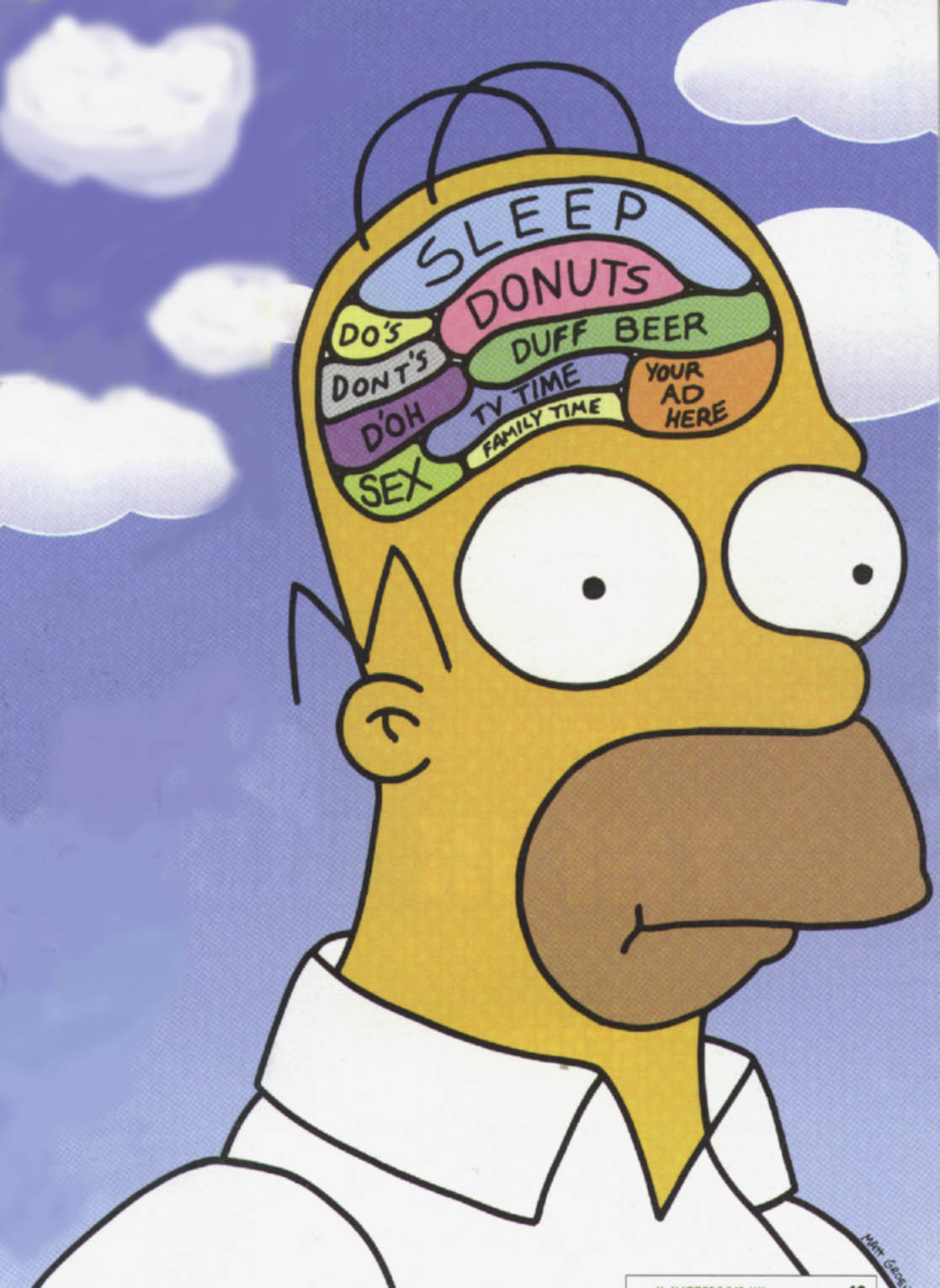
Talk of memories brings on some neuroscience. We smell food as much as taste it, and what we call tasting food is partly smelling it. The brain’s memory circuits are linked with smell and taste. That’s why smells and tastes evoke memories and responses. This is good: as animals we learn to avoid danger. Pheromones enable us to ‘sniff out’ sexual attraction. I think of my mind, inasmuch as I have one and can see what goes on in it, as a tank of viscous fluid with memories slowly and randomly moving, up and down, side to side, slithering about. The only viewing point is a small opening at the top. As the memories move, they become visible for a short time through the opening, sometimes this, sometimes that, sometimes the other—unpredictable, ever-changing. If these memories have not been processed, the undesirable emotions and responses they provoke can cause real disruption. All the more reason to pay some attention to what goes on in our minds.

This is self-examination, reflection, confiding in a friend. It is a clearing-out, a cleansing. However distressing we find it, we come out the other side enlightened and lighter.