Cancer deaths to fall?

Earlier this week, Cancer Research UK announced that within 20 years, deaths from cancer will fall dramatically. So what, then, will people die of? Maybe we won’t die at all – isn’t that what people hope will be the result of medical research? – but live for ever and ever, becoming like the struldbrugs in Gulliver’s Travels, increasingly opinionated and cranky. Some of us are on that road already. If memory serves me right, at 80 years of age their marriages were dissolved because no two people could stand each other for ever, and they became legally dead, no longer able to own property. This is not unattractive. No taxes, no responsibilities, no leaking roofs to worry about (yes, the Rectory roof still leaks). As centuries passed, the struldbrugs could understand less and less since language changed. Hmm, immortality really does have something to be said for it after all.

Is there such a thing as a good death? Some people say they want a sudden death. No suffering for them, but hard for family. A lingering death gives time for family to come to terms with, even welcome, it, but can be trying for the dying person. When my mother was on her last legs (secondary cancer filling her liver), she was put on morphine and had a couple of months at home. I said if I was her, I’d get myself a freedom of UK train ticket and go places, though by then she was too ill to bother. After she died, my father bought a deep fat frier, and that was the end of him within 2 years. If we don’t die of cancer, I suppose heart disease will be the killer. Or murder—if the struldbrug character changes are an indicator.

What will it be for me? Road traffic accident? Heart disease (I like eggs)? Cancer? Quite possibly cancer: I am a bit of a worrier and that always gives me bellyache, and anyway there seems to be some evidence for cancer-genes in the family. Cancer is a side-effect of getting older: the longer you live, the more likely your cells are to go out of control. The sad thing is that it can strike the young.

I have slight experience of religious communities, and am always impressed by their attitude to someone’s death: here today, gone tomorrow, we have stuff to do so let’s get on with it. There’s Gospel backing for that one. I’ve no doubt that much distress at a death is the result of survivors’ guilt at the way the dead person was treated when alive, and some of the rest arises from a need to be seen to behave in a certain way.

The claim by Cancer Research UK is in truth fatuous and stupid. Everyone is going to die of something. How about most of the world’s population who don’t live long enough to get cancer at all?
Foot gestures

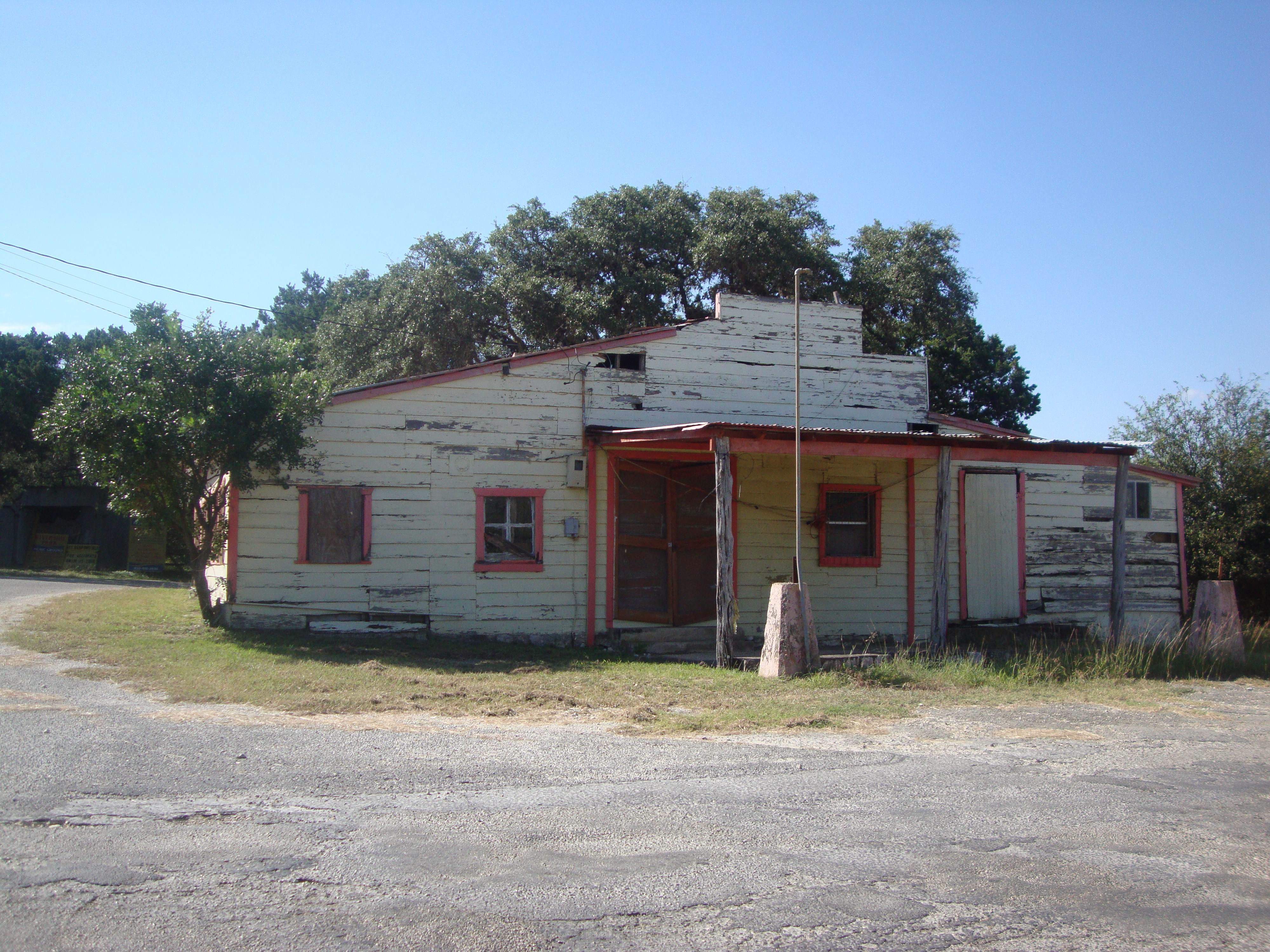
Dusty Texan shack

The feet of plantigrade mammals like us are remarkable things. Highly specialized for perambulation. I have elegant 62-year old feet, so I am told by mine own eyes, which behold their glory. Wherever possible, I take my shoes off. And my socks, a habit that infuriated my mother and now endears me to SWMBO. Socks are lost in and under couches and chairs, retrieved some time later covered in dog hairs. (All my socks are black, so finding a matching pair doesn’t matter.) Footwear is, on the whole, bad for feet, since though it is true that feet are made for walking, they were not made for being cooped up. Ideally, I would celebrate the sacraments in bare feet so as to be touching holy ground.

In the Middle East, as in many other places, it’s insulting to show people the soles of your feet. You have to be careful how you sit, especially when you cross your legs. When pious Jews in days of old visited a non-Jewish cities, they shook the (non Jewish) dust off their feet when they left, presumably so as not to be contaminated. ‘Shake the dust off your feet’ is the instruction Jesus gives his men in today’s Gospel. Don’t waste time with people and places that don’t welcome you—quite a statement in those days, an insult almost. The message, roughly translated, is don’t flog a dead horse. Know when to cut your losses and give them the old heave-ho as Bertie Wooster probably said.

All very well in theory, but it can be hard to do. Often, we don’t want to admit defeat, especially when we’re younger. We want to ‘win’, to impose our wills on people or things. Think how much time is wasted by organizations—especially but not exclusively churches—that try again and again to do the same things over and over again, hoping that next time things will be better. Sheer lunacy. Einsteinian insanity.

As I get older, I find it much easier to shrug my shoulders, say ‘OK, if that’s the way you want it, bye bye’, or words to that effect, and expend my energy more productively.  Apparently, with gospel approval.

Moving and memories

New classes, new schools, new colleges, new jobs—this time of year often brings a mixture of excitement and fearfulness. The need to make new friends, and moving from being a big fish in a small pond to being a minnow in an ocean can be a challenge. Watching two new hens join our original four showed me again that settling into a new pecking order is fraught—the two new ones are still being bullied after four months. Coping with this (settling in I mean, not the hens) is difficult enough when you’re in your sixties, but can you remember what it was like when you were starting school? I was at primary school 200 yards away from the house. I can’t remember much about how I felt then except for a general air of anxiety, for some reason made much worse when our cat followed me to school and I thought I’d get the blame for it. Maybe that’s why I don’t like cats, which are probably best housed under the wheels of a heavy truck (they also bring on wheezing and eye-watering). Back to the plot. Moving from primary to secondary school can be troublesome with official and unofficial hierarchies to cope with, and coming to terms with some of the more unwelcome aspects of playground gangs, and seniors who appear to be the size of houses.

By the time you get to 18 it might be that you can’t wait to leave home and start to plough your own furrow. That is admirable and understandable—indeed, if we never explored we’d still be scrabbling about in caves (as I’ve said before, and doubtless will again). The sad thing is that for financial reasons students now find it increasingly difficult to study away from home, at exactly that time of life when they should be shoved out of the nest. I can’t remember where I read it, but someone said that people can be classified as those who always look forward and don’t fear anything, those who defend and are always watchful, and those who remain within the boundary caring for the nest (nothing to do with male/female, since both sexes are found in all groups). I suppose you might say nomads, defenders and home-makers. I’m a nomad, SWMBO isn’t, so rows are not uncommon. Adapting to new circumstances, however exciting, always provides challenges. Please spare a thought for those whose personalities and inclinations make this a troubling time, especially those starting school.

Starting a new phase of life may well mean that we need to grieve for what we’ve left behind. This kind of grief is every bit as serious as the grief for someone who has died. If we don’t acknowledge it, it will bring us low. If we bottle it up, it will explode when we least want it to. It’s worth marking the old ‘life’ in some way in order to celebrate what has passed. It might be worth thinking about how elements of the past can be incorporated into the forward-looking present. This becomes more important as we get older, and I guess this is why people like poring over old photographs, or keeping toys and books from childhood. Don’t just keep them in a press in the dark—take them out occasionally and revel in them. Use the past to enrich the present and future.

Talk of memories brings on some neuroscience. We smell food as much as taste it, and what we call tasting food is partly smelling it. The brain’s memory circuits are linked with smell and taste. That’s why smells and tastes evoke memories and responses. This is good: as animals we learn to avoid danger. Pheromones enable us to ‘sniff out’ sexual attraction. I think of my mind, inasmuch as I have one and can see what goes on in it, as a tank of viscous fluid with memories slowly and randomly moving, up and down, side to side, slithering about. The only viewing point is a small opening at the top. As the memories move, they become visible for a short time through the opening, sometimes this, sometimes that, sometimes the other—unpredictable, ever-changing. If these memories have not been processed, the undesirable emotions and responses they provoke can cause real disruption. All the more reason to pay some attention to what goes on in our minds.

This is self-examination, reflection, confiding in a friend. It is a clearing-out, a cleansing. However distressing we find it, we come out the other side enlightened and lighter.

Demons?

He’s behind you

Sermon for Proper 16 Year B

In Acts 8 we hear that the apostles went from place to place, proclaiming the word. The crowds were impressed by Philip who seemed to have a canny way of dealing with unclean spirits, who came out of the afflicted, crying with loud shrieks.

They seemed much readier then than we are now to talk of possession and unclean spirits. We talk in terms, perhaps, of obsession, of nastiness, of greed, envy, pride and the abuse of power. But some people do still talk of possession, in the sense of evil spirits that need exorcism. In my last incumbency, I was trained in the deliverance ministry, and I heard at first hand of poltergeist activity, though I’ve never knowingly witnessed it myself. The truth is that I’m a sceptic but I’ve heard the experiences of people whose integrity I do not doubt. It’s a fact that brainwaves influence the environment—EEG—so might they, in extreme circumstances, visibly affect the environment? And perhaps what goes on in the environment influences brainwaves.

I accept the reality of demons. We see and hear of them daily: pride, standing on dignity, lust for power, envy, greed, malice, spite. We might even recognise them in ourselves—I hope to goodness we do, for such recognition is the first step to banishing them. And it is these demons that we need to be on our guard against. They charm us, they steal our personalities, they take hold of us, even to the extent that may affect our health. I’m convinced that these are the things that much of Jesus’ ministry was dealing with. His advice, in today’s Gospel, is that we devote ourselves to the bread of life—eucharistically and symbolically—that is, thinking WWJD.

In today’s Gospel, it’s clear that some disciples found Jesus’ message too difficult to accept, and turned away. Life can be difficult. Christianity is difficult. It’s not an easy option. When I hear of Christians pretending otherwise, I wonder what sort of la-la land they inhabit. We are dragged out of the relative security of our comfortable lives into a life of insecurity where attitudes and behaviours are challenged as we begin to see ourselves as we really are. As we seek truth, we find ourselves attacked by those who let demons take them over. Evidently Jesus knew that he would lose some of his followers. He asked them whether they would stay or go. Go, if you want. You’re no use here if you’d rather be somewhere else. But where else is there to go? The religion of shopping does not sustain for long, and is expensive. The religion of drugs, or comfort-eating is harmful. The religion of sport and physical activity can become our master. The religion of being spiteful and malicious is draining—and how will you feel on your deathbed if spite and malice are all that people will remember you by?

In his letter to the church in Ephesus (today’s epistle), Paul deals with hostility, division, and self-interest more than any other topic. As I said last week, they must have been a fractious group, quite unlike the typical Church of Ireland community. They faced the spiritual forces of evil within them, just as they are within each of us. Paul reminds us to be on our guard: for we wrestle not against flesh and blood, but against principalities, against powers, against the rulers of the darkness of this world, against spiritual wickedness in high places. The high places in our minds that we fool ourselves are palaces of light.

Each one of us has to answer Jesus’ question: ‘Do you also want to go away?’ We often struggle to remain faithful amongst the sorrows of personal circumstance and the daily grind, of dealing with unreasonable bosses, unreasonable customers, children in trouble, domestic violence, confronting corruption. Can we wear the protective armour of God and stand firm? To live according to Christian teaching is to seek truth, not self-deception. But truth can divide, truth can hurt before it heals, truth may produce hatred, truth can leave a person standing alone, truth can appear to fail before it succeeds.

Some people are offended by military images in church, but they are here in scripture and they are embedded in the liturgy: Sabaoth, the heavenly army. Armies are for fighting evil. Paul was writing for people who saw Roman soldiers every day. Conquerors to be sure, but also guardians of peace—Garda Siochana—girded in armour to withstand attack. Christian soldiers need to be offensive against evil, not complicit, and defensive to protect themselves.

Jesus wanted the disciples and with him, but not against their will. Like them, we can choose whether we say  yes or no to joining the army. We can choose whether to say yes or no to the demons.  These are our decisions. How do you want to be remembered?

Organs, music, masculine

What large organ pipes!

I’m an organist. I know that organ concerts are not usually spectator sports and can be dull to the uninitiated, so I wasn’t expecting too many punters at the Thursday lunchtime concerts in Portlaoise. An organ concert in Dublin, I’m told, might attract 20 people or so. Imagine my delight when 40 people turned up for the first one, 25 for the second, 48 for the third, and 42 for the fourth. Is it novelty value? Is it that they are regular, short and tuneful? Whatever the reason, good! Thanks to all our performers who have waived fees, and thanks to all who come. It’s good to see people bringing lunch to munch. The organ is a treasure. Internationally acclaimed musician Mark Duley says so. Stanley says so: it is a very versatile small instrument that fills the church with great richness of sound. I happened to be playing when one of the visiting organists turned up to practise, and he said he was stunned by the sound, and how well it suited the church. Portlaoise should be proud of the instrument.

Portlaoise church was privileged recently to host a concert given by the extraordinarily gifted young artists of the Herbert Lodge Music Summer School. One of the performers was a young lad on the cello whose mother told me that when, at his request, she took him to concerts at the National Concert Hall, she was almost – I kid you not – accused of abusing the child by ‘forcing’ him to listen to classical music when he should be out playing football. This says something about the values of our society. At the Maryborough School end of term service in June, the school choir sang John Rutter’s The Lord bless you and keep you. It showed what can be accomplished with vision and enthusiasm. Sad, though, that some of the senior boys declined to sing: singing is not cool. I’d be the first to acknowledge that singing school assembly ditties suitable for 6-year-olds is repellent to young male adolescents, but we really need to quash the apparently widespread notion that singing damages both sporting prowess and spermatogenesis. I think this attitude might even extend to interest in any sort of ‘classical’ music. Will all the musicians of the future be female? Interestingly, all the organists playing in Portlaoise this summer are male, and most professional organists are male. Comments, anyone?

A plague of immoderate rain and waters

A former Rector of Stradbally, Patrick Semple, was known as the Rector who wouldn’t pray for rain. We certainly haven’t needed any such prayers recently. The Roman Catholic Bishop of Ferns encourages his flock to pray that the rain will cease. Bishop Brennan is in good company, for in old editions of the Prayer book we find this: O Lord God, who hast justly humbled us by thy late plague of immoderate rain and waters …  In his 1928 book Paganism in our Christianity Arthur Weigall asks if we think God is a vindictive hobgoblin. If so, praying for rain or shine, as required, might be just the thing. If you see the Lord as an irascible headmaster needing to be placated and massaged, then prayers for this or that might be just your cup of tea. It wasn’t Patrick Semple’s. It’s not mine.

So much rain here, so little in the USA. Our farmers are having a tough time because of too much, theirs because of too little. That word immoderate seems spot on. Jesus is recorded as saying that rain, much welcomed in those parts, falls on the just and the unjust (Matthew 5:45), and this is one of the texts (Luke 13 is another) that should be wheeled out when people say that some nasty accident is God’s judgement on the victim. This is piffle. As I’ve so often said, life is unpredictable – tectonic plates shift, cells go out of control, people decide to do things that affect others. Tragedies occur, but they say nothing about the Lord. They may well say something about ourselves:

“The rain falls upon the just
And also on the unjust fellas
But mostly it falls upon the just
Cause the unjust have the just’s umbrellas”
― Cormac McCarthy, The Statesman

Some people say that climate change is the result of human activity, and that we should do something about it. If it is, it’s a bit late. It started at least as far back as the 18th century with industrialisation. In Saudi Arabia, where petrol is dirt cheap, I witnessed the turning on of car engines and aircons at 5 am so that the car would be nice and cool for the journey hours later. Think of all that exhaust. How can we deny to others what we have had for at least a century? There’s some profound hypocrisy going on here—and the church, with the way it uses petrol, electricity, paper, and hot air, makes its green charters part of this hypocrisy.

Some say that we need to preserve the environment for the sake of existing species, but what about the view that environmental changes will provoke the next stages of the evolution of species? God, then, would be ‘working his purpose out as year succeeds to year.’ Nigel Lawson’s book An Appeal to Reason: A Cool Look at Global Warming is a salutary read. Climate change is part of a cyclical process over centuries, and of course the activity of humans and other animals contributes (think of all the cow farts). The Lord gave us intellects to cope and develop. This is what scientific investigation is for.

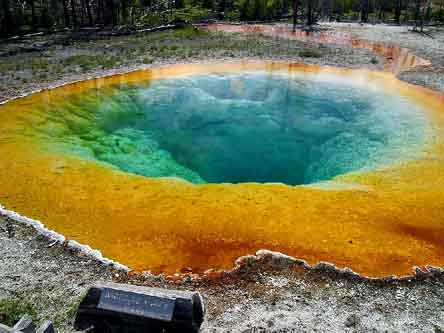
Yellowstone

In the end, whatever happens, nature will win. Bacteria will beat antibiotics. Particles from the sun will one day disrupt our power supplies with catastrophic results. We could well be wiped out as a result of the dust cloud if Yellowstone erupts, already long overdue. But bacteria and insects will survive and evolve, plants will survive and evolve, and—who knows—a new, improved super-ape might evolve and the whole process start all over again.

If you care about the environment enough to act, you will get rid of your cars, turn off your lights, turn down your heating/aircon, stop using paper, stop buying jewels, and make sure your pension funds (such as they are) are not invested in the oil and geological extraction industries. Let’s have another sherry.

Clonmacnoise, Capernaum and rubble

Stones in Jerusalem

Having some weeks back found the Rock of Cashel wanting in the welcome department, now it’s the turn of Clonmacnoise. A pile of rubble in a field—is it more than this? Apparently so, for huge coaches clog up narrow local roads, bringing hordes of pilgrims to tread in the footsteps of Ciaran and JPII. Even on a day blighted by low skies, soft rain and a general air of gloom, the car park was full. Last time we were there, about 20 years ago, entry was free and views unimpeded. Today we found that not only did entry come at a price, but also any possibility of using the loo—at the same price. It seemed that trees had been planted deliberately to obscure any chance of a view without paying. Rampant commercialism meant that even a cup of tea was not to be had without paying the entrance fee. Maybe this is what happens after JPII has visited a place.

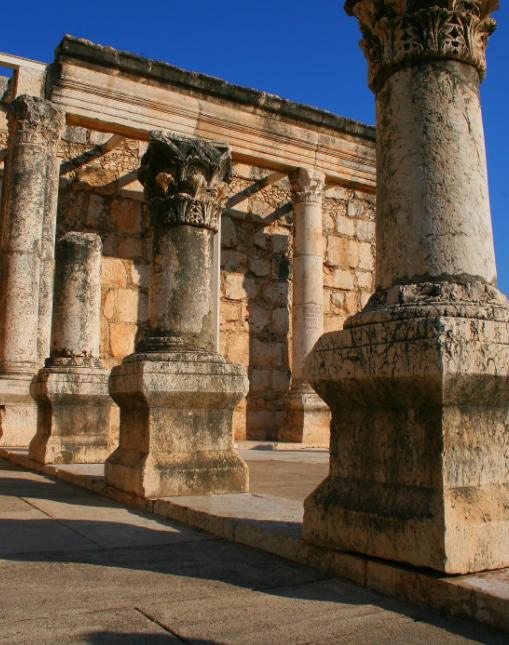
Capernaum

Rampant commercialism reminds me that last week we called in at Knock on the way back from Donegal. The shop merchandise was all in the best possible taste. She who must be obeyed said that the loos there were ‘appalling’. She is not alone: so say several online reviews. The weather was awful too, but I don’t suppose we can do much about that. A few years ago we visited the Holy Land. We saw lots of piles of rubble in fields near Jerusalem that possibly may possibly have possibly been associated with Jesus and the disciples. Galilee is beautiful and very moving. It feels real. And the Rock of Dunamase still rocks.

More intourism

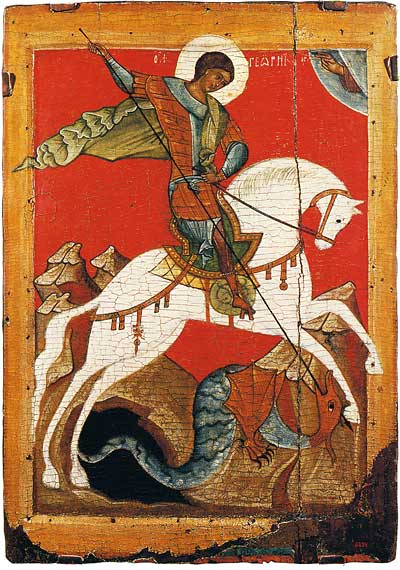
Russian icon

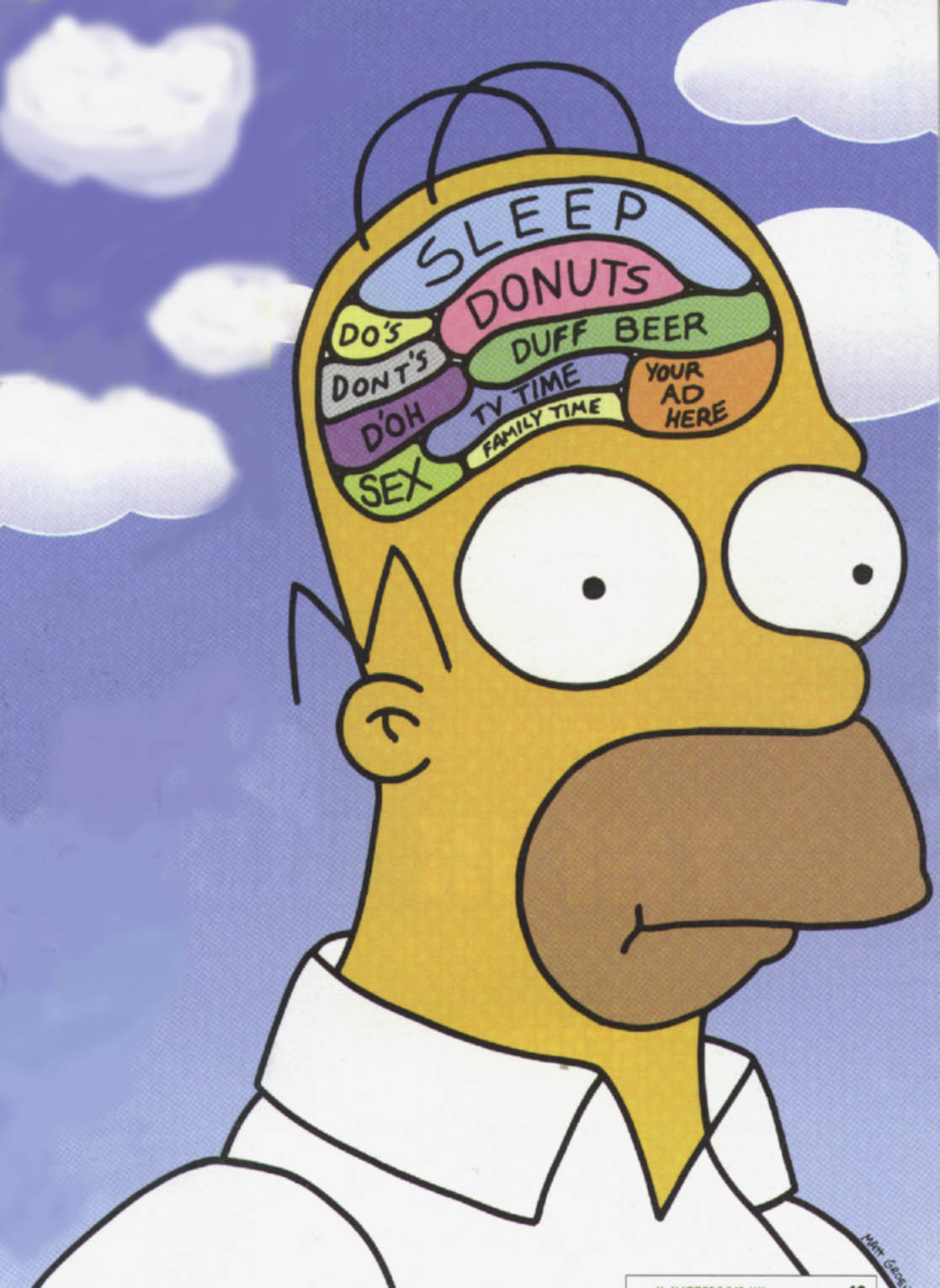
My enthusiasm for things Russian persists. I love the icons, the incense, the architecture, the matryushka dolls, The language: wonderful sounds – ‘l’ sounds like you hear in east Lancashire in places like Burnley and Chorley (listen to Jane Horrocks). And music to die for – literally, the Contakion with Russian basses whose vocal cords (no h, please) must be at least a foot long, and whose chests must contain several barrels of vodka, for them to get that low. The chants, the Rachmaninov Vespers: I drool like Homer Simpson with a donut. In Leningrad I sought out a poster shop a few metro stops from Hotel Moskva, and brought back some treasures, now gone the way of much else in various house moves. But one was particularly juicy, I recall, with square-jawed Soviet heroes and the hammer and sickle, and a slogan exhorting the workers to something or other in Russian.

Soviet icon

A few months after that holiday, we moved from Nottingham to Kilmacanogue when I started professoring at the College of Surgeons in Dublin. What better place to display the said communist poster, thought I, than in the Anatomy Room of that august body, well known for its revolutionary history and sympathies. At that time, we had some young surgeons in training at least one of whom, from a wealthy Dublin family (a rarity, of course, at the College of Surgeons) found it unsettling. He disapproved, and said so. What a tease!

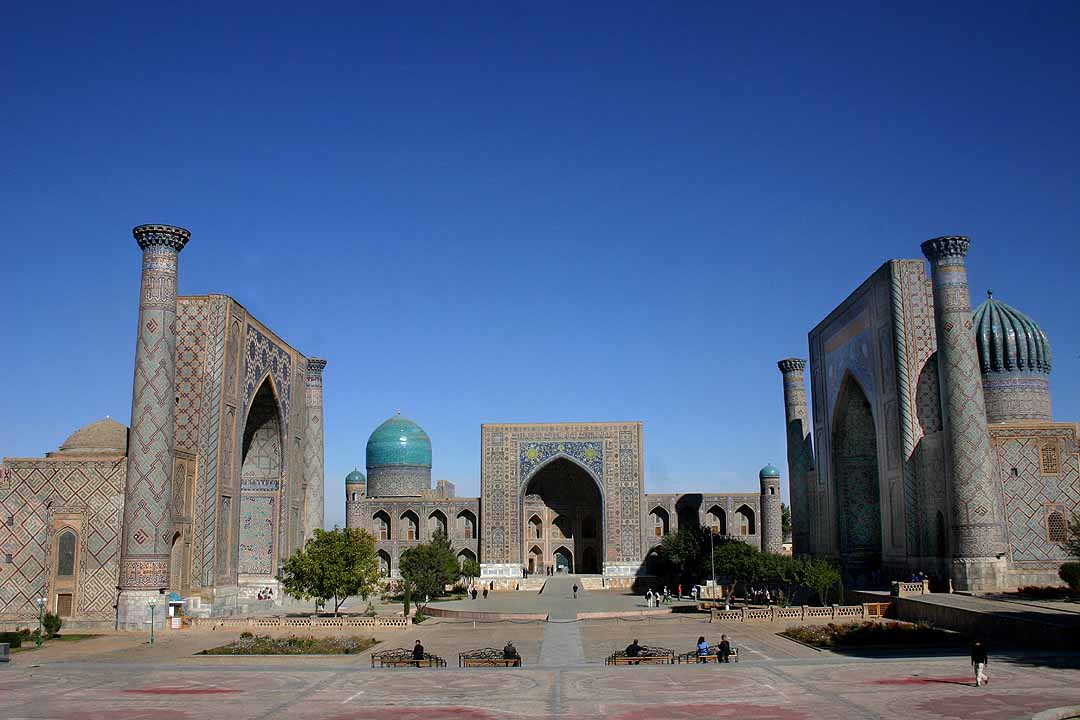
Registan, Samarkand

The year before all five of us went to the USSR, Susan and I went to Leningrad, Tashkent, Samarkand and Moscow. It was a rather rushed trip, and memories are hazy: tea drinking and beautiful Islamic architecture in Samarkand stand out. Someone wanting to talk to westerners the following day approached us in Samarkand, but nothing materialized. Gorbachev was in power then, and Moscow was boss. I wonder what has become of the would-be conversationalist in the now independent Uzbekistan. I wonder what has become of Comrade Boris and Borisovna of the erstwhile Soviet Union. Were they better off under Krushchev, Brezhnev and Gorbachev, before the ex-KGB man came to power and their oil tycoons became filthy rich and bought up football clubs?

One thing I brought back from the USSR was the realization that despite what we are told year-by-year, the Russians suffered war casualties on a far greater scale than anyone in the so-called west. You can understand why Uncle Joe was so keen to have a fence of buffer states between him and the western aggressors that had invaded Russia time and again over the centuries.

Communism and Christianity have much in common. A pity nobody’s tried either of ’em. Happy days.