More intourism

Russian icon

My enthusiasm for things Russian persists. I love the icons, the incense, the architecture, the matryushka dolls, The language: wonderful sounds – ‘l’ sounds like you hear in east Lancashire in places like Burnley and Chorley (listen to Jane Horrocks). And music to die for – literally, the Contakion with Russian basses whose vocal cords (no h, please) must be at least a foot long, and whose chests must contain several barrels of vodka, for them to get that low. The chants, the Rachmaninov Vespers: I drool like Homer Simpson with a donut. In Leningrad I sought out a poster shop a few metro stops from Hotel Moskva, and brought back some treasures, now gone the way of much else in various house moves. But one was particularly juicy, I recall, with square-jawed Soviet heroes and the hammer and sickle, and a slogan exhorting the workers to something or other in Russian.

Soviet icon

A few months after that holiday, we moved from Nottingham to Kilmacanogue when I started professoring at the College of Surgeons in Dublin. What better place to display the said communist poster, thought I, than in the Anatomy Room of that august body, well known for its revolutionary history and sympathies. At that time, we had some young surgeons in training at least one of whom, from a wealthy Dublin family (a rarity, of course, at the College of Surgeons) found it unsettling. He disapproved, and said so. What a tease!

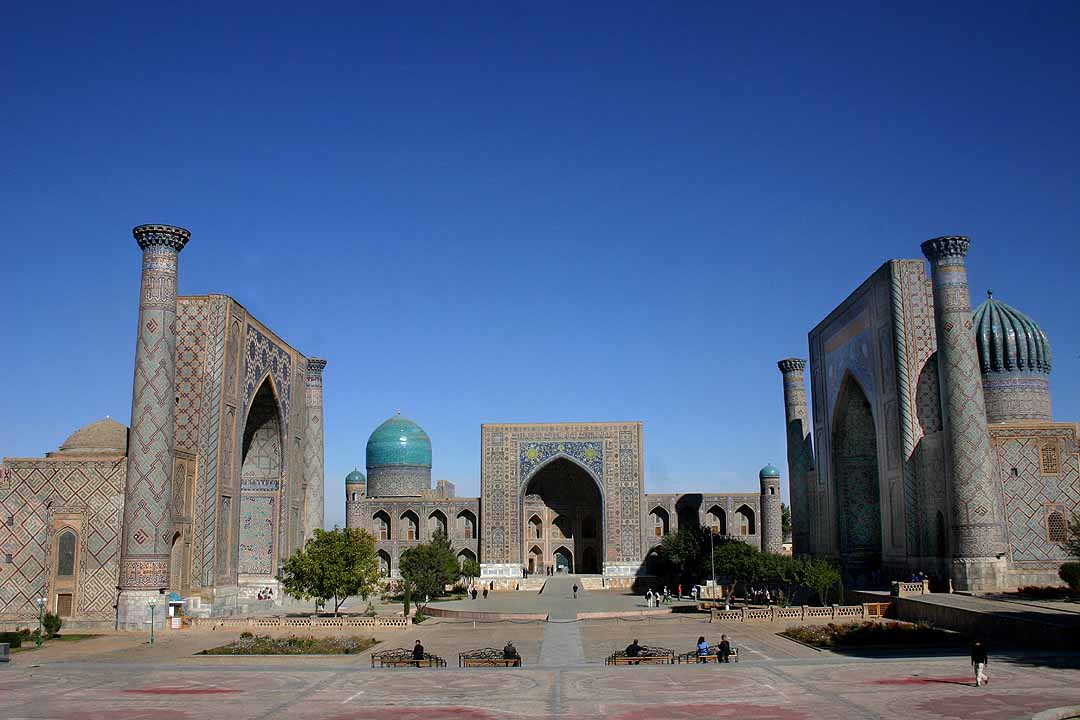
Registan, Samarkand

The year before all five of us went to the USSR, Susan and I went to Leningrad, Tashkent, Samarkand and Moscow. It was a rather rushed trip, and memories are hazy: tea drinking and beautiful Islamic architecture in Samarkand stand out. Someone wanting to talk to westerners the following day approached us in Samarkand, but nothing materialized. Gorbachev was in power then, and Moscow was boss. I wonder what has become of the would-be conversationalist in the now independent Uzbekistan. I wonder what has become of Comrade Boris and Borisovna of the erstwhile Soviet Union. Were they better off under Krushchev, Brezhnev and Gorbachev, before the ex-KGB man came to power and their oil tycoons became filthy rich and bought up football clubs?

One thing I brought back from the USSR was the realization that despite what we are told year-by-year, the Russians suffered war casualties on a far greater scale than anyone in the so-called west. You can understand why Uncle Joe was so keen to have a fence of buffer states between him and the western aggressors that had invaded Russia time and again over the centuries.

Communism and Christianity have much in common. A pity nobody’s tried either of ’em. Happy days.

Wider than the heavens – the intermingling of human and divine in Theotokos

The Great Panagia of Yaroslavl

Here is a conversation between biology and theology. Modern understanding of mammalian reproductive biology tells of an exchange between mother and fetus that has extraordinary implications for the exchange between Mary and the fetal Jesus. Astonishingly, Lancelot Andrewes hit on some of this in his devotional material, and it leads wonderfully and beautifully into Orthodox notions of deification, hinted at in Charles Wesley’s hymns.

God the Logos became what we are, in order that we may become what he himself is. Irenaeus was prescient. Read on.

Intourism 1987

Sergeyev Posad

The Great Panagia of Yaroslavl, pictured here, reminds me of an Intourist trip to the Soviet Union in 1987. On the way from Moscow to Zagorsk, now Sergeyev Posad, we passed a road sign that said something like Zagorsk 25 Km, Yaroslavl 220 Km, Arkangelsk 1120 Km – not the kind of distance you’d see on road signs round here. As Sugar Kane says in Some Like it Hot, ‘it makes a girl think.’ Distance, limitless, a sort of freedom.

My father had died, and the solicitor had sent us a cheque. How shall we use it? Nothing ‘safe’, that’s for sure. I know: we’ll take the five of us to Russia. What more natural place for a family holiday with children aged 7, 9 and 11 than Moscow and Leningrad? Landed at Sheremetyovo, bus to the Hotel Cosmos—in Russian, KOCMOC, which raised a titter with the boys. Next day the Intourist Guide said ‘you will come on city tour.’ No, says I, we’ll explore on our own. ‘You will come on city tour, please’. No, explore on our own. This went on for some while. We ended up exploring on our own. Metro stations, giant wheel, GUM, VDNK. We did Red Square and Lenin with the guide, of course, and jolly interesting it was too. But the trip to Zagorsk was memorable for the beautiful churches, the road sign and the lunch – for the wrong reason: a kind of chicken Kiev without the chicken. Edward, no longer 7 years old, remembers the Soviet toy store with something approaching alarm. I will see if I can get him to put those memories into print.

Then to Leningrad by train through miles and miles of forest. The children behaved impeccably. Big round orange ‘caviar’ served on the train. Samovar. Leningrad (as was) is stunning, but no matter how hard I try I can not switch it to St Petersburg in my head. A visit to the bookshop on Nevsky Prospect in the former Singer (sewing machine) building included an exchange with the shop ‘assistant’ that went something like this:

Me, pointing at 9 year old Hugh: Gdye twallette, pazhalusta? (where are the toilets please?)
Assistant: Nyet.
Me: as above, but louder and more insistent.
Assistant: Nyet.
Me, to Hugh: the lady says no, so just go into the corner and pee on the floor.
Assistant: come with me.

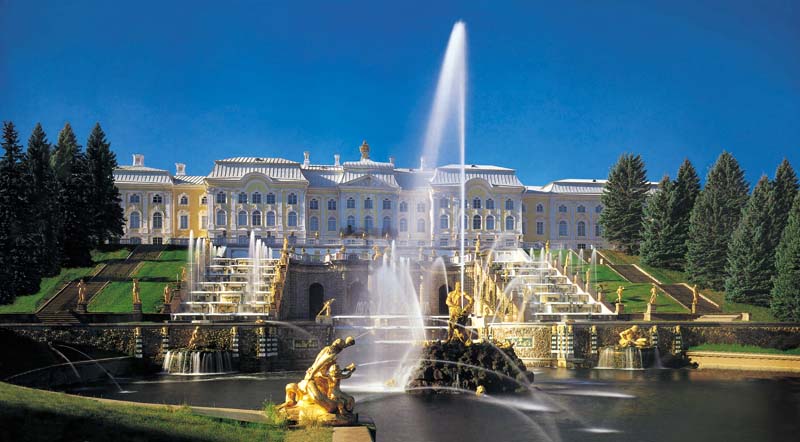
Petrodvorets (Peterhof) near Leningrad

There must be some theology in that somewhere. The picture book for this holiday brings back so many memories: the palaces, the wonderful colours, the scale of the place, the Hermitage, the Russian Orthodox liturgy in the monastery opposite the Leningrad hotel. The adventure. And I was thin then.

Dunamase beats Cashel

Scissors, paper, rock. Keen readers will have noted this blog’s disappointment with the Rock of Cashel and its bored-looking staff (see below: What a welcome). A couple of days after the Cashel non-experience we took the Texans to the Rock of Dunamase. That was a great hit: ‘much better than Cashel’ they chorused. More exciting, more left to the imagination, more nooks and crannies, more unkempt. Please keep Dunamase a secret otherwise they’ll start charging, and one will have to fight through turnstiles and so on. When you’re up there, you can understand its strategic military value. Great views to the Wicklows, the Slieve Blooms,  towards Nenagh, towards Kildare and the bogs. It puts me in mind of the castle on Kirrin Island (Enid Blyton Famous Five, remember?). Oh, happy days.

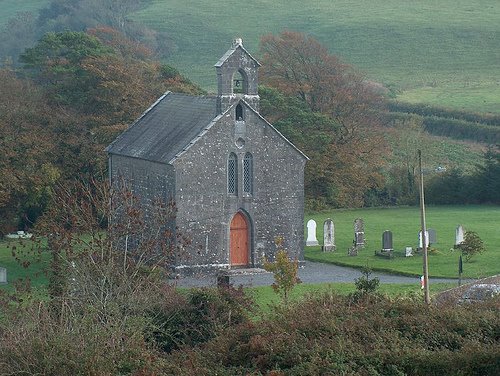
I can understand why people want to be buried in the graveyard next door (one of ‘my’ churches). You feel in touch with the spirits of history in that place. When Susan and I came to look at the this job back in March 2011, I was pretty much bowled over by the spirit of Dunamase. It  puts the parish pump politics of the Church of Ireland in their right place – which, dear Reader, is probably best left to your imagination.

St John the Baptist

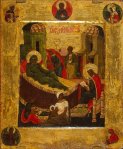
Nativity of John Baptist

In the Church Kalendar, there are only three births celebrated: Jesus, Mary and John Baptist. John is an important fellow. In the Old Testament, when the Lord had a special task for someone, there was something unusual about the birth, usually the woman barren. It is a well known literary device in the Greek myths that heroes are born to women who are past childbearing or are virgins. In Holy Scripture, we have Sarah, Samuel’s mother and Samson’s mother. In the New Testament we have, today, Elizabeth and Zechariah, and of course Mary. John Baptist is the bridge from Old to New. The last of the straight-talkin’, shootin’ from the hip Old Testament Prophets, and the first of the New. And his straight talkin’, shootin’ from the hip message was REPENT – that is, change direction.

Repent – not to please God the headmaster so that we can get more benefits on some celestial insurance policy. No! Repent to free ourselves from lumber that weighs down the ship of life, and prevents us from living. Lumber like pride, prejudice, expectations, envy. Notions. Repent – so that we can be committed to the way of abundant living, not constrained by pride and self, but flying free. Repent to be free from self, free from me, me, me, free from the lust for power, from the certainty that I am right and everyone else is wrong. Free from self-righteousness.

We see the wrong sort of commitment every day of our lives. We see self-righteousness. We see commitment to control, to power. We see commitment to cause hurt and division. Division arises when people who want to retain power exclude others by means of gossip, or anonymous messages, poison pen letters – we hear about these daily. This is what the News of the World was so proficient at, and the enormity of which its hacks still deny. This kind of division has been part of human experience since the hissing serpent of the Garden of Eden with its forked, divided tongue. When we divide person from person, or exclude others, we become the devil. Consider the word diabolical: anabolic means building up, catabolic means breaking down, and diabolic means dividing, splintering. The Kingdom of God is about integration, synthesis, anabolism. It is as far removed from diabolical gossip as it is possible to get. These are some of the things that John Baptist calls us to repent about. To acknowledge that we have strayed – sinned in theological jargon – and that we can revise our course by working for togetherness, community and cooperation.

The ship in which we sail the voyage of life, like any ship, does not do well if it is overloaded with lumber. It does best when loaded only with essentials. You might say that to be truly challenging, a voyage must rest on a firm foundation of risk. If we set out on a venture, first of all preparing something to fall back on in case we fail, you can be sure that we will fail. If we risk all and have nothing to fall back on, we are more likely to succeed. The purpose of life is not to be bored, but to lie on our deathbeds and say, ‘Ye Gods, that was some ride.’ Or words to that effect.

What do we really need? We need food sufficient for the day (give us today …), we need shelter, somewhere to sleep, and some form of activity that gives a sense of accomplishment. And since it is not good for us to be alone, companionship. That’s all. But we are brainwashed by capitalism and the evil (diabolical) advertising industry to let ourselves be trapped by payments, mortgages, fashion, preposterous gadgetry, and storing money in the bank. This is idiocy. As the years pass, our hopes and dreams are corroded by caution and fear. And then we die. Sin is life unlived.

When Jesus saw the crowds, we are told, he went away from them. He didn’t run after popularity or populism. The worst sin of all is to seek the approval of others. It is tempting for the Rector to do things that others want him to, and to court popularity with the in-crowd. But it is not the way of the Kingdom of God. ‘Blessed are those who hunger and search for righteousness’: Righteousness is not having fine thoughts and being a goody-goody. Righteousness is about fighting wrongdoing and injustice, about recognizing the inherent dignity and humanity of every person, made in the image of God, and about committing oneself in body, mind and spirit to furthering the goals of that passion. At great personal cost. We will not be popular!

     When John the Baptist preached for all to hear,

     He said, ‘Repent! The kingdom has come near!’

     His rough, prophetic manner caused surprise,

     But people heard his words and were baptized.

     Prepare the Lord’s own way! Make his paths straight!

     It’s time to change! We can no longer wait!
 
     And Lord, you call for change in your church, too,

     For even here we’ve wandered far from you.

     Renew in us a vision of your Way,

     And give us strength and courage to obey.

    Prepare the Lord’s own way! Make his paths straight!

     It’s time to change! We can no longer wait!
                    (Carolyn Winfrey Gillette)

That is what John Baptist laid the groundwork for: ‘it’s time to change.’ His vocation is to prepare you and me for judgement, and to call us to repentance. Today’s Gospel ends with ‘What, then, will this child become?’ What will you become? What will these churches become? Do we give in to diabolic division, or do we work for anabolic integration? What do we need to do to prepare the way? Here are some suggestions:

  • accept each other as we are; don’t condemn.
  • forgive each other; don’t harbour resentments.
  • welcome each other; don’t exclude.
  • care for each other; don’t listen to gossip.
  • bless each other, especially those we find difficult.

This is the way of the Lord. The gateway is narrow, but the reward is eternal life.
Memory boxes and idols

Carlisle looking east

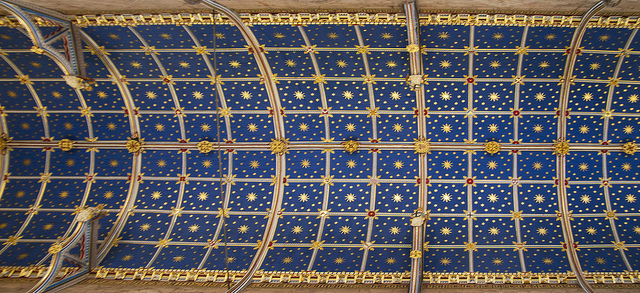
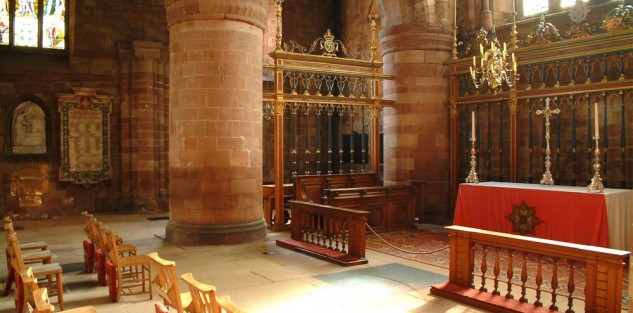
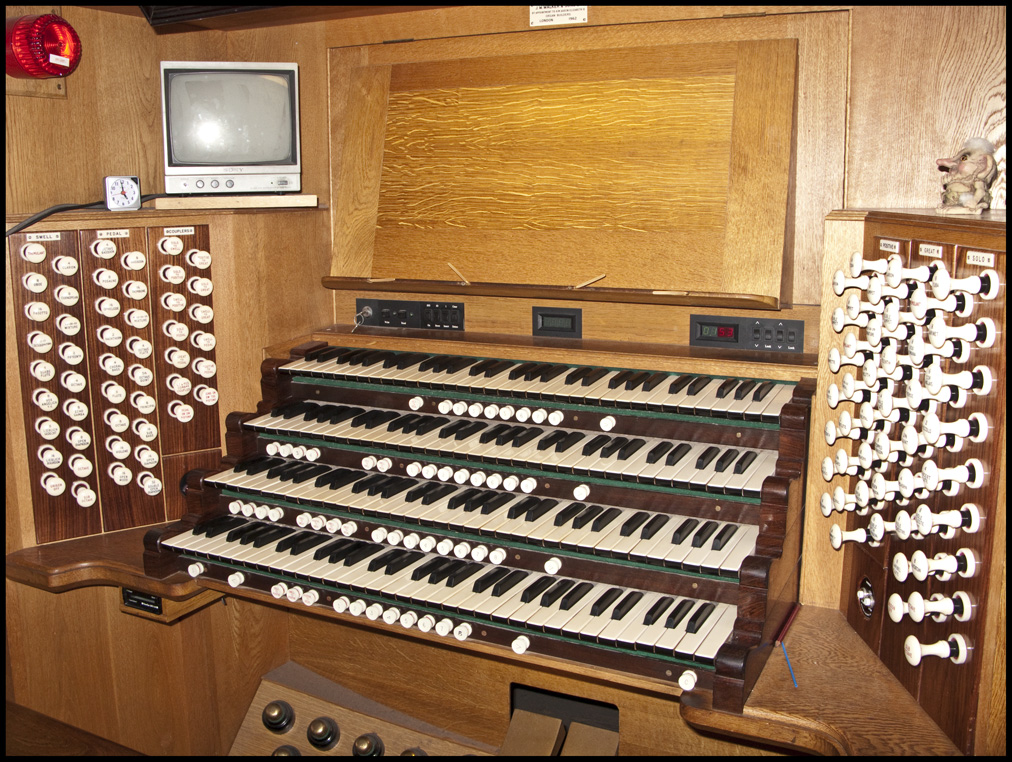
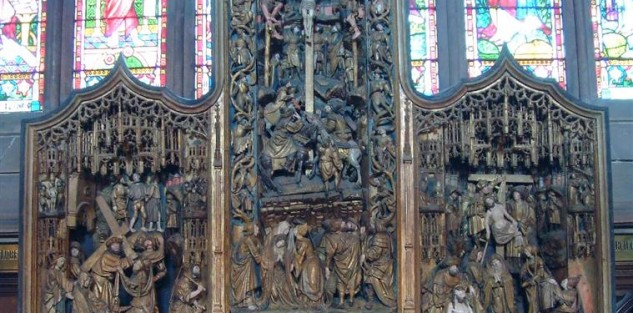
This is the ceiling of Carlisle Cathedral. The city of my birth, the place of my artistic awakening. This is where I had organ lessons, sang in the choir, and occasionally played the organ for services. It is a magical place in my memory box. Although small, thanks to Cromwellian thugs, and somewhat unprepossessing from the outside, going in is like entering a jewel box. It has been cared for and furnished by two of the 20th century’s most judicious church architects: Charles Nicholson and Stephen Dykes Bower. In a recent book on Dykes Bower, the architectural writer Anthony Symondson describes Carlisle as the least spoilt of England’s ancient cathedrals. The ceiling was originally painted in the 19th century, and was brought to vivid life in 1969/70 under Dykes Bower’s supervision.  I remember Evensong being sung accompanied by the occasional interruptions – amusingly welcome to the tittering teenager – of the craftsmen at work above the temporary false ceiling. On this page there are some more examples of Nicholson and Dykes Bower’s work at Carlisle.

Dykes Bower at Carlisle

We all have these memory boxes. For my daughter and sons, I suspect, they are things of which I don’t wish to know too much. We are well served by our memory boxes when we draw on them and their place in our development in order to fortify us for the here and now – when we can look on them with satisfaction and realize how well they have served us and nourished us. They become idols when we put them on pedestals and think that nothing will ever match up to them. When we judge the rest of life against them, and find it wanting, we are letting them destroy us.

Carlisle ‘cockpit’

These ‘awakenings’ tend to occur in our youth when we are most impressionable, when we are in our physical prime, and when our hopes and dreams are as yet intact. They shape us for ever. We all know people who live on their memories and bore the world with them. We know people who live through their children’s youth in order to try to recapture their own. We may even have done this ourselves until we saw the error of our ways. This is idolatry that leads to abuse. Given that our memories always embellish past reality in one way or another, these idols are always false.

Carlisle organ
east side

I see people in churches objecting to anything that changes their memory boxes. This is at the root of objections to redecoration, to the moving or removal of pews (a late invention in church terms), to changes of any description. They too are making idols of their memories, idols that fly in the face of reality. I struggle with wanting to rekindle the emotions that Carlisle Cathedral evokes in me. I return there in the flesh with trepidation, for I know that it will not be as I remember it. When I am tired, or feel attacked, or plain depressed, I echo the psalmist’s ‘Oh for the wings of a dove … far away would I roam’ – to Carlisle, and to the discovery long ago of the glory of English cathedrals.

Canopy by Charles Nicholson

But not the cathedrals of now with their heritage-industry and welcomers and self-justifying boards showing how they are ‘relevant’ to the life of the city (surely the point of the spiritual is to lift us out of the humdrum?). It’s the cathedral of ‘then’ to which I would return, to the womb where my mind was opened to art, music, colour, liturgy, comradeship and a sense of belonging. To beauty and delight, in fact. For a boy brought up in the drab 1950s in a drab farming village where you didn’t count unless you were knee deep in cow dung and cared about soccer and cricket, this was truly a glimpse of heaven.

Carlisle organ
west side

Jesus says a great deal about not living in the past. He tells his disciples not to flog a dead horse. He tells people not to bother about the dead, but to work for the living. We in the church are very inclined to ignore these commands of the Master.  We idolize the past just as we idolize our memory boxes.

Make no mistake: we need our memory boxes. Long may we have them. But let us never insist that they be imposed on other people. Let us never use them to oppress, to abuse, to stifle, to fly in the face of reality. Let us never allow them to take hold of us so that we become blind to life in the here-and-now.

Heaven knows, it can be difficult.

From Antwerp to Carlisle

Dreams and drips

The Rectory alarm clock

In my dream I was crawling along a corridor with water dripping on me from the ceiling. In my dream I thought, as you do, maybe I’m imagining the drips on my skin, or maybe they signify some serious neurological problem. Then, hey presto, I realized that I was being dripped on, and woke up. The Rectory roof continues to leak, and the drips drop directly over where I lie. Move the bed. You read about old houses where the furniture is moved around to avoid the drips. The Rectory is not an old house.

It’s easy to make something out of this: attend to little problems early so that they don’t become bigger ones. There are countless examples from daily life, and certainly from church life, where nipping something in the bud prevents disasters developing. And in medicine too: dealing with the wound as soon as it occurs might just stop the abscess developing.

It’s just as important to recognize problems that arise from within—that is, from our thoughts and our behaviour—and deal with them. If we don’t, we are in danger of establishing thought patterns that are destructive and lead to behaviour that attacks ourselves and those around us. Lent and Advent are the traditional times in the church year for a bit of ‘me-time’, though when you feel the drips is also a good time. This ‘me-time’ is not a matter of being self-indulgent, but rather of  taking stock. I don’t mean sitting thinking about what I do and why I do it because, as St John the Evangelist says, if we say that we have no sin, we deceive ourselves and the truth is not in us. You can not rely on your own opinion of yourself. You need a critical friend. If you have a dripping ceiling, you need to get the opinion of an expert. If you have things inside that are niggling at you, you need to get the opinion of someone else who can tell you how others see you, and what needs work. It is painful to glimpse yourself as others see you (Take me away, I can not bear the sight), and attending to the symptoms is hard work. It’s a matter of touching the untouchable within as the onion skins peel away. At this point I must interject. If you’ve seen Shrek 1 (and if you haven’t you should you know, you really should—there’s profound theology in there relevant to this ramble) you might recall the conversation about onion skins and parfaits. What is he on about? I hear some say.

I make no secret of the fact that of the C of I liturgies I find Morning and Evening Prayer 2 difficult to bear. They are wordy, there’s too much up and down, and three readings are one more than my brain can take in. I much prefer the structure, movement and language of the ‘1662’ services. To those who say that the language repels some people, I say it attracts others. The thee/your discussion is incomprehensible to me, having been brought up in part of England where thee, thou and thy remain in use. These are friendly terms. But what is so wonderful about the ‘proper’ liturgy is the introductory material right up to O Lord, open thou our lips. It is entirely Scriptural, and psychologically spot-on—we have erred and strayed, etc. We’re like supermarket trolleys that seem never to go in a straight line, but veer off to one side or another. Cranmer and his mates knew a thing or two when they were penning that stuff, and when you learn that Cranmer married his missus while he was a Catholic priest, and hid her from society until Henry VIII kicked the bucket, you might begin to see that he knew what he was talking about. Anyway, back to the plot: deal with your problems now, before the roof falls in. And enjoy the monsoon season.

lla weht nor orrim ror rim

The mirror never lies?

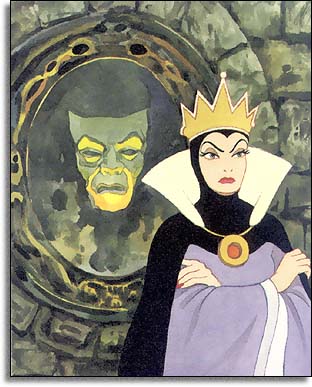
Stand in front of the mirror, and be still. What do you see? Do you see what others see? When Harry Potter stood in front of the Mirror of Erised he saw his parents and other relatives. He’s surprised when Ron Weasley can’t see what Harry sees: when Ron looks in the mirror, he sees himself as Head Boy and Quidditch Captain. Professor Dumbledore says he sees lots of socks in the mirror–you can never have enough socks, after all–though elsewhere it hints that he actually sees his family alive and well again. Erised is Desire backwards, and the mirror does not show knowledge or truth: it’s inscribed, erised stra ehru oyt ube cafru oyt on wohsi — I show not your face but your heart’s desire. It shows us what we really, really want. Poor old Ron wanted to be Quidditch captain so that he could come out of the shadow of his successful older brothers, and of Harry himself.

Our dreams are a bit like that mirror. We see images that tell us about our deepest needs, about what we really, really want. They’re often scrambled, and they take some reflecting upon (mirror again) in order to sort out the images. A dream about your children might actually be a story about something child-like in your own make-up that you need to pay attention to. After all, the child is father of the wo/man, and we will gain eternal life when we become as children: open, exploratory, trusting, naïve, lacking the will to harm (is the impulse to malice peculiar to humans?).

Imago dei

Mirrors feature a good deal in Holy Scripture and religious imagery. St Paul writes of the mirror in which we see in ourselves the likeness of the Divine, and other religious writers write that infant humanity has the capacity to grow into full maturity in God. We polish the mirror such that the image of God within us might perfectly reflect its divine source. If you’ve seen or read The Name of the Rose by Umberto Eco, you might recall how the key to the mystery lies beyond what appears to be a mirror surmounted by the words Imago dei – the image of God, actually a concealed door to a secret chamber. Pre-Christian writers tell us that self-knowledge is divinity. Christian writers tell us that self-knowledge is the essential prerequisite to glimpse the Divine.

A mirror features too in The Snow Queen, the Andersen tale that ought to be part of the Biblical canon. The shards of diabolical mirror that distort Kay’s inner and outer vision, shards that turn Kay’s heart to ice, melted only by Gerda’s tears of love. Speed these lagging footsteps, melt this heart of ice; as I scan the marvels of thy sacrifice.

I show not your face but your heart’s desire. Ask yourself what it is that you really, really want in all the world. An itch for a new house might signify a search for a spiritual home; a flash car might point to a lost youth or lost opportunities; flailing around for a different job could be an expression of disappointment in yourself; seeking promotion or additional qualifications might signify a sign of a need for acceptance—especially self-acceptance.

Jesus said what do you want me to do for you? What do you really, really want? What do you see when you look in the mirror?