The old man carried the child, but the child governs the old man

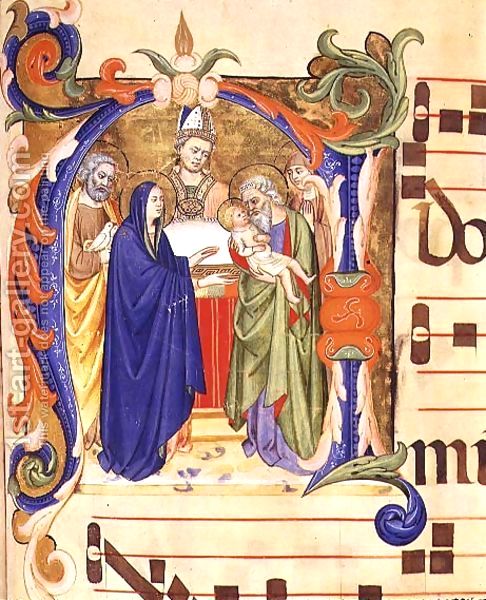
Ms-572-F.88r-Historiated-Initial-$27n$27-Depicting-The-Presentation-In-The-Temple-From-An-Antiphon-From-Santa-Maria-Del-Carmine,-FlorenceEaster Eggs in the shops on 1 January. Fortunately, this year Easter is early. Thank the Lord! An early Whit. An early Trinity Sunday so that—I’m being serious here—I can enjoy all those Sundays after Trinity over summer that in 2013, the Lord told me in a dream, will happen on 18 July. Then comes the most important liturgical festival of the year, Harvest, compared to which the crucifixion and resurrection/ascension are mere blips. I know Rectors with six churches who have found their anatomical appendages under grave threat of amputation when they had the nerve to suggest that each church didn’t need its own Harvest.

Anyhoo, I digress. Easter is early so Lent is upon us almost before the last of the Christmas chocolate cherry liqueurs disappear ‘down the little red lane’ (as Anthony Blanche called the oesophagus when he swallowed four Brandy Alexander cocktails in quick succession. Brideshead Revisited, since you ask. Oh, never mind). We turn from crib to cross at the last great feast of Incarnation/Epiphany/childlikeness: Candlemas, or Presentation, or Purification, or whatever you want to call it. Simeon holds the divine child and says ‘this is enough, I need no more’. Ich habe genug—if you have not heard Bach’s Cantata of the same name, it’s not too late. Find the first movement on YouTube here sung by the glorious Dietrich Fischer-Dieskau. Words can hardly express the satisfied gently swaying longing that Bach conjures up. Come unto me, all ye that labour and are heavy laden, and I will give you rest.

euston 030-1The old man carried the child, but the child governs the old man: you might reflect on how spot-on that is psychologically. The child is the father of the man. We are governed by thought patterns laid down in childhood. Childhood innocence, willingness to explore and ability to have fun are, as we grow up, so easily perverted by the slings and arrows of outrageous fortune that life throws at us. The supermarket trolley of the psyche becomes more and more wayward, and less and less inclined to head for the target we once thought we were aiming for.

We need the 3Rs: repent, recall and recover the childlikeness we’ve lost. Michael my Ordinary (Peace Be Upon Him) sometimes asks: is the child you once were proud of the adult you have become? Examining that is worth the Lenten discipline of spiritual spring-cleaning. If the answer is no (and I doubt that anyone can truthfully answer otherwise), what are you going to do about it?

* Yesterday I came across this as naval gazing which puts a lovely new perspective on things, for all the nice girls love a sailor.

Christmas 2012

nativity_HorenboutBut as many as received him, to them gave he power to become the sons of God

Imagine the shed. Imagine the cold, the sense of being alone. Let’s assume there were animals there. Imagine the creatures, the smells, the dung. Imagine the placenta, the umbilical cord, the blood. Since neither parent was, as far as we know, a qualified midwife, imagine the fear of getting things wrong and the baby suffering. What a mess!

Life is a mess. Relationships don’t do what you expect. Things don’t work out. Actions, or inactions, have consequences. Like a row of skittles where one knocks over the next, and the next, and the next …. actions and consequences repeating themselves endlessly and uncontrollably. This is the glorious mess of being alive.

If the divine was prepared to jump into this mess of humanity, then we don’t need to worry about it. To begin to know the innermost part of the mess that is yourself is to begin to encounter the Lord. Relax into yourself, as you are—after all, you are made in God’s image. Then you will start to see what you can be. Christ is born in you today. That’s the Christmas message. We are all sons and daughters of the Divine Lord.

Christmas is coming, so get stuck in

Get stuck in

Get stuck in

At Christmas we welcome to our churches those who don’t come very often. This bothers some people. It doesn’t bother me. It gladdens my heart. Some so-called Christians mutter about people coming only because they like the sentimentality of candlelight services, or of being reminded of childhood warmth and home. I say, what’s wrong with a bit of sentimentality? Such reminders are part of our longing for something ‘other’ – something that lifts us up from the daily grind. Something, in fact, that gives us a glimpse of heaven (which is not about the afterlife). Bringing heaven to earth. Clouds coming down. ‘Drop down ye heavens from above’. Divinity comes to earth. The exchange when, at the Ascension, humanity ascends to heaven. Charles Wesley’s astonishing hymn: Let earth and heaven combine, Angels and men agree, To praise in songs divine The incarnate Deity, Our God contracted to a span, Incomprehensibly made Man.

Christmas is not about camels, stable, shepherds, ox, ass, star. Much of this evocative paraphernalia is not in the Gospels, though it connects the story to Old Testament Messiah prophecies. The real Christmas message is that the world is transformed when we allow new life and childlikeness to grow within us. This transformation takes place not ‘in them, out there’, but ‘in me, in here’. In Advent we heard of John Baptist calling us to complete honesty of self-examination. The unpredictable supermarket trolley of our psyche, for ever veering waywardly, needs realignment so that, as the Christmas hymn says, ‘O holy child … be born in us today’. When we heed Jesus’ call to childlikeness, and live with straightforwardness, guilelessness, honesty, openness, and willingness to explore, we will transform our view of the world, and so transform the world.

This is not easy and will not be popular. John Baptist so irritated Herod that he was put in clink. The  message of Christ ‘has not been tried and found wanting. It has been found difficult and left untried’ (G K Chesterton). After the end-of-year festivities, we have to gird up our loins for the challenges ahead. There are plenty of them. We have to dredge up endurance and perseverance if we are to hold onto our souls. The New Testament Greek word we translate as endurance does not mean long-suffering patience, taking things lying down and passively, but rather standing up and dealing with the challenges. It means rolling your sleeves up and getting stuck in, using your ‘talents’ to survive, keeping your wits about you. Søren Kierkegaard wrote ‘preparation for becoming attentive to Christianity does not consist in reading many books … but in fuller immersion in existence.’ Which means: get stuck in. Archbishop William Temple wrote: ‘It is a mistake to assume that God is interested only, or even chiefly, in religion.’ Which means: get stuck in.

How do you want to be remembered?

NB4392

Grab life by the …

… so, boys and girls, following on from the previous post, let me ask: how do you want to be remembered?

In my days as an academic, I recall sitting on the Student Progress Committee (which was of course the student lack-of-progress committee). It was disheartening to hear a student who had failed to achieve a satisfactory standard say that he (more often a he than a she) had worked very hard. He could not seem to grasp that either he was not doing something effectively, or that he was personally or intellectually ill-suited to the course. It was much more refreshing to hear a student say that he was enjoying life too much to bother with anything as trivial as studying. (Let me say at this point that in my first year at University I managed only a third class result, so I know what I’m talking about. The really irritating people, of course, are those who do no work but yet come out with top marks. Or maybe it’s that they say they do no work …).

Anyhoo, extending this argument, given that Divine forgiveness is infinite (and the Bible says it is, so it must be true) and you’re going to be forgiven anyway, you might as well sin spectacularly, rather than commit some trifling little offence.  Might as well be hung for a sheep as a lamb.

‘Can he be serious?’ you may ask. Maybe I am, maybe I’m not.  Martin Luther was presumably being serious when he wrote: ‘be a sinner, and let your sins be strong’ and went on to explain how this works. I won’t bore you with the explanation, but will say that one of the ways I read this is: be bold. Take risks. Be fearless. We will get some things wrong and some things will work out. Better surely to have given life your all than simply to have sat quivering in the corner through fear. Make the best of what you’ve got. If you’ve got it, flaunt it—so long as the it you have is intended as an agent of delight. We need to be ready to fail. Like a child learning to walk, long strides come from short stumbles.  Grab life by the little round things in your efforts to bring delight to the world.

Just as I dislike the almost universal replacement of  ‘can I help you?’ by ‘are you OK?’ and of ‘thank you’ by ‘cheers’, so I dislike hearing ‘take care’ used as a farewell. It’s not ‘take care’, it’s ‘take risks’.

I think that’s how I’d like to be remembered.

Judgement

500px-Fra_Angelico_-_The_Last_Judgement_(Winged_Altar)_-_Google_Art_ProjectSermon for Advent Sunday 2012

Almighty God, give us grace that we may cast away the works of darkness, and put upon us the armour of light, now in the time of this mortal life, in which thy son Jesus Christ came to visit us in great humility, that in the last day, when he shall come again in his glorious majesty, to judge both the quick and the dead, we may rise to the life immortal.

I talk about judgement today.

We wait for the coming of the Lord at Christmas. But the theme of Advent is more ominous than tidying up in expectation of the arrival of a guest. The theme is not simply preparing for the coming of the Lord at Christmas, but of preparing for the coming of the Lord at the end of time. We say ‘I believe … from thence he shall come to judge the quick and the dead.’

Do we really believe that? Does this talk of judgement after death? Purgatory, in which we shall be cleansed, the dust beaten out of us like many of us used to beat the dust out of carpets? (Purgatory hasn’t been abolished … it’s limbo that was abolished). The trouble is that we’ve no evidence. Nobody has come back to tell us.

I think it trivializes heaven and hell and purgatory to think of them simply and solely as future states of reward and punishment. It leads to a score-keeping picture of a recording angel, like the school prefect standing by the school gate to see if we boys were wearing our caps as we trudged the mile or so in the rain from King Street bus stop. Bishop John Robinson said that heaven and hell were the same: ‘being with God for ever. For some that’s heaven, for some it’s hell.’ How does this fit with our ideas of heaven and hell?

I think we might look at judgement in a different way.

The story of the Garden of Eden, fig leaves, choices, scrumping, talking reptiles etc, paints a picture. It is NOT a picture of what actually happened at the beginning of time. Rather, it’s a picture of what happens all the time. It’s a picture of what happens every day, as we make choices based on pride and arrogance and selfishness. Of what happens when we cover up the truth that is in us, when we hide behind fig leaves of pride and arrogance and selfishness – when we, in the words of Psalm 17, become inclosed in our own fat.

In a similar way, I think of Biblical statements about judgement and heaven and hell not as advance coverage of future life, but rather as basic truths of this present life, here and now. More eminent theologians than I say that they are not about what happens at the end of time, rather they express religious meanings of what happens all the time.

Jesus is on record as saying that he has not come to judge the world, but to save it. There is no punishment meted out by the school prefect. ‘Punishment’ is the inevitable and natural consequence of our action. Just as we make our own choices, as we must decide between God (the way of love) and Mammon (the way of this world) ourselves, so we must take the inevitable consequences of our choices. Back to the Garden of Eden. We need to take responsibility for our actions. Sin, if you like, includes punishment as a natural and inevitable consequence. In other words, sin does indeed bring punishment, but that punishment comes from sin itself—the alienation and disintegration that follow. Imagine doing something that hurts someone else. Afterwards, perhaps, you begin to wish you hadn’t done it. You begin to feel shame. Then your heart hardens, you begin to twist the story in your own head so that it becomes the victim’s fault. You start to fear reprisals. You walk around with your head down, your eyes averted, you refuse to look people full in the face, you are constantly alert, in case you are being followed, ‘watchful for demons’. Paranoia sets in. None of this is punishment from God. It’s punishment from ourselves, it’s the consequence of our action.

It is we who judge ourselves.

I have no idea about what, if anything, happens after death. As I say, nobody has come back to tell me. Yet, I have this feeling that there will be some sort of reckoning at some time. And the sort of reckoning that I think most terrifying is that in which I find myself gazing into a mirror. When I shall see not as in a glass (mirror) darkly, but clearly, face to face. When I see the consequences of my actions. When I look back at them and see what effect they had on others and on myself. Looking into that mirror is something that we do every day. It is we who judge ourselves. All the time, not at the end of time. Past, present and future rolled into one.

The Lord called Abraham and the patriarchs to live by the light of faith and to journey in hope. The Lord called the Prophets to warn that actions have consequences. The Lord called Mary to put aside what she might have wanted for the sake of humanity. The Lord calls us to do all this, and to take stock. The Advent Sunday collect ‘give us grace that we may cast away the works of darkness, and put upon us the armour of light’ draws upon the words of St Paul: 
’Now it is high time to wake out of sleep, for now is our salvation nearer than when we believed. The night is far spent, the day is at hand. Let us, therefore, cast off the works of darkness, and put on the armour of light.’ 
There is some sense of urgency in this. The moment is critical because it depends on our decision now: do we, like Mary, say ‘let it be as you say’.

In the Litany we pray that we will be spared from ‘dying unprepared’ – that is, a death that comes before we have set right things that need to be set right. Here are some questions for us: What do we want to feel like when we’re on our deathbed? How do we want others to remember us? What do we need to do to set things right so that when we are confronted by that mirror and we see ourselves as we really are, we shall not be ashamed?
A Christian?

Theology has to account for this

Earlier today, someone asked me what I thought it meant to be a Christian. Oddly enough, I’ve never been asked that before — at least, not quite so bluntly. I have views about how theology must fit the reality of our animal existence, and I will set them down in print when I have worked through some of the issues they raise. But for now, from a practical point of view, here’s what I think ‘being a Christian’ involves.

Do justly, love mercy, walk humbly.

Love your neighbour as yourself. This doesn’t mean letting my neighbour walk all over me. It doesn’t mean that I should approve of my neighbour evading responsibility for his or her own action or inaction any more than I should evade responsibility for mine. It means expecting of myself no less than I expect of others. It means expecting of others no more than I expect of myself. It also means:

  • Don’t do to others what I wouldn’t like them to do to me.
  • Condemn not that I be not condemned.
  • Examine the plank in my own eye before I even begin to comment on the speck in someone else’s.

And:

  • Don’t compete for the best places at parties.
  • Pray in secret not for show. Indeed, don’t do anything for show.
  • Openness — let your light so shine  …  as a city on a hill, a lamp on a stand.
  •  Watch for the signs of the times. Use your nous. To stand in front of an oncoming car expecting it not to hit me is stupid. Newton’s first law of motion still holds (he thought his most important role in life was as a Biblical Scholar).
  • Let your ‘yes’ be yes and your ‘no’ be no — anything else is evil. (What about diplomacy?)
  • Do not treat people with partiality, for God is no respecter of persons … you have one Father and you are all sisters and brothers. Everyone. Not just members of your family, your tribe, your race, your denomination, your opinion. Everyone. Including those who hate you.
  • Love one another as I have loved you. Thankfully, loving does not have to mean liking.

I fall short on them all. I’m human therefore I make mistakes. The psychological authenticity of Jesus’ message sustains mesometimes only justin my priestly role. I suppose what this role boils down to is: encouraging people to confront reality by living in the present (e-ternity, ec-stasis), free from the burden of the past (forgiveness), feet planted on the ground (humility), eyes and mind looking all round and beyond (others and otherness). Some of the doctrine we’ve inherited was written by and for a pre-mediaeval view of the universe. Some of it reflects the pyschological obsession of the writer. Some of it has passed its sell-by date. Much of it is poetic imagery. Nearly all of it expresses deep psychological truths.

The questioner asked me a second question: do I believe every word when I say the Creed. What a question. Watch this space.

The world is as it is

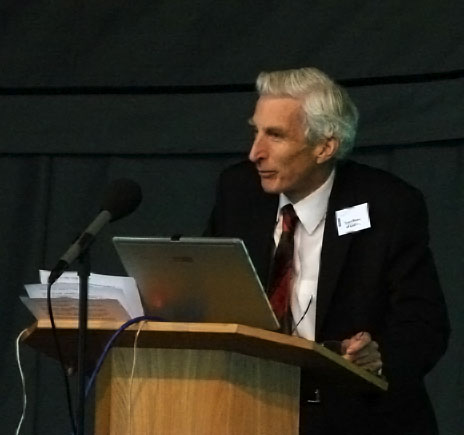
The Astronomer Royal

The British Astronomer Royal points out here that the sun has been shining for over 4 billion years, and has over 6 billion to go before it explodes and earth is vapourized. If you represent earth’s lifetime by a single year January to December, the 21st century is a quarter of a second in June. We are less than halfway through the process of evolution. Whatever creatures witness the demise of the solar system will be as different from us as we are from bacteria. We are still, he says, at the beginning of the emergence of intelligence in the cosmos. The last three centuries have seen acceleration in (probably) human-induced changes in the planet’s environment. Some species become extinct, new ones will evolve. Humans like us may or may not survive, but will certainly evolve.

I remember at primary school (Langwathby C of E since you ask) standing in the playground, Settle-Carlisle railway to my left, and thinking that life on another planet does not necessarily mean life as we know it. And I still think that. We have haemoglobin to carry oxygen in the blood, octopuses have other stuff for the same purpose – and they are on the same planet. The creature in Alien that grew in John Hurt’s belly (yes, yes, I know it was only a story) had acid in its blood vessels. Our thinking is altogether too selfish, too human-obsessed. Things could be otherwise. We are like pimples on the backside of the cosmos. Hurricanes, earthquakes, wind and rain come and go. The earth will cleanse itself. For those that accept the notion of God, ‘God is working his purpose out as year succeeds to year’. For those that don’t, the laws of nature are doing the what-comes-naturally. In the context of evolution, this has interesting theological implications. It’s not over yet.

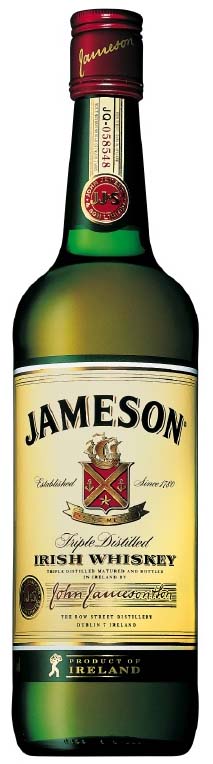
Make the most of what you’ve got when you’ve got it, because you might not have it much longer. Live each day as ‘twere thy last. In an earlier post here I wrote about a ‘good death’. One of my more elderly (in years but not in mind) parishioners told me that her idea of a good death was slipping off a stool with a glass of Jameson’s in her hand. This has interesting theological implications too. Raise your glasses. The standard Anglican response to any difficult issue has much to commend it: ‘Let’s have another glass of sherry‘. Or whiskey.