The centurion’s servant

JesusHealingCenturionServantHomily for 2 June 2013

1 Kings 8:22-23, 41-43. Psalm 96:1-9. Galatians 1:1-12. Luke 7:1-10.

This morning’s reading from Hebrew Scripture commends ministry to outsiders, not just to members of the club. That message also comes across in Paul’s letter to the Galatians. Paul is gravely disappointed that the Galatians should have been foolish enough to listen to people who said that only Jews – that is club members – would be saved. He is very cross – incandescent I’d say – that he has to tell them again that that isn’t the case. And in the Gospel, we see Jesus healing an outsider. An outsider of outsiders, in a way: not a Jew, not even a Roman, but the servant of a Roman. The servant could have been from anywhere. That theme, that Christianity is for all, not just the chosen elite, is something that all churches need to take seriously: as we welcome people, as we give out notices—it’s easy to assume if I say ‘tell the Wardens’ that people will know who the Wardens are, as I’m greeting people before and after services. It’s easy for us to fall into chatting with people we know, and ignore those we don’t. We’ve talked about that before, and doubtless will again. But not today. Today I want to consider healing itself.

We say medicine is about the relief of suffering. In Christianity, and I suspect in many of our childhood experiences, there’s always been something of a suffering-is-good-for-you masochism. It’ll make a man of you. Sportsmen proudly bearing their scars as a token of ‘hardness’. Some Christians seem to glory in suffering. Their aim is not to avoid pain but to embrace it. And I suspect we all know people who make a virtue of enjoying ill health. ‘After all’, they say sanctimoniously, ‘Jesus knowingly goes to the cross, and in this suffering I’m imitating Our Lord, present alongside those who suffer’. This is not a view I’m keen on myself. My idea of suffering is running out of ice cubes. The logical position for these people would be to eschew antibiotics, elastoplasts, pain-killlers, hip replacements. And the rest.

Other faiths are more sensible than some Christians. Members of other Abrahamic faiths have no problem with alleviating suffering, accepting contraception when a pregnancy is likely to threaten a woman’s health, even the killing of the unborn in certain circumstances. Jewish writers denounce the glorification of suffering, and even prefer to forego future reward if it involves present agony. So let’s not kid ourselves that we need to be miserable, despite the emphasis on the suffering servanthood of Christ that is pushed by some branches of Christianity.

Let’s consider healing. As I’ve said before, healing is not about cure. After all, we’re all going to die sooner or later, and there is no cure of that. Medical cure today of one disease simply means that we’ll die tomorrow of something else. Not recognizing that is one reason why so much money is poured into the health services; why doctors are so well-funded by the folly of patients who think that they should live for ever; why people pay for unnecessary plastic surgery and cosmetics; why people obsess about their appearance. This obsession with perfect health and appearance is saying that we are intolerant of imperfection and disability. I speak with some insight here: there was a time when I spent money on gym memberships in the quest for some physical ideal. You can see how far I have fallen short, and how that money was wasted. We are all afflicted to some degree or other. But the quest for perfection and immortality is, I think, a perversion by satanic elements in our culture of a perfectly reasonable spiritual quest for wholeness.

Surely, that’s what healing is about: the quest for wholeness. Here are some other words and ideas that mean the same: salving, restoring integrity, soothing, and the one I like best: coming to terms with the situation we’re in. When we have come to terms with our situation, we do feel better, we know we need to ask for help, and that is itself a form of healing. At the bedside, I often pray that we will have grace to bear what must be borne, and patience to cooperate with the healing process.

In today’s Gospel, it’s easily missed that the centurion and Jesus never actually met. It’s healing from afar. You could say that Jesus did nothing, because by the time he was told of the servant’s condition, the centurion had already sent out messengers to say that the servant was healed, so Jesus needn’t go any further. It seems to indicate that healing began as soon as the need for it was acknowledged. I think this is absolutely true. When I realize that I have a cold, or manflu or whatever, I can relax a bit and accept the fact that I won’t be able to do this or that or the other. And concentrate on resting to allow biological healing processes. It’s as if the healing process is locked away inside us and can’t begin until we consciously realize that we need to let it start working.

We don’t need to hide our broken-ness. At the Eucharist, there’s great significance in one little act immediately after the Lord’s Prayer. The bread which we break is a sharing in the body of Christ. It was the wounds to Jesus’ body that did the healing work. We don’t need to pretend we’re perfect. We are human: we can never be perfect. It’s our imperfections that help us to understand one other. When we see someone else’s faults, and that they acknowledge them, we feel more kindly disposed to them. This is the first stage of healing. This is why people who never acknowledge their mistakes are so scorned. Why spin doctors are reviled. I view it as one of my tasks to make plain my faults for all to see. Some people want their ministers to be perfect. Good luck with that one. Let’s put aside any facade of perfection, and acknowledge that we all need healing from something: childhood hurts; or resentments that we refuse to let go; or addictions to attitudes, to chemicals, to ways of behaving. We need healing from all the things that are thieves of our true selves.

In hospitals, patients tell me their secrets. They whisper them to me, and we talk about them. They smile nervously as they do so. And then I can see them sinking back into their pillows. I can see the relief. This is a coming to terms operation. It’s a setting down the load operation. It’s an acceptance of who they are, and when they see that they are not condemned for being who they are, it’s a healing.

You and I are human. We have no need to pretend to be anything else. In the Christian way of thinking, our humanity was raised to the level of the Divine at the Ascension. Made like him, like him we rise. We begin to be healed when we accept our need for healing. Just like the centurion and his servant.

Aim high

618px-Cosmic_Heavyweights_in_Free-For-All-_One_of_the_most_complex_galaxy_clusters,_located_about_5.4_billion_light_years_from_Earth.I was thinking of starting a campaign to get people to stop chatting in church for five minutes before the service starts. I was foolish enough to labour under the apprehension that people come to worship and learn, and for spiritual refreshment, whereas in fact the service is but a short rest from the exhausting rigours of socializing. I don’t even mind people being late: I would hate to think that church attendance was interfering with gossip.

In the Exodus from Egypt the Israelites were freed from slavery not to build an ideal society, not to campaign for FairTrade, not to care about the environment, but to worship freely in accordance with the divine command. We recall this every time we say or sing the Benedictus Dominus in Morning Prayer.

For me, worship should speak of mystery, majesty and glory. It’s not just about how much I love Jesus, or Jesus loves me. There must be a sense of ‘otherness’. However unfashionable it may be to say so, Christianity is a supernatural religion that commands us to look deep into ourselves, and way beyond ourselves, to the invisible and intangible. It is about spiritual things, forgiveness primarily, and self-forgiveness particularly, but such forgiveness is to my mind pretty useless unless we each begin to glimpse our own need for it.

We are right to build up church community—that is, the body of Christ—and pursue justice without which there will never be peace. But our first priority is worship, and worship exists to give us glimpse of the Divine. Liturgy matters. The biggest enemy is mediocrity. If worship is mediocre, then faith is mediocre. If worship is half-hearted, then God becomes a half-hearted creation of our own, not the cosmic Lord. Many modern hymns and choruses are about me (Here I am Lord); golden oldies are principally about God (Immortal invisible). We need both, but we don’t need self-indulgence. We need to lift our eyes out of self and above the humdrum. That is why I’m suspicious of calls for worship to be ‘relevant’. Worship is not about leaving us feeling cosy and comfortable. Energized, yes; smug, no. And maybe slightly unsettled.

Pentecost delight

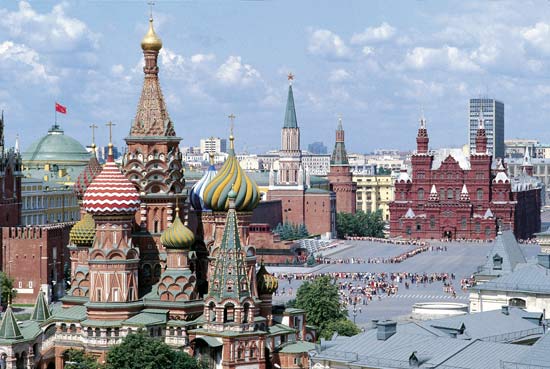
84883-004-ACA9F3E9Red for beauty. Red Square, beautiful square. Red for delight, life, joy. Red for blood, blood of martyrdom, destruction,  blood of Christ. Red for blood that fights disease, removes waste, brings oxygen. Red for paradox. Red for inflammation, heat killing bacteria. Red for fire, burning dross that tethers us. Red for consuming flames; flames of the spirit that sets us free; flames that destroy so that phoenix may rise. Tongues of fire and fire in tongues, apostles’ tongues for good news to the world.

Dove or flames?

Dove or flames?

Red for Kingdom of God in our blood, in our veins. Kingdom, not comfortable God, not vengeful God, but unknowable Divine that turns chaos to cosmos. Divine unconstrained by human thinking, unknowable, immortal, invisible, inaccessible. Divine wisdom, stardust from which cosmos is made, in air we breathe. Divine wisdom in Christ, challenging, unpredictable.

Red for church militant, not church hesitant, not church petulant. Red for salvation. Red for glory. Red for flames cleansing falsehood and bringing truth’s delight.

Degrees, hoops & osmosis

Too many degrees

Too many degrees

One could be forgiven for thinking that the Church of Ireland Bishops have decided that clergy are no longer needed. They in their wisdom have decreed that ministers should have a master’s degree. Now, I yield to no-one in my admiration for the wisdom of Bishops, but I can tell you that I have (1) a medical qualification—that is, a couple of bachelor’s degrees; (2) a couple of master’s degrees, one in theology; and (3) a science PhD, and not one of these helps me master essential tasks of ministry such as photocopying and tea-drinking. What does most certainly help is experience of life, mortgages, deaths, births, agonies and ecstasies. And such common sense as I can muster.

Having acquired degrees does help with the reading of documents—or rather, spotting which need not be read. The trick is to read the first and last sentences and see if you want to go deeper. One rarely does. That works for books as well. Indeed, if you hold the book in your hand long enough, the information therein contained seeps into your brain by osmosis and you needn’t read them at all. That’s why students spend so long in libraries just handling the books. They don’t actually read them. On reflection, this can’t be true because if it were the average congregation member would know all the words in the Prayer Book off by heart. And they seem not to, despite repeating them week in, week out. It’s great fun when I say a liturgical good morning to see how flustered people get because the response is not written in bold on page 201 or whatever.

Does the insistence on a master’s degree (it’s the same in the C of E by the way, but there are more people there so the problem is less acute) dissuade people from coming forward? I suspect it does. I suspect it’s intimidating to some capable people who have no record of formal education beyond secondary school, but who have more than enough wisdom and ability to do what is required of the clergy after a brief (18 months perhaps) training that consists of seminars and on-the-job stuff. This is training by osmosis that certainly works.

Happy ballooning

 ascension-pskov-pecheryA sermon for the Sunday after Ascension Day (Year C)

Last week it was  the creator of the cosmos, the hand that ‘flung stars into space’; the big bang,  the idea that the laws of physics are part of God. This week it’s the splendour of God. In the reading from Acts, and the psalm, we hear of God’s mighty acts of liberation. Between these two Sundays, on Thursday we celebrated the Ascension. Some people find the Ascension embarrassing. How can you believe, they ask, that someone went to heaven, disappearing from view, feet disappearing through the clouds? A celestial stair lift. Some people find this even more difficult to deal with than the idea of Jesus rising from the dead. It’s easy to ridicule Christian doctrine if you take everything literally.

So, don’t take it literally. Think instead of the symbolic meaning—of what the story means for you and me. Think of phrases we use: aiming for the stars; scaling the heights. This is what Ascension is about.

Think of the Ascension as Christmas in reverse. At Christmas we celebrate the Divine Lord coming in human form. Heaven to earth. Through Jesus’ life we have Divine and human fused, experiencing all human pains and pleasures. At the Ascension, all this human experience is taken back to the source of Divinity. It was the wounded Jesus who ascended, taking with him all the pains as well as the pleasures of human life. All our human life is made divine.

Irenaeus

Irenaeus

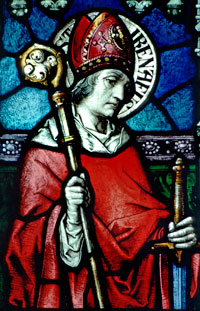
St Irenaeus said something like: God became what we are, in order that we may become what he himself is. In the Christmas Gospel, St John says something similar: as many as received him, to them gave he power to become the sons of God. More Irenaeus: The glory of God is a living person, and the life of man fully alive is the vision of God.

The message of the Ascension is that our lives, lived to the full, are a vision of God. By living life to the full we ‘ascend’ toward the heights of divinity, aiming for the stars, scaling the heights. And that is something reflected in today’s Gospel, Jesus says: Father, I desire that those also, whom you have given me, may be with me where I am. The splendour of God is seen in the splendour of human life lived to the full.

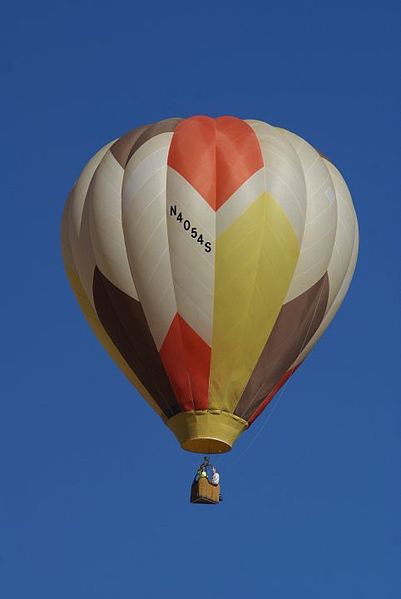
See yourself as a hot air balloon powered by the fire of the Divine Lord. What does the balloonist do to become airborne? (1) turns up the heat; (2) chucks out the weights and cuts the ropes that tether the balloon to the ground. Turning up the heat can be left to next week when fire and flames are part of the story. Today, think about chucking out the stuff that weighs us down and tethers us to the ground.

There are things we do that we wish we didn’t. These weigh us down. There are things we want to do but never get round to. This weights us down. St Paul knew all about these when he said that he knew what he should do but often couldn’t manage it, and found himself doing the things he knew he shouldn’t.

401px-Joy_Ride_hot_air_balloonThere are things we carry with us that weigh us down: shame, regrets, guilt. Confess them – bring them to the surface, tell someone else. This is what people often do when they know they are dying. It’s always a relief.

There is pride that makes us think we are better than other people, or that other people or groups or races matter less than we do. There is pride that prevents us seeing ourselves as we are. This pride is not the sort of pride that we take in someone’s achievement, but the pride of hubris – pride and arrogance that shows a loss of contact with reality and an overestimation of our own competence or capabilities. We see it in a few politicians, in some bankers, in all abusers. We see it in people who take delight in shaming and humiliating others. We see it, if we are honest, in ourselves. When we think we are better than others, we belittle them, and this leads to abuse, sectarianism, theft, stealing.

These are some of the things to chuck out of the balloon.

We can also help the balloon to rise by giving things away. We can share our gifts and our love with others. The interesting thing about this is that no matter how much we give away, the reservoir always seems to have more left in it. And these things appear to be weightless. In the words of St Peter: Be generous with the different things God gave you, passing them around so all get in on it. Be content with who you are, and don’t put on airs. As we work on this generous giving and sharing, we ascend towards the divine.

The point of the Ascension is to help us to realise that we approach the divine when we are fully human, each of us playing to our strengths and giving to the world what only each one of us can give. Man fully alive is the Glory of Creation. The divine light is in us all, and as St Matthew has it, Let your light so shine that all may see it and glorify your father in heaven. The Ascension is inside us, the kingdom of God is inside us. Don’t worry about showing off: we are all meant to shine, as children do. We were born to make manifest the glory of God that is within us. And as we let our own light shine, we unconsciously give other people permission to do the same. As we are liberated from our own fear, our presence automatically liberates others. (Marianne Williamson)

Lancelot Andrewes

Lancelot Andrewes

This is why we need the Ascension: to rekindle, restore our sense of hope. The splendour of man is the splendour of God. This is a great gospel for inspiring us for the future.

Hear  what Bishop Lancelot Andrewes saith on Christmas Day 1605: It is most kindly to take part with Him in that which He took part in with us, and that, to no other end, but that He might make the receiving of it by us a means whereby He might “dwell in us, and we in Him;” He taking our flesh, and we receiving His Spirit which He imparteth to us; so we by His might become “partakers of the Divine nature.”

Worms, worlds and Wesley

The worm that passes understanding

The worm that passes understanding

This week’s New Scientist has three articles that tickle my fancy.

The first is about nematode worms that have been found 3.6 Km down in the earth, where the sun don’t shine. No energy from the sun, no oxygen. And hot. Microbes have been found even deeper. They don’t waste energy reproducing—they simply exist. They move so slowly they seem to be dead. (Do you have friends like that?) But they’re not. It seems they get their energy from uranium and sulphur, methane and hydrogen sulphide. So life on other planets with an atmosphere of such gases may well be a real possibility, just not life as we know it. We use oxygen to get rid of waste electrons, but there are other ways to do that. Maybe as we humans spend more and more time indoors, out of sunlight, and move less and less, we will become like these ‘things creeping innumerable’. We will get fatter and fatter, peering at screens, living in an atmosphere of methane and hydrogen sulphide (farts), and eventually exchange atoms with our environment (like Flann O’Brien’s bicycle seat and the backside on it). We will reproduce by budding. That would save a whole lot of shoving and grunting anyway. And it would mean that the church could stop obsessing about sex.

The second article is entitled The early turd. I suppose you could say it’s also about things where the sun don’t shine. It explains how the study of human excrement from long, long ago (the mind certainly boggles) can tell us about farming in days gone by. Here are some nuggets. Whipworm and roundworm infection exploded about 10,000 BC in Europe as we changed from being hunter-gatherers to farmers. The domestication of wild boar about 8,000 BC made us prone to infection by the liver fluke. In the 13th century AD Christian crusaders from northern Europe, who ate raw fish, took the fish tapeworm to the middle east. And so on. Fascinating stuff. Now wash your hands.

Milky way

Milky way

The other article is not about where suns don’t shine, but where they do—in the middle of the Milky Way. It seems that the giant black hole in the centre of our galaxy (and that is only a tiny part of the cosmos) is about to suck in a large gas cloud. What happens then is exciting cosmologists. I’m not entirely clear why we aren’t all being inexorably sucked into a giant black hole. Maybe we are.

Anyhoo, these articles point to a contrast between deep within and far outside, between very small and very big. Unlike the cows (or was it sheep?) in Father Ted, the stuff far away is very big. We humans are privileged to be able to see both ways. We are part of the smallness and the infinity. Is there any theology in this? There most certainly is: we are part of a system. The Greeks had a word for the system underlying all things, and it is logos. The system underlying all things is divine. Or, as John Addison put it, the hand that made us is divine. That takes us to the Incarnation gospel where heaven meets earth.

Let earth and heaven combine,
Angels and men agree,
To praise in songs divine
The incarnate Deity,
Our God contracted to a span,
Incomprehensibly made Man
 

Charles Wesley had a terrific mind.

Good shepherds and attentive sheep. Or dogs.

How is your hearing?

Sermon for 21 April 2013.

Jesus said: My sheep hear my voice. I know them, and they follow me. I give them eternal life. You may know about sheep. I know more about dogs. I expect their behaviour has much in common. Our dog is called Og. Og is an Old Testament bad guy, the King of Bashan, the sort of chap that you wouldn’t want to meet in a dark alley late on a Saturday night as the pubs are closing. Or so the Israelites thought. I thought Og was a wonderful name for a dog. Og the dog. Not that Og the dog is in any way like Og the king. You wouldn’t mind meeting Og the dog in a dark alley. He is a rescue dog, and was apparently abused. He is a timid creature, fearful of anyone in a hoodie, of anyone holding a pole or stick, and of traffic. ‘Now, this is all very interesting’, I  hear you say, ‘but what has Og the dog to do with sheep and shepherds?’ Well, boys and girls, it concerns animal behaviour. Og the dog, like Dolly the sheep, will not be hurried. If you try to hurry him he lies down and will not move. If you carry him to where you want him to be, as soon as you put him down, he runs back to where he was before. After all, dog is god in reverse. If you keep quietly walking, cajoling, leading and showing, he will eventually follow. Cajoling, leading, showing, encouraging: these are tips on how to be a good shepherd. Jesus as the good shepherd is modelling one type of leadership.

This calls for persistence, a sort-of pretended nonchalance in the shepherd. The shepherd needs to have faith in the sheep—faith that they will indeed follow eventually. The shepherd must have patience. I am profoundly gifted in this regard—with impatience. When I hear of the need for a shepherd to have patience and compassionate persistence, I am brought up sharp against yet another of my inadequacies.

But the story is not only about the shepherd’s voice and manner. It’s not just for  clergy in their role as shepherd. It’s also about sheep—you and me—and the need for us to listen to the shepherd’s voice. Listening is not just about hearing words. It means attending—giving your attention—to the speaker. Watching the face, the emotions. Observing the body language. Being alert to nuances in the tone of voice. Picking up, you might say the vibrations in the environment. This is hard work.

Sixfinger_threadfin_schoolHearing is about picking up vibrations from the environment. That’s what our eardrums and ossicles and cochleas are for, and the hearing parts of the brain. Eardrums and ossicles evolve from the things that in fish do exactly the same thing: they pick up vibrations from the environment. If you watch a shoal of fish, you will see that they all change direction together. How do they do this? They are picking up vibrations from the watery environment so they know when to turn. How do we pick up what you might call ‘spiritual vibrations’ from the environment so that we know when to change direction? Turning, re-turning, re-pentance, transformation, pupation, metamorphosis. It’s not about changing the environment, about moving to a new place or a new job. It’s about us ‘hearing’ what that still small voice that whispers in our ear is telling us. The trouble is, there is so much noise that assails us: noise from outside, nose from advertising that tempts us to greed and envy, noise from inside that tempts us to pride. Noise of the ego.

In Acts 9, some of which we hear today, we learn of people transformed. Paul eventually hears the divine voice, after having spent so much of his life persecuting it. He is brought, as it were, from death to life. We learn that Aeneas, sick of the palsy, hears the divine voice, and is healed. He is brought, as it were, from death to life. Tabitha/Dorcas is brought from death to life. Last week we heard that Peter, who denied Jesus three times, was nevertheless affirmed by Jesus who asked him to ‘feed my sheep’. He is brought, as it were, from the death of denials to new life.

This is about liberation. Never mind whether the man was actually paralyzed like someone who’s had a stroke. Instead, think of how we can be paralyzed by guilt, how we can be kept captive by regret or resentment, looking backwards, never daring to move on. Never mind whether Tabitha was biologically dead or not. After all, people in coma can appear to be dead. People who breathe unaided can be brain dead (it’s too tempting – I can’t resist it – to point out how many people appear to fall into that category). We talk of a living death: think of team building exercises, or synods.

The message is renewal, transformation from spiritual death to fullness of life. Moving from being constrained to the wide space of salvation. It results from being attentive to the divine voice, the still small voice within. As I say, it’s hard work. C S Lewis wrote: God whispers to us in our pleasures, speaks in our consciences, but shouts in our pains. It was when Tabitha and Aeneas and Peter and Paul were in pain that they heard the voice. It is so often when we are in pain or distress or perplexity—and not until we are—that we begin to see the need for us to change, to turn.

How can we become more attentive to that still small voice? The goal is transformation from spiritual death to fullness of life,  from imprisonment in ego to the wide space of salvation.

All things bright and beautiful

Spider pig

Pigs are very like humans, or is it the other way round?

In a moment of utter madness some months ago, I agreed to have a Pet Service. The dratted date comes up soon. Why did I do it? What will I say? I should make the point that we humans are mammals, just like cows, elephants, dogs, cats and most of our pets (though I feel that cats, to which I’m allergic, are best housed under the wheels of very heavy trucks).  I should make the point that humans are apes—and that apes tend to behave rather better than the worst specimens of humanity. I should point out that by lavishing love and affection on our pets we are in fact making idols of them, worshipping them even. I might say how we eat animals, wear animals, and get glue from animals. I have been a medical scientist, and I could point out that the drugs that heal us are tested on animals, and how some surgical procedures were practised on animals. Pigs are very like humans in their internal anatomy, or is it the other way round?

Instead, I expect I’ll talk about companionship and care and how pets bring out the best in some of us. How they repay our love by guarding and sometimes leading us. How they can sniff out cancers. How the unconditional love of a dog can teach us a thing or two. How they don’t worry, so we needn’t. (How do we know they don’t worry?) And so on. But I feel strangely conflicted.

I asked some school pupils recently if they thought we were animals. They said not. Apes? ‘Certainly not’. Why is it that people can’t see that when we get down on all fours, we are just like other animals? that we are not better than other creatures, just slightly different from many of them? We are ‘creatures of this earth’ just like all the others, from viruses to Einsteins. We are to be custodians of creation, not rulers (the Hebrew of Genesis 1:26 is often mistranslated, with unfortunate implications). The privilege of our intelligence brings responsibilities. We need to remember that crocodiles have been around for aeons, that they and bacteria and insects will still be around long after we apes are extinct.

Ah well, we’ll enjoy ourselves, we’ll parade round church and I will bless the animules and their custodians. I will do my best to have All creatures of our God and King (some of the verses anyway) but not to have All things bright and beautiful which I dislike—no, I hate (the purple headed mountain in verse 2—I ask you!), and others.

Oh Lord, it’s just occurred to me: I hope this is not a slippery slope leading to holding stones, imagining my worries passing into them, and then washing them in water and feeling my cares disappear down the plughole. As if.