Baptism

800px-Baptistery.Arians06Homily for 12 January 2014. Isaiah 42:1-9. Psalm 29. Acts 10:34-43. Matthew 3:13-17

As a child I was enraged when adults referred to me as Arthur’s lad, or whatever, and it narks me now to hear people say so-and-so’s daughter or son. I have a name, dammit, and I was given it at Baptism.

When we give someone a name, we feel more personally involved with him or her. A different kind of relationship is established: I’m now me, not just Arthur’s son, or his car, or his boots. Using a name, we can address someone directly.

But other things happen too when we give somebody a name. We make them part of our tribe, our group. We domesticate them like a pet. We begin to feel comfortable with them, and able to control them, drink tea with them and suck them into our prejudices.

It’s easy to let this happen with our relationship with the Master.

We begin to feel we know him. We ask him for this or that favour,  ignoring the fact that millions of others ask for favours that negate ours. We ask him to cure this or that illness in someone we know, as if he is at our beck and call. We twist his teaching to suit us and our situation, ignoring the fact that we’re already pampered and privileged. As we domesticate Jesus we try to make him ‘one of us’, like a lap dog that wags its tail and goes for walkies at our whim.

It’s dangerous to claim to know Jesus. It reflects our narcissism. What emerges from Holy Scripture is just how unpredictable he is. I marvel at those people who claim to know the Master. I do not dare presume. He is concentrated, undiluted love—certainly—but that is not limited by my desires and prejudices. Concentrated, undiluted love might mean saying ‘no’ to me, for my own well-being. Many churches have the strap-line ‘to know Jesus and to make him known’. Good luck with that.

Who is doing the naming in today’s Gospel?

The mistake I’m making is to assume that I’m doing the naming. Of course I’m not. ‘This is my beloved Son, in whom I am well pleased’ doesn’t come from my mouth, nor from the mouth of John the Baptist, who’s puzzled by Jesus’ appearance in the queue. ‘What are you doing here? You know what I’m on about better than I do.’

Jesus doesn’t need baptism. But maybe he’s waiting in line for our benefit. Acting as our representative, he shows us what to do. In the words we heard at the carol service: ‘and if you want to know the way, be pleased to hear what he did say’. He identifies with all of us imperfect people who need a fresh start and a new identity—which is one of the things that baptism’s about.

The Gospel tells us whose son Jesus is, and the first readers knew very well what his name meant. Jesus, the Greek version of Joshua (and like Jason, as in the Argonauts), means ‘the one who saves’. From what, by what means, and to what end, are topics for a whole course of sermons.

Whatever else today’s events mean for you and me, they remind us that the Master is not a personal pet, to be called on only when we need a bit of a cuddle and ignored the rest of the time. And just as he, the beloved Son, shows us the way, all of us are beloved sons and daughters of the Divine Lord, with all the rights and responsibilities that brings.

Jesus is immersed in the Jordan. We are immersed in divine love, by no means always easy to bear. Today is a call to think about our personal relationship with the one we claim to worship.

Wisdom and sinkholes

Many words and fine thoughts

Many words and fine thoughts

There was I this morning poring over many words and fine thoughts, when SWMBO glanced at the book and said ‘all these words, all this philosophy, all this stuff written down—people would be better occupied making clay pots.’

Some time later I saw on the BBC news website that a large sinkhole had opened up in Foolow, just off the road between Chesterfield and Manchester, near where I used to work in Derbyshire.

‘Look’, she said, ‘you could fill that with philosophers and theologians. Then it would be useful.’

The picture, taken later today, shows a different sort of poring.

Acceptance

Homily given in SS Peter and Paul (RC), Portlaoise, at the Vigil Mass for the Fourth Sunday in Advent

It’s a pleasure and delight to be here tonight to bring to you warmest Christmas greetings and blessings from the people of St Peter’s. And personally from Susan and me, and especially to Fr John and his colleagues here. Whether they know it or not, they are a great source of advice and support for me, and I treasure that more than I can say.

In the Church of Ireland, of course, we use the same lectionary as you, so like you this weekend we celebrate Mary the Mother of God. My very short message to you is kind-of biological. By the simple act of saying ‘yes’ to the Lord’s invitation, Mary allowed the infant Christ to grow in her belly for nine months. Just think how we can be transformed by that same simple act – saying ‘yes’ to the Lord’s will.

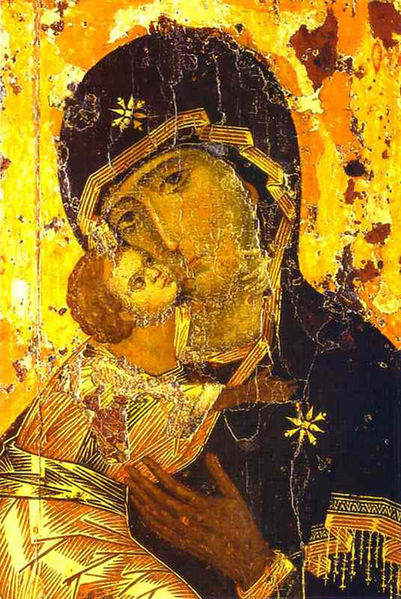
VladimirIf we can be transformed, then think how much the world will be transformed.

Christmas, when you strip away the gooey stuff, is a festival of childlikeness. Not childishness, but childlikeness. Think of the newborn Lord: open, trusting, dependent, straightforward, without guile. Just think how the world could be transformed if we were all like that. ‘Transformation to the kingdom’ is for me is the real Christmas message. This is the festival where heaven meets earth, and prepares us for being taken there ourselves.

Discerning the Lord’s will is not an easy exercise when we have to cope with all the ‘noise’ and distractions that the world throws at us, but as the Nativity shows us, the Lord is with us in our mess, just as he is in the mess of the stable. God bless this mess.

As we sing in one of the Christmas Carols: O holy child of Bethlehem, be born in us today. Let the Divine light within grow to en-lighten us from the inside out.

Advent Rose

rose_02_bg_040106Roses have prickles. They give the plant a bit of purchase as it elbows its way slowly upwards. Rough edges enable growth.

Prophets are prickly. They have rough edges. They are not conventional. They are not welcomed. They are difficult to live with. I like people with rough edges: they get things done! It’s the rough edges that provoke new growth. Evolution from the edges.

Prophets are not ‘nice’. To be called ‘nice’ is the worst possible insult.

Geoffrey Clayton, some time Vicar of Chesterfield, then Archbishop of Cape Town, was prickly. He is reputed to have said when he was ordained in 1909 that he didn’t want anyone to say of him ‘our nice new curate.’ He ruefully added after a lengthy pause: ‘and no-one ever did.’

On Ash Wednesday 1957 he signed a letter on behalf of the South African Bishops telling the Prime Minister that they would neither obey the laws enforcing Apartheid, nor counsel their congregations to do so. He died the next day.

It’s as well to recall some of the shoulders on which Nelson Mandela was able to stand.

Advent reflection

UntitledLook at some details of the Christmas story: virgin birth, in Bethlehem, from Nazareth, descended from David, shepherds, stars in the sky, born in a manger, animals.

Now some postnatal events: men from the Orient led by a star, flight to Egypt, massacre of the innocents, presentation in the Temple.

That’s enough to be going on with. Every single one of these details has resonances with Old Testament writings. You could say:

  • ‘how clever of prophets, centuries before, to be right about what would happen.’
  • ‘how clever of God to listen to prophets, and arrange things so.’
  • ‘how clever of Gospel writers to manipulate the story so that prophetic comments can be interpreted as having come true.’

It’s striking how people obsess about detail but miss the big picture. Not one of those details listed above matters. They’re colourful and fun, but that’s all. The Christmas story is, big picture, about renewal, and the power of powerlessness. End of. That’s what the resurrection/ascension is about too. In fact, that’s what Christianity is about.

One of the reasons I like Advent is because of the sense of yearning for renewal. Homecoming. ‘O come, O come.’ To quote a friend: ‘I yearn to be a person who is better able to bring the qualities I see in Jesus into the world. I yearn for a better world and for the ability to make a contribution to it.’

Renewal comes when we put the past behind us, mistakes and all, and start again, in hope. As Queen Elizabeth II said in Dublin in 2011, ‘With the benefit of historical hindsight we can all see things which we would wish had been done differently … or not at all.’ We’re all in that place.

Renewal is about forgiving and being forgiven. The Christmas story is about renewal for you and me that comes when we give up the search for certainty, we accept that we, like infants, are powerless, and fall back on what Christians might call the Divine will. ‘Be born in us today.’

Never mind that the Nativity story is probably entirely fictional—it’s fiction with meaning. Our lives are messy like a stable, at least mine is, with all sorts of smelly impedimenta cluttering the place up. We have to start from where we are, and that means letting go of where we were, or used to be—and of where we would like to be.

We forgive. We are forgiven. We move on, naked and powerless.

It’s good to be back

Fall-Foliage-1-LargeWe returned from 12 days in the US this morning. The weather was perfect: sunny and cool. No rain. Vermont was lovely in late autumn, enough red left on the maples. Manhattan was Manhattan.

Everything there is about present and future. We come back to this island off an island off the edge of a continent that doesn’t matter any more, to be confronted in national and church press by same old, same old squabbles. It’s all about the past here. People are still perseverating about what Christians should and shouldn’t do with their genitals, and primates are pontificating about perceptions of parochial attitudes. It seems that ‘sex and sectarianism’ is now the strapline for the Irish church.

It’s good to see that it’s got its priorities right.

The immoral church?

Aside

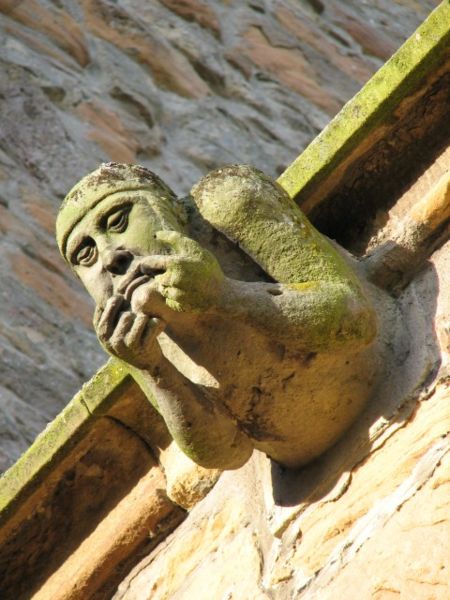
450px-Gargoyle_Dornoch_CathedralMore from Windsor. Informal conversations have brought home to me, with unexpected force,  the extent to which the church is vilified by today’s young people. They see it as fundamentally unjust because of its attitudes to, for example, women and gays. The movers and shakers of tomorrow consider the church to be less just and less ethical than the society in which they live. It is no longer fit to regard itself as a guardian of standards, let alone a preacher.

I hear from an impeccable source that no C of E bishop was willing to go on air to defend the official position on gay marriage. I wonder how many C of E bishops refuse publicly to acknowledge their own sexuality, and condemn those who do.

Is this relevant to the Church of Ireland? I rather think it is. It’ll be interesting to hear how some of its bishops explain the reasons why they’re in favour of ‘exorcising’ gay people. One even hears of church people who look forward to the identification of the ‘gay gene’ so that fetuses that have it can be rubbed out.

This, it seems, is the gospel of love. Kyrie eleison.

Theology and the arts

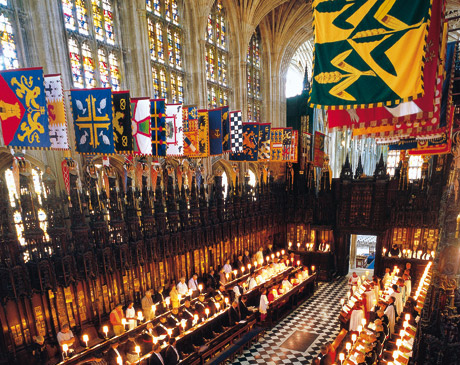
p3-quireHere I am on a course about Theology and the Arts. The surroundings are magnificent, Windsor Castle, St George’s Chapel, mediaeval glory, 18th and 19th century Gothick and the rest. An extension of ‘public’ (English-speak for fee paying posh, don’t ask why) school and Oxbridge.  The company is congenial and stimulating. And yet, and yet …

At the ‘consultation’ we are hearing about, among other things, the enrichment of church life by music, art, literature and so on. Very interesting and stimulating too, as ways to enchant the liturgy. But I see from Crockford’s that clergy speakers come from the rarefied heights of the church. I wonder do they think how frustrating it can be to ordinary parish clergy to have all these wonderful ideas thrown at them, then when they get home realize that few if any are likely to go down well with those who come to church and pay the bills? It’s a different world in Windsor. Those who inhabit this élite place are free of the rigours of ordinary parish life, but also of its blessings. I wonder how well they would fare in its rough and tumble? Reality does not much tarnish their fine thoughts.