Judgement

500px-Fra_Angelico_-_The_Last_Judgement_(Winged_Altar)_-_Google_Art_ProjectSermon for Advent Sunday 2012

Almighty God, give us grace that we may cast away the works of darkness, and put upon us the armour of light, now in the time of this mortal life, in which thy son Jesus Christ came to visit us in great humility, that in the last day, when he shall come again in his glorious majesty, to judge both the quick and the dead, we may rise to the life immortal.

I talk about judgement today.

We wait for the coming of the Lord at Christmas. But the theme of Advent is more ominous than tidying up in expectation of the arrival of a guest. The theme is not simply preparing for the coming of the Lord at Christmas, but of preparing for the coming of the Lord at the end of time. We say ‘I believe … from thence he shall come to judge the quick and the dead.’

Do we really believe that? Does this talk of judgement after death? Purgatory, in which we shall be cleansed, the dust beaten out of us like many of us used to beat the dust out of carpets? (Purgatory hasn’t been abolished … it’s limbo that was abolished). The trouble is that we’ve no evidence. Nobody has come back to tell us.

I think it trivializes heaven and hell and purgatory to think of them simply and solely as future states of reward and punishment. It leads to a score-keeping picture of a recording angel, like the school prefect standing by the school gate to see if we boys were wearing our caps as we trudged the mile or so in the rain from King Street bus stop. Bishop John Robinson said that heaven and hell were the same: ‘being with God for ever. For some that’s heaven, for some it’s hell.’ How does this fit with our ideas of heaven and hell?

I think we might look at judgement in a different way.

The story of the Garden of Eden, fig leaves, choices, scrumping, talking reptiles etc, paints a picture. It is NOT a picture of what actually happened at the beginning of time. Rather, it’s a picture of what happens all the time. It’s a picture of what happens every day, as we make choices based on pride and arrogance and selfishness. Of what happens when we cover up the truth that is in us, when we hide behind fig leaves of pride and arrogance and selfishness – when we, in the words of Psalm 17, become inclosed in our own fat.

In a similar way, I think of Biblical statements about judgement and heaven and hell not as advance coverage of future life, but rather as basic truths of this present life, here and now. More eminent theologians than I say that they are not about what happens at the end of time, rather they express religious meanings of what happens all the time.

Jesus is on record as saying that he has not come to judge the world, but to save it. There is no punishment meted out by the school prefect. ‘Punishment’ is the inevitable and natural consequence of our action. Just as we make our own choices, as we must decide between God (the way of love) and Mammon (the way of this world) ourselves, so we must take the inevitable consequences of our choices. Back to the Garden of Eden. We need to take responsibility for our actions. Sin, if you like, includes punishment as a natural and inevitable consequence. In other words, sin does indeed bring punishment, but that punishment comes from sin itself—the alienation and disintegration that follow. Imagine doing something that hurts someone else. Afterwards, perhaps, you begin to wish you hadn’t done it. You begin to feel shame. Then your heart hardens, you begin to twist the story in your own head so that it becomes the victim’s fault. You start to fear reprisals. You walk around with your head down, your eyes averted, you refuse to look people full in the face, you are constantly alert, in case you are being followed, ‘watchful for demons’. Paranoia sets in. None of this is punishment from God. It’s punishment from ourselves, it’s the consequence of our action.

It is we who judge ourselves.

I have no idea about what, if anything, happens after death. As I say, nobody has come back to tell me. Yet, I have this feeling that there will be some sort of reckoning at some time. And the sort of reckoning that I think most terrifying is that in which I find myself gazing into a mirror. When I shall see not as in a glass (mirror) darkly, but clearly, face to face. When I see the consequences of my actions. When I look back at them and see what effect they had on others and on myself. Looking into that mirror is something that we do every day. It is we who judge ourselves. All the time, not at the end of time. Past, present and future rolled into one.

The Lord called Abraham and the patriarchs to live by the light of faith and to journey in hope. The Lord called the Prophets to warn that actions have consequences. The Lord called Mary to put aside what she might have wanted for the sake of humanity. The Lord calls us to do all this, and to take stock. The Advent Sunday collect ‘give us grace that we may cast away the works of darkness, and put upon us the armour of light’ draws upon the words of St Paul: 
’Now it is high time to wake out of sleep, for now is our salvation nearer than when we believed. The night is far spent, the day is at hand. Let us, therefore, cast off the works of darkness, and put on the armour of light.’ 
There is some sense of urgency in this. The moment is critical because it depends on our decision now: do we, like Mary, say ‘let it be as you say’.

In the Litany we pray that we will be spared from ‘dying unprepared’ – that is, a death that comes before we have set right things that need to be set right. Here are some questions for us: What do we want to feel like when we’re on our deathbed? How do we want others to remember us? What do we need to do to set things right so that when we are confronted by that mirror and we see ourselves as we really are, we shall not be ashamed?


A Christian?

Theology has to account for this

Earlier today, someone asked me what I thought it meant to be a Christian. Oddly enough, I’ve never been asked that before — at least, not quite so bluntly. I have views about how theology must fit the reality of our animal existence, and I will set them down in print when I have worked through some of the issues they raise. But for now, from a practical point of view, here’s what I think ‘being a Christian’ involves.

Do justly, love mercy, walk humbly.

Love your neighbour as yourself. This doesn’t mean letting my neighbour walk all over me. It doesn’t mean that I should approve of my neighbour evading responsibility for his or her own action or inaction any more than I should evade responsibility for mine. It means expecting of myself no less than I expect of others. It means expecting of others no more than I expect of myself. It also means:

  • Don’t do to others what I wouldn’t like them to do to me.
  • Condemn not that I be not condemned.
  • Examine the plank in my own eye before I even begin to comment on the speck in someone else’s.

And:

  • Don’t compete for the best places at parties.
  • Pray in secret not for show. Indeed, don’t do anything for show.
  • Openness — let your light so shine  …  as a city on a hill, a lamp on a stand.
  •  Watch for the signs of the times. Use your nous. To stand in front of an oncoming car expecting it not to hit me is stupid. Newton’s first law of motion still holds (he thought his most important role in life was as a Biblical Scholar).
  • Let your ‘yes’ be yes and your ‘no’ be no — anything else is evil. (What about diplomacy?)
  • Do not treat people with partiality, for God is no respecter of persons … you have one Father and you are all sisters and brothers. Everyone. Not just members of your family, your tribe, your race, your denomination, your opinion. Everyone. Including those who hate you.
  • Love one another as I have loved you. Thankfully, loving does not have to mean liking.

I fall short on them all. I’m human therefore I make mistakes. The psychological authenticity of Jesus’ message sustains mesometimes only justin my priestly role. I suppose what this role boils down to is: encouraging people to confront reality by living in the present (e-ternity, ec-stasis), free from the burden of the past (forgiveness), feet planted on the ground (humility), eyes and mind looking all round and beyond (others and otherness). Some of the doctrine we’ve inherited was written by and for a pre-mediaeval view of the universe. Some of it reflects the pyschological obsession of the writer. Some of it has passed its sell-by date. Much of it is poetic imagery. Nearly all of it expresses deep psychological truths.

The questioner asked me a second question: do I believe every word when I say the Creed. What a question. Watch this space.

No point moaning

Christmas trees in supermarkets already. Butchered carols assail our ears in butchery sections. ‘Isn’t it terrible to have Christmas things so early. We have Easter bunnies right after Christmas, and Christmas is upon us as soon as the schools are back. What’s the world coming to?’ It seems to escape their notice that the reason they went to the supermarkets in the first place was to do their planning-for-Christmas shopping. Here I am already planning Carol Services, thinking about readers and music and how to involve the community. I wouldn’t dream of criticizing others for milking Christmas and Easter since that’s exactly what I do. On the odd occasion that I go to supermarkets with Christmas carol muzak, I thank the Lord for being deaf.

I hear that some clergy deplore the disappearance of Advent. Do they imagine that their darling flocks prepare for Christmas by a strict Advent discipline of penitence and reflection? Perhaps they think this is what goes on in Lent too. With the pressure of modern life, child rearing, jobs, bills to be paid, creaky joints etc, I think if you manage to make church most weeks, you’re doing pretty well in preparing for Christmas. I try to keep Sunday mornings in Advent as Advent services. Patriarchs, prophets, John Baptist, Mary. (Can anyone tell me the point of Jesse trees? Where do people keep all the bits and pieces for the rest of the year? And do they remember where they put them last year?)

The world is as it is. If we don’t like it, we can try to change it, move somewhere where things are better, or accept it. If we don’t like the effect of supermarkets on communities, or the way they treat their suppliers, what are we going to do about it? Moaning is pointless. If we want our pension funds (hollow laughter) to support us in the future, we need to be careful about attacking the commercial concerns in which the funds are invested. When I was silly enough to have a romantic view of what church was about, I used to think that it must be lovely to be a monk, free from worldly hassle. Then I got to know some monastic communities. They are as full of tension and squabbles as life out here, with the added joy of living cheek-by-jowl. No wonder monks are so often guest speakers elsewhere. One of them told me that religious communities consist of people who can’t hack the real world. Maybe the church is too: some young idealistic ordinands seem to think that all they need is the knowledge that Jesus loves them. Parochial life as an ordained minister will soon test that.

Are we going to try to change the world? Bankers’ bonuses, political corruption, cronyism, begrudgery. These are just extreme forms of things that affect us all, the demons of avarice, of envy, and that which incites us to seek the approval of others whose approval is not worth having. Even so, I can’t help feeling that ‘something must be done’ as the rich get richer and the poor get poorer. (Rambling Rector bucks the trend here: every job change over the last decade has resulted in a pay reduction.) I wonder—seriously—about Gandhi’s idea of calling for days of prayer and fasting. The fact that some may call them national strikes is neither here nor there.

Memories and tombs

Use it or lose it

November is a dark kind of month. Dark memories, dark nights, dark moods if you have seasonal affective disorder, the end of the church year, waiting for the light to dawn. Remembrance, memory, memorial, tomb. Mnema. When we retreat into memories of times past, we can get stuck—entombed—there. Like a black hole that sucks everything into it, we start to live in the tomb of memory with the door closed, living in the distant past, unable to look outward. Dementia. Locked away. That’s what happens to some people as they age and lose function in part of the brain that deals with recent memory. It’s as if the only part of the memory that functions is the long-ago memory. That’s what happens to some people who chose not to let go of the past, and who seem to rejoice in dredging up past grievances. Remembrance ceremonies in November remind us how destructive humans can be when we act on pride and the will to control others. I hope they can also point how constructive can be our resolve to make the world a more delightful place when we replace the desire for revenge with the desire for love. And I don’t mean soppy, emotional love. I mean proper love that’s hard work, caring, sharing, working, enduring. Replacing me-me-me with us-us-us. When we let go of the past and open the tomb of memory, resentments of the past fly away. Rolling away the stone that entombs us in our memories enables resurrection and new life. Roll on!

Cancer deaths to fall?

Earlier this week, Cancer Research UK announced that within 20 years, deaths from cancer will fall dramatically. So what, then, will people die of? Maybe we won’t die at all – isn’t that what people hope will be the result of medical research? – but live for ever and ever, becoming like the struldbrugs in Gulliver’s Travels, increasingly opinionated and cranky. Some of us are on that road already. If memory serves me right, at 80 years of age their marriages were dissolved because no two people could stand each other for ever, and they became legally dead, no longer able to own property. This is not unattractive. No taxes, no responsibilities, no leaking roofs to worry about (yes, the Rectory roof still leaks). As centuries passed, the struldbrugs could understand less and less since language changed. Hmm, immortality really does have something to be said for it after all.

Is there such a thing as a good death? Some people say they want a sudden death. No suffering for them, but hard for family. A lingering death gives time for family to come to terms with, even welcome, it, but can be trying for the dying person. When my mother was on her last legs (secondary cancer filling her liver), she was put on morphine and had a couple of months at home. I said if I was her, I’d get myself a freedom of UK train ticket and go places, though by then she was too ill to bother. After she died, my father bought a deep fat frier, and that was the end of him within 2 years. If we don’t die of cancer, I suppose heart disease will be the killer. Or murder—if the struldbrug character changes are an indicator.

What will it be for me? Road traffic accident? Heart disease (I like eggs)? Cancer? Quite possibly cancer: I am a bit of a worrier and that always gives me bellyache, and anyway there seems to be some evidence for cancer-genes in the family. Cancer is a side-effect of getting older: the longer you live, the more likely your cells are to go out of control. The sad thing is that it can strike the young.

I have slight experience of religious communities, and am always impressed by their attitude to someone’s death: here today, gone tomorrow, we have stuff to do so let’s get on with it. There’s Gospel backing for that one. I’ve no doubt that much distress at a death is the result of survivors’ guilt at the way the dead person was treated when alive, and some of the rest arises from a need to be seen to behave in a certain way.

The claim by Cancer Research UK is in truth fatuous and stupid. Everyone is going to die of something. How about most of the world’s population who don’t live long enough to get cancer at all?

Foot gestures

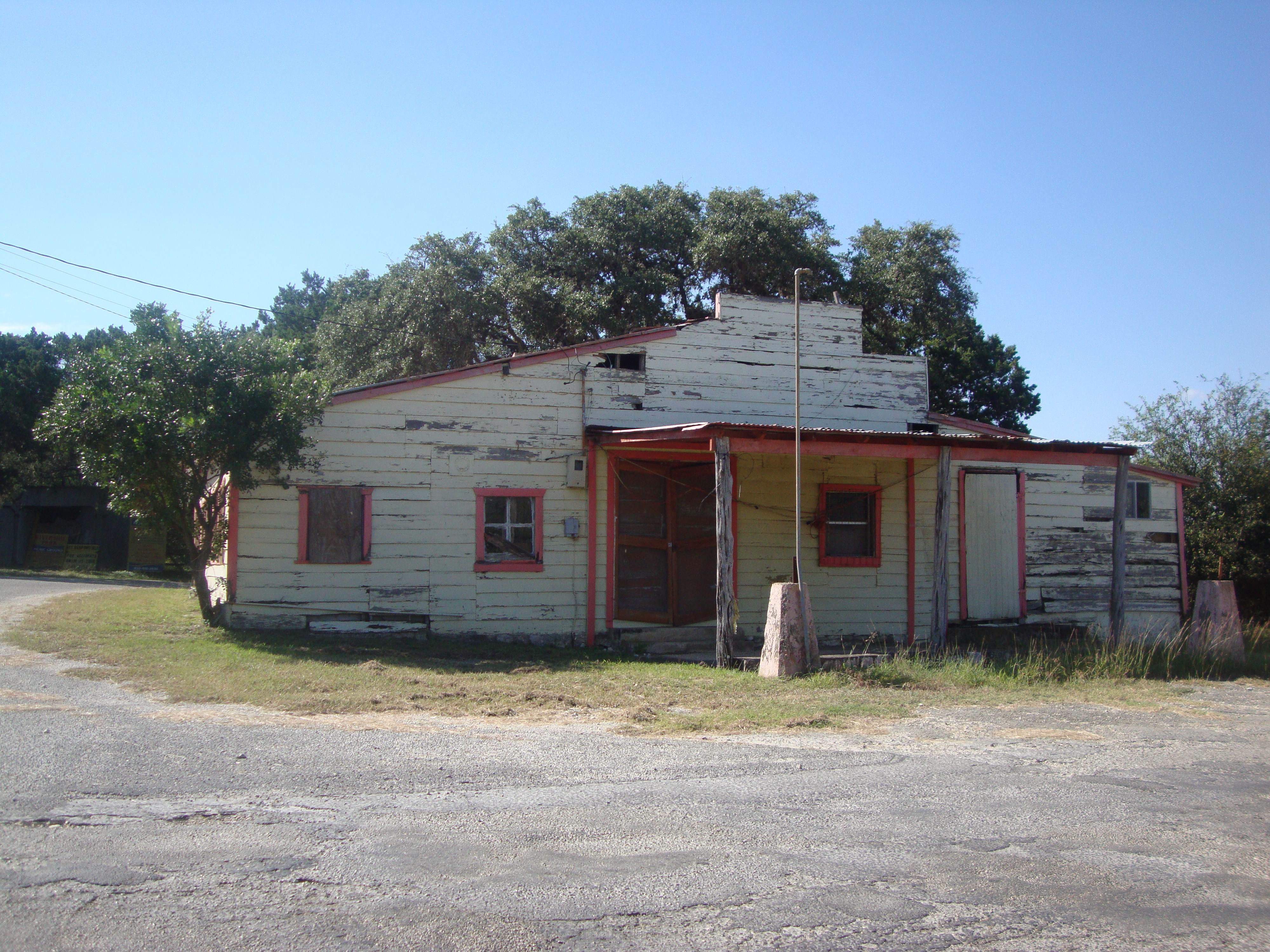
Dusty Texan shack

The feet of plantigrade mammals like us are remarkable things. Highly specialized for perambulation. I have elegant 62-year old feet, so I am told by mine own eyes, which behold their glory. Wherever possible, I take my shoes off. And my socks, a habit that infuriated my mother and now endears me to SWMBO. Socks are lost in and under couches and chairs, retrieved some time later covered in dog hairs. (All my socks are black, so finding a matching pair doesn’t matter.) Footwear is, on the whole, bad for feet, since though it is true that feet are made for walking, they were not made for being cooped up. Ideally, I would celebrate the sacraments in bare feet so as to be touching holy ground.

In the Middle East, as in many other places, it’s insulting to show people the soles of your feet. You have to be careful how you sit, especially when you cross your legs. When pious Jews in days of old visited a non-Jewish cities, they shook the (non Jewish) dust off their feet when they left, presumably so as not to be contaminated. ‘Shake the dust off your feet’ is the instruction Jesus gives his men in today’s Gospel. Don’t waste time with people and places that don’t welcome you—quite a statement in those days, an insult almost. The message, roughly translated, is don’t flog a dead horse. Know when to cut your losses and give them the old heave-ho as Bertie Wooster probably said.

All very well in theory, but it can be hard to do. Often, we don’t want to admit defeat, especially when we’re younger. We want to ‘win’, to impose our wills on people or things. Think how much time is wasted by organizations—especially but not exclusively churches—that try again and again to do the same things over and over again, hoping that next time things will be better. Sheer lunacy. Einsteinian insanity.

As I get older, I find it much easier to shrug my shoulders, say ‘OK, if that’s the way you want it, bye bye’, or words to that effect, and expend my energy more productively.  Apparently, with gospel approval.

Moving and memories

New classes, new schools, new colleges, new jobs—this time of year often brings a mixture of excitement and fearfulness. The need to make new friends, and moving from being a big fish in a small pond to being a minnow in an ocean can be a challenge. Watching two new hens join our original four showed me again that settling into a new pecking order is fraught—the two new ones are still being bullied after four months. Coping with this (settling in I mean, not the hens) is difficult enough when you’re in your sixties, but can you remember what it was like when you were starting school? I was at primary school 200 yards away from the house. I can’t remember much about how I felt then except for a general air of anxiety, for some reason made much worse when our cat followed me to school and I thought I’d get the blame for it. Maybe that’s why I don’t like cats, which are probably best housed under the wheels of a heavy truck (they also bring on wheezing and eye-watering). Back to the plot. Moving from primary to secondary school can be troublesome with official and unofficial hierarchies to cope with, and coming to terms with some of the more unwelcome aspects of playground gangs, and seniors who appear to be the size of houses.

By the time you get to 18 it might be that you can’t wait to leave home and start to plough your own furrow. That is admirable and understandable—indeed, if we never explored we’d still be scrabbling about in caves (as I’ve said before, and doubtless will again). The sad thing is that for financial reasons students now find it increasingly difficult to study away from home, at exactly that time of life when they should be shoved out of the nest. I can’t remember where I read it, but someone said that people can be classified as those who always look forward and don’t fear anything, those who defend and are always watchful, and those who remain within the boundary caring for the nest (nothing to do with male/female, since both sexes are found in all groups). I suppose you might say nomads, defenders and home-makers. I’m a nomad, SWMBO isn’t, so rows are not uncommon. Adapting to new circumstances, however exciting, always provides challenges. Please spare a thought for those whose personalities and inclinations make this a troubling time, especially those starting school.

Starting a new phase of life may well mean that we need to grieve for what we’ve left behind. This kind of grief is every bit as serious as the grief for someone who has died. If we don’t acknowledge it, it will bring us low. If we bottle it up, it will explode when we least want it to. It’s worth marking the old ‘life’ in some way in order to celebrate what has passed. It might be worth thinking about how elements of the past can be incorporated into the forward-looking present. This becomes more important as we get older, and I guess this is why people like poring over old photographs, or keeping toys and books from childhood. Don’t just keep them in a press in the dark—take them out occasionally and revel in them. Use the past to enrich the present and future.

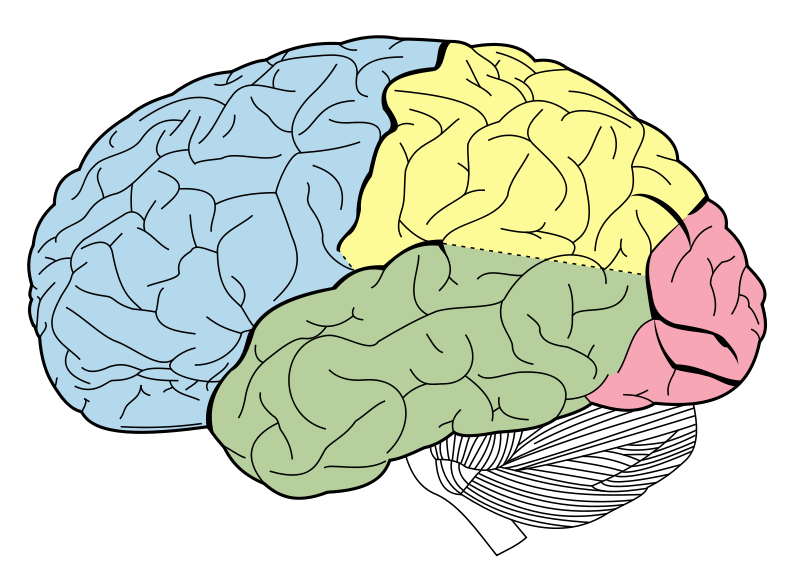
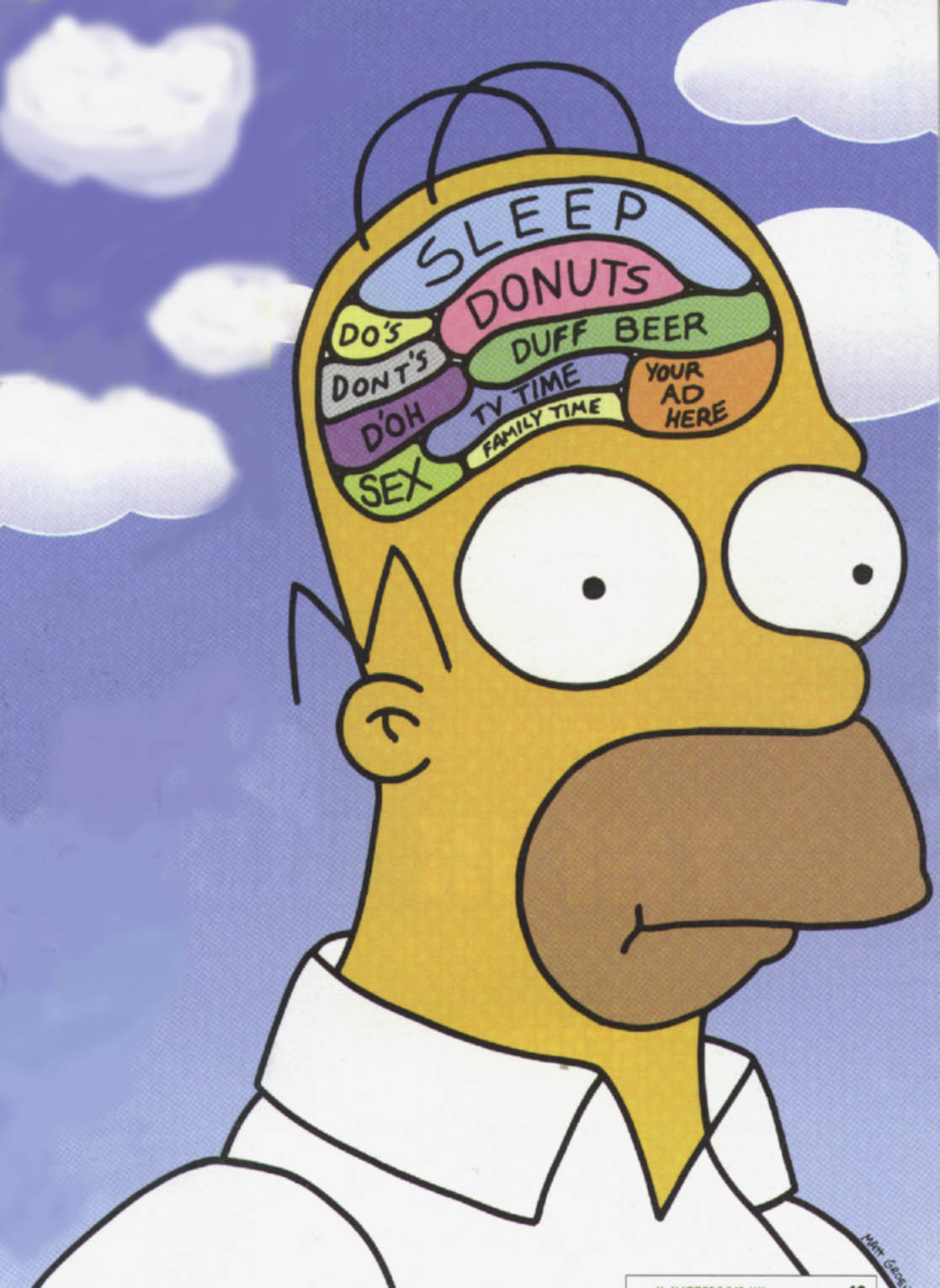
Talk of memories brings on some neuroscience. We smell food as much as taste it, and what we call tasting food is partly smelling it. The brain’s memory circuits are linked with smell and taste. That’s why smells and tastes evoke memories and responses. This is good: as animals we learn to avoid danger. Pheromones enable us to ‘sniff out’ sexual attraction. I think of my mind, inasmuch as I have one and can see what goes on in it, as a tank of viscous fluid with memories slowly and randomly moving, up and down, side to side, slithering about. The only viewing point is a small opening at the top. As the memories move, they become visible for a short time through the opening, sometimes this, sometimes that, sometimes the other—unpredictable, ever-changing. If these memories have not been processed, the undesirable emotions and responses they provoke can cause real disruption. All the more reason to pay some attention to what goes on in our minds.

This is self-examination, reflection, confiding in a friend. It is a clearing-out, a cleansing. However distressing we find it, we come out the other side enlightened and lighter.

Demons?

He’s behind you

Sermon for Proper 16 Year B

In Acts 8 we hear that the apostles went from place to place, proclaiming the word. The crowds were impressed by Philip who seemed to have a canny way of dealing with unclean spirits, who came out of the afflicted, crying with loud shrieks.

They seemed much readier then than we are now to talk of possession and unclean spirits. We talk in terms, perhaps, of obsession, of nastiness, of greed, envy, pride and the abuse of power. But some people do still talk of possession, in the sense of evil spirits that need exorcism. In my last incumbency, I was trained in the deliverance ministry, and I heard at first hand of poltergeist activity, though I’ve never knowingly witnessed it myself. The truth is that I’m a sceptic but I’ve heard the experiences of people whose integrity I do not doubt. It’s a fact that brainwaves influence the environment—EEG—so might they, in extreme circumstances, visibly affect the environment? And perhaps what goes on in the environment influences brainwaves.

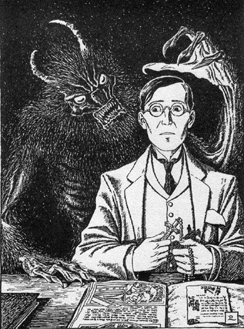
I accept the reality of demons. We see and hear of them daily: pride, standing on dignity, lust for power, envy, greed, malice, spite. We might even recognise them in ourselves—I hope to goodness we do, for such recognition is the first step to banishing them. And it is these demons that we need to be on our guard against. They charm us, they steal our personalities, they take hold of us, even to the extent that may affect our health. I’m convinced that these are the things that much of Jesus’ ministry was dealing with. His advice, in today’s Gospel, is that we devote ourselves to the bread of life—eucharistically and symbolically—that is, thinking WWJD.

In today’s Gospel, it’s clear that some disciples found Jesus’ message too difficult to accept, and turned away. Life can be difficult. Christianity is difficult. It’s not an easy option. When I hear of Christians pretending otherwise, I wonder what sort of la-la land they inhabit. We are dragged out of the relative security of our comfortable lives into a life of insecurity where attitudes and behaviours are challenged as we begin to see ourselves as we really are. As we seek truth, we find ourselves attacked by those who let demons take them over. Evidently Jesus knew that he would lose some of his followers. He asked them whether they would stay or go. Go, if you want. You’re no use here if you’d rather be somewhere else. But where else is there to go? The religion of shopping does not sustain for long, and is expensive. The religion of drugs, or comfort-eating is harmful. The religion of sport and physical activity can become our master. The religion of being spiteful and malicious is draining—and how will you feel on your deathbed if spite and malice are all that people will remember you by?

In his letter to the church in Ephesus (today’s epistle), Paul deals with hostility, division, and self-interest more than any other topic. As I said last week, they must have been a fractious group, quite unlike the typical Church of Ireland community. They faced the spiritual forces of evil within them, just as they are within each of us. Paul reminds us to be on our guard: for we wrestle not against flesh and blood, but against principalities, against powers, against the rulers of the darkness of this world, against spiritual wickedness in high places. The high places in our minds that we fool ourselves are palaces of light.

Each one of us has to answer Jesus’ question: ‘Do you also want to go away?’ We often struggle to remain faithful amongst the sorrows of personal circumstance and the daily grind, of dealing with unreasonable bosses, unreasonable customers, children in trouble, domestic violence, confronting corruption. Can we wear the protective armour of God and stand firm? To live according to Christian teaching is to seek truth, not self-deception. But truth can divide, truth can hurt before it heals, truth may produce hatred, truth can leave a person standing alone, truth can appear to fail before it succeeds.

Some people are offended by military images in church, but they are here in scripture and they are embedded in the liturgy: Sabaoth, the heavenly army. Armies are for fighting evil. Paul was writing for people who saw Roman soldiers every day. Conquerors to be sure, but also guardians of peace—Garda Siochana—girded in armour to withstand attack. Christian soldiers need to be offensive against evil, not complicit, and defensive to protect themselves.

Jesus wanted the disciples and with him, but not against their will. Like them, we can choose whether we say  yes or no to joining the army. We can choose whether to say yes or no to the demons.  These are our decisions. How do you want to be remembered?