Anger and apathy

475px-The_ScreamCorrupt police, whistleblowers persecuted, financial crime unpunished, cronyism, laws that are obligatory for us but merely aspirational for the rich and famous. Maybe all this doesn’t affect you personally.

Dealing with jobsworths in utility companies, banks, and councils. Wondering why you have to make an appointment in your busy life to sign a piece of paper that could have been posted to you. Maybe at work you’re harassed to do more, to achieve more, to sell more, to recruit more. Maybe you have to deal with managers who dump on you because they’re concerned only for themselves. Maybe some of this is more your experience.

Maybe you work for an institution that appointed you to do a job that cost you a great deal of distress, which, when the institution changed the rules, you see was for nothing. You’re left drained, disheartened, feeling foolish and hopeless—that is, de-sperate. There’s a memorable episode in the US House of Cards in which Kevin Spacey’s ‘wife’, a self-obsessed businesswoman, asks her underling to sack employees, and after it’s done, then sacks the underling. Maybe you understand what that must have felt like.

Anger is hard-wired in to the amygdala and limbic system of the brain. We need it, or used to, for survival. Suppressing it, however socially acceptable, is bad for the organism. I internalize it. I pretend to myself I can deal with it. Then after a couple of days I get collywobbles and pains and what feel like panic attacks. Slowly, it dawns on me that this is not indigestion or oesophageal reflux, neither is it psychiatric illness. It’s anger.

Some people get rid of their anger by thumping. I wish I were more like them. There’s no point explaining to those responsible why you’re angry, for the likelihood is that they’re so keen on saving face or backside (interchangeable?) that their response is merely to hide behind legalities and protocols.

What can the pastor advise about dealing with anger? I spent a good bit of time with a 12 year old lad who had an abusive father. He knew the fate that awaited him for having lost some trivial item. He was beside himself. I said ‘I know how you’re feeling.’ And he – to his great credit – said ‘no you don’t, how can you? you’re not me’. That taught me a thing or two. Saying ‘Jesus understands’ is likely to result in your admission to A & E. Rightly so. Getting people to talk about it is an absolute must. To scream and shout, to curse until there is no more energy left. To sink into apathy.

Apathy. A useful state, however painful it is to arrive there. A lack of emotion. All passion spent. No longer are you foolish enough to expect others to imagine how their decisions might affect you. From apathy you begin to pick up again, knowing better what you’re dealing with. Maybe you become intent on revenge. They say it’s a dish best served cold. The trouble is that seeking revenge makes you hard-hearted and bitter as it eats away like cancer. It is cancer of the spirit. But it’s easy to understand why films about revenge – Shawshank – are so popular.

Perhaps you’ll learn from the experience and move on. Maybe you’ll distinguish between anger on behalf of others, and anger on behalf of self, that is, injured amour propre. If it’s the latter, maybe you’ll see that you’ve fallen victim to the demon that incites us to seek approval from others, and you’re angry with yourself. Maybe you’ll see that those others’ opinions are not worth having. If so, you’ll come out of it wiser, determined to continue to let your ‘yes’ be ‘yes’ and your ‘no’ be ‘no’, despite the duplicity and thoughtlessness of others.

But it is never easy.

Less religion, more maths

01The Education Minister says schools should teach less religion and more reading.

In my humble opinion, schoolseven primary schoolsshould teach more mathematics too. I don’t mean sums, I mean mathematics. Children will become familiar with logic, conceptual thinking, problem solving and truth. Nothing is truer than mathematics. Mathematics leads to architecture, music and biology, as Donald Duck found out.

Why should schools teach religion at all? You could say it inculcates tribal attitudes and behaviour that can be profoundly unChristianindeed, inhuman. It encourages parents to think that since school does it, they don’t need to, either at home or by church commitment. It encourages a view of God as a cross between a sky pixie and an irascible parent who needs to be placated and evaded. It’s used to tell children that they should be nice, clean, tidy, adhere to notions of respectability and generally do what adults tell them. It can lead to a kind-of spiritual infantilization and emasculation that soon fails them.

What should I be saying at school Assemblies? Should I teach the doctrine of the Holy Undivided and Indivisible Trinity (mathematical concepts of simplicity there), or the difference between substance and essence (chemistry here)? maybe I should be exploring with them the feminine part of the Divine, Sofia, Mary redemptrix (plenty biology there). What about how Greek ideas and fairy tales shaped the Gospels?

What I do try to say is that the Divine light is in ‘here’ in everyone, that ‘we’ is more important than ‘me’ (ants), that we light the way for others when we let the light shine out of ourselves (fireflies), and that we all benefit from a bit of quietness (dormancy and metamorphosis). And also, of course, that whereas human team captains can’t avoid being swayed by personal considerations, there is one captain who shows us the way. I try to explore with them what they think God-ness might be like. I ask them to consider when being ‘nice’ is inappropriate and when they should fight for justice.

I doubt that’s what parents or teachers want. But I plod on trying, for the sake of the staff, not to let the pupils see how much I squirm with embarrassment at some of the words of the silly songs.

After the example of an esteemed colleague, I’ve started reading stories. Oscar Wilde’s The Selfish Giant was a smasher.

Bleeding rain

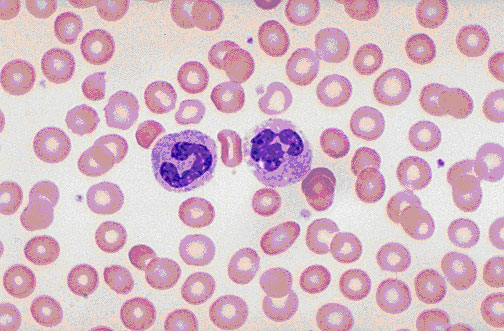
red_white_blood_cells‘Been thinking about you all morning.’

A siren song assailed my left ear as I was in the filling station waiting to pay. It’s not something I expect to hear from ladies in queues. She’d been deliberating about whether or not to go for her morning run, and was just about to settle on ‘no’ because the weather was so vile, when her daughter piped up ‘Stanley said yesterday it didn’t matter if you got wet because once you were wet you wouldn’t get any wetter and anyway you’d soon dry.’ So she went.

That’s the first evidence that anybody ever listens to anything I say.

Yesterday’s Maryborough School Assembly was about water. My views about wetness come from experience from the age of 10 onwards. When you’ve grown up around Penrith, and got soaked most mornings walking the mile or so from King Street bus stop to the Grammar School, you get used to rain, and you realise pretty quick that once you’re wet through (after about 20 seconds, I recall), you don’t get any wetter. Furthermore, before long you dry out. Never mind that the first 35 minute class is endured amidst steam rising from damp uniforms and viewed through steamed up specs.

I also said how magic our dog’s coat was for it was self-cleaning. And maybe our skin was. And maybe we shouldn’t wash so much because being too clean did nothing for our immune systems. This did not go down well with the teachers.

After assembly I took the seniors for a short biology discussion about blood. There had been a recent death from leukaemia, so we did types of blood cells, what they do, and what goes wrong when they don’t. And a bit of Greek with erythro and leuko and cyte and aemia. As far as I can judge from their attitude and lack of fistling, they were seriously interested. They certainly asked intelligent questions.

There’s a market for public lectures about how the body does and doesn’t work.

Unity?

Ponder the jellyfish

Ponder the jellyfish

Epiphany 3, Year A. Isaiah 9:1-4. Psalm 27. 1 Corinthians 1:10-18. Matthew 4:12-23

As I was leaving a parishioner’s hospital bedside on Friday, the RC priest on duty waved at me and stopped for a chat. He reminded me that it was Christian Unity week.

It’s not top of my priorities, and it falls at a silly time of year, too soon after Christmas. Last year, the Kiltegan Fathers invited me to give their Annual Christian Unity lecture in February – a better time. This year, the PP and I decided that rather than have a badly attended midweek service in gloomy January, we’d do something practical at Christmas. And that’s why I preached at one of the masses on 21 December, and why Fr Eddie came to the Carol Service the next day.

If unity means united in mutual support as we try to live the life of Christ as best we can in the culture and place in which we find ourselves, then I’m all for it. If it means uniformity—that we should all be the same—then I’m against it. Having different ways of thinking and different ways of doing things is wonderful. It means that life is not boring. It means that we can have intelligent discussions about things, whether they be theories of the atonement, or ethical dilemmas, or animal experimentation, or whatever.

What we need is Christian unity-of-purpose. Mutual respect. We don’t quite have it in this state, but it’s immeasurably better than it was. Yes, it’s sad that when I go to RC Mass dressed as a Church of Ireland priest, I’m probably not offered the sacrament, not because I’d refuse it (I wouldn’t) or because left to his own devices the priest wouldn’t offer it (he might), but because conservative people might object as it’s against church rules. And the other way round: I wouldn’t surprise an RC priest by offering him the sacrament in this church—not because the priest wouldn’t accept it (he might), but because of what some of his flock might say if he did. It’s possible, of course, that some C of I parishioners might take offence at what I might do in these circumstances, but I’m not inclined to take any notice of that. I yield to no-one in my regard for church rules.

It’s all rather silly anyway. RC chaplains in prisons and hospitals offer the sacrament to everyone—no questions asked. I urge C of I patients to accept it with joy. In other countries, there are fewer scruples than here where waters are polluted by centuries of resentment bred into respective tribes. In the history of Christianity, murder and violence have too often resulted from a lack of mutual respect because of this sort of tribalism—which brings me to today’s Epistle.

Paul was cross with people arguing about whose baptism was best. Next week I’m baptizing twins in a Candlemas liturgy. I will be doing things that I don’t usually do. I will be doing things that maybe you aren’t used to. But I challenge anyone to say that my baptism is somehow less efficacious than anyone else’s because of that. Something like that seems to be what the Corinthians are arguing about. ‘If this gets any worse’ maybe Paul is thinking, ‘there’ll be arguments, rivalries, sectarianism and even warfare’.

Isn’t that the problem with the world—‘my way is right, yours is wrong’. ‘I know best.’ ‘If you don’t agree with me, you don’t deserve to live.’ ‘You’re not part of my tribe, so you matter less than I do and I can have you rubbed out’. We need tribes and families for support. But when they get ‘notions’ of superiority, those in other tribes come to be regarded as less human, with ethnic cleansing and concentration camps just around the corner.

The problem with tribalism, or denominational posturing in church terms, arises when how we do things becomes emphasized at the expense of the reason why we do them. The point of the game is, as I said before, to live as best we can the life of Christ in the circumstances in which we find ourselves. The focus is the Lord and the Lord’s kingdom. If we forget that focus, we’re likely to think that the focus is what we think and do. The focus becomes ‘our’ mob versus ‘your’ mob.

Life is too short for this nonsense. Of course decisions have to be made, but as I said last week, it’s often not a matter of right and wrong, but rather simply choices and consequences. It really doesn’t matter if others choose to express their love of the Lord differently from us, so long as we, and they, don’t start to claim that only ‘our’ way is best. If we do, we are making an idol of the way we do things. Tribalism in any form depends on the claim that ‘we are best’, ignoring the possibility that other tribes may think that ‘they’ are best. It assumes that there is nothing bigger than us.

If religion has no other use, at least it tells us that there is something bigger than us. We humans can be extraordinarily arrogant. We assume that we rule the planet and that it’s our plaything. Let me tell you, boys and girls, that if any creatures could be said to rule the planet, they could well be jellyfish and their friends in the oceans. They’ve been around 700 million years. They’re the oldest living multicellular organisms. They can kill us. They are increasing in number. They show every sign of continuing well into the future, long after we humans have gone (we’re not, despite what we think, a very successful species).

Faces of the Divine

Faces of the Divine

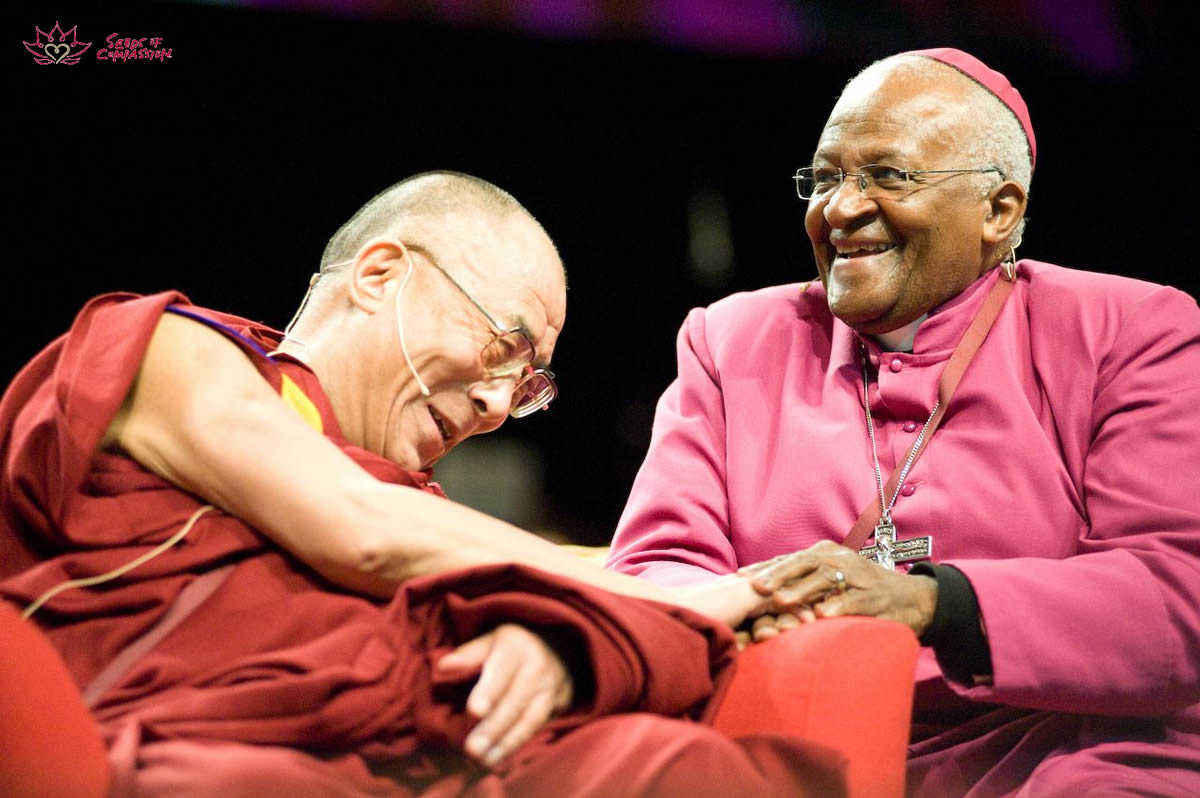
In Christian Unity Week we do well to remember how tribes and tribalism can lead us to do terrible things. We do well to realize that what dictates our identity as creatures of this earth doesn’t come from us, but from the Christ. And that identity could include Jews and Buddhists and others, as well as people who call themselves Christians.

This is what Christian Unity is about: respect leading to justice. Disunity and tribalism that lead to injustice are what Paul was arguing against.

Ultimately, what matters is what the Psalm speaks of: ‘The Lord is my light and my salvation … One thing have I desired of the Lord, which I will require: even that I may dwell in the house of the Lord all the days of my life, to behold the fair beauty of the Lord, and to visit his temple.’

Indecision and delivery

Og the dog

Og the dog off for a swim

Nothing works. I’ve tried shaking my head like Og the dog after a swim. I’ve tried tipping my head to one side and then the other. All to no avail. My brain is still brimming over. Usually when something goes in one ear, another thing falls out the other. But not at the moment. So many possibilities and consequences.

At school when we all wanted to be first in the dining hall there was so much pushing and shoving that nobody made it through the door at all. That’s what my head’s like: full of one the one hand … and on the other Like people who have so much to say, it all comes out jumbled.

They say we have free will. Pish and piffle! One of the characters in the film Shadowlands (CS Lewis and Joy Gresham), says ‘we read to know we’re not alone’. I read Richard Rohr and often think ‘yes! finally I find someone who knows what I think better than I do.’ He writes: We are all conditioned, programmed, wounded, addicted, repetitive, habituated and compulsive in our brain processes—which indeed largely determines the content of what gets in and what stays out. True free will is largely a myth, as most of us initially operate almost entirely out of conditioning and culture.

When I was a student on the Obstetrics and Gynaecology rotation, a wise obstetrician* said that the best line of treatment more often than not is Masterly Inactivity (and he spoke the capitals). This is not bad advice for me at the moment. If in doubt do nowt. Who or what will be a midwife for my brain?

* He was on hand when SWMBO came to be delivered of our daughter in 1975. We then moved to Nottingham, and found that he had too, so he was in charge of the emergence of the two boys into daylight as well. They’re all October birthdays. It’s called the rhythm method of conception.

Delight and agony of Africa

ghjhg

From Church News Ireland

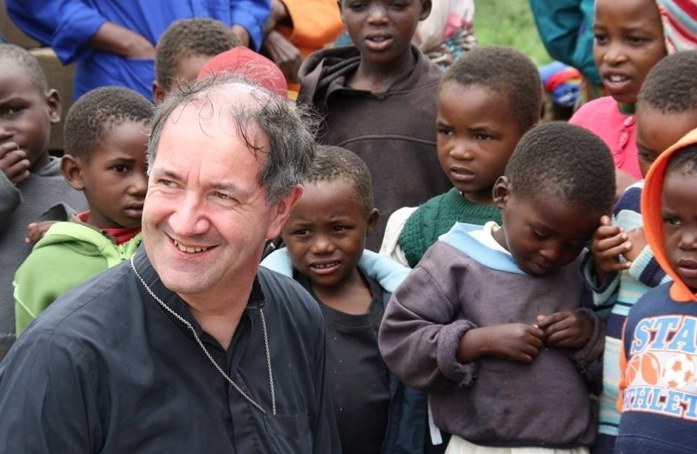
The Bishop has been to Swaziland. He said ‘the poignant thing was I was such an old man there … because of HIV and other factors most men are dead before they are 50.’

He’s right. If he’d gone to Malawi he’d feel even older. Despite that, I expect he was in the midst of laughter, welcomes, smiles, and liturgies where people want to be involved. There would be few if any shoulds and oughts. People just get on with the job and are glad to be alive. They are not bothered about ‘the way we do things here’ – because all the people who know how we do things are dead.

Digression alert. I did a session on ‘ethics of decision making’ for the diocesan certificate course and asked how many of the middle-aged people were on diocesan synods. All but one put their hands up. I said, ‘it’s time you came off to make room for younger people’. I keep saying that the church is run by people without a future, A self-limiting problem.

Back to the plot. My visit to 6 am Mass in English at St Paul’s, Blantyre, was notable for all those things I mention, but most of all for the uninhibited enthusiasm emanating from the hall next door where the choir was rehearsing for the 9 am Mass in Chichewa.

African Anglicans come to church in Portlaoise. I wonder what they make of it. What can we offer them? All I have is the liturgy, myself, and, since I have some inkling of what it is like to ‘mourn in lonely exile here’, my friendship.

The Bishop has imagination and a fine intellect. How will he survive back here having seen the delight and agony of Africa?

Advent Rose

rose_02_bg_040106Roses have prickles. They give the plant a bit of purchase as it elbows its way slowly upwards. Rough edges enable growth.

Prophets are prickly. They have rough edges. They are not conventional. They are not welcomed. They are difficult to live with. I like people with rough edges: they get things done! It’s the rough edges that provoke new growth. Evolution from the edges.

Prophets are not ‘nice’. To be called ‘nice’ is the worst possible insult.

Geoffrey Clayton, some time Vicar of Chesterfield, then Archbishop of Cape Town, was prickly. He is reputed to have said when he was ordained in 1909 that he didn’t want anyone to say of him ‘our nice new curate.’ He ruefully added after a lengthy pause: ‘and no-one ever did.’

On Ash Wednesday 1957 he signed a letter on behalf of the South African Bishops telling the Prime Minister that they would neither obey the laws enforcing Apartheid, nor counsel their congregations to do so. He died the next day.

It’s as well to recall some of the shoulders on which Nelson Mandela was able to stand.

Prophets

skinnerpointingWhat do you expect of a man who lives in the wilderness? Someone dressed in posh frocks and smells of roses? Get real.

Walking to the Rectory from church the other night: ‘Father, can you help me?’ Can you guess what’s coming? A child in hospital, a mother dying in Dublin, needs money for bus fare, food, accommodation. Yup, spot on. All of ’em.

This is common enough. He might be telling the truth. Shall I look at his teeth for signs of crystal meth use? Shall I ask to see his forearms for signs of needles? Will anyone visit me in ITU if I do? I think: ha, I’ll see if a few questions will catch him out. Where does he live? Which hospital in Dublin? Has he been to social services? (What social services? you may well ask.) But I know there’s no point asking questions. I am naïve, he is smart. Anyway, who am I to judge?

Of course, I part with money. He goes off: a small victory for him. I’m tired, and there’s something on the box in two minutes, and for a moment I’m relieved. Then the nagging guilt: I should be doing more. I can’t blame him: what do I expect from someone who hasn’t been dealt the same cards as me?

—————

A phone call from prison asking if a man could put my number on his phone card. Again, common enough. Yes, of course. Next day I had a call from the gentleman who asks me questions about the C of I – are we Presbyterian? (No, but congregations behave as if we were!) What do we believe? (Ye Gods! What do we believe?) Can I change religion? (Why?) Will you come and see me? Of course I will.

I’m uneasy, not least because the exchange doesn’t conform to my expectations of a conversation with someone I’ve never met. And I’m left from childhood with a wariness of people not like me. Then I think, what do I expect from someone with a different view of society who has not been dealt the same cards as me?

—————

Like the people who gather on Coote Street waiting for their drugs from the clinic, and like the people who chuck used needles and syringes over the Rectory wall, just down the street, these men are prophets.

Prophets make us uncomfortable. Prophets say what others dare not. Prophets reveal our values. Journalists like Veronica Guerin, killed for her trouble. Journalists who report the Dublin ‘poor’ given an extra €135K from donated money to top up a salary of €116K (and we vote for people who turn a blind eye).

It’s not just about what happens ‘out there’. It’s about ‘in here’ too—the John the Baptist that lives inside my head and nags insistently when I go for the easy option, like handing over money and thinking that the problem is dealt with. It’s not dealt with at all—it’s compounded.

Prophets force me to judge myself: have I ordered my life to attend to what is most true, most important, most essential?

And if not, what will I do about it?