T’interweb meedja

JesseRight, so. I sorted out how to do a Facebook (? FaceBook) page for the churches. I managed to do it for an organization rather than for an individual so was quite pleased with myself. This is in preparation for a website.

It took me a while because I’m 64 and these things don’t come naturally at an age when many of us are worried about letting angels prostate fall around our ankles. And, it has to be said, in my former lives I’ve always had people to whom I simply had to utter a command and lo, it cameth to pass. Not now I fear. So gird up your loins, young man, or what’s left of them, and show the virtual world what you’re made of.

So I did.

I emailed my many friends and asked them if they would be kind enough to ‘like’ the Facebook page so that it would begin to be noticed by the great noticer of things in the firmament of heaven which must now be stuffed full of things jostling to be noticed. So full, in fact, that the aether is getting thicker and thicker—have you noticed?—and moving is more and more difficult. Either that or gravity is getting stronger by the minute. Anyhoo, back to the plot. As I say, I emailed friends and asked them to like it.

You would be astonished, Bruce, just how many darlings responded by saying something like ‘well actually, I don’t do Facebook’ or ‘I can’t get the hang of these twitter things.’ Astonished. You can, I hope, read the smell under their noses. All of these hoity-toity people, be it noted, were English, not Irish. It is noticeable that clergy colleagues in Ireland were on Facebook much more often than English clergy. Perhaps this is because Church of Ireland clergy have fewer calls on their time (seriously, this will get another blog), but whatever the reason, Irish folk are much more meedja savvy than English folk of similar age. What d’ye make of that?

Now to the website. The possibility that I might do one (‘seek to do one if it is the will of God’ in C of E speak) was dumped upon by a whole load of nay-sayers. I can understand that church people of an age when incontinentia buttox begins to loom might feel that such things are not for them, but unless they grasp the concept that the church has to deal with the world as it is and will be, rather than as it was when they were young and Napoleon was in Paris, we are more likely to be, as Private Fraser used so eloquently to say, doomed.

On the grounds that there is a tide in the affairs of men. which, if not taken at the flood, leads on to extinction, I thought the best thing was simply to JFDI. WWJD? He’d JFDI.

So Website-Ho! as Charles Kingsley would have said.

Holy Goat

Strangely compelling

Strangely compelling

Churchyard upkeep is becoming a problem for church councils and Select Vestries. What is to be done as volunteers become incapacitated, or drop of their perches?

Rotas for grass cutting could be drawn up. This would give even more opportunities for church people to fall out. To the list that includes flower rota, cleaning rota, washing the linen rota, and rota for ‘who complains this week about the wrong tune’, can be added the churchyard grass cutting rota. This is a special rota because while the others are largely or exclusively for girls, keeping the churchyard looking good is not really a girly thing. Indeed, farmers could legitimately wonder whose was the biggest tool.

In a former parish, I had complaints about grass being unkempt round auntie’s grave. I ignored the first letter, but the second elicited a response in which I pointed out that the churchyard was looked after by volunteers, and that I would entertain no further correspondence from people who neither contributed money nor lifted a finger to help.

But now there is a new weapon in the armoury for keeping the graves looking nice for the general resurrection. A goat.

Yes, boys and girls, a goat. Goats are on the agenda of a Council meeting near you. Goats are the new solar panels. In the light of this I humbly put forward some helpful tips for any church council soon to be considering goats, in the hope that my thoughts will help the implementation of this game-changing strategy.

New rotas will be needed:

  • Who will march the animal down, tether it and then march it back every day? Sheep might stay out in all weathers but goats do not, and Billy will need tethering so that he doesn’t attack the flowers lovingly placed on the grave yesterday.
  • Who will make sure the goat has clean water every day? The RSPCA are hot on this, and it would be unfortunate to make front page of the Diocesan red-top for animal neglect.
  • Who will be on-call in the small hours for capturing an escaped goat before it crops all the plants along the bungalows?

Other practicalities:

  • How can the tethering rope be prevented from wrapping itself around gravestones and pulling them over? A falling gravestone could even trap the goat, useful if there were a barbecue in the offing.
  • Insurance against acts of goat? A Goat Compare website would be helpful.
  • Dogs wander into churchyards, so people could pay to watch dog-goat fights. Or a new species could be engineered: the barking goat. Half-man, half-goat is Pan, so I suppose half-dog, half-goat might be Gog. Or Dot.
  • Rules will have to be drawn up—and enforced—to banish poisonous plants. Either that, or market the incense made from essence of dead goat in churchyard. Although in the United States Fresh Expressions is a brand of cat-litter, too many complications would follow from pursuing this here.
  • There is opportunity for a whole new tranche of administrators to be appointed in Diocesan Offices, thus enhancing God’s Kingdom.

Whatever floats your goat I suppose. What do you call a Spanish goat with no back legs? Gracias.

I’ll get my coat.

On this rock …

Blackpool-rock-ePeter, the denier, the dissembler, the man who means well, the man who cocks up time after time. The man who sometimes gets a bit above himself and has to be given a slap. Homer Simpson in fact. You. Me.

Cut us in two and we have humanity written all the way through us.

Cut us in two and we bleed. Some of the things that help us to stop bleeding are platelets. These are not blood cells, but are broken-off pieces of huge cells (megakaryocytes) that lie in wait to be summoned to wherever they are needed to plug the holes in the pipes. Biological Radweld. We are broken off bits of the Divine. To be sure, we have other things in us too that are maybe not so Divine, but we are all sons and daughters of the Divine.

Platelets bind together when they recognize damaged blood vessels. They aid blood clotting to stop blood seeping out of damaged vessels. Blood is life force, so pushing this silly simile a bit further, we stop the life force seeping out by plugging bleeding hearts, easing burdens, bringing delight. Blood brings iron, oxygen and nutrients. Blood disposes of waste products.

On this rock. Not the rock of perfection, superiority, excellence and aloofness, but the rock of humanity with its tendency to wander off like a supermarket trolley, and its ability to act as plugger of holes, mender of fences and bringer of jollity.

O admirabile commercium.

Keeping an eye on people

Imago deiThe Mission office emailed us with ‘tools’ for keeping track of people who come to church. There are detailed spreadsheets to be filled in for every Sunday of the year, spreadsheets for names of regulars, names of visitors, space for notes as to what they do where they come from, where they go to, and why they came or went. And more.

It’s reassuring to know that Diocesan workers have parish clergy in mind as they create forms for us to fill in. We only work half a day a week, if that, and so there’s plenty time to make notes on where Mrs So-and-so was last week, and where her grandchildren were the week before. After the blessing at the 9;30 Mass, as I leave for the 11.00 service elsewhere, I brush aside people who wish to talk to me in order that I can fill in the forms before the memory fades.

This is an effort, I’m told, to make my job easier and help me keep watch over my flock. The Stasi were good at that. A correspondent wonders how this sits with Data Protection legislation. I really can’t think why the anonymity of Cathedral worship attracts more and more people.

But I am puzzled as to why properly trained clergy should need to be told pastoral practice. I’m put in mind of Medical Educationalists who are supremely gifted in the ability to tell others how to teach, despite never having taught themselves.

God bless this mess

MouldyBooksWent to the dump this morning.

I like dumps. I like the mess. I like the outskirts of towns with the randomness of buildings and telephone poles and wires. I like the scattering of car shops, tyre shops, furniture shops, bathroom shops, burger shops. I like Derby road in Burton. It’s all so normal somehow.

It’s sad to see farming villages neat and tidy. ‘Cotswoldized’ is the word I use. They should have dogs barking and cows mooing and cow dung decorating the roads. And smells. That’s what farming villages are for. It’s depressing when the chattering classes move in with their A-K-ya accents, their Chelsea tractors and their notions. It’s all so sterile. We’re too clean. No wonder our immune systems don’t cope like they used to—they’re not challenged enough.

Some people have a vision of heaven that’s ordered beauty. A Midsomer village where one’s friends live in ochre-cloured cottages along the banks of the stream, behind Kentucky-fried Georgian doors. I hope not.

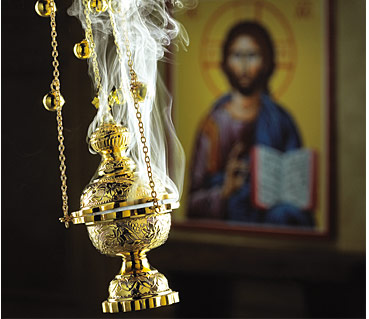
censer-incense-burner-01Sunday Mass is heavenly. Sounds, sights, smells. Incense smoke curling up through stained glass sunlight. It’s a mood altering substance: it alters mine anyway. Music to aid devotion rather than simply excite. Order, certainly, but with a joyful tendency to entropy. Acolytes doing their own thing, the occasional wanderer from the pathway brought back with a quiet hiss to attract attention. Then giggles. Where is the thurifer? Where are my specs? I’m in the wrong place again. I forget a book and have to ask someone to pass me it. And then, charismatic soul that I am, I do something spur of the moment. Loosely ordered humanity. I hope this is more what heaven’s like.

Down with cleanliness, down with tidiness. Eat dirt—it’s good for you.

Retreating

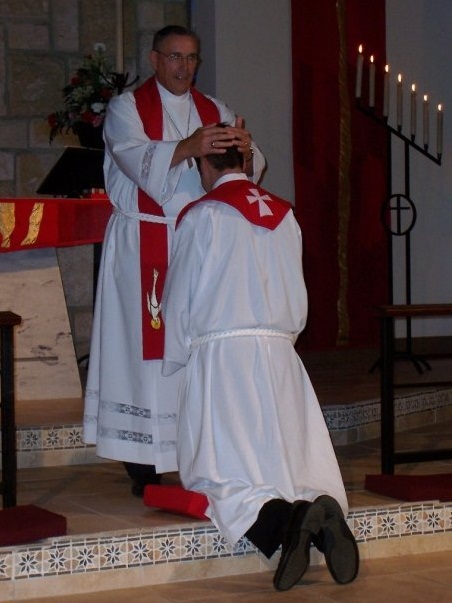
Lcms_lutheran_pastor_being_ordainedI recently led a retreat for an ordinand and four readers about to be licensed. Here is the sermon I preached at the ordination. I have changed one name.

One of the things Elijah was asked by the Lord was ‘why are you here?’

Why am I here? It’s been a real delight to have been with you all over the last four days, and I thank you for the invitation to be part of it. We’ve spent much of the last few days exploring aspects of what it means to be human. Not the artificial hail-fellow-well-met sort of humanness that you get at meetings and social gatherings where people are trying to impress each other, façade speaking to façade, but the heart speaks to heart humanness that is actually divine. Yesterday, we celebrated St Irenaeus, one of whose most famous utterances is God the Logos became what we are, in order that we may become what he himself is. To be fully human is to approach the divine.

When we live life to the full, we approach the divine. In the words of Charles Wesley, made like him, like him we rise. That is what the festival of the Ascension is about: our humanity – all of it, every jot and tittle – shared by Jesus – is taken to heaven, that is, made Divine.

Being fully human is what the priest needs to be. To give his all, all the time. Being fully human doesn’t mean we do what we like: it means we use our God-given talents to the full. We all have the Divine spark embedded within us like a divine pilot light, so becoming fully human means letting that divine pilot light expand to fill us from the inside, squeezing out what St Paul calls the flesh—that is ego, selfishness, pride, conceit, pomposity, ‘all the vain things that charm me most.’ When heart speaks to heart, the divine core inside does the work, and the resultant pastoral encounter is powerful beyond measure. I concentrate on pastoring for that is what I sense Peter’s principal calling is, and it is what he thinks it is.

Pastoring is not about telling people what they want to hear. Pastoring does not mean tolerating nonsense from people who should know better. One of the functions of the priest, as we shall soon hear, is to admonish. Warn. Point out consequences of foolishness where it exists – and it is widespread in the church. Members of congregations don’t like it when the priest admonishes them, but, Peter, don’t be put off. If people are acting childishly—and there is something about the church that infantilizes people—they need to be told, and it is the priest’s job to tell them. Good luck with that.

If you walk into the sacristy of an RC church, you will certainly see a picture of the Pope. If you walk into the vestry of a Methodist church, a picture of one or both Wesleys. In a Presbyterian church, a picture of Calvin perhaps. What do you see in an Anglican vestry/sacristy? I hope you don’t see a picture of the Bishop – they’re exalted enough. In Portlaoise vestry I could gaze upon the faces of almost all my twentieth century predecessors, for it is well known that the foremost authority on all things is the previous Rector. But in an Anglican vestry I bet you anything you will see a mirror.

Imago deiPeter, you need to spend time gazing into that mirror. Not simply to check that vestments are on properly, important though that is. Certainly not to give yourself airs and graces and big yourself up with what in Portlaoise they call notions. But to look into your own eyes, and heart, and ask yourself ‘what am I doing here?’

What are you doing here? What are you doing here? What are you doing here?

Who is you?

How does your face show forth the divine core inside? What is the relationship between them? For the priest to function authentically, it’s essential that the part of the Divine Lord that exists as the pilot light in you is allowed to reach the surface and shine out.

Peter works with people. He has always worked with people. I have observed him over the last four days. He knows how to listen. I have listened to him. His observations and reflections come from deep within; they are not superficial or meretricious. They are not calculated to ‘show off’: they are profound enough naked, as it were. And most importantly of all, unlike many church people, he knows when to shut up. He has a natural openness, and my guess is that he is a good comforter—not in the sense of sickly sweet there, there, but in the true meaning of comforter, that is, strengthener.

It seems to me that Peter is on that road that Irenaeus wrote of when he said: The glory of God is a living person and the life of man is the vision of God. He will be, I predict, a robust and authentic pastor. Good luck with that.

He is a man of science. Before I was ordained I was a medical school teacher of anatomy and embryology, so I predict that he will be asked to justify church teaching that goes against all known facts of biology. He will be asked why the House of Bishops seems to believe that there have been no developments in biology since Aristotle. My advice to him is: don’t try. It’s simply not possible. He must develop his own strategy for coping with the church’s headlong rush into a new Galileo debacle. Good luck with that.

He brings to ministry his humanity, his authenticity, his love for the Lord. He brings his eccentricity. And he brings his sensitivity. The big challenge is not to let pastoral energy and sensitivity be drained away. There are three things that will do just that if you’re not careful.

The first is an institutional problem. Although the number of people attending church is falling, and the number of Indians is falling, the number of chiefs is not, the number of initiatives is not, and the amount of paperwork is not. I’ve found that my most useful office accessory is a large box by the side of my desk into which I ‘accidentally’ drop stuff that ends up in the recycling bins. It doesn’t seem to matter.

Then, there are personal issues that sap energy and disable gifts. And the greatest of these is stress. I’ve been a doctor, a medical school teacher, and a Professor, but there’s a relentlessness and emotional involvement about this job that is more demanding than anything else I’ve done. Hospital doctors have time off, leave the hospital and get drunk. Lecturers go home. Clergy are always expected to be available, and perfect. Relentless is the right word.

Most clergy stress is not caused by what you have to do, but by what you don’t do, but think you should. Much of this guilt arises because we have to bear the expectations of others that developed in past days when clergy were much thicker on the ground. Only you live in your skin. Only you can know what your priorities are. If parishioners are offended by something you’ve done, or not done, in good faith, that is their choice, not your responsibility. Try and ignore expectations that others dump on you. One of the things I find most difficult—you see, I fail as a vicar—is dealing with people who think that my sole purpose on God’s earth is to help them find the grave of their great great great grandmother. No matter how often I tell them, they just don’t get it that I don’t care.

The third trap into which you may fall is that you may, just may, be tempted to be nice. For the best of reasons, usually, we want people to think well of us. But Deacon Evagrios back in the 4th century wrote that the worst demon of all, because it leads to all the others, is that which incites us to seek the approval of other people. It is NEVER worth having. Our task, it seems to me, is not to please other people but to reflect the Master to the world. Jesus was not nice. St Paul was not a nice man! The bishop of Carlisle said not too long ago that the CoE was in danger of dying through too much niceness. Jesus was challenging, impatient, provocative, almost rude on occasion. He goaded people to confront reality. This is what healing is, and it is what Jesus’ whole ministry was about—healing. The process is not nice: it is about seeing the world full on, straight on, face-on. A face that is uncovered lets the real you shine out to the world. A face that speaks the truth.

Speaking the truth, and exposing one’s thoughts and fears is exhausting. And that is why you need to be careful to follow Jesus’ example and take frequent solitary R and R breaks. Say no. Slow down. We can’t reflect Jesus if we don’t spend time with him. Good luck with that.

Eyes that see do not grow old

Eyes that see do not grow old

There’s no need for you to be perfect. St Peter was certainly not perfect. We do a better job when the soft and vulnerable centre is exposed to the world, rather than the smooth exterior. Like chocolate éclairs: that lovely moment when the goo inside is reached. If you put a lamp inside a large plant pot, you will not see the light unless there is a defect in the pot. A crack will let the light out. You must be a crackpot. Only through your cracks, defects, wounds, will your true humanity shine out and be able to do the work of a priest. And remember, true humanity is divine, as Irenaeus said. Find a soul friend to whom you can expose yourself – metaphorically I think – and of course you have your family. Expose yourself to your wife and family. Good luck with that.

And lastly, Peter, never allow yourself to become instutitionalized, and never cease pricking the bubbles of pomposity.

At this ordination service we are giving thanks. We are affirming your ministry and commending it to the future. We affirm ourselves, too, and commending ourselves to the future with you, supporting you in every way possible. Here are some words of St Paul.

I wish you all joy in the Lord. I will say it again, all joy be yours. Let your generosity of spirit be manifest to all. The Lord is near; have no anxiety, but in everything make your requests known to God in prayer and petition with thanksgiving. Then the peace of God, which is beyond our understanding, will keep guard over your hearts and your thoughts in Christ Jesus. And now, my friends, all that is true, all that is noble, all that is just and pure, all that is loveable and gracious, whatever is delightful and admirable—fill all your thoughts with these things; … and the God of peace will be with you.

And now, go forth upon your journey from this place, in the name of God the Father Almighty who creates you; in the name of Jesus Christ who redeems you; in the name of the Holy Spirit who strengthens you; in communion with the blessed saints, and aided by angels and archangels, all the armies of the heavenly host, and by the thanks and prayers of all of us who know and love you.

Oremus pro invicem. Blessed be God for ever. Amen, Amen, Amen!

Immaturing

remington-keywound-triple-chime-mantel-clock-by-hermle-2-1.gifPortlaoise GFS had its end-of-season bash last night. Terrific! The star event was the dance routine. On the stage behind us, the dance teacher was strutting her stuff for the girls in front of us to follow. After a few minutes I became aware of a small commotion behind me. The girls’ infant sisters and brothers were themselves ‘copying’ the teacher—that is to say, jiggling about with giggles and fallings-over and great glee. It was all quite wonderful.

A three-tiered performance of leader at the back, performers in front, and uninhibited joyful randomness between says something profound about life, the universe and everything. Maybe an improvement on Plato’s cave allegory that I need to tease out a bit.

As a leaving present the GFS gave me a mantelpiece clock with Roman numerals (including IIII instead of IV, very proper) duly inscribed for SWMBO and me on the back. Lovely. In turn, I thanked them not only for the present, but also for simply being. As with students at Maryborough School, I feel as if I’m at their level and they at mine. Heart speaks to heart when we get together. I treat them as colleagues, they respond as colleagues. This isn’t always the case with congregations. A clerical neighbour has twice berated me for looking on them as colleagues: he says I should look on them as children. Try as I might, I just can’t bring myself to do it.

Is it that there’s something deeply infantilizing about attending church? Actually, this is now widely accepted, so there’s no question about it. There’s a container in the church porch for people to put their brains in as they arrive.

Is it that there’s something deeply infantilizing about adulthood? It’s certainly the case that the education system results in people knowing more and more about less and less. Vision becomes more and more restricted. You see this medical education: I regarded it as my job to help remove blinkers. Still do. ‘Education is what’s left after you’ve forgotten what you learned at school.’

Maybe it’s quite simply that I’ve never grown up. Yes, that’s it! My aim is to immature with age. This is why I’m not old enough to play golf.

New blood?

Ducreux__YawnLocal election results here are rather gloomy. The same old faces, many of whom look about 30 years older in person than they do on publicity posters.Some say that it’s better to go for experience, but the trouble is that ‘experience’ has brought us to a place that most folks would rather not be. I hope that those with ‘experience’ will not allow the same old crooks to go on milking the system. What power do local politicians have anyway? I gather that the answer is ‘pretty much none’, in which case, why are they so expensive?

We see the same phenomenon in church elections: select vestries, diocesan synods, diocesan councils. Same old names, same old faces. How do we get new blood and new thinking on to tired and listless committees?

It’s said that the emigration of young people from Ireland will be reduced by providing more jobs. Will it? Maybe they emigrate because they’re tired of the same old faces perpetuating the battles of the past without, it seems, the ability to look ahead with imagination and vigour.

I’m just a humble clerk in holy orders, but I really do think that a bit of ‘inexperience’ might serve us better than the narcoleptic complacency of ‘experience’.