Passion, Patrick, Pope, Persevere

saintpatrickA sermon for St Patrick’s day, Passion Sunday, 2013

Passion. Jesus passively bears what must be borne, in order that new life will blossom. The passion story illustrates that refreshment and renewal come only after we’ve gone through the painful process of killing the past, or letting it be killed. Renewal comes when we let go of things we once held dear, of attitudes and attachments that once sustained us but now hold us back and tether us to the ground. Jesus said: in three days I will destroy this temple, and then I will build a new one. This applies to our church life as much as it does to us as individuals.

What might constitute the ‘old’ that needs to be relinquished in order that new life may flourish? What puts people off the church as an institution? There are lots of young people in the vicinity, but few come on Sundays. Why not? If they did, would they be welcomed and treated as equals, or would they be whispered about, left to flounder, and glared at they sat in ‘our’ pew? Would we be delighted to see them, or would we feel threatened as they invade territory that we consider our own?

Something needs to happen if the church is not to wither and die. If you saw the Pope’s election (you were probably glued to it), you might have witnessed a TV commentator, ignorant of the Lord’s Prayer, having to depend on the translator. At weddings and funerals in England, few people under the age of 50 know the Lord’s Prayer, and hardly any under the age of 40. That is coming here. There is now so much hostility to the church from the young people of Ireland that the outlook is bleak. The new Archbishop of Canterbury has given the church a decade before implosion. Why don’t the bishops of the Church of Ireland ever speak plainly? God forbid they offend their friends and relations.

The church is entering its own Passiontide. It must go through painful times before it can be reborn. And when it is reborn, maybe it will look nothing like what it replaced. In the gospel, expensive oil is used on Jesus’ feet. To wash someone’s feet in those days and in that culture was (and is) something that only the lowest of the low would do—it is beneath one’s dignity for any respectable person to wash someone’s feet. We need to lose our dignity and get our hands dirty. As the psalm has it, those that sow in tears shall reap with joy. This is the only way that renewal will come.

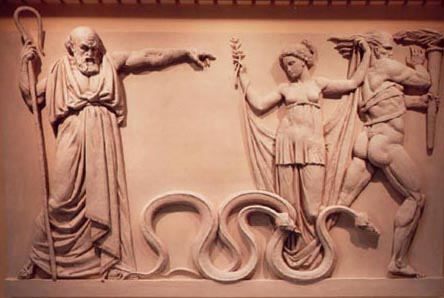
Patrick. Legend has it that Patrick banished snakes from Ireland. This is absolute tosh, of course, like so much about Patrick. Nevertheless, there are plenty snakes to be banished. The snake that tempts us to lying, to pride, to thinking that we know best—just as it tempted Adam and Eve. The snakes in church that cause people to find fault and go off in a huff rather than putting differences aside and working together. The snakes of sloppiness in church: lateness, ill-prepared readings, carelessness in presentation. The snakes in society: consumerism, advertising, celebrity. The snakes in self: hardheartedness, lack of humility, lust for power  and possessions. We are part of a society in which a garda who threatens to prosecute a pub owner for after-hours drinking is told ‘either join us or be transferred’? And people think it’s amusing. We are part of a society in which the rich and famous are lauded for slithering out of being prosecuted. We are part of society in which justice seems to be reserved only for the wealthy and well connected. Why do we tolerate this evil? People seem to admire those who lie and cheat. As faith has decreased, greed has increased.

Pope. The Pope has said that unless the church concentrates on its message, it will become simply a compassionate NGO. God knows his church needs renewal. It’s a huge organization, and its problems are huge. But let’s not be complacent: their problems are our problems, only our organizaton is smaller, so our problems are smaller. They all stem from the same human ‘snakes’: avarice, envy and seeking the approval of the wrong people. The Pope is right: we must turn away from these ‘snakes’ and turn towards the message and example of Jesus Christ: love, compassion and selflessness.

Persevere. The message of Jesus is that letting go of the past leads to hope. Letting go of the past is a matter of forgiveness. We forgive others, we ask for their forgiveness, and we forgive ourselves – self-forgiveness. It’s such a waste of energy to carry around grudges and resentments. When we lay down these burdens, the stone that entombs us in the past rolls away, and we go on our way lighter. We have more energy to engage our imaginations. We become more attractive: radiators rather than drains. When we put the past to death on the cross, we ascend to the heavens. The balloon takes off. This is salvation, resurrection.

Here are some suggestions for this coming fortnight as we reflect on church life and personal life.

  • Look back at the last year and ask: what have we as a church done that attracts people? Let’s do more of that.
  • What have we done that repels people from joining us? Let’s stop it.
  • Let’s focus on the message and pull together to be agents of grace and delight. Life is too short for anything else.

Alternatively, let’s pack up.

Judas, spies, Polo mints and donuts

6a00d83454b21e69e20168e9543645970c-800wiHave you read or seen John Le Carré’s A perfect spy? Magnus Pym, the glittering image who is so many things to so many people, doesn’t know who he is any more as a result of his father’s manipulation. When his father dies, Magnus begins to see what he has allowed to happen to himself, and he kills himself. Judas: a similar story? I think of poor Cardinal O’Brien whose mask has been nudged off, and feel nothing but sympathy for the poor soul underneath. Another case of allowing oneself to be duped by a dream and manipulated, in his case by an organization. Those who shout loudest are usually trying to drown the pleading within.

We are all spies, we all change faces, we all use charm or bluster to betray our true selves. I’ve done that with all my bosses, pretended that things are other than they are, put on a good face. Everyone does it. Men in particular do it, for they are not encouraged to expose their innermost selves face to face. They might do so shoulder to shoulder, that is, while both are engaged on some project—soldiers, team mates, colleagues—but not face to face.

So much of our energy is wasted putting on faces that we had in our adolescence as we try to recapture the feelings of those times: the awakenings of emotional and physical pleasure, of delight and self-gratification. We so easily become slaves to fashions and attitudes of those years. I’m pretty sure that’s why fetishism of any sort (not just sexual) develops, and indeed for some people religious observance is a form of fetishism. Idolatry. The attempts to recapture first loves evoke emotions that are incredibly strong, strong enough to thrust aside realities, and strong enough to neutralize any fear of adverse consequences. And there are always some adverse consequences.

homer-for-web-712765I’ve got to the stage after 62 years where I don’t know what or who I am. I know about some of the influences that have created the masks, but I think there is a hole right in the middle of me. Polo mint. Donut (it’s shocking how Homer Simpson gets everywhere). What is the essence of me-ness? Is there one, in fact? Everything is persona. Recognition of the central ‘lack’ is something that I find liberating. All passion spent. I am nothing. But there’s a real and ever-present danger that it means there’s nothing to withstand my being buffeted by emotions, by my wanting to regain the ‘buzz’ of adolescent excitement. Self is illusion. Letting go of self is what the crucifixion is about. To love our life is to loose it—the self-centred ego, the me, me, me attitude. To step into reality is resurrection. This is the eternal truth told by The Buddha and demonstrated by Jesus.

Some people on seeing the central ‘absence’ kill themselves, or drown themselves in booze or drugs or religion, itself so often just another drug that people use to help reduce the pain of their existence. Magnus Pym topped himself. Judas topped himself. So why don’t I? Biologically speaking I’m entirely redundant (tubes cut 30 years ago). I occasionally glimpse the hole that is at the core of my being. I start to crawl round in it, exploring nooks and crannies to see what creatures lurk there. A bit like a potholer in an underground cavern with a light strapped to my head. A bit like a doctor with a suction probe cleaning out an abscess cavity. I have to confront that black hole and realize that the emptiness is real and that all else is illusion. What keeps me going? A sense of ridiculousness I think. We come from nothing and we go to nothing. Expand and contract, like the universe. Twinkle in the eye rather than the sky. A cosmic joke.

The three demons that lead to all the others (Evagrios, 4th century) are (1) that of avarice, (2) that of greed, (3) that which incites us to seek the approval of others. And the third is why we betray ourselves. Judas, for the approval of the  Sanhedrin, short term gain, money. Of all the disciples, Judas is the one I like best. He seems to have glimpsed himself. The trouble is, he couldn’t bear the sight.

Metamorphosis

Or if he pleaseth, through it pass

Or if he pleaseth, through it pass

Sermon for Sunday next before Lent, 2013

Exodus 34: 29-35. Ps 99. 2 Cor 3:12 to 4:2. Luke 9: 28-36

I like an early Easter. It gives a sense of progress and movement to the year. Today’s readings have a sense of movement. Over the last few weeks we’ve had a series of manifestations of the Divine: to shepherds, to magi, to Jews, to non Jews. First, Jesus was a baby, then at the Baptism an adults, then last week a baby again, and today he’s an adult again? What’s occurring? We have the same gospel reading on the feast of the Transfiguration in August. Why today as well, on the Sunday when we go round the corner from Christmas and Epiphany to face Lent and Easter?

Well, that’s why – we go round the corner from Christmas and Epiphany to face Lent and Easter. It’s about movement and sense of purpose. It’s the point that moves us from what Jesus has been and is, to what he will become. The becoming. The metamorphosis. The time, if you like, when he enters the chrysalis in order to burst out at resurrection/ascension.

  • Jesus looking backwards, to Moses and Elijah. ‘Do you want to stay there in houses that I build for the three of you?’ asks Peter. ‘No, we’ve work to get on with. No living in the past for me.’
  • Jesus in the present with the voice of God booming out his approval of Jesus. He is declared the anointed one who has come in fulfilment of all that the Israelites longed for, to take the past on to greater glories.
  • Jesus in the future as he sets his face to go to Jerusalem – to the crucifixion.

‘Sets his face to go’ – the crucial phrase turning us from past to future, safety to danger. Face, image, the principal organ of communication. In a few pages time we have the face of agony, Jesus on a different hill, with different companions. A different kind of glory. From glory to glory. Moses’ face shining, after being in the presence of God, shining like a storage heater that continues to glow after being removed from the source of energy. But Moses’ face was veiled from the Israelites. Writing this sermon in the last couple of days I had a revelation. A veil was lifted from my eyes. I was blind and came to see this in a new way. The veil is between Moses and Israelites. but it’s not put there by Moses, or by the Lord. It’s put there, unknowingly by the Israelites, who because of their pride, hardheartedness and moaning refuse to see the plain truth.

Is this why our view of the Divine is so difficult to glimpse? Is it because of the veils or barriers we erect? Barriers of pride? Barriers of pretending we’re better than we are, or stronger than we are, or less vulnerable than we are? Barriers that make us seem we have no problems, no worries? Barriers that makes us hard-hearted as the Israelites were hard hearted (Venite: harden not your hearts …)? The barriers that dull the glow of the shining divine face?

The gospel says ‘Peter and his companions were weighed down with sleep; but since they had stayed awake, they saw his glory’. I think that it’s when I’m tired and at the end of my tether and my defences are down that I am at my most open. Blessed are the poor in spirit – those who lack spiritedness. When you’ve lost all you have, you’ve nothing else to lose, and you can stop pretending. When we remove the veil of self, of me me me, we glimpse the divine.

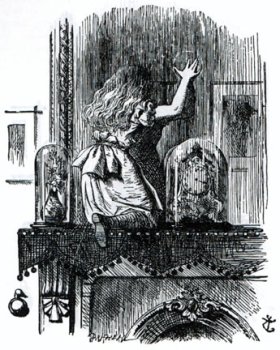
Which takes me to the epistle. ‘And all of us, with unveiled faces, seeing the glory of the Lord as though reflected in a mirror, are being transformed into the same image from one degree of glory to another’. We look into a mirror, and what do we see? Let me quote the great preacher Charles Spurgeon:

Our own judgment of our own character usually errs on the side of partiality to ourselves. Nor is the evil so readily cured as some suppose, for the gift of seeing ourselves, ‘as others see us,’ is not so corrective as might be supposed. Some persist in seeing us through the coloured spectacles of prejudice and ill- will. And this injustice is apt to create in us a further partiality to ourselves. If other men make mistakes about us who can see us, they probably do not make such great blunders about us as we do about ourselves, since we cannot see our own faces! The truth is that we are very fond of ourselves and have our own characters in high esteem—therefore we are unfair judges on points of difficulty about ourselves.


We think the world revolves around us. Me me me. We do damage in small and subtle ways until perhaps we realize that the cumulative effect has been catastrophic and that we have destroyed a life—our own—and maybe someone else’s as well, and that we are left with nothing of value to hand back to the Lord when we pass through the glass, when we look into the mirror and glimpse ourselves—not as others see us, and certainly not as we see ourselves, but as the Lord sees us. Paul calls for transformation, and the word he uses for this is metamorphoumetha. Metamorphosis. Pupation, maturation, caterpillar to butterfly, ‘ugly duckling’ to swan. A becoming as William Blake says.

Rabbi Zusya said, ‘When I come to die, God will not ask me why I was not Moses, he will ask me why I was not Zusya.’ Becoming the very best, as individuals, that the Lord made us to be. This is what we are to seek as Christian disciples. And we need to help others to be the best that they can be.For this we need humility, we need perseverance and we need a sense of constant reliance upon the other—that is, to accept that we are not in control. We need to let go of the pretences that veil our faces so we cannot see clearly. Maybe this is what Lent can be about: not giving up things like chocolates, but giving up those things that veil our view of the world. Giving up, perhaps, the idea that nobody else’s opinion matters as much as our own.

‘A man that looks on glass, on it may stay his eye, or if he pleaseth, through it pass, and then the heavens espy.’ If he pleaseth – the road is open to all. Maybe all we have to do is to stop resisting.

Two spiritual autobiographies

Homecoming

It took me a while to overcome a Kindle aversion. All sorts of reasons: Amazon exploiting the book market, inveigling its way into my mind through cookies, and so on and so forth. And then I thought ‘sod it’ and bought one. So far I haven’t spilt tea on it.

Good for stuffing in your pocket of course. Good for taking on holiday. Good for reading in bed: not as unwieldy as a book. Not good when SWMBO wants the light out and I want to continue reading, for mine is not one of the sexy back lit jobbies. I have a light on a clasp, but that seems to have a life of its own in that the light comes and goes, and so does the whole thing when the spring clasp decides to rearrange itself. Trouble is, though we’ve downloaded a fair number of free books, (for yes, dear reader, Susan acquired one too), most books I’d like to read are not free. So considerable, and where books are concerned rare, self-discipline is called for.

Before I fell asleep on the train yesterday I was reading (kindling?) the second volume of art critic Brian Sewell’s autobiography, Outsider: Always Almost: Never Quite. It covers, amongst other things, the Anthony Blunt saga. Whatever else Sewell may be, and some say snobbish, elitist, offensive, immoral, and much, much more (‘we pee on things and call it art’), he is uncompromisingly honest and without a shred of self-deception. He has the guts to tell it as it is about so-called works of art lauded by the chattering classes. He has taste and discernment, and for that he is pilloried by the luvvies. It’s not the sort of book you’d leave for your 10 year old to read, however. Sewell’s sexual activities are – what’s the word I’m looking for here? – ah yes, educational. He is utterly matter-of-fact about them. As I muse on them, and their significance, I’m reminded that we have no coherent theology of pleasure.

‘Uncompromisingly honest and without a shred of self-deception’ is a phrase that must be used to describe Ruth Burrows. Whether or not you pick up Brian Sewell’s book, I most strongly recommend anything, everything by Ruth Burrows. In her autobiography Before the Living God, this Carmelite nun unflinchingly dissects her human and emotional experiences, the battles that rage in her head, and her responses to them. She shows that prayer is, more than anything else, God’s work, not ours, enabling a journey into self, letting the onion skins fall off as one penetrates ever deeper, in order that the divine within can merge freely with the divine without, no more layers blocking the exchange. (Talk of onion skins puts me in mind of the donkey in Shrek and parfaits. Oh, never mind.) This requires courage and honesty to see ourselves as we really are. More than any other contemporary writer, I think, Ruth Burrows shows that to be holy is to be fully human, hiding nothing, accepting everything about ourselves in order to let the hell be loved out of us. Love your enemies, especially the enemies that live in us.

Eyes that see shall never grow old

Eyes that see shall never grow old

So, then, could Brian Sewell be called holy, or fully human? I suppose that depends on what he thinks of the battles that go on in his head, and only he can know that. We all have these battles. Some are more aware of them than others. When I take out my brain to look at the stuff that goes on in my head, I begin to glimpse what Ruth Burrows has known for a long time, that liberation means freedom from, not freedom to. We might ask ourselves: freedom from what?

The old man carried the child, but the child governs the old man

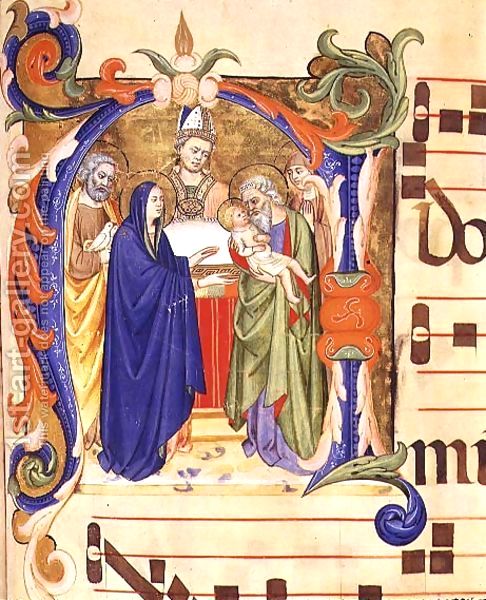
Ms-572-F.88r-Historiated-Initial-$27n$27-Depicting-The-Presentation-In-The-Temple-From-An-Antiphon-From-Santa-Maria-Del-Carmine,-FlorenceEaster Eggs in the shops on 1 January. Fortunately, this year Easter is early. Thank the Lord! An early Whit. An early Trinity Sunday so that—I’m being serious here—I can enjoy all those Sundays after Trinity over summer that in 2013, the Lord told me in a dream, will happen on 18 July. Then comes the most important liturgical festival of the year, Harvest, compared to which the crucifixion and resurrection/ascension are mere blips. I know Rectors with six churches who have found their anatomical appendages under grave threat of amputation when they had the nerve to suggest that each church didn’t need its own Harvest.

Anyhoo, I digress. Easter is early so Lent is upon us almost before the last of the Christmas chocolate cherry liqueurs disappear ‘down the little red lane’ (as Anthony Blanche called the oesophagus when he swallowed four Brandy Alexander cocktails in quick succession. Brideshead Revisited, since you ask. Oh, never mind). We turn from crib to cross at the last great feast of Incarnation/Epiphany/childlikeness: Candlemas, or Presentation, or Purification, or whatever you want to call it. Simeon holds the divine child and says ‘this is enough, I need no more’. Ich habe genug—if you have not heard Bach’s Cantata of the same name, it’s not too late. Find the first movement on YouTube here sung by the glorious Dietrich Fischer-Dieskau. Words can hardly express the satisfied gently swaying longing that Bach conjures up. Come unto me, all ye that labour and are heavy laden, and I will give you rest.

euston 030-1The old man carried the child, but the child governs the old man: you might reflect on how spot-on that is psychologically. The child is the father of the man. We are governed by thought patterns laid down in childhood. Childhood innocence, willingness to explore and ability to have fun are, as we grow up, so easily perverted by the slings and arrows of outrageous fortune that life throws at us. The supermarket trolley of the psyche becomes more and more wayward, and less and less inclined to head for the target we once thought we were aiming for.

We need the 3Rs: repent, recall and recover the childlikeness we’ve lost. Michael my Ordinary (Peace Be Upon Him) sometimes asks: is the child you once were proud of the adult you have become? Examining that is worth the Lenten discipline of spiritual spring-cleaning. If the answer is no (and I doubt that anyone can truthfully answer otherwise), what are you going to do about it?

* Yesterday I came across this as naval gazing which puts a lovely new perspective on things, for all the nice girls love a sailor.

Judgement

500px-Fra_Angelico_-_The_Last_Judgement_(Winged_Altar)_-_Google_Art_ProjectSermon for Advent Sunday 2012

Almighty God, give us grace that we may cast away the works of darkness, and put upon us the armour of light, now in the time of this mortal life, in which thy son Jesus Christ came to visit us in great humility, that in the last day, when he shall come again in his glorious majesty, to judge both the quick and the dead, we may rise to the life immortal.

I talk about judgement today.

We wait for the coming of the Lord at Christmas. But the theme of Advent is more ominous than tidying up in expectation of the arrival of a guest. The theme is not simply preparing for the coming of the Lord at Christmas, but of preparing for the coming of the Lord at the end of time. We say ‘I believe … from thence he shall come to judge the quick and the dead.’

Do we really believe that? Does this talk of judgement after death? Purgatory, in which we shall be cleansed, the dust beaten out of us like many of us used to beat the dust out of carpets? (Purgatory hasn’t been abolished … it’s limbo that was abolished). The trouble is that we’ve no evidence. Nobody has come back to tell us.

I think it trivializes heaven and hell and purgatory to think of them simply and solely as future states of reward and punishment. It leads to a score-keeping picture of a recording angel, like the school prefect standing by the school gate to see if we boys were wearing our caps as we trudged the mile or so in the rain from King Street bus stop. Bishop John Robinson said that heaven and hell were the same: ‘being with God for ever. For some that’s heaven, for some it’s hell.’ How does this fit with our ideas of heaven and hell?

I think we might look at judgement in a different way.

The story of the Garden of Eden, fig leaves, choices, scrumping, talking reptiles etc, paints a picture. It is NOT a picture of what actually happened at the beginning of time. Rather, it’s a picture of what happens all the time. It’s a picture of what happens every day, as we make choices based on pride and arrogance and selfishness. Of what happens when we cover up the truth that is in us, when we hide behind fig leaves of pride and arrogance and selfishness – when we, in the words of Psalm 17, become inclosed in our own fat.

In a similar way, I think of Biblical statements about judgement and heaven and hell not as advance coverage of future life, but rather as basic truths of this present life, here and now. More eminent theologians than I say that they are not about what happens at the end of time, rather they express religious meanings of what happens all the time.

Jesus is on record as saying that he has not come to judge the world, but to save it. There is no punishment meted out by the school prefect. ‘Punishment’ is the inevitable and natural consequence of our action. Just as we make our own choices, as we must decide between God (the way of love) and Mammon (the way of this world) ourselves, so we must take the inevitable consequences of our choices. Back to the Garden of Eden. We need to take responsibility for our actions. Sin, if you like, includes punishment as a natural and inevitable consequence. In other words, sin does indeed bring punishment, but that punishment comes from sin itself—the alienation and disintegration that follow. Imagine doing something that hurts someone else. Afterwards, perhaps, you begin to wish you hadn’t done it. You begin to feel shame. Then your heart hardens, you begin to twist the story in your own head so that it becomes the victim’s fault. You start to fear reprisals. You walk around with your head down, your eyes averted, you refuse to look people full in the face, you are constantly alert, in case you are being followed, ‘watchful for demons’. Paranoia sets in. None of this is punishment from God. It’s punishment from ourselves, it’s the consequence of our action.

It is we who judge ourselves.

I have no idea about what, if anything, happens after death. As I say, nobody has come back to tell me. Yet, I have this feeling that there will be some sort of reckoning at some time. And the sort of reckoning that I think most terrifying is that in which I find myself gazing into a mirror. When I shall see not as in a glass (mirror) darkly, but clearly, face to face. When I see the consequences of my actions. When I look back at them and see what effect they had on others and on myself. Looking into that mirror is something that we do every day. It is we who judge ourselves. All the time, not at the end of time. Past, present and future rolled into one.

The Lord called Abraham and the patriarchs to live by the light of faith and to journey in hope. The Lord called the Prophets to warn that actions have consequences. The Lord called Mary to put aside what she might have wanted for the sake of humanity. The Lord calls us to do all this, and to take stock. The Advent Sunday collect ‘give us grace that we may cast away the works of darkness, and put upon us the armour of light’ draws upon the words of St Paul: 
’Now it is high time to wake out of sleep, for now is our salvation nearer than when we believed. The night is far spent, the day is at hand. Let us, therefore, cast off the works of darkness, and put on the armour of light.’ 
There is some sense of urgency in this. The moment is critical because it depends on our decision now: do we, like Mary, say ‘let it be as you say’.

In the Litany we pray that we will be spared from ‘dying unprepared’ – that is, a death that comes before we have set right things that need to be set right. Here are some questions for us: What do we want to feel like when we’re on our deathbed? How do we want others to remember us? What do we need to do to set things right so that when we are confronted by that mirror and we see ourselves as we really are, we shall not be ashamed?

Demons?

He’s behind you

Sermon for Proper 16 Year B

In Acts 8 we hear that the apostles went from place to place, proclaiming the word. The crowds were impressed by Philip who seemed to have a canny way of dealing with unclean spirits, who came out of the afflicted, crying with loud shrieks.

They seemed much readier then than we are now to talk of possession and unclean spirits. We talk in terms, perhaps, of obsession, of nastiness, of greed, envy, pride and the abuse of power. But some people do still talk of possession, in the sense of evil spirits that need exorcism. In my last incumbency, I was trained in the deliverance ministry, and I heard at first hand of poltergeist activity, though I’ve never knowingly witnessed it myself. The truth is that I’m a sceptic but I’ve heard the experiences of people whose integrity I do not doubt. It’s a fact that brainwaves influence the environment—EEG—so might they, in extreme circumstances, visibly affect the environment? And perhaps what goes on in the environment influences brainwaves.

I accept the reality of demons. We see and hear of them daily: pride, standing on dignity, lust for power, envy, greed, malice, spite. We might even recognise them in ourselves—I hope to goodness we do, for such recognition is the first step to banishing them. And it is these demons that we need to be on our guard against. They charm us, they steal our personalities, they take hold of us, even to the extent that may affect our health. I’m convinced that these are the things that much of Jesus’ ministry was dealing with. His advice, in today’s Gospel, is that we devote ourselves to the bread of life—eucharistically and symbolically—that is, thinking WWJD.

In today’s Gospel, it’s clear that some disciples found Jesus’ message too difficult to accept, and turned away. Life can be difficult. Christianity is difficult. It’s not an easy option. When I hear of Christians pretending otherwise, I wonder what sort of la-la land they inhabit. We are dragged out of the relative security of our comfortable lives into a life of insecurity where attitudes and behaviours are challenged as we begin to see ourselves as we really are. As we seek truth, we find ourselves attacked by those who let demons take them over. Evidently Jesus knew that he would lose some of his followers. He asked them whether they would stay or go. Go, if you want. You’re no use here if you’d rather be somewhere else. But where else is there to go? The religion of shopping does not sustain for long, and is expensive. The religion of drugs, or comfort-eating is harmful. The religion of sport and physical activity can become our master. The religion of being spiteful and malicious is draining—and how will you feel on your deathbed if spite and malice are all that people will remember you by?

In his letter to the church in Ephesus (today’s epistle), Paul deals with hostility, division, and self-interest more than any other topic. As I said last week, they must have been a fractious group, quite unlike the typical Church of Ireland community. They faced the spiritual forces of evil within them, just as they are within each of us. Paul reminds us to be on our guard: for we wrestle not against flesh and blood, but against principalities, against powers, against the rulers of the darkness of this world, against spiritual wickedness in high places. The high places in our minds that we fool ourselves are palaces of light.

Each one of us has to answer Jesus’ question: ‘Do you also want to go away?’ We often struggle to remain faithful amongst the sorrows of personal circumstance and the daily grind, of dealing with unreasonable bosses, unreasonable customers, children in trouble, domestic violence, confronting corruption. Can we wear the protective armour of God and stand firm? To live according to Christian teaching is to seek truth, not self-deception. But truth can divide, truth can hurt before it heals, truth may produce hatred, truth can leave a person standing alone, truth can appear to fail before it succeeds.

Some people are offended by military images in church, but they are here in scripture and they are embedded in the liturgy: Sabaoth, the heavenly army. Armies are for fighting evil. Paul was writing for people who saw Roman soldiers every day. Conquerors to be sure, but also guardians of peace—Garda Siochana—girded in armour to withstand attack. Christian soldiers need to be offensive against evil, not complicit, and defensive to protect themselves.

Jesus wanted the disciples and with him, but not against their will. Like them, we can choose whether we say  yes or no to joining the army. We can choose whether to say yes or no to the demons.  These are our decisions. How do you want to be remembered?

Wider than the heavens – the intermingling of human and divine in Theotokos

The Great Panagia of Yaroslavl

Here is a conversation between biology and theology. Modern understanding of mammalian reproductive biology tells of an exchange between mother and fetus that has extraordinary implications for the exchange between Mary and the fetal Jesus. Astonishingly, Lancelot Andrewes hit on some of this in his devotional material, and it leads wonderfully and beautifully into Orthodox notions of deification, hinted at in Charles Wesley’s hymns.

God the Logos became what we are, in order that we may become what he himself is. Irenaeus was prescient. Read on.