Monday in Holy Week: confronting death

Beauty anointing the spirit

Isaiah 42:1-7. John 12:1-11

The events in tonight’s gospel story take place before the Palm Sunday procession we recalled yesterday. I’m going to take both stories together, in the Biblical order. Here are some themes that strike me.

  • Preparing for death: Mary’s anointing Jesus with oil normally reserved for anointing the dead
  • Jesus facing the future squarely: his cheerfulness, and the crowd’s acclamation.

We live in a society that refuses to look death full in the face. People try and pretend it will not happen. They go to great lengths to try and delay it, even when it’s obviously inevitable. We spend money on seeking a cure for this or that disease as if there is some hope that we can live for ever. We forget that one day, even if we are cured of this or that disease, tomorrow we will die of something else.

This always leads to trouble. If you pretend it won’t happen, you can’t set things straight before you go. You are left with unfinished business. If you can’t set things straight, you are left with regret and guilt. You can’t say that you wished you’d not said so-and-so, and you can’t say, before it’s too late, what you should have said years ago. And all that is the overwhelming cause of grief and weeping and family tensions at funerals. It’s in contrast to the death of a friend of mine recently, who knew she was dying, told the world, and wrote her own funeral address, and characteristically witty it was too. For six months of my life I worked in a north Brixton children’s hospital in south London. I saw babies with incurable conditions having operation after operation, and I was required to insert drips into their tiny veins whilst seeing their eyes looking at me. I was gravely distressed at the inhumanity and cruelty of it. I plucked up the courage to suggest that baby Anthony should be allowed to die with dignity. The reaction was swift: I was reprimanded in no uncertain terms. He died the next week after yet another operation. It is not my intention to start a debate tonight on end-of-life issues—that’s for another time maybe—but I’m using this as an illustration of how many of us refuse to confront one of the realities of animal existence on this planet. Our refusal to be straightforward about death results in grief for ourselves and for those that love us.

This sanitisation of death, this refusal to look it full in the face, is partly a consequence of urbanisation. Rural folk have a more robust attitude to death. They see it day by day. Animals are killed so that we might eat. Many of us think nothing of shoving an arm up a cow’s rear end to pull out a dead calf. Now, I acknowledge that my attitude to death may be more peculiar than most: not only was I brought up in a farming village, but for 25 years I was using human cadavers to teach anatomy: cutting them up, examining them and handling them.

However unusual my attitude to death might be, I’m convinced that our attitude to death needs realigning. Tonight’s Gospel and the Palm Sunday procession seem to say likewise. Our Lord faces death full in the face. Face: earlier in the gospel Jesus came down from a mountain with a shining face. Then he set his face to go to Jerusalem. And now acknowledging to Judas—I’ve more to say about him on Wednesday—that he is being anointed for death, just as many priests have anointed people for death. The Easter message is that death leads to new life. If you want to build on a new site, it is wise to clear it of rubble so that good foundations can be laid. This is new life following death of the old. And so, of course, is the resurrection story.

Death of the old prepares for the new

Biologically speaking, death is part of life. The cells of our bodies are dying all the time, and new life replaces them. Skin cells are constantly being shed and replaced. Blood cells past their sell-by date are replaced all the time. There are lots of other examples, but here is a startling example of the necessity of cell death. When a fetus is developing in the uterus, the hands and feet start off as spade-like things, a bit like fists. You might think that fingers and toes grow out from the spades, but you’d be wrong. What happens is that rather than digits growing out, four strips of cells are programmed to die, leaving digits remaining between them. If not enough cells die, we get webbed fingers and toes. If more strips die we get more fingers than usual. Here is another example. When a bone is fractured and reset, the two ends are rarely aligned properly. The body copes with this by killing off bone cells in the wrong place, and laying down new ones where needed.

Biology has no hesitation in killing off the old in order that the new can flourish. We can’t move on if we try to preserve the past. That is why I oppose the conservationist lobby. We must face death when necessary. We can’t engage with the present if we refuse to accept the inevitability of death, because we will be tempted to put off things that need attention before it’s too late.

I am calling for honesty and clarity of vision. And this, I think, is what Our Lord called for throughout his ministry. Yesterday and today, Our Lord stands up to face the future full on. He stands at the gates of the city, the city of wrong. Facing the future mindfully means killing, letting go of, all that holds us back. It can be very painful. We begin to see ourselves as others saw us. We realise that we are not as good as we thought we were. We realise how we deceived ourselves and the truth was not in us. We need to grieve our lost attitudes, our lost expectations, our lost dreams. We need to let go of what we want, or wanted, and accept the grace of God to resurrect us. We must die in order to live, as Christ Jesus died in order to live. Death of our self-obsession enables us to rise:

As larks, harmoniously, And sing this day Thy victories: Then shall the fall further the flight in me.

As I grow older, I look back on some of the things I used to be passionate about and wonder what it was about them that so obsessed me. Obsession is the right word, because these passions blinkered my vision and limited my action. I once had a huge collection of books: they were my friends. I came to see that they limited me. Not only did they cost a lot of money, they also dictated the type of house we could move to. And after all, when one has sucked the marrow out of a book, one might as well pass it on. These are not evil things in themselves but they limited me, they narrowed my vision. They stole some of me and prevented me from being fully me, in a similar way to that of any addiction. I am still afflicted by such things—I suspect we all are—but now I’m slightly more aware of the symptoms of the addiction. As we get older we find ourselves attached to fewer and fewer things. Our vision becomes less restricted. We are moving into a wide, unfettered place. This notion of being in a wide place is one of the Hebrew images of salvation, and it is one that Jesus teaches. If we die to earthly attachments, we are in this place, and we can focus on what matters: love of God, and love of neighbour. There is much truth in the Buddhist idea that all disease is caused by attachments.

There is a kind of renewal in this, and the key to it is to live in the present. Our Lord’s teaching again and again emphasizes that we need to do just this. Learn from the past certainly, but don’t live in it. Look to the future, but don’t waste time laying up treasures. Live now, in the moment. This, actually, is what eternal means. When we hear ‘everlasting life’ in church services, we often get the wrong idea, and it would be better, and more accurate a translation of the Greek, to use the word eternal rather than everlasting. It’s not quantity or length of time that matters, but quality. Eternal, timeless, out of time, in the present, Divine. Thy kingdom come on earth, here and now. Trust the teaching of Jesus: live in the present moment, and do your best in that moment. We can do no more, and we need do no more. In one sense this is easy to do, and in another it’s extraordinarily difficult when we are surrounded by the petty irritations that life throws up day by day, when we see the injustice that surrounds us, and when we are governed, as we are, by prejudices and faulty behaviour patterns bred into us by our upbringings. But see all these for what they are, and trust and hope.
Faces of the Divine

If we are to attain eternal life, here and now, we must face death and die to worldly trivia. Having divested ourselves of these burdens we walk off lighter. ‘My yoke is easy and my burden is light’ – light in both senses, light because of the light of the world, and light because we are less burdened by impedimenta from the past. Jesus’ last hours complete the incarnation. Our Lord gave up a divine dwelling for human frailty, and now he suffers the stripping away of dependence on self to fall into he arms of the selfless, the divine. ‘It is finished’. It is a renunciation that we are called to join in these five days. And the task for us, sisters and brothers, is to accompany the Lord on this journey of death in order to fall into the arms of the divine.
Healing for foolishness

Wisdom of the fool

Homily for Septuagesima 2012

Isaiah 40: 21-end. Psalm 147. 1 Corinthians 9: 16-23. Mark 1: 29-39

The Gospel passage is one of the healing stories. You can take the words literally: Jesus performed miracles. Maybe he did. Certainly, inexplicable healings occur. Sometimes they’re ascribed to seventh sons of seventh sons. I have no experience of them, although I have come across ways in which biology has done the unexpected and inexplicable.

The trouble with taking the New Testament literally is that we need to know how the original Greek was used by the writer and by the people he was writing for. For example, in today’s gospel the word translated as fever might not mean fever as caused by infection, but may mean agitated, or in a rage.

If Peter’s mother in law was lying in a rage, then a visit by her son-in-law’s enigmatic friend might have perked her up wonderfully. I’m careful about taking the Bible literally: to do that is itself a form of idolatry. Bibliolatry. Remember that middle-eastern people use much more colourful images than we do. Remember that they dramatize situations much more than we do. The Bible needs interpreting.

So how else might we look at the healing stories? As I’ve said before, I take healing not to mean medical cure. After all, we’re all going to die sooner or later, and there is no medical cure of that. Medical cure of one disease simply means that we’ll die of something else later. Not recognising that is one reason why so much money is poured into the health services and why doctors are so well-funded by the folly of patients who think that they might live for ever.

The way in which I interpret healing is of salving, being made whole, restoring integrity, soothing, being given reassurance much as a child that has fallen over seeks reassurance from a parent. This sort of healing is what we, broken humanity, need. Look at the political situation. Look at the way we suffer from the greed and foolishness of a pampered few and their cronies.

Much of the gospel is written to send messages to its readers. Perhaps the message here is that when we heed Jesus’ example of how to live life and conduct ourselves, it gives us a freedom of the spirit: not freedom to do selfishly what we choose, but freedom from the shackles of greed, avarice, the expectations of others and the fashions of the time.

We all can be healers. We can be agents of salvation, agents of healing: making life better here and now. We’re capable of being agents of reassurance, agents of hope, fighters against injustice—yes, fighting can be a healing act.

My ordination vows oblige me to admonish you – to warn of consequences, to point you away from the wrong road and towards the right road. The church assumes that because I have studied the scriptures and reflected upon their meaning I am better placed to do this. I am not ordained to be nice, or to allow you to do what I know will be bad for you, but to warn. This too is a healing act.

Maybe Jesus told Peter’s mother in law to stop feeling sorry for herself, to get up out of bed and get a grip on herself. Maybe I should be doing more of that. I’ve come across people whose companionship makes me feel happier, and when we feel happier, our immune systems can perk up, so these people are healers.

We needn’t worry that our own faults make us incapable of being healers. It’s these imperfections, when other people see them, that help us to understand one other. When we see someone else’s faults, and that they acknowledge them, we feel more kindly disposed to them. This is the first stage of healing. This is why politicians who never acknowledge their mistakes are so rightly scorned, and why spin doctors are reviled. It is the reason why church people who appear in their pretentious complacency to have all the answers are sneered at. I view it as one of my tasks to make plain my faults for all to see. It was the wounds to Jesus’ human body that did the healing work.

All this calls for us to speak to each other from our hearts. Heart to heart. Let’s put aside any facade of perfection, and acknowledge that we all need healing from our demons within: demons of childhood hurts; or resentments of the past that we refuse to let go; or addictions to attitudes, to chemicals, to ways of behaving. We need healing from all the things that are thieves of our true selves.

The world needs openness and honesty—and I do not see it much in evidence. As we sung earlier, Let all thy converse be sincere … This is prophetic work. People who call for openness and honesty are always crucified one way or another. I know that if I’m not being criticised by someone, I’m not doing my job properly.

In all this, let’s not forget ourselves. We ‘heal’ others better if we pay attention to our own needs first. And recently we have heard some extraordinary insights into how we might go about this. A palliative care nurse has published a book in which she has recorded the most often heard regrets of the dying. Here are some of them:

  • I wish I’d had the courage to live a life true to myself, not the life others expected of me. Most people die knowing that their lives have been limited by their choices.
  • I wish I hadn’t worked so hard. This came from every male patient that the author nursed. It is true for me. I missed a good deal of my children’s youth and Susan’s companionship.
  • I wish I’d had the courage to express my feelings. Many people don’t say what they think so as to keep peace with others. As a result, they settle for a mediocrity. Many develop illnesses like heart disease and cancer that are associated with bitterness and resentment.
  • I wish that I had let myself be happier. Happiness is a choice. Misery is a choice. People stay stuck in old patterns and habits. Fear of change makes us pretend to others, and to ourselves, that we are content, when deep within, we long to laugh and be silly. There is not enough innocent silliness in this world.

In today’s gospel, when Simon’s mother-in-law was restored to health, she responds by serving those around her. That’s a great model for us all. It’s what Paul says in the epistle: if we recognize Christ’s healing power—Christ’s salvation—we have a duty to heal others, with the sensitivity that their situation demands, and we do so by using whatever means are at our disposal.

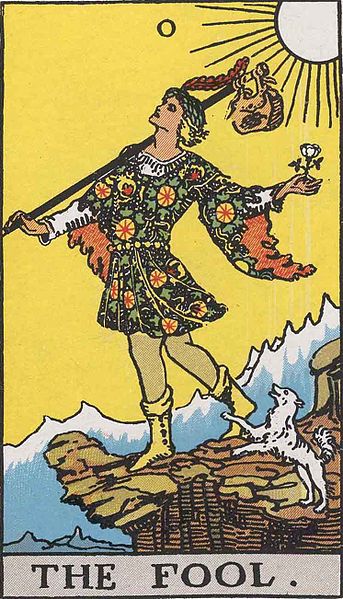
Let go of should and oughts. Let go of things that bind. Stride into the future unencumbered. Live with delight. Bring delight to others. Be foolish. This is the Lord’s work.

Reading the signs

Change for new life

Cardinal Newman: In a higher world it is otherwise, but here below to live is to change, and to be perfect is to have changed often. Some of us like being stuck in a rut: the security of familiarity. Others seem to need constant new experiences and are easily bored: the boredom of familiarity. Both conditions are examples of greed, even lust: the first is lust for routine, the second is lust for new sensation. They are addictions, cravings that distract us from living in the present and enjoying every moment. Somewhere between these two extremes is the place of poise, of balance, of recognizing the forces that surround us and that influence where we are—that is, of living in the moment, outside ourselves—ex-stasis, ecstasy.

Living in the present is where we need to be in our journeys as individuals, and as churches. We are all the products of place, time and circumstance. I am no longer the person I was in, say, 1970—though I carry him around in me and with me. I have been changed. I think that what Newman was getting at is not that we have to change to become different, but that because the world is changing, we have to change to be the same. We must ensure that we never prevent growth and development by clinging to the fashions and practices of the past, of our upbringing, or indeed of any particular era. We do the world and ourselves no favours by doggedly hanging on to the attitudes of parents. We must not hold the grievances of the past to be signposts for the future. As Jesus said on more than one occasion, we need to read the signs of the here-and-now in order to plan for a healthy future.

We need to be sharp and sassy, rather than dull and dozy. 

Friction

Death by clinging

If you read the New Testament epistles or the Acts of the Apostles, you’ll be in no doubt that rows and disagreements have always been part of the fabric of church life. They still are. Sometimes they’re about what the Rector does or does not do, or what he permits or does not permit. Sometimes they’re about what the wider church organisation does or wishes to do. Sometimes they’re about something that happened years ago that we enjoy raking up, not realising that it is like a cancer, and that we are becoming more and more like Gollum in Lord of the Rings. At the root of all this, it seems to me, is lust for control. We can’t seem to let go of the illusion that the cosmos revolves around what ‘I’ want. Why do ‘I’ want it? Is it because if I don’t get it I feel as if I’ll be letting down the memory of my forefathers? Is it because I can cope only with what I am familiar with? Is it because I’m pretending that I’m still in my prime by keeping things as they were then?

We need to ask questions about our understanding of church. Is it a mystical reality, or an earthly club? Is the Church of Ireland a loose confederation of individual parishes that can do as they like, or is it part of the Church of Christ? If we are all parts of the same body, as St Paul writes, then what is the equivalent of the nervous system that coordinates activity and allows communication between the different parts and the centre? What, indeed, is the centre? And what does that mean for the way that we as individual Christians, and as Christian communities, carry out our business?

Dead and alive

Dead but won’t lie down

The Dear Leader is dead. Much more interesting than the death was the birth. When Kim Jong-Il was born, North Korean propaganda tells us, a rainbow appeared in the sky and a star appeared over the place where he lay. Remind you of anything?

It’s interesting to look at the ways in which cultures dress up ‘specialness’. For 200 years or so Biblical scholars have debated the significance of virgin births, angels, shepherds, stars and wise men. What does ‘virgin’ mean in that context? People of the Bible knew nothing about egg and sperm at fertilization, so would have a different reaction to the idea of a virgin birth than we do. And so on.

For me, these elements are symbols of the messages of Christmas. Attitudes to a teenage pregnancy reveal the real values of society. The first to hear the good news were young shepherds out in the cold—just as we leave parts of ourselves out in the cold. Wise men follow a star and kneel at childlikeness. They refuse to cooperate with an agent of earthly power who attempts to stifle new growth and creativity. All this is as far removed from the reality of the Kim dynasty as it’s possible to get.

Let earth and heaven combine

But don’t let’s fall into the trap of thinking that the Divine would approve of this regime, or disapprove of that. The kingdom of the Divine is not of this world, but is an inner kingdom—in here, not out there—and there is no chance that out there will be sorted until we’ve attended to in here.

O holy child of Bethlehem, be born in us today.

Our God contracted to a span, Incomprehensibly made Man. And we the life of God shall know, For God is manifest below.

Because of you, O full of grace, all creation rejoices, the ranks of angels and the human race; hallowed temple and spiritual paradise, pride of virgins; From you God was incarnate and he, who is our God before the ages, became a little child. For he made your womb a throne and caused it to become wider than the heavens. Because of you, O full of grace, all creation rejoices; glory to you.

Orlick and me

Seeking whom he may devour

My memories of childhood include Sunday afternoon TV serials such as The Secret Garden, The Silver Sword, David Copperfield, and Great Expectations. Memory plays tricks, but I have a distinct impression that the productions of the 1960s were long enough to be more faithful to the novels than many subsequent shorter versions. Last month’s Great Expectations, spread over three hours, covered aspects of the story that don’t feature at all in shorter films, such as the attack on Mrs Jo, and the characterisation of Orlick.

I home in on Orlick because in that recent production I was struck as never before that Orlick is the dark side of Pip. You could regard Great Expectations as an exploration of Pip’s self-deception, of the way in which he falls victim to the attraction of money, status, the high life—seduced by glamour in fact—but all the time this dark character haunting him and reminding him of his past.

There may be people around who are permanently sunny, unsullied by dark corners, people who are entirely pure and without stain. As I say, there may be—though I’ve never knowingly met one. And I’m certain that I’m not one. My dark side is alive. Like Orlick, he sometimes disappears from view and I kid myself that he’s gone. But he hasn’t: he struts back into the picture at inappropriate moments.

I hear people pray for all stress to be removed from their lives. The hymn Dear Lord and father of mankind, which people seem to like, but I don’t (it’s the tune they like), has that fatuous line ‘take from our souls the strain and stress … ’—can you imagine anything more utterly boring? (And while I’m on this rant, the last verse, Breathe through the heats …  is silly as well. Do you want to be emasculated?) We need to struggle to confront the darkness within, the demons that are the enemies of our good selves. Life is a struggle, and part of that struggle is to enable light to overcome the darkness—to let the light bleach the hell out of us. Love the hell out of us is perhaps is a more helpful phrase (sadly, not original). Jesus tells us to love our enemies, and there is a great temptation to forget that our most pernicious enemies are not other people, but are actually parts of ourselves, those inner demons that incite us to pride, the lust for power, and insincerity (all Dickens’ villains). The inner demons that prevent us from being fully ourselves. The inner demons that steal our liberty because we become slaves to them, addicted and dependent.

This is the spiritual warfare of Paul’s epistles. Spiritual wickedness in high places—not ‘out there’ but ‘in here’. It is a message of John’s epistles. It is what Christianity is about. In Great Expectations Pip’s ‘redemption’ is balanced by Orlick’s unmasking and arrest, and our happiness and fulfilment will begin only when we acknowledge the Orlick within.

Deliver us from the evil parts of ourselves. 

Tourette’s

I hardly think a caption necessary

What shall I do about my Tourette’s? People say it’s very entertaining when my outrageous comments issue forth. One day, though, if they haven’t already, they’ll get me into terrible trouble. Are my Tourette tendencies eruptions of some long-suppressed frustrations? Evagrios (4th century) said: The demons that fight us in the front line are those entrusted with the appetites of gluttony, those that suggest avaricious thoughts, and those that incite us to seek the esteem of men. Is this my problem: the need to show off to others, the craving of recognition by those whose recognition is not worth having? If so, I suppose the first step is to recognise the embryonic urge to utter forth in glorious voice something that would best be left unuttered, and nip it in the bud.

Or perhaps my brain is wired that way, and this is an expression of me. If it were suppressed, would I cease to be me? Are the brains of comedians and performers – like clergy – wired in such a way that we need some degree of Tourette’s in order to do our work? Neuroscientists and pyschologists must have opined on this.

A common image of Jesus is, to quote from hymn and carol, someone meek and mild, obedient and good. The Jesus of Holy Scripture is charismatic, elusive, revolutionary, sometimes offensive, physical, thoughtful, sympathetic, empathetic. He rarely if ever answers a question directly. He is described by others as a glutton and a drunkard. These two sets of images do not match. Why not?

The church seems to emasculate men. It often seems very ‘girly’. Perhaps theological colleges have a burdizzo (look it up). No wonder men and boys are deserting the church. Which would you rather do: play sport or be passive in church? Of course, church needn’t be passive, and it’s possible to do both church and sport (or whatever), but in this case, Sunday morning ain’t a good time for getting folk in.

Maybe it’s this conflict between what I feel I am, and what people expect me to be, that’s the cause of my pseudo-Tourette’s. On reflection, though, I think I’ve always been like this. Maybe it’s hardwired in and I should live with it, enjoy it. When I and my colleagues were ordained, the Bishop told us that we must never lose our humanity. The hand that made us is divine.

Farewell to Derbyshire

I’ve been planning this address for some time. Then this last week, things happened that overturned my plans. The UK riots. I simply cannot ignore them. I do not see in them anything that has not been seen before in recent history. To give a few examples: In the 18th century civil chaos was such that people ventured out of doors at night at their peril; look at Paris in revolutionary times; student riots and Brixton riots in my living memory. In January 1848 Abraham Lincoln said: “Any people anywhere, being inclined and having the power, have the right to rise up and shake off the existing government, and form a new one that suits them better.” I’ve no doubt that the riots were fuelled by evil, by boredom, by a lack of respect for other people, by young people brought up with a lack of tough love, by the psychology of the mob, by an education system that promotes rights over responsibilities and is increasingly feminized. But also a sense of powerlessness. And while it’s right that the perpetrators are made to face the consequences of their actions. I just wish the same applied to bankers.

But we would do well not to point the finger at others. We—all of us in the west—take more than we need. We all do risky things expecting someone else to mend us when the risks don’t pay off. We live in a welfare state that seems to encourage people not to take responsibility for their actions. We envy what other people have, and the evil advertising industry incites us to grab it. We do things to seek approval from other people, and this leads to lying – diplomacy we call it – to obfuscation – pastoral sensitivity we call it, and to the adulation of the masses for so-called celebrities who, in truth, are ordinary human beings quivering in terror behind the masks that are made for them by menacing media moguls. And we are all complicit. We listen to the music. We pay to go to football matches. We buy the publications if only to disapprove of them.

It is not possible to live on this planet without the divine image within being maimed by what we do or don’t do. We are surrounded by things that purport to be quickfix solutions, following the latest fashions, the latest brands, the latest chic destination to visit. But the truth is, these things are not satisfying: the effects don’t last. They are like candyfloss, insubstantial, sticky and full of air. Because we set them up as idols, and we become obsessed by them, they steal our liberty: we become slaves to them. This is what St Paul called the flesh. There are lots of these wolves in sheep’s clothing that sing their siren song. They all lead us up a cul-de-sac. They don’t lead to green pastures.

These human failings – wanting more than we need, wanting what others have, and the mob psychology in which we seek the approval of others – are the failings that were identified 1700 years ago by Evagrios the Solitary as the deadliest of the seven sins. And before that, they were the temptations of Christ. I see the results of these sins daily in myself as I want this or that CD, or this or that new book, or eat something that I’m told will clog my arteries but I like the taste. I see the results of these failings every time I drive between churches and Rectory. I pass homes behind electric gates and electronic security systems. Every time I am put in mind of Psalm 17 verse 10: they are inclosed in their own fat and their mouth speaketh proud things. Like Gollum in Lord of the Rings, we want to hang on to what we think is ours and we become spiritually wizened and deformed in our obsession to do so.

We all hide behind masks, behind personalities, cosmetics of the spirit. We all mask the divine light within. We put on a pretence. We say that this is necessary for the smooth running of society, for manners, for charm. How I am suspicious of charm. I am determined that nobody should ever call me charming. No-one has! There is a notion that a façade of smoothness and perfection impresses others, that we must do all we can to hide our wounds. We put up barriers between ourselves and other people: barriers of attitudes, possessions, mental attitudes that form security systems between others and ourselves.

This pretence never works! It’s too good to be true. You know how infuriating it is to deal with bureaucrats who refuse to acknowledge that they’ve made a mistake. You know how healing it is when someone acknowledges that they got it wrong. Perhaps you’ve witnessed the effect of letting someone else see by your tears, your wounds, that you too are vulnerable. Perhaps you’ve seen how effective this can be in bringing reconciliation, forcing reassessment, resurrection that comes after death of what we thought we held dear. I’m certain that I often get things wrong, and unintentionally as a result people can be hurt. That’s the way life is.

I look around and see the church complicit in pretence. It erects barriers. I see Church of England bishops hiding behind status, behind secretaries and personal assistants and chaplains. I see the institutional church hiding behind rules and regulations. I see church councils hiding behind ‘we’ve always done it this way’ and – as was said to me three years ago with breathtaking arrogance ‘we’ll soon have you whipped into our way of thinking.’ All this is humanly understandable. It is truly pathetic. In the exchange between Jesus and the woman, today’s Gospel tells us that erecting barriers to exclude people who are different from us is never acceptable. Depending on how you read it, it shows Jesus as truly human acknowledging that his first comments had been inappropriate. Or else that he was tongue in cheek provoking the woman to justify her opinion, which he then affirmed.

We see exclusions in churches about all sorts of things: who can sit where, who can do the flowers, who can bake the scones (wars are fought over this), who can be a server, what people should wear, commenting on whether people stand or sit or kneel to pray. We see it in the way some so-called Christians reject people who disagree with them. We see it in the way that some people accept as valid only certain ways of expressing their faith. In Christ. Are you saved? Have you accepted Jesus into your life? Let the love of God into your heart. Jesus loves you (it sometimes doesn’t feel like that). That awful prayer for serenity ‘go placidly …’ or whatever. This is all gobbledegook to me – these statements are not how I express my perception of the Divine, or of the meaning of Jesus and his work.

From the Church of Ireland Gazette last week:

A great challenge is posed by moving on from a parish or a position or a place of work; that requires great strength of will and purpose. Anyone who has had experience of this will agree that suddenly the place from which one is moving has never seemed so attractive! All its advantages are glaringly obvious, in a way they had never been before. Perhaps that is also because people’s attitudes change when they know you are about to disappear from their lives. Suddenly, there is a loosening of emotions, a reaching out and willingness to articulate friendship which may not previously have been on offer. Sad, however, that it takes a move to allow this to happen – perhaps it is symptomatic of the perversity of human nature that we all do not appreciate people until it is too late.

That is absolutely my experience! I look back over three and half years and review what has happened in my churches. The churches are now more realistic about the state they are in. They are more ready to look through clear, as opposed to rose-tinted, spectacles at themselves and the challenges that lie ahead. Church councils are more business-like. There is a wider spectrum of people involved in the running of the churches—not wide enough, but better than it was three years ago when too many activities were dependent on an inner clique. Some people may not like the fact that power is slipping through their fingers. They may not like that fact that their opinion which once counted for so much now counts for no more and no less than that of everyone else. I see fewer barriers than there were. I’m proud of that. In my previous job I was described as an agent of change. I’m pleased with that, not least because that is exactly how I see Our Lord’s ministry.

I’ve provoked a handful of parishioners to begin to explore their vocation to a deeper ministry. I’ve provoked people to study Holy Scripture and see how to apply it to life today. I have, I hope, encouraged people to take the liturgy more seriously: more worship and less trivializing entertainment, and in that worship not to lose a sense of fun. I hope I’ve encouraged people to live with delight and commitment, and to enjoy their humanity. As the barriers come down, as we leave the inclosure of fat, we become more open to the delights of being fully human, fully ourselves—and that is the way to becoming divine.

Over the last month I’ve had a fair number of well-wishing cards, emails and messages, mostly from nonchurch people whose baptisms, weddings, or funerals I’ve done, and from people who read my writings. I seem to have the gift of engaging the unchurched as much as I discomfit some of the churched. Which is more important for the future of the church? Our Lord comforted the disturbed, and disturbed the comfortable. I have my priorities right.

Jesus’ own story has so many elements that strike me as true because they speak of the way people are, as I am. And it’s that honesty, that authenticity, that is attractive. It’s the sight of wounds that tell us a person is speaking from experience, with freshness and straightforwardness. It’s that lack of guile that attracts people to Jesus, makes them feel secure around him, and it’s all of that in us that gives each of us the ability to serve those in distress, to provide the safety of the sheepfold.

I can only do my work effectively if I’m honest about myself. ‘Here in honesty of preaching’: in sermons, I hope I’ve never been holier than thou. I’ve never said anything that isn’t true for me. It’s expensive because I have to go deep down inside myself, look honestly at personal issues that confront me. When we face up to and recognize our faults, then the opportunity comes for the spirit to change us. Confronting ourselves is essential, and necessary before confronting others—motes and beams. Those who are aware of their own imperfection are inevitably the most tender, compassionate, and understanding of others who are bruised or weak. It is the self-righteous who, the Gospel tells us, are not suited to God’s purpose.

T S Eliot:

  • What we call the beginning is often the end And to make and end is to make a beginning. The end is where we start from.
  • We shall not cease from exploration And the end of all our exploring will be to arrive where we started And know the place for the first time.

Since May 2008 you’ve entertained and provoked me as I have, I hope, entertained and provoked you. I thank you for the fun we have had together, the joy and delight. And remember this, without joy and delight, we are in hell. That indeed was St Isaac’s definition of hell. Joy and Charity, JC, Jesus Christ. Listen to George Herbert:

As on a window late I cast mine eye,
I saw a vine drop grapes with J and C
Anneal’d on every bunch. One standing by Ask’d what it meant. I (who am never loth
To spend my judgement) said, It seem’d to me To be the bodie and the letters both
Of Joy and Charitie; Sir, you have not miss’d, The man reply’d; It figures JESUS CHRIST

Sisters and brothers: Go raibh maith agaibh. Slán agus beannacht leat Bail ó Dhia ort.