
Memory boxes and idols

Carlisle looking east

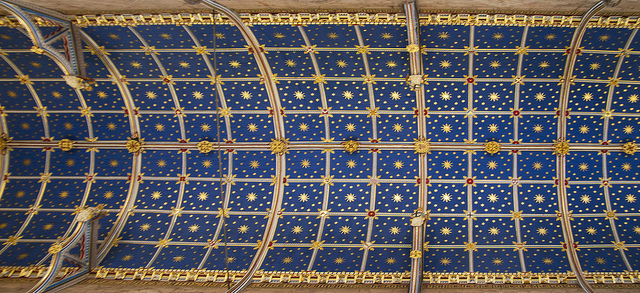
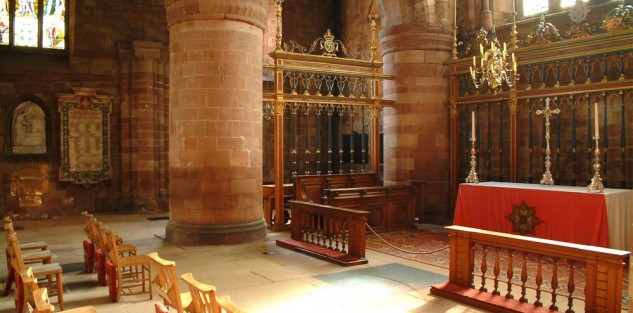
This is the ceiling of Carlisle Cathedral. The city of my birth, the place of my artistic awakening. This is where I had organ lessons, sang in the choir, and occasionally played the organ for services. It is a magical place in my memory box. Although small, thanks to Cromwellian thugs, and somewhat unprepossessing from the outside, going in is like entering a jewel box. It has been cared for and furnished by two of the 20th century’s most judicious church architects: Charles Nicholson and Stephen Dykes Bower. In a recent book on Dykes Bower, the architectural writer Anthony Symondson describes Carlisle as the least spoilt of England’s ancient cathedrals. The ceiling was originally painted in the 19th century, and was brought to vivid life in 1969/70 under Dykes Bower’s supervision.  I remember Evensong being sung accompanied by the occasional interruptions – amusingly welcome to the tittering teenager – of the craftsmen at work above the temporary false ceiling. On this page there are some more examples of Nicholson and Dykes Bower’s work at Carlisle.
Dykes Bower at Carlisle

We all have these memory boxes. For my daughter and sons, I suspect, they are things of which I don’t wish to know too much. We are well served by our memory boxes when we draw on them and their place in our development in order to fortify us for the here and now – when we can look on them with satisfaction and realize how well they have served us and nourished us. They become idols when we put them on pedestals and think that nothing will ever match up to them. When we judge the rest of life against them, and find it wanting, we are letting them destroy us.
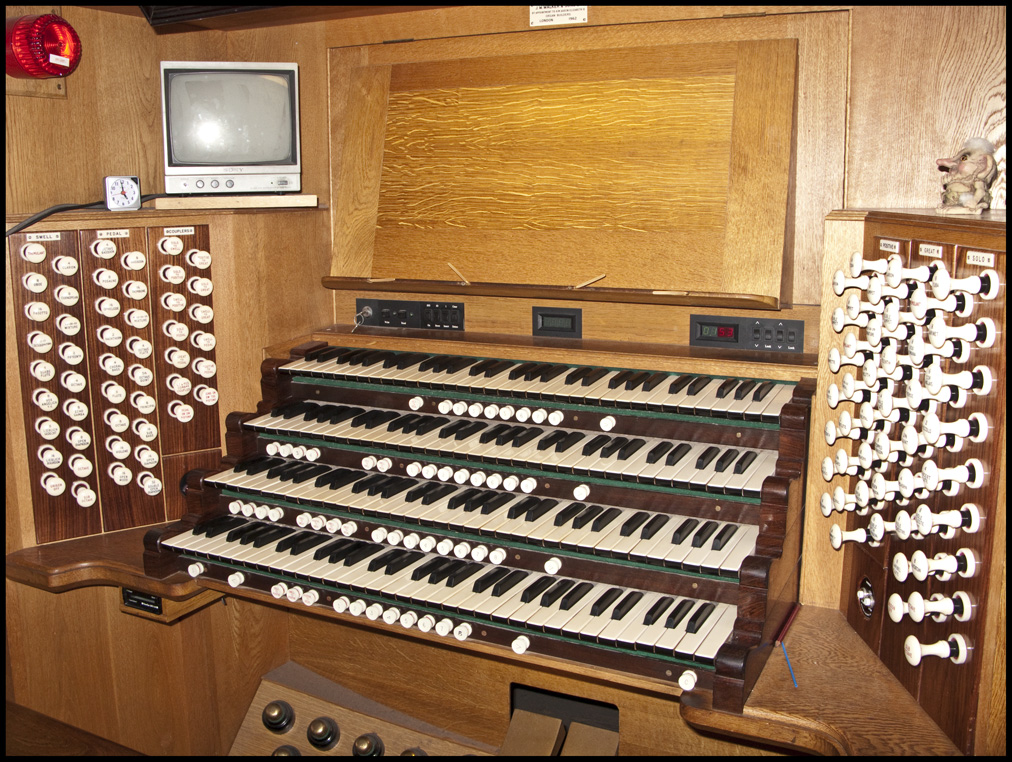
Carlisle ‘cockpit’

These ‘awakenings’ tend to occur in our youth when we are most impressionable, when we are in our physical prime, and when our hopes and dreams are as yet intact. They shape us for ever. We all know people who live on their memories and bore the world with them. We know people who live through their children’s youth in order to try to recapture their own. We may even have done this ourselves until we saw the error of our ways. This is idolatry that leads to abuse. Given that our memories always embellish past reality in one way or another, these idols are always false.

Carlisle organ
east side

I see people in churches objecting to anything that changes their memory boxes. This is at the root of objections to redecoration, to the moving or removal of pews (a late invention in church terms), to changes of any description. They too are making idols of their memories, idols that fly in the face of reality. I struggle with wanting to rekindle the emotions that Carlisle Cathedral evokes in me. I return there in the flesh with trepidation, for I know that it will not be as I remember it. When I am tired, or feel attacked, or plain depressed, I echo the psalmist’s ‘Oh for the wings of a dove … far away would I roam’ – to Carlisle, and to the discovery long ago of the glory of English cathedrals.

Canopy by Charles Nicholson

But not the cathedrals of now with their heritage-industry and welcomers and self-justifying boards showing how they are ‘relevant’ to the life of the city (surely the point of the spiritual is to lift us out of the humdrum?). It’s the cathedral of ‘then’ to which I would return, to the womb where my mind was opened to art, music, colour, liturgy, comradeship and a sense of belonging. To beauty and delight, in fact. For a boy brought up in the drab 1950s in a drab farming village where you didn’t count unless you were knee deep in cow dung and cared about soccer and cricket, this was truly a glimpse of heaven.

Carlisle organ
west side

Jesus says a great deal about not living in the past. He tells his disciples not to flog a dead horse. He tells people not to bother about the dead, but to work for the living. We in the church are very inclined to ignore these commands of the Master.  We idolize the past just as we idolize our memory boxes.

Make no mistake: we need our memory boxes. Long may we have them. But let us never insist that they be imposed on other people. Let us never use them to oppress, to abuse, to stifle, to fly in the face of reality. Let us never allow them to take hold of us so that we become blind to life in the here-and-now.

Heaven knows, it can be difficult.
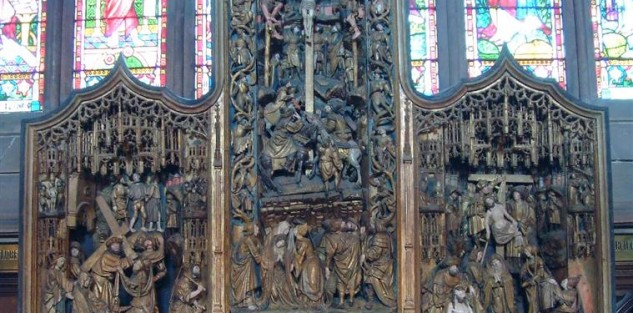
From Antwerp to Carlisle

Dreams and drips

The Rectory alarm clock

In my dream I was crawling along a corridor with water dripping on me from the ceiling. In my dream I thought, as you do, maybe I’m imagining the drips on my skin, or maybe they signify some serious neurological problem. Then, hey presto, I realized that I was being dripped on, and woke up. The Rectory roof continues to leak, and the drips drop directly over where I lie. Move the bed. You read about old houses where the furniture is moved around to avoid the drips. The Rectory is not an old house.

It’s easy to make something out of this: attend to little problems early so that they don’t become bigger ones. There are countless examples from daily life, and certainly from church life, where nipping something in the bud prevents disasters developing. And in medicine too: dealing with the wound as soon as it occurs might just stop the abscess developing.

It’s just as important to recognize problems that arise from within—that is, from our thoughts and our behaviour—and deal with them. If we don’t, we are in danger of establishing thought patterns that are destructive and lead to behaviour that attacks ourselves and those around us. Lent and Advent are the traditional times in the church year for a bit of ‘me-time’, though when you feel the drips is also a good time. This ‘me-time’ is not a matter of being self-indulgent, but rather of  taking stock. I don’t mean sitting thinking about what I do and why I do it because, as St John the Evangelist says, if we say that we have no sin, we deceive ourselves and the truth is not in us. You can not rely on your own opinion of yourself. You need a critical friend. If you have a dripping ceiling, you need to get the opinion of an expert. If you have things inside that are niggling at you, you need to get the opinion of someone else who can tell you how others see you, and what needs work. It is painful to glimpse yourself as others see you (Take me away, I can not bear the sight), and attending to the symptoms is hard work. It’s a matter of touching the untouchable within as the onion skins peel away. At this point I must interject. If you’ve seen Shrek 1 (and if you haven’t you should you know, you really should—there’s profound theology in there relevant to this ramble) you might recall the conversation about onion skins and parfaits. What is he on about? I hear some say.

I make no secret of the fact that of the C of I liturgies I find Morning and Evening Prayer 2 difficult to bear. They are wordy, there’s too much up and down, and three readings are one more than my brain can take in. I much prefer the structure, movement and language of the ‘1662’ services. To those who say that the language repels some people, I say it attracts others. The thee/your discussion is incomprehensible to me, having been brought up in part of England where thee, thou and thy remain in use. These are friendly terms. But what is so wonderful about the ‘proper’ liturgy is the introductory material right up to O Lord, open thou our lips. It is entirely Scriptural, and psychologically spot-on—we have erred and strayed, etc. We’re like supermarket trolleys that seem never to go in a straight line, but veer off to one side or another. Cranmer and his mates knew a thing or two when they were penning that stuff, and when you learn that Cranmer married his missus while he was a Catholic priest, and hid her from society until Henry VIII kicked the bucket, you might begin to see that he knew what he was talking about. Anyway, back to the plot: deal with your problems now, before the roof falls in. And enjoy the monsoon season.

lla weht nor orrim ror rim

The mirror never lies?

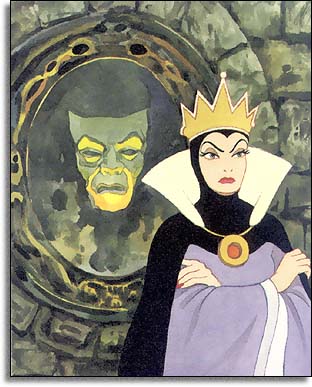
Stand in front of the mirror, and be still. What do you see? Do you see what others see? When Harry Potter stood in front of the Mirror of Erised he saw his parents and other relatives. He’s surprised when Ron Weasley can’t see what Harry sees: when Ron looks in the mirror, he sees himself as Head Boy and Quidditch Captain. Professor Dumbledore says he sees lots of socks in the mirror–you can never have enough socks, after all–though elsewhere it hints that he actually sees his family alive and well again. Erised is Desire backwards, and the mirror does not show knowledge or truth: it’s inscribed, erised stra ehru oyt ube cafru oyt on wohsi — I show not your face but your heart’s desire. It shows us what we really, really want. Poor old Ron wanted to be Quidditch captain so that he could come out of the shadow of his successful older brothers, and of Harry himself.

Our dreams are a bit like that mirror. We see images that tell us about our deepest needs, about what we really, really want. They’re often scrambled, and they take some reflecting upon (mirror again) in order to sort out the images. A dream about your children might actually be a story about something child-like in your own make-up that you need to pay attention to. After all, the child is father of the wo/man, and we will gain eternal life when we become as children: open, exploratory, trusting, naïve, lacking the will to harm (is the impulse to malice peculiar to humans?).

Imago dei

Mirrors feature a good deal in Holy Scripture and religious imagery. St Paul writes of the mirror in which we see in ourselves the likeness of the Divine, and other religious writers write that infant humanity has the capacity to grow into full maturity in God. We polish the mirror such that the image of God within us might perfectly reflect its divine source. If you’ve seen or read The Name of the Rose by Umberto Eco, you might recall how the key to the mystery lies beyond what appears to be a mirror surmounted by the words Imago dei – the image of God, actually a concealed door to a secret chamber. Pre-Christian writers tell us that self-knowledge is divinity. Christian writers tell us that self-knowledge is the essential prerequisite to glimpse the Divine.

A mirror features too in The Snow Queen, the Andersen tale that ought to be part of the Biblical canon. The shards of diabolical mirror that distort Kay’s inner and outer vision, shards that turn Kay’s heart to ice, melted only by Gerda’s tears of love. Speed these lagging footsteps, melt this heart of ice; as I scan the marvels of thy sacrifice.

I show not your face but your heart’s desire. Ask yourself what it is that you really, really want in all the world. An itch for a new house might signify a search for a spiritual home; a flash car might point to a lost youth or lost opportunities; flailing around for a different job could be an expression of disappointment in yourself; seeking promotion or additional qualifications might signify a sign of a need for acceptance—especially self-acceptance.

Jesus said what do you want me to do for you? What do you really, really want? What do you see when you look in the mirror?

Fear not, grow up, and party on

Fear not

The talk at schools is about seniors moving on, and welcoming new students in September. Lots of emotions in the air: excitement, apprehension, finding new friends, losing old ones. Likely as not, students move from being a big fish in a small pond to being a small fish in a bigger pond. If this hasn’t happened to them before, it will certainly happen to them again, because that’s life.

We’ve a choice in dealing with this: we can jump into the pool, go with the flow, and take what comes, or else we can retreat into a self-contained box and do the equivalent of living in a dark room, never venturing out. Jesus’ most often heard advice was ‘don’t be afraid’, and on several occasions he advised his disciples when out fishing to put out into the deep for the best catch, and do what they’ve never done before. There’s some good advice. Jump in and see what comes. Grab life by the … opportunities. Young people are usually much better at this than so-called grown-ups. Here’s some Stanley advice: give to the world what only you can give—you, with your combination of gifts and talents and enthusiasms. Your vocation is, in the words of Frederick Buechner, ‘where your greatest joy meets the world deepest need.’ So go for it. Take risks, jump in.

In all this, there’s more than a whiff of the need for each one of us to take responsibility for ourselves. To grow up, in fact. This process starts at birth, and is not helped by the indulgent over–cosseting that people and organisations provide for those who should learn to stand on their own feet. This is not the same as selfishness. Selfishness comes from ignoring and trampling roughshod over the needs of others, whereas what I’m talking about is a matter of equipping oneself with the skills and attitudes that enable us to serve others. When you’re in an aeroplane and the safety announcements come on, the instruction is to get yourself sorted out before dealing with other people. Yes, there’s a fine line between this and self-obsession, but you’re no good to anyone else if you can’t breathe yourself. So here’s a message to all of us responsible for the nurturing of young people: we’re doing them no favours by mollycoddling them. I spent 30 years nurturing students, so I have some experience to draw on when I write this. We do them no favours if we confuse love with sentimentality. C S Lewis said (something like) ‘God wants us to get out of the nursery and grow up’, a message that reflects the teachings of Jesus whose healings always included the afflicted coming to terms with the reality of their situation. No pretence. No mollycoddling. The laws of nature are inexorable and totally unsentimental. And human behaviour, which could be merciful, often isn’t. We need to deal with the world as it is, not the world as we wish it to be. Then our own healing can begin.

At the moment, I am reading about Old Testament prophets, Amos in particular, who wrote at a time when people had become greedy and had stopped following values of decency. The wealthy elite had become rich at the expense of others. Farmers who once served local communities had been forced to farm what was best for foreign trade. And people say Holy Scripture is irrelevant to modern life! God bless this mess. That phrase comes to me from Jack Nicholls, the former Bishop of Sheffield. He is convinced that despite—or maybe because of—the mess of the world, what we need is simply more prayer and more parties. Prayer is what you do when you talk (in your head, often) to something or someone outside yourself. You already do that—it’s just a matter of directing it and listening to the response. More parties—there’s a thing! We were driving through Birmingham on the M5 one evening during the Muslim festival of Eid and there were fireworks all round. Why don’t we Christians celebrate our major festivals with that kind of visceral fun? There’s a challenge for repressed Anglicans. Rise to it! Party on!

Seeking approval

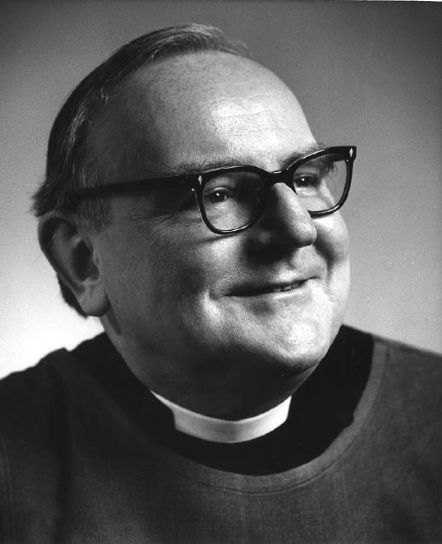
Harry Williams

When I was ordained, I vowed that I would only ever say what was true for me personally. In this I am following the example of Anglican theologian and monk Harry Williams. I never met him, but to read his writings is to get some idea of the man. You can glimpse his inner turmoil, his difficulties in finding God (his autobiography has the inspired title Some day I’ll find you), and his struggles with society, religion, and the church. He wrote that after a difficult time in a London parish he vowed he would never say anything that was not wrought from his own experience. I admired that when I first read it, I admire it still, and I vow to stick to it.

It’s in struggling that we get down to the real you and me. Not by hiding the difficulties, but by acknowledging them, like so-called doubting Thomas. You can’t cure an abscess by ignoring it. The problem with hiding our problems is that we then put on a false front. We pretend that things are better than they are. Propaganda. Spin. This is very familiar to us as we read and listen to the news.

Why do we give into this temptation to ‘spin’? At its root is seeking the approval of others. Evagrios (AD 345-399) wrote that the demons that most sap away our strength are gluttony, avarice, and the need to seek the esteem of others. Interpret gluttony wider than just gluttony for food, and interpret avarice broadly as wanting what is not yours— itself the root of pride.

Now, look at the world; look at the mess we’re in. The advertising industry is built upon our inability to resist gluttony and avarice for possessions. We are avaricious for perfection. This is in part a noble longing: we ache for things to be better.

The trouble is that we forget that what is perfection for us is likely to mean making things worse for someone else. Our latest fashions come at the price of people in sweatshops elsewhere. Our quest for the perfect body, or the perfect anything, can lead us to neglect or harm our families and friends, and ourselves. And I write this bearing Harry Williams’s advice in mind: this is first hand experience from my past. We are surrounded by the three things that Evagrios warns us against. This is the sin of the world.

What do we do about it?

Of course, things will never be just as we want them, and we have to live with this imperfection. But we also need to speak out and bring it into the open. This is prophecy, and the Hebrew root of the word prophecy is ‘to make things bear fruit’. It is revolutionary.

Jesus was both spiritual and revolutionary—two sides of the same coin. Prophets ask real, often painful and upsetting questions to show what the true situation really is. Children are prophets by their openness and honesty: The Emperor’s New Clothes. People who speak against governments are rarely thanked. Whistleblowers are often prosecuted. But healthy society needs dissent. We need look no further back than the twentieth century to see what happens when prophets are silenced. When something is wrong, we need people to say so, and we can’t do this if we want the approval of the majority.

As a minister of religion, I have only one message really, and it’s that we all have Christ within—the divine core. We begin to get glimpses of the Divine only when we start to know ourselves through self- examination. This involves distressing internal turmoil as Harry Williams well knew. It involves soul-searching, discarding images from the past, discarding expectations of others and the need to seek approval from them.

My experience is that however far down into myself I go, I never seem to reach the bottom of the barrel: there’s always yet more muck hiding in a corner. I trust it’s worth it. Letting the divine core within take over our whole selves makes us all divine. That’s what the two recent festivals of the church are all about. The Ascension (21 May) is taking our human-ness into the realms of the divine, and Whitsuntide (31 May: Pentecost if you must) is about the divine accessible to everyone, everywhere. That’s something to look forward to as we struggle with the daily irritations and frustrations that life brings.

My Ascension resolution is to try and stop seeking the approval of others. This is very difficult. If we work for someone else, our job often demands that we do things for the boss’s approval, whether or not we’d like to. But let’s try anyway: seek divine will, not human will. If you doubt what it’s all for—and who doesn’t—you might recall Churchill’s words during the Second World War: suffering, blood, sweat and tears, but then glory.

Harry Williams on God

The joy which a man finds in his work and which transforms the tears and sweat of it into happiness and delight – that joy is God. The wonder and curiosity which welcomes what is new and regards it not as threatening but enriching life … the confidence which leads us to abandon the shelter of our disguises and to open up the doors of our personality so that others may enter there, and both we and they be richer for the contact … the compelling conviction that in spite of all evidence to the contrary, in spite of all the suffering we may have to witness or to undergo, the universe is on our side, and works not for our destruction but for our fulfilment – [all this] is God. 

Resurrection as homecoming

The welcome

Christ is risen, so it’s all OK, hunky dory and we can all get on with being nice to each other as Christians are. No, no, no, Christ having risen is rather a challenge.

Imagine how Judas must have felt when, having agreed to give information to the Romans, he came face to face with what he’d done to his friend by kissing him. Imagine how ashamed Peter must have been to have to look into the face of the man he thought was dead and who he’d denied three times. Imagine how ashamed the disciples must have been to have to look into the face of the master that they’d deserted. Imagine how ashamed Thomas must have been to have to eat humble pie the week after he’d been so definite. Imagine the shame.

Shame is a great motivator. It gives away our guilt by making us protest too much. It makes us think of walking away from awkward situations when we would be better to face the shame. It makes us fill our lives with activity to distract us from facing the shame. Read Charles Dickens’ Great Expectations and see how shame motivated Pip. Read the biography of Dickens to see how shame motivated all his frenetic activity as social reformer. It’s interesting that Dickens regarded himself as ‘very small and not-over-particularly-taken-care-of boy’. Think of how many of Dickens’ books are about small and not-over-particularly-taken-care-of boys: Great Expectations, David Copperfield, Oliver Twist, Nicholas Nickleby …

The Easter experience – new life – means that we all must confront uncomfortable truths about ourselves, our pasts, our behaviour—the people we have hurt intentionally or unintentionally, the things we have done that we wish we hadn’t, and the things we have not done that we wish we had. The Risen Christ forces all our baggage, our guilt and shame, to the surface. The Resurrection means having to confront who we actually are.

When we meet someone else, we put on a façade: bumptious, or aggressive, or submissive or charming, or whatever. When we confront Christ, he sees us as we really are, and when we realize that, we are overawed, even ashamed. It is too much to bear. When we glimpse ourselves as the Lord sees us—or even as others see us—we can get an awful shock. This is not something that is reserved for the after-life, it is something that can hit us here and now. It is part of conscience, though conscience is not a big enough word for it.

We look in the mirror and see not the urbane, charming, well manicured and scrubbed person we present to the world, but instead the ordinary fallible human being. And it is so much easier to love the ordinary fallible human being than the scrubbed up image, because in the ordinary fallible human being we are the real thing rather than the pretentious deception. As your Rector, I would rather deal with the ordinary fallible human being who shouts at me, or loses his temper with me, than with the charmer who says one thing to my face and another behind my back.

Jesus stands before these frightened disciples who had all wronged him in some way. He stands before us, the ordinary fallible human beings, and says ‘peace to you.’ Shalom. Salaam. Salvation. Having been brought up sharp to the reality of shame, the disciples Peter and Thomas, and you and I, are accepted. We are forgiven. The great thing is that the reality of Peter’s denials, and Thomas’s doubt are not in the least condemned by Jesus. Peter is the rock on whom the church is built. Thomas’s need for evidence was affirmed by Jesus.

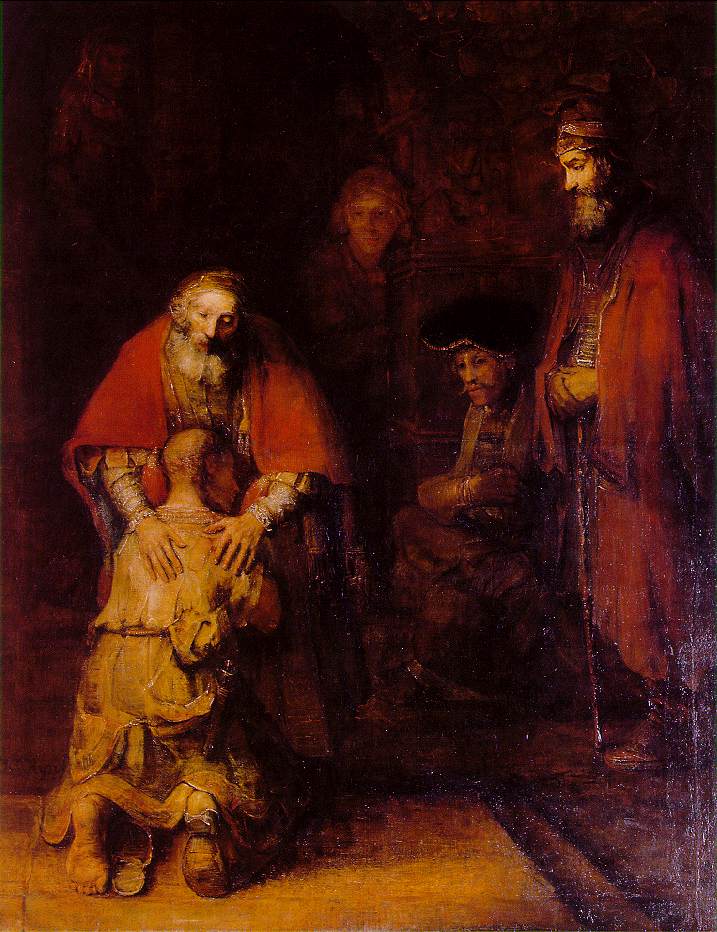
And that is a homecoming. Like the younger son in the Prodigal Son parable returning when he realized what an idiot he’d been. The door is never shut. This door of this church is never shut. The door of the Rectory is never shut.

In truth, we have God inside us all. That sanctuary of the soul that is hidden within, that we need to let fill us from the inside out. We sometimes choose to keep it locked up and pretend it is not there. That is when we are driven by pride and self-obsessedness. When we open that door, the divine light floods out. It might make us shed tears of joy that melt the heart of ice (O my Saviour lifted). This is forgiveness. We do not have forgiveness because we acknowledge our sins. We have forgiveness therefore we acknowledge our sins, our human frailty.

The younger son saw himself as the Lord saw him. He chose to take the first step. He could have chosen not to. He came home, forgiven. This is resurrection. We can choose to exclude ourselves, or we can choose to be a part of God’s kingdom here and now. The choice is ours as to whether or not we stay in the cold and become bitter and twisted, or we come home acknowledging our imperfections, and enjoy the divine presence and the divine warmth of divine light and love.

Resurrection or wilderness is the choice facing each one of us. A pretty easy decision, you would think, but one demanding openness, honesty and courage.

Wednesday in Holy Week: betrayals

Wisdom sage?

‘I’m not coming to church: you’re all a bunch of hypocrites.’ I usually respond: ‘well, there’s always room for one more, so you’d be in good company.’ We hear a lot about Judas in Holy Week, and Judas is, amongst other things, a hypocrite. On Monday we heard him say that money used to buy oil should be given to the poor, whereas in fact he wanted to filch it for himself.

There’s an element of ‘it wasn’t me, guv, honest’ in the Judas story. It puts me in mind of Homer Simpson’s advice to Bart. Homer says:

I want to share something with you: the three little sentences that will get you through life. Number 1: Cover for me. Number 2: Oh, good idea, Boss! Number 3: It was like that when I got here.

For all his faults, Homer is a kind of innocent, and he certainly loves his family. But enough of these insights into my depraved televiewing habits. I want to talk tonight about the demons that assailed Judas, and because there’s something of Judas in us all, about our human nature. We left Jesus on Sunday standing at the gates of the city, facing death in the city of wrong. Jesus faces his demons. As we go with him, we must face our demons, our fears. These demons are the enemies within, enemies of spiritual growth, enemies of resurrection. Jesus tells us to love our enemies, but we can’t love these demons until we see them, and we can’t see them until we look them full in the face.

What are our demons? Let’s look at the demons in the Passion narratives. There are three obvious headings:

  • Failure to confront reality, that is to say, denials
  • Mob justice
  • Evasion of responsibility

And of course Judas. I don’t think Judas wasn’t a particularly bad man. He was, like many of us, weak. He sold information. His weakness is part of the story, just as Peter’s denials are part of the story. Maybe if Judas hadn’t killed himself he’s be a saint like Peter. Anyway, let’s look at those three.

  • Denials. Peter’s denials saved his skin—but only for that moment. Later, he wept, overcome with remorse. It’s hard to hear today’s news without being confronted by denials that turn out to be lies. Is anyone guilt-free? Who has not tried to get something for nothing, or used work time for personal business?
  • Mob justice. There are so many stories that illustrate this. One from 2007 sticks in my mind. In March of that year, The London Times reported, a young man was surrounded by a gang with wooden sticks. Witnesses say that teenage girls egged on the attack with shouts of “Kill him, kill him.”
  • Evasion of responsibility. Judas said ‘it wasn’t me’. Pilate wriggled out of responsibility and washed his hands. Pilate needed to please his superiors. How often have I felt like that? Look at bankers and politicians evading responsibility. We all make mistakes. We all are greedy. We all want the advantages of investment dividends if we are lucky enough to have money invested, and our pensions depend on them. We are all complicit in the problems that afflict us, and our children and grandchildren will have to bear the burden of the mistakes our generation has made. I accept all that, and I can’t and don’t condemn anyone for faults that also afflict me. However, the arrogance and lack of remorse that we see in public life at the moment is something beyond all this. According to the Gospels, Jesus was censorious about very little, but always, always, always about hypocrisy and complacency. Even Josef Fritzl, who kept his children locked up in a basement for 24 years, seems to have acknowledged, eventually, the enormity of his actions after being confronted by his daughter’s account of their effects on her and her children. But not, it seems, the powerful of today.

Kiss of friendship

We betray others. We betray ourselves. Judas realised that—that’s why he topped himself. Magnus Pym in Le Carré’s A Perfect Spy realized that, and he topped himself too. Greed, avarice, and seeking the approval of people whose approval is not worth having: the three most pernicious demons. Maybe they can be compressed into one: the sin of Adam—trying to be what we are not. The fig leaf has nothing to do with covering up our genitals, but is about covering up our naked selves by putting on a mask, a persona to hide our true faces. We deny the truth because of our need to save face, but it’s not the face that suffers. It is the inner self that I harm when I deny what is evident to others. This inner self that is the Christ within, the Divine within. When we harm others, we wound the Christ within as surely as any nail on the cross.

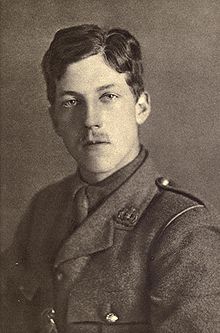
Here is a poem that tells of this inner kingdom, the holy of holies within that I suggest needs to be allowed to expand  from within so that the brittle shell of self will be shattered. It was written by 20-year old Charles Sorley who died weeks later in 1915 at the Battle of Loos. I marvel at the self knowledge possessed by this young man.


C H Sorley 1895-1915

From morn to midnight, all day through,
I laugh and play as others do,
I sin and chatter, just the same
As others with a different name.
 
And all year long upon the stage,
I dance and tumble and do rage
So vehemently, I scarcely see
The inner and eternal me.
 
I have a temple I do not
Visit, a heart I have forgot,
A self that I have never met,
A secret shrine—and yet, and yet
 
This sanctuary of my soul
Unwitting I keep white and whole,
Unlatched and lit, if Thou should’st care
To enter or to tarry there.
 
With parted lips and outstretched hands
And listening ears Thy servant stands,
Call Thou early, call Thou late,
To Thy great service dedicate.


Tuesday in Holy Week: struggle and choice

Gethsemane agony

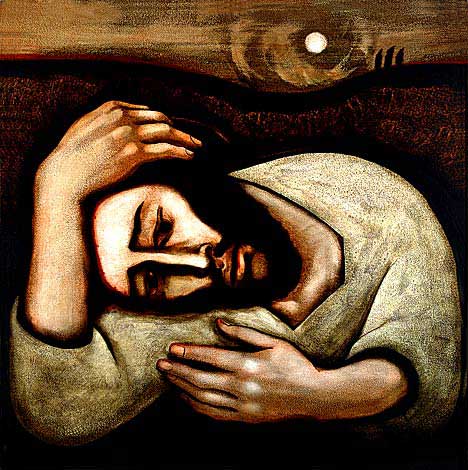
Jesus in the garden struggling to come to terms with events. He asks for support from friends but they fall asleep. He asks to be spared the awaiting fate, but then says (something like) ‘I have to face the future full on.’ He struggles.

Life is a struggle, and for most people on the planet it’s more of a struggle than it is for us. We look around and see the beauty and fragility of creation; mountains, plains, plants, flowers, architecture, art, science, craftsmanship. We see how it is constantly beset by terrible acts of evil. Over the last few decades there have to appalling events in Russia, Africa, the Balkans where hundreds of innocents are slaughtered in the name of political struggle: one group of people trying to control others. We see inhumanity in places like North Korea and Burma. We see it even in our own land. We see war waged in Iraq and Afghanistan, and threatened in Iran. At times it almost seems as if the very stars are being wrenched from heaven by some evil force—which is exactly how the events of Friday are described in the Gospels as the sky is plunged into darkness.

the beginning of a thought

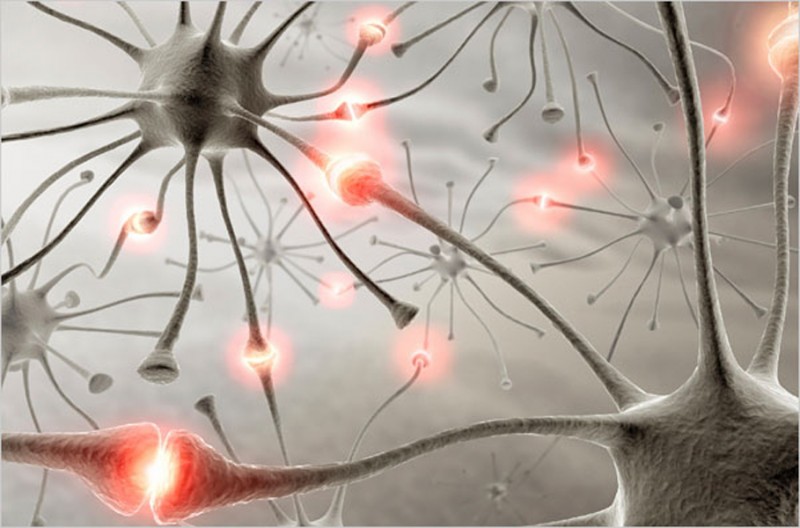
This urge to the inhuman must be in us somewhere. Evil, badness, cruelty – these begin as a thought in someone’s mind, one nerve cell in the  brain sparking on another. When we decide to support the things that evil people do—bullying, torture, exploitation—that decision begins as a thought in someone’s mind—yours and mine. When we are tormented by what to do, when beads of sweat start forming on our foreheads and drop like grapes to the floor, we are experiencing something of the mental agony that we hear of in the Garden of Gethsemane. All this because we have the power to choose: wisely or unwisely; actions that might fracture or might heal; actions that might increase the amount of misery in the world, or that attempt to decrease it.

The story of Adam and Eve in the Garden of Eden is a fairy story that attempts to explain why we humans so often get it wrong. A story that illustrates that when we choose for selfish reasons rather than for selfless reasons, we disturb the cosmos. A story that explains why we so often hide behind masks, spiritual cosmetics, spiritual fig leaves, rather than stand in full frontal nakedness before the Divine.

Breugel: good versus evil

We have choice. Every choice begins as a thought. We need to be aware of our thoughts. We need to choose wisely. We need to have courage to stand against the mistaken majority and stand for truth and right. We need to have courage to be nonconformist as Jesus was nonconformist, and stand up to those who try to persuade us to do what we know we should not. We may be laughed at, scorned, cast out, sneered at. We may suffer. But from this suffering we grow in self-knowledge, and growing in self-knowledge, with all the shame and joy that such growth brings, is the first step towards growing into the Divine. God became man so that humans might approach the Divine.

C S Lewis: God whispers to us in our pleasure, speaks to us in our conscience and shouts to us in our pains.