Church militant? Church irrelevant

At least this is a natural hypnotic

At least this is a natural hypnotic

Look at the pictures of the 2013 General Synod in Armagh. Same old, same old. Where are the new faces? Where are the young people? Read the accounts of business. Where’s the reality? Where’s the vitality? Where’s the strategy? Where’s the vision? Where’s the engagement with science, with society? Why are Bishops apparently obsessed with sex, but say next to nothing about injustice and usury? Listen to the way at Diocesan Synods that rabbit’s friends and relations are voted into vacancies, or retiring members are immediately re-elected. See how fear of reprisal influences voting by show of hands.

Is this a portrait of a thriving organisation? It is not. It’s a portrait of an irrelevant and self-congratulatory club in which old people plan a future they will not be around to see. What’s the point of spending money on prizes for blogs, websites, media? Who, outside the membership of the select little club, cares a damn about this piffle? I’m reminded again of Aer Lingus being awarded the prize for the best Irish airline by Cara, the in-house magazine of Aer Lingus.

Well over half the clergy in this diocese are over 60. Will we be replaced? Even if replacements can be afforded, where will they come from? I suspect the trickle from Rome has peaked. Some of us come from England, and there are some from the kingdom of Far Far Away, but the church can’t rely on them. The Church of Ireland community can hardly be said to be enthusiastic about fostering vocations. Look at the pictures of synod again: how many of those people can even manage to get their children and grandchildren to come to church?

In Co Laois there are eight paid Church of Ireland clergy. Costs are rising, property taxes are passed on to churches. People are increasingly hard-up. Crisis looms (crisis does not mean opportunity—that’s management-speak invention). How long before eight are down to three: north, central, and south? And as for churches: there are too many. So close some. Simples.

What’s the chance of a rational and clear-headed discussion of these issues? None. It’s all about tribal identity, posturing and self-gratification. If the Church of Ireland population were even a fraction as loyal and committed as is the Muslim population, churches would thrive and lives would be changed.

Degrees, hoops & osmosis

Too many degrees

Too many degrees

One could be forgiven for thinking that the Church of Ireland Bishops have decided that clergy are no longer needed. They in their wisdom have decreed that ministers should have a master’s degree. Now, I yield to no-one in my admiration for the wisdom of Bishops, but I can tell you that I have (1) a medical qualification—that is, a couple of bachelor’s degrees; (2) a couple of master’s degrees, one in theology; and (3) a science PhD, and not one of these helps me master essential tasks of ministry such as photocopying and tea-drinking. What does most certainly help is experience of life, mortgages, deaths, births, agonies and ecstasies. And such common sense as I can muster.

Having acquired degrees does help with the reading of documents—or rather, spotting which need not be read. The trick is to read the first and last sentences and see if you want to go deeper. One rarely does. That works for books as well. Indeed, if you hold the book in your hand long enough, the information therein contained seeps into your brain by osmosis and you needn’t read them at all. That’s why students spend so long in libraries just handling the books. They don’t actually read them. On reflection, this can’t be true because if it were the average congregation member would know all the words in the Prayer Book off by heart. And they seem not to, despite repeating them week in, week out. It’s great fun when I say a liturgical good morning to see how flustered people get because the response is not written in bold on page 201 or whatever.

Does the insistence on a master’s degree (it’s the same in the C of E by the way, but there are more people there so the problem is less acute) dissuade people from coming forward? I suspect it does. I suspect it’s intimidating to some capable people who have no record of formal education beyond secondary school, but who have more than enough wisdom and ability to do what is required of the clergy after a brief (18 months perhaps) training that consists of seminars and on-the-job stuff. This is training by osmosis that certainly works.

A pastoral riddle

The perfect pastor

The perfect pastor

In a letter to the new Archbishop of Canterbury, Pope Francis wrote that the pastoral ministry ‘is a call to walk in fidelity to the Gospel of our Lord Jesus Christ.’ Good grief!  Has the Pope made his first error of judgement? What has the Gospel of our Lord Jesus Christ got to do with pastoral ministry? We must investigate!

What do parishioners want of their pastors?

  • Someone to baptize, marry and bury. This is a statutory duty. It is a pleasure and a privilege.
  • Someone to, in the words of the 1662 ordinal, ‘search for the sick, poor, and impotent people of the Parish’. So is this.
  • Someone to lead public worship. As is this. Even though they don’t often come, most of them like to think that it’s happening.
  • Someone to maintain the tribal temple in exactly the same state as it was when they were children. God forbid that the colour scheme be changed, or that pews be removed.
  • Someone nominally in charge of the burial ground where they can go to talk to the people they feel guilty about having misjudged (or worse) when they were alive.
  • Someone nominally in charge of the burial ground where they themselves want to end up.
  • Someone they can complain about in other meetings and gatherings. This is a popular pastime in the Church of Ireland, and seems to be the cause of church-hopping. Catholics seem less bothered about it.

What don’t parishioners want of their pastors, though the Gospel says that they should?

  • Someone who treats new arrivals the same as long established members. Body armour required.
  • Someone who encourages parishioners to look into their own hearts before they start pointing out faults in others. It is one of the greatest pastoral joys to help people with this, and to see as a result more and more of the hidden murky depths of one’s own heart.
  • Someone who challenges bullying in church meetings. Bullying takes many forms; it is insidious and malign.
  • Someone who delivers parishioners of demons. Well, good luck with that, girls and boys.
  • Someone who knows that the church is in law a charity and so insists that church affairs be conducted in a business-like fashion in accordance with the law of the land. Fortunately, there’s no argument with this, however much resistance one encounters – and one most certainly does.

Are there any clergy like Dick Emery’s character? Wouldn’t it be lovely if pastoring were merely a matter of drinking tea and agreeing with people? Perhaps not. It would be very boring, that’s for sure. The sermons that have brought me most trouble have been those that uncompromisingly preached the Gospel. I regret not one word of them.

Passion, Patrick, Pope, Persevere

saintpatrickA sermon for St Patrick’s day, Passion Sunday, 2013

Passion. Jesus passively bears what must be borne, in order that new life will blossom. The passion story illustrates that refreshment and renewal come only after we’ve gone through the painful process of killing the past, or letting it be killed. Renewal comes when we let go of things we once held dear, of attitudes and attachments that once sustained us but now hold us back and tether us to the ground. Jesus said: in three days I will destroy this temple, and then I will build a new one. This applies to our church life as much as it does to us as individuals.

What might constitute the ‘old’ that needs to be relinquished in order that new life may flourish? What puts people off the church as an institution? There are lots of young people in the vicinity, but few come on Sundays. Why not? If they did, would they be welcomed and treated as equals, or would they be whispered about, left to flounder, and glared at they sat in ‘our’ pew? Would we be delighted to see them, or would we feel threatened as they invade territory that we consider our own?

Something needs to happen if the church is not to wither and die. If you saw the Pope’s election (you were probably glued to it), you might have witnessed a TV commentator, ignorant of the Lord’s Prayer, having to depend on the translator. At weddings and funerals in England, few people under the age of 50 know the Lord’s Prayer, and hardly any under the age of 40. That is coming here. There is now so much hostility to the church from the young people of Ireland that the outlook is bleak. The new Archbishop of Canterbury has given the church a decade before implosion. Why don’t the bishops of the Church of Ireland ever speak plainly? God forbid they offend their friends and relations.

The church is entering its own Passiontide. It must go through painful times before it can be reborn. And when it is reborn, maybe it will look nothing like what it replaced. In the gospel, expensive oil is used on Jesus’ feet. To wash someone’s feet in those days and in that culture was (and is) something that only the lowest of the low would do—it is beneath one’s dignity for any respectable person to wash someone’s feet. We need to lose our dignity and get our hands dirty. As the psalm has it, those that sow in tears shall reap with joy. This is the only way that renewal will come.

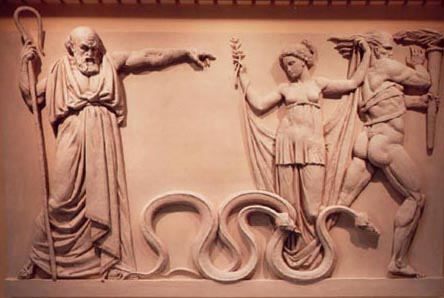
Patrick. Legend has it that Patrick banished snakes from Ireland. This is absolute tosh, of course, like so much about Patrick. Nevertheless, there are plenty snakes to be banished. The snake that tempts us to lying, to pride, to thinking that we know best—just as it tempted Adam and Eve. The snakes in church that cause people to find fault and go off in a huff rather than putting differences aside and working together. The snakes of sloppiness in church: lateness, ill-prepared readings, carelessness in presentation. The snakes in society: consumerism, advertising, celebrity. The snakes in self: hardheartedness, lack of humility, lust for power  and possessions. We are part of a society in which a garda who threatens to prosecute a pub owner for after-hours drinking is told ‘either join us or be transferred’? And people think it’s amusing. We are part of a society in which the rich and famous are lauded for slithering out of being prosecuted. We are part of society in which justice seems to be reserved only for the wealthy and well connected. Why do we tolerate this evil? People seem to admire those who lie and cheat. As faith has decreased, greed has increased.

Pope. The Pope has said that unless the church concentrates on its message, it will become simply a compassionate NGO. God knows his church needs renewal. It’s a huge organization, and its problems are huge. But let’s not be complacent: their problems are our problems, only our organizaton is smaller, so our problems are smaller. They all stem from the same human ‘snakes’: avarice, envy and seeking the approval of the wrong people. The Pope is right: we must turn away from these ‘snakes’ and turn towards the message and example of Jesus Christ: love, compassion and selflessness.

Persevere. The message of Jesus is that letting go of the past leads to hope. Letting go of the past is a matter of forgiveness. We forgive others, we ask for their forgiveness, and we forgive ourselves – self-forgiveness. It’s such a waste of energy to carry around grudges and resentments. When we lay down these burdens, the stone that entombs us in the past rolls away, and we go on our way lighter. We have more energy to engage our imaginations. We become more attractive: radiators rather than drains. When we put the past to death on the cross, we ascend to the heavens. The balloon takes off. This is salvation, resurrection.

Here are some suggestions for this coming fortnight as we reflect on church life and personal life.

  • Look back at the last year and ask: what have we as a church done that attracts people? Let’s do more of that.
  • What have we done that repels people from joining us? Let’s stop it.
  • Let’s focus on the message and pull together to be agents of grace and delight. Life is too short for anything else.

Alternatively, let’s pack up.

No point moaning

Christmas trees in supermarkets already. Butchered carols assail our ears in butchery sections. ‘Isn’t it terrible to have Christmas things so early. We have Easter bunnies right after Christmas, and Christmas is upon us as soon as the schools are back. What’s the world coming to?’ It seems to escape their notice that the reason they went to the supermarkets in the first place was to do their planning-for-Christmas shopping. Here I am already planning Carol Services, thinking about readers and music and how to involve the community. I wouldn’t dream of criticizing others for milking Christmas and Easter since that’s exactly what I do. On the odd occasion that I go to supermarkets with Christmas carol muzak, I thank the Lord for being deaf.

I hear that some clergy deplore the disappearance of Advent. Do they imagine that their darling flocks prepare for Christmas by a strict Advent discipline of penitence and reflection? Perhaps they think this is what goes on in Lent too. With the pressure of modern life, child rearing, jobs, bills to be paid, creaky joints etc, I think if you manage to make church most weeks, you’re doing pretty well in preparing for Christmas. I try to keep Sunday mornings in Advent as Advent services. Patriarchs, prophets, John Baptist, Mary. (Can anyone tell me the point of Jesse trees? Where do people keep all the bits and pieces for the rest of the year? And do they remember where they put them last year?)

The world is as it is. If we don’t like it, we can try to change it, move somewhere where things are better, or accept it. If we don’t like the effect of supermarkets on communities, or the way they treat their suppliers, what are we going to do about it? Moaning is pointless. If we want our pension funds (hollow laughter) to support us in the future, we need to be careful about attacking the commercial concerns in which the funds are invested. When I was silly enough to have a romantic view of what church was about, I used to think that it must be lovely to be a monk, free from worldly hassle. Then I got to know some monastic communities. They are as full of tension and squabbles as life out here, with the added joy of living cheek-by-jowl. No wonder monks are so often guest speakers elsewhere. One of them told me that religious communities consist of people who can’t hack the real world. Maybe the church is too: some young idealistic ordinands seem to think that all they need is the knowledge that Jesus loves them. Parochial life as an ordained minister will soon test that.

Are we going to try to change the world? Bankers’ bonuses, political corruption, cronyism, begrudgery. These are just extreme forms of things that affect us all, the demons of avarice, of envy, and that which incites us to seek the approval of others whose approval is not worth having. Even so, I can’t help feeling that ‘something must be done’ as the rich get richer and the poor get poorer. (Rambling Rector bucks the trend here: every job change over the last decade has resulted in a pay reduction.) I wonder—seriously—about Gandhi’s idea of calling for days of prayer and fasting. The fact that some may call them national strikes is neither here nor there.

What a welcome

Unwelcoming rock

The son and granddaughter from Texas are with us for two weeks. We went to Cashel. At the reception desk at the Rock we were met with bored looking staff who told us quite sharply that they did not take cards, only cash. It is clearly a privilege for us to pay money to Heritage Ireland, and we must do it on their terms, not ours. Whatever happened to the notion that the customer might sometimes be right? This must be a great experience for foreign visitors.

I wonder what sort of welcome visitors to our churches get? Are they confronted by a group of people in conversation in front of the books? Do they have to fight their way through people blocking the doors? Is the pre-service atmosphere one of socialising or reverence? Is the organ music actually audible? Are newcomers confronted by a sense of the Divine glory and joy, or simply a group of people who are intent on maintaining the attitudes and resentments of the past? Does any of this matter? If it does matter, for how much longer will it matter?

Friction

Death by clinging

If you read the New Testament epistles or the Acts of the Apostles, you’ll be in no doubt that rows and disagreements have always been part of the fabric of church life. They still are. Sometimes they’re about what the Rector does or does not do, or what he permits or does not permit. Sometimes they’re about what the wider church organisation does or wishes to do. Sometimes they’re about something that happened years ago that we enjoy raking up, not realising that it is like a cancer, and that we are becoming more and more like Gollum in Lord of the Rings. At the root of all this, it seems to me, is lust for control. We can’t seem to let go of the illusion that the cosmos revolves around what ‘I’ want. Why do ‘I’ want it? Is it because if I don’t get it I feel as if I’ll be letting down the memory of my forefathers? Is it because I can cope only with what I am familiar with? Is it because I’m pretending that I’m still in my prime by keeping things as they were then?

We need to ask questions about our understanding of church. Is it a mystical reality, or an earthly club? Is the Church of Ireland a loose confederation of individual parishes that can do as they like, or is it part of the Church of Christ? If we are all parts of the same body, as St Paul writes, then what is the equivalent of the nervous system that coordinates activity and allows communication between the different parts and the centre? What, indeed, is the centre? And what does that mean for the way that we as individual Christians, and as Christian communities, carry out our business?

Hiding behind titles

Pompous, proud and prelatical

In my former parishes, I was often called Fr Stanley. I liked this, since I am a father, and at least in Derbyshire there was affection in it. But I understand that this is de trop in the Church of Ireland. Here, the tradition seems to be to call me Rev Stanley. I don’t feel particularly reverend, and anyway Rev is properly used with Christian name or initial and surname. My own preference is to be called, at least to my face, Stanley. Or Irreverend Stanley.

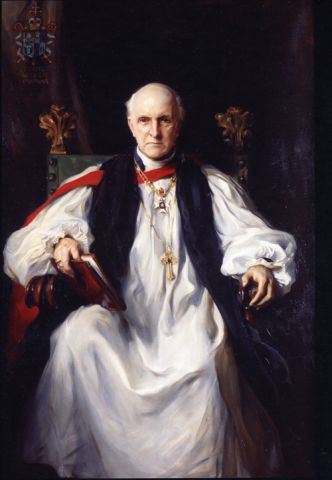
Institutions are obsessed with titles and rank. The church, which should know better, is riddled with them. Reverend, Venerable, Canon, Very Reverend, Right Reverend, Most Reverend, Frightfully Reverend, Your Grace. When Michael Parkinson interviewed Robert Runcie, about to become Archbishop and change from being Right Reverend to Most Reverend, Runcie with characteristic wit suggested that his title at that moment was Increasingly Reverend. One of Runcie’s predecessors, Cosmo Gordon Lang complained that his new portrait made him look pompous, proud and prelatical, to which one of his colleagues, the acerbic Bishop Henson, is said to have asked: “To which of those epithets does Your Grace take exception?” All this hierarchical nonsense is a sign of an institution in trouble. It signals a delusional and inward-looking club. Who, outside the club, cares? And if any organisation should care about those outside it, it’s the church.

It’s easy for us clergy to become institutionalized, and to imagine that our little clubby rules are important. I read church publications in which nothing controversial is ever reported and wonder what sort of la-la land they are talking about. How do they relate to real life? If you read the documents that parishes produce when they are looking for new clergy, you quickly learn to read between the lines (see attachment). I wonder how much the blurb for the post I’ve recently left will reflect the job that I knew …

We need to wake up to the fact that people see through this tripe. People see beyond this spin and hypocrisy. Yes, I know it’s easy for me to talk having ‘enjoyed’ rank and title in a former career, but we must try to see that our being obsessed with the churchy club flies in the face of incarnational reality for the world’s population.

Guide_to_church_speak