Pentecost delight

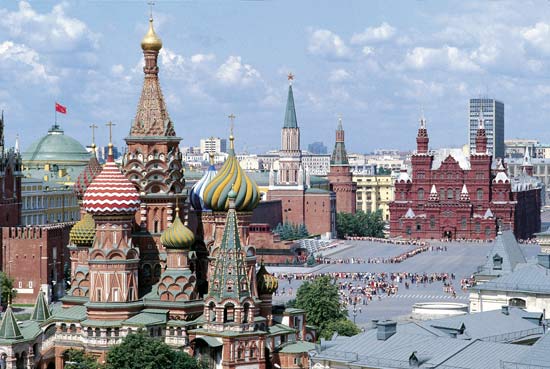
84883-004-ACA9F3E9Red for beauty. Red Square, beautiful square. Red for delight, life, joy. Red for blood, blood of martyrdom, destruction,  blood of Christ. Red for blood that fights disease, removes waste, brings oxygen. Red for paradox. Red for inflammation, heat killing bacteria. Red for fire, burning dross that tethers us. Red for consuming flames; flames of the spirit that sets us free; flames that destroy so that phoenix may rise. Tongues of fire and fire in tongues, apostles’ tongues for good news to the world.

Dove or flames?

Dove or flames?

Red for Kingdom of God in our blood, in our veins. Kingdom, not comfortable God, not vengeful God, but unknowable Divine that turns chaos to cosmos. Divine unconstrained by human thinking, unknowable, immortal, invisible, inaccessible. Divine wisdom, stardust from which cosmos is made, in air we breathe. Divine wisdom in Christ, challenging, unpredictable.

Red for church militant, not church hesitant, not church petulant. Red for salvation. Red for glory. Red for flames cleansing falsehood and bringing truth’s delight.

A ‘simples’ problem for Justin

Aleksandr Orlov

Aleksandr Orlov

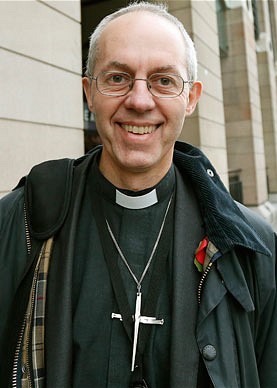
Justin Welby, Archbishop of Canterbury, was recently interviewed by a Financial Times journalist. You can read it here. It’s all pretty anodyne, except that when pressed a teeny bit about the thing that Jesus spent most of his time talking about, namely what homosexual clergy may or may not do in the privacy of their own bedrooms, Justin got shirty, and reportedly said ‘I’m not going to go into all the sort of intricacies of what [celibacy] might or might not mean specifically, not least because we’ve just had lunch and it’s a bad post-lunchtime conversation. I’m not going there.’

I think he may have to go there, and I have a solution to his problem, if problem it be.

In the English Book of Common Prayer there is a Table of Kindred and Affinity that sets out who you may not be married to (I know the grammar’s wrong, but that’s what I say). It begins ‘A Man may not marry his mother, daughter, adopted daughter ….’ and similarly for a woman. It’s quite detailed and includes such prohibitions as a woman not marrying her daughter’s daughter’s husband. In light of such a document going into this level of detail, I suggest that what Justin now needs is a similar document giving precise details of those anatomical structures which may be apposed in the pursuit of delight and pleasure without incurring archiepiscopal censure. Such a document would be an adornment to Common Worship—indeed, definitions, footnotes and references may be sufficiently copious as to necessitate yet another volume.

Justin Welby

Justin Welby

Of course, this will have to be enforced, so I have two further proposals: (1) that CCTV monitoring equipment be installed in all (so as not to be discriminatory) clergy bedrooms; and (2) that diocesan pleasure police be appointed to monitor them.

‘Simples’ as Aleksandr Orlov might say. We need a coherent theology of delight, and one that takes account of evolutionary biology. I’m working on it.

I promise that this is positively my last blog about the matter.

Anabolism and diabolism

hard-heart-wire-frame1-1024x682I’ve been told by a well-wisher that s/he looks forward every month to my writings in the Diocesan magazine. Not only that, they get better each month. This is a comforting message. It builds me up: it is anabolic, and I need that. It comes at a time when I hear that some parishioners scan my every word in the magazine and on this blog for something they can use to have me drummed out. It comes the day after one complaint that parish accounts were not available (a pile of them were in the church porch for over a month), and another, surprisingly vicious, that the pewsheet had the wrong readings in it (year B, not year C). It would have been helpful had the complainant offered to be responsible for pewsheet production.

The well-wisher said that s/he did not know of a Church of Ireland parish in which all was sweetness and light, and knew of several that were riven with discord. S/he wondered how anyone these days could stick the hassle of being a Rector. I knew the Church of Ireland between 1988 and 2003 and then again from 2011. Someone in early 2012 asked me what it was like coming back, to which I replied ‘I forgot just how unpleasant some members of the C of I can be to each other.’ Fortunately, for all the vexatious members there are more delightful ones. Ministering to all is a privilege, and ministering to the delightful is a pleasure.

You would think that the church would be less prone to fault-finding than other organizations. Sadly, the opposite seems to be the case—spectacularly so in the C of I. I recall complaints brought against the Revd Michael Bland, the Rector of Buckland with Snowshill (Gloucestershire), in the 1960s. When asked about the angry emotions felt by some of his congregation, he said: ‘Quite right. Get the violence off the street and into the Church where it belongs.’ Why the aggro? Is it because church is the place for power-games? Is it because church is the tribal totem? I can’t see what the discord has to do with the man in sandals. Perhaps the church has a death wish: they forget nothing, they learn nothing, as it was reputedly said of the Bourbons.

Seeking whom he may devour

Seeking whom he may devour

Grumbling and gossip are diabolical. They splinter—that’s what diabolical means. The shards of glass from the devil’s mirror at the beginning of Andersen’s The Snow Queen turn the heart to ice and corrupt the vision. Guilt and shame harden the heart. As for corrupting the vision, look into the eyes. The retina is the only bit of the central nervous system that is visible to an observer. The eye is the window of the soul: eye structure and personality are linked, researchers suggest, because genes responsible for the development of the iris also influence how the ‘personality part’ of the brain is wired up. And notice how shame and guilt affect the way that people hold their heads and move their eyes.

Hardness of heart is what the psalmist warns us about. It makes us insensitive to the woes of others. It makes us obsess about self. And the harder it gets, the greater will be the mess when it eventually shatters–as certainly it will.

Speed these lagging footsteps; melt this heart of ice.

Worms, worlds and Wesley

The worm that passes understanding

The worm that passes understanding

This week’s New Scientist has three articles that tickle my fancy.

The first is about nematode worms that have been found 3.6 Km down in the earth, where the sun don’t shine. No energy from the sun, no oxygen. And hot. Microbes have been found even deeper. They don’t waste energy reproducing—they simply exist. They move so slowly they seem to be dead. (Do you have friends like that?) But they’re not. It seems they get their energy from uranium and sulphur, methane and hydrogen sulphide. So life on other planets with an atmosphere of such gases may well be a real possibility, just not life as we know it. We use oxygen to get rid of waste electrons, but there are other ways to do that. Maybe as we humans spend more and more time indoors, out of sunlight, and move less and less, we will become like these ‘things creeping innumerable’. We will get fatter and fatter, peering at screens, living in an atmosphere of methane and hydrogen sulphide (farts), and eventually exchange atoms with our environment (like Flann O’Brien’s bicycle seat and the backside on it). We will reproduce by budding. That would save a whole lot of shoving and grunting anyway. And it would mean that the church could stop obsessing about sex.

The second article is entitled The early turd. I suppose you could say it’s also about things where the sun don’t shine. It explains how the study of human excrement from long, long ago (the mind certainly boggles) can tell us about farming in days gone by. Here are some nuggets. Whipworm and roundworm infection exploded about 10,000 BC in Europe as we changed from being hunter-gatherers to farmers. The domestication of wild boar about 8,000 BC made us prone to infection by the liver fluke. In the 13th century AD Christian crusaders from northern Europe, who ate raw fish, took the fish tapeworm to the middle east. And so on. Fascinating stuff. Now wash your hands.

Milky way

Milky way

The other article is not about where suns don’t shine, but where they do—in the middle of the Milky Way. It seems that the giant black hole in the centre of our galaxy (and that is only a tiny part of the cosmos) is about to suck in a large gas cloud. What happens then is exciting cosmologists. I’m not entirely clear why we aren’t all being inexorably sucked into a giant black hole. Maybe we are.

Anyhoo, these articles point to a contrast between deep within and far outside, between very small and very big. Unlike the cows (or was it sheep?) in Father Ted, the stuff far away is very big. We humans are privileged to be able to see both ways. We are part of the smallness and the infinity. Is there any theology in this? There most certainly is: we are part of a system. The Greeks had a word for the system underlying all things, and it is logos. The system underlying all things is divine. Or, as John Addison put it, the hand that made us is divine. That takes us to the Incarnation gospel where heaven meets earth.

Let earth and heaven combine,
Angels and men agree,
To praise in songs divine
The incarnate Deity,
Our God contracted to a span,
Incomprehensibly made Man
 

Charles Wesley had a terrific mind.

Sex talk

UnknownThe Church of Ireland Gazette is full of sex talk. It is very boring. People have asked me why I don’t blog about the church’s  to sexuality. After all, I make no secret of the fact that I hold that churchy stuff must accord with biology, not the other way round. The truth is that I think there’s no discussion to be had. I’ve posted here and here on aspects of sexuality. It’s possible for people to have genitalia that are neither one thing nor the other. It’s possible for chromosomal constitution to be, in a sense, neither one thing nor the other. It’s probable that, psychologically, everyone has elements of maleness and femaleness. So the argument comes down to what people do with their genitals. So long as there is no exploitation of one by the other, I cannot see that this is anyone’s business but that of those concerned.

The Archbishop of Canterbury said recently ‘Throughout the Bible it is clear that the right place for sex is only within a committed, heterosexual marriage.’ The Old Testament has polygamy, incest and rape, but is there anything about ‘committed heterosexual marriage’? The New Testament opines that bishops (overseers) must only have one wife, which implies that the norm was more. It’s faithfulness and commitment that the Bible is full of. Parishioners don’t seem bothered. The only time I was ever assailed about the issue was the Sunday after the mealy-mouthed Church of Ireland synod resolution, when an elderly lady poured forth scorn and opprobrium on it. It was not what I was expecting her to say. Joy and delight are difficult enough to find in this world. Any committed relationship of mutual love is worth celebrating.

Gender biology, Aristotle and theology

OLYMPUS DIGITAL CAMERAI have a dear friend who developed leukaemia about 20 years ago. He is a male of the species. Or is he? His leukaemia was treated by a bone marrow transplant, the donor being a woman. Were he to commit some heinous crime, ‘his’ blood cells left at the crime scene would appear to have come from a female. What delicious opportunities abound for him to exact revenge on those who have offended him, and yet evade detection. Has this possibility yet been explored by a crime novelist? This man has the body of a male but the blood of a female. How do we define gender?

Some species change sex mid life. Males become females—and I’m not talking man-boobs here. Clownfish do it, though that’s something that Finding Nemo didn’t explore. Things can go the other way too, female to male. These phenomena seem to happen naturally when a population deems it necessary (how?) to restore a particular male/female ratio. Do you think this might happen in say, primary school teachers, where men are woefully under-represented? Some hormonal diseases cause men to develop female characteristics, and others cause women to develop male characteristics. Is the more laid-back outlook that some men acquire as they get older a result of falling levels of testosterone, a kind of natural feminization? Are we males being feminized by the increasing oestrogen levels in the water supply?

It’s widely held that the ‘default setting’ of the mammalian embryo is female: the embryo will develop into a female unless male things are switched on a certain time of development. The female, then, is the basic form, the male the experimental (more advanced? less stable?). SWMBO says this explains why flu is more ‘serious’ in a man, since he is the less robust sex. We all have within our bodies male and female bits and pieces in various stages of development. The ovary and testis come from the same thing. The penis and clitoris likewise.
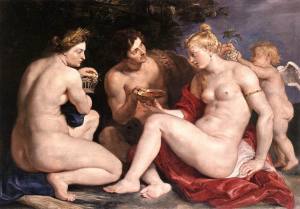
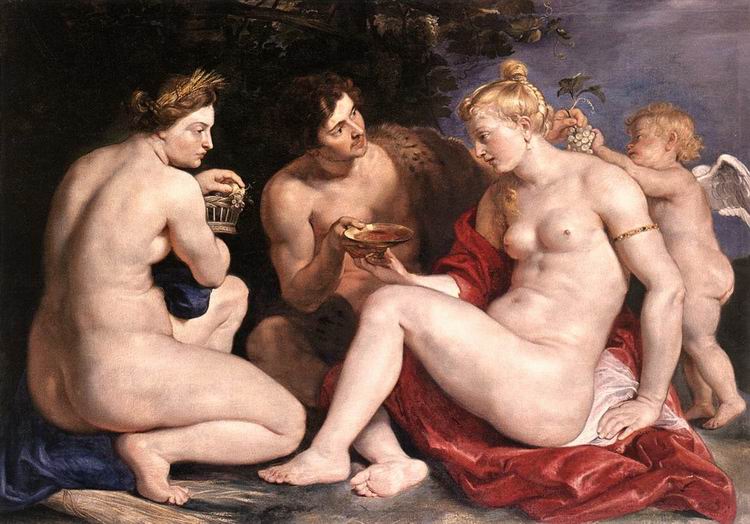
Peter Paul Rubens

Peter Paul Rubens

Then there’s the matter of psychological gender—what we think we are, what we feel like in our heads. How does it affect our personalities, the way we express our sexuality, the way we respond to art, for example? What does a generously proportioned Rubens nude broad do for you? or one of Michelangelo’s representations of God, looking for all the world like a steroid-crazed bodybuilder who pumps iron in a spit-and-sawdust gym? What do your physical and/or emotional responses to these images say about you and your psychological sexuality? Our knowledge of how psychological sex is determined in the brain is very sketchy indeed. A spectrum is more likely than either/or.

I could go on. Suffice it to say that things are not as simple as some would wish. I think there’s a bit of both in all of us. Hermaphrodites (functioning male and female organs in the same creature) are common in plants and animals. Homosexuality occurs in nature. And so do intersex states—organisms that are neither male nor female, but somewhere in-between, to put it crudely. Physical abnormalities of the penis are common in humans, and nearly all of them reflect a kind-of intersex state in which there is some degree of reversion to the basic female anatomy. Some human newborns appear to be of indeterminate gender, and the nature of their upbringing is a matter of choice by parents/professionals. And God loves all her creation.

The church gets into a terrible tangle about this. The reason is, I think, that it hasn’t quite grasped the fact that  biology has moved on from Aristotle, The role of semen as seed (and no more than seed) was appreciated at least as early as about 1400 BC. Later on, Hindu scriptures of the sixth century BC accept that the female is essential, with menstrual blood (from the mother, of course) forming the basis of the embryo, and semen merely the provoking agent for things to happen. Then along come others who thinks that the sperm from the male contains the miniature human, and that all the woman provides is the ‘oven’ for incubation. This faulty biology might at least in part explain the Vatican’s aversion to condoms. I suppose they think the used condom is full of miniature humans desperately clamouring to find an oven in which to bake. Extending this, the catholic view should be that intercourse is permissible only when conception is likely. Using the safe period for contraception, therefore, should be frightfully sinful.

070522_sharks_hmed_5p.grid-6x2It gets even better! New Scientist, 2 March 2013 tells us that virgin births are commoner than we thought. Though not yet recorded in mammals, except once about 2000 years ago in the Middle East, sharks, snakes, and turkeys, to name but three, can do it, and in the wild too. If this is a sign of things to come, men will no longer be required. Perhaps—and this is a long shot, I know—clerical celibacy is actually prophetic, pointing to the ultimate biological uselessness of the male of the species. In the Garden of Eden when the snake was talking to the woman, as they do, the man was nowhere to be found. Perhaps he was in his garden shed, recovering from surgery. Well now, lads, you can stay there. Is this not good news? I urge you to read Consider Her Ways by John Wyndham, and The Children of Men by P D James.

Fascinating stuff, raising all sorts of questions. There are doctorates to be written on the theology of gender and reproduction. Theology has to fit biology, not the other way round.
Life, the universe and everything

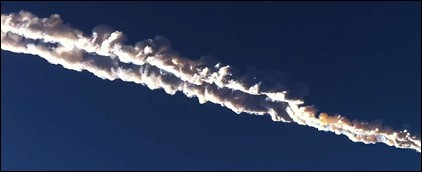
RussianMeteor_GregorGrimm_021413_marquee_420The meteoroid streaking across the Russian sky is a wonderful sight. Pity about the damage and injury, but what a spectacle. Easy to understand why people might have thought such a thing a sign from the gods, or even from God. Easy to imagine too that some people might think it an attack from another country. I wonder what North Koreans would have made of it if they’d witnessed it. We really do need proper education in science: it has implications for politics and peace. I haven’t yet heard a so-called religious figure say that the meteor is a punishment from God, the explanation given by some nutters for the 2004 tsunami, though the lightning strike over the Vatican has been linked with Papa Ratzinger’s resignation. We need proper education in religion. This has political implications too.

I’m not one of those who sees a conflict between religion and science—well, I wouldn’t, would I? I see them as mutually enriching. We are creatures of this earth. We live as biological organisms. We think as biological organisms. Our concepts of the cosmos and of the Divine are shaped by the limitations of our biology, of the way we think, of the way our brain cells interact with each other. Biology shapes our every perception. Mathematicians claim that their discipline is God. the trouble is that that too is shaped by how our, or rather their, brain cells work. Maybe science and biology are two aspects of the same thing. I rather think so. The conversation between science and spirituality is exciting. If only we could find some way of doing it that was jargon-free.

Proverbs 8 tells is that sofia, lady wisdom, is present alongside the creator during creation, at the big bang. Wisdom, an emanation of the creator. The stardust out of which you, me, meteoroids, planets are made. Wisdom, the ordering principle that converts the unformed to the ordered, chaos to cosmos.  The ordering principle, that is the laws of the universe or logos. This kind of stuff is a great way to begin confirmation classes.

Church of Ireland and termination of pregnancy

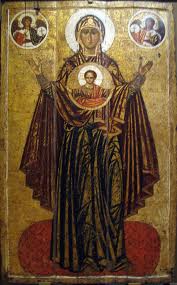
Panagia of Yaroslavl

Panagia of Yaroslavl

The Church of Ireland is to make a submission to the Government of the Republic about ‘abortion’. I can hardly wait. (I wish people wouldn’t call it ‘abortion’, by the way, which is a spontaneous event, far commoner than many realize. I wish we would call it termination of pregnancy.) The life history of a human being from fertilization to death is a continuous and infinitesimally gradual process. There is no single moment before and after which the organism is recognizably different. Attempts therefore to say that this moment or that moment is the time after which abortion is not permitted do not stand up to scrutiny.

Some say that ‘abortion’ might be permitted at any stage before the fetus can perceive pain. The trouble is, how do you pin down definitions of ‘pain’ and ‘perceive’, and how does someone who is not the fetus judge? Even if you can pin down such concepts, we would still only be talking of likelihoods and averages, since variations exist in the way that neuronal conductivity develops, and in the development of parts of the brain involved in pain recognition. Others talk of using the ability of the fetus to survive independently as a criterion. But this too is fraught, since it depends on the definition of ‘independent’. Medical intervention now allows premature infants to survive ex utero much earlier than heretofore.

As I see it, then, logic takes me to the position that if it’s permissible to kill a fetus, it’s permissible to kill any human of any age. I can see that under certain very exceptional circumstances, killing the fetus may be necessary. The argument concerns what those circumstances might be, and who makes the judgement.

In forthcoming weeks and months, I picture church bigwigs travelling at church (that is, our) expense to meetings where they ponder issues of ensoulment and anthropology and ontological intentionality and potentia obedientialis. I earnestly hope that biology will not pass them by.