Anger and apathy

475px-The_ScreamCorrupt police, whistleblowers persecuted, financial crime unpunished, cronyism, laws that are obligatory for us but merely aspirational for the rich and famous. Maybe all this doesn’t affect you personally.

Dealing with jobsworths in utility companies, banks, and councils. Wondering why you have to make an appointment in your busy life to sign a piece of paper that could have been posted to you. Maybe at work you’re harassed to do more, to achieve more, to sell more, to recruit more. Maybe you have to deal with managers who dump on you because they’re concerned only for themselves. Maybe some of this is more your experience.

Maybe you work for an institution that appointed you to do a job that cost you a great deal of distress, which, when the institution changed the rules, you see was for nothing. You’re left drained, disheartened, feeling foolish and hopeless—that is, de-sperate. There’s a memorable episode in the US House of Cards in which Kevin Spacey’s ‘wife’, a self-obsessed businesswoman, asks her underling to sack employees, and after it’s done, then sacks the underling. Maybe you understand what that must have felt like.

Anger is hard-wired in to the amygdala and limbic system of the brain. We need it, or used to, for survival. Suppressing it, however socially acceptable, is bad for the organism. I internalize it. I pretend to myself I can deal with it. Then after a couple of days I get collywobbles and pains and what feel like panic attacks. Slowly, it dawns on me that this is not indigestion or oesophageal reflux, neither is it psychiatric illness. It’s anger.

Some people get rid of their anger by thumping. I wish I were more like them. There’s no point explaining to those responsible why you’re angry, for the likelihood is that they’re so keen on saving face or backside (interchangeable?) that their response is merely to hide behind legalities and protocols.

What can the pastor advise about dealing with anger? I spent a good bit of time with a 12 year old lad who had an abusive father. He knew the fate that awaited him for having lost some trivial item. He was beside himself. I said ‘I know how you’re feeling.’ And he – to his great credit – said ‘no you don’t, how can you? you’re not me’. That taught me a thing or two. Saying ‘Jesus understands’ is likely to result in your admission to A & E. Rightly so. Getting people to talk about it is an absolute must. To scream and shout, to curse until there is no more energy left. To sink into apathy.

Apathy. A useful state, however painful it is to arrive there. A lack of emotion. All passion spent. No longer are you foolish enough to expect others to imagine how their decisions might affect you. From apathy you begin to pick up again, knowing better what you’re dealing with. Maybe you become intent on revenge. They say it’s a dish best served cold. The trouble is that seeking revenge makes you hard-hearted and bitter as it eats away like cancer. It is cancer of the spirit. But it’s easy to understand why films about revenge – Shawshank – are so popular.

Perhaps you’ll learn from the experience and move on. Maybe you’ll distinguish between anger on behalf of others, and anger on behalf of self, that is, injured amour propre. If it’s the latter, maybe you’ll see that you’ve fallen victim to the demon that incites us to seek approval from others, and you’re angry with yourself. Maybe you’ll see that those others’ opinions are not worth having. If so, you’ll come out of it wiser, determined to continue to let your ‘yes’ be ‘yes’ and your ‘no’ be ‘no’, despite the duplicity and thoughtlessness of others.

But it is never easy.
Scars, octopuses and trouts

450px-Finger_with_granulation_tissueA sort of homily for Proper 17, Year C

Sirach 10:12-18. Psalm 112. Hebrews 13:1-8, 15-16. Luke 14:1, 7-14

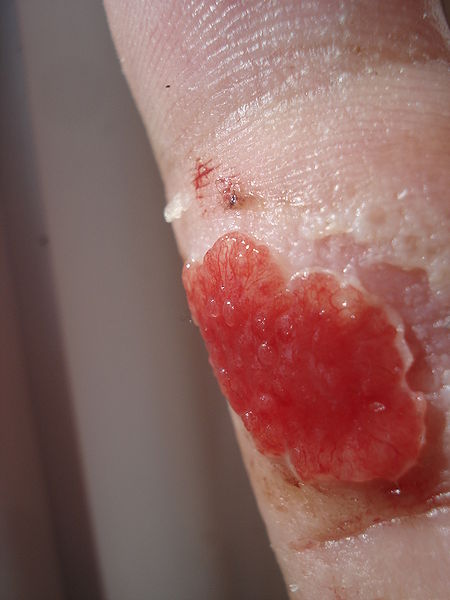
Being proud of someone else is one sort of pride. This can be a selfless pride. I am proud of my children. I hope this is selfless. Then there is being proud, standing over, putting oneself above. We talk about the ‘proud flesh’ of a healing wound. In the healing process, granulation tissue ‘stands proud’ of surrounding tissue and gradually forms a scar. Scar tissue is functionally useless.

You might say that people who are proud in this sense are functionally useless. Hubris: overweening pride, pride before a fall. Hubris kills.

A Pharisee and a tax-gatherer prayed in the temple. The Pharisee prayed, ‘God, I thank you that I’m not like other men.’ The tax-gatherer said, ‘God, be merciful to me, a sinner.’

It’s tempting to say ‘Lord, thank you that I’m not like that Pharisee.’

When the Titanic set sail, someone reportedly said ‘Even God couldn’t sink this ship.’

Pride test

Do you long for attention? Do you make a scene? Are you needy and clingy? Have you learnt to look pathetic?
Are you a begrudger? ‘They didn’t deserve that!’ ‘That’s not fair!’ ‘I could do better than them.’ Maybe you could, but you don’t!
Do you always have to win? Some people even cheat at Scrabble.
Do you tell porkies? Do you tell lies to make yourself look bigger than you are, or to belittle someone else? It’s all pride.
Do you refuse to admit it when you’re wrong? And when you’re caught, do you try to wriggle out of it? You blame something else, bring on the waterworks, blame the drink, or the tiredness or whatever?
Do you pick fights? Is this because you stand up to bullies? Or is it because you are a bully and must win?
Do you push in when you’re in a queue: ‘I’m very important, I have important things to do. The rest of you can wait.’
Do you get upset when people don’t recognize your worth?
Do you believe that dreadful advert where the lady says ‘Because I’m worth it’? No, you’re not!
Do you feel you’re basically a good person, but others are not?

One point for each yes. I scored 362.

Octopus_tool_useHumility

Humus = earth. Humble people are earthed in the reality of being human. We are creatures of this earth. Octopuses can assemble coconut shells to make a ‘house’. And humans think invertebrates are stupid! I know a zoologist who worked with octopuses, and she was quite certain that they were clever. I tell you, invertebrates will be around long after humans are gone. 

Pride versus humility

Pride covets others’ success. Humility says ‘I’m delighted for you’ and means it.
Pride is about being selfish. Humility is about being selfless.
Pride is about getting glory. Humility is about giving glory.
Pride is about independence. Humility is about dependence.
Pride says to itself, ‘My will be done.’ Humility says to the Lord, ‘Thy will be done.’
Pride leads to dishonour. Humility leads to honour.
Proud people make terrible spouses, parents, friends, colleagues, bosses, church members. Humble people, by the grace of God, can be a good spouses, parents, friends, colleagues, bosses, church members.
Are you going to start high and end low, or are you going to start low and end high?

Forget me me me. Take stock of your gifts and skills and faults. Accept them, be earthed, then focus on the Divine. Never mind competing with others. Make the best of what comes your way and pass it on.

When’s the last time you were on your knees? Some say, ‘I never get on my knees.’ When was the last time you acknowledged your pride to someone else? ‘I would, but what will other people think?’ Never mind other people. As Evagrios said, the worst demon of all is that which incites us to seek the approval of others.

cantankerous-old-troutLook at the news. Syria. Egypt. People gouge out a child’s eyes in China. People abuse children. Politicians screw their people. However much we may be horrified at the behaviour of those in the news, it hurts to acknowledge that it is but an extreme version of our own. It all comes down to supposing that ‘my’ wishes are more important than anyone else’s.

I need to remember that when I’m sitting at traffic lights, cursing some old trout in the car in front who seems to be waiting for a particular shade of green.

This is the sin of the world.

You pet a dog, the dog wags its tail and thinks you must be a god. You pet a cat, and the cat purrs, shuts its eyes and thinks it must be a god. What about you? How do you think?

If you should ask me what are the ways of God, I would tell you that the first is humility, the second is humility, and the third is humility. St Augustine.

Registering intersex

What sex would you say the baptismal candidate was?

What sex would you say the baptismal candidate was?

Very soon in Germany it will be possible to register a child as being of indeterminate gender—neither male nor female, but indeterminate.

Off you go to the Register Office. You have to say whether the little darling is male or female. No problem usually. But occasionally it’s fraught: the little darling’s gender is ambiguous because the anatomy of the nether regions is neither one thing nor the other. Usually, surgery is soon done to ‘regularize’ the situation. Making the baby look like a female is the easiest thing to do for the obvious reason that it’s easier to chop things off than stick things on. (This can lead to psychological problems later when, for example, the person grows up feeling like a male, yet having no dangly bits.)

Being neither one thing nor the other, or having bits of both, means intersex. This is a natural phenomenon. It’s not something the baby chooses, and certainly not something parents choose. They are, doubtless, in shock and perplexity. But the fact is that sometimes, more often than we recognize or admit, nature goes awry.

I know, I’ve blogged about this stuff before, here and here. The German initiative means I’m doing it again. There will be some delicious issues for the institutional church. It’s full of rules. If we say marriage is between man and woman, then we have to define man and woman. If we say ordinands have to be heterosexual, then we have to lay down criteria of maleness and femaleness. If only men may be ordained, how will manhood be assessed? Is it an absence of some things or a presence of others? If it’s a chromosomal thing, then what will assessors do about chromosomal anomalies? It seems to me that none of the church’s rules can be enforced. If it’s not possible to enforce them, there’s no point having them.

You may say I’m being silly. Perhaps you think that the institutional church is on the way out, and that what the churches say or do is irrelevant. You might be right. But if you think that the church could be, should be, and basically is, a force for good in the world, then it does matter. The trouble is that the churches generally are run by people who seem blind to what biology has to tell us about the human condition, and who tend to look backwards rather than forwards. A biological Galileo saga in the making.

Biologically, legal recognition of intersex is long overdue.

Click here for more about the development of sexuality.

Science and self

451px-New_Scientist_6_Feb_2010New Scientist has jiggled my little grey cells recently.

You are not alone

We have creatures living in us and on us. We’d die without them, especially the ones in the gut that help us digest food. Some of them are not good for us, though, and these are parasites. They take, take, take—there’s no give with a parasite. Did you know that parasitism is the most popular lifestyle on Earth? Up to now you may have thought it confined to adolescents who lie moping on the couch all day. Some of you may have, or have had, personal experience of this curious parasitic life form that lives at the expense of its host(s). Perhaps you harbour the wish to turn the tables and one day, in your dotage perhaps, become parasitic on those who treated you as their host. We can all dream. You may have seen parasites in or on your pets. You may even have them yourself: worms and malaria for example (if so, hopefully now recovered). Anyway, the point is that you and I are never alone.

Depression

Sometimes it feels as if we have parasites living in our minds. They suck well-being from us. They used to be called demons, but now we call them other things. One of the commonest is depression. At least 1 person in 6 has to deal with this some stage. It seems that the most popular antidepressants are not as effective as was once thought. Or perhaps it’s better to say that drug-resistant depression is on the rise. New treatments involving magnetism and electricity (not the old-style ECT) are being investigated. If brain waves can affect the external environment—and they can, otherwise EEG/EKGs wouldn’t work—then magnetic and electrical forces might affect the brain. Perhaps someone some day will explain to me exactly what magnetism and electricity are. The anaesthetic ketamine might also have its uses. Indirectly it helps nerve cells in the brain to grow new bits and pieces—which is a good thing for depressives. So maybe depression is not only a chemical thing, but also a structural thing—the shape of nerve cells is affected in depression. Then again, there’s the moon. It’s reported that the full moon makes people edgier. Well, if the gravitational pull of the moon can affect the oceans, might it not also affect the liquid in and around the brain, and the brain itself which is really quite jelly-like? Perhaps someone some day will explain to me exactly what gravity is.

Methane

Huge amounts of methane lie just below the Arctic sea. Melting of seabed ice means that there could be a gigantic smelly belch any time soon. That would bring global warming forward by over 30 years and change the face of the planet: sea levels, climate zones, malaria risk areas … a long list. Human activity might have nothing to do with it: the leakage of methane from this area is nothing new and could have been going on since the end of the last ice age.

So what?

Yellowstone

Yellowstone

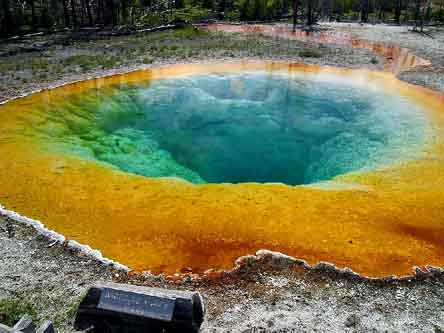
The earth does not revolve around you or me. In time-terms, the ice age is but yesterday. It will come again. The earth will do what the earth has to do, and we can not stop it, even if that means a gigantic arctic fart next month, or a catastrophic eruption of the Yellowstone caldera. Microbes will do what microbes have to do, and we can not stop them, even if that means MRSA and/or bird flu epidemics decimate the human population next year. We are not in control. Not one of us. The sooner each one of us comes to terms with this, the better. Actually, it’s liberating, for it means that there’s no point fretting about the future so we might just as well work with the here-and-now–which is what eternal means anyway: out of time, in the moment.

Each one of us is no more than a collection of memories, feelings, and illusions—or more likely delusions—about ourselves. If we keep inflating our balloons, at some point they will burst. If we recognize our own powerlessness and frailty, we are not subject to illusions about them, or about the pride that causes us to think ourselves better than others. Ego-self is illusion. St Paul calls it flesh. Letting go of it is what the crucifixion is about. To love my life is to lose it—the self-centred ego, the me, me, me. Losing this means stepping into the freedom of resurrection. Liberation comes phoenix-like after destruction. This is the truth of all religions worthy of the name. We can rise only if we have fallen.

It’s been said that the principal job of the priest is to prepare people for death. So here you are, boys and girls: sooner or later you’re gonna be dead. All your self, your hurts, your trophies, your notions, your targets, your money in the bank … none of it matters. Vanity of vanities, saith the preacher; all is vanity. Meaningless. It doesn’t matter how big your grave is, how well-tended it is, how often it’s visited, or how large is the plaque erected in your memory.

Reading about science reminds me that, as I pointed out here, we are creatures of this earth. No more, no less. We’re in partnership with the cosmos, not opposition to it. So work with what you’ve got and enjoy it while it lasts. And when it goes, work with something else.

Behold, the sea

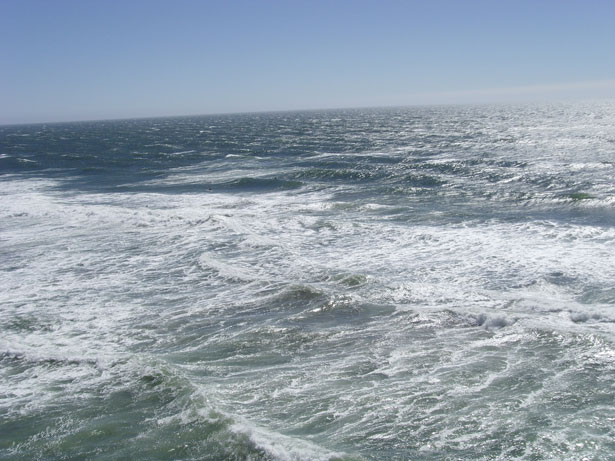
just-oceanBehold, the sea itself,
 and on its limitless, heaving breast, the ships. And in the ocean depths, the ‘things creeping innumerable, both small and great beasts’. Doubtless some of you will be immersing your tired limbs and arthritic joints in the sea at some point, so here’s something to ponder as you lie there sipping your Margaritas or whatever.

It’s a funny thing that we know more about outer space and other planets than we do about the ocean depths on this planet. All sorts of weird and wonderful things live down there. Gigantic single-celled amoebas, bristleworms chomping ferociously through the seabed, as close to the earth’s core as it’s possible to get. Creatures that live with the enormous weight of water pressing down on them, that ‘feel’ their way rather than see (no light down there), that know nothing of greedy bankers or being out of work or feeling depressed. Creatures that adore sulphur and shun oxygen. I suppose all they care about, if they ‘care’ at all, is getting enough food (so do we, if truth be told, though we pretend otherwise).

There are more creatures down there than humans up here, yet we think nothing of chucking our pollutants and radioactive rubbish into their environment. How long before we start to regret our casual disregard for ocean life? How long before the Kraken wakes? How long before our drilling on the seabed causes underwater landslips leading to tsunamis that wipe us out? And some people will doubtless blame ‘God’ for it.

Bristleworm mouth. These things can be a foot long

Bristleworm mouth. These things can be a foot long

When we have nuked ourselves out of existence, sea cucumbers and jellyfish and giant tubeworms will still be there, deep down in the oceans. When we’ve been wiped out by our antibiotic over-use, they will still be there. There’s a prayer I always use at funerals that begins ‘O Lord God, who has made us creatures of this earth’ to remind us that we are exactly that—creatures of this earth, like (other) apes, cattle, insects, amoeba, bacteria and viruses. Psalm 24 says the earth is the Lord’s, and all that is in it. Not ours. We are merely custodians.

My mind is like the ocean depths. I sometimes feel like someone who descends in a diving doodah with a powerful light attached. As the light scans over the depths, it illuminates some fantastic demon-creature that, unused to light, quickly flaps away. The trick is to get the light to stay on it, following it, no escape. Sometimes, then, the creature transmogrifies into something rather sad and loveable. Then it disappears as it becomes part of me.

Depression and exaltation

creativity-disease-how-illness-affects-literature-art-music-sandblom-philip-paperback-cover-artA letter in the Church of Ireland Gazette a few weeks ago asked why the church officially ‘has nothing to say in relation to the one in four people who attend our parishes every Sunday … [who] at least one time in their life experience serious problems with their mental well-being?’ The writer points out that there are plenty of resources on interfaith dialogue, building maintenance, liturgy, etc, but ‘no resources to help people who are struggling with mental health issues.’ I meet many people who tell me they are clinically depressed but do not wish it to be widely known: society and the church have a peculiar pre-scientific attitude to mental illness. Some of them cope without drugs, some are on antidepressants all the time, others on and off.

Let me ask: what resources would you like to see made available?

I need chemicals. I don’t blame myself for this. I don’t say, ‘if only I had, or hadn’t, done this, or that …’ I accept that something about the production and/or metabolism of my brain chemicals means that I cope better with help. This is not new: it’s been going on for over 20 years, and when I look back I see signs in my youth. Furthermore, I think previous generations showed signs too, not that I recognized it at the time. I’ve been on sertraline for years. When we went to France last summer I forgot to take them. ‘Never mind, I’ll see what happens’. What happened was that I began to feel ‘hunted’, agitation bubbling up. I started the pills again. Once since then, I’ve stopped them with much the same the results. Without the pills, I feel that the cosmos is not on my side. Paranoia is too strong a word, but certainly heightened watchfulness. From an evolutionary point of view, this is no bad thing: when we were hunter-gatherers we needed to avoid being eaten by predators, so watchfulness is hard-wired in. Another thing I notice without pills is a heightened tendency to shock (strong enough, some would say, without being heightened). This can be very amusing, at least to me—naughty child stuff. It’s as if I observe a torrent of words coming from another creature within me. I can understand why people thought, and think, in terms of possession and demons.

The GP asked me recently if I thought there was an element of ‘up’ as well as ‘down’ and I said not. But SWMBO rather thinks there is, and the more I consider it, the more I come round to the view that she’s right. I guess the pills smooth out highs and lows—every valley shall be exalted, and every mountain and hill shall be made low—but I have a sneaking suspicion that this comes at the expense of a kind of suppression, a feeling that I’m being averaged. There is much more to be described and written, but others were there long before me (Stephen Fry has recently spoken about this). There are many implications for theology, particularly with respect to biological drives and the notion of  ‘made in the Divine image’.

Some people feel that taking happy pills means that they are second-rate humans. I’m not inclined to see it that way: it’s not because we lack something, but because we see more clearly. We need something to cope with the strange society in which we live. Society doesn’t look down on people who take antibiotics, so why should those on antidepressants be sneered at? I am as I am. If I need chemicals, then I need chemicals. If that troubles others, it’s their problem.

I look back over the blogs. Sometimes I think ‘yes, spot on!’ Sometimes I think ‘why did I write that? I wouldn’t write that now’. The things we say and do, and write, are without doubt products of our moods and emotions. We are slaves of our brain chemicals. All of us. There’s plenty in the medical literature that points to a link between creativity and psychiatric illness. There’s the lovely story of a man with Tourette’s syndrome who takes pills during the week for work, but not at the weekend when he plays in a band: he’s a better musician without the pills. The question becomes: ‘how can I make the best of my condition?’

To all fellow ‘sufferers’ let me repeat: what resources would you like to see? What can I do to help? If you’d like to contact me with suggestions, I’ll see what I can do.

Suffering genes

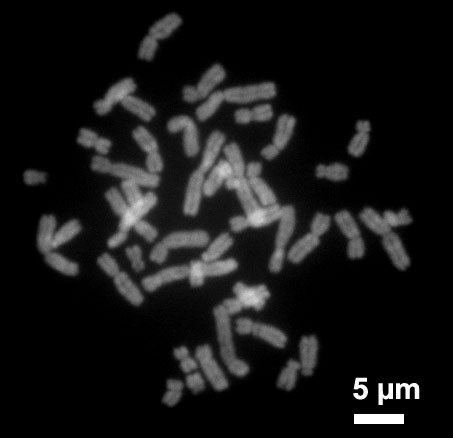
HumanChromosomesChromomycinA3We reckon medicine to be about the relief of suffering. It seems to me that Jews and Muslims are more enthusiastic about this than many Christians. Despite the holocaust, Jews embrace forms of genetic engineering. Rabbi Immanuel Jakobovits reportedly advised against marrying into a family known to carry an inherited disease. This refreshingly honest attitude is not confined to genetics: Orthodox Jews accept contraception when a pregnancy is likely to threaten a woman’s health—something officially forbidden to most Christians. R M Green writes that Talmudic sages denounce the glorification of suffering, and prefer to forego future reward if it involves present agony. This is attractive! It’s as if over the centuries Jews have had enough suffering and want to minimize it in the future.

In Christianity, by contrast, there’s always been something of a suffering-is-good-for-you masochism. St Paul says as much. Some Christians seem to glory in suffering. Their aim is not to avoid pain but to embrace it. We all know people who make a virtue of enjoying ill health. ‘After all’, they say sanctimoniously, ‘Jesus knowingly goes to the cross, and in this suffering I’m imitating Our Lord, and present with those who suffer’. Pass the sick bag. The logical position for these people would be to eschew antibiotics, elastoplasts, analgesics, hip replacements—the lot.

And yet, and yet … I can’t pretend to be logical or consistent. Given our human ability to take a tool for good and turn it to evil ends, I’m ambivalent about gene therapy. My wife and I decided when we were both reproductively intact, now long ago, that we would not have amniocentesis when she was expecting, for the result would not change our minds about allowing the pregnancy to proceed to term. The practice of medicine is, at root, antibiological and antievolutionary, and you could say that all medicine is a form of genetic engineering in that helping the ‘less fit’ to survive and reproduce weakens the gene-pool. Despite the considerable benefits that genetic medicine can bring, our use of it indicates intolerance of imperfection and disability. And so does plastic surgery, bodybuilding, cosmetics, and obsession about weight. There was a time in my life when I fell victim to this as a ‘gym rat’. Now I see these as indicating a quest for perfection and immortality that is a perversion by the satanic advertising industry of a perfectly reasonable spiritual quest for wholeness.

Yes, I know, such agonizing is a disease of materialism. But I live in 21st century Europe and am confronted by such issues. Even so, perhaps especially so, there are boundaries to be laid down about what is and isn’t permitted by society, and what can and can’t be available at public expense. Who will draw these lines? Politicians don’t seem to want to, and neither do medics. Ethicists and theologians can twist anything to suit—and do. Herbert McCabe (1926–2001), a Roman Catholic priest, theologian and philosopher, is reported as saying ‘ethics is entirely concerned with doing what you want.’ Maybe we should remove all controls and let people do as they wish—at their own expense. I think not.