Comfortable words

1We’re not the first and won’t be the last, but I don’t know what I think until I write it down, and writing is therapeutic, so …

We need to lick our wounds. We’re not straying from the nest.

I find solace in liturgy and the offices of the church. A funeral visit yesterday was truly moving, and I heard and saw that the family found it so too. Officiating at Evensong sung by Lichfield Cathedral choristers was like being wrapped in a sucky-rug woven by strands from Carlisle, Southwell, Ripon and Dublin. Mostly Carlisle: great east window, celestial ceiling, mediaeval misericords, organ. Emotional certainly, but good emotional not bad emotional. This kind of professional activity is somehow real. It’s just about all that matters at present other than family and close friends. Come unto me, all ye that travail and are heavy laden, and I will refresh you.  

Anything that requires a response from me is out of the question. I should be at two coffee mornings today. There’s no chance. I can’t face any sort of social interaction except with those who know the value of silence. This is nothing new, but what is new is the pain of being talked at. Pious platitudes provoke an only just resisted thrusting of index and middle fingers into the speaker’s eyes. They may mean well, but that doesn’t make it any better. Wise people say “there’s nothing I can say.” Even some clergy have responded thus. If in doubt, say nowt.

Some people say they will pray for us. A few years back while driving up the M1 I heard a radio play in which Almighty God, overwhelmed by prayer requests flooding in by heavenly fax, asked his secretary to hand him the next in line for action. It was—a bit of a backlog—from someone whose family had been wiped out by the Black Death. I doubt that any fax about us would make it to the top pretty soon. My notion of the impassible Divine isn’t that of a celestial GP doling out analgesic pastilles on demand.

The new dog entertains despite sharp baby teeth. It’s impossible not to be amused at a Boxer pup, though I suspect amusement will soon become tarsomeness and irritation. Irritation: yes, the rawness of grief makes me even more intolerant. I can hardly bear to engage with arguments about trivia, and let’s face it, it’s all pretty trivial. I know that people like the Vicar to make decisions so that they can blame him when stuff goes wrong, but Hugh’s death has made me determined not to engage with this kind of childishness. Is this intolerance of trivia temporary? I sure hope not.

I’ve been taken aback by some people’s responses in two ways. First, some persistently ask prurient questions. Ed pointed out that what they really want to know is: was it suicide? (Hugh “died suddenly”). That had not occurred to me. Now when people do this, I say “it wasn’t”. Second, a few people who’ve made precious little effort for decades to keep in touch with Hugh or us suddenly become very “caring”. Perhaps they are sincerely trying to help, but I can’t help feeling it’s just guilt.

It’s a lovely day: cold, sunny, my favourite. The sort of day for a train journey down the Rhine to a Christmas Market. Mainz perhaps, or Limburg (that was good). The Germans know how to do Advent.
A rare privilege

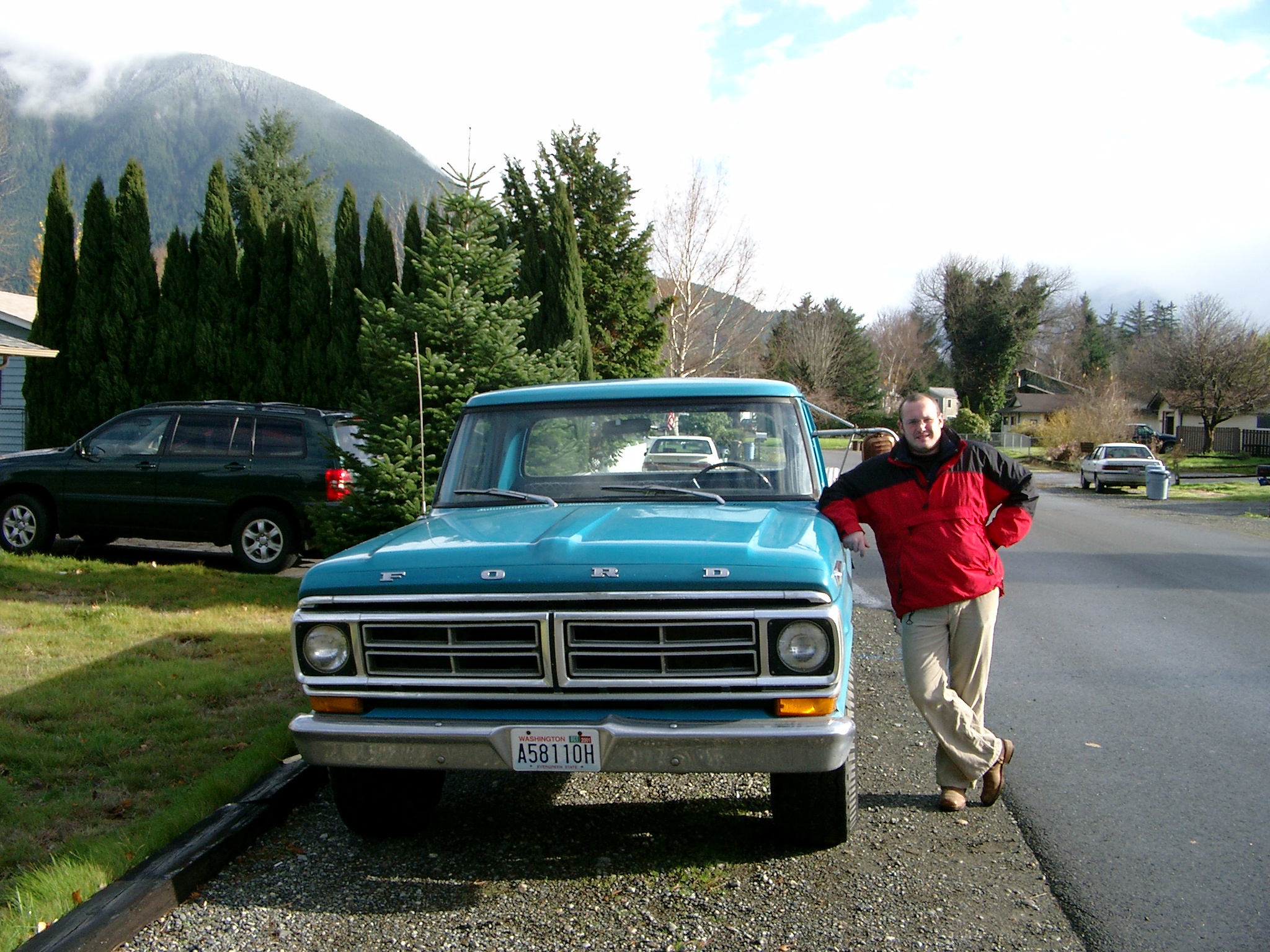
North Bend, WA, 2004

North Bend, WA, 2004

Three weeks ago I never imagined that I would say this, but — it’s a rare privilege for a father to speak at the obsequies of his son. It’s rare for obvious reasons. It’s a privilege because over the last three weeks I’ve come to know Hugh as never before, from hearing and reading what his colleagues and friends have said about him.

It’s customary not to speak ill of the dead so that what is said about them bears little relation to the truth – de mortuis nil nisi bunkum. I shan’t fall into that trap: I am more familiar than most with the anatomy of the gonads, so am well able to recognize balls. But I know what I saw in Houston when I visited Hugh’s work place. I know the shock, the glazed expressions, the crumpled faces of his workmates. I heard what they said. I read what they, and others, wrote. Those manifestations of grief were so very moving because of their patent sincerity. You can read some of them in the US funeral leaflet.

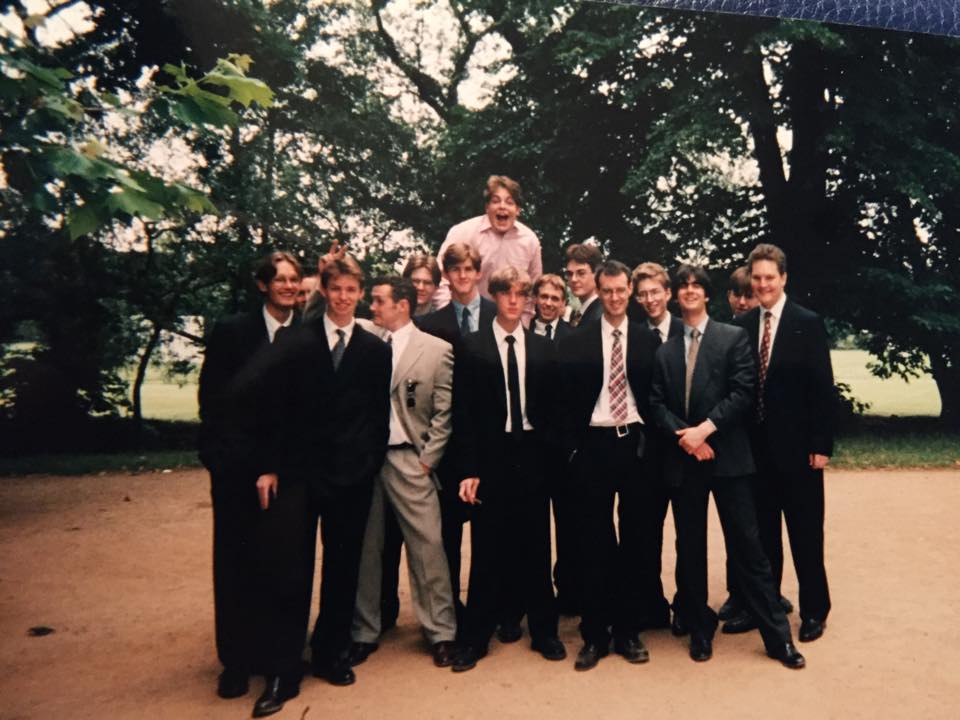
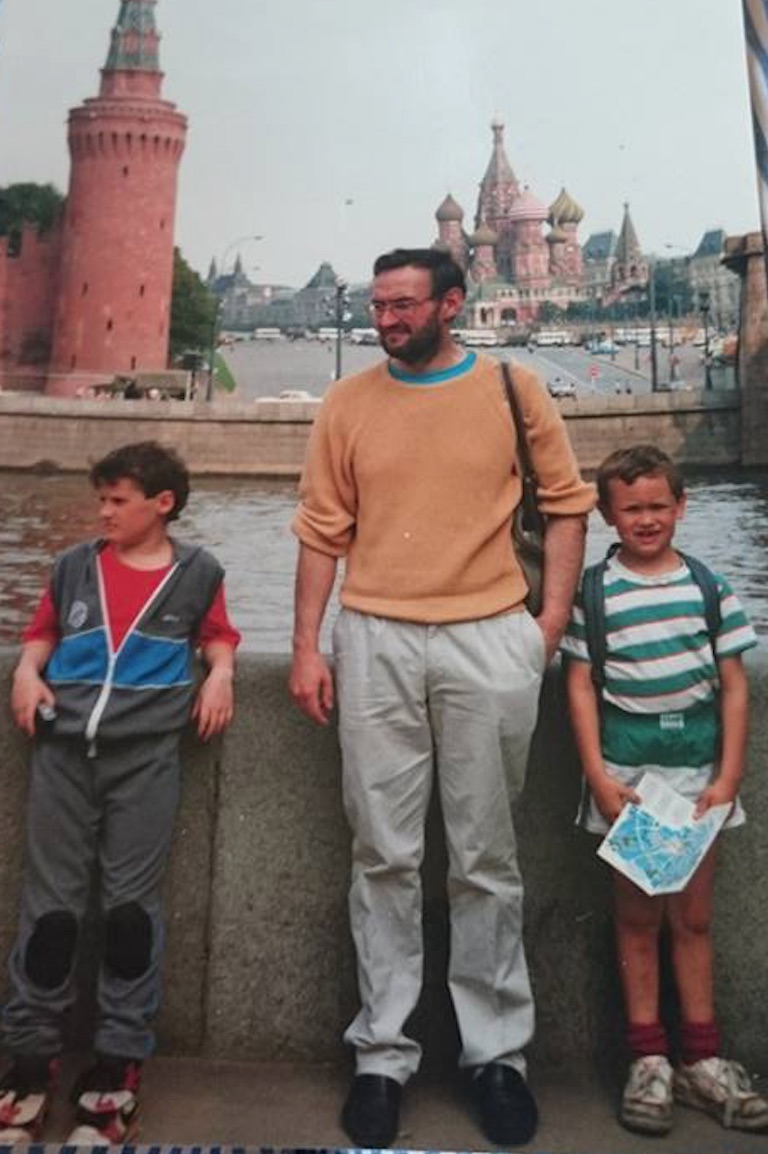
Boys in Moscow, 1987

Boys in Moscow, 1987

At the funerals of both my parents thirty years ago I was struck by how little I knew them, and how little they knew me as anything other than their grown up child. Thankfully, over the last fifteen years, I came to know Hugh as a man, a fellow explorer, not just a son. Now in the last three weeks, as in a whirlwind, I’ve had the privilege of seeing him as a teacher, an example, a beacon. It’s taken my relationship with him to quite a different plane. I wish, O how I wish, that it were not so. Like King David when his son Absalom was killed, I have wept, “O my son, my son, my son! would God I had died instead of thee, O my son, my son!” But it is so, and I must live with that.

It is a truth universally acknowledged that people can be divided into two categories—not sheep and goats, but drains and radiators. In pastoral ministry – and as a medical school teacher, which is a form of pastoral ministry – one comes across a lot of drains. Churches are full of them. They suck the life force from you as they enjoy ill health, or enjoy finding fault. They try to draw you into their jaundiced world view. They think that because you drink tea with them you give your and the church’s approval to their prejudices. They are, in short, full of crap.

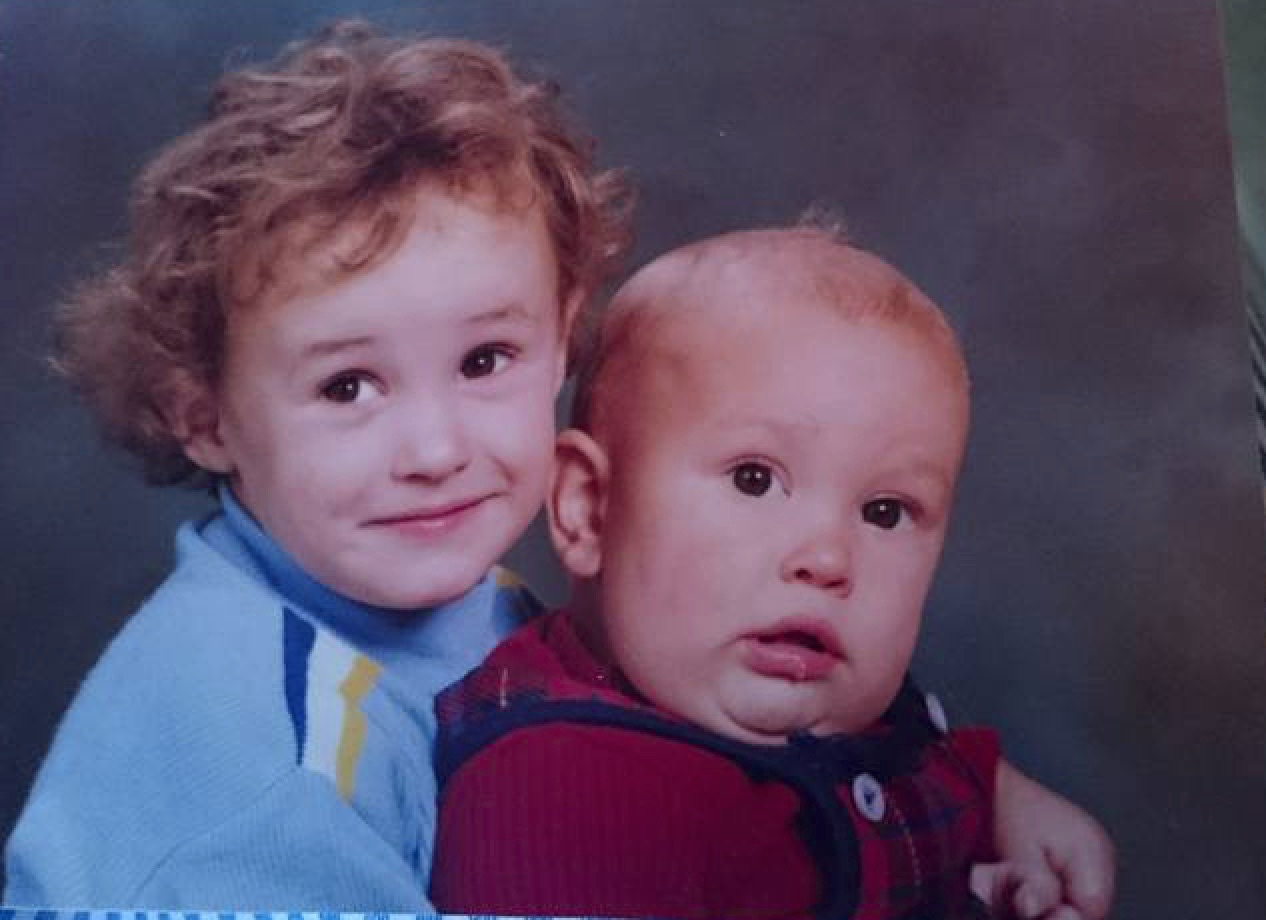
About 1980

About 1980

Hugh was no drain.

He radiated mischief. Eyes were open and alert minutes after birth. He prized open Susan’s eyes, “wake up mummy” as she was taking a nap between ministrations to a 4 year old, a 2 year old (him), and a newborn. “Don’t sit on the bike – you’ll fall off into the pit and break your arm”. So he did, and he did. And then “don’t go swimming with your arm in plaster, or the cast will fall off” – so there’s a memory of Hugh running up to the pool at a campsite in the Dordogne, and jumping in with his plastered arm held high. There’s a photo somewhere.

He radiated cheek: not many Wesley College second formers would say to a huge sixth form rugby jock—Leinster triallist—who collided with him in the corridor, “watch where you’re going, you fat fecker”. Hugh’s alliterative skill was not enough to protect him from retribution.

Eton Choral Course about 2000. Guess which is Hugh

The man in the white suit. Eton Choral Course about 2000

He radiated energy. He loved an argument. He had a profound sense of justice that made him provocative, dogged, and protective. He was intellectually quick so did not make himself popular with pedestrian Wesley College staff: he agreed with the psalmist “I have more understanding than my teachers”. He did not make it easy for his parents. But I comfort myself with the knowledge that there is nothing worse for an adolescent boy than to have a father who understands him. Hugh had no time for people who should know better, and he told them so. He was utterly intolerant of humbuggery. He comforted the disturbed and disturbed the comfortable. I am so very proud to be his father.

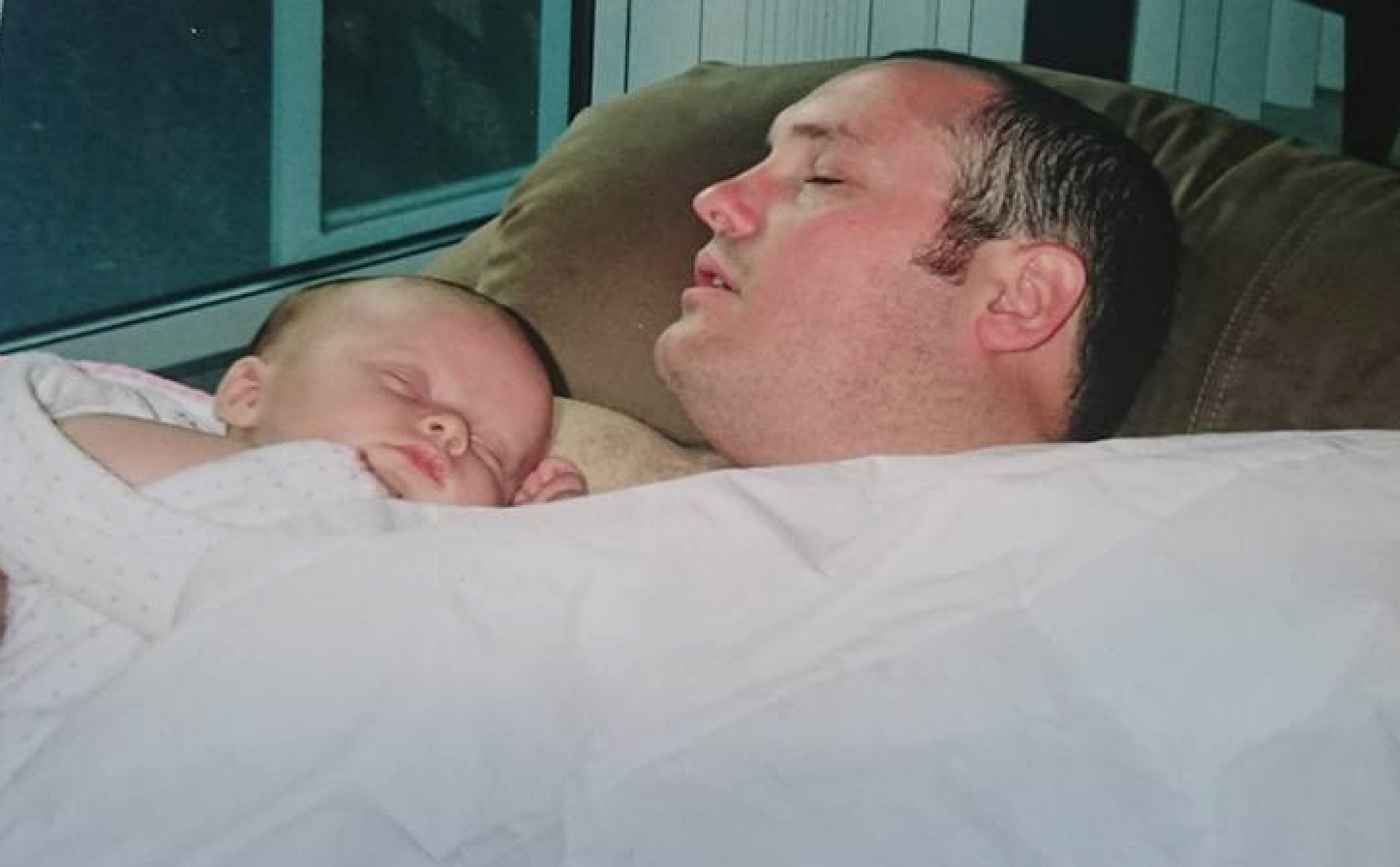
Asleep

2005

It’s the job of a priest in a funeral homily to put a life into a theological context. I recall something said by the Archdeacon of Chesterfield as we chatted before my ordination as priest 8 years ago. We were talking about “sin”. He said, “quite simply, sin is life unlived”.

Sin is life unlived.

You are sinning if you don’t make the best of what life throws at you. You are sinning if you don’t use your gifts and skills to increase delight. You are sinning if you don’t use your personality to put a smile on people’s faces. You are sinning if you sit in the corner and wait for other people to serve you. I could go on.

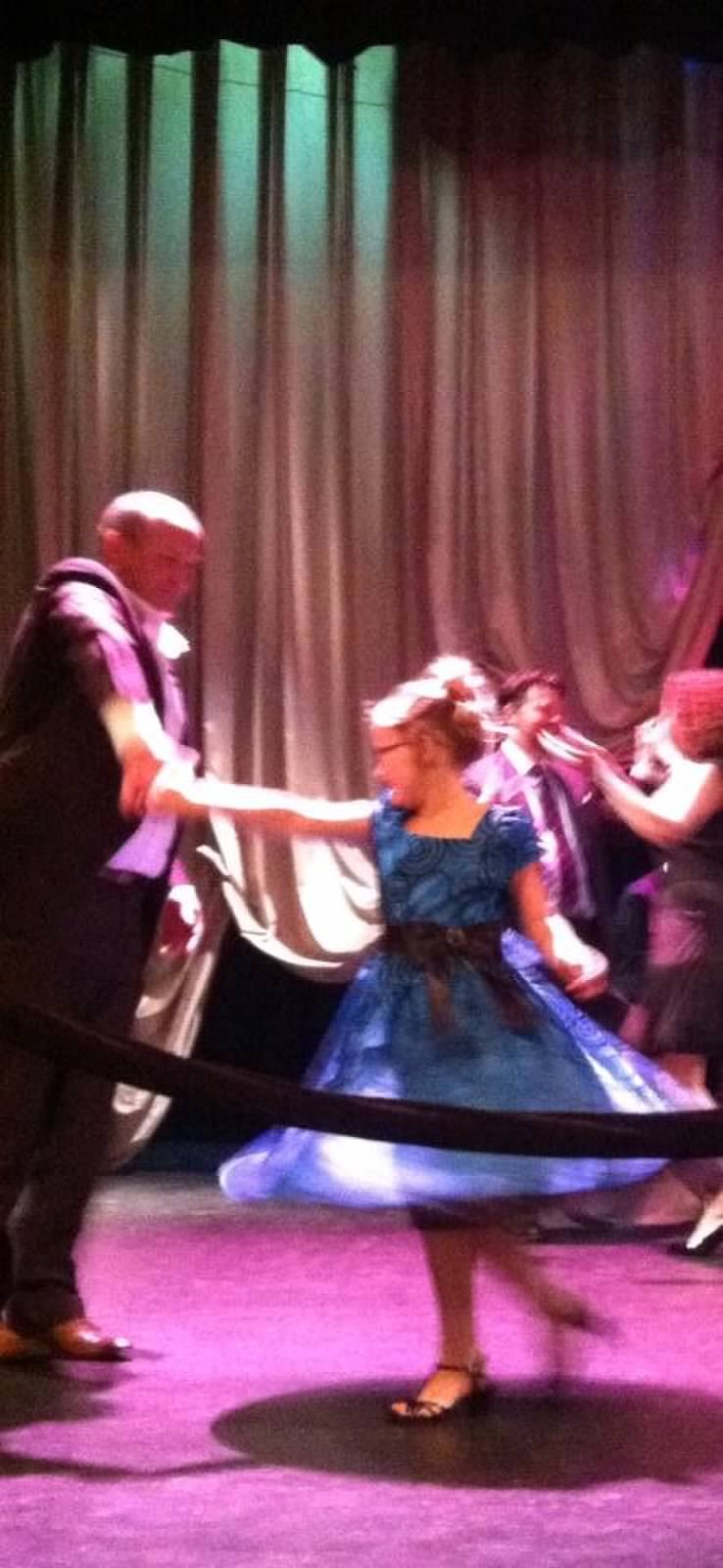
2014

2014

Hugh was never a sinner! You just had to mention his name and faces would light up. And if you found him irritating, you deserved to be irritated. St Irenaeus had it spot on 2000 years ago: The Glory of God is a human being fully alive. Hugh was fully alive. I could go on with other learned quotes, but one more will do the trick: Jesus said I came that all may have life and have it in abundance.

Hugh had it in abundance. He shared it with the world. He helped people who received him convert old wine to new. He packed more into 38 years than some people pack into twice that time. I’m sad to think that maybe in the last 10 years he was worn out as he valiantly and sacrificially endured a series of hardships for the sake of his daughter and wife, but I’m so grateful to the people of Independence Oilfield Chemicals that with them for the last year Hugh found a place where he was appreciated and cherished. It’s not everyone who finds a music degree to be the perfect entrée into lab work in the Texas oilfields. Talk about charm.

Bahamas

Bahamas 2015

I shall wrap up as I always do at funerals with an admonition. It’s particularly apt in this case because Hugh’s death was so unexpected. Remember, all of you, every one of you, that you will one day go the same way. And it might be tomorrow. So please, please use Hugh as your example: live your life to bring delight to others; live it so that when your time is up you leave behind as few regrets and as little unfinished business as possible.

Hugh. I am so desperately sad you’ve gone. I miss you every minute of every day, but thank you for letting your light so shine that we may glorify your Father which is in heaven. You are for ever with me.

Hugh Stanley Robson Monkhouse RIP. 20.10.1977 – 23.10.2015

A liver of lilies

white-water-lilyDoes being a C of E parish priest advance the Kingdom of God at all?

I am the curator of listed buildings, the administrator of diocesan regulations, the community shaman and witch doctor for rites of passage for people rarely seen again, the chaplain to an offshoot of the Evergreen club. I am expected by many to be the upholder of middle class prejudices as they try to suck me into agreeing with them. Sod that for a game of soldiers.

Some people who knock at my door for this and that are, I think, genuine. One of them has just been – with a child in a buggy – wanting money. He went off with tins of baked beans. I am a softy, but only, I fear, because I don’t have the courage to say ‘no’, so I chide myself about that.

SWMBO is much more robust—like when we were at Penrith Grammar School, and I used to ask her (a prefect like me) to tell the boys to get out because I didn’t want to. It’s true that I didn’t see why they should have to get out, but that’s another matter.

I recall being told to chuck some boys out of the bogs where they were smoking. I went to the Headmaster (a good man and a wonderful Maths teacher) and asked why I needed to: ‘if they want to kill themselves, let them’. He said ‘do it, or resign as Prefect.’

Guess which I did.

College life

Cambridge_Queens'_GatehouseA Cambridge contemporary died recently. The funeral was in Hampshire. I didn’t go. I gather that at the do afterwards a group of them raised the possibility of hiring a venue for a house party reunion. Would I be interested? one of them asked.

Part of me is curious, of course. It would be fascinating to see who’s fatter, thinner, balder (men only college in those days), richer. It would be interesting to see who’s still a nice guy, who’s a pompous gobshite.

But a bigger part of me is reluctant to go, so I was examining why this might be so.

When I think about those years, the predominant feeling is that I was always smirked at, tolerated. I put that to the man who wondered if I might like the house party, and he agreed that it was so, but that it was always with affection. “Like the village idiot” I suggested, but response came there none. ‘You can’t help loving that Stan of ours’ they sang in a College concert,

Why? No public school veneer? No sporting ability or interest? No posh accent? No family connexions? No sex appeal? (This was the opinion of the Deputy Head, a woman, at Penrith Grammar School, who said so to SWMBO when we were both pupils).

At a time when students are about to begin college courses, leaving the nest, incurring massive debts with student loans, it’s as well to remember that the image of partying, drinking, and carousing student life is a figment of the imagination of irresponsible commentators. It just aint so.

Essays, reading, tutorials, practicals, lab work, site work, placements, regulations, theses, dissertations. It is hard work. And on top of this—even before this—one has to deal with one’s own insecurities and thread one’s way through the cliques and gangs and the self-appointed élite of the student body.

And when they come out? There are not enough jobs befitting their qualifications, according to today’s news. So they take jobs for which their courses have been entirely superfluous. Still, it’s kept them off the streets for 6 years or so.

My father felt strongly that education was the way to better oneself. That was so in his day, but not now. So why not send people to school until they can read, write and do sums, then at 12 they can join the jobs market. Higher education then follows only for those that need it or that actually would like it.

A sure vote winner.

A cold climate

An architect designed this

An architect designed this

One of the less welcome accompaniments to getting older is dreaming about school, university and previous jobs. Last night I was yet again feeling guilty for not ‘getting on with research’ as a lecturer in Anatomy at Nottingham. The boss, Rex Coupland, made some barbed remark about it being too much to hope that he would see a publication soon.

How long does this sort of tripe go on? I thought I’d ditched this sort of stuff! Ah well, at least the dreams about the pecking order of school playgrounds have died down. Maybe I’m becoming demented with long-term memories shoving out short-term stuff. I can’t find my fountain pen—lost it last Wednesday I think. I’d much rather be able to remember that than some jerk in a 1962 playground.

As it happens, publications from Nottingham days did trickle along eventually, after I’d submitted my PhD dissertation. I vividly remember the viva voce examination: it was embarrassing. People had commented on how easy it was to read the dissertation—‘like a novel’ said the examiner from Glasgow, but the examiner from Sheffield, the foremost expert in one of the techniques I used, was (rightly) scandalized that I had made some sweeping journalistic statement that conveniently ignored facts (they always get in the way of a good story). I had to modify and resubmit.

glengorm

Glengorm

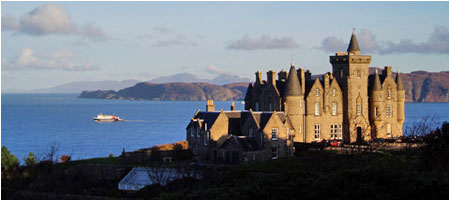
I’d begun to write the dissertation the previous year. I first put pen to paper (no computer or word processor) on a week’s holiday to the Isle of Mull. We rented one of the cottages attached to Glengorm Castle near Tobermory. I’d been rather taken by the place as Madam Sin’s (Bette Davis) HQ the film of the same name, a kind of silly James Bond romp in the Highlands and Islands. There we pitched up: Susan, her mum, three kids and me just after Easter.

Ye Gods, it was cold. Never been so cold. Was the cottage heated? It was not. There was a wood burning stove that made my eyes run, and there was a bath with some hot water if you turned the heater on and did a Highland Fling to get it to work. The children slept in their overcoats. I think I did too. The seaward views were terrific though: Coll quite close, and was that South Uist in the distance?

Those were the days when I was daft enough to think that I should take work on holiday with me. Never did any, mind, but felt I should. Despite an inauspicious start the dissertation was completed and submitted later that year.

After that I applied for promotion to Senior Lecturer. Those were the Thatcher days of University squeezes, and that year there were, I think, fewer than 10 such promotions in the entire University. Needless to say, I was not one of them. I started to look about at other opportunities. Early in 1987 the Professorship of Anatomy at the College of Surgeons in Dublin was advertised. I don’t quite know why I applied: no Irish blood, no golf, no shooting, no fishing. But I did. The interview was in March. East Midlands to Dublin was in a Fokker with elastic bands. All very cosy. I must have charmed the panel.

The job started on 1 January 1988. Those were the last years of Catholic Ireland, and that’s another story.

Blissfully bad behaviour

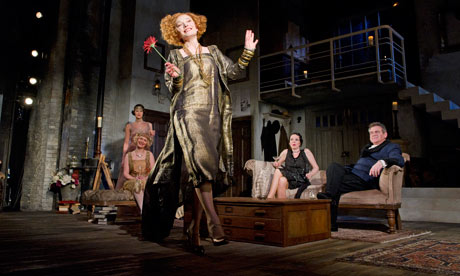
Hay Fever at Noel Coward Theatre“Each day is a little life: every waking and rising a little birth, every fresh morning a little youth.” Schopenhauer may have thought so, but I don’t, at least not when I’m dragged from the land of Nod by a commotion on the bed at 5.10 am.

I open my sticky eyes to find that what feels like a dog dancing on my head is indeed a dog dancing on my head. The tail wags—that’s a nice breeze. I suggest to the dog that he might calm down. When I say “I suggest”, I actually instruct the dog to go elsewhere with language that pious po-faces think a Clerk in Holy Orders should not know. The dog, impervious to any command that he dodge lorries on the A38, wins.

“Mine eyes have seen the glory of the coming of the Lord” – not so. They remain sticky and gooey. I peel them open. I arise and go to my kettle and conjure forth the first of many “cups that cheer but not inebriate”.

As we accompany Og the dog to the canal for the morning constitutional, SWMBO asks if I see the pretty flowers. Then she looks at me. “No, I don’t suppose you do”. Everything is a blur. So is the screen as I type, even after antihistamines, salbutamol and whatever it is in the dark brown inhaler. Prickly eyes, prickly skin, and a feather tickling each side of my nose.

Oh bliss, dahling, summer is upon us.

“The flowering grasses will be reaching their peak during the warm weather this week.” What a joy. This, I suppose, is why wheat makes me feel prickly inside, why whiskey and I have a fraught relationship (thankfully), why cakes and buns are not good for me, though it’s kind of people to offer me them when I visit, as Vicars are wont to do. A couple of weeks ago I took one, had a crumb, then surreptitiously put the bun it in my pocket. Later that day when foraging for coins there was a shower of crumbs.

My reaction to corn, wheat and hay meant that going with my father into his flourmill or hen house was out of the question, any notion of following in his footsteps unthinkable. Playing among hay bales was an early introduction to the phenomenon of cause and effect. Funny, though, I kept doing it for a while. Wasn’t it Einstein who said that insanity was doing the same thing over and over again and expecting different results?

I knew there was a reason why cold sunny weather suits me best, but for now I enjoy the performance. If my immune system is alive, so must I be.

Children of the 1950s

silver-sword1Back in the 1950s I remember The Silver Sword, on TV. The story, by Ian Seraillier, is utterly gripping. Aged 7 or 8, I became aware for the first time of the Second World War and the Nazis. It remains for me the most vivid example of man’s inhumanity to man.

The story concerns the three Balicki children, Edek, Ruth and Bronia. Their parents are carted off the Nazis to God-knows-where. The children have to learn to manage among the ruins of the destroyed Warsaw. A small silver sword from home becomes their lucky charm. They hear rumours that their parents have escaped. They trudge across Europe, then across Lake Constance, to Switzerland where the family is re-united. It’s based on a true story, and I guess there are many similar stories in war zones everywhere. The most memorable character, even after almost 60 years was Edek, played on TV by a very young Melvyn Hayes.

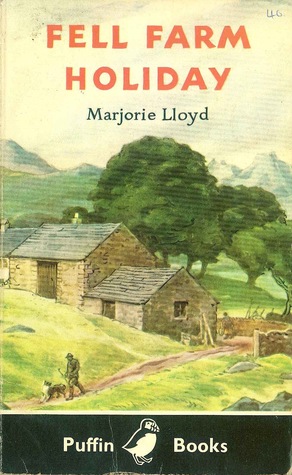
6931193Round about then at Langwathby School we were introduced to Swallows and Amazons. I think I was supposed to like those stories since they were about Windermere, and that was ‘ours’. I thought the children intolerably stuck up. Still do. I liked the children in Marjorie Lloyd’s Fell Farm books better, especially when they were allowed to go fell walking on their own and stay away from home for days. Why couldn’t I be free of supervision too?

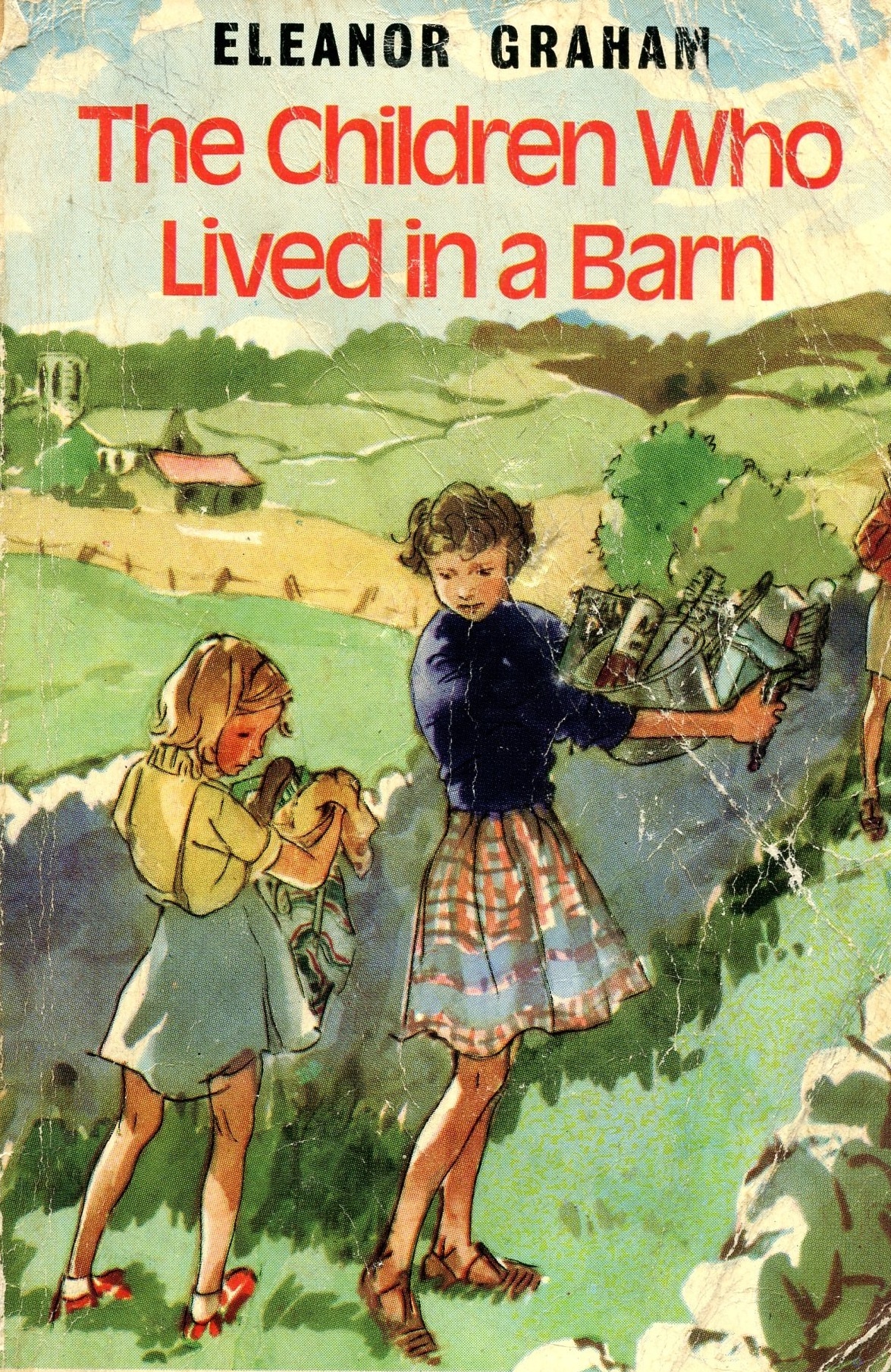
Persephone-Books-The-Children-who-Lives-in-a-Barn-cover-389x600Best of all was Eleanor Graham’s The Children who lived in a barn. An utterly improbable story, I now see, but that didn’t bother me then. The Dunnett parents fly to foreign parts to see some aged relative, leaving the children at home. They do not return. The village busybodies interfere. The landlord evicts the children. They set up home in a barn. The authorities threaten them. The children manage for months. More threats and interference. Eventually the parents return.

Oh, the bliss of being free of adult restrictions and expectations. I was with the Dunnett children all the way. I could see the nosey-parkers around me. That story did more to make me intolerant of interfering busybodies than any other event in my life.

I think about the Balicki children making their way across Europe. I think about the Fell Farm children. I think about the Dunnett family. I look at children of today accompanied even only a few yards to school, watched, smothered.

It’s just over a year since we left Ireland

Ulysses_Arriving_In_DublinNext month sees me one year in post.

We’ve left Ireland twice now. The first time was in 2003 after 15 years at the College of Surgeons in Dublin, when I came to help set up the new medical school in Derby. Then again last year after three years in Portlaoise.

Both times it has taken me a long time to disconnect and for the emotions to begin to settle. Both times things were complicated by our leaving behind a daughter and a son, and in 2014 a son-in-law. When we came to England in 2003 another son was here, but now he’s in Texas with a family, so that enriches the bubbling brew.

In 2003 it took me several months to give up a daily fix of the College of Surgeons website hoping for news of friends, and (I confess) a bit of schadenfreude. Now its the Facebook pages of Irish ex-colleagues.

“Why am I doing this?” Part grief, part anger, part separation anxiety, part questioning of motives, for there was no compulsion to leave. And part dependency.

My heart is somewhere between Dublin and Holyhead: there is something about Ireland that I dearly love; bits of my DNA are in Dublin, and bits of Dublin are in my DNA. I’m managing now to look at the Irish Times only once a week (Saturday, for Ross O’Carroll Kelly) and catch up on the news. And of course there’s the Euro pensions (not good at the moment).

It brings it home to me in a tiny way the plight of those who at great risk flee their homeland, who cross the sea in leaky barrels, who trudge miles and miles overland. People whose relatives at home may be punished as a result. Those who, like the man I saw this morning, was lured here and abused by criminals and now can’t go home, and can’t find work or accommodation.

Spare a thought for people away from home. You never know what battles they have faced, or what grief they suffer.