
Poor biological material?

srgry02Hearing’s not great. Euston-station tube orifices are patulous. Left tympanic membrane has a large retraction pocket (medics will understand). I blame all this on glugging too much cows’ milk when I were a lad. Cows’ milk is snot- and allergy-inducing poison. My left retina became detached about 10 years ago and an attempt to stick it back on failed so my left eye is useless. And, now, oh joy oh rupture, I’ve got suspected glaucoma on the right.

So off we trot to ophthalmology outpatients. I’ve joined the ranks of the shuffling Zimmer frames, the arthritics, the blue rinse cardys (that’s the men), and the even-more-obese-than-me. Interesting to note how many patients bring the family with them for a day out. Put me in mind of families checking in at Heathrow for flights to the far east, with mountains of luggage.

If I weren’t already a member, I’ve joined the ranks of the poor biological material. This highly politically correct phrase was much used by us medical students to describe those whose inheritance, life circumstances or personal choices left them just a bit—how shall I put this?—poor biological material. The ‘strawberry jam complexion’ (my term) was a pretty good indicator of a diet rich in white bread and sugar. Of course, there isn’t a machine that measures this, so as a diagnostic tool it’s limited.

Sitting in the ophthalmology waiting room and having exhausted the stamp collecting magazine (5 seconds) and Woman’s Weekly (let’s say 10), I was pondering the differences between the general population in Ireland and England. Here are my preliminary observations.

The Irish are healthier and look more alive. They are closer to the earth—many of them work on the land—and so are more physically active. They are less obese. There are fewer mobility scooters in Ireland, in fact I don’t remember having seen one in 19 years there. Can their burgeoning presence here be put down simply to the popularity of Benidorm?

Why not tell people to take up their beds and walk? There is precedent for this, I understand. Give them all a gym subscription and make them go at least three times a week. Think of the savings on arthritis, joint replacements, mobility scooters, diabetes, obesity and more. Then they too could have a body like mine. It won’t do much for eyes and ears though.

Asperger vicar

a-word-01I’ve been watching some of the TV programmes about Asperger’s syndrome. Here are some of the qualities and gifts that people with Asperger’s have.

  • They seek truth, not sham; reality, not opinion.
  • They say it like it is, with no hidden agendas.
  • They’re not limited by what others think.
  • They’re direct; single-minded, focussed.
  • They think in different ways.
  • They are loyal, not scheming.
  • They’re not interested in selfish gain.
  • They persist.

Made me think that maybe Vicars could learn a thing or two from them. Made me wonder if Jesus was a bit Asperger.

I resolve to be more like them. Imagine what will happen when I tell some old trout to get her mangy old flowers out of the sanctuary. Or tell Mr Halitosis that his breath could strip the paint off the Forth Bridge.

Funny, I always thought I was Tourette’s. Maybe I should not be a Vicar.

Five months on

DancingNobody told me about the exhaustion. And if they had, I don’t suppose I’d have believed them, or thought it would ever apply to me.

It’s now almost 5 months since the great catastrophe. After the “excitement” of getting to Texas in a hurry, the emotional events of that week, returning for the Irish funeral and then the dreadful day of doom scattering on the Sugarloaf—after all this comes the daily grind of grief.

Much of the grief is self-serving; did I love him enough? did he know? did he love me? why did I do such and such when he was 10? did he know his time was limited? is that why he said such and such? why did I not pick that up? why did he feel he could not confide in me? … you can imagine the little stories I invented – without any evidence.

The self-pity has more or less worked itself out. Slowly I deal with autopsy findings, intellectual processing, picking up broken ends, revising expectations. I am beginning to sleep through the night thanks to Nytol. And the sparkle has returned to my eyes, people tell me. I begin to recover mischief and iconoclasm.

Four months ago I said that I felt as if I’d been struck with the greatest imaginable physical force. And so I did. But the exhaustion goes on and on and on. I do not wish to leave the nest. I do not want to be in situations where people might ask things of me. I barely have enough energy for myself and certainly none to spare for others. People hammering on the vicarage door at 11 pm swearing and spitting leave me unmoved. Those who claim to need train fares to Birmingham are likely to be dismissed ungraciously. Conserving energy is difficult when people are wanting to touch the hem of my garment in all sorts of ways. They sympathize, they mean well, they don’t mean to steal my energy, they don’t know they are doing it. I need to rethink how I deal with it.

A friend of similar age was discussing getting older with me. He was lamenting the lack of intellectual oomph. But, you know, I rather like that. After a lifetime of living by my intellect and striving to prove myself to parents, to colleagues, and to ego, I find it liberating to renounce the multiple seductions—academia, music, church, to name but three—to which I fell victim. Vanity of vanity, all is vanity.

These last few weeks I’ve been very glad of films on Netflix and YouTube. I’ve been enjoying violence as never before. But the thing that always revives the drooping spirit is—wait for it—Benidorm. As I make the great renunciations I begin to come down where I ought to be …

… the gutter. The valley of love and delight.

Life cycle of crockery

article-1029700-001533AB00000258-694_468x383SWMBO has berated me for taking a bowl from the draining board rather than from the cupboard.
The life cycle of household crockery, a complete mystery to me, is clearly complex, and any disturbance of the natural rhythm is one that, as far as I can judge from the tirade that assaulted me, leads to cosmic disharmony of the most profound order.

It seems that reuse may begin only after an article has resided in the crockery cupboard for an undefined though not inconsiderable period. Before reaching said cupboard, the article must have been ‘dried’ on a tea towel (why tea towel?) despite already having drip dried on the plastic draining yoke, again for an undefined though not inconsiderable period.

To skip these two stages in the cycle by, as I did, reusing a bowl that had just been washed, is a mortal sin.

The state of Albion

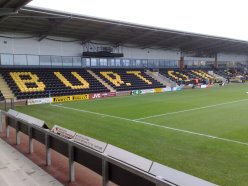
pirelli-stadium-2.jpgEast Staffordshire Borough Council has cut its funding to the voluntary sector by over 27%. The Mayor, a member of the Borough Council, has written to ask me to support his chosen charities. Do you see anything odd here?

People who in my opinion need psychiatric care are unable to have it because the resources are not there. Junior doctors feel their voice is ignored by a government intent on spinning for the sake of cheap publicity. But look at the salaries of NHS administrators. Do you see anything odd here?

The Church of England General Synod makes decisions based on grand policy gestures without paying attention to those of us at the coal face. Indeed, it feels as if in order to put them into effect, they must needs hector the likes of me. You elect people to PCCs and they elect people to Deanery Synods and they elect people to Diocesan Synod and they elect people to General Synod. And by the time these darlings get that far up the greasy pole some of them are so intoxicated by being near the source of ‘power’ and influence and titles that they lose sight of where they came from.

Local politics and national politics affect everyone. Church politics affect very few, only those odd people whose Sunday hobby is going to a strange building that reeks of the past and who live in the past. It’s been said of academic politics (universities etc) that they are so vitriolic because they matter so little. How much more is this true of church politics.

As I keep banging on, Lent is an opportunity to take stock and look ahead, ditching what we don’t need any more. Our diocesan apparatchiks call this mission action planning – though I’ve no idea what mission is. I understand the value of assessing strengths, weaknesses, threats, opportunities, so that’s what we’re doing. The archdeacon is coming to check up on us in June. As government checks up on schools through Ofsted, it won’t be long before the Bishops check up on all our activities through OfGod.

I read in a book once that foundations are best built on rock not sand, so here are some rocks for you to consider as we plan for the future of our churches. Remember that I had a life before ordination, so I am not institutionalized. I’ve worked in the big wide world amongst people who know how the big wide world works. I’ve no interest in kow-towing to bishops or archdeacons, and I’m only concerned about my parishioners. Actually, as a cradle Methodist, I don’t know what bishops are for. Here are some of the realities that we’re up against.

  • The vast majority of people under the age of 50 do not know the Lord’s prayer – have never heard of it, even.
  • There are an increasing number of families in which four generations have never set foot in a church.
  • Church funerals have plummeted even in the 10 years I’ve been ordained. No bad thing, less hypocrisy, though dioceses bemoan the drop in fee income.
  • Some people say that there is a reservoir of affection for the church in the local community. I disagree. There may be smidgeon in the over 60s, but it does not result in significant support. Younger people don’t care two hoots.
  • Some people regard the vicar as the means of tracing their family history – and that’s all.
  • Some people expect the vicar – and the church – to pick up those who fall through the net of hard-pressed social services (see above) though who they think will do it, or pay for it, is not clear,

I could go on. And we haven’t even begun to consider buildings, toilets, car parking, let alone God.

Which brings me to football. Football stadia are our cathedrals. They have their own bishops and priests. They have their acolytes, their rituals, their liturgy, their hymns, their swaying charismatics. They provide pleasure and fun and community spirit. They are about living in the present and planning for the future.

Up the Brewers.


Margaret Forster has died

hqdefaultHer work includes stories of her early years in Carlisle in the 1940s and 50s.

In those days, before the M6 and the electrification of the West Coast Main Line, it and its Eden valley hinterland were cut off from the rest of England for much of the year when bad weather blocked the A6 over Shap and the road to Hexham.

It’s a particular part of the world, with the Pennines to the east, Scotland 8 miles to the north, the Solway to the west and the Lake District and Shap fell to the south. It doesn’t belong to the north east and Newcastle, though some would put it there. It doesn’t belong to Lancashire and Manchester, though the BBC thinks it does. It doesn’t feel at home in Scotland, though it was on and off until not that long ago. It is, as I say, particular. And so are its people.

After reading one of her books I wrote to say inter alia that so much of what she described of her childhood in the 1940s resonated with me and mine ten years later. It evidently took a decade for Carlisle attitudes to travel 20 miles upstream along the River Eden. At that time I’d not long moved to Ireland and I told her that this blunt and forthright Cumbrian was having to come to terms with the slantiness of Irish ways.

Her reply was wonderful, and I hope she would not have minded my sharing a bit of it with you. She described the exchange between her father and a visiting nurse bent down dressing his poorly leg. Imagine the flat vowels and properly pronounced consonants.

Yer must find it hard doin a job like yoo-ers.

Why’s that, Mr Forster?

Well, with you bein so stout.

Cumbrian factual straightforwardness with offence neither intended nor taken.

The inhabitants of lesser counties – and they are all lesser – simply don’t get it.

Requiem aeternam Burton Burbles

55430_largeNo, no, not Hugh. He’s had his requiem.

But his death is causing me to reassess my priorities. No more pussyfooting around. No more wasting time on trivia. And no more Burton Burbles.

It first appeared as Rambling Rector in 2008 as a kind of 3-church benefice leaflet in Derbyshire. In 2011 it moved across the Irish Sea and served the same function for three churches in Ireland. Then I started my blog http://ramblingrector.me so when I came to Burton I changed the name of the leaflet to Burton Burbles to reduce confusion.

S Paul’s and S Aidan’s have their own magazines; S Modwen’s does not. S Paul’s and S Modwen’s have weekly news sheets, S Aidan’s does not. I thought there was a need for a vehicle common to all three churches and tried, singlehandedly, to make it such.

At a meeting last night it became clear that I was alone in this view—indeed, there was more than a smidgeon of hostility to the notion that each church might need to know what others were doing. I must therefore be wrong.

Burton Burbles could only serve the intended purpose if information were passed to me, since along with most Vicars who are not seriously deranged I don’t know stuff unless I’m told it. Or it’s written down and handed to me. As it is, or rather was, I wasn’t told it and yet some people still were offended that I hadn’t appropriately stroked their egos.

If people want theological whimsy and provocation, and/or to know what’s in my mind, they can come to church, or log on here to the blog – I write something most weeks. Occasionally there are pieces by me in The Burton Mail, the local daily.

So finally, and not in homage to a writer that does not appeal to me,  IF

If you can start the day without caffeine or pills; If you can wait when loved ones are too busy to give you time; If you can take criticism and blame without resentment; If you can face the world without lies and deceit; If you can relax without booze; If you can sleep without the aid of drugs; If you can love without imposing conditions; If you can do all these things;

… you’re a dog.

I love all beauteous things

CarlBoss

Eyes that see shall never grow old

At last, Herbert Howells speaks to the sanctuary of my soul. Or, more truthfully, at last his music has penetrated the fat inclosing it.

Over the years, I’ve thought and said some dismissive things about Howells. That when you’d heard one of his Evensong settings, you’d heard them all (like Haydn String Quartets, and Palestrina Masses). That his organ compositions were little more than quiet-loud-quiet or loud-quiet-loud. That—ye Gods, how I am ashamed of this—he never let go of the death of his son. Mea culpa, mea culpa, mea maxima culpa.

It’s tempting to say that his loss released energy in his work that speaks to my loss. But the Requiem that I now find so poignant was written in 1932, three years before his bereavement. Howells certainly channelled his grief into creativity, but early compositions speak to me just as powerfully, so there is something more than the outworking of his grief that penetrates to my Holy of Holies.

I wonder what it is. Is it perhaps no more and no less than the pursuit of beauty?

I found beauty in the early 1960s in Carlisle.

The biology teacher shouts “don’t you know which side your bread’s buttered?” when I bare my soul about music or medicine. The organ teacher borrows money from my parents, so can hardly encourage me to go against their wishes. I finally let hold of my grip in 1972 when I went to medical school. I don’t think I’ve ever recovered from that loss. I’ve been chasing and mourning it ever since. Is my addiction to the church merely a vain attempt to cling to that first love?

Today I’ve discovered Howells’ I Love all Beauteous Things written in 1977. Like the anatomist’s knife it slices open my insides in one stroke. It exposes my soul to the world. An unprotected soul is mortally vulnerable, but better wounded than icy, for the wounds do the work. Gerda and Kay in The Snow Queen, different parts of me, tears of love melting heart of ice.

We see events in the world that demonstrate, yet again, the three groups of demons (addictions in modern parlance) that Evagrios in the fourth century AD identified as responsible for the ills of the world: “those entrusted with the appetites of gluttony, those that suggest avaricious thoughts, and those that incite us to seek the esteem of others. All the other demons follow behind and in their turn attack those already wounded by the first three groups.”

“We cannot solve [the attacks in Paris] problem only through prayers. I am a Buddhist and I believe in praying. But humans have created this problem, and now we are asking God to solve it. It is illogical. God would say, solve it yourself because you created it in the first place.” These words of Dalai Lama shout at me.

Take responsibility for your actions: your overeating, your overuse of antibiotics, your exploitation of other people, your consumption of natural resources … Face your grief for your sins, and for the hurts done by others. Then your tears will flow. Tears that come from the heart: herzwasser. The woman’s herzwasser that washes Jesus’ feet. Herzwasser that flows when we are forgiven, and when we forgive. Herzwasser that flows in the presence of beauty in all its manifestations: sounds, sights, smells, handiwork, openheartedness, and above all else sacrificial love: “O my son, my son, my son! would God I had died instead of thee, O my son, my son!”

The Kingdom of God is not about life after death. It is not about an ideal political system. My kingdom is not of this world: it is an inner kingdom, here and now.

It is certainly not a kingdom of control. It is a kingdom of liberating beauty in its protean manifestations. Beauty does not conquer by forcing, but by freeing.

I love all beauteous things,

      I seek and adore them;

God hath no better praise,

And man in his hasty days

      Is honoured for them.

I too will something make

      And joy in the making;

Altho’ to-morrow it seem

Like the empty words of a dream

      Remembered on waking.

Robert Bridges, 1844–1930