Enough

6a0120a7aae27b970b01538f6cdea3970b-800wi

The perfect pastor

I’ve been scathing about clergy who after a few years in parochial ministry suddenly discover they are being “called” to sit behind a desk. I become incandescent when I see more and more parishes dumped on fewer and fewer parish clergy, while at the same time noting the cancerous growth in the number of staff in diocesan offices.

It was similar in academic life. Forty years ago one of the pleasures of being a university teacher was that apart from academic work there were ancillary tasks to be attended to, such as admissions, and student pastoral care. Since then, these have been taken from academics and put in the hands of people employed solely for the purpose. Whether or not this improved the student experience is questionable, but it certainly made my life less interesting. Coupled to this, the staff-student relationship was destroyed as Orwellian algorithms replaced discretion and discernment. The reduction in the number of people at the coalface, and the pestilential growth of faceless administrators, are common to both.

Now, after thirteen years in parochial ministry I must eat my words. I understand why clergy desert parish ministry for administrative jobs and chaplaincies in hospitals, prisons and such like, where professional standards apply, and employment is governed by law.

I’ve had a varied life. I learnt survival skills as a fat and bookish boy in a rural community where only sport mattered. I survived—enjoyed—university life on the edge of the fens despite a northern accent (no, I’m not a professional northerner). I was moulded into a career that I didn’t particularly want but found a niche for myself in one of its side streets. I ministered to people in towns, villages and cities, including Camberwell and Brixton. I learnt Machiavellian skills of university politics and wielded them with some distinction. I developed a feel for what people need if they are to flourish. I dealt with happy students, sad students, needy students, independent students, crazy students, manipulative students, delightful students, apprehensive students (I was one myself). I can recognize chancers and charmers. I coped with being an Englishman in the Republic of Ireland. I survived the death of one of my sons. I’ve dealt with all sorts and conditions of colleagues, many of whom were and are egomaniacs.

But nothing, nothing, compares to the pressures on my psyche that come with front-line parochial ministry: the frustration and helplessness when confronted by almost malicious bureaucracy, the way it impinges on innocent people trying their best, and having to deal with mendacious, manipulative and occasionally psychotic church people.

Two things sap my morale more than anything else.

First, cowards who complain to others but lack the courage to complain to whomever they’re complaining about—me. There have been only two or three (that I know of) in my ordained ministry, but it takes only one to drip poison. I know they’re doing it because people tell me (that of course raises more questions). The poison is like acid that becomes more destructive the further it spreads, so that by the time it gets back to me, it could corrode steel.

The force that breaks down and splinters—diabolic—is much more potent than that which builds up—anabolic. The tendency to entropy rules every bit as much as in thermodynamics. I know in my head that complainers are in a tiny minority, but they are vocal. They are deeply disturbed, and part of me is concerned for their welfare. But first I must look after myself. People say I need a less porous roof over my head. And I do.  But I don’t know how to grow it, and if I did, it would change me. Perhaps I need to change.

Second, people who are incapable or unwilling to think for themselves. They think that because someone from former millennia said something or propounded some theory, the old view must prevail, the implication being that people of a former age were more intelligent and better informed than we are. I know of no evidence for this.

Such people are obviously frightened. They need the security of the straitjackets woven by others. They sit like abused children, cowering in the corner of the room. They are sad. And I am naive to hope that they might change.

I’m heartily sick of hearing that my views on such-and-such are heretical and of little worth because they are out of line with those of say Paul or Augustine or Aquinas or Calvin or Wesley. If the church is to regain any kind traction in society, it has to come to terms with the realities of life here and now, not there and then. It has to think afresh. I’m on record as saying that if there is a conflict between, say, biology and theology, then theology must either be ditched or changed. But I feel as if I’m pissing in the wind.

As I get older I find it increasingly difficult to cope with stress. At present I feel much like I did shortly after Hugh died: exhausted, drained, anxious, with barely enough energy for myself, let alone others. A year ago I thought I might seek a year’s extension and stay in post till I was 71. I was enjoying the job. I’m shocked at how quickly the feeling of having had enough has overwhelmed me.

Advent letter 2018

Leningrad bookshop as was

Leningrad bookshop as was

Yesterday a friend told us that she hated Christmas letters. This is because, she said (rightly in our experience), she is fed up with hearing how perfect other families are, mum and dad sustaining the world economy with their cottage industry, fighting corruption and reversing global warming, though—hypocrisy alert—this seems to involve a fair bit of travelling on aeroplanes. The children of this perfect family are truly chips off the old block and are already in line for Nobel prizes.

It doesn’t occur to the writers to put a sticker on the envelope advising the ingestion of antiemetic medication before opening.

This may well be the last of the Monkhice “Advent” letters since the Vicar has it on good authority that the Liturgical Commission of the Church of England, in its continuing suicidal quest to be relevant and trendy, will abolish Advent from 2019. It will be replaced by a series of “Sundays after Black Friday”, the liturgical colour to be vermilion red to reflect the resultant bank balances. The season of expectation is thus replaced, in line with the zeitgeist, by that of instant gratification. The residents of Burton vicarage, in their loyalty to all liturgical innovation, have enthusiastically embraced the spirit of the age by consuming the first tin of Celebrations. Actually it’s plastic. Can you have a plastic tin?

Susan and Stanley went to Barcelona in February. It snowed. We liked Barcelona, especially the old part. Stanley was not impressed by Gaudi. Despite, or possibly because of, reading History of Art at Cambridge, he thought a five-year old could have done better. The Sagrada Familia is over-rated and looks as if it’s melting, and Gaudi’s tiles are not as good as the ones in Carlisle station jacksie where there are also some interesting and educational messages on the wall.

Speaking of which, himself got into trouble in Sagrada where he was desperate for a wazz so went to the loo, or tried to. But a Guardian of the Porcelain refused him entry on the ground that it was being cleaned. He was reminded of an episode in Leningrad, as was, in 1987 when in the bookshop on Nevsky Prospekt young Hugh, nine or so, said he needed the loo. Stanley went to the counter and said to the assistant “gdye twalette pazhalusta?” The response was “nyet.” This exchange was repeated. Stanley turned to young Hugh and suggested that he go into the corner of the shop and “piss on the floor”. The assistant then escorted the pair of them to the staff toilet. It just goes to show.

The next outing after Barcelona was to Cumberland in August where the Vicar officiated at the wedding of his grandniece in the parish church of the village where he spent his childhood. It was a lovely occasion marred only by the fact that his left eye, the blind one, was very painful. Examination the next week revealed that it was about rupture as a result of arteries bleeding into the vitreous humour, so he had a little operation. It is still not right, not painful but irritating. He wanted them to take it out so that he could have two glass eyes, one with red sclera so that he could pretend to be Dracula when it suited him. Or rather half Dracula since the good eye does not (yet) have a red sclera. Actually, the good eye isn’t that good. It has glaucoma and a cataract. He won’t drive on dark nights any more. This is wonderful since he can miss meetings. He told his parishioners that there would be no more evening meetings in the winter. They were delighted. Fewer meetings for all: truly a win-win situation.

The trip to Cumberland was combined with the Vicar giving an organ recital in Whitehaven. Surprisingly perhaps, West Cumberland is full of good organs for which there are various reasons, one of which being the profitability in the 19th and early 20th centuries of mining and heavy industry.

Our other jaunt was by train to meet medical school friends in Leeds. Decades since we last saw some of them. Apart from these trips, and occasional visits to Ireland, it’s difficult to prise Monkhice from Burton.

Stanley’s hearing is disimproving too, again not without benefits in meetings. They have mouths, and speak not: eyes have they, and see not. They have ears, and hear not: noses have they, and smell not. Susan’s hearing is not great either but her vision is good. She can still thread needles. She spends a lot of time crocheting and stuffing things—toy animals that she makes along with friends at The Making House which is in posh Burton, that is to say, the other side of the river.

Stanley was reminded yesterday that 2019 marks 50 years since he started third level education. He says education, though he’s inclined to the Alan Bennett view that education is what’s left when you’ve forgotten everything you were taught. This year was 30 years since he became Professor of Anatomy at the Royal College of Surgeons in Ireland. Like birthdays and anniversaries such things don’t move him much, but they are reminders that tempus fugits. As it fugits he looks back over his life and he’s reasonably happy given that he doesn’t want to be boring—indeed he thinks boring people should be exterminated—and he would like on his deathbed to say “my God that was a helluva ride”. Or royud as they say in north Dublin.

After having being led a merry dance over the past few decades, Susan has chosen the retirement home. Not Penrith, as previously suggested (that was a crazy idea – she says so herself) but here in Burton. It’s a 2-down 3-up with a long thin garden in the town centre. The question is when? Himself is required to quit his job no later than 6 June 2020 when he’ll be 70. He could go earlier. He could apply from year’s extension in order to see the assistant curate through the first three years. We shall see.

Stanley learnt long ago not to make statements on behalf of other people, so all he’ll say about the rest of family is that Victoria and Edward are well, delightful, quirky, so not boring, in Dublin—as is Shane, Victoria’s husband. Abby and Adriene are well in Texas. We are of course in regular contact with them. Adriene remarried this summer so we hope that they will have stability after a tumultuous time. Abby is coming over next summer and we look forward to that. Hugh is always in our hearts. It is indeed true that he shall not grow old as we that are left grow old. Which reminds me if you want to read my Remembrance Sunday sermon, you’ll find it on my blog. Google Rambling Rector blog.

Happy advent, sorry I mean happy season after Black Friday. May whatever force you believe in light up your life. And remember, sin is life unlived.

The Kim code

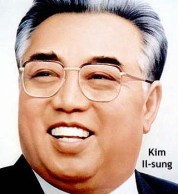
kim_il_sungNorth Korea has long fascinated me.

Michael Palin’s Channel 5 programmes (http://www.channel5.com/show/michael-palin-in-north-korea/) helped me to see how, in a country completely flattened by US forces just over half a century ago, people see Kim Il-sung as saviour.  The social morality of Confucianism helps me to understand how loyalty and filial piety contribute to the Kim family surviving in power. With US forces perceived as hostile only 100 miles away from Pyongyang, I understand the necessity to run a tight ship. Given the changes that are beginning to occur, I wonder how long it will be before Pyongyang is much like any other city in east Asia.

North Korea has affected my theology too.

Consider some of the stories surrounding the births of the Kim leaders. Heavenly sounds; miraculous changes in flora and fauna; rainbows; stars. Sound familiar?

There is nothing new about such birth narratives. They have always been part of folk mythology. There was nothing new about the Gospel birth narratives in Matthew and Luke, and certainly nothing new about virgin births (there’s an interesting story to be told about the history of ideas in embryology, but it can wait).

Why are they written? Quite simply, to embiggen* the subject.

Biblical scholars have known for centuries that the scriptural birth narratives are fiction, fairy tales written for exactly this purpose. There is nothing even remotely new about this proposition. The stories in Matthew and Luke are stuffed with allusions to Hebrew prophecies and how the babe of Bethlehem is their fulfilment—again to ‘big up’ the child in the manger.

So what?

  • Jesus was a charismatic, integrated human. His effect on those around him was profound. His influence extended far beyond those who met him. He became the example, the prototype of abundant human living. His friends, impressed by him as by no-one else, wrote about him afterwards to ‘big him up’ so that his influence lives on long after his death. There is nothing new here.
  • Is he the Son of God? Kim Il-sung is a god. John 1 tells us that we all may become ‘children’ of God. Our destination in eastern Christian theology is that we come to share in the attributes of God.
  • Kim Il-sung, though dead, is risen. He is still head of state. He is worshipped.

Some other parallels

  • Every official pronouncement and scientific paper in the Soviet Union had to begin with a reference to the works of Lenin, and in North Korea today, official pronouncements must quote one or more of the Kims. In the church, when people are confronted by a knotty problem, medical ethics for example, they first work out what common sense tells them, then they scour the Bible to back it up with a suitable quotation.
  • Institutional churches are totalitarian states. When the Church of England’s Church Assembly was set up in 1919, taking away some of the power from Parliament, one MP said ‘The fact that the organisation proposed by the Archbishop of Canterbury is precisely the same organisation as has been adopted by Lenin is attributable to the desire of both to secure the same end … The real principle at the root of Bolshevism is a desire to combine a democratic form with autocratic effects, and that is what has taken place in this Constitution.’ (see: That Was The Church That Was: Andrew Brown & Linda Woodhead). Recent events in the Catholic Church and the Church of England make it clear that nothing has changed.
  • As an aside, it is held in North Korea that the digestive systems of the Kim family were so well tuned that they never needed to excrete urine or faeces (a bit like ladies who don’t sweat, I suppose, but much better). We know nothing about Jesus’ excretory processes, so the Kims are one up there. Furthermore, Kim Jong-il was regarded by some as fashion guru. Jesus’ influence in that regard flowered briefly in the hippie 60s, but didn’t survive.

So …

For me, the value of Scripture is in allegory and poetry. Some of it is terrible tripe. I recall my ageing Methodist minister uncle telling me that increasingly he was a Wordsworthian who saw God in all things. Just as platelets are broken off bits of megakaryocytes, so everything in the cosmos is a bit of God. We all have particles in us from the big bang. We may well have within us, in the form of mitochondria, some of the earliest life forms. We are all bits of God. What is not God is nothing (I think that’s from Sergei Bulgakov). What is not God is no thing.

Logos can be translated as ‘the system underlying all things’ (read Heraclitus), so: the laws of the cosmos. In John 1 this gives us: In the beginning was the system underlying all things, and the system underlying all things was with God, and the system underlying all things was God.

I can cling to that, just about, and to the last line of one of the verses of This is the truth sent from above: ‘and if you want to know the way, be pleased to hear what he did say’ [and do].

* embiggen came into use, along with cromulent, after being used in ‘Lisa the Iconoclast’, the sixteenth episode of The Simpsons, seventh series (1995-6).

Play with your ears

PONTING_1911_Dog_Listening_to_Gramophone_Antartica-620x481The 2018 summer organ concerts at St Modwen’s finished last Wednesday. We went out with a bang.

The player was Ben Bloor, a kind-of-local lad, who’d been chorister and organ scholar at Derby Cathedral, then went on to organ scholarships in Oxford where he read music, Westminster Cathedral, St George’s Windsor, and Rochester Cathedral. He is now successor to Ralph Downes and Patrick Russill at Brompton Oratory—at the tender age of 27. He wears his virtuosic gifts with quiet affability, earthed humanity, and wry humour. He is someone who would have provoked in me, when I was his age, naked envy.

The concerts began in 2017 when the new organist, Tony Westerman, arrived. He has many contacts in the local organ scene and I said to him that it would be wonderful to have “a bit of culture”. I pretended that this was for the sake of the church and the town, but in truth my motivation was entirely selfish. It was I who wanted a bit of culture. Thanks to Tony’s organisational skills, I sure got it.

The concerts have been a remarkable and unexpected success. Burton is within 11 miles of two cathedrals with great musical traditions: Derby with its wonderful acoustic to the north-east, and Lichfield to the south-west. Coventry and Birmingham are not that far away either. So if Burtonians want organ music, they haven’t far to go.

I wasn’t expecting great numbers, and told people that I’d be happy if we made double figures. At the first 2017 concert there were, IIRC, over 30, and the most we had in that season was over 60. I’m told we sometimes had more than Lichfield Cathedral.

St Modwen’s has a number of things in its favour. It’s in the Market Square, in the middle of town. The organ is in the west gallery and speaks directly into the church—going full pelt it’s almost painfully loud. The console is at ground level and the organist can be seen, and can hear everything in proportion. But perhaps most significant was our insistence that the pieces played should be foot-tappingly tuneful. No forearm smashes. No tuneless crap. And the players have obliged with good heart. And hearts have been good. We’ve been blessed with organists, including professionals, willing to give their talents free, therefore indirectly for local charities. I’m extraordinarily grateful.

Some players have been stunning, and most excellent. It doesn’t follow that professionals necessarily play better than amateurs. I would rather listen to a performance that’s passionate and in tune with the spirit of the music despite a few mistakes, than one that’s cold, clinical and flawless—and I’ve heard professionals give performances that have been exactly that, and certainly not worth the vast fees they charge.

Only two players were disappointing. It sounded as if they, quite simply, did not listen to the sound they produced. A good player always plays with his or her ears. S/he will listen to what s/he’s doing. In my half-century as a church musician and cleric I’ve heard organists who are transported in ecstasy to an Enid Blyton la-la land where the sun always shines and wrong notes are unknown. Rather than listen to what they’re actually doing, they “listen” to what they think they’re doing. I’ve “fond” memories of a Derbyshire village organist whose hands worked entirely independently of each other, and without any apparent neural connexion to the retinal impulses resulting from the black dots and squiggles of the printed music. I coped with this by singing very loudly so as to drown her out. It was truly w-o-e-f-u-l. She couldn’t be sacked since she was related to half the village and the pastoral consequences would have been seismic.

Back in the 1960s my piano teacher, Miss Julia Thompson, a very proper Penrith lady, constantly exhorted me “Stanley, you must always play with your ears”. It was some of the best advice I’ve ever been given. I carried on with lessons until I went to Cambridge in 1969. A lumbering late teenage boy sat next to a bird-like epitome of propriety, alternately praising and chastising him, must have made a pretty picture. One of my most cherished memories was when Miss Thompson set me a Beethoven sonata (can’t remember which) and after listening to me for a few minutes, stopped me and, knowing that I was a good sight-reader, said “Stanley, have you done any practice this week?”

Project Nokabolokoff

asdsa

With a snip snip here and a snip snip there

I heard a sermon yesterday telling us, as is right and proper, how our churches must be places of universal welcome for all, irrespective of appearance, wealth, intelligence, sexuality, and so on.

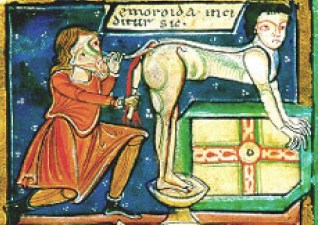
The speaker contrasted such a welcome with Deuteronomy 23:1 in which men who have had their bollocks and todger chopped off (respectively ‘stones’ and ‘privy member’ in the King James Bible) are forbidden from entering the assembly of the Lord. Look it up if you don’t believe me. I’m not for now exploring the issue of whether or not I, who had a vasectomy aeons ago, am therefore fit to celebrate the holy mysteries.

For someone such as me with a long-standing interest in the evolution of reproduction, all things genital, and possessed of a degree of intellectual mischief, this was stimulating. On the way home I hatched a plan for the salvation of at least one of my churches. Here it is.

In the summer months, when the church hall is not being used for the homeless shelter, it could become the centre for something that has a great future in the Church of England—one of the few things that have—namely, an emasculation clinic.

There would be space for operating table(s), appropriate restraints, and anaesthetic equipment, though most procedures could be done under local—even with appropriate soundproofing no anaesthetic at all. There is more than adequate storage for surgical instruments and other paraphernalia. The kitchen area, which we hope to overhaul in the foreseeable future, could with suitable modification serve as a scrub-up area.

The theological and biological bases of this proposal are, in brief:

  • the reversal of the somewhat restrictive anatomical purity requirements of the Pentateuch, e.g. Deuteronomy 23:1.
  • an acknowledgment of the salvific power of the shedding of blood, as may be inferred from one of the verses of Fr Faber’s fine hymn There’s a wideness in God’s mercy, viz ‘There is plentiful redemption in the blood that has been shed; There is joy for all the members in the sorrows of the head.’ The references to penile anatomy are quite explicit, as you can see.
  • a freeing, for those that request it, of the tyranny of testosterone that corrupts our human nature with horrid masculinity (I’m quite content with this tyranny myself, but I gather others are not).
  • an acknowledgement of the fact that there is no such thing as 100% male or 100% female and that we mammals are all on a spectrum of sexuality—pansexual I suppose. This is particularly so in males for reasons of biology that I’ll expound another time.

This modest proposal would be entirely congruent with the well-established tradition of the Church of England that results in the gradual, decades-long emasculation of any male who crosses the threshold of any of its churches. It would hasten the earnestly to be desired feminization of the church, and provide a public service for a society where boys and men are increasingly not allowed to be boys and men.

A winner all round, I think.

An interesting linguistic snippet. ‘Penis’ is a Latin word meaning little tail. The correct English word for privy member is cock, defined in OED as a short tube for the passage of liquid – as in stopcock, ballcock etc (again, look it up if you don’t believe me). I suppose matrons of ancient Rome were as squeamish as are matrons today: “now, now, Titus, stop playing with your little tail, supper’s nearly ready,”

British Association of Clinical Anatomists: origin and future

srgry02A paper for the meeting of the British Association of Clinical Anatomists at the Burton on Trent meeting, 14 December 2017

In the beginning was the Word, and the Word was with God, and the Word was the Anatomical Society and the Journal of Anatomy. They were in the beginning with God, and without them was not anything done in anatomy that was done. And the Professors of Anatomy saw themselves as the Lord Almighty. They terrorise and pulverise. They march through the breadth of the earth to possess the dwelling places that are not theirs. They are terrible and dreadful, their judgment and their dignity proceed from themselves. And lo, it came to pass that the people rebelled inwardly in their hearts. They cried to the Lord “wilt not thou deliver us from these bitter and hasty foes?” And the Lord raised up prophets, Coupland of Nottingham and Scothorne of Glasgow. And through them the Lord came to the aid of the oppressed. And lo! BACA was born.

It’s fun to see the formation of BACA in these Biblical terms, and it is not inaccurate. But there’s a bigger story to tell, and since this year marks BACA’s fortieth birthday, I shall do so. Of course, I’m not an historian, but I’m one of the few people alive who witnessed BACA’s birth in 1977 just along the corridor from my office in Nottingham. My recollections are thus first-hand and are as reliable as memory ever is.

First, a brief autobiographical sketch. I was at Cambridge for preclinical studies and then King’s College Hospital in London for clinical training and preregistration house jobs, as they were then known. I went to Nottingham as anatomy demonstrator in 1976 then Lecturer in 1977. In 1988 I began as Professor of Anatomy at the Royal College of Surgeons in Ireland, in Dublin—a medical school as well as a postgraduate college—and then in 2003 was appointed to Nottingham’s Graduate Entry Medical School at Derby. In 2006 I was ordained into the Church of England, becoming Vicar of Burton in 2014.

The origins of BACA are intertwined with two main medicopolitical trends: first, the decline of anatomy as a discipline in the medical curriculum, and second, the loss of medical graduates from departments where they had been predominant. I know that I am talking today to a mixture of scientists, physios and medics, and I apologize if what follows seems irrelevant to many of you, but it is important in the embryonic development of the society, so bear with me.

The decline of Anatomy

I enjoyed undergraduate anatomy. I was riveted by the first lecture in October 1969 concerning lemurs and lorises and thumbs, part of a series on the evolution of Man. Subsequent anatomy memories centre on Max Bull, the doyen of Cambridge anatomy teachers, who gave us a definition of anatomy that has stayed with me: “the study of the structure and function of the growing and changing living organism, not necessarily human”. It’s not elegant but, like a thong, it covers the essentials, especially, as Max was at pains to emphasize, the growing and changing bit.

I was fortunate in the Cambridge anatomists of that time, who with one exception were affable, approachable and interested in students. So when during clinical years I realised that practising medicine was not for me, I thought that if being an anatomist involved what Max Bull did—welfare and nurturing of students using the vehicle of a subject that interested me—then an anatomist is what I would be.

In the third clinical year I approached several professors of anatomy about a job, and ended up in Nottingham because it was a lovely day when I visited and Rex Coupland, the professor, was charismatic. It was a good decision. I immediately saw the value of the brand new systems-based course that resulted in anatomy being significantly trimmed down, with much less time spent on dissection.

Listening to colleagues who had done time at other places, I realized how fortunate I’d been in Cambridge. I heard that more than a few Professors of Anatomy elsewhere were belligerent and irrational, and bullied their juniors and students. I witnessed it in external examiners

This is relevant to the decline of anatomy. In the 1970s and 80s, all the influential people in medical schools had had to endure hours wasted on dissection, all had been made to learn anatomy in excessive detail, and a fair few had suffered from the bad behaviour of some anatomists. Not surprisingly, they resented anatomy and they resented some anatomists. They were determined to cut anatomy down to size. They were abetted by the new discipline of Medical Education, then on the march, many of whose enthusiasts stated openly that doctors no longer needed to have facts at their fingertips. There was growing opposition to what they, wrongly, called didactic teaching

Things did not get better. The systems-based curriculum developed in many places in a way that may have suited metabolic processes but all but wiped out regional anatomy. The understanding of human biology as a product of evolution and adaptation, as imprinted upon me by Max Bull, sank without trace. I must be one of the last medical students to have enjoyed a term studying serial sections of pig embryos as part of an undergraduate course.

What was to be done?

With their clinical training and their clinical eyes—Coupland had begun to train in neurosurgery—BACA’s founding fathers were certain that only medically qualified staff were capable of teaching clinical anatomy. But there were hardly any left. So the question for them, given the image problem and the brain drain, was: how can we in anatomy recruit and retain medics?

The answer, they thought, was twofold: money and status. Rex told me that he saw BACA as a trade union that would lobby for preclinical medics to be paid more. Furthermore, the founders saw it a means of having medical anatomy recognized as akin to a clinical specialty. The trouble was that Rex and Ray didn’t know how to achieve these aims—indeed, given that they were both adept medical politicians in university life, they displayed surprising naivety.

First, money. Formerly, medics in preclinical departments had been paid more than non-medics doing the same job, but this differential had been abolished some years back. No salary committee in its right mind would reverse that decision for the sake of a miniscule number of peculiar medics. Perhaps the founders were thinking in terms of a salary enhancement, for Rex was the recipient of a hefty NHS merit award for which he attended at most one ward round a week. If he thought that that arrangement would catch on with NHS administrators, he must have seen pigs with wings. As for payment for clinical duties undertaken by anatomy staff, of which I was for over a decade a beneficiary, the resentment created by my not being available for university duties for one session a week was considerable. That wouldn’t have survived in the increasingly regulated NHS.

Second, status. I’m afraid Rex and Ray were living in cloud cuckoo land in imagining that clinicians would support any proposal to give senior anatomists clinical privileges. Unless the definition of clinical was twisted to mean what it patently does not, anatomists could never be clinical. At that time I became a member of the BMA Medical Academic Staff Committee, and believe me I know just how little support there was for such an idea. The clinicians simply laughed. In any case, Rex and Ray were wrong. Neither money nor status would have dealt with the image problem. Medics in anatomy were in many cases rightly considered maimed, unable to cope clinically, or, like me, deranged in turning their backs on clinical practice and salary.

It was all too late. King Canute couldn’t stop the waves, and neither could BACA.

Consequences

In the eyes of junior staff, BACA was compromised from the beginning. It was snobbishly hierarchical. For full membership you had to be a medic, and a senior anatomist to boot. Anything else meant a lesser category. And right at the bottom—sorry about this, all you scientists—were the ‘mere’ PhDs. The Association looked like an exclusive club for Rex’s and Ray’s friends and relations. My non-medic colleagues were outraged. The powers that be eventually relented, and this discrimination was abolished, though not soon enough. It left a bitter taste, and non-medic anatomists shunned BACA in favour of other scientific societies, leaving BACA meetings in the early days with little of great worth other than a good meal.

How did clinicians view BACA? I can only go by what I deduced from meetings. I should say that I was never a great meetings enthusiast. As a teacher I felt an impostor as scientist. As someone who did one ENT clinic a week, I felt an impostor as clinician. I was at home with students, provoking them to explore, to think, to imagine, to learn, and to ask questions, but to be on the receiving end of a comment from an eminent scientist which began “Dr Monkhouse, I listened to your paper and I have a question” was to render me incoherent in the sure and certain knowledge that evisceration was imminent. But to proceed. Many of the presentations at early BACA meetings came from only a handful of research groups—we’re back to the private club. Most surgeons looked elsewhere to flex their academic muscles, and few were enthusiasts for BACA or indeed anatomy. I was astonished to hear a Professor of Surgery tell me, the Professor of Anatomy, that he didn’t care what a structure was, or what it was called, or how it developed: all he cared about was whether or not he could cut it.

For these and other reasons, BACA was viewed by non-medical staff as elitist, and by clinicians as not really kosher. BACA meetings and the journal Clinical Anatomy came to be regarded by some in both camps as second or third best. It was fighting for its life as soon as it was born.

The future

I’ve been off the game for over a decade, so what value my comments have is for you to judge. However, as Max Bull remarked over 45 years ago, I have an analytical brain, added to which the view of the forest is better from the edge than from the middle.

The organization I work for at the moment is run by yesterday’s people making decisions for tomorrow without heeding the concerns of those that will have to bear the consequences. Is this true of BACA? Judging from your website, I think not, indeed I have the impression that you have worked hard to move on from those incestuous and hierarchical early days.

The future of an organization depends upon its capacity to be of service to others. So I suggest that you continue in that direction in the knowledge that you are on the right course. The future of BACA depends not on juniors tugging the forelock to grand old men, but on the extent to which those with experience can be useful to those trying to acquire it.

You rightly offer yourselves as a forum for gaining experience to anyone who wishes to explore clinical anatomy, no matter how tangentially. Find out what trainees need and work with them to provide it. Help them build their portfolios, and gain skills in presentation, writing and editing. Think back to when you were young and ask yourself what made you anxious. Help trainees to master these things.

Your committees will need to include more than a token trainee, so sling off the superannuated. If trainees are hard pressed to find time to serve, then organize things to suit them. I don’t want to get overly theological about this, but didn’t someone once say that the first would be last and the last first?

Many of the scientists among you will know more embryology than the medics. Teach them! It is hugely important in several clinical and scientific areas. How can anyone understand the function and layout of the cranial nerves except in terms of evolution and embryology? How can anyone understand how a weak voice might signal a mediastinal tumour except in terms of evolution and embryology? The medics among you can help nonclinical staff get to grips with some of the more obscure consequences of regional anatomy in terms of diagnosis and treatment. Work with the Anatomical Society—after all they are wealthy while you, I understand, are merely comfortable.

Is there anything to be gained by working with the Royal Colleges in training programmes? I know it’s difficult to work with surgeons, especially those who are big in the Royal Colleges, for as with Yorkshiremen, you can’t tell them anything: they are multitalented and omniscient. But there are other disciplines …

Another flight of fancy. Alternative medicine is on the up. See if you can cooperate with some of its more anatomical branches. I was in terrible trouble early in my Dublin days for having conversations with osteopaths and physical therapists about how we could help with their training. My knuckles were well and truly rapped by protectionist surgeons. I still see nothing wrong with those conversations and remain unrepentant, especially since they had money to pay us. One of the things I learnt from osteopaths was the way in which neglected ideas from the past surface years later. For example, the gut brain, once sneered at, has a new lease of life. It was an osteopath that directed me to a book entitled “The Autonomic Nervous System” by Albert Kuntz, published in 1929. There are some prescient nuggets in there that might repay imaginative thought.

Now there’s a word: imaginative. Imagine how you could serve. Imagine how things might develop and plan for them. Maybe that’s the best advice anyone could give the Association as it looks towards the next forty years. You’ve done well to come from a precarious postnatal period to the state you’re in now, so keep your eyes open and your antennae alert and let your imaginations flower. You can be proud of yourselves.

Finally

When I saw that BACA was coming to Burton, my first thought was “perhaps they’ll give an honorary member, or whatever I am, a free dinner”. And so you did, last night. It pays to be cheeky: “ask and you shall receive” is a phrase I read somewhere. It’s lovely to meet you, to renew friendships, and a real pleasure to begin to get to know Neil Ashwood. When we first met he asked me if I knew any connexions between Burton and Anatomy to which he could refer in his speech. I said modestly “not really, only me.”

Friends, thank you for your invitation, for feeding me, and for listening to me.
Cathedrals: Annuntio vobis gaudium magnum

28A recent report from the C of E tells us that cathedrals are “amazing” places doing awesome things. Leaving aside the inflation of language that I so deplore, it occurs to me to wonder how well ordinary churches would do if they had access to at least half the resources thrown at cathedrals.
One of my churches is about the size of a small cathedral, such as Derby, Birmingham, Carlisle. It is staffed not by several paid clergy, paid musicians, paid administrators, paid finance directors, paid fabric managers etc—none of these—but by one third of a Vicar—that is, girls and boys, me (only a third of me because I have two other churches, one almost as big). That’s it. End of. Its regular congregation is about 30 who give of their time, energy and resources generously and sacrificially.

Of course, I don’t begrudge the cathedrals their worldly success, and I’m not in the least envious. Not at all. Not one iota. It’s important for the C of E to serve, as cathedrals undoubtedly do, the people who already have so much. Ministering to the middle classes is what the C of E is for, after all. (On first typing that last sentence my autocorrect had not middle classes, but idle classes. I should have left it.)

I have a cunning plan.

In order that cathedrals might be even more successful, I propose that without further shilly-shallying at least half the parish churches in the country should be closed—I’m quite happy to make the decisions—so that even more funds can be directed to cathedrals to help them do even better.

Furthermore, the clergy of the churches that will under the Monkhouse plan be closed can be redeployed in Diocesan offices thinking up more initiatives and demands to dump on the fewer and fewer parochial clergy that are left. This will result in an all-round increase in job satisfaction and wellbeing.

My final thought on this matter concerns the press release announcing to the world this great joy, and all similar spin. It’s taken me a long time—dunce that I am—to realise what they call to mind. They are like media reports from Pyongyang. Similarities don’t stop there, of course, for it’s well known amongst North Korean cognoscenti that Kim Jong-il’s birth took place on a mountainside and was heralded by inter alia a bright star appearing in the sky.

I’ll get my coat. And my P45.

The effects of transmitted stress

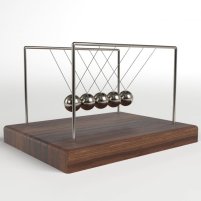
4167-newtons-cradle-2SWMBO draws my attention to an article in yesterday’s Church Times (13 October 2017) that explores the effects of clergy stress on clergy spouses.

The background to this is a recent survey in which clergy declare themselves on the whole happy and fulfilled in their jobs. This came as a bit of a surprise to me, knowing what I know and hearing what I hear, and it made me wonder if the clergy who responded to the survey were predominantly those with permanent “I’ve found Jesus” smiles on their faces, rose coloured spectacles, and a complete inability to see reality.

The article is illustrated by a picture of Newton’s cradle—the toy with balls suspended from a frame, the only balls that move are those on the edge, those in the middle remaining motionless but transmitting the considerable resulting forces. That’s the clergy spouse. Susan found it particularly telling because that image describes exactly how it was for her during the three years I was a Rector in the Church of Ireland.

The problem was not in Portlaoise—ministry there was varied and stimulating. It arose in neighbouring Ballyfin out of a Diocesan policy to force groups of parishes into unions. In C of E terms it would be the forced merger of separate Parochial Church Councils into one PCC. I shan’t tell the story here—I reserve that for another day when I have time and energy to work through my detailed diary of events and emails. In short, what I came up against in effecting diocesan policy can be boiled down to:

  • the way Diocesan council ignored local feeling;
  • the meddling of members of Diocesan council without my permission—I suspect this to have been in part Masonic intrigue;
  • what appeared to me to be a sense of entitlement in families who, by design or default, filled the gap in rural society resulting from the departure decades earlier of the Protestant Anglo-Irish aristocracy.

The final straw was when, my having done what was required of me, that Diocesan policy was abandoned.

It was extremely unpleasant for me. But I was only a ball on the edge. On the other edge was Diocesan policy. Poor Susan was all the balls in the middle. Having reflected on that hell, I’ve come seriously to wonder if I’d witnessed a case of possession. Certainly, the word diabolical is not inappropriate, at least in its being an antonym of anabolic. There was splintering caused by behaviour that appeared malicious and malevolent. Read the Prologue to Andersen’s The Snow Queen.

I understand therefore something of the malignant effects of clergy stress on the clergy family. The article tells me how courageous one must be to go public with it. The fear is that by so doing you will mark the card of your spouse who will then be noted unable to cope and/or unfit for preferment—if preferment is your thing (it shouldn’t be, but humans are human).

The combination of Protestant work ethic and a perversion of the suffering servant mindset is insidious and profoundly harmful. The more I think about Jesus and his ministry, the more I think that he came to abolish religion. I’ve heard it said that when Linda Woodhead asks her students to invent a religion, not one of them has ever suggested that clergy are necessary.