Summer music

Irish Midlands Chamber Orchestra in St Peter's

Irish Midlands Chamber Orchestra in St Peter’s

The Portlaoise lunchtime concerts have grown. People thank me for brightening up lunchtime as if I were some sort of philanthropist. Little do they know me! The truth is, of course, that I started the concerts last year for my benefit, to get a bit of culcha. They have the added value of bringing a bit more music to a town that in some respects needs it. They get people into the church-—and this is a good thing, for there are still some out there who haven’t quite lost the notion that they might go to hell if they come in. And they raise a bit of money for the Hospice, Dunamaise Arts Centre and the church. But first and foremost they revive my sometimes drooping spirit!

This summer we’ve had some spectacular performers: organ, violin and cello were lovely, trumpet and organ were thrilling, ladies close harmony was charming, organ-alone concerts have been refreshing, and today’s Midlands Concert Orchestra was terrific. There were about 80 people there. Toe-tapping tunes. You could see people’s bodies moving to the beat of Dvorak, Bizet, Offenbach, Lennon/McCartney, and marches from the movies. Organ music has featured most, not surprising given my background and contacts, but then St Peter’s has an organ that sounds well and is good to play.

Visiting musicians comment on the lovely church and its sense of intimacy, the brightness of the place, and an acoustic that gives a bit of bloom to the sound. And, I hope, the welcome. It’s particularly good to have young players, and several have said how much they value the experience of giving a public performance. For organists in particular, it’s gratifying to play music that people actually listen to, rather than merely talk over. There’s plenty of talent about, and it’s great that people are willing to come to St Peter’s.

It’s a truth universally acknowledged that if you please yourself, then some others will be pleased with you. Here’s to the rest of the 2013 season.

Separation anxiety

dog_greyhound_sad_270x224I’m such a fraud. I write about the need to let go of the past, and get rid of attachments. If only I could do it myself.

It’s not easy finding a raison d’être once the ‘children’ have left home. Maybe this was less of a problem when adults died younger and when people didn’t move far from home. But now, having ‘children’ scattered here, there and everywhere is a real heart-piercer. When the separation is a result of one’s own decisions, rather than random circumstances, there is the added layer of guilt.

When we came to Ireland in 1988, our daughter went straight to secondary school, but the boys were in cathedral choir schools in England. They remained there for 1 and 3 years until they came to secondary school in Dublin. In those days it was the small Fokkers that flew to and from East Midlands and Leeds/Bradford, and the memory of watching our little fellers walking across the tarmac to the plane at Dublin airport still destroys me. We lived near the Sugar Loaf in Co Wicklow and from the house we could see the St Columba plying between Dun Laoghaire and Holyhead. It was excruciating to watch it on its way east. How I wished I were on it. Sometimes I went to see them on my own in the car, arriving at Holyhead about 3 am. The journey on the A5/A55 was usually accompanied by the BBC world service, Lilliburlero screaming out of the radio at about Colwyn Bay. Soon, the joy of reunion, the delight of being with them. One particularly ecstatic episode of an unexpected visit is vivid. Then the agony of separation. And all self-inflicted.

It’s not that I want them at my beck and call. I don’t. I don’t want to influence their lives. I feel as if the only thing I want to do is to be of service to them. Well, now I’ve written that, I see that that is in a way trying to influence them. Paradox. Having passed my genes on, I am now expendable, biologically useless, merely titrating the time remaining to me above ground. Previous accomplishments pale into insignificance, particularly when they came at the cost of not paying attention to important relationships. Maybe I am too hard on myself, but I think—indeed I know, based on what I am told by those who open their hearts to me—that I am not alone in feeling like this. Parents, and men in particular, are caught between, on the one hand, the demands of having to ‘pretend’ to be enthusiastic about targets and strategies and plans and pleasing bosses and watching one’s back, and, on the other, the guilt that arises from the way that this distracts from relationships that matter. It sometimes felt like prostitution. In my previous post I quoted Bronnie Ware’s book The Top Five Regrets of the Dying, in which she wrote that every man she nursed wished he hadn’t worked so hard. You can see why.

Life is messy. Someone once said that grief is the price we pay for love. I wonder how diplomats cope with the grief of having their children at boarding school overseas. It’s not something I would do again: I’ve not recovered from the first time yet.

The road to glory?

road-less-traveledA twinge of guilt still hangs over one Christmas in the early 1960s. It had been decided that I was going to be a doctor, so one of the presents was a plastic model of a person you could take to bits and put together again, thus learning about the structure of the body. And I never even opened it. I knew it had been expensive, hence the guilt. Before long, in the gloriously impressionable early teenage years, my heart was seduced by music and architecture. Glamour of a sort. The great awakening. The plastic human was shoved to the back of the cupboard.

The hope of Cambridge (never Oxford) enabled me to imagine that I could work in one world but live in another. This is the story of Magnus Pym, A Perfect Spy, but then we’re all spies one way or another. When I was 11, I chose Latin for Cambridge entrance, only to find after a year that Cambridge dropped the Latin requirement. I went through secondary school in a fug really. Music after school was the consolation for what went on in it. I still can’t see why I had to learn about Bessemer converters. I liked O-level biology though. Zoological classification was interesting, seeing patterns in the animal kingdom. A-level was a different kettle of fish, ho ho. The school was one of those chosen to try out the new Nuffield A-level syllabus. Why did we have to see for ourselves? Why did we have to reinvent the wheel? Why did we have demonstrate the bleeding obvious? Why not just tell me? I’ll believe you. Then we can get on with interesting speculative stuff and think about ‘so what?’ Nuffield biology had as high an opinion of me as I did of it, for my A level Biology result was an E – a scraped pass.

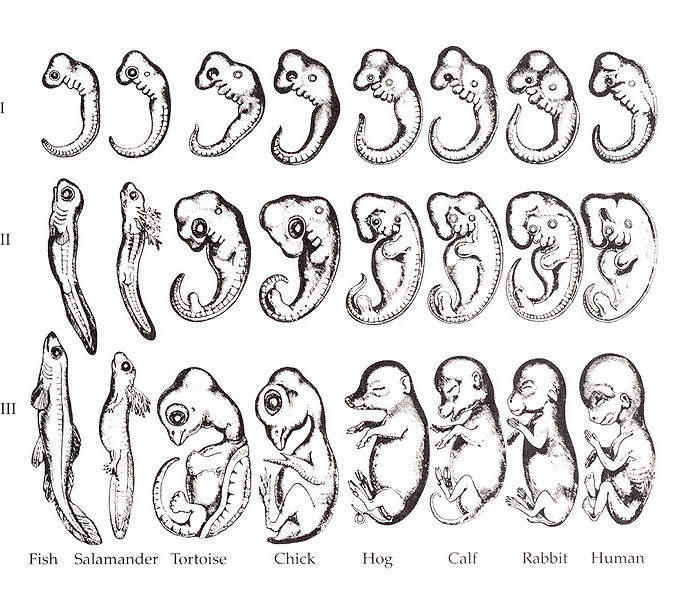
686px-Haeckel_drawingsFirst memories of Cambridge days were not dead bodies in the dissection room, but the lectures from the Professor of Anatomy, Richard Harrison, in which he told us about primates (apes not archbishops), the group to which we humans belong. I was entranced by tarsiers, lemurs and so on, and how we were like them. I enjoyed embryology, hearing that our nine months of intrauterine development could, at a pinch, be seen as something like a kind-of speeded-up evolution—ontogeny recapitulates phylogeny. Fascinating stuff that has stayed with me and continues to intrigue: the evolution of reproduction.

Max, ten years before I knew him

Max, ten years before I knew him

The Senior Tutor of the Cambridge College I was at was himself an anatomist, Dr Max Bull. This was in the late 60s and early 70s. Men only, gates closed at 11 pm, permission needed to be away from College for even one night, dons regarded by statute in loco parentis. Max had a tough time as Senior Tutor in those days with student unrest, revolutionaries, riots and the like. They say if you can remember the 1960s you weren’t there. I wasn’t there. I suppose I became an anatomist because of Max: ‘if that’s what an anatomist is, and if that’s what an anatomist does, then I’ll be an anatomist’. In about 1974 Susan and I went to see him to ask his advice. He counselled against a career in anatomy. ‘You’ll never earn much.’ He was right. ‘You’ll always be looked down on by other medics.’ He was right. ‘It’s publish or perish out there; you’ll never get anywhere if you are like me, only interested in teaching.’ He was almost right: as one of my former colleagues in Dublin said to me, ‘the only reason you came to Dublin was because you’d never have made professor in England.’ Like all good advice, Max’s was not taken. He taught generations of Cambridge students, and was, with Dr Gordon Wright, a truly memorable teacher. Another anatomist memorable for other reasons was Dr Michael Message. His contributions to the anatomy course were lectures on statistics. No, I don’t see the connexion either. Here’s a story about him and me.

Picture the scene. First year anatomy viva voce exams, summer 1970. It’s customary for students to dress up for oral examinations: suit, tie, polished shoes etc. But nobody told me that, so here’s this still rather naïve state school boy from rural Cumberland in polo neck and grubby jumper waiting with the suited sophisticates who knew the form. We hope we will be sent to anyone but Dr Message. ‘Mr Monkhouse to Dr Message’. In I go. He passes me a fetal skull and asks me a few questions about how the skull forms and grows. Then he hands me wet specimen dripping with preservative, a triangular shaped wedge of meat on top of a chestnut, with a number of tubes attached.

‘Tell me, Monkhouse, what do you make of this?’
Silence.
‘Come on, come on, haven’t got all day.’
‘Well, Dr Message I don’t know, but it looks a bit like a heart, though if it is it’s not human.’
Dr Message rolls his eyes heavenwards.
‘Oh, come on, come on. Surely you can do better than that.’
More silence.
‘Well, Monkhouse, if I tell you these tubes here (pointing to two of them) develop from the mesonephric ducts, what can you say then?’
‘Well Dr Message’ says I with a broad smile (Oh God, no, not a smile, anything but a smile), ‘I can tell you it’s not a heart.’ Then I chuckled.

That was the end of that. The thing was a bladder (the triangular wedge) and prostate (the chestnut) and the tubes derived from the mesonephric ducts were the ducts that carry sperm from testes to penis through the prostate. The other two tubes were the ureters carrying urine from kidney to bladder. I was right of course: it wasn’t a heart.

Talk of prostate reminds me that I must take a break.

The happiest days of your life?

OLYMPUS DIGITAL CAMERA

Langwathby School as it used to be

Is there any reason why I must eat all my dinner? Why am I having school dinners anyway? The house is five minutes’ walk from school. Here am I, kept in just because I won’t eat pudding. Food comes in metal containers from some witches’ cauldron in Penrith. ‘Irish’ stew is tolerable if you leave the gristle on the side, and I like winter salad and pease pudding. I like salty stuff more than sweet. My babyish response to ‘what do you want to eat?’ always was ‘fish else eggs’. Definitely not sweets.

At the top of the ‘awful’ list are tapioca, semolina and rice pudding. Different sized lumps of rubbery snot in grey slime with a tiny gobbet of red jam that tastes of nothing. I refuse, day after day, week after week, kept in until the bell goes. These become happy times when I’m tall enough to reach the books on the shelf. Into my own little world I go.

The infant class was run by Mrs Green. Or maybe Miss. What’s the point of pretending to be a tree with branches waving in the autumn wind? Or to be an animal coming out of hibernation? Music and movement. Music and resentment. When I started at school, the Headmistress was Miss Taylor. The seniors said she had a cat-o-nine-tails, and used it. She took the over 11s—this was before the days of universal secondary education, and if you didn’t pass the 11-plus for the Grammar School, you stayed at the village school for two more years, out you go. She retired a year or two later. After a few years she returned to the village. The poor woman didn’t stay long. Instead of beating naughtiness out, the cat-o-nine-tails drove rage into former pupils, now her neighbours. She was followed by Miss Bean. No more cruel regime.

For most of my time at Langwathby school, up by the railway station, trains steamed past to and from Glasgow and Edinburgh, Thames-Clyde and Thames-Forth expresses. I was in Miss Metcalfe’s class. It was a shock to discover that she lived in the neighbouring village. I assumed that schoolteachers lived in specially exalted Emerald cities, and certainly not in a farmhouse in Great Salkeld with mum and dad. Every autumn she would tell us about her summer holidays, one in particular by ferry to Bremerhaven and Bremen so we heard about the Hanseatic league.

The school was bursting because of the baby boom, and with the post-war lack of money, Cumberland Education Committee (motto on the front of exercise books: Perfero) rented the Methodist Sunday School as a classroom. Assembly was held in the main school. On most days Headmistress Miss Bean, who became Mrs Byers, said a prayer that entranced this boy in short pants: ‘defend us in the same’, ‘fall into … neither run into’, ‘ordered by thy governance … always that is righteous’. Here was beauty, etched thenceforth on his psyche. The awakenings of delight. He’d never heard language like it before.

After assembly our lot trooped the 50 yards or so down the hill and across the road to chapel. Miss Winifred Metcalfe had a lot of us to look after, and managed by having two or three blackboards at the front, the different age ranges sat behind them as appropriate. On Mondays we had Rhythm and Melody or Singing Together alternate weeks on the radio ‘with Mr William Appleby’. ‘The harp that once through Tara’s halls’ made a wistful impression. ‘Wi a hundred pipers’ was good because it mentioned Carlisle. Our metropolis was famous, never mind that it was only because the wicked Scots laid it waste time after time. No wonder Hadrian built his wall. PT was occasional, thankfully. Humiliation time for fat Stanley, always the last to be picked, though I did quite like playing with ‘the apparatus’.

Nature walks were sporadic and always the same. Crocodile down the Culgaith road, turn right after Stratheden down to the river, then I can’t remember much more. Me and my best friend (as I would have said) John lived in houses with land that went down to the river, so maybe that was nowt special. Anyway, I couldn’t see that well—something that wasn’t noticed till I was about eight. On holiday in Gourock, I was unable to see things that it was felt I ought to be able to see. Ships to be precise. So maybe my lack of recollections about nature walks can be put down to not seeing things.

Thursday afternoon was handicraft—it had to be endured. Raffia, newspaper and glue, felt shapes – aaaargh. I liked printing and drawing with Miss Metcalfe’s Flo-Master pen, and the smell of the ink. Friday afternoons was story time. Winnie read to us novels by Rosemary Sutcliff, The Wind in the Willows, and the deeply subversive The Children who lived in a barn. I liked stories about people, but didn’t care for Sutcliff’s battles and standards and legions. I think we were supposed to like it because the Roman Wall was near. With Fell Farm Holiday and Fell Farm Christmas it became apparent that some children did exciting things on their own, and The Family from One End Street opened a new world: the warmth of a big family in a small house.

Winnie was a good teacher. She had standards. She sometimes lost her temper with the 10 and 11-year old bags of hormones. But she was loved. In the 1960s she married and moved to Penrith. The last time I saw her was a few months before she died. I was still at school I think. The hormones got to her again, I fear: a relatively late first pregnancy ‘provoked’ aggressive breast cancer. I could have gone to her funeral, but didn’t. I wish I had.

Travelling light

Where next?

Where next?

If you’re going on holiday, what will you take with you? In the days when I travelled more than I do now, it was fascinating to see some people checking in huge amounts of luggage, and others next to nothing, even for long-haul flights. When our three children were children we went on quite a few Eurocamp holidays to France. The rule was: take no more than fits in a supermarket plastic bag. The children were on the whole left to do their own packing, and their judgment was usually spot on. Of course, a favourite toy had to fit in the bag, and quite right too. I learnt the hard way that travelling light is best. On one flight to the US Susan and I were questioned closely by security staff at check-in because we had so little. I think they thought we might be suicide bombers so wouldn’t be coming back. (Do I look like a suicide bomber?)

travel_lightOver the past few weeks lectionary readings have been advising us to travel light: no baggage, no looking back, concentrate on essentials. Travel light in every sense, not just luggage, but also attitudes, obsessions, addictions, shoulds, oughts, other people’s expectations …. ditch them. I know, it’s easier to do this as one gets older and cares less what other people think. I know, when you’ve got a boss breathing down your neck, and targets to meet, and others to placate–all this makes it difficult to travel light. There’s the mortgage to pay, and the children to clothe, feed and educate. In days not long gone, men in particular found themselves stuck on this treadmill. Now, with both parents in many households having to work, it’s worse still.

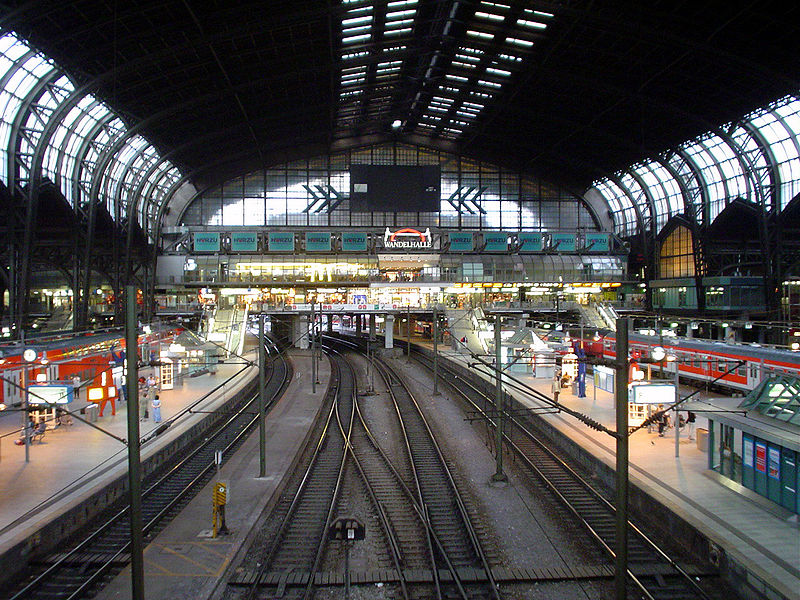
‘I want’ used to mean ‘I lack’ (as in ‘there is nothing I shall want’). Now it seems to mean the opposite: ‘I must have, I absolutely can’t do without’. All piffle of course. We can do without anything if we set our minds to it. Jack Reacher carries only a toothbrush and buys cheap clothes as he travels. Mind you, he has money in his wallet. He can’t have been married. There’s something wonderfully liberating in arriving at a port or a railway station, not having to be anywhere in particular and going where one pleases. We arrived at Hamburg Hauptbahnhof on one holiday in exactly that position. We ended up in Weimar that night. Cain was made to wander the earth as punishment.  Was it really punishment?

Happy summer. I hope you find refreshment somehow. Take what comes and enjoy it as best you can. Travel as light as you can.

Depression and exaltation

creativity-disease-how-illness-affects-literature-art-music-sandblom-philip-paperback-cover-artA letter in the Church of Ireland Gazette a few weeks ago asked why the church officially ‘has nothing to say in relation to the one in four people who attend our parishes every Sunday … [who] at least one time in their life experience serious problems with their mental well-being?’ The writer points out that there are plenty of resources on interfaith dialogue, building maintenance, liturgy, etc, but ‘no resources to help people who are struggling with mental health issues.’ I meet many people who tell me they are clinically depressed but do not wish it to be widely known: society and the church have a peculiar pre-scientific attitude to mental illness. Some of them cope without drugs, some are on antidepressants all the time, others on and off.

Let me ask: what resources would you like to see made available?

I need chemicals. I don’t blame myself for this. I don’t say, ‘if only I had, or hadn’t, done this, or that …’ I accept that something about the production and/or metabolism of my brain chemicals means that I cope better with help. This is not new: it’s been going on for over 20 years, and when I look back I see signs in my youth. Furthermore, I think previous generations showed signs too, not that I recognized it at the time. I’ve been on sertraline for years. When we went to France last summer I forgot to take them. ‘Never mind, I’ll see what happens’. What happened was that I began to feel ‘hunted’, agitation bubbling up. I started the pills again. Once since then, I’ve stopped them with much the same the results. Without the pills, I feel that the cosmos is not on my side. Paranoia is too strong a word, but certainly heightened watchfulness. From an evolutionary point of view, this is no bad thing: when we were hunter-gatherers we needed to avoid being eaten by predators, so watchfulness is hard-wired in. Another thing I notice without pills is a heightened tendency to shock (strong enough, some would say, without being heightened). This can be very amusing, at least to me—naughty child stuff. It’s as if I observe a torrent of words coming from another creature within me. I can understand why people thought, and think, in terms of possession and demons.

The GP asked me recently if I thought there was an element of ‘up’ as well as ‘down’ and I said not. But SWMBO rather thinks there is, and the more I consider it, the more I come round to the view that she’s right. I guess the pills smooth out highs and lows—every valley shall be exalted, and every mountain and hill shall be made low—but I have a sneaking suspicion that this comes at the expense of a kind of suppression, a feeling that I’m being averaged. There is much more to be described and written, but others were there long before me (Stephen Fry has recently spoken about this). There are many implications for theology, particularly with respect to biological drives and the notion of  ‘made in the Divine image’.

Some people feel that taking happy pills means that they are second-rate humans. I’m not inclined to see it that way: it’s not because we lack something, but because we see more clearly. We need something to cope with the strange society in which we live. Society doesn’t look down on people who take antibiotics, so why should those on antidepressants be sneered at? I am as I am. If I need chemicals, then I need chemicals. If that troubles others, it’s their problem.

I look back over the blogs. Sometimes I think ‘yes, spot on!’ Sometimes I think ‘why did I write that? I wouldn’t write that now’. The things we say and do, and write, are without doubt products of our moods and emotions. We are slaves of our brain chemicals. All of us. There’s plenty in the medical literature that points to a link between creativity and psychiatric illness. There’s the lovely story of a man with Tourette’s syndrome who takes pills during the week for work, but not at the weekend when he plays in a band: he’s a better musician without the pills. The question becomes: ‘how can I make the best of my condition?’

To all fellow ‘sufferers’ let me repeat: what resources would you like to see? What can I do to help? If you’d like to contact me with suggestions, I’ll see what I can do.

Doctor in the house

Professor Sir Stanley Clayton

Professor Sir Stanley Clayton

Dulwich Hospital, late 1974 or early 1975. Teaching ward round led by Professor Sir Stanley Clayton, author of celebrated Obstetrics and Gynaecology undergraduate text. I was not the most diligent of students, but I turned up for everything. Osmosis works.

SC: Tell me, Mr Monkhouse, what do you know of the aetiology of pre-eclampsia?
Me: silence
SC: Well, perhaps you can tell me about its treatment.
Me: silence
SC:  [we wore name badges] Mr Monkhouse, do you have a textbook?
Me: Yes, sir. Yours.
SC: Have you ever opened it?
Siemiginowski_Marie_Casimire_with_childrenCambridge, Addenbrooke’s Hospital, early summer 1975, ‘final’ Obstetrics viva voce examination

Mr Michael Brudenell (examiner): Why might this lady know more about her condition than most?
Me: because she’s a librarian.
MB: Oh, very good. And what advice will you give her about feeding her baby?
Me: Breast.
MB: Tell me why.
Me: Because breast is best. Cow’s milk is for cows, and human’s milk is for humans. There’s no better reason.
MB: Haw, haw, haw. Well I think that’ll do. Off you go.

I passed.

Bennett-Fracture-LCambridge,  Old Schools, early summer 1975, ‘final’ Surgery viva voce examination. I can’t remember who the examiners were, but there were three of them, all professors or Sir somebody or other.

Examiner: Good morning. Take a seat. Which College?
Me: Queens’.
Examiner: And which medical school?
Me: King’s [College Hospital Medical School, London].
Examiner: Haw, haw, a royal flush, eh?! Haw, haw.

After I’d picked myself up from rolling around on the floor in laughter, I was handed a radiograph of a wrist. There was a fracture of the base of the first metacarpal. God knows how I recognized it, but I did.

Me: Ah, a Bennett’s fracture.
Examiner: Very good. Pause. Tell me, who was Bennett?
Me, confidently: a nineteenth century Dublin surgeon.
Examiner, surprised: Oh. Pause. Quizzical look. Was he?
Me: I’ve no idea. I was guessing. There were so many nineteenth century Dublin surgeons, so the chances are good that he was.
Examiner: Haw, haw. Very good.

Ironic, in view of my subsequent history (there must be a God after all), but Bennett was a nineteenth century Dublin surgeon. And there were so many of them. I passed.

We brought nothing into this world …

River Eden at Langwathby

River Eden at Langwathby

… and it is certain we can carry nothing out. I was 63 a few days ago and I have a funeral today, so here’s a contemplative ramble.

At Maryborough school recently we sat in silence for a while, maybe 90 seconds or so. I asked how many felt comfortable in the silence. Very few hands went up. I asked the ‘uncomfortables’ why they felt uncomfortable, and a 7 year old said ‘it’s a waste of time’. I guess that’s a pretty common feeling about silence.

SWMBO and I increasingly sit in silence. My vision and hearing are such that the TV is less and less an option. Even when the words are on, I can’t see them clearly enough. I refuse to get one of them huge screens. I like silence. I suppose you could say that it’s not silence in my head. It’s reading or thinking. It’s still noise, you might say, that distracts me from being conscious of the here-and-now moment. It is true that we spend a great deal of time avoiding solitude and having to confront our inner selves. But sooner or later we must. As we get older and deafer and blinder, and as our friends start to shuffle off this mortal coil, we are increasingly silent and increasingly alone. (I’ve blogged about this before.)

A blissful childhood does not prepare one for life. It makes hardship difficult to come to terms with (for an interesting take on hardship, read this). An unhappy childhood, they say, enables a child to develop psychological resources to cope with the vicissitudes of life and the solitude of advancing years. My happiest memories of my first ten years are of being alone: playing in the sandpit, playing streams and dams in the mud by the river Eden at the bottom of the garden, and reading. I liked being 6: fun without responsibility. I still feel 6 quite often. Does anyone remember a four volume set The World of the Children? Wonderfully politically incorrect (hooray) by today’s standards, but utterly redolent of childhood for me (I got another set from abebooks; they’re by the bed). I remember trying to match the pictures of wildflowers with the ones growing on the slope down to the river.

Is this enjoyment of solitude the beginning of second childhood? Maybe. But it also allows me to recognize the disguises, the onion skins that have collected around me over the years. I begin to see that I don’t need them, they have outlived their purpose—if indeed they had one. I’m rather enjoying confronting myself, warts and all. As the masks fall away, I’m not sure if there is anything inside. The central absence. Schopenhauer wrote of ‘a certain trace of silent sadness … a consciousness that results from knowledge of the vanity of all achievements and of the suffering of all life, not merely one’s own’, and while I understand utterly the point about vanity—yes, all is vanity—I don’t today feel that the central absence is sad. Rather it’s an occasion for delight. Life, the divine joke.

As onion skins are discarded, the view from the eye of the soul in the midst of the central absence becomes clearer and clearer. With fewer onion skins, fewer personae, fewer masks, I see out more clearly. Clairvoyance. Not only that, but others looking from outside can see me more clearly. That’s how it seems to me today. I’m not sure I know who I am any more. This is not in the least frightening or distressing—it’s liberating.