Wisdom and sinkholes

Many words and fine thoughts

Many words and fine thoughts

There was I this morning poring over many words and fine thoughts, when SWMBO glanced at the book and said ‘all these words, all this philosophy, all this stuff written down—people would be better occupied making clay pots.’

Some time later I saw on the BBC news website that a large sinkhole had opened up in Foolow, just off the road between Chesterfield and Manchester, near where I used to work in Derbyshire.

‘Look’, she said, ‘you could fill that with philosophers and theologians. Then it would be useful.’

The picture, taken later today, shows a different sort of poring.

Delight and agony of Africa

ghjhg

From Church News Ireland

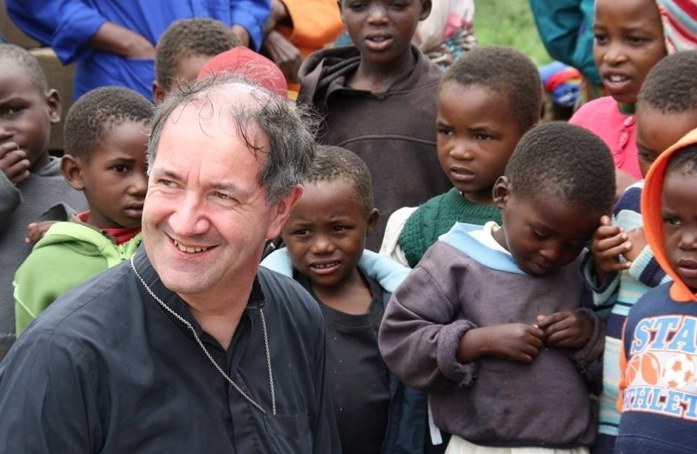
The Bishop has been to Swaziland. He said ‘the poignant thing was I was such an old man there … because of HIV and other factors most men are dead before they are 50.’

He’s right. If he’d gone to Malawi he’d feel even older. Despite that, I expect he was in the midst of laughter, welcomes, smiles, and liturgies where people want to be involved. There would be few if any shoulds and oughts. People just get on with the job and are glad to be alive. They are not bothered about ‘the way we do things here’ – because all the people who know how we do things are dead.

Digression alert. I did a session on ‘ethics of decision making’ for the diocesan certificate course and asked how many of the middle-aged people were on diocesan synods. All but one put their hands up. I said, ‘it’s time you came off to make room for younger people’. I keep saying that the church is run by people without a future, A self-limiting problem.

Back to the plot. My visit to 6 am Mass in English at St Paul’s, Blantyre, was notable for all those things I mention, but most of all for the uninhibited enthusiasm emanating from the hall next door where the choir was rehearsing for the 9 am Mass in Chichewa.

African Anglicans come to church in Portlaoise. I wonder what they make of it. What can we offer them? All I have is the liturgy, myself, and, since I have some inkling of what it is like to ‘mourn in lonely exile here’, my friendship.

The Bishop has imagination and a fine intellect. How will he survive back here having seen the delight and agony of Africa?

Acceptance

Homily given in SS Peter and Paul (RC), Portlaoise, at the Vigil Mass for the Fourth Sunday in Advent

It’s a pleasure and delight to be here tonight to bring to you warmest Christmas greetings and blessings from the people of St Peter’s. And personally from Susan and me, and especially to Fr John and his colleagues here. Whether they know it or not, they are a great source of advice and support for me, and I treasure that more than I can say.

In the Church of Ireland, of course, we use the same lectionary as you, so like you this weekend we celebrate Mary the Mother of God. My very short message to you is kind-of biological. By the simple act of saying ‘yes’ to the Lord’s invitation, Mary allowed the infant Christ to grow in her belly for nine months. Just think how we can be transformed by that same simple act – saying ‘yes’ to the Lord’s will.

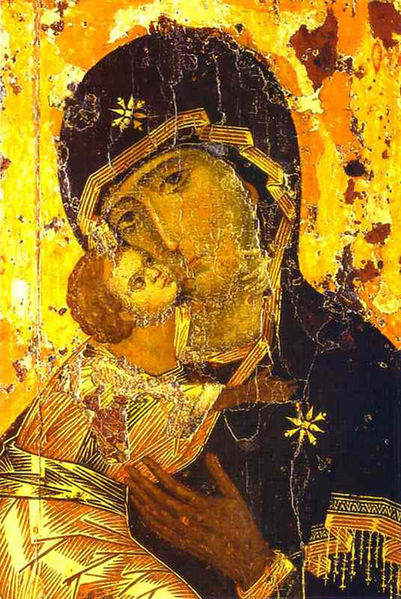
VladimirIf we can be transformed, then think how much the world will be transformed.

Christmas, when you strip away the gooey stuff, is a festival of childlikeness. Not childishness, but childlikeness. Think of the newborn Lord: open, trusting, dependent, straightforward, without guile. Just think how the world could be transformed if we were all like that. ‘Transformation to the kingdom’ is for me is the real Christmas message. This is the festival where heaven meets earth, and prepares us for being taken there ourselves.

Discerning the Lord’s will is not an easy exercise when we have to cope with all the ‘noise’ and distractions that the world throws at us, but as the Nativity shows us, the Lord is with us in our mess, just as he is in the mess of the stable. God bless this mess.

As we sing in one of the Christmas Carols: O holy child of Bethlehem, be born in us today. Let the Divine light within grow to en-lighten us from the inside out.

Two transitions

Cambridge_Queens'_GatehouseThe post on Christmas Eve 1968 brought the letter telling me I had a place at Queens’ Cambridge. I’d opted to stay for a third year in the sixth form to do the Cambridge Entrance Exam, so I spent the rest of the year doing very little at school, instead fiddling with my organ, as it were, and singing and playing at Carlisle Cathedral, which I’d been increasingly doing since 1963.

On my last night in Langwathby in October 1969 Hitchcock’s Psycho was on TV. I was not allowed to watch it. Off to Cambridge the next day, over Stainmore and down the Great North Road with its roundabouts and cross roads, and bottlenecks. Six hours and more.

First year students at Queens’ didn’t have rooms in College but were in lodgings. I was billeted on Mill Road, number 81 I think, on the town side of the railway bridge in a semi where post-war dark greens and browns predominated. Mrs K L Gentle was one of the long-serving College landladies, and Kitty, as we didn’t dare call her, knew what she wanted and how we should behave. And we did.

There were two of us. David from Buxton was the other, also a medic. I was glad to discover that he didn’t play rugby. He later became my ‘best man’ and is now a pillar of society and indeed of The Victorian Society. We had to get our own breakfasts—I still open my boiled egg like David did—and we were allowed one bath a fortnight.

Despite wanting to get away from Langwathby, I was quite lonely for about a month. Homesickness is not the right word, for it wasn’t home that I was sick for. It was nest-warmth—for the Cathedral community in which I felt authentic, valued and safe. I suppose that search became a lifelong quest. It’s illusory, of course.

Ye Gods, Cambridge in winter is cold. Winds whistle west from the Urals. I exchanged cold, damp Cumberland for freezing, foggy Fens, the Fens fog that gets right into your bones. A foggy start to a new life. So much for its being warmer down south.

The next upheaval came in 1972 when I moved to London. I’ve written about this before, but memory today takes me to finding accommodation. I arrived a couple of weeks early and slept on the floor of a college friend, already at work at the Bank of England, in Orlando Road, Clapham. There were invertebrates slithering slowly along the bathroom walls. I did the rounds of letting agents all over the place. Praed Street (Paddington) stands out—why in God’s name Praed Street I do not know: it was nowhere near the Medical School in Camberwell.

c98468f2a15d53e3606cdfd4869fb933After a day or two, a few of us including David from Buxton joined forces. We found a basement flat in south Clapham, almost Balham really—the gateway to the south—on Cavendish Road, the South Circular. Living room, kitchen, part of which was partitioned off as the bathroom (yes, the bathroom in the kitchen), and one bedroom for three blokes. There was a tiny room under the stairs just big enough for a double mattress, and that was shared by Geoff and his girl.

It was to this nest that I invited Susan, then teaching in Manchester. It was on Clapham Common that I proposed. It was just outside The Windmill on The Common that she accepted.

Strange things happen on Clapham Common.

Messing about on the river

Queens Rowers today

Queens’ rowers today

My rowing career was brief. In 1972 the medics at Queens’ got together to form a rowing eight. The college’s élite rowers were, naturally, the First Boat. We were the Sixth Boat. That in itself says something. (We later became the fifth boat because the original fifth boat couldn’t stay the course, but that’s another story and anyway I can’t remember it).

However inept we may have been, we took our ineptitude seriously, up at 6 for ‘training’ three days a week. This masochism enabled the second year medics to get to lectures at 9. By that time I was in the third year and was studying History of Art, Well, I say studying—what I suppose I mean is, attending three lectures a fortnight and striking a studious pose. I was not so pressed for time.

Rowing is what you might call a solitary team sport. Each individual oarsman is responsible for his (a men’s college in those days) own little compartment, but can’t do without the others. That’s the sort of teamwork that suits me just fine. None of these silly meetings to discuss tactics and marking opponents and watching what they’re doing. You just get in the boat and pull like hell.

We did well enough in the 1972 Bumps (‘a form of rowing race where competing boats start simultaneously but at fixed distances from each other. The aim is to bump the boat in front before being bumped by the boat behind. If neither happens, you are said to row over. A significantly dangerous pastime, and therefore an excellent spectator sport.’ See Cambridge University Jargon). We bumped on two of the three days and rowed over on the third.

All good things come to an end, but in this case they got better, for later that year in London I was fortunate to find that there were enough of us to make up a King’s College Hospital Medical School eight to row on the Thames. We hoofed off to a Putney boathouse on Saturday mornings, messed about on the river, and sampled Young’s ale afterwards.

Two highlights stand out particularly clearly in the memory.

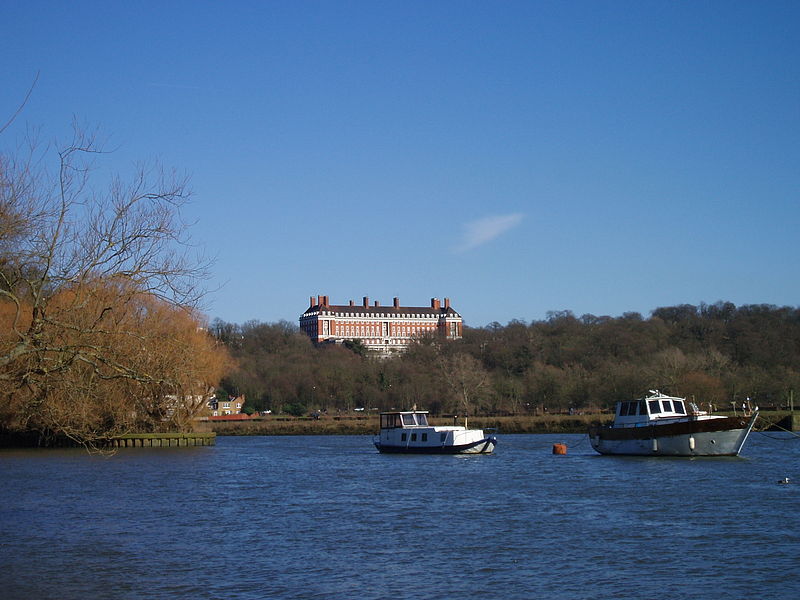
800px-Star_and_Garter_from_Marble_Hill_Park_(March_2010)_3

The Star and Garter on Richmond Hill

The first was rowing all the way from Putney to Hampton Court to take part in the Kingston Regatta a few days later. Then of course, we had to row back. About 17 miles each way. Lovely weather, glorious views glimpsed between grunts and gasps through dripping sweat: Harrod’s Furniture Depository, Kew Gardens, The Star and Garter, Eel Pie Island, Ham House, Teddington Lock. I think it took us about 3 hours including a stop or two for a rest. A lovely, wonderful memory.

The other highlight was taking part in the 1974 (I think) Tideway Head, one of the great Thames rowing events. This was serious stuff, and before I tell the story, you need to understand that the convention in this race was that if a boat was about to be overtaken, it should do the decent thing by moving to the side to let the faster boat past. Got that?

Our most accomplished oarsman was a big fellow, academic high-flier, who had rowed at school and then Cambridge. He was quietly spoken and rarely said anything very much, but when he did speak it was considered, apposite and admirable. This man was respected by all for his discernment, ability and gentleness.

We were doing well, powering along the Oxbridge boat race course in reverse. We’d overtaken one or two boats, if memory serves me right, when we found ourselves almost upon the boat in front, a motley crew of ne’er-do-wells from Wapping or some such place where they eat jellied eels.

Our bow made contact with their stern (this is not good). Our oars clashed (this is terrible).

Would they pull into the side? Would they hell-as-like.

And, lo, the angel of the Lord came upon them, and the glory of the Lord shone round about them: and a stentorian voice boomed forth from the midst of our boat announcing not peace on earth, goodwill to men—rather the opposite actually—but ‘get out of the way, you … wankers.’  It was the voice of the gentle giant, of such volume as had never before been heard issuing from his larynx, nor, in my experience, any larynx since.

Putney Bridge

Putney Bridge

He, it must be said, inserted an adjectival present participle between ‘you’ and ‘wankers’ that since I am a Rector I can not bring myself to type, but let’s just say that it begins with f, is very rude, and is not unrelated to the Latin expression futue te. This is not an unusual term of endearment, you understand, but it is one that on that occasion on that day stunned us all, not so much for the sentiment—it was after all in accord with the regulations, and stated in terms that would have been, and indeed were, understood by the intended audience—but more for the origin and force of its utterance.

Eventually our friends from Wapping admitted defeat, pulled over and allowed us to proceed to the finish at Putney Bridge, dazed, sweaty, ecstatic, but deeply, deeply conscious that we had heard a voice from the belly of a whale.

Advent Rose

rose_02_bg_040106Roses have prickles. They give the plant a bit of purchase as it elbows its way slowly upwards. Rough edges enable growth.

Prophets are prickly. They have rough edges. They are not conventional. They are not welcomed. They are difficult to live with. I like people with rough edges: they get things done! It’s the rough edges that provoke new growth. Evolution from the edges.

Prophets are not ‘nice’. To be called ‘nice’ is the worst possible insult.

Geoffrey Clayton, some time Vicar of Chesterfield, then Archbishop of Cape Town, was prickly. He is reputed to have said when he was ordained in 1909 that he didn’t want anyone to say of him ‘our nice new curate.’ He ruefully added after a lengthy pause: ‘and no-one ever did.’

On Ash Wednesday 1957 he signed a letter on behalf of the South African Bishops telling the Prime Minister that they would neither obey the laws enforcing Apartheid, nor counsel their congregations to do so. He died the next day.

It’s as well to recall some of the shoulders on which Nelson Mandela was able to stand.

Prophets

skinnerpointingWhat do you expect of a man who lives in the wilderness? Someone dressed in posh frocks and smells of roses? Get real.

Walking to the Rectory from church the other night: ‘Father, can you help me?’ Can you guess what’s coming? A child in hospital, a mother dying in Dublin, needs money for bus fare, food, accommodation. Yup, spot on. All of ’em.

This is common enough. He might be telling the truth. Shall I look at his teeth for signs of crystal meth use? Shall I ask to see his forearms for signs of needles? Will anyone visit me in ITU if I do? I think: ha, I’ll see if a few questions will catch him out. Where does he live? Which hospital in Dublin? Has he been to social services? (What social services? you may well ask.) But I know there’s no point asking questions. I am naïve, he is smart. Anyway, who am I to judge?

Of course, I part with money. He goes off: a small victory for him. I’m tired, and there’s something on the box in two minutes, and for a moment I’m relieved. Then the nagging guilt: I should be doing more. I can’t blame him: what do I expect from someone who hasn’t been dealt the same cards as me?

—————

A phone call from prison asking if a man could put my number on his phone card. Again, common enough. Yes, of course. Next day I had a call from the gentleman who asks me questions about the C of I – are we Presbyterian? (No, but congregations behave as if we were!) What do we believe? (Ye Gods! What do we believe?) Can I change religion? (Why?) Will you come and see me? Of course I will.

I’m uneasy, not least because the exchange doesn’t conform to my expectations of a conversation with someone I’ve never met. And I’m left from childhood with a wariness of people not like me. Then I think, what do I expect from someone with a different view of society who has not been dealt the same cards as me?

—————

Like the people who gather on Coote Street waiting for their drugs from the clinic, and like the people who chuck used needles and syringes over the Rectory wall, just down the street, these men are prophets.

Prophets make us uncomfortable. Prophets say what others dare not. Prophets reveal our values. Journalists like Veronica Guerin, killed for her trouble. Journalists who report the Dublin ‘poor’ given an extra €135K from donated money to top up a salary of €116K (and we vote for people who turn a blind eye).

It’s not just about what happens ‘out there’. It’s about ‘in here’ too—the John the Baptist that lives inside my head and nags insistently when I go for the easy option, like handing over money and thinking that the problem is dealt with. It’s not dealt with at all—it’s compounded.

Prophets force me to judge myself: have I ordered my life to attend to what is most true, most important, most essential?

And if not, what will I do about it?

Advent reflection

UntitledLook at some details of the Christmas story: virgin birth, in Bethlehem, from Nazareth, descended from David, shepherds, stars in the sky, born in a manger, animals.

Now some postnatal events: men from the Orient led by a star, flight to Egypt, massacre of the innocents, presentation in the Temple.

That’s enough to be going on with. Every single one of these details has resonances with Old Testament writings. You could say:

  • ‘how clever of prophets, centuries before, to be right about what would happen.’
  • ‘how clever of God to listen to prophets, and arrange things so.’
  • ‘how clever of Gospel writers to manipulate the story so that prophetic comments can be interpreted as having come true.’

It’s striking how people obsess about detail but miss the big picture. Not one of those details listed above matters. They’re colourful and fun, but that’s all. The Christmas story is, big picture, about renewal, and the power of powerlessness. End of. That’s what the resurrection/ascension is about too. In fact, that’s what Christianity is about.

One of the reasons I like Advent is because of the sense of yearning for renewal. Homecoming. ‘O come, O come.’ To quote a friend: ‘I yearn to be a person who is better able to bring the qualities I see in Jesus into the world. I yearn for a better world and for the ability to make a contribution to it.’

Renewal comes when we put the past behind us, mistakes and all, and start again, in hope. As Queen Elizabeth II said in Dublin in 2011, ‘With the benefit of historical hindsight we can all see things which we would wish had been done differently … or not at all.’ We’re all in that place.

Renewal is about forgiving and being forgiven. The Christmas story is about renewal for you and me that comes when we give up the search for certainty, we accept that we, like infants, are powerless, and fall back on what Christians might call the Divine will. ‘Be born in us today.’

Never mind that the Nativity story is probably entirely fictional—it’s fiction with meaning. Our lives are messy like a stable, at least mine is, with all sorts of smelly impedimenta cluttering the place up. We have to start from where we are, and that means letting go of where we were, or used to be—and of where we would like to be.

We forgive. We are forgiven. We move on, naked and powerless.