Organs, music, masculine

What large organ pipes!

I’m an organist. I know that organ concerts are not usually spectator sports and can be dull to the uninitiated, so I wasn’t expecting too many punters at the Thursday lunchtime concerts in Portlaoise. An organ concert in Dublin, I’m told, might attract 20 people or so. Imagine my delight when 40 people turned up for the first one, 25 for the second, 48 for the third, and 42 for the fourth. Is it novelty value? Is it that they are regular, short and tuneful? Whatever the reason, good! Thanks to all our performers who have waived fees, and thanks to all who come. It’s good to see people bringing lunch to munch. The organ is a treasure. Internationally acclaimed musician Mark Duley says so. Stanley says so: it is a very versatile small instrument that fills the church with great richness of sound. I happened to be playing when one of the visiting organists turned up to practise, and he said he was stunned by the sound, and how well it suited the church. Portlaoise should be proud of the instrument.

Portlaoise church was privileged recently to host a concert given by the extraordinarily gifted young artists of the Herbert Lodge Music Summer School. One of the performers was a young lad on the cello whose mother told me that when, at his request, she took him to concerts at the National Concert Hall, she was almost – I kid you not – accused of abusing the child by ‘forcing’ him to listen to classical music when he should be out playing football. This says something about the values of our society. At the Maryborough School end of term service in June, the school choir sang John Rutter’s The Lord bless you and keep you. It showed what can be accomplished with vision and enthusiasm. Sad, though, that some of the senior boys declined to sing: singing is not cool. I’d be the first to acknowledge that singing school assembly ditties suitable for 6-year-olds is repellent to young male adolescents, but we really need to quash the apparently widespread notion that singing damages both sporting prowess and spermatogenesis. I think this attitude might even extend to interest in any sort of ‘classical’ music. Will all the musicians of the future be female? Interestingly, all the organists playing in Portlaoise this summer are male, and most professional organists are male. Comments, anyone?

St John the Baptist

Nativity of John Baptist

In the Church Kalendar, there are only three births celebrated: Jesus, Mary and John Baptist. John is an important fellow. In the Old Testament, when the Lord had a special task for someone, there was something unusual about the birth, usually the woman barren. It is a well known literary device in the Greek myths that heroes are born to women who are past childbearing or are virgins. In Holy Scripture, we have Sarah, Samuel’s mother and Samson’s mother. In the New Testament we have, today, Elizabeth and Zechariah, and of course Mary. John Baptist is the bridge from Old to New. The last of the straight-talkin’, shootin’ from the hip Old Testament Prophets, and the first of the New. And his straight talkin’, shootin’ from the hip message was REPENT – that is, change direction.

Repent – not to please God the headmaster so that we can get more benefits on some celestial insurance policy. No! Repent to free ourselves from lumber that weighs down the ship of life, and prevents us from living. Lumber like pride, prejudice, expectations, envy. Notions. Repent – so that we can be committed to the way of abundant living, not constrained by pride and self, but flying free. Repent to be free from self, free from me, me, me, free from the lust for power, from the certainty that I am right and everyone else is wrong. Free from self-righteousness.

We see the wrong sort of commitment every day of our lives. We see self-righteousness. We see commitment to control, to power. We see commitment to cause hurt and division. Division arises when people who want to retain power exclude others by means of gossip, or anonymous messages, poison pen letters – we hear about these daily. This is what the News of the World was so proficient at, and the enormity of which its hacks still deny. This kind of division has been part of human experience since the hissing serpent of the Garden of Eden with its forked, divided tongue. When we divide person from person, or exclude others, we become the devil. Consider the word diabolical: anabolic means building up, catabolic means breaking down, and diabolic means dividing, splintering. The Kingdom of God is about integration, synthesis, anabolism. It is as far removed from diabolical gossip as it is possible to get. These are some of the things that John Baptist calls us to repent about. To acknowledge that we have strayed – sinned in theological jargon – and that we can revise our course by working for togetherness, community and cooperation.

The ship in which we sail the voyage of life, like any ship, does not do well if it is overloaded with lumber. It does best when loaded only with essentials. You might say that to be truly challenging, a voyage must rest on a firm foundation of risk. If we set out on a venture, first of all preparing something to fall back on in case we fail, you can be sure that we will fail. If we risk all and have nothing to fall back on, we are more likely to succeed. The purpose of life is not to be bored, but to lie on our deathbeds and say, ‘Ye Gods, that was some ride.’ Or words to that effect.

What do we really need? We need food sufficient for the day (give us today …), we need shelter, somewhere to sleep, and some form of activity that gives a sense of accomplishment. And since it is not good for us to be alone, companionship. That’s all. But we are brainwashed by capitalism and the evil (diabolical) advertising industry to let ourselves be trapped by payments, mortgages, fashion, preposterous gadgetry, and storing money in the bank. This is idiocy. As the years pass, our hopes and dreams are corroded by caution and fear. And then we die. Sin is life unlived.

When Jesus saw the crowds, we are told, he went away from them. He didn’t run after popularity or populism. The worst sin of all is to seek the approval of others. It is tempting for the Rector to do things that others want him to, and to court popularity with the in-crowd. But it is not the way of the Kingdom of God. ‘Blessed are those who hunger and search for righteousness’: Righteousness is not having fine thoughts and being a goody-goody. Righteousness is about fighting wrongdoing and injustice, about recognizing the inherent dignity and humanity of every person, made in the image of God, and about committing oneself in body, mind and spirit to furthering the goals of that passion. At great personal cost. We will not be popular!

     When John the Baptist preached for all to hear,

     He said, ‘Repent! The kingdom has come near!’

     His rough, prophetic manner caused surprise,

     But people heard his words and were baptized.

     Prepare the Lord’s own way! Make his paths straight!

     It’s time to change! We can no longer wait!
 
     And Lord, you call for change in your church, too,

     For even here we’ve wandered far from you.

     Renew in us a vision of your Way,

     And give us strength and courage to obey.

    Prepare the Lord’s own way! Make his paths straight!

     It’s time to change! We can no longer wait!
                    (Carolyn Winfrey Gillette)

That is what John Baptist laid the groundwork for: ‘it’s time to change.’ His vocation is to prepare you and me for judgement, and to call us to repentance. Today’s Gospel ends with ‘What, then, will this child become?’ What will you become? What will these churches become? Do we give in to diabolic division, or do we work for anabolic integration? What do we need to do to prepare the way? Here are some suggestions:

  • accept each other as we are; don’t condemn.
  • forgive each other; don’t harbour resentments.
  • welcome each other; don’t exclude.
  • care for each other; don’t listen to gossip.
  • bless each other, especially those we find difficult.

This is the way of the Lord. The gateway is narrow, but the reward is eternal life.

Memory boxes and idols

Carlisle looking east

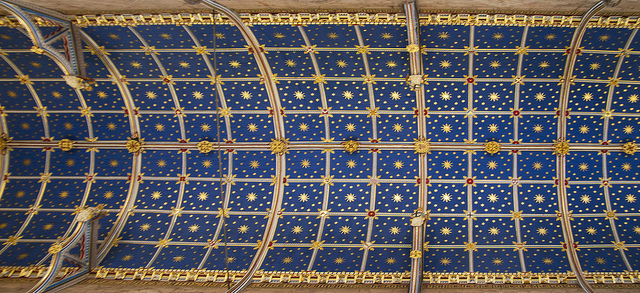
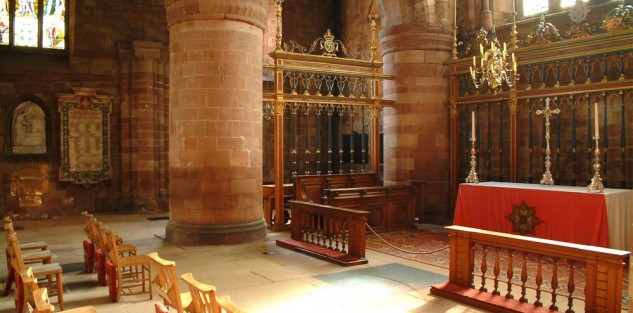
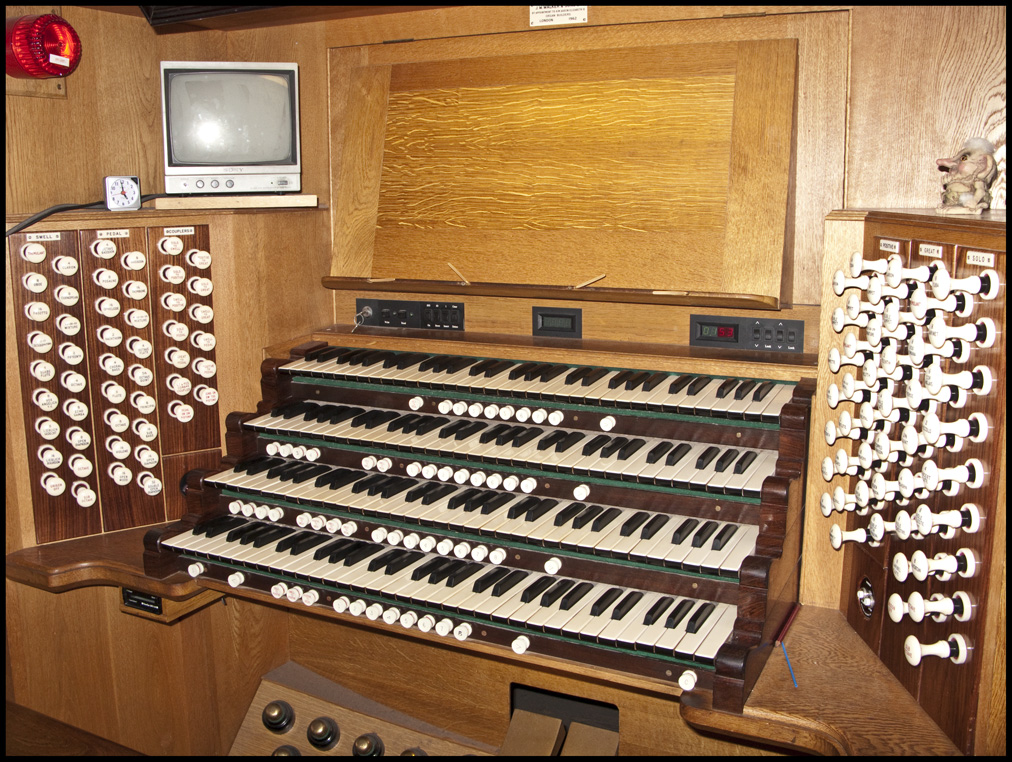
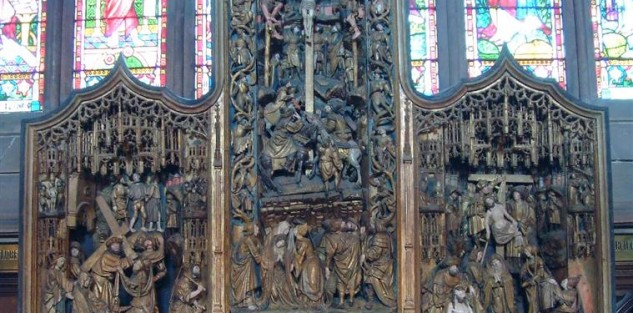
This is the ceiling of Carlisle Cathedral. The city of my birth, the place of my artistic awakening. This is where I had organ lessons, sang in the choir, and occasionally played the organ for services. It is a magical place in my memory box. Although small, thanks to Cromwellian thugs, and somewhat unprepossessing from the outside, going in is like entering a jewel box. It has been cared for and furnished by two of the 20th century’s most judicious church architects: Charles Nicholson and Stephen Dykes Bower. In a recent book on Dykes Bower, the architectural writer Anthony Symondson describes Carlisle as the least spoilt of England’s ancient cathedrals. The ceiling was originally painted in the 19th century, and was brought to vivid life in 1969/70 under Dykes Bower’s supervision.  I remember Evensong being sung accompanied by the occasional interruptions – amusingly welcome to the tittering teenager – of the craftsmen at work above the temporary false ceiling. On this page there are some more examples of Nicholson and Dykes Bower’s work at Carlisle.

Dykes Bower at Carlisle

We all have these memory boxes. For my daughter and sons, I suspect, they are things of which I don’t wish to know too much. We are well served by our memory boxes when we draw on them and their place in our development in order to fortify us for the here and now – when we can look on them with satisfaction and realize how well they have served us and nourished us. They become idols when we put them on pedestals and think that nothing will ever match up to them. When we judge the rest of life against them, and find it wanting, we are letting them destroy us.

Carlisle ‘cockpit’

These ‘awakenings’ tend to occur in our youth when we are most impressionable, when we are in our physical prime, and when our hopes and dreams are as yet intact. They shape us for ever. We all know people who live on their memories and bore the world with them. We know people who live through their children’s youth in order to try to recapture their own. We may even have done this ourselves until we saw the error of our ways. This is idolatry that leads to abuse. Given that our memories always embellish past reality in one way or another, these idols are always false.

Carlisle organ
east side

I see people in churches objecting to anything that changes their memory boxes. This is at the root of objections to redecoration, to the moving or removal of pews (a late invention in church terms), to changes of any description. They too are making idols of their memories, idols that fly in the face of reality. I struggle with wanting to rekindle the emotions that Carlisle Cathedral evokes in me. I return there in the flesh with trepidation, for I know that it will not be as I remember it. When I am tired, or feel attacked, or plain depressed, I echo the psalmist’s ‘Oh for the wings of a dove … far away would I roam’ – to Carlisle, and to the discovery long ago of the glory of English cathedrals.

Canopy by Charles Nicholson

But not the cathedrals of now with their heritage-industry and welcomers and self-justifying boards showing how they are ‘relevant’ to the life of the city (surely the point of the spiritual is to lift us out of the humdrum?). It’s the cathedral of ‘then’ to which I would return, to the womb where my mind was opened to art, music, colour, liturgy, comradeship and a sense of belonging. To beauty and delight, in fact. For a boy brought up in the drab 1950s in a drab farming village where you didn’t count unless you were knee deep in cow dung and cared about soccer and cricket, this was truly a glimpse of heaven.

Carlisle organ
west side

Jesus says a great deal about not living in the past. He tells his disciples not to flog a dead horse. He tells people not to bother about the dead, but to work for the living. We in the church are very inclined to ignore these commands of the Master.  We idolize the past just as we idolize our memory boxes.

Make no mistake: we need our memory boxes. Long may we have them. But let us never insist that they be imposed on other people. Let us never use them to oppress, to abuse, to stifle, to fly in the face of reality. Let us never allow them to take hold of us so that we become blind to life in the here-and-now.

Heaven knows, it can be difficult.

From Antwerp to Carlisle

Dreams and drips

The Rectory alarm clock

In my dream I was crawling along a corridor with water dripping on me from the ceiling. In my dream I thought, as you do, maybe I’m imagining the drips on my skin, or maybe they signify some serious neurological problem. Then, hey presto, I realized that I was being dripped on, and woke up. The Rectory roof continues to leak, and the drips drop directly over where I lie. Move the bed. You read about old houses where the furniture is moved around to avoid the drips. The Rectory is not an old house.

It’s easy to make something out of this: attend to little problems early so that they don’t become bigger ones. There are countless examples from daily life, and certainly from church life, where nipping something in the bud prevents disasters developing. And in medicine too: dealing with the wound as soon as it occurs might just stop the abscess developing.

It’s just as important to recognize problems that arise from within—that is, from our thoughts and our behaviour—and deal with them. If we don’t, we are in danger of establishing thought patterns that are destructive and lead to behaviour that attacks ourselves and those around us. Lent and Advent are the traditional times in the church year for a bit of ‘me-time’, though when you feel the drips is also a good time. This ‘me-time’ is not a matter of being self-indulgent, but rather of  taking stock. I don’t mean sitting thinking about what I do and why I do it because, as St John the Evangelist says, if we say that we have no sin, we deceive ourselves and the truth is not in us. You can not rely on your own opinion of yourself. You need a critical friend. If you have a dripping ceiling, you need to get the opinion of an expert. If you have things inside that are niggling at you, you need to get the opinion of someone else who can tell you how others see you, and what needs work. It is painful to glimpse yourself as others see you (Take me away, I can not bear the sight), and attending to the symptoms is hard work. It’s a matter of touching the untouchable within as the onion skins peel away. At this point I must interject. If you’ve seen Shrek 1 (and if you haven’t you should you know, you really should—there’s profound theology in there relevant to this ramble) you might recall the conversation about onion skins and parfaits. What is he on about? I hear some say.

I make no secret of the fact that of the C of I liturgies I find Morning and Evening Prayer 2 difficult to bear. They are wordy, there’s too much up and down, and three readings are one more than my brain can take in. I much prefer the structure, movement and language of the ‘1662’ services. To those who say that the language repels some people, I say it attracts others. The thee/your discussion is incomprehensible to me, having been brought up in part of England where thee, thou and thy remain in use. These are friendly terms. But what is so wonderful about the ‘proper’ liturgy is the introductory material right up to O Lord, open thou our lips. It is entirely Scriptural, and psychologically spot-on—we have erred and strayed, etc. We’re like supermarket trolleys that seem never to go in a straight line, but veer off to one side or another. Cranmer and his mates knew a thing or two when they were penning that stuff, and when you learn that Cranmer married his missus while he was a Catholic priest, and hid her from society until Henry VIII kicked the bucket, you might begin to see that he knew what he was talking about. Anyway, back to the plot: deal with your problems now, before the roof falls in. And enjoy the monsoon season.

A life of contrasts

Guinness not good for Diana

This was the title of Diana Mitford’s autobiography, the story of a member of that extraordinary family who lived (one of them still lives) life to the full. Diana’s contrasts included marrying into the Guinness family, divorce, marrying Mosley the politician, embracing Fascism, imprisonment during the 1939-45 war, friendship with the Duke of Windsor, and kind-of self-imposed exile in Paris (there are worse places). Life is not plain sailing. All our lives are lives of contrasts.

I minister to men and women who find it difficult to cope with the contrasts that life throws at them—indeed, I am such a person. I’m struck time and again by the way that men feel unable to talk about their troubles, sometimes with tragic consequences. Of course, women find themselves in difficult situations too; it’s just that society allows women to talk about them in a way that men feel unable to. What can we do about this? Be attentive, and listen. Provide the environment where people feel safe to unwind without being condemned. And don’t expect men to be less sensitive than women.

Personal health issues provide more contrasts. Discovering a suspicious lump can turn what begins as a good day into something quite different. Hearing deteriorates, vision deteriorates, joints deteriorate … and it’s not just older people who suffer these slings and arrows of outrageous fortune. What can we do to help? Same again: be attentive to people’s needs and do what we can to help—but help in a way that they find useful, not in a way that we think they would find useful because it makes us feel good to do it.

In amongst all these contrasts, hope springs eternal. I’m cheered by the resilience and good heartedness of people I meet. Life is indeed full of contrasts: contrasts in our inner selves and our emotional responses as we go from elation to despair and back again time and time again. We need to be attentive to ourselves and listen to our hearts. Even if we can’t do what exactly our hearts tells us, we can at least approach it as best we can. If we don’t, we kill off part of ourselves—often with disastrous consequences.

Stuff happens

Chaos theory

The randomness of life is brought home to us again as we deal with the shock of the death of a 19 year old man, and the agonizing deterioration of those with recently diagnosed painful terminal disease. We need to be clear about one thing: whatever else we may be, we are just machines: structure (bones etc), electrics (nerves), plumbing (blood vessels) and padding (too much for many of us). And all this goes wrong from time to time, just as ceilings drip.

When things go wrong, we are not being punished, despite what some religious nutters say. We are simply witnessing the fact that, in the words of the well known philosopher Homer (Simpson), stuff happens. Let us be tender and compassionate with each other, and live this day as if ‘twere thy last—because it jolly well might be.

Resurrection as homecoming

The welcome

Christ is risen, so it’s all OK, hunky dory and we can all get on with being nice to each other as Christians are. No, no, no, Christ having risen is rather a challenge.

Imagine how Judas must have felt when, having agreed to give information to the Romans, he came face to face with what he’d done to his friend by kissing him. Imagine how ashamed Peter must have been to have to look into the face of the man he thought was dead and who he’d denied three times. Imagine how ashamed the disciples must have been to have to look into the face of the master that they’d deserted. Imagine how ashamed Thomas must have been to have to eat humble pie the week after he’d been so definite. Imagine the shame.

Shame is a great motivator. It gives away our guilt by making us protest too much. It makes us think of walking away from awkward situations when we would be better to face the shame. It makes us fill our lives with activity to distract us from facing the shame. Read Charles Dickens’ Great Expectations and see how shame motivated Pip. Read the biography of Dickens to see how shame motivated all his frenetic activity as social reformer. It’s interesting that Dickens regarded himself as ‘very small and not-over-particularly-taken-care-of boy’. Think of how many of Dickens’ books are about small and not-over-particularly-taken-care-of boys: Great Expectations, David Copperfield, Oliver Twist, Nicholas Nickleby …

The Easter experience – new life – means that we all must confront uncomfortable truths about ourselves, our pasts, our behaviour—the people we have hurt intentionally or unintentionally, the things we have done that we wish we hadn’t, and the things we have not done that we wish we had. The Risen Christ forces all our baggage, our guilt and shame, to the surface. The Resurrection means having to confront who we actually are.

When we meet someone else, we put on a façade: bumptious, or aggressive, or submissive or charming, or whatever. When we confront Christ, he sees us as we really are, and when we realize that, we are overawed, even ashamed. It is too much to bear. When we glimpse ourselves as the Lord sees us—or even as others see us—we can get an awful shock. This is not something that is reserved for the after-life, it is something that can hit us here and now. It is part of conscience, though conscience is not a big enough word for it.

We look in the mirror and see not the urbane, charming, well manicured and scrubbed person we present to the world, but instead the ordinary fallible human being. And it is so much easier to love the ordinary fallible human being than the scrubbed up image, because in the ordinary fallible human being we are the real thing rather than the pretentious deception. As your Rector, I would rather deal with the ordinary fallible human being who shouts at me, or loses his temper with me, than with the charmer who says one thing to my face and another behind my back.

Jesus stands before these frightened disciples who had all wronged him in some way. He stands before us, the ordinary fallible human beings, and says ‘peace to you.’ Shalom. Salaam. Salvation. Having been brought up sharp to the reality of shame, the disciples Peter and Thomas, and you and I, are accepted. We are forgiven. The great thing is that the reality of Peter’s denials, and Thomas’s doubt are not in the least condemned by Jesus. Peter is the rock on whom the church is built. Thomas’s need for evidence was affirmed by Jesus.

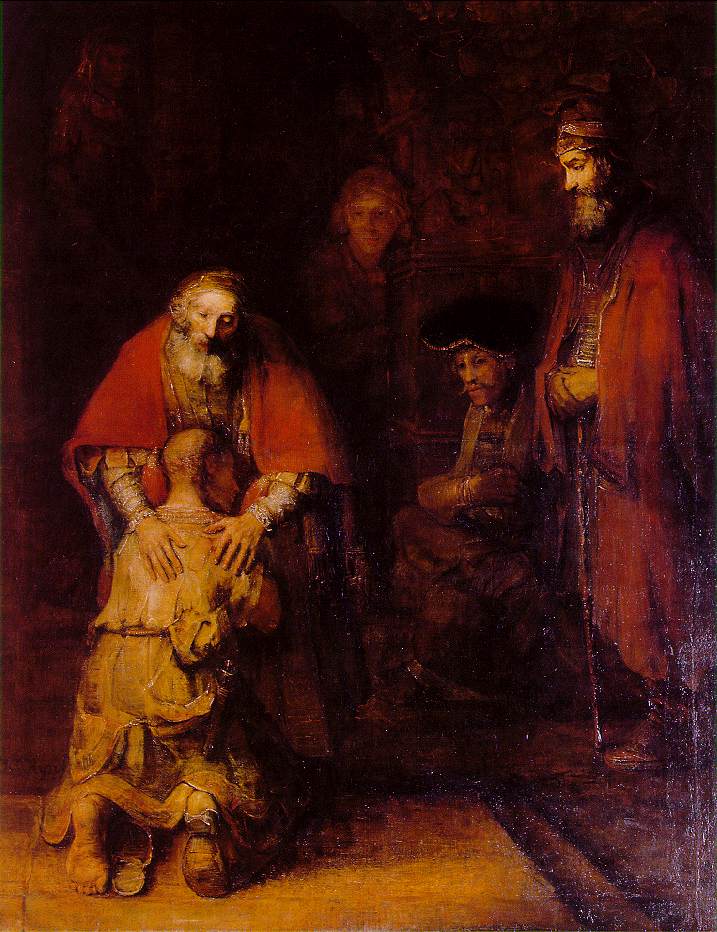
And that is a homecoming. Like the younger son in the Prodigal Son parable returning when he realized what an idiot he’d been. The door is never shut. This door of this church is never shut. The door of the Rectory is never shut.

In truth, we have God inside us all. That sanctuary of the soul that is hidden within, that we need to let fill us from the inside out. We sometimes choose to keep it locked up and pretend it is not there. That is when we are driven by pride and self-obsessedness. When we open that door, the divine light floods out. It might make us shed tears of joy that melt the heart of ice (O my Saviour lifted). This is forgiveness. We do not have forgiveness because we acknowledge our sins. We have forgiveness therefore we acknowledge our sins, our human frailty.

The younger son saw himself as the Lord saw him. He chose to take the first step. He could have chosen not to. He came home, forgiven. This is resurrection. We can choose to exclude ourselves, or we can choose to be a part of God’s kingdom here and now. The choice is ours as to whether or not we stay in the cold and become bitter and twisted, or we come home acknowledging our imperfections, and enjoy the divine presence and the divine warmth of divine light and love.

Resurrection or wilderness is the choice facing each one of us. A pretty easy decision, you would think, but one demanding openness, honesty and courage.

Resurrection as imagination

An architect’s imagination

In his novel ‘The Power and the Glory’, Graham Greene has one of his characters say ‘hate was just a failure of imagination’.

The theme of Easter is renewal. The Holy Week and Easter story is about a group of people who were so threatened by new ideas that they put Jesus to death. A failure of imagination that resulted in hatred. Looking at the world today, we see the same forces at work. North Korea might be a long way away, but its threats have the power to destroy the world—and all because the governing clique of old men lacks the ability to admit that new ideas could make things better. A failure of imagination.

If you look at the photos of the installation of the new Dean of St Patrick’s in Dublin, you will see pictures of an institution that appears to be ruled by old men, stuck in the past and with little interest in preparing for the future. Is this what our church looks like? Here are some questions for you.

  • How many of our offspring attend church? What is there to attract them? Do they see a group of people who live with hearts and minds fixed on the Gospel?
  • Where will the clergy of the future come from? Some recent clergy appointments in this diocese have been even older than I am. Already, we are in the position where one post is unfilled because of a shortage of trainee clergy.
  • What is your vision of the future for this church? Do you think it can be business as usual, as it has been?

Many people seem to want the church to remain as they think it always was. The thing is, memory plays tricks. They want things to conform to a romantic notion of how they think things used to be. That was not Jesus’ way: there was nothing romantic about flights to Egypt, childhood in Nazareth, stomping around the Judean desert, the blood and gore of torture and crucifixion. Like him, we live in a messy world and we must confront it and get our hands dirty, like Thomas. Like Thomas we need to ask questions and push at boundaries to see how best to put our Lord into action. What will the church be like in 10 years’ time if we don’t do some fresh thinking?  We need the courage to ask questions and seek evidence, Thomas-style, and then act on it, Jesus style. We need, in the message of the epistle, to let light triumph over darkness.

We need renewal. We need to experiment. We need to cooperate. We need imagination. Without imagination we would still be scrabbling about in caves. Our future, as the Acts of the Apostles makes crystal clear, lies in togetherness, in openness, in being willing to try new things. Our churches are dying because of constipation from yesterday’s diet and yesterday’s resentments. Dietary ingredients must remain the same as they always have been—the word of the Lord—but the recipes need the roughage of altering circumstances.

I met a man in hospital, in his 80s, who said to me that the church had lost its way because it had forgotten what love was all about. We need to let God work in us. It’s not so much that we need actively to cooperate with God, but rather that we need to stop resisting God. The divine blueprint is there within us. We let it fill us and squeeze out the evil. This means letting the resurrected Jesus point out to us those assumptions and behaviours that are based on fear and hatred, and get rid of them.

Hatred is a failure of imagination. Love is the blossoming of the imagination. Love is expensive. Love demands a letting go. Love is renewal. Love is resurrection. Love is God. Let imagination and love triumph over hatred.