Church of Ireland and termination of pregnancy

Panagia of Yaroslavl

Panagia of Yaroslavl

The Church of Ireland is to make a submission to the Government of the Republic about ‘abortion’. I can hardly wait. (I wish people wouldn’t call it ‘abortion’, by the way, which is a spontaneous event, far commoner than many realize. I wish we would call it termination of pregnancy.) The life history of a human being from fertilization to death is a continuous and infinitesimally gradual process. There is no single moment before and after which the organism is recognizably different. Attempts therefore to say that this moment or that moment is the time after which abortion is not permitted do not stand up to scrutiny.

Some say that ‘abortion’ might be permitted at any stage before the fetus can perceive pain. The trouble is, how do you pin down definitions of ‘pain’ and ‘perceive’, and how does someone who is not the fetus judge? Even if you can pin down such concepts, we would still only be talking of likelihoods and averages, since variations exist in the way that neuronal conductivity develops, and in the development of parts of the brain involved in pain recognition. Others talk of using the ability of the fetus to survive independently as a criterion. But this too is fraught, since it depends on the definition of ‘independent’. Medical intervention now allows premature infants to survive ex utero much earlier than heretofore.

As I see it, then, logic takes me to the position that if it’s permissible to kill a fetus, it’s permissible to kill any human of any age. I can see that under certain very exceptional circumstances, killing the fetus may be necessary. The argument concerns what those circumstances might be, and who makes the judgement.

In forthcoming weeks and months, I picture church bigwigs travelling at church (that is, our) expense to meetings where they ponder issues of ensoulment and anthropology and ontological intentionality and potentia obedientialis. I earnestly hope that biology will not pass them by.

Instincts, urges and conferences

Primates together

The Church will soon be having its conferences and synods about human sexuality and civil partnerships. At Clergy meetings we hear about attitudes to scripture and the importance of pastoral sensitivity. It is said—quite rightly—that the Church has got its knickers in a complete twist by having a conference about this issue, whilst having said little or nothing about the rape of the country by the wide boys of political-financial cronyism. I would go so far as to say that the Church’s knickers are now round its ankles. They are in danger of tripping it up with a Galileo-style mistake in which the evidence of science and senses is ignored.

It seems to me that all the discussions miss the most important thing of all. In case it has passed you by, girls and boys, we are animals. We are mammals. We are apes. Stand with no clothes on in front of a mirror and use your eyes. Anatomy and physiology confirm this. We are governed by animal instincts and urges that come from, amongst other places, hormones secreted by our glands, and glands that are controlled by natural rhythms.

Holy Scripture tells us that each one of us is made in the image of the Divine. Just as I am, just as you are. Jesus loves me, this I know, for the Bible tells me so. So Jesus must love my glands too. And their secretions. And the effects they have. And the processes by which they developed from the moment that my father’s sperm fertilised my mother’s egg. So how can there be an intelligent discussion on human sexuality without considering what we know about the development of sex organs, sex hormones, their effects, the development of psychological sex, emotions and the nature of sexual attraction? I ask you.

How can we be certain enough to make universal rules? Experts differ about the meaning and interpretation of Holy Scripture. How can we be certain what words in a language no longer spoken meant to people who wrote and first read them 2000 years ago? Pastoral considerations can never be wholly reliable because I am not you and you are not I—even if I know myself and you know yourself. I wonder how many of those with the loudest voices have actually looked into themselves and wondered where their thoughts, and urges, and instincts, and gut reactions come from.

If the conference displays to the world that the Church has its priorities wrong, will anyone be surprised? Will anyone care any more?

All about Eve and Adam

The unsuccessful ones nip off for a pint, I suppose

The Church of Ireland is having a big row about sexuality. I referred to this in November 2011 under the heading A spot of bother. However painful it may be for those directly involved in this—and I know it causes worry and sleepless nights for some—it is discussion that needs to be had in public. As someone who spent 30 years teaching anatomy and embryology to medical students, I have views based on what we know about the biology of sexuality.

If we say marriage is between man and woman, then we have to define man and woman. If we say ordinands have to be heterosexual, then we have to opine on maleness and femaleness.

Structure

The gonads of the early embryo can develop into either testes or ovaries. It seems that the ovary develops unless hormonal conditions at a certain stage of development ‘switch’ on the testis, as it were. That is, the female is the default setting. Very rarely (1 in over 80,000 births), an individual may have an ovary on one side and a testis on the other, or a gonad may contain both ovarian and testicular tissue. During development, the ovary stays more or less where it started, but the testis descends into the scrotum. Undescended testes, this descent having been arrested, are common: about 3 in 100 male births. In a sense, they signify incomplete male development. The clitoris and penis both develop from the same embryonic precursor. The female, again, seems to be the default setting. Penile congenital anomalies such as hypospadias, where the opening is on the under surface of the penis, are surprisingly common (some say as much as 1 in 300 male births). They can be regarded as varying degrees of reversion to the female anatomy. How small does a penis have to be before it is more a clitoris?
The scrotum and the labia majora develop from the same structures: the scrotum is the two labia ‘sewed’ together (you can see the ‘seam’). How large do labia have to be before they become scrotum-like? Every adult male prostate gland contains a vestige of the precursor of the uterus. Every adult female has structures that in males develop into the tube conveying spermatozoa from testis to penis.

I could give more examples. Genitalia differ in size, shape and form. Some people are born with external genitalia of one sex, and internal genitalia of another. Or a person may be born with genitals that seem to be neither one thing nor the other—a girl may be born with an abnormally large clitoris, or lacking a vaginal opening, or a boy may be born with a small penis, or with a divided scrotum, like labia. Structural anomalies in the male are more common than in the female, though you may recall the fuss last year about the South African ‘female’ athlete who was reported to lack both ovaries and uterus.

Chromosomes

The normal human female complement of sex chromosomes is XX. The normal human male complement of sex chromosomes is XY. The incidence of newborns that are neither XX nor XY has been put at about 1 in 1700. Here are some examples:

  • XXX: 1 in 1000. Female, often no other manifestations.
  • XYY: 1 in 1000. Male, often no other manifestations.
  • XXY: Klinefelter’s syndrome. 1 in about 1000, often sterile, males with female fat distribution. May never be diagnosed, so may be commoner than we think.
  • XO, that is, only one X chromosome and nothing else: Turner’s syndrome. 1 in about 3000. Appear female, nearly always sterile.
  • Mosaic, some cells XX, some XY. Very uncommon.

Psychological sex – ‘what do I feel or experience?’

We know very little. It seems that a part of the brain may be switched on to ‘I think I’m a male’ at a certain stage of development. It seems, again, that the female is the default state. There are reports of people who feel as if they have been born into the body of the ‘wrong’ gender. There are reports of an area of the human brain that in homosexual men is more like that of heterosexual women than that of heterosexual men: male body, female brain perhaps.
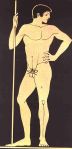
Look at me
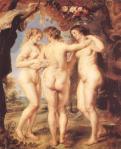
Rubens: The Three Graces

If a man admires or envies the muscularity of a male athlete, does that mean he is a homosexual?

If a woman admires or envies a Rubens lady of generous proportion, does that mean she is a lesbian?

Defining man/male and woman/female

We simplify sex categories into male, female, and sometimes intersex, for cultural purposes. This is unsubtle. There is much scope for naturally occurring structural and chromosomal anomaly, and a spectrum of psychological sex.

Pleasure

To what extent did Biblical writers and early readers associate procreation with sexual intercourse? This is worth asking, for it is clear that even today not everyone understands the sequelae of sexual intercourse. In Biblical times, the roles of ova and spermatozoa were not as we know them today. It was held at one stage that semen merely initiated the development of the embryo in the mother, and at another stage that a spermatozoon contained the miniature human and that it was ‘injected’ into the mother, who was merely the vessel in which the embryo grew (perhaps the origin of bun in the oven). (As an aside, both these shed interesting light on notions of virgin births in Biblical times, even accepting that virgin is the correct translation.) This matters to the same-sex debate, because it is relevant to whether or not Biblical people recognised the importance of pleasure in sexual intercourse—what we might term the psychological effects that come from the flood of endorphins released in orgasm.

If we say that sexual pleasure is banned, and that intercourse is only for the purpose of procreation, then intercourse must be restricted only to those times in the menstrual cycle when conception is possible. Of course, this turns current RC teaching on its head, and using the safe period for the avoidance of conception is just as much a sin as using a condom.

Pleasure police

So, how do we define man and woman? 

Inspecting genitalia might not give a definite answer, and anyway who would have the imbecility to suggest it? Chromosomal tests might not be a reliable indicator of how the person feels. Assessing the ability to engage in vaginal intercourse might do the trick, Diocesan assessors could be appointed, and CCTV cameras installed in Rectory bedrooms. If one or both partners were infertile, then intercourse would be only for pleasure, so there might have to be pleasure police.

Conclusion

If we say we are certain, we deceive ourselves, and the truth is not in us.

Some poor biological material

A short story

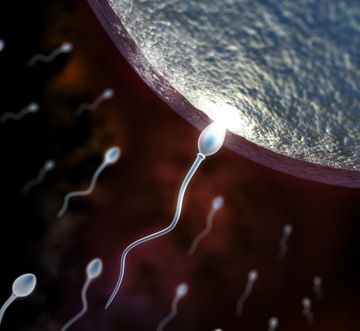
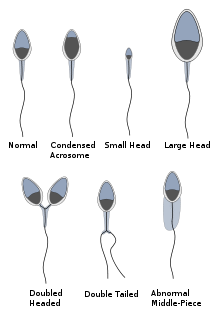
Male infertility is on the rise—a scientist has described it as a ‘timebomb’. Spermatozoa are now more likely than ever to be dysfunctional. It could well be that we are being feminised by the hormones routinely used in food preparation, now entering the water table. Read Consider her ways by John Wyndham, published in 1961. Set in the future when men are a distant memory for even the oldest human in a society organised like that of bees. Parthenogenesis returns. The trouble with parthenogenesis in XX mothers is that the offspring can only be female. And on that note I end.


Healing and research

“They don’t like it up ’em!” said Corporal Jones

I wrote recently about healing, in theological terms, being about acceptance of reality, preparation for the future, liberation, rather than about medical cure. Heal = salve = save. Here are some more phrases: healing as coming to terms with, at-one-ment. I’ve been provoked to think more about this as a result of discovering that the Burzynski Clinic in the US is attempting to silence a 17 yr old young man for having the temerity to point out to the world on his blog that the clinic’s claims of offering a cure for cancer are not founded on robust scientific evidence. The young man has gone so far as to call Stanislaw Burzynski ‘a quack and a fraud’.

Why do we invest so much in doctors and drug companies? Why are they paid so much? At least part of the reason is that people can’t come to terms with the fact that life is a terminal condition. We imagine that the next new drug, or treatment, or whatever, will allow us to live for ever—or at least, for that bit longer. Now, let’s imagine you’re expecting to kick the bucket any day, then a new drug unexpectedly becomes available and you are told you have an extra month. What will you do in that extra month? Will you travel to where you’d always wanted to go? Will you write your life story? Will you watch more TV? Will you make sure that the people you think are eejits know your opinion of them? (That’s a very tempting option.) Perhaps you will try to make peace with people you know you’ve offended or hurt. You might even try to let people who’ve hurt you know that you bear them no ill will. You would then, in your last days, have a lighter heart, carry fewer burdens, and die more serenely. You—we—can start this now, by living each day as ‘twere our last. Because it might be. Life—to repeat—is terminal, and we never know when the game’s up. Wiping out this disease today means we die of something else tomorrow.

This takes me back decades to when I was a medical student and junior hospital doctor in south London. I ministered to dying babies, children and adults, and to their to parents and families. I began to wonder about the distinction between medicine as easing suffering, medicine as restoration, and medicine as prolonging a life of suffering or even unconsciousness. I witnessed the switching off of life-support systems for people who had effectively ‘died’ months earlier. I witnessed ‘treatments’ that were little short of medical experiments dressed up as false hope.

Research in medicine has enabled us to move on from surgery as practised in mediaeval times—see the illustration at the top. Most medical research is of the highest ethical standards, but some is driven by the need for researchers to climb the greasy pole of career advancement. Peer-reviewed assessment can result in the stifling of innovative thought because it challenges accepted wisdom, threatening to diminish the reputations of reviewers. Research funded by drug companies should always be most closely scrutinized in case commercial concerns have distorted methods and/or findings (see or read Le Carré’s The Constant Gardener). And of course, medical research is always at the mercy of charlatans. When people are at their lowest, they are at their most vulnerable. That is why quacks and frauds must be exposed for what they are.

You are perhaps beginning to see that I was never cut out to be a researcher.