A plague of immoderate rain and waters

A former Rector of Stradbally, Patrick Semple, was known as the Rector who wouldn’t pray for rain. We certainly haven’t needed any such prayers recently. The Roman Catholic Bishop of Ferns encourages his flock to pray that the rain will cease. Bishop Brennan is in good company, for in old editions of the Prayer book we find this: O Lord God, who hast justly humbled us by thy late plague of immoderate rain and waters …  In his 1928 book Paganism in our Christianity Arthur Weigall asks if we think God is a vindictive hobgoblin. If so, praying for rain or shine, as required, might be just the thing. If you see the Lord as an irascible headmaster needing to be placated and massaged, then prayers for this or that might be just your cup of tea. It wasn’t Patrick Semple’s. It’s not mine.

So much rain here, so little in the USA. Our farmers are having a tough time because of too much, theirs because of too little. That word immoderate seems spot on. Jesus is recorded as saying that rain, much welcomed in those parts, falls on the just and the unjust (Matthew 5:45), and this is one of the texts (Luke 13 is another) that should be wheeled out when people say that some nasty accident is God’s judgement on the victim. This is piffle. As I’ve so often said, life is unpredictable – tectonic plates shift, cells go out of control, people decide to do things that affect others. Tragedies occur, but they say nothing about the Lord. They may well say something about ourselves:

“The rain falls upon the just
And also on the unjust fellas
But mostly it falls upon the just
Cause the unjust have the just’s umbrellas”
― Cormac McCarthy, The Statesman

Some people say that climate change is the result of human activity, and that we should do something about it. If it is, it’s a bit late. It started at least as far back as the 18th century with industrialisation. In Saudi Arabia, where petrol is dirt cheap, I witnessed the turning on of car engines and aircons at 5 am so that the car would be nice and cool for the journey hours later. Think of all that exhaust. How can we deny to others what we have had for at least a century? There’s some profound hypocrisy going on here—and the church, with the way it uses petrol, electricity, paper, and hot air, makes its green charters part of this hypocrisy.

Some say that we need to preserve the environment for the sake of existing species, but what about the view that environmental changes will provoke the next stages of the evolution of species? God, then, would be ‘working his purpose out as year succeeds to year.’ Nigel Lawson’s book An Appeal to Reason: A Cool Look at Global Warming is a salutary read. Climate change is part of a cyclical process over centuries, and of course the activity of humans and other animals contributes (think of all the cow farts). The Lord gave us intellects to cope and develop. This is what scientific investigation is for.

Yellowstone

In the end, whatever happens, nature will win. Bacteria will beat antibiotics. Particles from the sun will one day disrupt our power supplies with catastrophic results. We could well be wiped out as a result of the dust cloud if Yellowstone erupts, already long overdue. But bacteria and insects will survive and evolve, plants will survive and evolve, and—who knows—a new, improved super-ape might evolve and the whole process start all over again.

If you care about the environment enough to act, you will get rid of your cars, turn off your lights, turn down your heating/aircon, stop using paper, stop buying jewels, and make sure your pension funds (such as they are) are not invested in the oil and geological extraction industries. Let’s have another sherry.

Wider than the heavens – the intermingling of human and divine in Theotokos

The Great Panagia of Yaroslavl

Here is a conversation between biology and theology. Modern understanding of mammalian reproductive biology tells of an exchange between mother and fetus that has extraordinary implications for the exchange between Mary and the fetal Jesus. Astonishingly, Lancelot Andrewes hit on some of this in his devotional material, and it leads wonderfully and beautifully into Orthodox notions of deification, hinted at in Charles Wesley’s hymns.

God the Logos became what we are, in order that we may become what he himself is. Irenaeus was prescient. Read on.

Tuesday in Holy Week: struggle and choice

Gethsemane agony

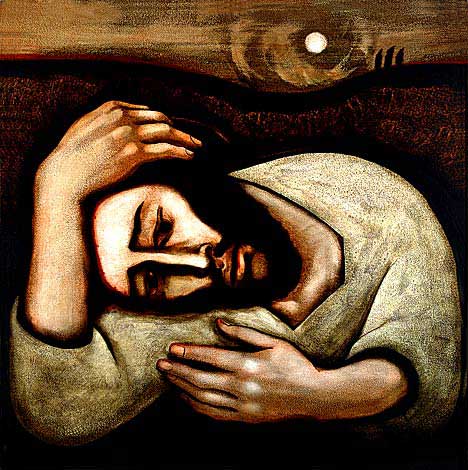
Jesus in the garden struggling to come to terms with events. He asks for support from friends but they fall asleep. He asks to be spared the awaiting fate, but then says (something like) ‘I have to face the future full on.’ He struggles.

Life is a struggle, and for most people on the planet it’s more of a struggle than it is for us. We look around and see the beauty and fragility of creation; mountains, plains, plants, flowers, architecture, art, science, craftsmanship. We see how it is constantly beset by terrible acts of evil. Over the last few decades there have to appalling events in Russia, Africa, the Balkans where hundreds of innocents are slaughtered in the name of political struggle: one group of people trying to control others. We see inhumanity in places like North Korea and Burma. We see it even in our own land. We see war waged in Iraq and Afghanistan, and threatened in Iran. At times it almost seems as if the very stars are being wrenched from heaven by some evil force—which is exactly how the events of Friday are described in the Gospels as the sky is plunged into darkness.

the beginning of a thought

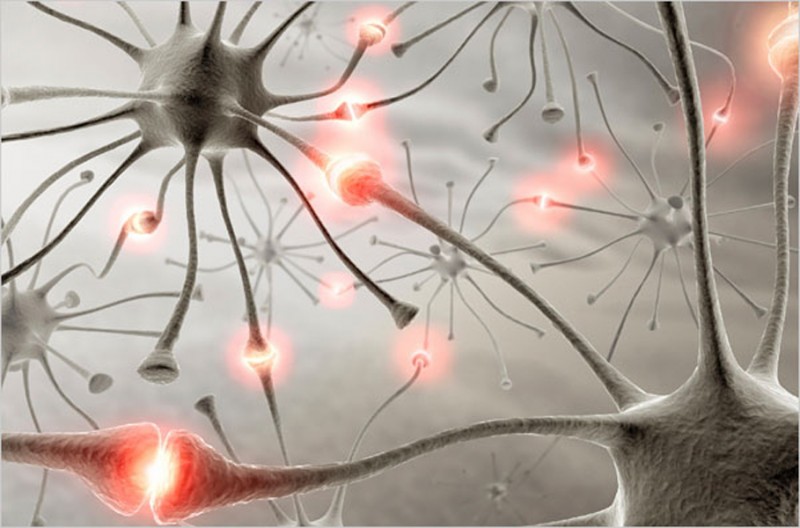
This urge to the inhuman must be in us somewhere. Evil, badness, cruelty – these begin as a thought in someone’s mind, one nerve cell in the  brain sparking on another. When we decide to support the things that evil people do—bullying, torture, exploitation—that decision begins as a thought in someone’s mind—yours and mine. When we are tormented by what to do, when beads of sweat start forming on our foreheads and drop like grapes to the floor, we are experiencing something of the mental agony that we hear of in the Garden of Gethsemane. All this because we have the power to choose: wisely or unwisely; actions that might fracture or might heal; actions that might increase the amount of misery in the world, or that attempt to decrease it.

The story of Adam and Eve in the Garden of Eden is a fairy story that attempts to explain why we humans so often get it wrong. A story that illustrates that when we choose for selfish reasons rather than for selfless reasons, we disturb the cosmos. A story that explains why we so often hide behind masks, spiritual cosmetics, spiritual fig leaves, rather than stand in full frontal nakedness before the Divine.

Breugel: good versus evil

We have choice. Every choice begins as a thought. We need to be aware of our thoughts. We need to choose wisely. We need to have courage to stand against the mistaken majority and stand for truth and right. We need to have courage to be nonconformist as Jesus was nonconformist, and stand up to those who try to persuade us to do what we know we should not. We may be laughed at, scorned, cast out, sneered at. We may suffer. But from this suffering we grow in self-knowledge, and growing in self-knowledge, with all the shame and joy that such growth brings, is the first step towards growing into the Divine. God became man so that humans might approach the Divine.

C S Lewis: God whispers to us in our pleasure, speaks to us in our conscience and shouts to us in our pains.

Faces and blood

Peter Butler: I hope he doesn’t mind

Face transplants are in the news from time to time, and we sometimes hear of the work of Professor Peter Butler in London. This is of some interest to me, not particularly from a medical point of view: transplanting a face I suspect involves craftsmanship similar to that needed by a restorer of ancient documents or paintings. The interest comes from the fact that when I was a Professor of Anatomy in Dublin I taught him, and employed him for a year. That is as near to fame as I’m likely to get. And there’s another source of fascination in this, and it’s to do with faces.

The squeamishness of the public concerning face transplants, and the moral questions that arise, reflect that fact that the face is what defines a person, even a personality for some people. The word person comes from persona, mask, which seems to imply that we all put on a mask to cover up our true selves. Is this also the sin of Adam? The face houses the organs of smell, taste, sight, and the most touch-sensitive parts of the body. The organs of hearing are not far away. The face is in a quadruped (and as apes we are just modified quadrupeds) the first part of the body to go into a new environment. It is the part of the body that confronts, as we heard in Isaiah: ‘I gave my cheeks to those who pulled out the beard; I did not hide my face from insult and spitting.’ The muscles of the face are called mimetic muscles because they mimic our emotions, communicating them to the observer. The brain connexions of the nerves that supply these facial muscles are specially protected from disease. I could go on: let’s just say that the face is of peculiar interest to me. And not just to me, it seems, but also to Holy Scripture.

The word face appears 25 times in Genesis alone. The Lord setting his face towards, or against, or hiding his face, or showing his face to someone or other. In the Gospels, Jesus comes down from the transfiguration mountain with a shining face. Think how the face is radiant in people who are doing exactly what they are put on the earth to do: shining with joy. Look at a photograph of the newly ordained (but hurry up before the radiance is wiped off their faces by the realities of ministry). Then a few pages later, Jesus sets his face to go to Jerusalem. Not joy this time, but gritted determination. Indeed, he sets his face like flint—which is the phrase used in tonight’s OT lesson: ‘The Lord God helps me; therefore I have not been disgraced; therefore I have set my face like flint, and I know that I shall not be put to shame.’

Melt this heart of ice

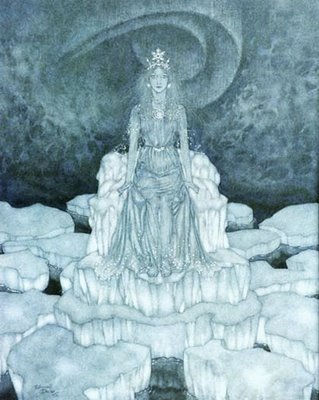
We see with our eyes and our eyes are watered by tears. The psalmist’s tears wetting his couch in his hours of distress, crying in the daytime. But tears of joy too. Tears that cleanse our faces. Tears in that most beautiful of Andersen’s stories, and one full of religious allegory, that melt the heart of ice that the Snow Queen has wrought in Kay. Tears of love that alone enable the ice blocks to spell the word eternity and allow Kay and Gerda to enter together. Eternity, here and now, out of time. The love that gives its all for me, as will I for my children.

The film Gandhi, when early in the film, Gandhi and Charlie Andrews on a crowded train, and Andrews invited up to the roof. A local says to him ‘I have friends who are Christian: they eat flesh and drink blood every Sunday.’ It’s meant to be a friendly greeting! In today’s culture of flesh-eating zombie films and vampire films and video games, Christianity has a hard time getting through to the unchurched used only to these ghoulish images of flesh and blood. And I have a confession to make: I would be ashamed to tell you how very recently it was that the penny dropped about the real significance of blood in Christian theology, and the reason for this is that I looked on blood from a medical point of view, whereas the key to the issue is in the layman’s point of view.

oxygen and iron

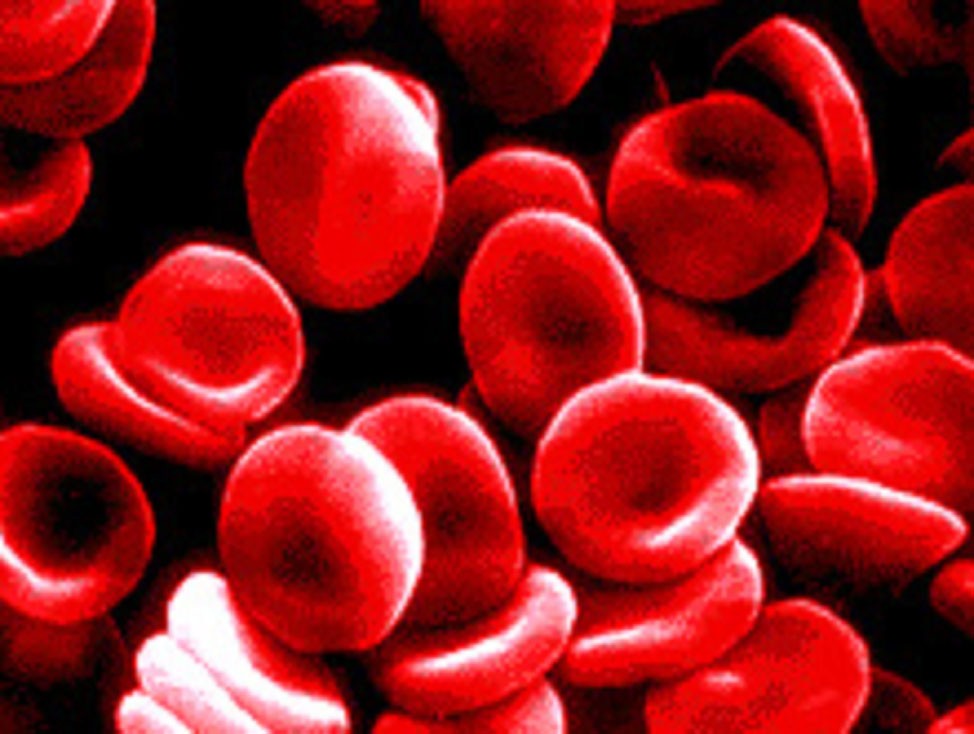
Picture someone attacked in the street, lying bleeding in the gutter. As the blood seeps away, so does the life-force. Lack of blood equals death, so blood equals life. For Jews and Muslims, ritual preparation of meat to eat involves draining all the blood so that they are not guilty of consuming the God-given ‘life force’. The blood that marks the doorposts in the first Passover (Exodus) signifies that the house will be preserved: blood equals life. And so the blood of Jesus, the blood that flows from his crucified side gives life to the world. All the references to blood of Jesus in Holy Scripture and in many rather gruesome hymns refer to the giving of life. The sacrifice on the cross is life giving for exactly this reason.

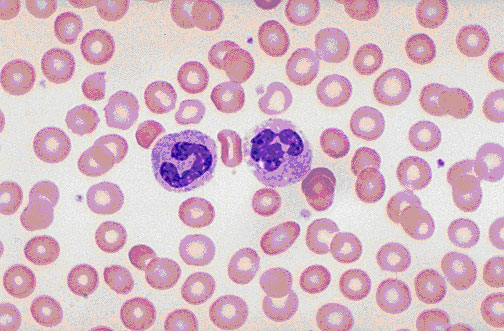
White (i.e. not red) cells stained purple: warriors

Some parallels can be drawn between the blood that circulates in our vessels and the blood of Jesus.

  • Blood brings nutrient to the cells of the body. What more nutritious than the Sermon on the Mount, the two great commandments, the parables?
  • Blood contains red cells that bring oxygen to the tissues. Jesus brings us the clear air of life. Get rid of the smoke of duty and oughts and shoulds, and instead take up the clear air of freedom from following the crowd. We are in the world, but not of the world.
  • Blood contains white cells that fight disease and maintain health. Isn’t that exactly what the teachings and example of Jesus can do for us.
  • Blood removes rubbish from the tissues of the body, and contains platelets that plug holes in the blood vessels. The resources of the Christian church are there for us when we feel burdened, and life overcomes us. Come unto me all that labour and are heavy laden, and I will refresh you.

So now when I hear of the ‘blood of the lamb’, I understand it as, quite simply, the will to do the Divine. As St John’s Gospel has it: ‘Unless you eat my flesh and drink my blood, you shall not have life within you’ (John 6:53).

Monday in Holy Week: confronting death

Beauty anointing the spirit

Isaiah 42:1-7. John 12:1-11

The events in tonight’s gospel story take place before the Palm Sunday procession we recalled yesterday. I’m going to take both stories together, in the Biblical order. Here are some themes that strike me.

  • Preparing for death: Mary’s anointing Jesus with oil normally reserved for anointing the dead
  • Jesus facing the future squarely: his cheerfulness, and the crowd’s acclamation.

We live in a society that refuses to look death full in the face. People try and pretend it will not happen. They go to great lengths to try and delay it, even when it’s obviously inevitable. We spend money on seeking a cure for this or that disease as if there is some hope that we can live for ever. We forget that one day, even if we are cured of this or that disease, tomorrow we will die of something else.

This always leads to trouble. If you pretend it won’t happen, you can’t set things straight before you go. You are left with unfinished business. If you can’t set things straight, you are left with regret and guilt. You can’t say that you wished you’d not said so-and-so, and you can’t say, before it’s too late, what you should have said years ago. And all that is the overwhelming cause of grief and weeping and family tensions at funerals. It’s in contrast to the death of a friend of mine recently, who knew she was dying, told the world, and wrote her own funeral address, and characteristically witty it was too. For six months of my life I worked in a north Brixton children’s hospital in south London. I saw babies with incurable conditions having operation after operation, and I was required to insert drips into their tiny veins whilst seeing their eyes looking at me. I was gravely distressed at the inhumanity and cruelty of it. I plucked up the courage to suggest that baby Anthony should be allowed to die with dignity. The reaction was swift: I was reprimanded in no uncertain terms. He died the next week after yet another operation. It is not my intention to start a debate tonight on end-of-life issues—that’s for another time maybe—but I’m using this as an illustration of how many of us refuse to confront one of the realities of animal existence on this planet. Our refusal to be straightforward about death results in grief for ourselves and for those that love us.

This sanitisation of death, this refusal to look it full in the face, is partly a consequence of urbanisation. Rural folk have a more robust attitude to death. They see it day by day. Animals are killed so that we might eat. Many of us think nothing of shoving an arm up a cow’s rear end to pull out a dead calf. Now, I acknowledge that my attitude to death may be more peculiar than most: not only was I brought up in a farming village, but for 25 years I was using human cadavers to teach anatomy: cutting them up, examining them and handling them.

However unusual my attitude to death might be, I’m convinced that our attitude to death needs realigning. Tonight’s Gospel and the Palm Sunday procession seem to say likewise. Our Lord faces death full in the face. Face: earlier in the gospel Jesus came down from a mountain with a shining face. Then he set his face to go to Jerusalem. And now acknowledging to Judas—I’ve more to say about him on Wednesday—that he is being anointed for death, just as many priests have anointed people for death. The Easter message is that death leads to new life. If you want to build on a new site, it is wise to clear it of rubble so that good foundations can be laid. This is new life following death of the old. And so, of course, is the resurrection story.

Death of the old prepares for the new

Biologically speaking, death is part of life. The cells of our bodies are dying all the time, and new life replaces them. Skin cells are constantly being shed and replaced. Blood cells past their sell-by date are replaced all the time. There are lots of other examples, but here is a startling example of the necessity of cell death. When a fetus is developing in the uterus, the hands and feet start off as spade-like things, a bit like fists. You might think that fingers and toes grow out from the spades, but you’d be wrong. What happens is that rather than digits growing out, four strips of cells are programmed to die, leaving digits remaining between them. If not enough cells die, we get webbed fingers and toes. If more strips die we get more fingers than usual. Here is another example. When a bone is fractured and reset, the two ends are rarely aligned properly. The body copes with this by killing off bone cells in the wrong place, and laying down new ones where needed.

Biology has no hesitation in killing off the old in order that the new can flourish. We can’t move on if we try to preserve the past. That is why I oppose the conservationist lobby. We must face death when necessary. We can’t engage with the present if we refuse to accept the inevitability of death, because we will be tempted to put off things that need attention before it’s too late.

I am calling for honesty and clarity of vision. And this, I think, is what Our Lord called for throughout his ministry. Yesterday and today, Our Lord stands up to face the future full on. He stands at the gates of the city, the city of wrong. Facing the future mindfully means killing, letting go of, all that holds us back. It can be very painful. We begin to see ourselves as others saw us. We realise that we are not as good as we thought we were. We realise how we deceived ourselves and the truth was not in us. We need to grieve our lost attitudes, our lost expectations, our lost dreams. We need to let go of what we want, or wanted, and accept the grace of God to resurrect us. We must die in order to live, as Christ Jesus died in order to live. Death of our self-obsession enables us to rise:

As larks, harmoniously, And sing this day Thy victories: Then shall the fall further the flight in me.

As I grow older, I look back on some of the things I used to be passionate about and wonder what it was about them that so obsessed me. Obsession is the right word, because these passions blinkered my vision and limited my action. I once had a huge collection of books: they were my friends. I came to see that they limited me. Not only did they cost a lot of money, they also dictated the type of house we could move to. And after all, when one has sucked the marrow out of a book, one might as well pass it on. These are not evil things in themselves but they limited me, they narrowed my vision. They stole some of me and prevented me from being fully me, in a similar way to that of any addiction. I am still afflicted by such things—I suspect we all are—but now I’m slightly more aware of the symptoms of the addiction. As we get older we find ourselves attached to fewer and fewer things. Our vision becomes less restricted. We are moving into a wide, unfettered place. This notion of being in a wide place is one of the Hebrew images of salvation, and it is one that Jesus teaches. If we die to earthly attachments, we are in this place, and we can focus on what matters: love of God, and love of neighbour. There is much truth in the Buddhist idea that all disease is caused by attachments.

There is a kind of renewal in this, and the key to it is to live in the present. Our Lord’s teaching again and again emphasizes that we need to do just this. Learn from the past certainly, but don’t live in it. Look to the future, but don’t waste time laying up treasures. Live now, in the moment. This, actually, is what eternal means. When we hear ‘everlasting life’ in church services, we often get the wrong idea, and it would be better, and more accurate a translation of the Greek, to use the word eternal rather than everlasting. It’s not quantity or length of time that matters, but quality. Eternal, timeless, out of time, in the present, Divine. Thy kingdom come on earth, here and now. Trust the teaching of Jesus: live in the present moment, and do your best in that moment. We can do no more, and we need do no more. In one sense this is easy to do, and in another it’s extraordinarily difficult when we are surrounded by the petty irritations that life throws up day by day, when we see the injustice that surrounds us, and when we are governed, as we are, by prejudices and faulty behaviour patterns bred into us by our upbringings. But see all these for what they are, and trust and hope.
Faces of the Divine

If we are to attain eternal life, here and now, we must face death and die to worldly trivia. Having divested ourselves of these burdens we walk off lighter. ‘My yoke is easy and my burden is light’ – light in both senses, light because of the light of the world, and light because we are less burdened by impedimenta from the past. Jesus’ last hours complete the incarnation. Our Lord gave up a divine dwelling for human frailty, and now he suffers the stripping away of dependence on self to fall into he arms of the selfless, the divine. ‘It is finished’. It is a renunciation that we are called to join in these five days. And the task for us, sisters and brothers, is to accompany the Lord on this journey of death in order to fall into the arms of the divine.

Look after yourself

Golden grapes: good on the skin, trouble elsewhere

For many of us, 2012 began with infections that remain difficult to shift. There must be some pretty virulent strains of microbes out there. Maybe our immune systems are depressed by pushing ourselves too hard. There’s a link between stress and disease, and worrying and feeling ground down by intractable circumstances reduce the ability of our immune systems to deal with disease. As we get older, we need to be mindful of ourselves—love your neighbour as yourself, not better than yourself. This is easy advice to give, but oh so difficult to take. And when people are in the midst of losing their jobs, wondering where the next cent will come from, and the general family and neighbourhood concerns that affect us all, it is even more difficult to stop worrying. It’s as well to remember (and I wish I could do this more effectively) that worrying does nothing other than harm the worrier. It doesn’t change future or past, though rational thinking might well lead us to a new way of coping. Remember, we are no good to anyone else if we don’t care for ourselves. Should we take antibiotics? Yes, of course. The more we encourage antibiotic resistant organisms to evolve by overuse of antibiotics, the sooner the human race will be wiped out, and evolution can start again. Perhaps there will be a better result next time round.

Some people forget that microbes are with us all the time. We need them for digestion and healthy surfaces, to name but two things. They cause trouble when they get into the wrong places. E coli are essential in the colon, but cause trouble when they get to other places. Are microbes part of Divine creation? If so, what right have we to kill them with antibiotics. Maybe I am an adherent of Jainism.

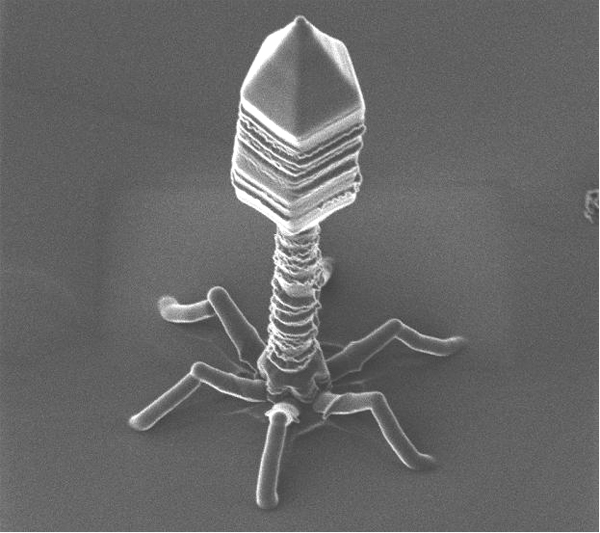
What do you make of this image? Lunar landing craft? Child’s toy? No, it’s a virus. It’s a needle with a reservoir on top, and legs to allow landing and positioning on the surface of a cell. And it’s length is a fraction of a millimeter. And we think we’re sophisticated. Here is a video of a similar virus in action. You can be sure of one thing (apart from death): bacteria and viruses will continue to roam the cosmos long after animal life has passed into history.

Instincts, urges and conferences

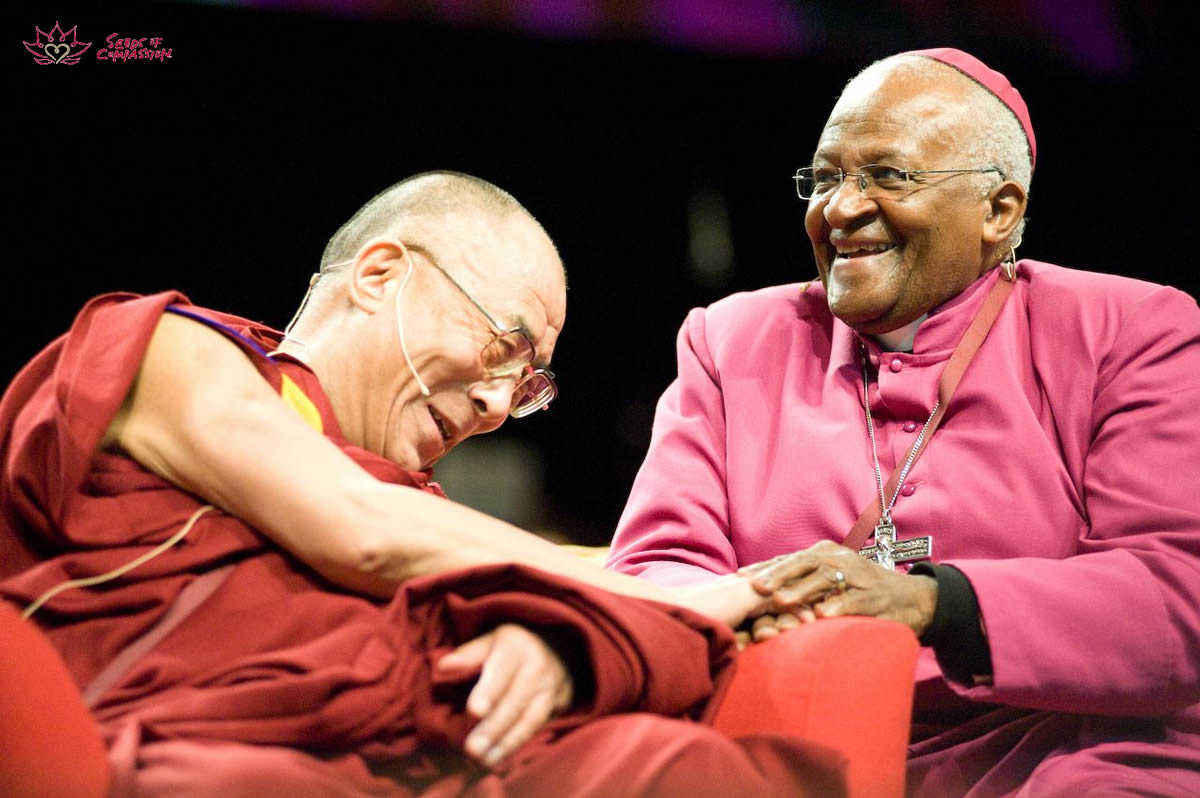
Primates together

The Church will soon be having its conferences and synods about human sexuality and civil partnerships. At Clergy meetings we hear about attitudes to scripture and the importance of pastoral sensitivity. It is said—quite rightly—that the Church has got its knickers in a complete twist by having a conference about this issue, whilst having said little or nothing about the rape of the country by the wide boys of political-financial cronyism. I would go so far as to say that the Church’s knickers are now round its ankles. They are in danger of tripping it up with a Galileo-style mistake in which the evidence of science and senses is ignored.

It seems to me that all the discussions miss the most important thing of all. In case it has passed you by, girls and boys, we are animals. We are mammals. We are apes. Stand with no clothes on in front of a mirror and use your eyes. Anatomy and physiology confirm this. We are governed by animal instincts and urges that come from, amongst other places, hormones secreted by our glands, and glands that are controlled by natural rhythms.

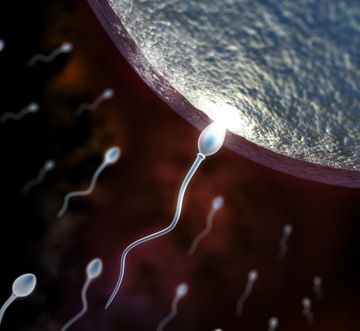
Holy Scripture tells us that each one of us is made in the image of the Divine. Just as I am, just as you are. Jesus loves me, this I know, for the Bible tells me so. So Jesus must love my glands too. And their secretions. And the effects they have. And the processes by which they developed from the moment that my father’s sperm fertilised my mother’s egg. So how can there be an intelligent discussion on human sexuality without considering what we know about the development of sex organs, sex hormones, their effects, the development of psychological sex, emotions and the nature of sexual attraction? I ask you.

How can we be certain enough to make universal rules? Experts differ about the meaning and interpretation of Holy Scripture. How can we be certain what words in a language no longer spoken meant to people who wrote and first read them 2000 years ago? Pastoral considerations can never be wholly reliable because I am not you and you are not I—even if I know myself and you know yourself. I wonder how many of those with the loudest voices have actually looked into themselves and wondered where their thoughts, and urges, and instincts, and gut reactions come from.

If the conference displays to the world that the Church has its priorities wrong, will anyone be surprised? Will anyone care any more?

All about Eve and Adam

The unsuccessful ones nip off for a pint, I suppose

The Church of Ireland is having a big row about sexuality. I referred to this in November 2011 under the heading A spot of bother. However painful it may be for those directly involved in this—and I know it causes worry and sleepless nights for some—it is discussion that needs to be had in public. As someone who spent 30 years teaching anatomy and embryology to medical students, I have views based on what we know about the biology of sexuality.

If we say marriage is between man and woman, then we have to define man and woman. If we say ordinands have to be heterosexual, then we have to opine on maleness and femaleness.

Structure

The gonads of the early embryo can develop into either testes or ovaries. It seems that the ovary develops unless hormonal conditions at a certain stage of development ‘switch’ on the testis, as it were. That is, the female is the default setting. Very rarely (1 in over 80,000 births), an individual may have an ovary on one side and a testis on the other, or a gonad may contain both ovarian and testicular tissue. During development, the ovary stays more or less where it started, but the testis descends into the scrotum. Undescended testes, this descent having been arrested, are common: about 3 in 100 male births. In a sense, they signify incomplete male development. The clitoris and penis both develop from the same embryonic precursor. The female, again, seems to be the default setting. Penile congenital anomalies such as hypospadias, where the opening is on the under surface of the penis, are surprisingly common (some say as much as 1 in 300 male births). They can be regarded as varying degrees of reversion to the female anatomy. How small does a penis have to be before it is more a clitoris?
The scrotum and the labia majora develop from the same structures: the scrotum is the two labia ‘sewed’ together (you can see the ‘seam’). How large do labia have to be before they become scrotum-like? Every adult male prostate gland contains a vestige of the precursor of the uterus. Every adult female has structures that in males develop into the tube conveying spermatozoa from testis to penis.

I could give more examples. Genitalia differ in size, shape and form. Some people are born with external genitalia of one sex, and internal genitalia of another. Or a person may be born with genitals that seem to be neither one thing nor the other—a girl may be born with an abnormally large clitoris, or lacking a vaginal opening, or a boy may be born with a small penis, or with a divided scrotum, like labia. Structural anomalies in the male are more common than in the female, though you may recall the fuss last year about the South African ‘female’ athlete who was reported to lack both ovaries and uterus.

Chromosomes

The normal human female complement of sex chromosomes is XX. The normal human male complement of sex chromosomes is XY. The incidence of newborns that are neither XX nor XY has been put at about 1 in 1700. Here are some examples:

  • XXX: 1 in 1000. Female, often no other manifestations.
  • XYY: 1 in 1000. Male, often no other manifestations.
  • XXY: Klinefelter’s syndrome. 1 in about 1000, often sterile, males with female fat distribution. May never be diagnosed, so may be commoner than we think.
  • XO, that is, only one X chromosome and nothing else: Turner’s syndrome. 1 in about 3000. Appear female, nearly always sterile.
  • Mosaic, some cells XX, some XY. Very uncommon.

Psychological sex – ‘what do I feel or experience?’

We know very little. It seems that a part of the brain may be switched on to ‘I think I’m a male’ at a certain stage of development. It seems, again, that the female is the default state. There are reports of people who feel as if they have been born into the body of the ‘wrong’ gender. There are reports of an area of the human brain that in homosexual men is more like that of heterosexual women than that of heterosexual men: male body, female brain perhaps.

Look at me

Rubens: The Three Graces

If a man admires or envies the muscularity of a male athlete, does that mean he is a homosexual?

If a woman admires or envies a Rubens lady of generous proportion, does that mean she is a lesbian?

Defining man/male and woman/female

We simplify sex categories into male, female, and sometimes intersex, for cultural purposes. This is unsubtle. There is much scope for naturally occurring structural and chromosomal anomaly, and a spectrum of psychological sex.

Pleasure

To what extent did Biblical writers and early readers associate procreation with sexual intercourse? This is worth asking, for it is clear that even today not everyone understands the sequelae of sexual intercourse. In Biblical times, the roles of ova and spermatozoa were not as we know them today. It was held at one stage that semen merely initiated the development of the embryo in the mother, and at another stage that a spermatozoon contained the miniature human and that it was ‘injected’ into the mother, who was merely the vessel in which the embryo grew (perhaps the origin of bun in the oven). (As an aside, both these shed interesting light on notions of virgin births in Biblical times, even accepting that virgin is the correct translation.) This matters to the same-sex debate, because it is relevant to whether or not Biblical people recognised the importance of pleasure in sexual intercourse—what we might term the psychological effects that come from the flood of endorphins released in orgasm.

If we say that sexual pleasure is banned, and that intercourse is only for the purpose of procreation, then intercourse must be restricted only to those times in the menstrual cycle when conception is possible. Of course, this turns current RC teaching on its head, and using the safe period for the avoidance of conception is just as much a sin as using a condom.

Pleasure police

So, how do we define man and woman? 

Inspecting genitalia might not give a definite answer, and anyway who would have the imbecility to suggest it? Chromosomal tests might not be a reliable indicator of how the person feels. Assessing the ability to engage in vaginal intercourse might do the trick, Diocesan assessors could be appointed, and CCTV cameras installed in Rectory bedrooms. If one or both partners were infertile, then intercourse would be only for pleasure, so there might have to be pleasure police.

Conclusion

If we say we are certain, we deceive ourselves, and the truth is not in us.

Some poor biological material

A short story

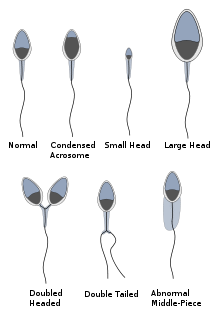
Male infertility is on the rise—a scientist has described it as a ‘timebomb’. Spermatozoa are now more likely than ever to be dysfunctional. It could well be that we are being feminised by the hormones routinely used in food preparation, now entering the water table. Read Consider her ways by John Wyndham, published in 1961. Set in the future when men are a distant memory for even the oldest human in a society organised like that of bees. Parthenogenesis returns. The trouble with parthenogenesis in XX mothers is that the offspring can only be female. And on that note I end.