Why do I bother? 

The Bible tells us not to eat pig or seafood, not to mate different kinds of animals, not to plant a field with two kinds of seed, and not to wear clothing woven of two kinds of material, so polycotton is out.  It tells us that women should be silent in church, dress modestly and avoid jewellery.  Most of us ignore all this.  It says that wives should be subservient to their husbands.  Good luck with that.

It condemns most strongly of all the taking of interest on a loan and the financial exploitation of the poor by the rich.  Our economic system is built on these sins.  Our pensions depend on them.

Yes, I know, these things should be taken in context, and they reflect the culture and mindset of the authors, some of whom, Paul for example, were hardly well-adjusted specimens of Homo sapiens.  

I was brought up in a farming village.  Cattle from the five working farms were herded between byre and field along the roads holding up traffic that had to pick its way through the steaming residue the cows generously left behind.  I came to savour the fragrance.  My short-trousered self could see that we were upright cows—head, body with holes at both ends, four limbs.  At school I became interested in zoology and the way the animal kingdom could be classified into various groups, single celled amoeba to complex multicellular organism like us, and I began to see evidence for evolution.  At Cambridge studying embryology as part of the medical course, my mind was further opened by the fact that in the first few weeks of our intrauterine development each one of us undergoes a kind of speeded-up evolution, and that we still carry with things that other creatures have but that we don’t need any more.  

So I’ve always understood that humans are animals like all the rest: we are in fact modified reptiles—not modified enough in some cases.

One of the biggest problems with theology for me, then, is interpreting scripture in the light of this.  

Do I actually believe that Jesus was born to what we call a virgin? Or is that simply a reworking of far more ancient myths about the birth of gods and goddesses, used by Matthew and Luke to “big up” Jesus? Such birth stories are still in use, notably in North Korea, where propaganda has elements of the Christian Nativity story to “big-up” the births of Kim family members.

Does my zoological mind really accept that humans are more special than any other creature of the earth?

Does my scientific mind really believe in the miracles that Jesus is claimed to have performed? Or are they simply fairy stories expressing profound truths using idioms familiar to the writers and readers of two thousand years ago? Middle Eastern people used—and use—language and imagery much more colourfully than we do.

Why should we pay heed to the writings of people of long ago who had a different worldview, who thought the earth was flat, who thought that water covered the sky, who thought that natural phenomena were manifestation of an irascible sky pixie’s temper?

I find it exhausting trying to marry these two world views together, that is modern and ancient, and I wonder why I bother.  What has kept me hanging on to the Christian story for so long, if only by the skin of my teeth?

The answer is quite simply the psychological authenticity of the gospel.  By that I mean Jesus’s teaching displays authentic human psychology and is without doubt the best way to live life.  It’s a pity it’s never been tried.

I don’t care about the virgin birth. I don’t care what adults do with their genitals for mutual pleasure. I don’t care whether the miracles are factual or not.  I don’t care whether the events recorded in the life of Jesus are historical or not.  I don’t care if they were all invented by his followers simply to “big-up” a remarkable man so that his teachings might take root.  I don’t care about much Christian doctrine. Some of it is of great poetic beauty, but much of it is pernicious nonsense invented by clergy to keep us proles in our place with the promise of jam tomorrow—when we ‘re dead. Sod that for a game of soldiers.

I see the message of the gospel as the triumph of selflessness over ego-self, the agony in the garden leading to the death of self so that selflessness can rise.  The equilibrium between looking after oneself—which is essential—and being selfless for the common good.  With such selflessness we are no longer weighed down by guilt and shame and we can metaphorically rise to become like Him.  Made like him, like him we rise.  The mass is the cosmic drama of self-sacrifice.

Does this mean I’m not fit to be a priest? Does it mean I’m not a Christian?

Many might say so.  I think the opposite.  I think we need more like me.  I think many people today are at best ambivalent about the supernatural, but are interested in the validity of gospel teaching when the penny drops.

I would go so far as to say that Christianity in the west has no future unless it grasps this. Deserves no future, even.

There are so many apparently brain-dead people in today’s increasingly narrow-minded C of E, so it’s hard work swimming against the tide. Maybe I need to stop thinking. But I shall KBO as long as I can.

Self and social

Homily for Proper 6 Year A, 18 June 2023

Last Tuesday three people were killed in Nottingham.  One of them was a first year medical student.  Her parents had been students of mine in Dublin and her maternal grandparents colleagues.  You may have seen her parents on TV.  It will not surprise you to know that I found their words and delivery deeply affecting—not only because of the personal connexion, but also because seeing and hearing distraught parents speaking in public vividly brought back to me memories I wish I didn’t have.

The following day I read that in Worcestershire a nine year old boy had been killed by his mother and her partner.  His death came after a prolonged months-long period of physical and mental abuse.  I want you to imagine that for a moment.  A nine-year-old boy.  Not a baby, but a nine-year-old boy, kicked, beaten with belts and hard objects, having his head bashed and submerged in the bath as punishment.  Imagine what it felt like for that young boy.  Can you even begin to imagine what was going through the minds of his mother and her partner?

Yesterday morning I felt yet more impotent rage at UK honours.  A few days ago it was Johnson’s jollies for mates, and then in the King’s birthday honours it’s to them that have shall more be given.  Compare the vastly wealthy rewarded for charitable work with the people with next to nothing faithfully serving the homeless at shelters, food banks and the like.  I seem to remember that a wise man made a similar comparison about two thousand years ago.

You might ask why God allows this evil and corruption?

God has nothing to do with it.  

It all comes down to human behaviour.  The basic underlying problem is the trinity of greed, avarice, and approval-seeking.  In a word, ego.  In another, pride.

Because of our egotistical vanity we imagine that our opinions and desires are more important than anyone else’s, and therefore that we have every right to bulldoze and bully our way through life.  We see it in international politics, national politics and individual relationships.  Be quite sure of this, sisters and brothers: you are no more than a tiny pimple on the face of the earth.  Don’t get too big for your boots.

The perpetrator in Nottingham, for whatever reason, felt that his only course of action was to impose his will on people who were in his way.  As a result of being at the wrong place at the wrong time, three people were killed and several injured.  

The couple in Worcestershire, who were supposed to be looking after the nine-year-old boy were so wrapped up in their egotistical desires that they ignored their responsibilities to a vulnerable human being and performed appalling acts of barbarity on him.  It’s the worst example I can recall of parental abuse since 2008 when a man near Doncaster snapped his baby daughter’s spine over his knee to stop her crying.

And now the honours list.  “Rabbit’s friends and relations” divvying up the Emperor’s New Clothes among themselves. How they love themselves.

It’s all about egotistical vanity in one way or another.  Pride, the root of evil.  Unbridled ego, the root of evil.  

Don’t imagine for one moment anyone in this church is free from it.  Every time you moan at somebody else for being slow you’re putting your own needs before theirs.  Every time you sit at the traffic lights behind some old trout who’s apparently waiting for a particular shade of green, you’re putting your own needs before theirs.  Every time you are late for a meeting for no good reason you are putting yourself before others.  Magnify all that, and you are quite capable in the right circumstances—or the wrong ones—of sticking the knife into someone else.

There is an answer to this abusive behaviour, and it’s called self-sacrifice.  

We heard about it not long ago in the garden of Gethsemane story when Jesus wrestled, first saying—and I am putting words into his mouth—take this cup from me, I can’t go through with it, before accepting it, saying resignedly OK, let it be as you say, by the way, echoing Mary’s response to Gabriel at the Annunciation.  This is the renunciation of pride and self so that selflessness can flourish for the common good.  

I’m not saying that we must always choose the way of self-sacrifice.  We are animals and self preservation requires us to be mindful of self for our safety and to avoid becoming food for predators.  But we are social animals and that demands a degree of looking out for others—altruism if you like. As with much of life an equilibrium is called for: we must always have an eye on the creatures around us and try to imagine the consequences of our actions for them.

In today’s gospel we hear Jesus giving advice on how to do it: tend the sick, cheer the despairing, feed the hungry.  Have an eye on those around you.  Put yourself in their position.  Ask if there’s anything they’d like you to help them with.  Jesus told us to start local—there’s no need to be too ambitious, just deal with what you encounter day by day.  There’s plenty to do here in Burton.  I said in my Maundy Thursday homily that it is not until we immerse ourselves in serving others that we begin to feel in our guts our own true humanity, for there isn’t room for it to grow until we’ve first shoved out our own self-obsessed wishes.  

As a friend said, all any one of us can do is try to neutralize the ego-pride we encounter by doing what we hope is good in our own small spheres.  Each of us can only do a little.  And as another friend put it, this will help to preserve the timeless values of wisdom, hope and authentic earthed humanity.

Meanwhile, there are grieving people.  Perhaps you’re one of them.  Remember them.

Easter!

Easter joy

An Easter homily inspired by the sermon preached by Bishop Lancelot Andrewes before King James at Whitehall on Easter Sunday 1609.

The New Testament word for sepulchre, tomb (as in empty tomb) is mnema. It’s the word that gives us memorial, memory, and mnemonic. The stories in the gospels about Jesus expelling demons from men living in tombs are for me about freeing them from living in their memories, from living in the past.

People who live in the past cling to resentments, unable to let go, unable to forgive, unable to move on. They are entombed in the past. Think of Miss Havisham in Great Expectations. Think of parents who live through the achievements of their offspring. Think of sad men propping up sports club bars boring all and sundry with tales of their sporting achievements decades ago before their bellies started hanging over their belts.

Now think of the Easter story. The stone is rolled away. The contents of the tomb have escaped.

Can you see that this is an invitation for us to let go of the past? If we are to live life abundant then we have to let go and move on. The empty tomb means the past is cleansed. It is forgiven.

Think of people who refused to support Jesus, who deserted him, who told lies about him to save their skins or to curry favour with authority, who joined the chanting mob. How many of the Palm Sunday supporters joined that baying crowd? Now think how shocked they must have been to hear that the man they’d condemned wasn’t dead and gone, but might meet them in the street. It’s like gossiping with a friend about a mutual acquaintance who, just as you’ve made the most utterly bitchy remark, appears round the corner and cheerfully greets you. You want the ground to open up and swallow you.

How does Jesus react when he meets his so-called friends again? Does he berate them? Does he take them to court? Does he arrange for some big fellers from the local pub to kneecap them?

No, none of this. All he says is “Peace”. It’s like he says, “never mind the past, friends, let’s get on—we’ve got work to do”. They—we—are forgiven.

Now, think of those times you’ve gossiped, betrayed, told half-truths to get you out of a tight corner, or blindly followed the crowd. The story is not just about 2000 years ago. It’s about human nature, yours and mine, NOW. It’s about death of pride and ego and self in order that selflessness can ascend. We need to, we must, forgive and let go, otherwise we become entombed in living death. This is not about life after death—it’s about life abundant before death.

The most difficult person you’ll ever have to forgive is yourself. Some of us like wallowing in it, turning masochism into an art form. But life is to be lived. People make the mistake of thinking that forgiveness will just happen. It won’t. It’s hard work. We have to practise it like we have to practise any skill. We have to keep telling ourselves that we are forgiven. We have to brainwash ourselves. This is important as we get older because the brain circuits that deal with long-term memory are more robust than those that deal with short-term memory, so we old people are more prone to dwell on the distant past than on last week, and it becomes harder to imagine the future. (There are benefits—species preservation—but that’s another story.)

Forgiveness doesn’t mean you escape the consequences of your actions, but it helps you to move on and make the best of—confront—the hole you’ve got yourself into. It helps you to escape the tomb and see the big wide world: eyes that see shall never grow old.

The penalty for living in the past is to become wizened, resentful, odious, and mendacious. We risk becoming deeply unattractive miserable gits. If we behave like that, people will avoid us, and rightly so. The only person I harm by living in the past is me.

As Andy and Red say in Shawshank, “get busy living or get busy dying”. The choice is yours.

Happy Easter.

We need pains in the ***

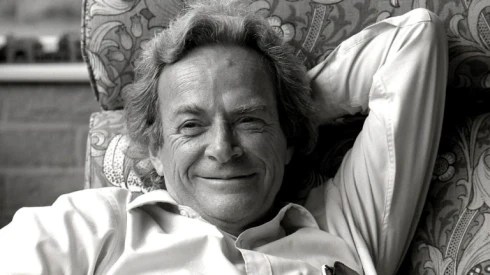
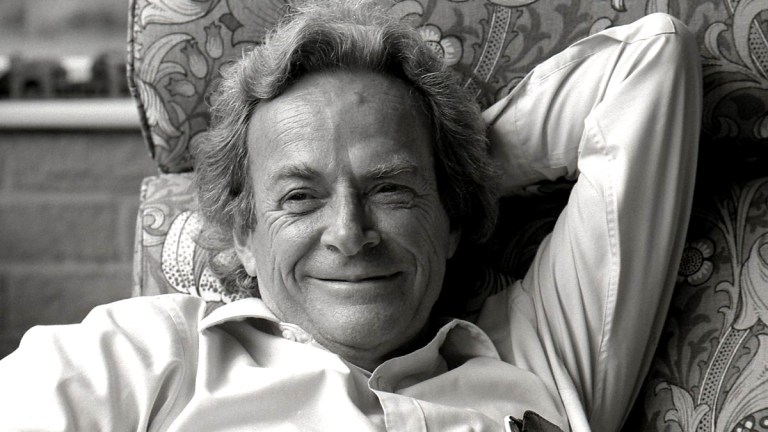
Richard Feynman

The UK Chief Medical Officer is out of favour with members of the government. They need a fall guy for a bad election result, and he’s an easy target.

We assume that science is always right. Maybe so. Scientists, however, are not.

Science has to be interpreted by people – scientists – and people get things wrong. Furthermore, a group of scientists considering the same evidence might well come up with several possible explanations, some contradicting each other. So when scientists “speak science” to us, they are actually speaking science as they interpret it. This is not the samer thing at all.

We observe scientific phenomena. Observations rely on our senses and intellects. We measure scientific phenomena. Measurements rely on instruments and techniques. In biological science we, animals, observe and experiment on other animals. Animals have “personalities”. Personalities influence responses.

There are so many variables in biological science. It is messy. Mathematics may well be pure, but biology is very messy indeed. Messiest of all are things like psychology and social science where all involved – subjects and observers – are likely to be affected by moods, feelings and memories that cloud responses and interpretations. 

I’m not saying that it’s impossible to draw conclusions in biological science. But it is time consuming and laborious, and it requires meticulous work from researchers whose personalities are well suited to meticulous work: focussed, capable of paying attention to detail and possessed of almost infinite patience. 

Egos get in the way. Scientists must be impervious to pressure for their results to conform to expected patterns that suit their own ideas or those of the organisation and funding bodies for whom they work. Scientists need to be uncontaminated by personal bias. Good luck with that.

Scientists – all of us – want to be well thought of. It’s good for the sake of pay, pension, reputation, and self-esteem. But the ego of a scientist can lead to his ignoring inconvenient results, even inventing data. It can lead to a pet model overriding observed data, the latter being squeezed to fit the model just as the ugly sister’s toe was amputated so her foot might squeeze into the glass slipper. Researchers employed by drug companies are particularly vulnerable to such pressures in order that their results will best enhance company profits, and thus reputations and prospects.

In the case of covid we are dealing with a novel virus, the word novel carrying with it uncertainty and unpredictability. When a scientist comes along with a model, people latch on to it. “We need something,” the politicians cry; “this is something; this will do”. 

Well, it might not. 

We, should assume nothing. We should proceed cautiously, adjusting and refining ideas on the basis of observations, rather than on the basis of preconceived models. Instead we do the opposite: “we have a world expert modeller; we know better than the rest of the world; we know what the virus will do”. We certainly do not know what the virus will do, or how we will respond to it. 

We need skeptics and doubters. We need dissenters – people who say “hold on a minute, what if … ?”. We need constant wariness, a readiness always to adjust, refine, and question. As Nobel prizewinning physicist Richard Feynman is reported as saying, “Science is the organized skepticism of the reliability of expert opinion.”

Feynman could himself be a skeptic. Former US Attorney General William Rogers said of him “Feynman is becoming a real pain in the ass.” 

We need more, many more,  pains in the ass.

This is an edited version of an earlier piece.

Bible, creation, evolution, science

Autumn. Churches (remember them?) mark harvest festivals and creation.

Churches are stuffed with flowers. My eyes water and my nose streams (it runs in the family).

Churchgoers bring gifts to their god and place them at the front of the church – home grown produce like tinned fruit, vegetables and soup, and packets of rice and pasta. Preachers tell how fortunate we are to be so favoured by the prodigal generosity of Creator God, but stop short of saying that therefore those whose harvests fail must be being punished by the irascible sky pixie.

The keen reader will deduce that I hate harvest festivals. I hated them as a child in Methodist Sunday School and I hated them as a vicar. Most years I managed to avoid having to preach at harvest by inviting somebody else do it. I was able therefore to listen to the infantile platitudes of others.

A friend with whom back in the day I worked at the University of Nottingham is now one of the editors of Southwell Minster (Nottinghamshire’s cathedral) magazine, and given this wonderful time of year, and my background in medicine, zoology and theology, she asked me for an 800-word piece on creation. Here it is.

The earliest Biblical “creation” story is in Genesis 2 and 3: earth, Adam and his rib, Eve, garden and talking serpent. It’s a myth – that is to say a story that expresses profound truth. Actually, I don’t think it’s really about creation. I think it’s an explanation of why humans cock-up. In short, we put on fig leaves to hide our fears, shame and insecurities and big ourselves up, the fig leaf being the first fashion accessory hiding the reality beneath. Herein lies the origin of egocentricity. 

The Genesis 1 story – “In the beginning God …” – came later. It is a glorious panoramic vision of the origin of the cosmos from big bang onwards. It is rich in meaning, with strands reaching back to even more ancient myths. You’ll see that the order of appearance of living things is pretty logical: plants, aquatic creatures, birds, land animals, then humans appearing at the last minute. In this there’s more than a hint of progressive evolution.

There is another snippet of a creation story that for me is spine-tingllng. Read Psalm 104 (preferably the Coverdale Book of Common Prayer version) and Proverbs 8 especially v 22 onwards (any version). Another character is introduced, lady wisdom, Sophia in Greek. Divine wisdom, the pre-existent Christ, present alongside the creator at creation, the unformed stardust of which the universe is made. If this Christ-wisdom is the stardust of the universe, Christ-wisdom is in every one of us. This is marvellously beautiful imagery: don’t take it literally, but let it work on your imagination. 

I said above that the first creation story hints at evolution. Of course writers of Hebrew scripture knew nothing of modern notions of evolution, but given that I do not accept Biblical creation stories as historical fact, I see no incompatibility with what they try to explain and what modern science tries to explain. Did you know that the first few days of mammalian development (yes, we are mammals – apes in fact – get used to it) are a kind of speeded-up evolution as things like tails appear then (usually) disappear, to give but one example. As the 19th/20th century zoologist Haeckel put it, “ontogeny recapitulates phylogeny” (look it up if you’re interested). 

The Biblical stories are poetry, allegory. No more. They attempt to explain what we observe and experience. They are rich sources for speculation and reflection, particularly in relation to Greek and Roman myths and folk tales of all cultures. 

Some people believe them to be scientifically accurate, despite the fact that they were written in a different language by humans with a different world view in a different cultural milieu from today’s – people who believed that the sun orbited the earth and that there were seas under the earth and above the skies. I can tell you that some “Bible-believing” medical students were aghast to discover that women and men have the same number of ribs. The idiocy of fundamentalism.

Arguments about creationism versus evolution are not worth wasting your time on. If people want to insist the Bible is a scientific manual, that the earth was created about 6000 years ago, and that dinosaurs and humans coexisted, good luck with that. Don’t bother me with it, and stop abusing children by teaching it.

What is much more important is something that I’ve already touched upon: “If this Christ-wisdom is the stardust of the universe, Christ-wisdom is in every one of us” and indeed in every living thing. We humans are creatures of this earth, no more and no less, along with “all things creeping innumerable, both small and great beasts” and – note this – plants and fungi and bacteria and archaea – and viruses. 

Unfortunately we’ve got this out of kilter, and I’m sorry to say that our reading of the Bible must take the blame. In Genesis 1:28 God reportedly tells humans to “be fruitful and multiply and fill the earth and subdue it”. The way we have interpreted this amounts to a criminal misrepresentation of the Hebrew. The message should be that we are to be responsible for, to nurture, to be good stewards of, to enable the earth and its creatures to flourish. The idea that the earth is ours to plunder as we like is utterly evil. 

As a race, humans have a woeful record in this regard. We see around us the fruits of our unbridled greed and arrogance. 

In the coming season of creation and harvest, stick that up your smoke and pipe it.

Mental illness

For the church newsletter, a sequel to “Should I go to the doctor?” https://ramblingrector.me/2020/05/16/should-i-go-to-the-doctor?/

If you have a broken arm, you go to hospital where it’s dealt with. If it happened playing sport or doing something heroic, your injury will be a badge of honour. If you’re a schoolboy whose arm was broken in a rugby match, you’ll be unbearable as you flaunt the evidence of your manliness. I don’t know how schoolgirls regard bones broken in, say, a hockey match because I’m not a girl.

If you have a faulty electrical circuit in your brain and become depressed, or self-harming, or in any way unable to cope, chances are you will not consult a doctor, but will soldier on, telling nobody, sinking deeper into the doldrums. If you tell someone else you run the risk of being patronised or ridiculed as odd, inferior, inadequate, even possessed by evil spirits—yes, that view is still held by some and is common in some cultures.

We can see, touch and understand a broken bone or a leaking blood vessel or a blocked tube. But we’ve little or no idea about what goes on in the brain. We talk about and are even proud of our broken bones, but we are embarrassed about and even ashamed of our broken minds. It should not be so.

Why do people become mentally ill? 

Maybe because some people don’t produce quite enough of a certain brain chemical which is used for one nerve cell to communicate with another. Maybe because some people produce too much of a different chemical. The one might result in depression, the other in mania or overactivity. Maybe some mental illness arises because repeated traumatic childhood experiences result in the development of electrical networks in the brain that enabled us to cope then but are unhelpful now. Maybe some people develop such networks in the brain as a result of genetic inherited patterns. It’s all a bit of a mystery.

If you use your imagination you might be able to see that some of these conditions can be helped by learning to think differently: counselling and cognitive behavioural therapy (CBT). Believe me, these are hard work and take time. Other conditions can be helped by chemicals. Sometimes a bit of both is good, with drugs kick-starting a longer period of counselling or CBT.

Recognising mental illness is difficult. We all have different personality types. Some people are prone to depression, others to overactivity. When does an exaggerated characteristic become illness? 

Sometimes such instability is productive. You may have heard of Tourette’s syndrome in which people have a mind that fizzes with ideas and a mouth given to uttering a constant stream of shocking profanities. If you are, for example, a jazz musician who is most productive when Tourette’s is at its height, the last thing you need is for the symptoms to be taken away with drugs, especially if it’s the jazz that puts bread on the table. Being “abnormal” in this way is no bad thing. There have been studies showing that the most original and creative scientists and artists can in some way be regarded as not quite mentally “normal”.

Please remember that there is in truth no such thing as “normal”: it is merely a statistical definition. To give one example, “schizophrenia” is used in different ways in different societies. In totalitarian states the chances are that if you are critical of the way society is organised, constantly sniping at government policy, you’ll be declared schizophrenic and confined to an asylum (for “protection”) or prison camp. Our society is highly critical of this, but hypocritical in that we do the exact same thing using different criteria. I leave you to think about that. Perhaps “normal” means “able to cope with society”. But what if society itself is abusive and oppressive? We need to fight for justice.

It’s also true that the brain receives information from all parts of the body and we know little about how this affects mental health. There is growing evidence that what goes on in the intestine affects our mental wellbeing – the “gut brain” sending information to the “head brain”. You know about gut feelings – this is what I’m on about. So, eat well, treat your intestines with respect, and if your diet upsets you in any way, change it. Don’t be a fool.

Similarly, exercise. It releases brain chemicals that improve the mood. It gives a sense of achievement. The best medicine is your own sweat produced by exercise. Just do it. 

Let me give you my theory about how some mental illnesses arise. We need to start with some evolutionary history. 

As you pass forwards (upwards in apes like us) from the spinal cord you come to the brainstem. In simple terms this deals with automatic things, control of breathing and heart rate, balance, coordination, awareness of position in space – stuff that we need but have no real control over. Next come the paired structures, right and left cerebral hemispheres. These are where awareness and thinking occur: we process information in order to make decisions. Part of the hemispheres deals with urges (sex, hunger, fear), memory, mood and emotion (these are linked) and another part with logical thinking, analysis, reasoning. 

I’m pretty sure that some mental problems result from tension between these two parts. For example, I might in a fit of anger feel the urge to punch your teeth down your throat, but the thinking part of my brain tells me that if I do, there will be undesirable consequences for me, and therefore I override the urges and refrain. Too much of this kind of repression results in a building up of frustration that, if not dealt with by exercise or kicking the cat or some such, is not good for mental health. Learning to recognise and cope with anger is a good thing. Anger, by the way, is good. It spurs us to improve what needs to be improved.

This is only a theory and it can’t be proved, but neither can it be disproved.

I said above that counselling was useful therapy, and to my mind it would be better named “listening”. Every single one of us is capable of being a listener. It’s one of the things that people with mental illness need. They do not need to be judged. They do not need to be told what to do. They do not need to hear your opinion or why you think they’re in the position they’re in. What they need from you is simply companionship. Look at that word “companionship”. In the middle of it is panis, Latin for bread (pain in French). Bread together. What they need is for you to take them for tea and something to eat. Sit with them. Listen to them. Keep your ears open and your mouth shut except when eating and drinking.

If you do that you’ll be increasing the amount of delight in the world. There is no better thing to do.

Men suffer disproportionately from depression. It is said that Staffordshire has the highest rate of young male suicides in the country: you will know how often the A38 is closed and the rail service disrupted for undisclosed reasons. Men are less likely to talk about their feelings than women who often need no encouragement. 

In Burton there’s a charity supporting men’s mental health. It deserves your support. 

Experts and skeptics

Sayings of Richard Feynman, Nobel prizewinning physicist:

  • There is no harm in doubt and skepticism, for it is through these that new discoveries are made.
  • Science is organized skepticism of the reliability of expert opinion.

In our response to covid, we are witnessing the lack of expertise of experts.

We assume that science is incontrovertible. It may well be.

Scientists, however, are not. They are human. When they “speak science” to us, we do well to remember that actually they are speaking not science, but science as interpreted by scientists. Not the same thing at all.

We observe scientific phenomena. Observations rely on our senses and intellects. We measure scientific phenomena. Measurements rely on instruments and techniques. In biological science we observe and experiment on animals, human and non-human. Animals have “personalities”. They are not predictable. Personalities influence responses.

When a scientist inspects cells or tissues under a microscope, they have been pulverised in all sorts of ways to render them observable. If yesterday’s work is to be compared to today’s and next week’s, you need to be pretty damn sure that all the conditions and chemicals and temperatures that held yesterday are absolutely identical to today’s and next week’s. This can never be. 

There are so many variables in biological science. It is very messy. Mathematics is pure. Physics is almost pure, but is a bit messy since it has to be observed. Chemistry is messier still. Biology is very messy indeed, as I explain above. Messiest of all are things like psychology and social science, the latter once defined as the study of those who don’t need to be studied by those who do.

In the biological sciences, it’s necessary to amass a large amount of data. Those data must be tested, time and again, and robust statistical analyses applied, before even tentative conclusions can be drawn. 

I’m not saying that it’s not possible to draw conclusions in biological science. But it is time consuming and laborious, and it requires meticulous work from researchers whose personalities are well suited to meticulous work: focussed, capable of paying attention to detail and possessed of almost infinite patience. A bit anal you might say. Being on the autistic spectrum certainly helps.

Most of all, scientists must be impervious to the pressures from themselves and others to get their results to conform to expected patterns that suit their own ideas or those of the organisation and funding bodies for whom they work. 

In short, scientists need to be uncontaminated by personal bias. Good luck with that.

You see, the problem is that scientists—experts—are human.

Back in the 4th century, Evagrios the Solitary said “there are three groups [of demons] who fight in the front line: those entrusted with the appetites of gluttony, those who suggest avaricious thoughts, and those who incite us to seek the esteem of men. All the other demons follow behind and in their turn attack those already wounded by the first three.” Evagrios clearly had a profound knowledge of human psychology.

The third of those demons, seeking the esteem of men, is by far the most insidious and dangerous. And that is at the root of the sin of the expert, of the scientist in general, and indeed of humanity.

We all want to be well thought of. It is good for the sake of pay, pension, reputation, self-esteem and ego. But seeking the approval of others requires that we choose those whose approval is worth having. Therein lies the problem.

The ego of an unscrupulous scientist can lead to his ignoring inconvenient results, even fabricating data. It can lead to a pet model overriding observed data, the latter being squeezed and deformed to fit the model just as the ugly sister’s toe was amputated so her foot might squeeze into the glass slipper. Researchers employed by drug companies are particularly vulnerable to such pressures in order that their results will best enhance company profits, and thus reputations and prospects.

I need not perseverate. You can see how the demon of seeking esteem infects us all—and in the realm of science, you can I hope see how such pressures and biases can distort the interpretation of biological data.

And that brings us to covid.

In the covid case we are dealing with a novel virus. People use that word, and yet they don’t see that novel carries with it uncertainty and unpredictability, for if something is novel we can not reliably assume or deduce anything on the basis of what we have known heretofore. When a scientist comes along with a model, people latch on to it. “We need something,” they cry; “this is something; this will do”. 

Well, it might not do. Indeed, it did not do at all.

They, we, should assume nothing but instead proceed cautiously, adjusting and refining our ideas on the basis of data, rather than on the basis of some preconceived model. Instead we did the opposite: “we have a world expert modeller; we know better than the rest of the world; we know what the virus will do”. We certainly do not know what the virus will do, or how we will respond to it. 

What we need is constant wariness, a readiness always to adjust, refine, question. As Richard Feynman is reported as saying, “Science is the organized skepticism in the reliability of expert opinion.” 

Experts, I repeat, are human and subject to all the deceptions and foibles of human nature. The problem is that we put too much weight on what they say. We treat them as infallible. We do not question them. We should. We need dissenters to say, “hang on a minute; what if … ?” Unfortunately dissenters, whistle blowers, are rarely if ever applauded. Richard Feynman could himself be a skeptic, for former US Attorney General William Rogers said of him “Feynman is becoming a real pain in the ass.” 

We need more, many more,  pains in the ass.

Looking ahead

I suspect that Floyd and Colston riots are in part manifestations of frustration and inconvenience of a policy drawn up on the basis of expert opinion insufficiently questioned and now seen to have been ineptly handled. The spark, I’m in no doubt, was anger at the behaviour of the Prime Minister and his adviser.

We are in for months of civil unrest—the rest of the year and possibly more. The privations, unemployment, business failures and shortages of covid will be as nothing compared to those resulting from the now almost inevitable hard brexit. The shysters in government will use the former as serendipitous cover for their treacherous and self-serving pursuance of the latter.

Politically, I have no axe to grind. In my time I’ve voted for everything except the Greens. But I come to the view that the best option for the immediate future would be an early uprising that would replace this morally bankrupt government with a “war cabinet” that includes Mr Starmer who already has acquired the gravitas and discernment that eluded most of his predecessors and that far exceeds anything in the present administration. Quite how this uprising could be provoked is something to ponder. 

It’s interesting to note that following the Irish general election months ago, there is still no government in Leinster House. And yet Dr Varadkar remains Taoiseach, the Irish go about their business, and two days ago the lockdown was eased considerably. 

Who needs a government? Who needs politicians? We urgently need loyal dissenters.

Noli me tangere

247f11754cd5847ddbc149fb2acdc2beA churchy one – sorry.

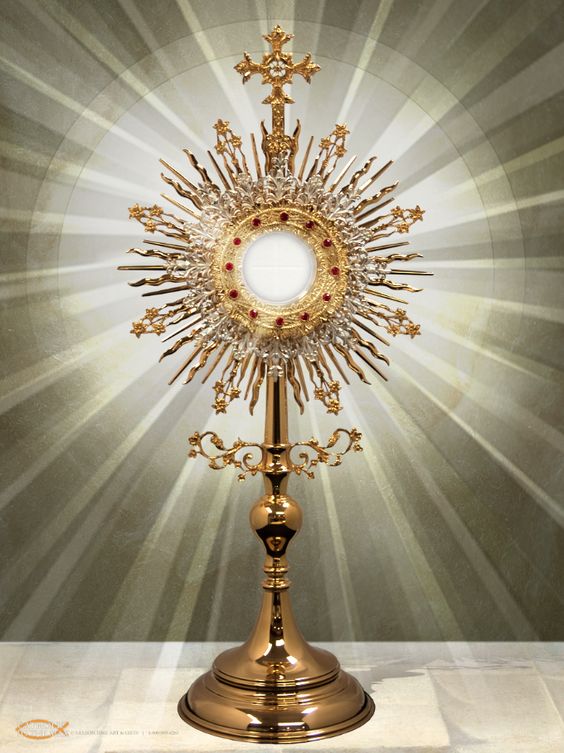
Archbishops have banned sharing the chalice at communion. The RC diocese of Rome has stopped all communion services for a month.

There will be panicking in the aisles. Mass demonstrations. People will wilt away, craving the sacrament.  Those who are so intrinsically wicked that they need communion several times a week must be inordinately distressed.

This is wonderfully illustrative of the knots into which people tie themselves in order to believe six impossible things before breakfast. I banned intinction years ago. My experience was that only respectable middle class women wanted it so that their lips didn’t have to tread where others had trod before. I pointed out that their hands were filthy from scratching faces, touching hankies, bibles, hymn books, leaflets and pews, and exchanging the peace (thank God that’s gone if only temporarily), the conclusion being that their hands that used to do dishes were actually cesspits of potential infection. They didn’t like that.

The advice and discussion make a mockery of transubstantiation (if anyone really and truly still believes that mediaeval nonsense), and even consubstantiation. Maybe the diocese of Rome has it right – the priest’s hands will be filthy enough, despite alcohol washes, that even the bread/wafer/Host is itself a danger to health – whatever that is.

When the current crisis is over it’ll be fun to see how the justification for banning the common cup is quietly forgotten as former practice is resumed – despite the fact that microorganisms live in us and on us by the billion, and that though they help to keep us in good working order, they can cause real problems if they get into places where they shouldn’t be?

This is the best entertainment the church has provided for a while. Laugh out loud stuff. Confusing an issue with facts is always problematic.