Need’st thou strive officiously to keep alive?

Holy Wisdom

Holy Wisdom

In 1975 and 1976 I worked as a junior hospital doctor in a children’s hospital in South London.

Once upon a time, in 1975, Simon (not his real name) was born with congenital biliary atresia. Liver damage meant that he would not see five years of age, and surgery at that time was ‘experimental’. Simon had repeated operations. I enter the scene in April 1976, a fairly newly qualified doctor, right at the bottom of the medical hierarchy. I am the first on-call doctor to carry out the consultant’s wishes during the day. I perform hands-on procedures such as intravenous drug administration. I am on call for two out of every three nights and weekends, at which times I am the only doctor in the hospital. Simon requires attention, often lengthy, during the small hours most nights. He has drips inserted into scalp veins. These frequently become displaced or blocked, causing swelling, inflammation and infection. It is my job to re-insert the drips into one of the increasingly few veins available. Simon is jaundiced, conscious and whimpering while this is going on. The memory of his large eyes looking at me as I am causing him pain is with me 37 years later.

During the next few months Simon has two further abdominal operations, a total of five so far. Sotto voce discussions during ward rounds acknowledge that Simon will die, but that perhaps another operation should be attempted. Face-to-face discussions with parents (Simon is their first child) are less realistic, or more upbeat, depending on your viewpoint. His parents are perplexed, distressed and uncertain. After the last operation I say to the consultant—remember I am the lowest of the low on the medical food-chain, ‘wouldn’t it be best for him and his parents if he were allowed to die with as much dignity as we can provide and he can muster?’ I am ridiculed and condemned for my views. My reasoning that this would have allowed his parents to begin to pick up their lives, grieving as necessary, and try for another child, is simply not heard. Simon undergoes hepatic surgery for the sixth time. A few days after this, Simon dies about 20 months old. This story is accurate inasmuch as my memory is reliable, long-forgotten details surfacing as I type.

Here are some of the issues raised by this story:

  • Best interests? Whose? Simon, parents, society, doctor?
  • How is unnecessary surgery justified? How can we know it’s unnecessary until it’s been tried?
  • To what extent do doctors put the needs of research and career advancement before those of patients?
  • Practising surgical techniques on babies for the possible benefit of those in the future.
  • My advocacy of allowing the child to die could be interpreted as advocacy of killing (Dr Leonard Arthur at Derby in 1981).
  • The effects of illness on the family, and the role of the medical profession in prolonging this.
  • Difficult treatment and practical procedures being in the hands of the least qualified (me).
  • The effect on me of being left to deal with Simon and his parents, especially at night.
  • The role of managers and senior medics in not providing adequate training and support.
  • The expense to the community of keeping alive, and providing expensive surgery for, those with no prospect of even medium-term survival.
  • Giving information to relatives: the balance between providing hope—that is, probably telling lies, or giving straight facts.

Was it arrogant and presumptuous, evil even, of me to want to leave Simon to God, or nature if you prefer, with only compassionate care? Was it selfish of me to want fewer disturbances at night? As a result of Simon’s needs, I was less well-rested for other patients. Is it appropriate that Simon’s parents were not consulted but were told what would happen to him? The relationship between the ‘healer’ and the sick should be open and honest. In this case, it was not. I was constrained by the instructions of bosses and did not have the courage to disobey them. I was feeling, though not acting, as if I alone knew the mind of God.

How do we weigh the needs of the individual against those of community and colleagues? We have to make judgements, although to do so today is often condemned: ‘to defend distinctions of value … is to offend against the only value-judgement that is widely accepted, the judgement that judgements are wrong’ (Roger Scruton).

Exams again

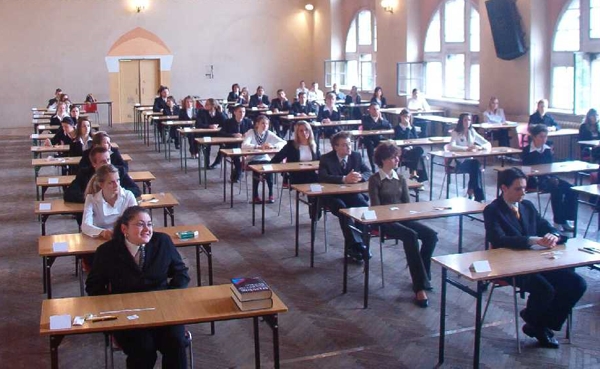
nadish-2059632Here are some thoughts from someone who’s marked exam scripts by the thousands

  • Divide your time in accordance with the marking system. For example, if all questions have equal weight, spend the same amount of time on each. If one is worth half another, spend half the time on it as on the other. And so on.
  • Answer the question that’s printed, not the one that you wish was printed.
  • If you know little about the one that’s printed, don’t despair. When you’ve done what you can with it, twist it round to something that you know about, and keep going until time to stop.
  • Treat the examiner as stupid: state the obvious. That’s very refreshing.
  • Write as much as you can. Whatever examiners say to the contrary, they are impressed by volume. Many examiners look for key words, and key words in a short text will probably be awarded a lower grade than the same key words in pages and pages. So, size matters. Did you ever doubt it?
  • If you don’t know what to do, write! Don’t gawp around like a decerebrate platypus. I can’t emphasize enough that anything is better than nothing. You might even give the examiner a laugh. That’s very refreshing too.
  • Don’t hesitate to repeat yourself in another question: the chances are each question will go to a different marker. I remember in second year Anatomy (as a candidate) I was able to give the same information in three different questions. If you want details: I rambled on about the parasympathetic supply to the parotid gland in questions about (a) the ninth cranial nerve, (b) the parotid gland, and (c) the parasympathetic nervous system. It did me no harm.
  • Be prepared to go back and add a few things to a question you thought you’d finished. The brain, when engaged on one topic, is often stimulated to recall something that can be fitted in elsewhere. So keep a separate sheet for notes you jot down as you write, but don’t hand this in for the examiner to see: it spoils the illusion! Smuggle it out somehow and burn it.
  • Spelling and grammar matter. This is particularly so in a thesis, where the examiner might be hard-pressed to judge quality of work, or where the examiner might be less intelligent than you (yes, I really mean that – I’ve been a university academic and so I know!), but they will always pick up grammatical infelicities and spelling mistakes—because they are obvious.
  • Never, never, never chat to other candidates after the exam about what they or you wrote. You’ll always hear something you should have written but didn’t, and you’ll feel awful. Some people engage in this devilish behaviour as sport, and tell porkies. Girls are good at it and must be avoided immediately after exams. Hoof it from the examination venue and avoid your mates.

It’s all a game.

Exam season and delight

Joy, joy

Joy, joy

I have a June birthday, and therefore many happy birthday memories of sitting in sweaty exam halls wondering what to write next, unable to fathom some knotty problem. I was not a quick worker, though I could ramble on and on in essay questions. Here are a couple of Physics questions that came my way: If a pendulum clock keeps time at the foot of the Post Office Tower in London, estimate its error at the top. And another: Estimate the weight of the heaviest insect that can be supported by surface tension on a pond. Nothing given, everything had to be estimated. Here is a question I liked rather more: ‘Architecture is frozen music’. Discuss.

I recall that one early summer Sunday in 1970, when it was my turn to do the prayers at Evensong in Queens’ College Chapel, Cambridge. I asked that we might ‘attain the results we deserve.’ It caused some consternation, and that year, the end of my first year, I got a third. Not good. Quod erat demonstrandum.

In those post-WW2 babyboom days, education was seen as a means of bettering oneself, and increasing one’s chances of getting a good job. Those were the days in England when what you knew was more important than who you knew. Those days, now gone in England I think, have not yet arrived in Ireland. We hear politicians lamenting the brain drain from Ireland, and yet here, more than anywhere else I know, people boast about pulling strings, and ‘having a word’, and sidestepping the system. Perhaps that’s one reason, other than economics, why young people emigrate.

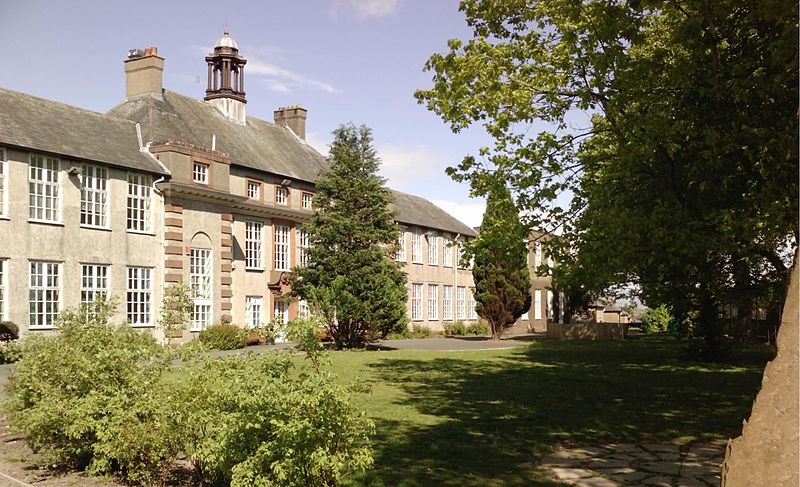
Queen Elizabeth Grammar School, Penrith

Queen Elizabeth Grammar School, Penrith

Some people are very bright. They do little work and yet outshine the rest. They are positively sick-making.  Some people acquire ‘cop-on’ and learn to play the system. Some people know exactly what they will do, and they do it. Some spend their lives exploring, trying this, trying that, and so end up as a Rector in Co Laois. I recall feeling apprehensive a fair amount of time as a student, never sure why I was there, and without any vision of a future. Now that I come to think of it, that’s still pretty much the case, though the apprehensiveness (apprehension?) has largely dissipated.

I don’t know anything any more, and I certainly have no idea if I got the results I deserve, or if anyone ever does. But I send my warmest greetings and blessings to all students and hope that they will, whatever results they get, live with delight and bring delight to others. Nothing else matters.

Degrees, hoops & osmosis

Too many degrees

Too many degrees

One could be forgiven for thinking that the Church of Ireland Bishops have decided that clergy are no longer needed. They in their wisdom have decreed that ministers should have a master’s degree. Now, I yield to no-one in my admiration for the wisdom of Bishops, but I can tell you that I have (1) a medical qualification—that is, a couple of bachelor’s degrees; (2) a couple of master’s degrees, one in theology; and (3) a science PhD, and not one of these helps me master essential tasks of ministry such as photocopying and tea-drinking. What does most certainly help is experience of life, mortgages, deaths, births, agonies and ecstasies. And such common sense as I can muster.

Having acquired degrees does help with the reading of documents—or rather, spotting which need not be read. The trick is to read the first and last sentences and see if you want to go deeper. One rarely does. That works for books as well. Indeed, if you hold the book in your hand long enough, the information therein contained seeps into your brain by osmosis and you needn’t read them at all. That’s why students spend so long in libraries just handling the books. They don’t actually read them. On reflection, this can’t be true because if it were the average congregation member would know all the words in the Prayer Book off by heart. And they seem not to, despite repeating them week in, week out. It’s great fun when I say a liturgical good morning to see how flustered people get because the response is not written in bold on page 201 or whatever.

Does the insistence on a master’s degree (it’s the same in the C of E by the way, but there are more people there so the problem is less acute) dissuade people from coming forward? I suspect it does. I suspect it’s intimidating to some capable people who have no record of formal education beyond secondary school, but who have more than enough wisdom and ability to do what is required of the clergy after a brief (18 months perhaps) training that consists of seminars and on-the-job stuff. This is training by osmosis that certainly works.

Rambling Rector wins a prize!

prize-medalRambling Rector has been judged runner-up in the blog category of the Church of Ireland Communications Competition 2013. The judges said: ‘An engaging and compelling blog voice on theology and everyday life. Cultivates readership. Good use of photos. Consistency in form and style. User–friendly archiving. Great job!’

This is astonishing, for I make no effort to toe any party line. I’d been thinking of starting the blog before I did, but was stimulated to act when the editor of the Cashel and Ossory Diocesan Magazine intimated that some of my pieces were too controversial for that august publication. So, thought I, time to publish them myself. Thank you, editor! Plenty people tell me that I make them think, which is one of my jobs as Rector. It is possible, I suppose, that the readers of the Diocesan Magazine don’t like having to think, but the first great commandment, ‘thou shalt love the Lord thy God with all thy heart, and with all thy soul, and with all thy mind‘ is a command to do just that.

Coo! Thank you for reading, encouraging and commenting. Keep ’em coming, and urge others to log-on.

The prize is an Eason’s ‘credit card’ to the value of 30 somethings, probably pounds Sterling since it came from Armagh.

Modern railways

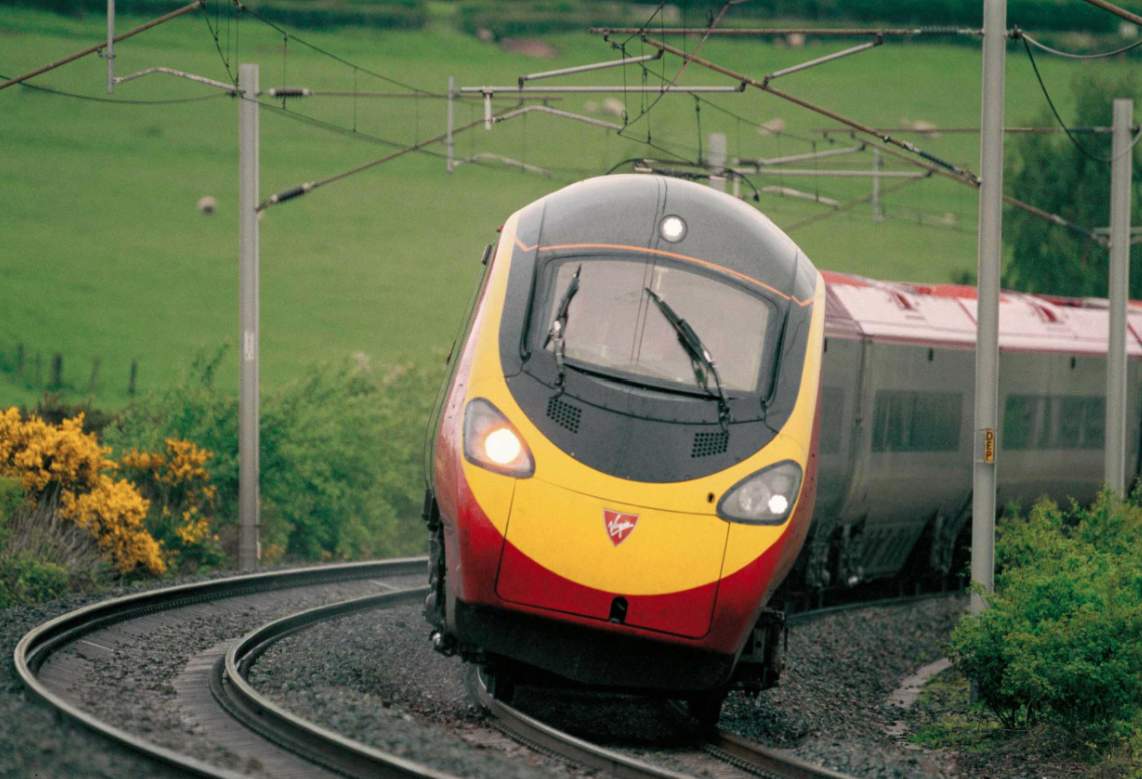
Tilting train near Penrith

Tilting train near Penrith

I’m not a steam fanatic, neither do I bother too much about trains. It’s the permanent way I like: the engineering, the way the railway interacts with the land: bridges, viaducts, embankments, tunnels. Of course trains matter to some extent, but what engages me is what they run on. I like to know about the design of junctions, track plans, the engineering that allows trains to travel round corners at speed. I’m curious about why and how some junctions are limited to 20 mph, or 50 or whatever. Some (a very few) are engineered for 125 mph. In my ignorance I used to think the reason why trains slowed down for bends was to stop them coming off the tracks. This is not so: they would need to be going extraordinarily fast to fly away like that. Speed is limited round bends simply for passenger comfort, the avoidance of the sort of g-forces that we (well I) like on big dippers.

When the railways were built in the 19th century, engine power was limited by men getting the coal into the burners. The surveyors minimized gradients by letting the tracks follow the lie of the land as much as possible. This means that in hilly areas there are lots of bends. This didn’t matter much then because trains could hardly get going fast enough for passengers to be discommoded. Think of the railway between Lancaster and Carlisle where it runs a sinuous course through the Lune gorge and over Shap. The uphill gradients limited the speed (imagine the firemen shovelling coal fast-forward like an old film). As for downhill, I suppose the trains were so slow at the summit that by the time they got up speed by, say, Penrith (northbound) or Oxenholme (southbound), they were past the most bendy bits.

Things are the other way round now. There is so much power available from the overhead wires, or the diesels, that going uphill provides little challenge. What limits now are corners, not gradients. And since the lines were built with lots of corners to ‘flatten out’ the gradients, we have a problem. In the new lines (London to Brussels and Paris, French high speed lines) the lines are pretty straight but the gradients are fierce. On the old lines, where it would be prohibitively expensive to straighten them out, the solution is the tilting train—like a motorbike going round a corner at speed. It’s quite exciting going through Penrith station at 90 mph (normal trains limited to 75) and seeing the station buildings leaning alarmingly. Isn’t the human mind wonderfully inventive?

I’ve taken out a subscription to Modern Railways. The only drawback is the political stuff and management jargon in it, but I still think it’s the railway magazine that suits me best.

One final thing: why do people these days talk about train stations. They are not train stations. They are railway stations. Aaaaaargh.

Pensions and powerlessness

BOHICA

BOHICA

Yesterday I was at a meeting where we heard about the parlous state of the Church of Ireland pension scheme. It is, in a few words, sick, screwed, diseased, creaking, shot at. Its future will be voted on by members of  General Synod, many of whom do not pay into it or will receive from it. I’m not complaining, though I should be. The truth is that I am powerless to do anything about it. I am powerless to call to account the wunch of bankers who got us into this mess. With a wry smile I cry, BOHICA: Bend Over, Here It Comes Again. If you attended a fee-paying school in the old days (I didn’t, but I’ve heard), you will know what that might be about.

Church of Ireland clergy can hobble on until they are 75. But for how much longer will parishes be able to afford to pay for them? In the English Church Times, more and more jobs are advertised as house-for-duty, that is, no money other than expenses, but house provided. The assumption is, I suppose, that applicants are already receiving a pension that will support them, or that their spouses are in receipt of salary or pension. Are the days of stipendiary clergy drawing to a close? This would be terrible: who will the Church of Ireland faithful have to complain about if there are no stipendiary clergy? The thought is intolerable.

As yet, I receive no pension. If I live long enough, I may be the recipient of four partial pensions: one from UK university service (14 years), one from the Royal College of Surgeons in Ireland (16 years; this fund is not in terrific shape, I gather), one from the Church of England (miniscule this one, only 5 years) and one from the Church of Ireland. If it still exists. There are many people worse off than me. What really makes me cross, and I’ve ranted before about this, is all those fees paid to financial advisors who cock up spectacularly, and then, one assumes, charge more fees for advising what to do next. All that money – my money – paid in salaries and bonuses to sharp-suited barrow boys who sit in boardrooms. Some of them may even be members of General Synod. I’ve said it before, and I say it again: what about a national day of prayer and fasting?