Indecision and delivery

Og the dog

Og the dog off for a swim

Nothing works. I’ve tried shaking my head like Og the dog after a swim. I’ve tried tipping my head to one side and then the other. All to no avail. My brain is still brimming over. Usually when something goes in one ear, another thing falls out the other. But not at the moment. So many possibilities and consequences.

At school when we all wanted to be first in the dining hall there was so much pushing and shoving that nobody made it through the door at all. That’s what my head’s like: full of one the one hand … and on the other Like people who have so much to say, it all comes out jumbled.

They say we have free will. Pish and piffle! One of the characters in the film Shadowlands (CS Lewis and Joy Gresham), says ‘we read to know we’re not alone’. I read Richard Rohr and often think ‘yes! finally I find someone who knows what I think better than I do.’ He writes: We are all conditioned, programmed, wounded, addicted, repetitive, habituated and compulsive in our brain processes—which indeed largely determines the content of what gets in and what stays out. True free will is largely a myth, as most of us initially operate almost entirely out of conditioning and culture.

When I was a student on the Obstetrics and Gynaecology rotation, a wise obstetrician* said that the best line of treatment more often than not is Masterly Inactivity (and he spoke the capitals). This is not bad advice for me at the moment. If in doubt do nowt. Who or what will be a midwife for my brain?

* He was on hand when SWMBO came to be delivered of our daughter in 1975. We then moved to Nottingham, and found that he had too, so he was in charge of the emergence of the two boys into daylight as well. They’re all October birthdays. It’s called the rhythm method of conception.

Brave new world

A good vicar

A good vicar

According to the UK Daily Telegraph yesterday, the Archbishop of Canterbury’s idea of a good vicar (Church of England jargon for parish priest) is one who holds services in ‘non-traditional venues like pubs and clubs’ and ‘in all kinds of strange places.’

I’ve worked in the Church of England and so can say with some confidence that the administrative demands imposed by the Archbishop’s colleagues and the institution on the one hand, and the pastoral role demanded by the community and by those who already support the church on the other, mean that few if any vicars could possibly be regarded by the Archbishop as good. Unless, that is, they refused to deal with correspondence, initiatives, circulars, questionnaires, funerals, weddings, baptisms, and five or six services a Sunday … and so on.

I must accept that I was not, and still must not be, a good vicar. I don’t have the wherewithal or confidence to evangelize in a pub or club or ‘strange place’ for I am not given to facile answers to difficult questions. I am given to pastoral and intellectual exploration that begins in joy and sorrow and ends in wonder and mystery. I am given to an appreciation of beauty and the liturgy. I am able to hold two opposing viewpoints and still function, I think and hope, reasonably well.

Two transitions

Cambridge_Queens'_GatehouseThe post on Christmas Eve 1968 brought the letter telling me I had a place at Queens’ Cambridge. I’d opted to stay for a third year in the sixth form to do the Cambridge Entrance Exam, so I spent the rest of the year doing very little at school, instead fiddling with my organ, as it were, and singing and playing at Carlisle Cathedral, which I’d been increasingly doing since 1963.

On my last night in Langwathby in October 1969 Hitchcock’s Psycho was on TV. I was not allowed to watch it. Off to Cambridge the next day, over Stainmore and down the Great North Road with its roundabouts and cross roads, and bottlenecks. Six hours and more.

First year students at Queens’ didn’t have rooms in College but were in lodgings. I was billeted on Mill Road, number 81 I think, on the town side of the railway bridge in a semi where post-war dark greens and browns predominated. Mrs K L Gentle was one of the long-serving College landladies, and Kitty, as we didn’t dare call her, knew what she wanted and how we should behave. And we did.

There were two of us. David from Buxton was the other, also a medic. I was glad to discover that he didn’t play rugby. He later became my ‘best man’ and is now a pillar of society and indeed of The Victorian Society. We had to get our own breakfasts—I still open my boiled egg like David did—and we were allowed one bath a fortnight.

Despite wanting to get away from Langwathby, I was quite lonely for about a month. Homesickness is not the right word, for it wasn’t home that I was sick for. It was nest-warmth—for the Cathedral community in which I felt authentic, valued and safe. I suppose that search became a lifelong quest. It’s illusory, of course.

Ye Gods, Cambridge in winter is cold. Winds whistle west from the Urals. I exchanged cold, damp Cumberland for freezing, foggy Fens, the Fens fog that gets right into your bones. A foggy start to a new life. So much for its being warmer down south.

The next upheaval came in 1972 when I moved to London. I’ve written about this before, but memory today takes me to finding accommodation. I arrived a couple of weeks early and slept on the floor of a college friend, already at work at the Bank of England, in Orlando Road, Clapham. There were invertebrates slithering slowly along the bathroom walls. I did the rounds of letting agents all over the place. Praed Street (Paddington) stands out—why in God’s name Praed Street I do not know: it was nowhere near the Medical School in Camberwell.

c98468f2a15d53e3606cdfd4869fb933After a day or two, a few of us including David from Buxton joined forces. We found a basement flat in south Clapham, almost Balham really—the gateway to the south—on Cavendish Road, the South Circular. Living room, kitchen, part of which was partitioned off as the bathroom (yes, the bathroom in the kitchen), and one bedroom for three blokes. There was a tiny room under the stairs just big enough for a double mattress, and that was shared by Geoff and his girl.

It was to this nest that I invited Susan, then teaching in Manchester. It was on Clapham Common that I proposed. It was just outside The Windmill on The Common that she accepted.

Strange things happen on Clapham Common.

Messing about on the river

Queens Rowers today

Queens’ rowers today

My rowing career was brief. In 1972 the medics at Queens’ got together to form a rowing eight. The college’s élite rowers were, naturally, the First Boat. We were the Sixth Boat. That in itself says something. (We later became the fifth boat because the original fifth boat couldn’t stay the course, but that’s another story and anyway I can’t remember it).

However inept we may have been, we took our ineptitude seriously, up at 6 for ‘training’ three days a week. This masochism enabled the second year medics to get to lectures at 9. By that time I was in the third year and was studying History of Art, Well, I say studying—what I suppose I mean is, attending three lectures a fortnight and striking a studious pose. I was not so pressed for time.

Rowing is what you might call a solitary team sport. Each individual oarsman is responsible for his (a men’s college in those days) own little compartment, but can’t do without the others. That’s the sort of teamwork that suits me just fine. None of these silly meetings to discuss tactics and marking opponents and watching what they’re doing. You just get in the boat and pull like hell.

We did well enough in the 1972 Bumps (‘a form of rowing race where competing boats start simultaneously but at fixed distances from each other. The aim is to bump the boat in front before being bumped by the boat behind. If neither happens, you are said to row over. A significantly dangerous pastime, and therefore an excellent spectator sport.’ See Cambridge University Jargon). We bumped on two of the three days and rowed over on the third.

All good things come to an end, but in this case they got better, for later that year in London I was fortunate to find that there were enough of us to make up a King’s College Hospital Medical School eight to row on the Thames. We hoofed off to a Putney boathouse on Saturday mornings, messed about on the river, and sampled Young’s ale afterwards.

Two highlights stand out particularly clearly in the memory.

800px-Star_and_Garter_from_Marble_Hill_Park_(March_2010)_3

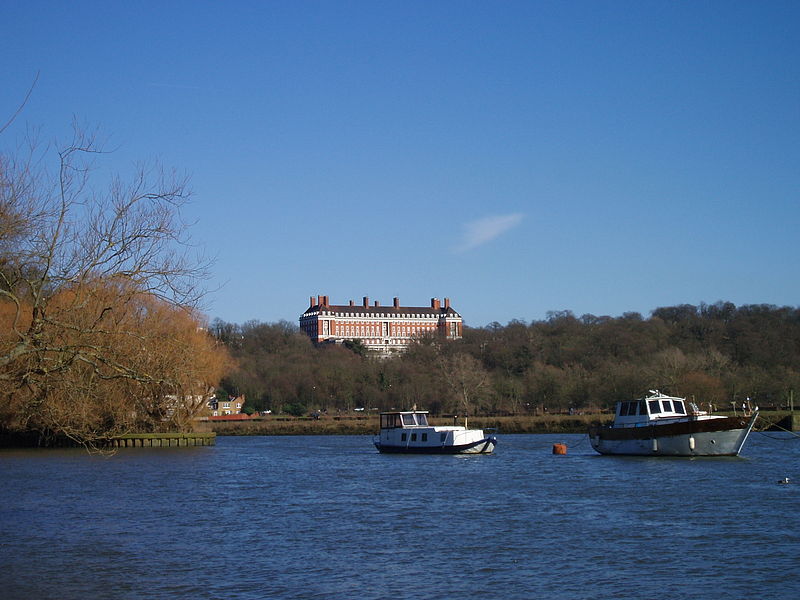
The Star and Garter on Richmond Hill

The first was rowing all the way from Putney to Hampton Court to take part in the Kingston Regatta a few days later. Then of course, we had to row back. About 17 miles each way. Lovely weather, glorious views glimpsed between grunts and gasps through dripping sweat: Harrod’s Furniture Depository, Kew Gardens, The Star and Garter, Eel Pie Island, Ham House, Teddington Lock. I think it took us about 3 hours including a stop or two for a rest. A lovely, wonderful memory.

The other highlight was taking part in the 1974 (I think) Tideway Head, one of the great Thames rowing events. This was serious stuff, and before I tell the story, you need to understand that the convention in this race was that if a boat was about to be overtaken, it should do the decent thing by moving to the side to let the faster boat past. Got that?

Our most accomplished oarsman was a big fellow, academic high-flier, who had rowed at school and then Cambridge. He was quietly spoken and rarely said anything very much, but when he did speak it was considered, apposite and admirable. This man was respected by all for his discernment, ability and gentleness.

We were doing well, powering along the Oxbridge boat race course in reverse. We’d overtaken one or two boats, if memory serves me right, when we found ourselves almost upon the boat in front, a motley crew of ne’er-do-wells from Wapping or some such place where they eat jellied eels.

Our bow made contact with their stern (this is not good). Our oars clashed (this is terrible).

Would they pull into the side? Would they hell-as-like.

And, lo, the angel of the Lord came upon them, and the glory of the Lord shone round about them: and a stentorian voice boomed forth from the midst of our boat announcing not peace on earth, goodwill to men—rather the opposite actually—but ‘get out of the way, you … wankers.’  It was the voice of the gentle giant, of such volume as had never before been heard issuing from his larynx, nor, in my experience, any larynx since.

Putney Bridge

Putney Bridge

He, it must be said, inserted an adjectival present participle between ‘you’ and ‘wankers’ that since I am a Rector I can not bring myself to type, but let’s just say that it begins with f, is very rude, and is not unrelated to the Latin expression futue te. This is not an unusual term of endearment, you understand, but it is one that on that occasion on that day stunned us all, not so much for the sentiment—it was after all in accord with the regulations, and stated in terms that would have been, and indeed were, understood by the intended audience—but more for the origin and force of its utterance.

Eventually our friends from Wapping admitted defeat, pulled over and allowed us to proceed to the finish at Putney Bridge, dazed, sweaty, ecstatic, but deeply, deeply conscious that we had heard a voice from the belly of a whale.

Trains and hosiery

Laois Traincare Depot, Portlaoise (copyright Peter Wilkins)

Laois Traincare Depot, Portlaoise
(copyright Peter Wilkins)

Last month I had a guided tour of Laois Traincare Depot. I was like a pig in pig stuff. For whatever reason, trains have always been important to me. Playtime at Langwathby school in the 1950s was always more exciting when Glasgow and Edinburgh expresses sped past, spitting steam and sparks. And in the 1960s I gazed longingly from home as the Thames-Clyde went by: ‘take me away, anywhere’ I pleaded! And now that I am away, the railways over Shap and Mallerstang are still dear to my heart.

In my travels on Irish Rail, including the time I missed my stop in soporific stupor, I’m impressed by the rolling stock, the punctuality and the cleanliness. Well done, Irish Rail! Over the cold winter months, spare a thought for the staff. Let’s hope they don’t get too much of the wrong sort of snow—speaking of which, I saw how, because the hooter is mounted low on the chassis, it’s prone to being blocked with snow. I wonder, can you guess the way they deal with this problem?

No?

Well, girls and boys, the high-spec technological solution is to cover the hooter with pair of tights. Yes, that’s right, ladies’ nylon stockings. Hosiery. I saw it with my own eyes. I now dream about rail staff going shopping: ‘I’d like a pair of tights for my horn, please’.

John Grainger Monkhouse 1943-2013

Some of the Monkhouse cousins in 2011. John RIP front row second from the left.

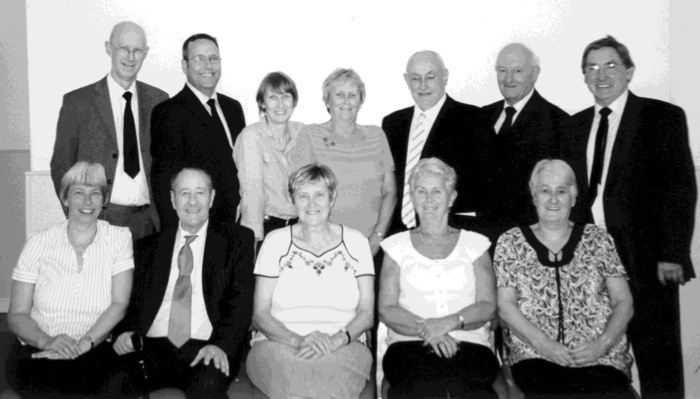
Some of the Monkhouse cousins in 2011. Back row: John, Tim, Elizabeth, Margaret, me, Michael, Andrew. Front row: Judith, John RIP, Susan, Christine, Margaret.

So, the funeral then. My cousin, 69, the first of our generation to go, brain tumour.

One of his brothers described him as an ‘expansive’ man—not his size, but his personality. He enlarged horizons. He was fun. He sparkled. I last saw him two years ago at our centenarian aunt’s funeral (see pic) and was all the better for it.

Lovely to meet cousins not seen for decades. And what gossip! All sorts of skeletons tumbling out of cupboards. Rows and fallings-out between the five Monkhouses (Monkhice I suppose) of my father’s generation meant that some of us 15 cousins never saw much of each other after the mid-1960s. So silly, and such a shame. Stories of resentments, inheritances, assumptions, fictions. A soap opera of a sort well-known to any clergyman. What a waste of energy when you might just as well let it all hang out.

Goodbye John. It was a sad end for him, a couple of weeks before his 70th birthday. But having known for some time that the end was nigh, he was at least able to ‘enjoy’ getting ready for it as best he could. Save us from dying unprepared. If I go at the same age as my parents, I’ve 8 years left at most.

We’re all be in a coffin one day, so we might as well start preparing for it now. Sparkle! There is no more worthwhile alternative.

A fairy story

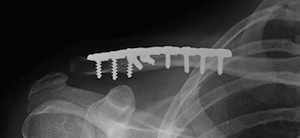
clavicle_plate02Manchester airport last night on the way back from a funeral. For the first time EVER my metal right clavicle (collar bone) caused the metal detectors to go off. The rather grumpy security man (he’d had a long day, I expect) poked and prodded me, and seemed unwilling to accept my explanation. I was taken off and almost stripped (not a pretty sight). Eventually, he had to let me go. He could find nothing. The cupboard was bare. I was rather pleased. Such things give a warm glow of satisfaction. Beating the system.

Once upon a time in the mid 1980s Jack was cycling home in Nottingham. Jack was returning to the nest after a particularly tedious University Senate meeting followed by several particularly refreshing jars. The sky was moonlit, but the street was ill-lit. A motorcycle parked transversely was sticking out into the road. The motorcycle and Jack’s cycle became embroiled in discussion. The motorcycle fell down, and Jack fell down and broke not his crown but his clavicle. A fall onto the outstretched hand damaged not the scaphoid nor the radius nor the humerus, but the clavicle.

The treatment, a mere sling, was utterly inadequate. Any fool could see that. Jack needed a figure of 8 bandage to pull the shoulder back. Would A and E staff listen to Jack? No, they would not. So the clavicle ‘healed’ in the form of a Z.

Weeks and months went by. Drinking tea became fraught, for as the arm moved, the two mobile edges of the clavicle jammed up against each other, their sudden springing apart causing the cup to jerk and the tea to spill. Jack was not happy and neither was Jill.

So by and by Jack had had enough. Jack was cut open, part of the clavicle was replaced by a piece of metal from the planet Krypton, and chips of bone grafted in from Jack’s iliac crest.

And they all lived happily ever after. Until Manchester airport yesterday. The moral of the story is: brace yourself with jars before meetings, not after them.

Deafness and ploughing

AudiogramA man wandered up to the joint RC/CoI tent at the National Ploughing Championships today and came over to our table. He was warmly and loudly greeted by my colleague. If she had looked at him, she would have seen him respond by pointing to his ears and mouthing ‘deaf’. My colleague burbled on some more, louder this time, so he did it again.

I handed him a pen and a pad of post-its. He wrote: ‘the C of I does nothing for deaf people.’ I wrote: ‘Well, it should, I am pretty deaf myself, and am tired of people thinking it’s my job to listen harder, rather than theirs to speak more clearly.’ And so I am. I now work on the principle that if people can’t be bothered to speak clearly and with deliberate enunciation, it must be because in their heart of hearts they realize that they’ve nothing worth saying.

We had an interesting ‘conversation’. I’m inspired to learn sign language. It will do me no harm, and it might even do some good.

What else happened?

Well, I was accosted by a gentleman who told me that there will never be church unity, for any church that re-enacts the Lord’s passion on the altar, and indulges in paedophilia, was damned to hell-fire, and that only the blood of Christ can save the world. I thanked him for his kind words and he stomped off. Quite a few people commented on the Bishop-designate of Meath and Kildare, and one or two wondered how the horsey set and the masons would take to her.

It was striking to note how many young adults of both sexes wrote prayer requests. I had good chats with the parish priests of Myshall and Killeigh. I shook hands and exchanged blessings with countless visitors. And the new (RC) bishop of Kildare and Leighlin came over for a chat. It’s good to have another bishop to look up to, for like my bishop he is well over 6 feet tall. I suppose they must have stood for long periods in fertilizer when they were young.