Holy Goat

Strangely compelling

Strangely compelling

Churchyard upkeep is becoming a problem for church councils and Select Vestries. What is to be done as volunteers become incapacitated, or drop of their perches?

Rotas for grass cutting could be drawn up. This would give even more opportunities for church people to fall out. To the list that includes flower rota, cleaning rota, washing the linen rota, and rota for ‘who complains this week about the wrong tune’, can be added the churchyard grass cutting rota. This is a special rota because while the others are largely or exclusively for girls, keeping the churchyard looking good is not really a girly thing. Indeed, farmers could legitimately wonder whose was the biggest tool.

In a former parish, I had complaints about grass being unkempt round auntie’s grave. I ignored the first letter, but the second elicited a response in which I pointed out that the churchyard was looked after by volunteers, and that I would entertain no further correspondence from people who neither contributed money nor lifted a finger to help.

But now there is a new weapon in the armoury for keeping the graves looking nice for the general resurrection. A goat.

Yes, boys and girls, a goat. Goats are on the agenda of a Council meeting near you. Goats are the new solar panels. In the light of this I humbly put forward some helpful tips for any church council soon to be considering goats, in the hope that my thoughts will help the implementation of this game-changing strategy.

New rotas will be needed:

  • Who will march the animal down, tether it and then march it back every day? Sheep might stay out in all weathers but goats do not, and Billy will need tethering so that he doesn’t attack the flowers lovingly placed on the grave yesterday.
  • Who will make sure the goat has clean water every day? The RSPCA are hot on this, and it would be unfortunate to make front page of the Diocesan red-top for animal neglect.
  • Who will be on-call in the small hours for capturing an escaped goat before it crops all the plants along the bungalows?

Other practicalities:

  • How can the tethering rope be prevented from wrapping itself around gravestones and pulling them over? A falling gravestone could even trap the goat, useful if there were a barbecue in the offing.
  • Insurance against acts of goat? A Goat Compare website would be helpful.
  • Dogs wander into churchyards, so people could pay to watch dog-goat fights. Or a new species could be engineered: the barking goat. Half-man, half-goat is Pan, so I suppose half-dog, half-goat might be Gog. Or Dot.
  • Rules will have to be drawn up—and enforced—to banish poisonous plants. Either that, or market the incense made from essence of dead goat in churchyard. Although in the United States Fresh Expressions is a brand of cat-litter, too many complications would follow from pursuing this here.
  • There is opportunity for a whole new tranche of administrators to be appointed in Diocesan Offices, thus enhancing God’s Kingdom.

Whatever floats your goat I suppose. What do you call a Spanish goat with no back legs? Gracias.

I’ll get my coat.

Doctrine of the fall

The fall

The fall

Ladies ‘fall pregnant’. Why? It’s a curious conjunction of verb and expectant adjective. Today’s Church Times describes Sinéad O’Connor as falling pregnant. Is it like Breaking Bad? What or where do they fall from? Do they fall onto something, or into something? Is it like tripping on the pavement and falling onto something they’d not noticed? And are they pushed?

Fr Richard Rohr uses the expression falling upwards to signify that only through falling, a kind of crucifixion in which one sheds one’s ego-driven obsessions, can one ascend to the heavens. Is this what happens to ladies who fall pregnant? I know that motherhood, like apple pie, is a state of grace, but am not clear why ladies fall into it. Is it like leaves falling after a glorious display?

Yet another of life’s perplexities.

Post script. SWMBO tells me that I should change ladies to women.

Making waves

4604300082_a0f1293f46Baroness Warsi has been hitting nails and nerves with her comments about public school toffs in the UK cabinet.

It puts me in mind of 1969, a new boy at Cambridge. Students from public schools were at home from day one. College was simply more of what they’d been used to at school. There were quads, courts, chapels, libraries. There were common rooms, ‘screens’ and ‘staircases’. There were gowns, gyps and bedders (no, not like that). There were shared toilets and no hot water. For these boys, the  jargon, the culture and the ethos were just more of the boring same-old-same-old.

For me, it was exotic and exciting and romantic. And not a little daunting. More daunting still was my reaction to noticing the ennui of the posh boys. It took some effort not to be cowed by it and them, and their tiresome efforts to mimic a northern accent so that I could feel at home.

Despite this, it was membership of an élite club. Or so I thought.

I guess the atmosphere at Westminster is the next step on the ladder from public school and Oxbridge. Despite the influx of women, I don’t suppose it’s changed much. In fact, maybe because of the influx of women the Hooray Henrys have become more hooray-henry-ish in at attempt to keep their end up, so to speak. All very silly.

I’m reading again The Raj Quartet by Paul Scott (Jewel in the Crown for TV buffs). Hari Kumar was ‘too English for the Indians, too Indian for the English’. Baroness Warsi comes to mind, and indeed everyone who is too big to fit into little boxes all the same and made of ticky-tacky that are manufactured for them by unimaginative apparatchiks.

Conspiracy or cock-up?

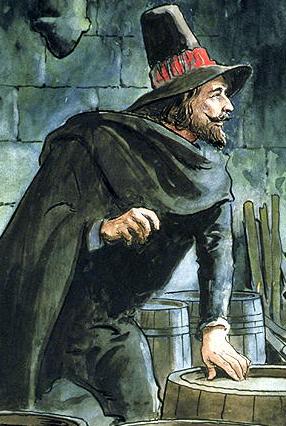
Guy Fawkes

Guy Fawkes

I’m reading Hack Attack: How the Truth Caught Up with Rupert Murdoch by Nick Davies. It’s a relentless switchback of the apparently power-obsessed Mr Murdoch and his empire’s standards. It is at the same time gripping and depressing, two words that came to mind about Alastair Campbell’s memoirs of Blair’s government and Damian McBride’s of Brown’s (which left me feeling sorry for Gordon).

Chris Denning, a former BBC DJ, admits charges of child molestation. Rolf Harris is found guilty of similar charges. Jimmy Savile is condemned posthumously. Cyril Smith is accused, Danczuk’s book being another sad read. There are rumours, easy to find on the internet, that allegations could be made of other public figures, and that super-injunctions have kept them quiet so far.

We all have our problems. I don’t comment on the urges—addictions really—of all these people: we’re all in recovery from something, whether we recognize it or not. But I draw attention to one thing and it is this: the police knew something but did nothing until they were forced to. In Hack Attack we are told that the police hid evidence, or revealed it only very reluctantly, or repeatedly made light of it.

Is this conspiracy or cock-up?

Are we looking at secret societies of the rich and famous, or merely at rectal problems (‘can’t be a**ed’) in the law enforcers? SWMBO says that she has never seen anything more chilling than A Very British Coup by ex MP Chris Mullin (watch it free on 4OD) for a nasty combination of secrecy and malice used to cling to power.

In Alan Bennett’s The History Boys, Rudge wonderfully described history as ‘just one f**king thing after another’. That same sense of relentlessness accompanies these revelations. ‘A blow upon a bruise’, time after time.

As the rich and powerful become richer and more powerful, it doesn’t bode well. Is this really Land of Hope and Glory, Mother of the Free?

Mobile phones off

turn-cell-phones-off1Cell phones came relatively late in my life. Now I’ve an i-phone.  God knows why, I hope, for apart from feeling I should have this toy because everyone else has one, I certainly don’t. Madness. Sure, it was handy for the three weeks we were without landline and t’interweb, but now …. ? it’s a waste of money and a waster of time. A distraction from life. My eyesight is such that there’s no point in using it to take photos, and anyway I’ve never been much interested in them except as a means of gaining information. (The need to gain information – there’s another demon that infects me, though it’s less powerful than it used to be).

Others chide me for my phone manner. Or lack of it. It is, they say, brusque. I’m not troubled by this, and neither should they be: at least I don’t take up too much of their time. They might understand if they realised that I grew up at a time when going on past the pips was, to say the least, discouraged. It cost money.

A trilling phone always makes me panic. So much so that I invariably fumble and often press the dratted button that cancels the call instead of the one that answers it. Then I call back immediately and of course get the engaged tone because the caller is leaving a message. And so it goes on.

Belgrave_Hospital_for_Children

The Belgrave, Kennington, SW9

I think the reason for my panic stems from my brief time as a hospital doctor. It was an unforgiving environment in which military immediacy was demanded, or so I thought.

The worst experiences were in the Belgrave Hospital for Children where at night I was the only doctor in the place, and me still within 12 months of passing finals. So much responsibility on such unexperienced shoulders with so little support—in fact, NO support. I went to bed dreading the phone. From my room under the roof, I was woken by the front door bell ringing in the middle of the night. Heartsink. The call to A & E inevitably followed. Panic, churning stomach, inner jelly, mask of competence, brave face. I hope junior doctors are better supported now.

I had a clerical colleague in Ireland who occasionally asked me to take his calls so that he could go and do whatever it was he did. But I had to assure him that I would have the phone switched on and on my person, at all times. And I mean ALL times. It’s extraordinary the lengths that some clerics go to in an attempt, one supposes, to feel needed. Can anything be that urgent?

I’ve never lost the momentary panic. I come into the house and look nervously to see if the message-waiting light is on. Even on my day off. Will I ever recover?

Exchanges

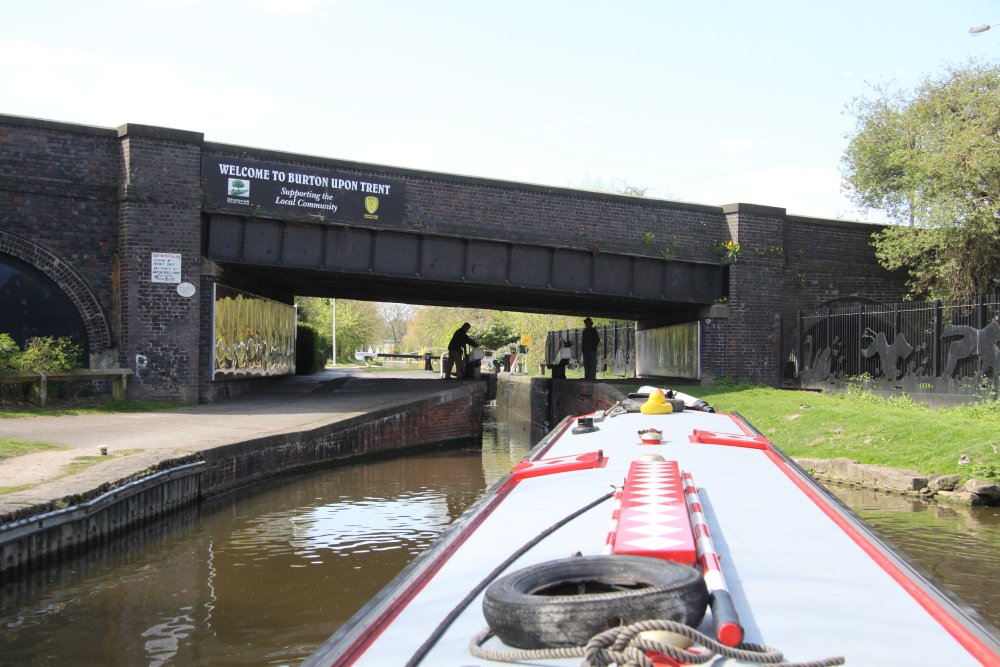
Dallow Lock (copyright Tuesday Night Club)

Dallow Lock (copyright Tuesday Night Club)

We exchanged our UK driving licences for Irish ones only last year. When we knew we were moving, we wished we hadn’t. But full marks to the DVLA: one phone call without hours of tinny Vivaldi, one form, one photo and new licence by return of post. Simples. I wish I could say the same for utilities and car insurance.

The Trent and Mersey canal is a few streets away. Barges, holiday makers, fry-ups at Shobnall Marina café, watching and helping at Dallow Lock, gardens backing on to the towpath. I’m put in mind of the Cam. Colour, gentle movement, industrial archaeology, swans guarding their territory and hissing at Og the dog, moorhens and chicks, ducks and ducklings. Delightful.

People talk about beauty of moor and mountain, but a rural Cumbrian childhood in the 1950s was mind-numbingly monochrome. The Lake District (Sunday drives) was slate grey, conifers and rain. Fellside village culture was repressive and lonely for a boy who liked neither football nor cricket. Perhaps this is why I like colour and variety. Richness. Religion too: ritual, colour, fine sights, fine sounds, fine smells, with prayer and lots of parties. No more sensory deprivation.

On the one hand:

Protestantism – the adroit castrator
Of art; the bitter negation
Of song and dance and the heart’s innocent joy –
You have botched our flesh and left us only the soul’s
Terrible impotence in a warm world.
R S Thomas 1995

… and on the other:

Wherever the Catholic sun doth shine,

There’s always laughter and good red wine.

At least I’ve always found it so.

Benedicamus Domino!
Hilaire Belloc

Retreating

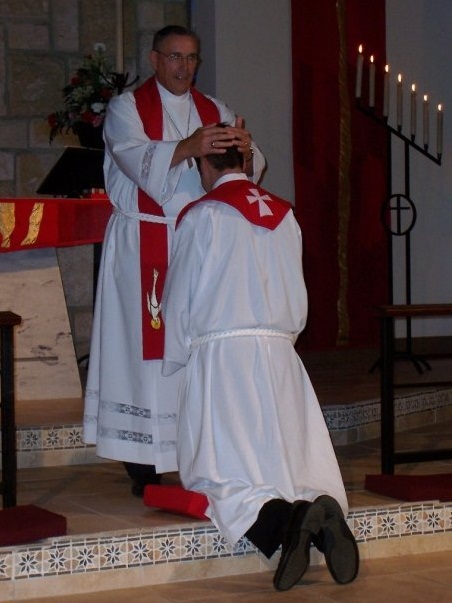
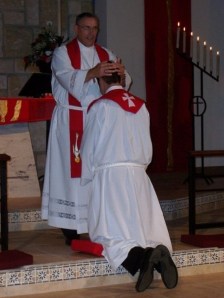
Lcms_lutheran_pastor_being_ordainedI recently led a retreat for an ordinand and four readers about to be licensed. Here is the sermon I preached at the ordination. I have changed one name.

One of the things Elijah was asked by the Lord was ‘why are you here?’

Why am I here? It’s been a real delight to have been with you all over the last four days, and I thank you for the invitation to be part of it. We’ve spent much of the last few days exploring aspects of what it means to be human. Not the artificial hail-fellow-well-met sort of humanness that you get at meetings and social gatherings where people are trying to impress each other, façade speaking to façade, but the heart speaks to heart humanness that is actually divine. Yesterday, we celebrated St Irenaeus, one of whose most famous utterances is God the Logos became what we are, in order that we may become what he himself is. To be fully human is to approach the divine.

When we live life to the full, we approach the divine. In the words of Charles Wesley, made like him, like him we rise. That is what the festival of the Ascension is about: our humanity – all of it, every jot and tittle – shared by Jesus – is taken to heaven, that is, made Divine.

Being fully human is what the priest needs to be. To give his all, all the time. Being fully human doesn’t mean we do what we like: it means we use our God-given talents to the full. We all have the Divine spark embedded within us like a divine pilot light, so becoming fully human means letting that divine pilot light expand to fill us from the inside, squeezing out what St Paul calls the flesh—that is ego, selfishness, pride, conceit, pomposity, ‘all the vain things that charm me most.’ When heart speaks to heart, the divine core inside does the work, and the resultant pastoral encounter is powerful beyond measure. I concentrate on pastoring for that is what I sense Peter’s principal calling is, and it is what he thinks it is.

Pastoring is not about telling people what they want to hear. Pastoring does not mean tolerating nonsense from people who should know better. One of the functions of the priest, as we shall soon hear, is to admonish. Warn. Point out consequences of foolishness where it exists – and it is widespread in the church. Members of congregations don’t like it when the priest admonishes them, but, Peter, don’t be put off. If people are acting childishly—and there is something about the church that infantilizes people—they need to be told, and it is the priest’s job to tell them. Good luck with that.

If you walk into the sacristy of an RC church, you will certainly see a picture of the Pope. If you walk into the vestry of a Methodist church, a picture of one or both Wesleys. In a Presbyterian church, a picture of Calvin perhaps. What do you see in an Anglican vestry/sacristy? I hope you don’t see a picture of the Bishop – they’re exalted enough. In Portlaoise vestry I could gaze upon the faces of almost all my twentieth century predecessors, for it is well known that the foremost authority on all things is the previous Rector. But in an Anglican vestry I bet you anything you will see a mirror.

Imago deiPeter, you need to spend time gazing into that mirror. Not simply to check that vestments are on properly, important though that is. Certainly not to give yourself airs and graces and big yourself up with what in Portlaoise they call notions. But to look into your own eyes, and heart, and ask yourself ‘what am I doing here?’

What are you doing here? What are you doing here? What are you doing here?

Who is you?

How does your face show forth the divine core inside? What is the relationship between them? For the priest to function authentically, it’s essential that the part of the Divine Lord that exists as the pilot light in you is allowed to reach the surface and shine out.

Peter works with people. He has always worked with people. I have observed him over the last four days. He knows how to listen. I have listened to him. His observations and reflections come from deep within; they are not superficial or meretricious. They are not calculated to ‘show off’: they are profound enough naked, as it were. And most importantly of all, unlike many church people, he knows when to shut up. He has a natural openness, and my guess is that he is a good comforter—not in the sense of sickly sweet there, there, but in the true meaning of comforter, that is, strengthener.

It seems to me that Peter is on that road that Irenaeus wrote of when he said: The glory of God is a living person and the life of man is the vision of God. He will be, I predict, a robust and authentic pastor. Good luck with that.

He is a man of science. Before I was ordained I was a medical school teacher of anatomy and embryology, so I predict that he will be asked to justify church teaching that goes against all known facts of biology. He will be asked why the House of Bishops seems to believe that there have been no developments in biology since Aristotle. My advice to him is: don’t try. It’s simply not possible. He must develop his own strategy for coping with the church’s headlong rush into a new Galileo debacle. Good luck with that.

He brings to ministry his humanity, his authenticity, his love for the Lord. He brings his eccentricity. And he brings his sensitivity. The big challenge is not to let pastoral energy and sensitivity be drained away. There are three things that will do just that if you’re not careful.

The first is an institutional problem. Although the number of people attending church is falling, and the number of Indians is falling, the number of chiefs is not, the number of initiatives is not, and the amount of paperwork is not. I’ve found that my most useful office accessory is a large box by the side of my desk into which I ‘accidentally’ drop stuff that ends up in the recycling bins. It doesn’t seem to matter.

Then, there are personal issues that sap energy and disable gifts. And the greatest of these is stress. I’ve been a doctor, a medical school teacher, and a Professor, but there’s a relentlessness and emotional involvement about this job that is more demanding than anything else I’ve done. Hospital doctors have time off, leave the hospital and get drunk. Lecturers go home. Clergy are always expected to be available, and perfect. Relentless is the right word.

Most clergy stress is not caused by what you have to do, but by what you don’t do, but think you should. Much of this guilt arises because we have to bear the expectations of others that developed in past days when clergy were much thicker on the ground. Only you live in your skin. Only you can know what your priorities are. If parishioners are offended by something you’ve done, or not done, in good faith, that is their choice, not your responsibility. Try and ignore expectations that others dump on you. One of the things I find most difficult—you see, I fail as a vicar—is dealing with people who think that my sole purpose on God’s earth is to help them find the grave of their great great great grandmother. No matter how often I tell them, they just don’t get it that I don’t care.

The third trap into which you may fall is that you may, just may, be tempted to be nice. For the best of reasons, usually, we want people to think well of us. But Deacon Evagrios back in the 4th century wrote that the worst demon of all, because it leads to all the others, is that which incites us to seek the approval of other people. It is NEVER worth having. Our task, it seems to me, is not to please other people but to reflect the Master to the world. Jesus was not nice. St Paul was not a nice man! The bishop of Carlisle said not too long ago that the CoE was in danger of dying through too much niceness. Jesus was challenging, impatient, provocative, almost rude on occasion. He goaded people to confront reality. This is what healing is, and it is what Jesus’ whole ministry was about—healing. The process is not nice: it is about seeing the world full on, straight on, face-on. A face that is uncovered lets the real you shine out to the world. A face that speaks the truth.

Speaking the truth, and exposing one’s thoughts and fears is exhausting. And that is why you need to be careful to follow Jesus’ example and take frequent solitary R and R breaks. Say no. Slow down. We can’t reflect Jesus if we don’t spend time with him. Good luck with that.

Eyes that see do not grow old

Eyes that see do not grow old

There’s no need for you to be perfect. St Peter was certainly not perfect. We do a better job when the soft and vulnerable centre is exposed to the world, rather than the smooth exterior. Like chocolate éclairs: that lovely moment when the goo inside is reached. If you put a lamp inside a large plant pot, you will not see the light unless there is a defect in the pot. A crack will let the light out. You must be a crackpot. Only through your cracks, defects, wounds, will your true humanity shine out and be able to do the work of a priest. And remember, true humanity is divine, as Irenaeus said. Find a soul friend to whom you can expose yourself – metaphorically I think – and of course you have your family. Expose yourself to your wife and family. Good luck with that.

And lastly, Peter, never allow yourself to become instutitionalized, and never cease pricking the bubbles of pomposity.

At this ordination service we are giving thanks. We are affirming your ministry and commending it to the future. We affirm ourselves, too, and commending ourselves to the future with you, supporting you in every way possible. Here are some words of St Paul.

I wish you all joy in the Lord. I will say it again, all joy be yours. Let your generosity of spirit be manifest to all. The Lord is near; have no anxiety, but in everything make your requests known to God in prayer and petition with thanksgiving. Then the peace of God, which is beyond our understanding, will keep guard over your hearts and your thoughts in Christ Jesus. And now, my friends, all that is true, all that is noble, all that is just and pure, all that is loveable and gracious, whatever is delightful and admirable—fill all your thoughts with these things; … and the God of peace will be with you.

And now, go forth upon your journey from this place, in the name of God the Father Almighty who creates you; in the name of Jesus Christ who redeems you; in the name of the Holy Spirit who strengthens you; in communion with the blessed saints, and aided by angels and archangels, all the armies of the heavenly host, and by the thanks and prayers of all of us who know and love you.

Oremus pro invicem. Blessed be God for ever. Amen, Amen, Amen!

Remembrance day

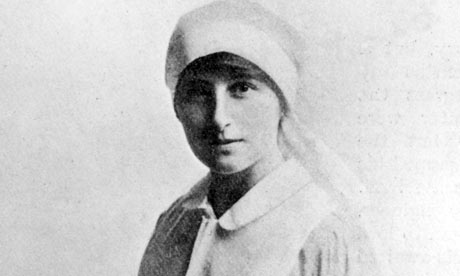
Vera Brittain

Vera Brittain

My last assembly at Maryborough School; ‘D’ day 70th anniversary; my last visit to St Fintan’s Psychiatric Hospital Links Centre; my birthday. Round the corner, my last week in Portlaoise beckons. A memorable day. A Gemini day. A Janus day.

Looking back

On the TV I hear ‘O valiant hearts …’ sung at the Normandy landings commemoration. It takes me back to Carlisle Cathedral on Remembrance Sunday in 1967 when I heard and sang it for the first time. Tear-inducing words set to luscious sentimental music that the 17-year old adolescent musician thought far from good taste, even though he was much moved by it. He knows better now, the ambivalence of simultaneously relishing two opposing responses now absorbed into the system. Back then, the more intellectual rejection of jingoism just about won the day. Now it’s the human cost that is uppermost and that leaves me silent and ‘filling up’ as I hear and sing Arkwright’s words and Harris’s music.

I lived and worked in Derbyshire for 8 years and it was a woman of Derbyshire who enabled me to understand something of that human loss. Vera Brittain from Buxton lost her fiancé, her brother, her friends, and her dreams, and as a result went on to change the world for the better. If you’ve not read her Testament of Youth, I recommend it; the film version is to be found on YouTube. As one who in comparison has led a charmed and self-indulgent life, I can only be silent.

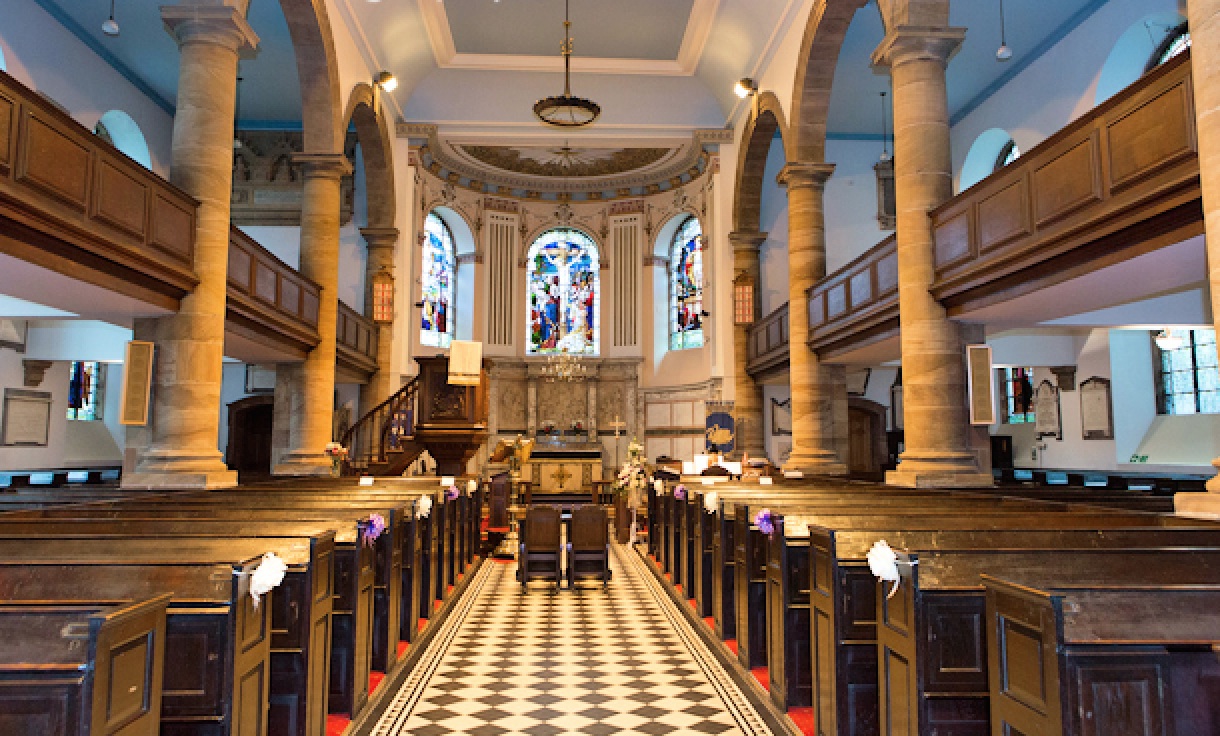
St Modwen, Burton upon Trent (© A Class Photography)

St Modwen, Burton upon Trent (© A Class Photography), one of the three churches to which I’m going

Looking forward

I didn’t mind being 50 or 60, but I’m unsettled at 64. At the age when the Beatles wondered if they would still be fed and needed, and when many of my school and college mates have retired, I’m just about to start a new job. Don’t write me off just yet. Jorge Bergoglio was older and he seems to be doing fine. Can I recover the energy that the last three years has drained out of me? Once the decision to move was made, I started sleeping better and recovering the mentality of my inner 6-year old, so I think so. Do I have the imagination and percipience to see opportunities and make the best of them? I think so, for that is not age-related: I know plenty of sparkling old people and dull young people.

A dear friend in Portlaoise told me a couple of days ago that the thing about me that she would miss more than anything else was the mischievous twinkle in my eye. This augurs well.