Perceptions in Penrith

066cd2fJames Rebanks is something of a media darling. His combination of boy with attitude who left school early, Oxford education, businessman and sheep farmer makes for heady reading.

Now I must declare an interest. Mr Rebanks farms at Penruddock near Penrith. He attended the comprehensive school in Penrith, a town which has, through all the ups and downs of state education and the abolition of the 11-plus exam, retained a selective state Grammar School, my alma mater. A contemporary of mine at the Grammar School was another Rebanks, presumably a relation, of whom my only memory is that he was shall we say pugnacious.

James Rebanks is scathing about the way he felt belittled by schoolteachers and others because he was interested in farming, and not much else. My experience was otherwise – the opposite in a sense. As an asthmatic child, allergic to corn and hay, forced to spend a good deal of time indoors, I felt belittled by my peers for not being interested in farming. In Langwathby in the 1950s and 1960s there was absolutely nothing for a boy who was not interested in football or cricket or being knee-deep in dung.

For me, reading was a window to a new universe, education the key that unlocked the door of the cage. Then music came along to set every nerve gloriously on edge. I recall speech days at the Grammar School in which the Headmaster, recently arrived from Manchester, reflected ruefully on the lack of ambition he met in mid 1960s Penrith. I recall encouragement and interest from my teachers in all their pupils. But I can’t say I was ever aware of any belittling of farming or agriculture as a means of getting from adolescence to death.

Maybe it was different at Ullswater School. Maybe Mr Rebanks came across teachers who were taking out their own frustrations on him. This is not ‘their’ fault, or ‘my’ fault or Mr Rebanks’s ‘fault’. It’s just the way things were. And quite possibly still are, despite the tourism, the second homes, the sterility of farming villages about which I’ve fulminated elsewhere.

Recently I saw the men of the family ranging in age from 20s to 70s trooping off together to a Carlisle United match. Part of me has always longed for that kind of camaraderie, but what I find difficult to take with it—and, I wonder, do I see this in Mr Rebanks despite his degree and business acumen?—is the persistent whisper of xenophobia. Clubbiness—I saw it yesterday in a group of organists! And then I wonder if I too am guilty.
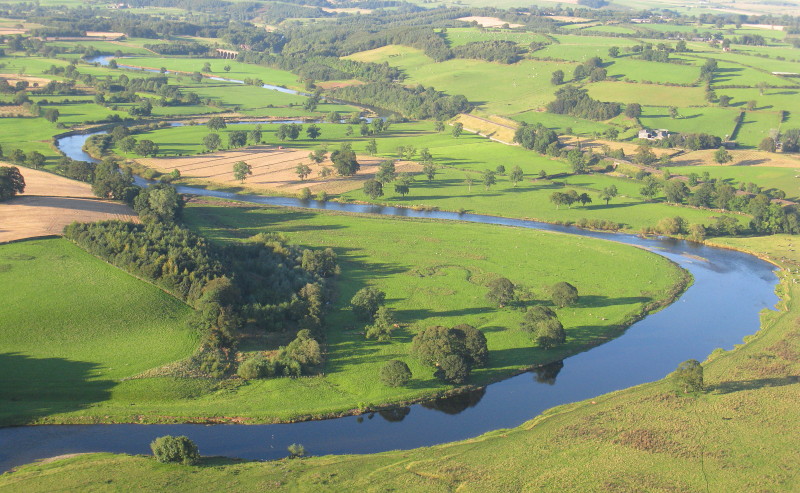
8523738_origMy son now 35 came with us on a recent trip and said he could see why I felt there was nothing for me there despite the analgesic air and hypnotic beauty and prosperity of the Eden Valley. The way in which it is hemmed in by the Pennines, Shap Fell, the Lakes and the Solway speaks of more than just geography.

Mr Rebanks might have cause to be grateful to those who belittled him. They fuelled the pugnacity that enabled him to push on the door labelled education at a time that suited him, not them, so that he could embark on the journey that has brought him to his fame of today.

Then and now

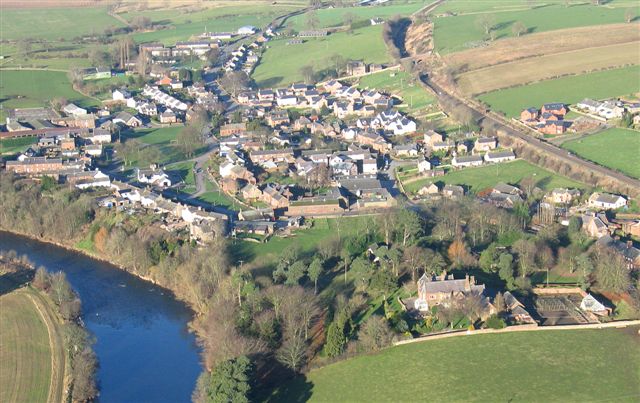
1-langwathby-5891bI was in the village of my childhood recently. In the 1950s there were at least seven working farms, with tractors, yapping dogs, animals herded along the main road, and cow dung spattered where feet did not fear to tread. It was smelly, noisy and messy.

Not any more. There are now, I think, three working farms. It’s all very clean. No dogs barking, no cows mooing or sheep baa-ing. No cow pats or sheep dottles decorating the roads.

It’s been ‘Cotswoldized’: second homes, suburban warfare, Chelsea tractors. Sterile.

We’re too clean. No wonder allergic diseases are on the rise when our immune systems are not challenged enough. In our ridiculously risk averse culture, kids don’t eat dirt any more. And why is there this obsession with washing and showering? Water is bad for your skin, and soap is worse. Muck falls off eventually.

I like mess. I like the outskirts of towns with the randomness of buildings and telephone poles and wires. I like the scattering of car shops, tyre shops, furniture shops, bathroom shops, burger shops. It’s all so normal somehow.

Some people have a vision of heaven that’s clean and tidy. A Midsomer village without murders where one’s friends live in ochre-coloured cottages along the banks of the stream, behind Kentucky-fried Georgian doors. I hope not. I hope it’s much messier than that. And as for murders, well, I have a little list ….

Life is messy. Relationships don’t do what you expect. Things don’t work out. Actions, or inactions, have consequences. Like a row of skittles where one falls knocking over the next, and the next, and the next …. endless and uncontrollable. This is the glorious mess of being alive. Stuff happens: you can’t control it.

Do you want to get to the end of your life regretting what you haven’t done because you wanted always to be in control? Or do you want to be able to look back knowing it’s been one hell of a ride?

Wisdom sage?

Wisdom sage

Here are three helpful bits of advice that my mentor, Homer Simpson, gave to his son Bart:

I want to share something with you: The three little sentences that will get you through life. Number 1: Cover for me. Number 2: Oh, good idea, Boss! Number 3: It was like that when I got here.

Biology is a wonderful thing

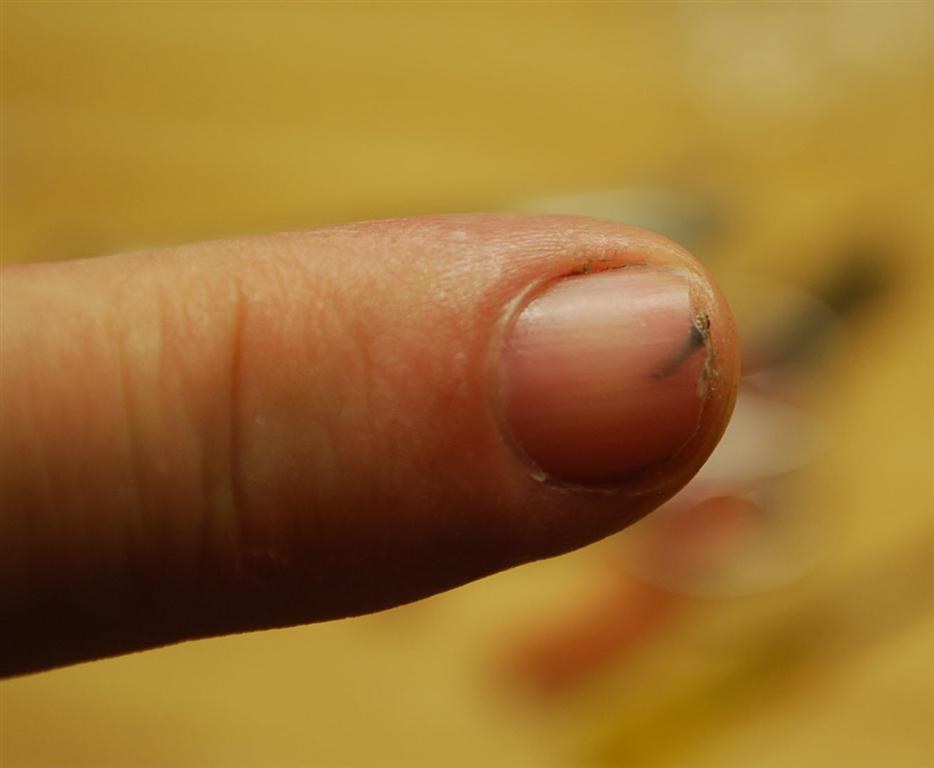
dsc0142bI was scrabbling around under the bed trying to retrieve the computer when – ouch – a splinter made its way under my index finger nail. First thing in the morning is not a good time for me to deal with this: I’m peering through lacrimal secretions that are still like gobbets of purest mud, and I need an industrial strength magnifying glass these days. So I left it alone for the moment. It began to hurt.

By the time I’d done a school assembly my eyesight was more conducive to digital inspection so I had a look. I could see a couple of millimeters of wood poking out from the edge of the nail so I grabbed it with a pair of tweezers and yanked. Out it came: about 7 mm of splinter. ‘Good, that looks like all of it, so problem sorted.’

Or so I thought.

That evening, it was still sore. It was beginning to swell. In the middle of the night it was throbbing. In sleepy gloom I’d already been admitted to hospital with septicaemia, and they’d had to amputate my finger, then my hand, then my arm. How much of me would they have to amputate before I stopped being me? Clearly, there was still some wood under the nail.

In the morning the finger end was red, warm, swollen and exquisitely painful. Rubor, calor, tumor, dolor. As soon as I could see, I took a pair of scissors and poked around a bit under the nail. Hell’s teeth, it hurt. There was something dark. Clotted blood or wicked wood? Whatever, it was I dug it out.

Now here’s the wonderful thing.

Within seconds, and I mean seconds, the throbbing abated. Within 15 minutes the redness had all but gone and there was no more swelling. After an hour there was no sign that anything had ever been amiss. I even remarked to SWMBO how marvellous it was.

Isn’t it remarkable how the body is so good at recognizing foreign material? And isn’t it remarkable that having done so, it knows as soon as, but not a minute before, the foreign material is no longer there? Imagine how efficient and busy the cells of the immune system must be to detect, act, repel, contain and relax.

Some scientists want to know exactly how it all works, and good luck to them. I’m happy to know that it still does, after all these years.

A 604 to Kettering

Chesterton Road

Chesterton Road

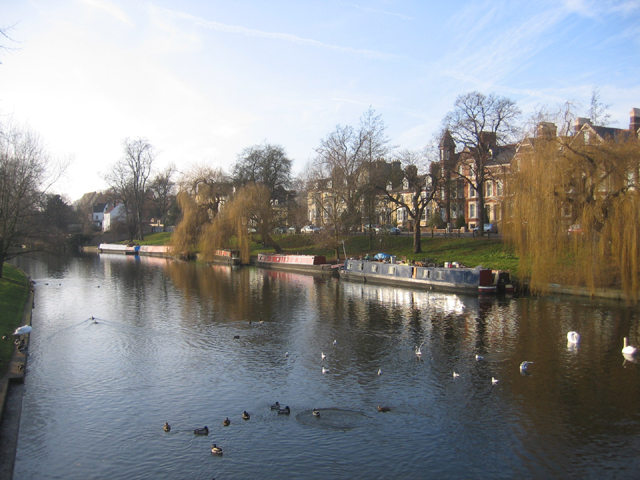
There it is on a road sign. It’s 1969 and I’m cycling along Chesterton Road in Cambridge. The road number has changed now, but the memory is vivid, the feeling that there’s a big wide world outside this bubble, and the A 604 to Kettering is proof of it. A lovely word, Kettering, unfamiliar.

The bubble in those days was little more than the walk or ride from lodgings in Mill Road to Anatomy, Physiology and Pathology on the Downing site, and then on to Queens’. A detour on foot through Pembroke was a treat. This was a rather strung-out sort of bubble, perhaps, and one in those days whose walls were rarely penetrated. Kettering was a bit of magic.

There were signs to Ely, St Neots and Royston. There might even have been one to London. But it was Kettering that fired the imagination. I didn’t see the sign that often since that side of the Cam was ‘injun country’ until 1971 when daily trips to the boathouse became part of the routine. Maybe it was the novelty.

Lichfield has a similar effect. Such a rich sound. When I was young, we had relatives near Stratford-upon-Avon, and being obsessed with cathedrals as I then was, I plagued parents to stop there on the way past Birmingham. They did once. Later, I saw the three spires from Euston-Carlisle trains (not any more: too built up now). A world I only glimpsed. And here I am now living only 10 miles away.

Lichfield still sings a siren song. I’m off to waste a bit of money in the cathedral shop. Detached from the inconsequential Barchester politics, the cathedral close is a reminder that there are some places that lift the spirit, oases of beauty and memory. Even the A 604 to Kettering.

Ireland and England

I hardly think a caption necessary

I hardly think a caption necessary

Sunday afternoon I announced to SWMBO that since I now had only two services most Sunday mornings I was less tired than in Portlaoise where I had three. Then I fell asleep. I was snoring and muttering so loudly that Og the dog was agitated. Anyhoo, I set to thinking how life as a priest in the Church of Ireland compares with that in the C of E,

Irish clergy are better paid and can go on until they’re 75. Irish clergy have fewer demands on their time. I know of at least one who’s rarely outside the Rectory during the week. But because they are essentially chaplains to a small tribe, most Irish rectors care for their flocks with greater involvement than in the C of E. In return, parishioners respond with random acts of kindness – fuel for the rectory fire, a full tank of heating oil, the occasional hamper and/or bottle of nectar. The downside of this is that parishioners feel that they at least in part ‘own’ you, but there’s a price for everything.

English clergy come across a wider section of the population, even if only on an occasional basis for weddings, baptisms and funerals. Some of us like this, others don’t. There are more meetings in England (you never know what you’re missing if you don’t go, so I miss quite a lot) and we are much more ‘watched’. We are appraised and monitored. We are urged to do this, that and the other. We are told what healthy growing churches should and should not be doing. Frankly, all this makes me feel deeply inadequate and that whatever I’m doing is not enough. There are moves to import all this to the C of I, so I hope it will be resisted.

In Ireland (I speak of the Republic outside Dublin) clergy are thin on the ground. Any sense of isolation is overcome by networks from college (there’s only one in the C of I) and social media. I know of no English clergy who are such keen FaceBookers as Irish clergy. I’ve caught the disease. The many flavours of the C of E create their own support networks. There are accepting liberals, intolerant liberals, traditional catholics, wishy-washy catholics, traditional evangelicals, wishy-washy evangelicals … yes, it’s silly isn’t it … and these groups can be helpful so long as we don’t take ourselves too seriously.

The tribal nature of the C of I, with the Church building as its totem, means that so long as there’s a steady supply of fecund Anglican maidens, with not too much notice taken of Ne temere if an Anglican should dare to marry a Catholic, the small rural church will be supported and maintained, if not often attended. I wouldn’t be surprised if the rural C of I survives longer than the rural C of E, where buildings are more expensive to maintain and where there’s little sense of loyalty other than to the graveyard (‘so that I can be buried with my ancestors’). The quasi-Masonic Lodge function of the church building has a huge downside, however. The loss of Anglo-Irish aristocracy can result in the gap being filled by self-appointed royal families, some of whom come to hold doleful and ignorant hegemony over parish and parishioners.

As to relations with other denominations, these are much healthier in Ireland. The dominance of the Catholic church means that it is secure enough to be gracious to the tiny minority. The Church of Ireland punches far above its weight, I guess, so that Irish society is seen as not being discriminatory.

So pluses and minuses. Maybe my soporific state on Sundays has little to do with any of the above, and more to do with the fact that I’m old and fat. Recent news that eggs and butter are no longer evil might help the first but not the second.

Taboo in Tabuk

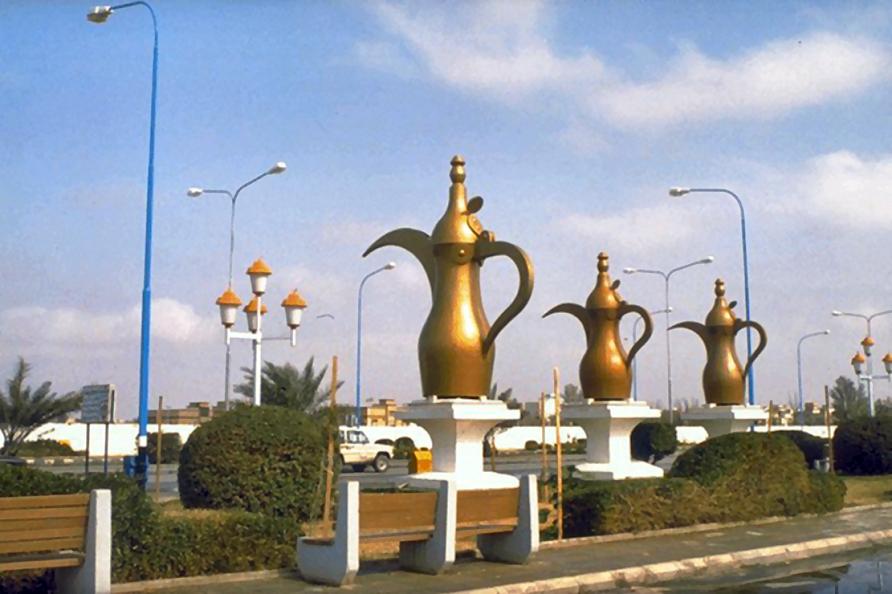
buraydah02A Tabuk imam has forbidden the making of snowmen. Quite right. Snowwomen and snowcamels too. Anything that has a soul may not be represented in crystalline water. As a theologian, I’m aware of a large corpus of literature on the souls of camels, as well as a little aphorism about the use to which camels can be put that I cannot print here, for children might be watching.

Reading about the fatwa took me back to the 1980s and 1990s when from time to time I went to Saudi on behalf of the College of Knowledge in Dublin to teach (two weeks at a time) or to examine (5 days or so). I was in Tabuk only once, but today’s news puts me more in mind of other Saudi trips, most particularly to Buraydah where I served a few sentences.

The culture in Buraydah is sooo relaxed, for this is where the Saudi religious police are trained. They patrol the streets eagerly seeking out infractions of dress and behaviour codes, a bit like Irish priests are said to have done in the past. Men may hold hands, women may hold hands, but man and wife may not. Under no circumstances may any female skin below the chin be visible, and preferably only that around the eyes. Ankle skin, frightfully erotic, drives men in Saudi into a frenzy. Being caught in contravention of any of these rules draws verbal abuse and a lash or six from the cane that every religious policeman carries. Female companions of mine were spat at on several occasions for daring to show a bit of trouser leg below the chador.

We were housed in apartments in the hospital compound. I noticed that local inhabitants rose about 5 am to turn on their car engines so that by the time they left the house two hours later the AC had the interiors nice and cool. The air was fragrant with he heady mix of Saudi incense – petrol fumes.

Apart from five or six hours teaching a day, life was a social whirl. The liturgy that gave shape and meaning to the day was that of oral hygiene: setting aside a good 10 minutes for cleaning my teeth. In those days I was obsessed with exercise (I’ve grown out of it now) and so by dint of disciplined running round the central green area morning, noon and night I became quite lean and very fit. Much like now.

Each morning I filled in a form indicating my supper choice from a reasonably comprehensive menu. Each evening it was rice, peas and a scraggy avian leg. That little exercise became for me a parable of a country where, it’s rumoured, whisky turns to water as it enters the oesophagus of the King.

A cold coming we had of it

7507019fWe disembarked from Sealink’s St Columba on 3 January 1988. There were four of us: Victoria, Edward, Susan and me. Southwell Minster School term began later that week, so we left Hugh lodging with a friend. It was dark, nowhere open until 9.30 or so, so breakfast at the Royal Marine seemed like a good idea.

Our new home was up the Old Long Hill between Enniskerry and Roundwood. The removals van wasn’t arriving until next day, so we had a barren sort of a day. I wondered what the hell I’d done accepting this job in a foreign country, agreeing to move house in January, and leaving our two boys at cathedral choir schools in England. Madness.

Ye Gods, it was cold. Thin walls, large windows. The only bit of the house with carpet was the small hall, so there we slept in sleeping bags, five hearts (we had a dog) huddled together.

The week after, Edward went back to school in Ripon: Fokkers to Leeds/Bradford. Victoria, secondary school age, stayed with us. I used to stand in the kitchen and watch the St Columba on its way to Holyhead and ache for the boys. That memory does not dim with the passing years.

The house was in a wonderful position with lovely views to the main Glendalough road across the valley, and to the sea and the Kish lighthouse over the roofs of Bray. But what a money pit. Everything that could be rickety was rickety, everything that could go wrong did go wrong. Water pumps, leaky roofs, failing heating system, wonky electrics, wobbly floors, inspissated sewage pipes leading to a jerry-built septic tank. Ah, that’s why the vendor refused to let our surveyor go into the roof space and take up the carpets. There’s a moral there: don’t buy from a solicitor who is acting for himself. Caveat emptor. When you’re dealing with the well-being of a young family in insecure times, though, other concerns predominate.

We found a builder – well, he called himself a builder – to mend the leaks, but every hole plugged meant a larger one in the bank balance as money flooded out. He taught us to ask ‘which Tuesday?’ when he said he’s be with us on Tuesday.

It was lovely in summer. It was a wonderful place for adventurous children to grow up. But life was complicated.

To potter, to think, to write, perchance to dream

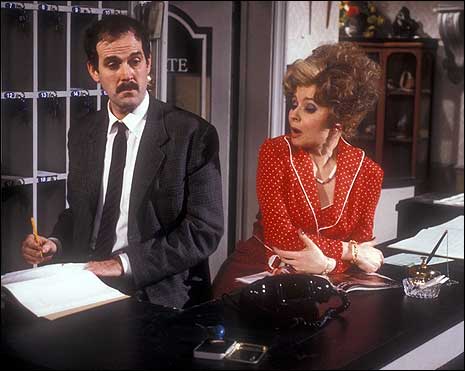
fawlty2_465x371Fawlty Towers, Communication Problems

The Major: Going to have a flutter, Fawlty?

Basil: No. No, no, no, no, no.

Sybil: No, Basil doesn’t bet anymore. Do you, dear?

Basil: No, I don’t, dear, no. No, that particular avenue of pleasure has been closed off.

I’m with Basil. Are there any avenues of pleasure that are not now closed off? The joy of playing in the snow – gone. The absorption of damming a stream – gone. The pleasure of learning a new piece of music – gone. The thrill of fiddling with my organ – gone. The excitement of visiting a place I’ve never visited before – gone. All gone. All passion spent.

In Nottingham we were neighbours of novelist Stanley Middleton who wrote one book about 23 times. He never moved from his study. He said if he couldn’t imagine all he needed to know he didn’t need to know it. But imagination and memory are malevolent, for I remember things that I might reasonably be proud of only when someone else thanks me for them or reminds me of them, and yet my head is full of past episodes real and imagined that make me squirm with embarrassment or shrink with shame.

Is this because I am tired? Possibly: Christmas is busy and tiptoeing round parishioners’ sensibilities is tiring. And futile. Is it because the last decade has been tumultuous—we have moved six times, twice across the Irish Sea? Is it because of the oppressive weight of diocesan desperation? Is it because circulating testosterone has dropped off, along with a few other things? Undoubtedly.

I often think I’ve been on the planet long enough. And I know I’m not alone, as became clear in a bit of R and R with my friend yesterday. But this solution won’t do, at least not yet. My expectations of myself need to be lowered. Others’ expectations of me need to be lowered: ‘No, the Vicar won’t do that: do it yourself.’

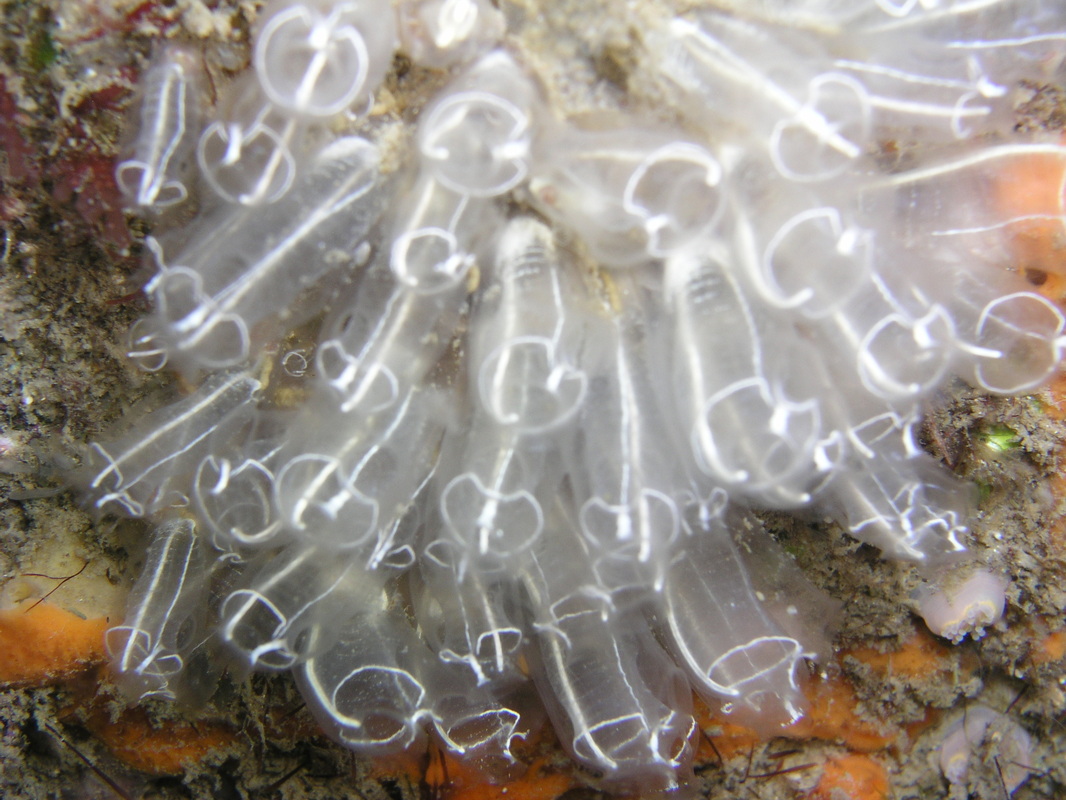
Sessile sea squirts

Sessile sea squirts

Some marine creatures move about only when they are immature. As they mature they become sessile, fixed to the sea bed. Maybe I’m maturing. SWMBO tells me that Churchill did a lot of his work in bed. It’s taken me a long time to discover the value of two short taps on the fn key at bottom left of this Mac keyboard. I like playing with words as I lie in bed.

To potter, to think, to write, perchance to dream.