Why do I bother? 

The Bible tells us not to eat pig or seafood, not to mate different kinds of animals, not to plant a field with two kinds of seed, and not to wear clothing woven of two kinds of material, so polycotton is out.  It tells us that women should be silent in church, dress modestly and avoid jewellery.  Most of us ignore all this.  It says that wives should be subservient to their husbands.  Good luck with that.

It condemns most strongly of all the taking of interest on a loan and the financial exploitation of the poor by the rich.  Our economic system is built on these sins.  Our pensions depend on them.

Yes, I know, these things should be taken in context, and they reflect the culture and mindset of the authors, some of whom, Paul for example, were hardly well-adjusted specimens of Homo sapiens.  

I was brought up in a farming village.  Cattle from the five working farms were herded between byre and field along the roads holding up traffic that had to pick its way through the steaming residue the cows generously left behind.  I came to savour the fragrance.  My short-trousered self could see that we were upright cows—head, body with holes at both ends, four limbs.  At school I became interested in zoology and the way the animal kingdom could be classified into various groups, single celled amoeba to complex multicellular organism like us, and I began to see evidence for evolution.  At Cambridge studying embryology as part of the medical course, my mind was further opened by the fact that in the first few weeks of our intrauterine development each one of us undergoes a kind of speeded-up evolution, and that we still carry with things that other creatures have but that we don’t need any more.  

So I’ve always understood that humans are animals like all the rest: we are in fact modified reptiles—not modified enough in some cases.

One of the biggest problems with theology for me, then, is interpreting scripture in the light of this.  

Do I actually believe that Jesus was born to what we call a virgin? Or is that simply a reworking of far more ancient myths about the birth of gods and goddesses, used by Matthew and Luke to “big up” Jesus? Such birth stories are still in use, notably in North Korea, where propaganda has elements of the Christian Nativity story to “big-up” the births of Kim family members.

Does my zoological mind really accept that humans are more special than any other creature of the earth?

Does my scientific mind really believe in the miracles that Jesus is claimed to have performed? Or are they simply fairy stories expressing profound truths using idioms familiar to the writers and readers of two thousand years ago? Middle Eastern people used—and use—language and imagery much more colourfully than we do.

Why should we pay heed to the writings of people of long ago who had a different worldview, who thought the earth was flat, who thought that water covered the sky, who thought that natural phenomena were manifestation of an irascible sky pixie’s temper?

I find it exhausting trying to marry these two world views together, that is modern and ancient, and I wonder why I bother.  What has kept me hanging on to the Christian story for so long, if only by the skin of my teeth?

The answer is quite simply the psychological authenticity of the gospel.  By that I mean Jesus’s teaching displays authentic human psychology and is without doubt the best way to live life.  It’s a pity it’s never been tried.

I don’t care about the virgin birth. I don’t care what adults do with their genitals for mutual pleasure. I don’t care whether the miracles are factual or not.  I don’t care whether the events recorded in the life of Jesus are historical or not.  I don’t care if they were all invented by his followers simply to “big-up” a remarkable man so that his teachings might take root.  I don’t care about much Christian doctrine. Some of it is of great poetic beauty, but much of it is pernicious nonsense invented by clergy to keep us proles in our place with the promise of jam tomorrow—when we ‘re dead. Sod that for a game of soldiers.

I see the message of the gospel as the triumph of selflessness over ego-self, the agony in the garden leading to the death of self so that selflessness can rise.  The equilibrium between looking after oneself—which is essential—and being selfless for the common good.  With such selflessness we are no longer weighed down by guilt and shame and we can metaphorically rise to become like Him.  Made like him, like him we rise.  The mass is the cosmic drama of self-sacrifice.

Does this mean I’m not fit to be a priest? Does it mean I’m not a Christian?

Many might say so.  I think the opposite.  I think we need more like me.  I think many people today are at best ambivalent about the supernatural, but are interested in the validity of gospel teaching when the penny drops.

I would go so far as to say that Christianity in the west has no future unless it grasps this. Deserves no future, even.

There are so many apparently brain-dead people in today’s increasingly narrow-minded C of E, so it’s hard work swimming against the tide. Maybe I need to stop thinking. But I shall KBO as long as I can.
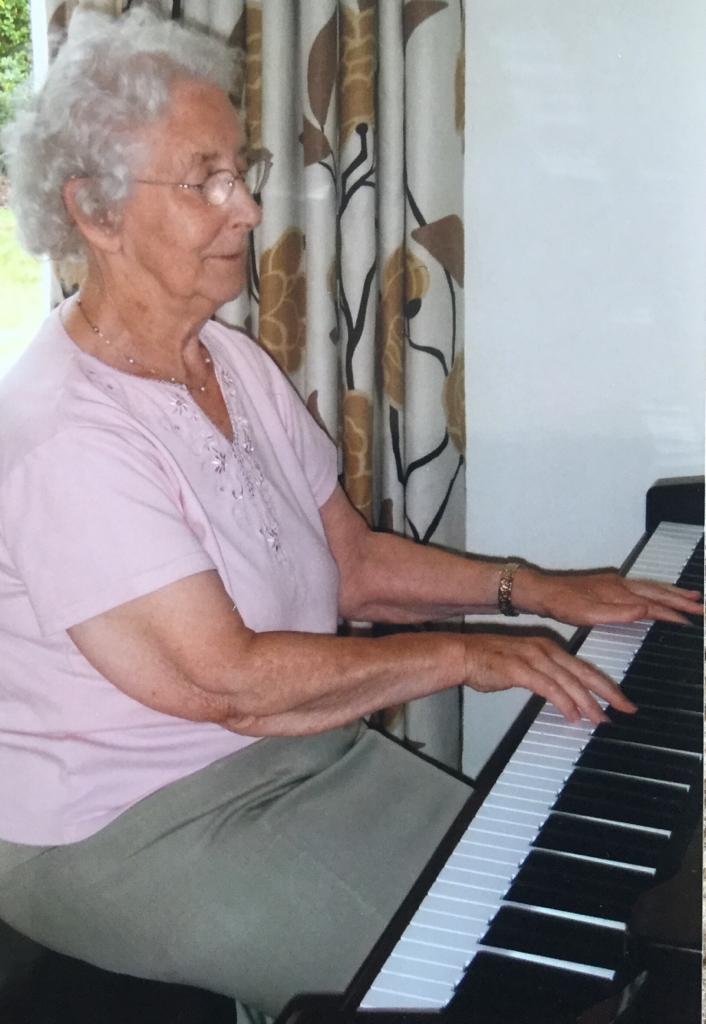
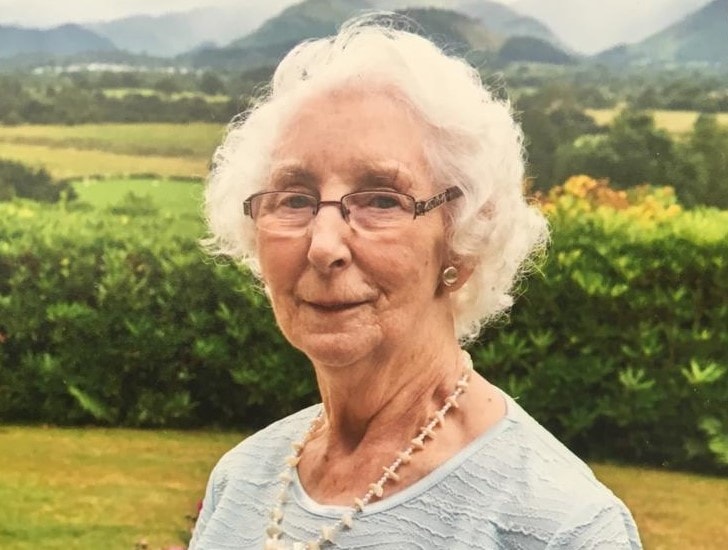
Winifred Little

Winifred Little died on 20 December 2021 aged 92. She spent her life in the Eden Valley, that gentle, understated, pastoral land between lakes and north Pennines. 

Winifred Wilkinson was raised in Culgaith, married Norman Little from Renwick, lived in Langwathby, then Lazonby, Kirkoswald and finally Penrith. She and Norman raised three children, the eldest of whom was a couple of years junior to me at Penrith Grammar School, the other two following after.

Why do I write about Winifred? 

With her death, there is now nobody left of the older generation that influenced me. Winifred’s guidance was not dramatic or earth-shattering, but gentle, enabling and kindly – words that describe Winifred herself.

Winifred nurtured my musical gifts long before anyone else.

Monkhouse life in the 1950s in Langwathby revolved around the Methodist Chapel. Sunday School at 2 o’clock followed by the main service at 3. There was the rota for entertaining visiting preachers (imagine my alarm when later on it was our turn to feed and water the Grammar School deputy headmistress). There were Kirkoswald Methodist Circuit socials in the village hall. Chapel was pervasive. My memories of Sunday School are in no way grey, dull or controlling but warm, informative and interesting to a somewhat solitary and self-sufficient boy in short pants (though I took against felt crafts),

And that atmosphere was down largely to Winifred. Don’t get me wrong – she was not mumsy, indulgent, or sentimentally emotional: fellsiders know nothing of indulgence or emotional sentimentality. She was kind, unassuming and considerate – but firm. 

Winifred played the hymns on the foot-pumped reed organ. She schooled us for the big events like Sunday School Anniversary and Harvest. She gave me my first solo “Jesus, friend of little children”. I was about eight and can remember exactly where I stood and how I felt – nervous. I made a mistake but there was no criticism, just encouragement. Winifred pushed me to play for Sunday School and later for the main service, and she made sure I could play hymns properly. Because of Winifred, I began to uncover the riches of the Wesleys’ hymns.

She shared her gifts with the surrounding area by teaching, and running and accompanying choirs, her musicianship far exceeding that to be expected in what was then a remote rural backwater.

Long before piano and organ lessons and O level music, Winifred Little opened a door through which I glimpsed enchantment and enlightenment.

To say that I am thankful for her is truly an understatement.

Advent 2021

I am recovering from a 6-week chest infection (covid negative), the like of which I have not experienced since the 1960s. Childhood memories of standing at the open bedroom window in the middle of the night trying to get air into my lungs. Susan is about a week behind me, as it were.

There are several reasons why I might have fallen victim to this, but what it really tells me is that (a) my lungs are 65 years older than I am in my head, and (b) viruses and other creatures that can take us over will win. It is entirely likely that these “extraordinary” times will last longer than I will. Talk of “post-covid” is well-premature. So, have no expectations other than that you’re gonna die. Get busy living, and as the well-known American theologian Dolly Parton might say, “if you’ve got it, flaunt it” before you lose it.

Susan had her second cataract done early in the year. She can see clearly now the mist has gone. She drives with more confidence. Her hair has turned pink with age. Stanley’s one functioning eye has glaucoma and a mega-cataract. He expects to have said cataract attended to in the next few weeks. Will he be able to drive again? He’s not done so for over 18 months and has no wish to start again. The local taxis take him to the gym and back and – added bonus – he is picking up a smattering of Urdu. His eyesight or lack of same has provoked the great renunciation of giving away most of his sheet music, organ and piano. Liberating in a way. But what if the surgery means he needn’t have done so?

In 6 months’ time Stanley will have outlived father (he outlived mother a few years ago). Susan has yet to reach the age of her mother’s demise. Stanley’s retirement more or less coincided with lockdown 1. “What Is there now to live for?” is the question. Facebook has yielded more people crawling from under the stones of the past, and he’s struck by the number of friends now in their 70s who have said to him that left to their own devices they wouldn’t have made the choices in life that they made – or that were made for them. Him too.

We are of course not often left to our own devices: parental expectations, quirks of circumstance, economic realities, consequences of actions, all conspire to set us on pathways and before we know it we’re too far gone to go back.

Stanley was brought up at a time and in a culture when the man was expected to husband – to father and provide. We made decisions, took the consequences, made the best of it, then another decision had to be made. Repeat ad infinitum. No complaints, no complaining – he’s not – we’re born, we struggle, we die. The molecules that once made us are used again. This cosmic cycle is satisfyingly reassuring. If Stanley had to name one event that marked expulsion from Eden (garden not river though the river is appropriate), it was when he was 5 and his sandpit was tarmacked over. He still feels the outrage. He was never the same again.

Maybe going off into the jungle with a begging bowl is the answer. It might be tolerable in warmer climes, but it’s not for him. His idea of roughing it is running out of ice cubes. He could live in a community of gorillas or orangs, kind of returning whence he came, but there’s still the ice cube problem. Decluttering, giving away possessions (downsizing forces this – it’s very refreshing), having no expectations, living in the moment (eternal life – Jesus was a Buddhist), and being mischievous. Why do people take themselves so seriously? They must think they matter.

Where have we visited this last year? Some of our friends have done so much travelling they must have needed indulgences from The Holy and Blessed Greta. How they can live with the guilt I simply do not know. We in contrast have been models of environmental restraint. Leeds, Derby, Newcastle under Lyme (Susan’s eye) just about sums it up. It’s been thrilling.

We hope to be in Ireland for Christmas, though Dublin is more cautious about covid restrictions than Westminster so we’re not banking on it. It’ll be the first time in two years we’ve seen Vic face to face. Ed visited us a couple of months ago.

In many ways life is like being back in the Eden valley in the 1950s. Small world, don’t go anywhere much, a 4 mile trip to Penrith the highlight of the week. Forced onto one’s own resources. I am now thankful for a solitary childhood that allowed an inner life to grow. Neither of us has a bucket list of places we’d like to see (just as well now) and Susan has long been of the opinion that world heritage sites should be visited only through the pages of the National Geographic.

I’ve been reading a lot. I return to Paul Scott’s Raj Quartet (Jewel in the Crown) and find something new each time. He has a great line about the British in India in the 1940s who “came to the end of themselves as they were”. I feel a bit like that myself. Retirement, sensory loss, lockdown, restrictions, all forcing an end to me as I was – and therefore a beginning. What next?

The phrase is certainly true of our way of life in the west. It is unsustainable. The aforementioned Greta is right, but wrong too – it’s way too late and has been for over a century. We might as well carry on and hasten the end. The sooner we humans are wiped out so that evolution can do its job again, the better. Homo sapiens is an odious species, far from sapiens. I’d like to be reincarnated as either an octopus or one of them sea squirts that come together with their mates to make a tube that glows – pyrosomes. Glowing in the dark is something we’re both used to having been brought up within spitting distance of Windscale (or Calder Hall or Sellafield) in the 1950s.

Two MUST reads: (1) Skyseed by Bill McGuire (he lives in Brassington where I was a curate). (2) The Swarm by Frank Schatzing (he doesn’t).

KBO. Klaatu barada nikto. Happy Advent. Nollaig Shona agus Athbhliain Faoi Mhaise

A story in black and white

Here is a view from the south transept of Carlisle Cathedral looking west into the south nave aisle showing the romanesque arches distorted by settlement in the 1120s*. It’s a meticulously detailed black and white pen and ink essay dated 1970.

The artist, a lovely, gentle man by name Reg Hunt, was a sidesman at the Cathedral and his son Richard and I were choral and in my case organ scholars in the 1960s. Living as I then did twenty miles from Carlisle, the Hunts had me to Sunday lunch week by week between the morning and afternoon choral services. Kindness and generosity of spirit were there in abundance in those heady days of musical exploration and soaking up Round the Horne before heading off for Evensong at 3.

Reg by then was Head of Art at White Close School in Brampton, about 10 miles away. I’d seen some of his work, and when I went to Cambridge in 1969 I asked him if he would be willing to do something for me as a memento of those times and of the Hunt family. I was overwhelmed with this – I was not expecting anything so spectacularly luxurious.

We have moved twelve times since then and this has moved with us – until recently. It’s still in the family, though, now having pride of place at Edward’s in Co Wexford.

I discovered that Reg had once courted a Carlisle woman, Margaret Grainger.  For whatever reason that didn’t work out and he married Margaret Henderson. Together they had John, a writer, and Richard. Margaret Grainger married my uncle Philip Monkhouse, later a tenor Lay Clerk at the Cathedral.

The Eden valley was a small world where rich red sandstone reigns, but Reg had seen more of the big world’s unpleasantness than most for he had been one of the liberators of Bergen-Belsen in 1945. 

* for more information see Dr James Cameron’s excellent and entertaining site: https://stainedglassattitudes.wordpress.com/2018/01/29/carlisle-the-unluckiest-cathedral/

Smells and Middle East memories

I was back in the Middle East recently. Waiting for the taxi to bring me home, I was sat on a huge tyre outside the gym, part of an industrial unit backing on to the railway. The boiling temperature and the smells from the scorching sun beating down on tarmac, cars, rubber and metal, transported me back to the 80s and 90s, to the aromas of Jeddah. 

Some trips were for teaching anatomy to would-be surgeons. I was there for two weeks at a time, with usually a physiologist and a pathologist. Other trips were for examining surgical aspirants – these lasted about a week or so, and were more social in that there were three examiners, two exam administrators, and often spouses.

Some visits took on a political dimension. The college was keen to recruit students and gain hospital management contracts, both of which brought with them substantial government income. I remember several receptions at which we sat round the edges of vast and ornately decorated rooms in palaces waiting for local dignitaries to arrive late, then joining in stilted conversation sipping Arabic coffee and nibbling sweetmeats as the man (never the woman) in the biggest chair continued his conversations with college bosses and advisers. On one occasion in Baghdad, just after the first Gulf War, the important man was a relative of Saddam. I did not consider it wise to be provocative – indeed I might well have said nothing, which was not difficult since smalltalk does not come easily to me unless it involves railways (not trains), organs or churchy stuff. I shut down in the midst of such internal distress, aching to get out. 

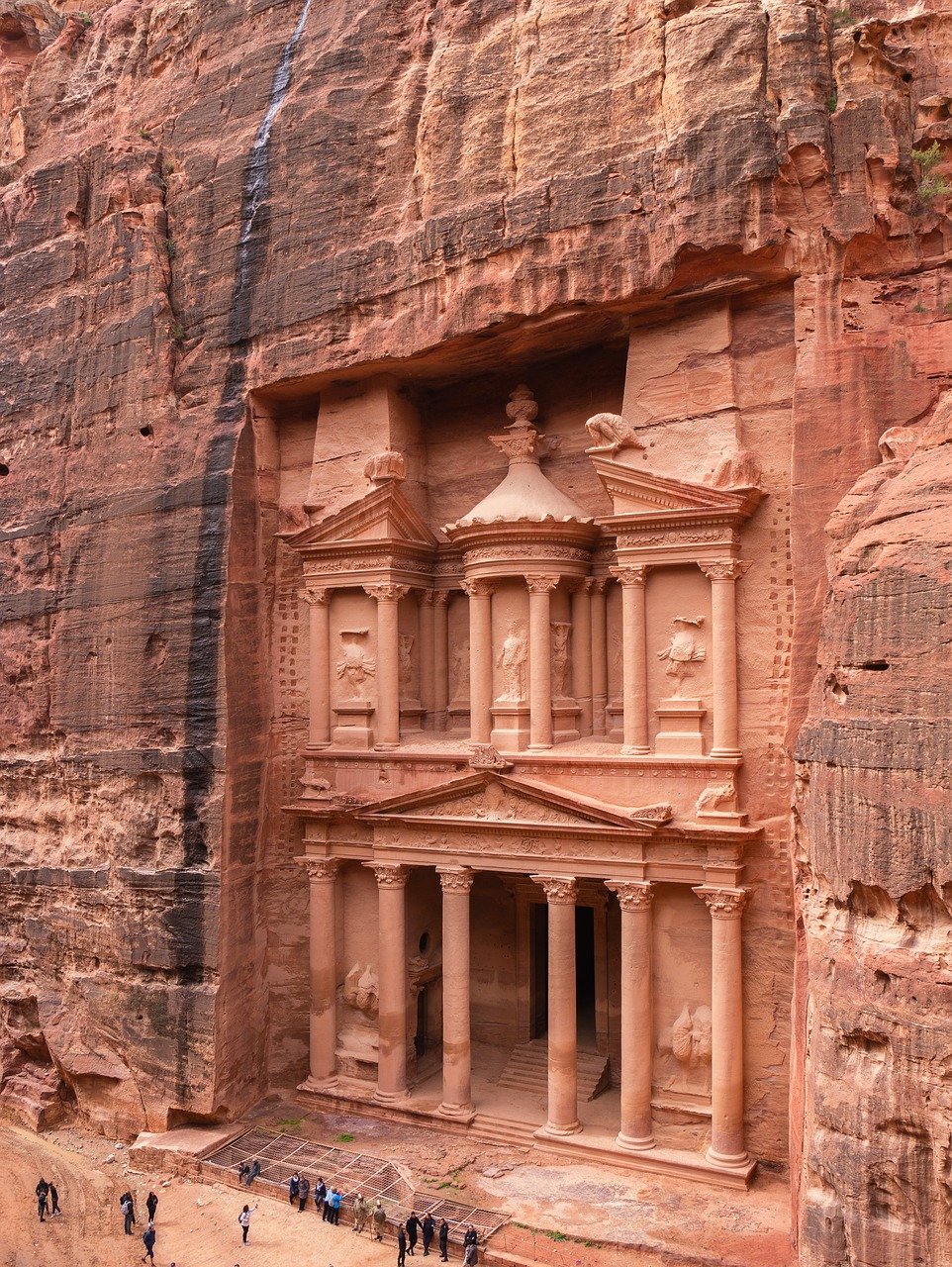
Of the places I visited, Amman was without doubt the most wonderful. Lovely people, fascinating places, Roman remains, Biblical sites. I even saw Petra before it was commercialised. By far the worst was Buraydah in central Saudi. I go so far as to declare it the cosmic cloaca. 

Like any remote settlement anywhere, it is conservative. But Saudi takes conservatism to a whole new level. Buraydah is the home of the training college for religious police – the mutawa. These puritans patrol the streets with sticks ensuring that shops close for prayers. They stamp out any hint of public joy. They are on the lookout for bare female flesh that they can whack. Foreigners are not exempt. An Irish female, head to ankle covered in black, had inadvertently allowed a smidgeon of bare foot to be visible. It did not escape the swipe. The mutawa bring to life R S Thomas’s definition of Protestantism: “the adroit castrator of art, the bitter negation of song and dance and the heart’s innocent joy”.

There was thus little incentive to leave the hospital compound. 

In Buraydah we were housed in three-bedroom villas – one each – for the medical staff. They were set around a central scrubby “lawn”. You can see the compound here, with the villas at the bottom of the screen: https://www.google.com/maps/@26.3482938,43.9699666,659m/data=!3m1!1e3

Other than three hours teaching a day there was nothing – and I repeat nothing – to do. It was just like lockdown, only worse. 

Routine activities like cutting one’s nails or scratching one’s backside were scheduled and done very slowly to fill the time. One of the biggest events of the day was cleaning my teeth of a morning. It was ritualized, It became a liturgical event. Running 100 times round the square was eagerly anticipated. Together with a physician teaching physiology, I competed with myself and him. I was never fitter than in those days: Susan said when I returned to Dublin after that fortnight that I looked like a rat. A fit one.

Food was interesting. Each morning we’d fill in a menu putting ticks against our chosen items for lunch and supper. Twice a day except Friday, the meals arrived: always scraggy chicken and rice, no matter where the ticks had been. A good game. There was a supermarket on the compound, fortunately.

I don’t want to give the impression that I sailed through these ten or so middle east trips. I did not. Life at the time was fraught. I found it incredibly difficult to be working and living in Ireland with the two boys at school in England (until 1992). In addition, to be away from Susan and Victoria on these occasions helped to propel me to despair from which it took years to recover – if I have. I was delighted to be able before long to pass these duties to junior staff, and they were happy to oblige.

Baghdad was my first middle east trip. I went twice, the first to examine as part of a team from the London surgical college, and the second, I think (memory is hazy), to discuss the establishment of a new medical school. I liked Baghdad and the Iraqis. Like Jordanians they were down to earth and pleasant. I met a croupier at one of the big Baghdad hotels and wondered why I didn’t have a glamorous and lucrative job like his.

Tragic middle east politics – another cock up of partition overseen by the Brits.

What’s in a name?

I’m a regular reader of the blog Thinking Anglicans (yes, I know there are very few of them ….). It keeps me up to date with the lamentable politics of the Church of England. 

There’s been an interesting discussion about whether contributors should be allowed to use fake names, as some do. The consensus is that real names are ideal but some people must hide their identities for various reasons. For example, a cleric using his/her name might feel obliged to stick to an official church opinion. That never bothered me for so much official church teaching is utterly bonkers and needs to be changed. I rather hoped that I might be hauled up before an ecclesiastical court – it would have been fun – but alas I seemed not to have been offensive enough. Must try harder.

Anyhoo, back to names, I am William after father and his father, Stanley after mother’s father, and Monkhouse because here at present we use the patronymic. Quite why my second name was routinely used I know not. 

I wonder if there is such a thing as a “me” that can be adequately encompassed in just one name.  You see, girls and boys, there are several “mes” living in my body. 

There’s adolescent me discovering things, 6 year old me playing in the sandpit, finger wagging me that gives out shoulds and oughts, 71 year old me that is angrier about injustice and more subversive than ever before (whoever said we get less revolutionary as we age was wrong), dutiful me that serves, eye twinkling provocative me, emotional me, fearful and inadequate me, depressive me that spends money as therapy, and more. 

Add to these the millions of creatures that live in and on me, bacteria, viruses, symbiotes, even maybe parasites, many of which produce chemicals that affect my thoughts and behaviour – we’re all at the mercy of circulating chemicals from whatever source, so is there really free will?

Having three official names to choose from I give different names to these various “mes”: Stanley, Stan, Will, William, Billy, Willy, Monk, Monkey (inevitable school nickname), fat git (used by one of my sons with then some justification). I like all these “mes” and love them even though some cause problems. Interestingly, the “mes” with the problems tend to be creative and good fun, and I wouldn’t be without them. 

As I reflect on these “mes” I return repeatedly to the profound question “would the child I once was be proud of the adult I have become?”

I am put in mind of this exchange on Life of Brian between Stan and his mates.

Stan wants to be a woman called Loretta so he can have babies. 

It is true that many men as they age and lose testosterone develop tits and become more female-like. Changing sex during the life cycle is not unknown in the animal kingdom.

I’m not there yet.

Dyspepsia, gut brain and vagus (again)

A few days ago I was lying on a table surrounded by people in masks.

One of them held my head and inserted an object between my teeth to keep the mouth open. A thick rubbery object was then shoved down past my pharynx into the oesophagus. There was much gagging, but I soon got used to it.

Now, dear reader, I don’t know what you’re thinking about the kind of sadomasochistic activity in which I was willingly engaged, but the truth is that I was having a gastroscopy.

The general term for looking into tubes is endoscopy (Greek endon: internal), but yer man didn’t go much further than the pylorus so I’ll stick with gastroscopy. (Actually, Greek gaster meant pretty much anything between chest and pubes, like belly, and I can’t be bothered to find out how it came to be used for the sac where food is digested.)

Boss man, having established that I was not entirely ignorant of medical matters, kept pointing to things on the monitor, telling me where he was and what he could see. This was kind and considerate of him and I would have been eagerly attentive but for the fact that they’d asked me to take off my specs so all I could see was a mass of light pink. It turns out that apart from a somewhat incompetent gastro-oesophageal sphincter leading to reflux, and bit of gastritis with a few erosions, it was all pretty good.

This was a relief. My mother and her father died younger than I am now from abdominal cancer, probably stomach, and in the month or so before the gastroscopy my symptoms (I’ll come to them) had worsened considerably, so in my head I was already rewriting my will and sorting out online passwords for the beloveds. The fact that I consulted the GP speaks volumes.

I’ve only met him once before, a graduate of University College Dublin, so we have mutual acquaintances and had a really good chat about Dublin, Ireland, John Boyne, and life as a non-native in Ireland (me) and England (him). And the state pensions: Ireland’s is much more generous than the UK’s.

For several years I’ve had periodic dyspepsia and belching. Symptoms have gradually worsened and latterly my stomach has taken a great dislike to some foods, sending them back whence they came. My stomach is clearly very clever, since it doesn’t necessarily reject the most recently consumed, but only those it takes exception to. I often feel a queue building up in my oesophagus as if the traffic lights at the pylorus were stuck on red.

Most unpleasant were increasing gassiness, hiccups, and the feeling that unless I made myself vomit – which I had to do frequently – the trapped wind would never get out. Sleep was sometimes delayed and subcutaneous fat lost (no bad thing in itself). There were no signs of liver disease like yellow sclera, pale craps, dark piss, and the latter did not taste sweet so no sugar (not salty either which is astonishing given the amount of salt I consume). But the increasing severity meant that I was no longer able to cope by eating carefully, slowly, little and often, so I was worried. I’m not given to complaining about discomfort: Susan says I’m a stoic and should seek help sooner. But I’m a bloke.

So why such troublesome symptoms in the absence of anything much to account for them?

The GP several times asked me how long this had been going on. Back at home I asked myself when I remembered not having to think about what I ate or how I ate it. 

The answer rather flabbergasted me. It was in Texas just before the great catastrophe of 2015. It is not possible to leave an empty plate at a Texan restaurant, and certainly not Mel’s Country Café in Tomball, if one has belly issues.

Quite astonishingly my symptoms improved from then on – not disappeared, but certainly less aggravating and more manageable. 

Grief, stress, long term niggling anxiety, relief at no evidence of malignancy – all these play a part in the story, together no doubt with food intolerances that have always been there and that I never really noticed because I was so used to them.

Last November I wrote about the vagus nerve: https://ramblingrector.me/2020/11/14/the-vagus-nerve-a-journey/. I mentioned its likely role not only in enabling digestion but also in connecting head brain and gut brain. I alluded to the way in which the psyche and the guts affect one another: gut feelings, gut reactions, feeling gutted, psychiatric state, and more. I never for one moment made that link to account for some of my symptoms until I recalled the last time I didn’t have to be careful about eating. 

On the phone I told the GP of this realization. I asked him if he thought it a likely factor. “Most certainly” he said. “The trouble with you is you know too much. But we’ll do a CT just to make sure there’s nothing sinister further down to account for the weight loss.” 

I am absolutely astonished – and thrilled – at this first hand experience of the importance of the vagus nerve, the nerve of digestion, the nerve of nutrition, the nerve of the yolk sac, and the links between guts and emotions. 

Eyelid and insulation

Devotees of my Facebook page have noted that yesterday and today I changed the images appearing at the top. The confluence of rivers Eden and Eamont near Langwathby has been replaced by the family in 2007, so Hugh is there holding his young daughter, and Christine and I in Trafalgar Square in about 1953 have aged a few years in a portrait taken in (I think) Binns photography department in Carlisle, by which time I was stroppier and hated having my picture taken. Still not keen.

I remember that checked shirt. I remember mother fussing about its collar and my hair. She was a great fusser. Trained as a nurse in Wrightington Hospital and Bradford Royal Infirmary, her approach to motherhood was clinical in the extreme. Everything had to be just so. A woman from the village whom I’d not seen for half a century told me that she’d never seen a boy’s toy cupboard as tidy as mine. She obviously thought this reflected on me and I didn’t have the heart to disabuse her. Having said that, those that know me will understand that I am the tidiest of men: a place for everything and everything in something else’s place. The consequences of a free-spirited lad being thus regimented can for now be left to your imagination, for that is not what today’s billet doux is about.

Should you study the photos of the infant yours truly, you will note that my left upper eyelid droops. The jargon word is ptosis (πτῶσις: falling, dropped). A developing ptosis can point to a number of neurological conditions, and it may even signify a tumour of the apex of the lung which invades the neighbouring sympathetic chain, for the nerve supply to some of the eye apparatus reflects a fascinating evolutionary and embryological history that need not concern us today. In my case, ptosis was present at birth. It is congenital. Yes, girls and boys, I’m a freak, a force of nature.

Why a left ptosis? 

Who knows? Birth injury? Perhaps the forceps happened to press on the wrong place. But I think not. Ever since my left retina “detached” in 2006 and sight on the left deteriorated and then vanished, I’ve concocted another story about my beloved ptosis. 

I think my left eye and eyelid have always been substandard. Vision on the left has always been iffy. Looking back (yes, ha ha, very funny) I’ve always screwed my left eye shut to read. I’ve always had to turn my head more to the left than the right when taking in a view. I’ve never had a good aim in throwing or catching or kicking. Playground fights at Langwathby school never ended well for me so I Iearnt to fight with words.

My lack of hand/foot/eye coordination meant I was the last to be chosen for teams. Mercifully this didn’t happen very often for Miss Metcalfe of truly blessed memory had the extraordinary notion that school was for reading, writing, sums, geography and a bit of history. I have written about her in a previous blog https://ramblingrector.me/2013/07/19/the-happiest-days-of-your-life/

I was therefore hopeless at cricket and football. Penrith Grammar was a rugby school and the only bit of that I even mildly enjoyed, for I had good thighs, was shoving in the scrum – no aim needed once one’s grasp of the opponent’s scrotum was secure. In the main I thought, and think, rugby an incredibly silly game. All those rules – why?

Now, leaving behind the subject of eyes, this set me thinking about why some children are better than others at sporty stuff.

The spinal cord is like an electric cable containing bundles of wires (nerve fibres) each with its own insulation, some carrying impulses from the brain, others to the brain (never, note never, do wires sometimes carry impulses one way and sometimes another – unlike railway tracks that can be signalled bidirectionally). Now, hear this. It takes years after birth for insulation (myelination is the jargon term, myelin being the insulator) to develop fully – indeed in some cases it’s not complete until the late teens. This is one reason why teenagers can be so ungainly and need so much sleep; myelination must be very tiring. Actually, by this reckoning I’m living life backwards. But I digress. 

Here’s my theory, so. If myelination is early, then chances are you’ll be well coordinated early, good at sports and win the victor/victrix ludorum prize, your proud parents donating a cup to be awarded at subsequent sports days for other swaggering toads. If, on the other hand, myelination is later than usual, then you risk having the shit kicked out of you by the jocks for being a clumsy lumbering git.