Organs, music, masculine

What large organ pipes!

I’m an organist. I know that organ concerts are not usually spectator sports and can be dull to the uninitiated, so I wasn’t expecting too many punters at the Thursday lunchtime concerts in Portlaoise. An organ concert in Dublin, I’m told, might attract 20 people or so. Imagine my delight when 40 people turned up for the first one, 25 for the second, 48 for the third, and 42 for the fourth. Is it novelty value? Is it that they are regular, short and tuneful? Whatever the reason, good! Thanks to all our performers who have waived fees, and thanks to all who come. It’s good to see people bringing lunch to munch. The organ is a treasure. Internationally acclaimed musician Mark Duley says so. Stanley says so: it is a very versatile small instrument that fills the church with great richness of sound. I happened to be playing when one of the visiting organists turned up to practise, and he said he was stunned by the sound, and how well it suited the church. Portlaoise should be proud of the instrument.

Portlaoise church was privileged recently to host a concert given by the extraordinarily gifted young artists of the Herbert Lodge Music Summer School. One of the performers was a young lad on the cello whose mother told me that when, at his request, she took him to concerts at the National Concert Hall, she was almost – I kid you not – accused of abusing the child by ‘forcing’ him to listen to classical music when he should be out playing football. This says something about the values of our society. At the Maryborough School end of term service in June, the school choir sang John Rutter’s The Lord bless you and keep you. It showed what can be accomplished with vision and enthusiasm. Sad, though, that some of the senior boys declined to sing: singing is not cool. I’d be the first to acknowledge that singing school assembly ditties suitable for 6-year-olds is repellent to young male adolescents, but we really need to quash the apparently widespread notion that singing damages both sporting prowess and spermatogenesis. I think this attitude might even extend to interest in any sort of ‘classical’ music. Will all the musicians of the future be female? Interestingly, all the organists playing in Portlaoise this summer are male, and most professional organists are male. Comments, anyone?

A plague of immoderate rain and waters

A former Rector of Stradbally, Patrick Semple, was known as the Rector who wouldn’t pray for rain. We certainly haven’t needed any such prayers recently. The Roman Catholic Bishop of Ferns encourages his flock to pray that the rain will cease. Bishop Brennan is in good company, for in old editions of the Prayer book we find this: O Lord God, who hast justly humbled us by thy late plague of immoderate rain and waters …  In his 1928 book Paganism in our Christianity Arthur Weigall asks if we think God is a vindictive hobgoblin. If so, praying for rain or shine, as required, might be just the thing. If you see the Lord as an irascible headmaster needing to be placated and massaged, then prayers for this or that might be just your cup of tea. It wasn’t Patrick Semple’s. It’s not mine.

So much rain here, so little in the USA. Our farmers are having a tough time because of too much, theirs because of too little. That word immoderate seems spot on. Jesus is recorded as saying that rain, much welcomed in those parts, falls on the just and the unjust (Matthew 5:45), and this is one of the texts (Luke 13 is another) that should be wheeled out when people say that some nasty accident is God’s judgement on the victim. This is piffle. As I’ve so often said, life is unpredictable – tectonic plates shift, cells go out of control, people decide to do things that affect others. Tragedies occur, but they say nothing about the Lord. They may well say something about ourselves:

“The rain falls upon the just
And also on the unjust fellas
But mostly it falls upon the just
Cause the unjust have the just’s umbrellas”
― Cormac McCarthy, The Statesman

Some people say that climate change is the result of human activity, and that we should do something about it. If it is, it’s a bit late. It started at least as far back as the 18th century with industrialisation. In Saudi Arabia, where petrol is dirt cheap, I witnessed the turning on of car engines and aircons at 5 am so that the car would be nice and cool for the journey hours later. Think of all that exhaust. How can we deny to others what we have had for at least a century? There’s some profound hypocrisy going on here—and the church, with the way it uses petrol, electricity, paper, and hot air, makes its green charters part of this hypocrisy.

Some say that we need to preserve the environment for the sake of existing species, but what about the view that environmental changes will provoke the next stages of the evolution of species? God, then, would be ‘working his purpose out as year succeeds to year.’ Nigel Lawson’s book An Appeal to Reason: A Cool Look at Global Warming is a salutary read. Climate change is part of a cyclical process over centuries, and of course the activity of humans and other animals contributes (think of all the cow farts). The Lord gave us intellects to cope and develop. This is what scientific investigation is for.

Yellowstone

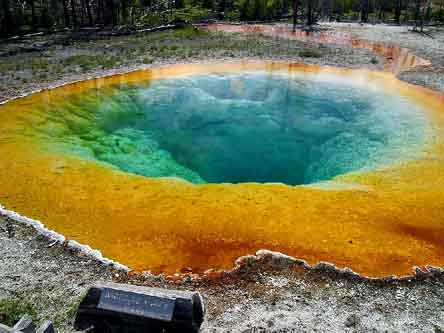
In the end, whatever happens, nature will win. Bacteria will beat antibiotics. Particles from the sun will one day disrupt our power supplies with catastrophic results. We could well be wiped out as a result of the dust cloud if Yellowstone erupts, already long overdue. But bacteria and insects will survive and evolve, plants will survive and evolve, and—who knows—a new, improved super-ape might evolve and the whole process start all over again.

If you care about the environment enough to act, you will get rid of your cars, turn off your lights, turn down your heating/aircon, stop using paper, stop buying jewels, and make sure your pension funds (such as they are) are not invested in the oil and geological extraction industries. Let’s have another sherry.

Clonmacnoise, Capernaum and rubble

Stones in Jerusalem

Having some weeks back found the Rock of Cashel wanting in the welcome department, now it’s the turn of Clonmacnoise. A pile of rubble in a field—is it more than this? Apparently so, for huge coaches clog up narrow local roads, bringing hordes of pilgrims to tread in the footsteps of Ciaran and JPII. Even on a day blighted by low skies, soft rain and a general air of gloom, the car park was full. Last time we were there, about 20 years ago, entry was free and views unimpeded. Today we found that not only did entry come at a price, but also any possibility of using the loo—at the same price. It seemed that trees had been planted deliberately to obscure any chance of a view without paying. Rampant commercialism meant that even a cup of tea was not to be had without paying the entrance fee. Maybe this is what happens after JPII has visited a place.

Capernaum

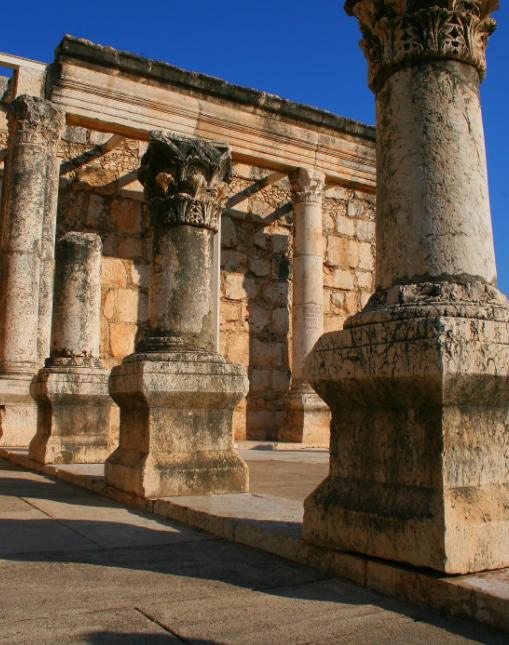
Rampant commercialism reminds me that last week we called in at Knock on the way back from Donegal. The shop merchandise was all in the best possible taste. She who must be obeyed said that the loos there were ‘appalling’. She is not alone: so say several online reviews. The weather was awful too, but I don’t suppose we can do much about that. A few years ago we visited the Holy Land. We saw lots of piles of rubble in fields near Jerusalem that possibly may possibly have possibly been associated with Jesus and the disciples. Galilee is beautiful and very moving. It feels real. And the Rock of Dunamase still rocks.